 9800+ TRUSTPILOT REVIEWS


 EN
EN DE
DE FR
FR NL
NL
Japandi Interior: The Complete Style Guide (2026)
Japandi is the most coherent interior style of the last decade: it has a clear philosophy, a tight material palette and a set of rules that actually make rooms look better rather than more complicated. This guide explains what it is, why it works, and how to buy furniture that genuinely fits it.
The name combines Japan and Scandi. The style marries Japanese wabi-sabi (the beauty of imperfection, natural materials, quiet spaces) with Scandinavian hygge and functionalist design (warmth, simplicity, craftsmanship that serves daily life). What emerges is neither purely Japanese nor purely Scandinavian: it is calmer than both, more considered than either alone, and unusually forgiving of smaller rooms. If you want the short version of the philosophy first, read what is Japandi style before going further.
Japandi does not require a complete interior overhaul. It requires the right furniture choices and the discipline to edit out what does not belong. This guide covers the five core principles, the correct material and colour palette, the three key furniture categories, a comparison of Japandi against adjacent styles, five styling habits that separate well-executed Japandi from rooms that merely look beige, and the most common buying questions answered directly.
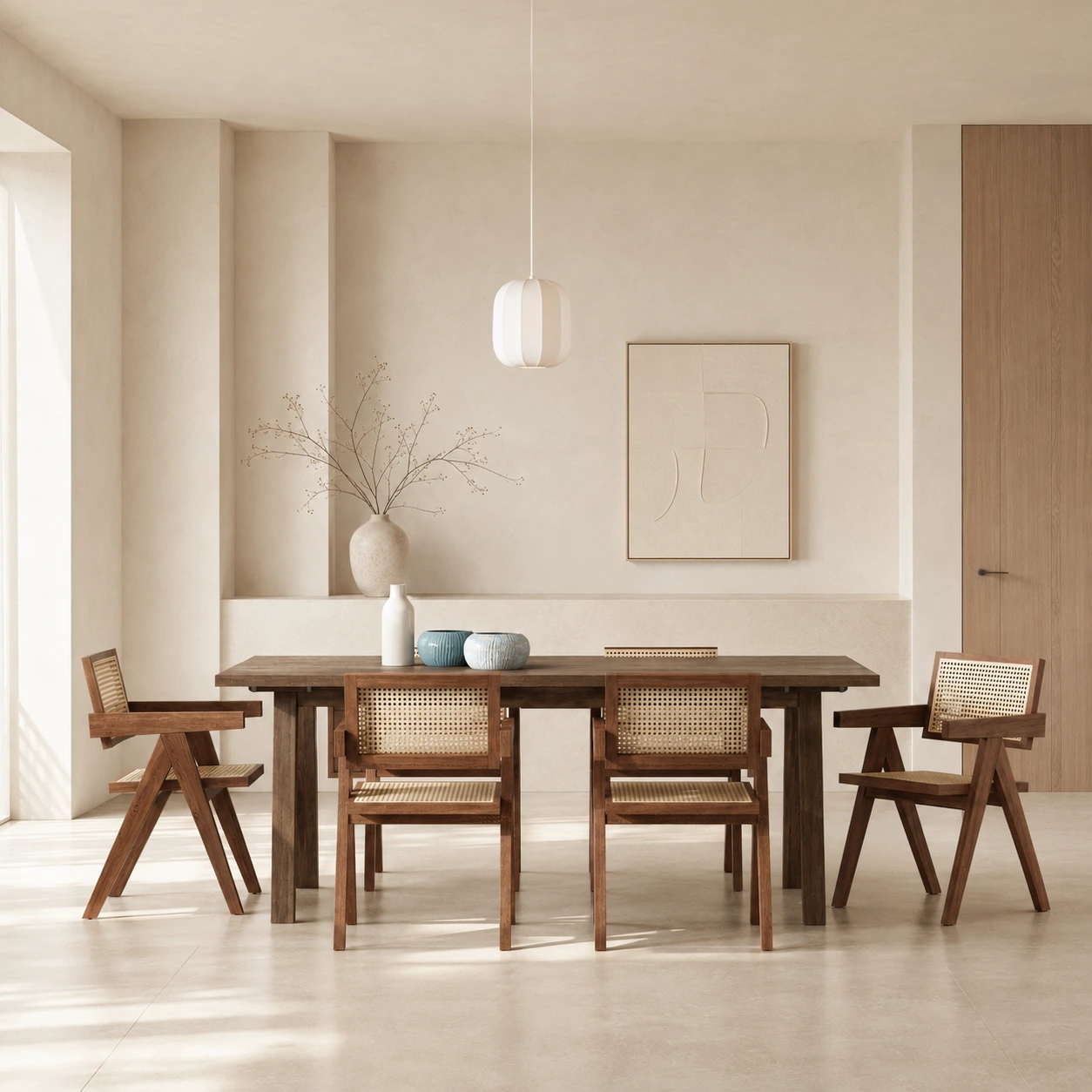
Five principles that define every genuine Japandi interior
Japandi is not a mood board aesthetic. It is a set of values made visible through material choices and spatial editing. Every piece of furniture either supports or undermines these five principles.
- Functional beauty: Nothing enters the room without a use. Decoration for its own sake is edited out. A beautiful object that also works earns its place; a beautiful object that merely sits there does not. This is where Japanese mingei craft philosophy and Scandinavian functionalism agree completely.
- Natural materials exclusively: Solid wood, rattan, linen, wool, stone and clay. Engineered materials are not categorically excluded but they must not be visible. A metal frame lacquered to a matte black can work; a chrome-plated frame cannot. The test: does it look like it came from the earth?
- Wabi-sabi: imperfection as virtue: Grain variation in oak, the slight irregularity of a hand-woven seat, a linen cushion that does not sit perfectly flat. These are features, not flaws. A Japandi room does not look showroom-pristine: it looks inhabited by someone with good taste.
- Negative space is a design element: Empty wall, clear floor, a surface with one object rather than five. The space between furniture matters as much as the furniture itself. Crowded rooms cannot be Japandi regardless of what fills them.
- Warmth over coolness: Scandinavian minimalism can tip cold. Japanese design can tip austere. Japandi avoids both by layering warm tones: amber wood, stone-toned plaster, terracotta accents, candlelight. The result reads calm rather than clinical.
The three pieces that make or break a Japandi room
Not all furniture carries equal weight in a Japandi interior. These three categories define the look more than anything else in the room.
Dining chairs
Dining chairs are the single most visible category in a Japandi interior because they are out, in use and central to the main social space most of the time. They cannot be hidden behind a sofa or tucked away.
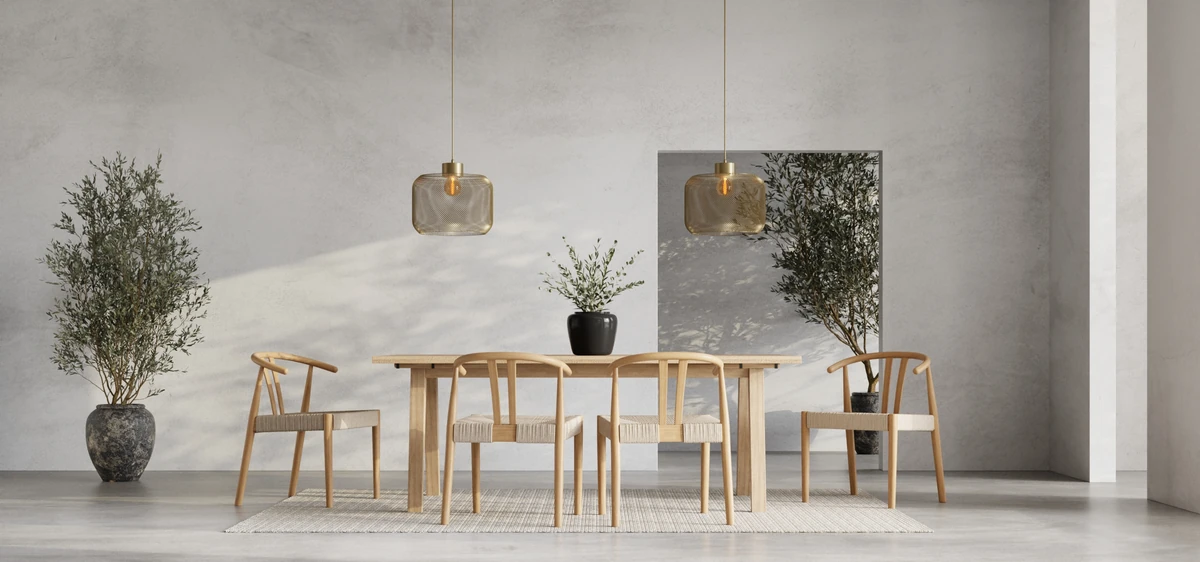
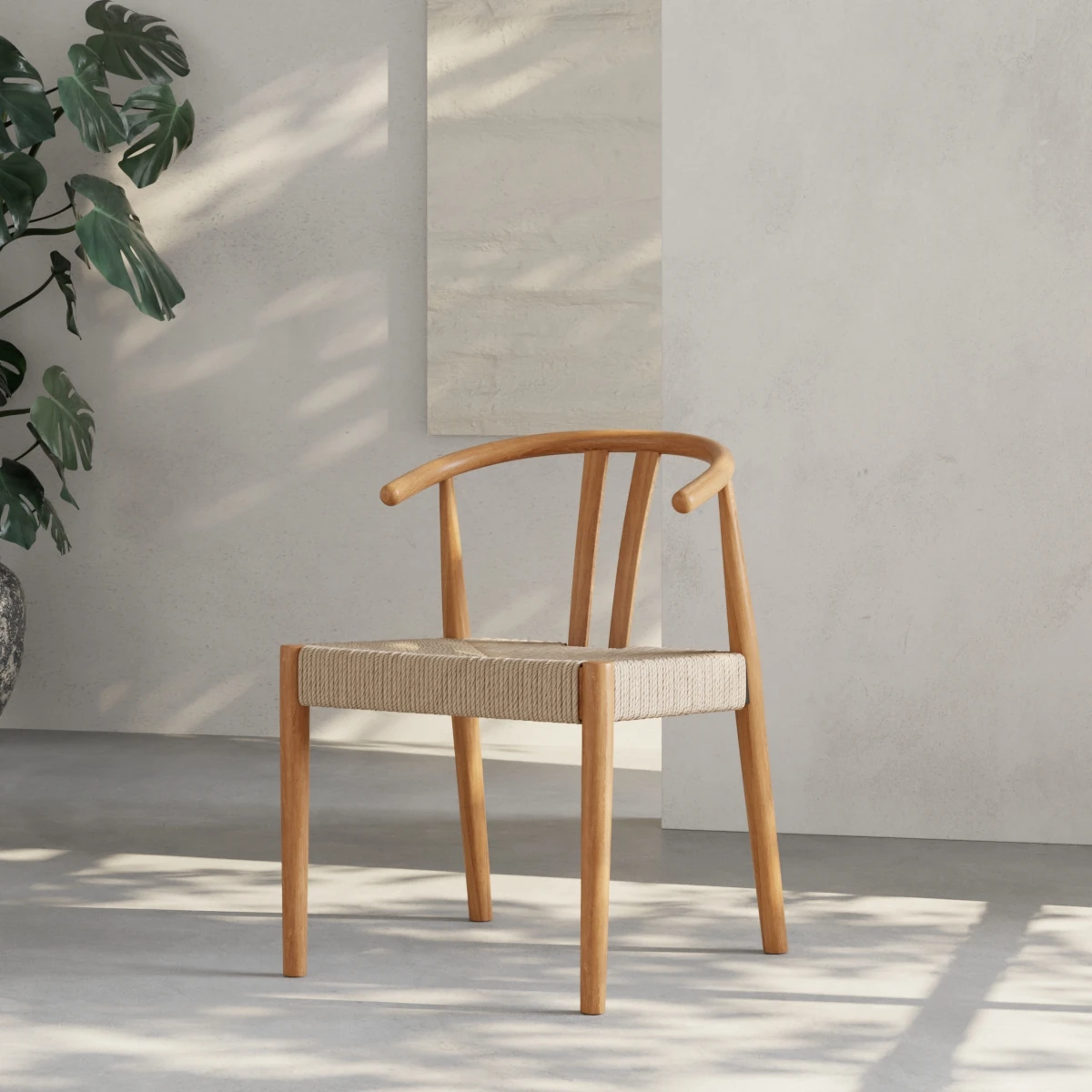
The correct Japandi dining chair has a solid wood frame in oak, walnut or ash, a seat in a natural material (solid wood, rattan, rush cord or a linen upholstered pad), and a silhouette that is clean without being cold. Legs taper. Backs are open or have a single horizontal splat rather than solid panels. The chair reads light even when it is structurally robust.
Rattan-seat dining chairs are the clearest Japandi expression: the weave adds texture and warmth, the natural fibre is the correct material story, and the open seat allows light to pass through. Furnicher rattan dining chairs combine kiln-dried hardwood frames with hand-woven seats and are available in finishes from natural oak to smoked walnut, covering the full Japandi palette. For a deeper look at silhouettes, joinery and seat materials, see our guide to Japandi chairs, and for the dining surface itself, the Japandi dining table guide.
Lounge and accent chairs
The Japandi lounge chair must be comfortable enough to use for hours and visually quiet enough not to dominate the room. These two requirements eliminate most furniture categories immediately: big, puffy sofas are too visually loud; wire-frame chairs are too cold.
The ideal Japandi accent chair sits relatively low to the ground (seat height 38 to 44 cm), has a slightly reclined back, and uses upholstery in a textured natural fabric: bouclé, brushed linen or undyed wool. The frame, if visible, is in solid wood or matte black metal. Rattan lounge chairs with deep cushions in sand or stone linen are a particularly strong choice because they bring texture into the room without adding visual weight. See our dedicated Japandi armchair guide for proportions, frame options and upholstery pairings, plus the rattan lounge chair breakdown if you are leaning toward woven seats.
One accent chair per seating area is the Japandi approach. Two is acceptable in a larger room. More than two competes with the negative space that makes the style work.
Storage and side tables
Storage in a Japandi interior must either be invisible (behind closed doors in a muted finish) or so well-made that it functions as furniture. Open shelving is acceptable only when what is displayed follows wabi-sabi logic: a ceramic bowl, three books, a trailing plant. Not a collection of objects arranged for display.
Side tables in a Japandi room are typically small, low and in a single natural material: solid oak, stone or hand-thrown ceramic. They hold one thing: a cup, a book, a candle. The Japandi approach to side tables is that they should look as if they arrived naturally rather than being placed.
The principle that unifies both categories: every surface has breathing room. Drawers and cupboards contain what would otherwise clutter the room. What is visible has been chosen deliberately. The same restraint applies when furnishing the main social space: our Japandi living room furniture guide walks through sofa, coffee table and storage choices in detail.
The Japandi colour and material reference table
One of the most common mistakes in Japandi interiors is using the wrong shade of white or the wrong species of wood. The palette is warm-neutral, never cool-neutral. The materials are organic, never synthetic-looking. This table is a buying checklist.
| Category | Works in Japandi | Does not work |
|---|---|---|
| Wall colour | Warm white, plaster, stone, sage, clay | Cool white, grey, navy, black |
| Wood species | Oak, walnut, ash, beech (natural or smoked) | Pine (too pale), lacquered MDF, gloss finishes |
| Upholstery | Linen, bouclé, undyed wool, cotton canvas | Velvet, polyester, bold patterns, bright colour |
| Accent materials | Rattan, paper rush, stone, clay, raw ceramic | Glass, chrome, polished metal, plastic |
| Accent colour | Terracotta, muted sage, warm charcoal, sand | Primary colours, pastels, high saturation |
| Lighting | Warm bulbs (2700K), paper lanterns, clay bases | Cold LED (4000K+), chrome pendants, neon |
The palette rule of thumb: warm whites plus one wood tone plus one accent material. Adding a second wood species or a second accent material is where Japandi rooms start to look busy rather than layered. For full swatch references and pairings, see the Japandi color palette guide, and for a deeper material breakdown including wood species, weaves and textiles, the Japandi furniture materials guide.
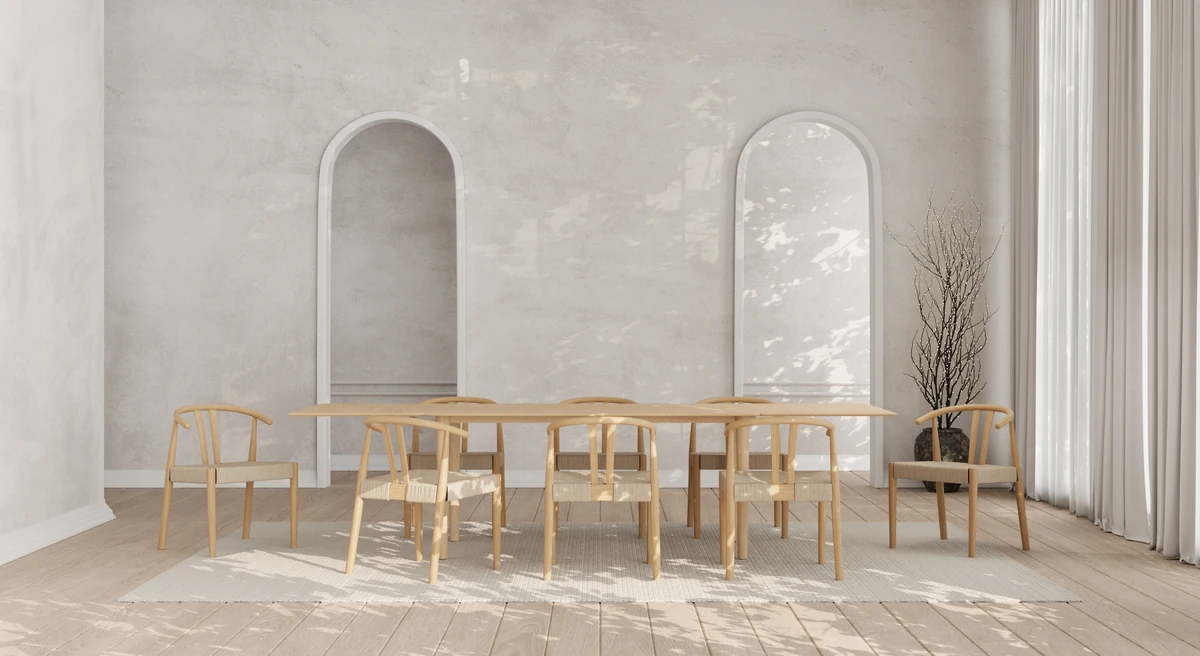
Japandi vs Scandinavian vs Wabi-sabi: where they diverge
These three styles are frequently confused because they share a minimalist impulse and a preference for natural materials. The differences are real and affect which furniture you should buy.
- Japandi vs Scandinavian minimalism: Scandinavian design often trends cooler: more white, more grey, more visible structure. It prizes functional clarity without always requiring warmth. Japandi takes Scandinavian functionalism and adds Japanese warmth and the wabi-sabi acceptance of imperfection. The result is less crisp, more organic. A light grey concrete table is Scandinavian. The same silhouette in warm oak with a slight grain is Japandi. We go deeper into the comparison in Japandi vs Scandinavian design.
- Japandi vs pure wabi-sabi: Wabi-sabi in its purest form can look worn, deliberately aged, sparse to the point of austerity. A cracked plaster wall left unpainted, a rough-hewn wooden bowl, a single branch in a clay vessel. Japandi takes wabi-sabi's acceptance of natural imperfection and channels it through Scandinavian comfort. The room is still habitable, still warm, still functional. It does not look like a meditation room. For the full side-by-side, read Japandi vs wabi-sabi.
- Japandi vs bohemian natural: Bohemian interiors also use rattan, linen and plants, but they layer and accumulate. More is more. Japandi is the opposite: fewer pieces, more space between them, no collector's energy. If a room has five rattan pieces and a macrame wall hanging, it is boho. If it has two rattan chairs, an oak table and one ceramic pendant, it is Japandi.
Five habits that separate well-executed Japandi from rooms that look beige
The most common failure mode in Japandi attempts is a room that is simply beige and empty rather than calm and considered. These five habits prevent that.
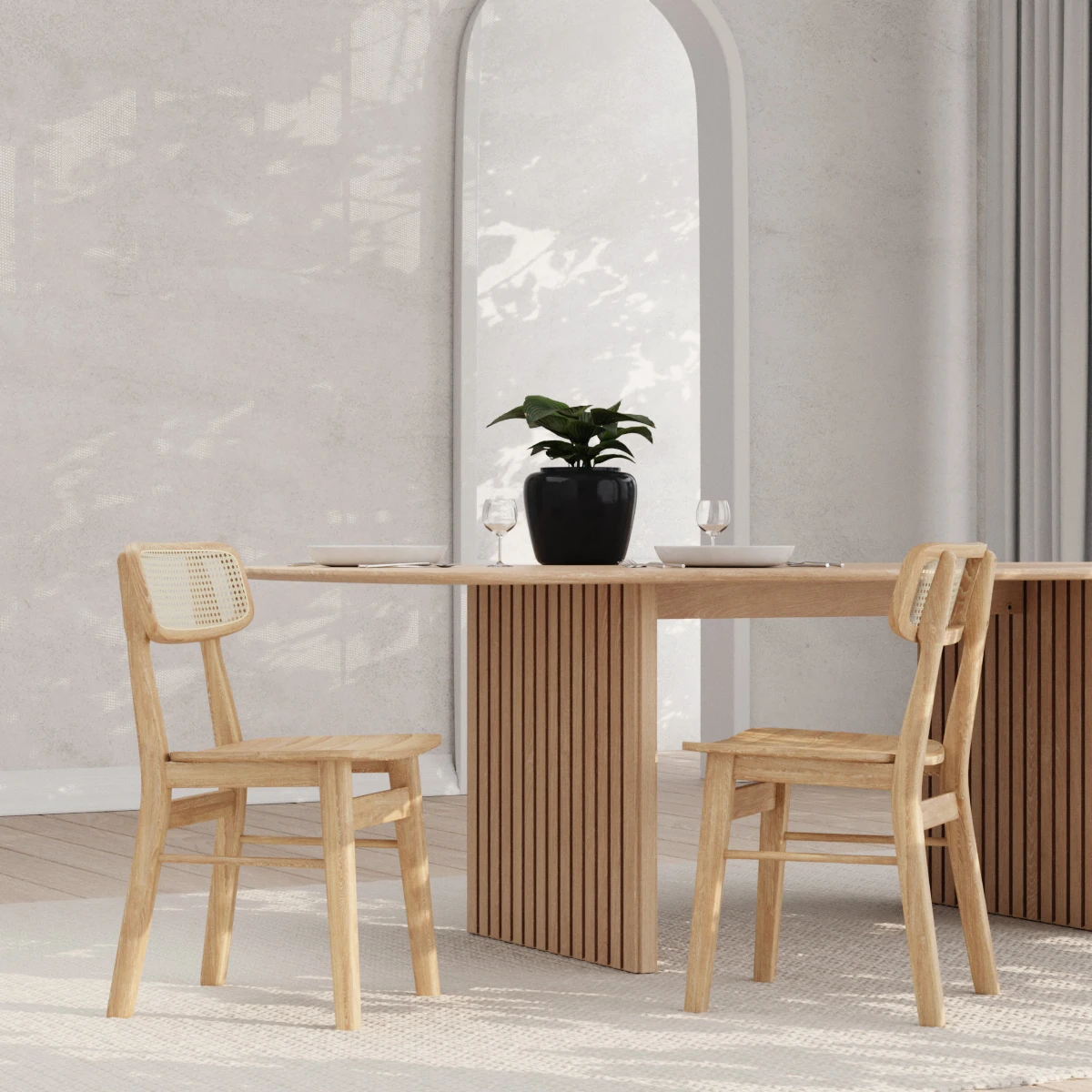
Featured in this guide
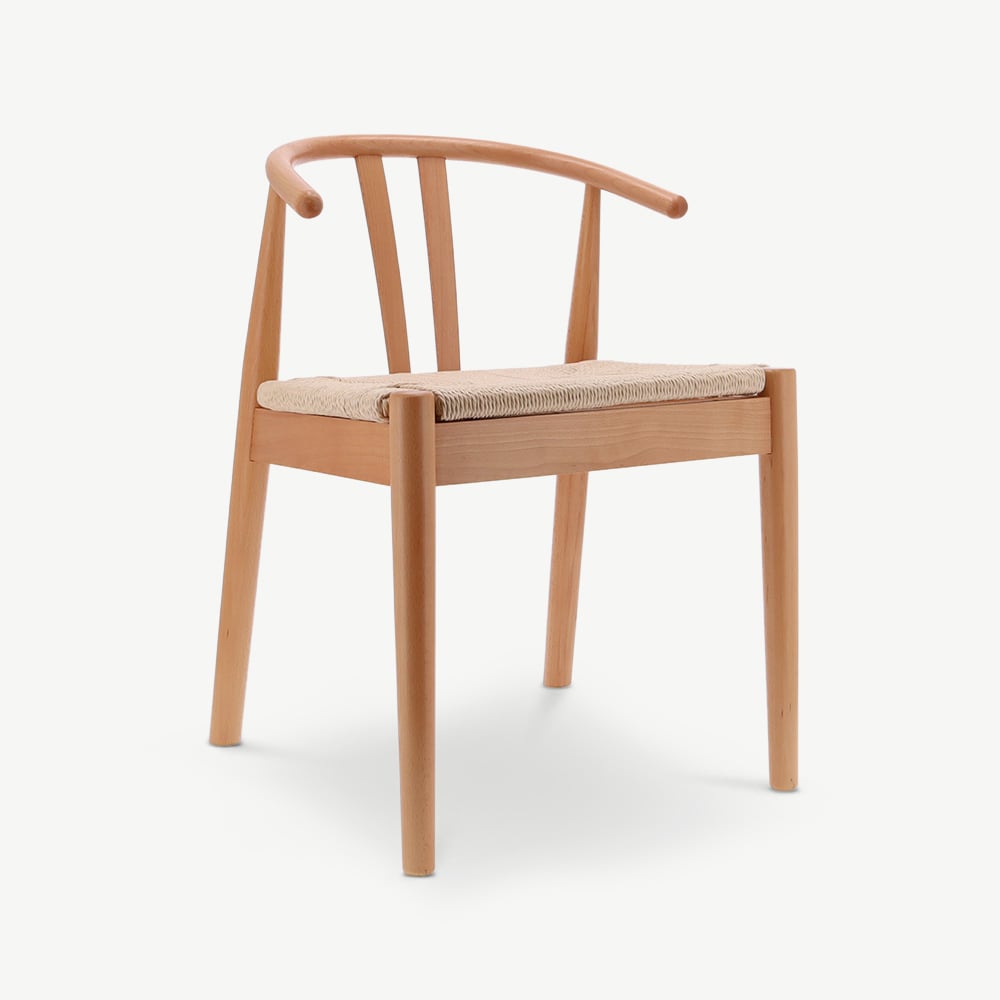


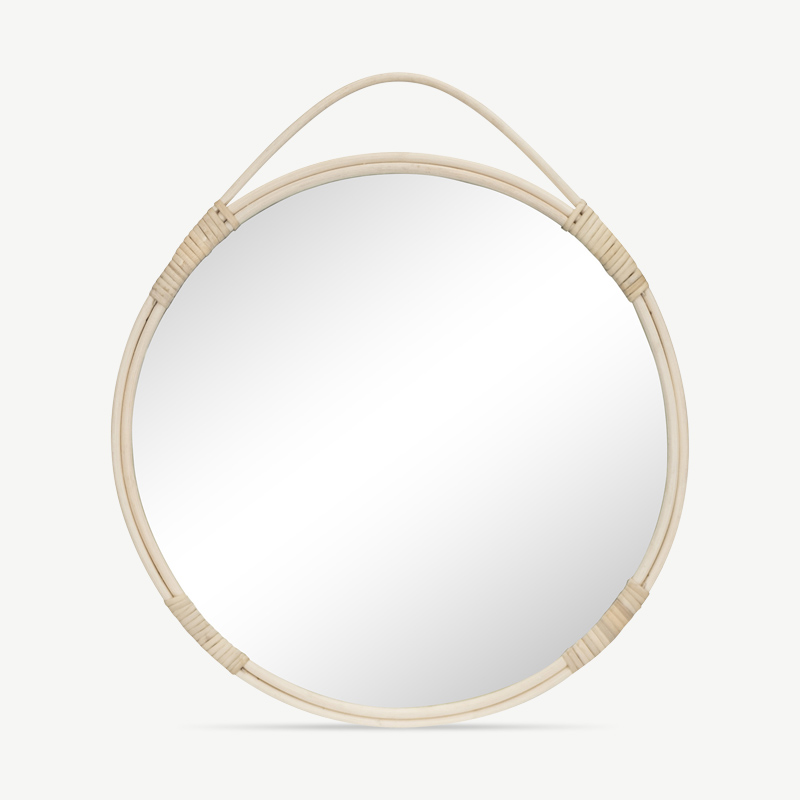
Furniture that earns its place in a calm, considered home
Every piece in the Furnicher Japandi edit is chosen against two tests: does the material story hold up to wabi-sabi logic, and does the silhouette serve the room rather than compete with it?
Solid oak and ash frames with natural oil finishes. Rattan and rush cord seats hand-woven for longevity. Upholstery in undyed linen and organic bouclé. Proportions that look right in European room dimensions. Free delivery across the EU, free returns on everything, and same-day dispatch on in-stock pieces.
Over 50,000 customers have furnished their homes with Furnicher. More than 9,500 have left reviews. The collection grows slowly and deliberately: nothing enters it that does not belong.
Japandi buying questions, answered directly
What is the difference between Japandi and Scandinavian design?
Scandinavian design prioritises functional clarity and often trends cooler: more white, more grey, more visible structure. Japandi takes Scandinavian functionalism and adds Japanese wabi-sabi warmth: an acceptance of imperfection, a preference for slightly warmer tones and a deeper respect for negative space. The practical difference in furniture terms is that Japandi pieces tend to be warmer in tone (oak over white, linen over polyester) and the rooms they occupy have more breathing space between them.
What colours work in a Japandi interior?
Warm neutrals exclusively: warm whites (never cool or blue-toned), plaster tones, stone, clay, sage and warm charcoal. Accent colours are muted and earthy: terracotta, sand, dark olive. The test for any colour in a Japandi room is whether it looks as if it came from a natural pigment source. Primary colours, pastels and high-saturation tones do not pass that test.
Is rattan furniture suitable for a Japandi interior?
Rattan is one of the best materials for Japandi because it satisfies all five core principles: it is functional, fully natural, imperfect by definition (no two pieces of cane are identical), lightweight enough not to crowd a room, and warm in both tone and texture. Rattan dining chairs, lounge chairs and side tables all have a natural place in a Japandi scheme. The only consideration is to choose frames in oak or walnut rather than painted frames, which would introduce a synthetic element into the material story.
How many colours should a Japandi room have?
Three is the practical maximum: one dominant neutral (the walls and largest surfaces), one wood tone (carried through the furniture), and one accent (a single earthy hue in cushions, a ceramic object or a plant pot). Many well-executed Japandi rooms use only two. The discipline of restraint is what distinguishes Japandi from rooms that are merely neutral.
Can Japandi work in a small flat or apartment?
Japandi is particularly well-suited to smaller spaces because its emphasis on negative space and edited-down furniture counts means rooms do not feel crowded. The key is to choose fewer, better pieces rather than filling every corner. A small dining area with two or four genuinely good chairs and a well-proportioned table reads better in a Japandi context than a larger set that fills the room. The style rewards restraint more than any other.
What wood is most suitable for Japandi furniture?
Oak is the most versatile Japandi wood because it sits precisely at the intersection of Scandinavian and Japanese material preferences: warm in tone, visibly grained (wabi-sabi), structurally strong and widely available in quality EU-certified grades. Walnut is a step richer and darker, which works particularly well in rooms with warmer wall tones or terracotta accents. Ash is a lighter alternative to oak with a slightly more pronounced grain. The common factor across all three: a natural oil finish that shows the wood rather than a lacquer or stain that conceals it.
