 9800+ TRUSTPILOT REVIEWS


 EN
EN DE
DE FR
FR NL
NL
A rattan lounge chair sits between dining chair and sofa: big enough to be a room element, small enough to fit a reading corner or a window niche. In most European apartments, it is the one piece of seating that genuinely styles a room without taking over the floor plan.
This guide covers the three classic frame shapes (cantilever, barrel, peacock), the right placement for the three most common situations, and the dimensions, load ratings and comfort specs to check before buying. Plus the price range where good quality actually lives.
Bigger than a dining chair, smaller than a sofa
Most rattan lounge chairs measure 70 to 85 cm wide and 75 to 90 cm deep. That is the footprint of a medium club chair, but the open weave makes the seat shell read visually lighter. In smaller flats, a rattan lounge chair lands with presence without weighing the room down.
Buyers usually choose a rattan lounge chair for one of three placements: a reading corner (with floor lamp and side table), a bedroom (in front of the bed or in a window corner), or as a living-room accent against a pale wall, angled slightly toward the sofa.
- Footprint: 70 to 85 cm wide, less than a wooden armchair with armrests
- Seat height: 38 to 44 cm, lower than a dining chair
- Load rating: 110 to 130 kg on solid-rattan-and-beech frames
Three silhouettes, three use cases
Most rattan lounge chairs fall into one of these three categories. Each has a different sit-position and a different visual job in a room.
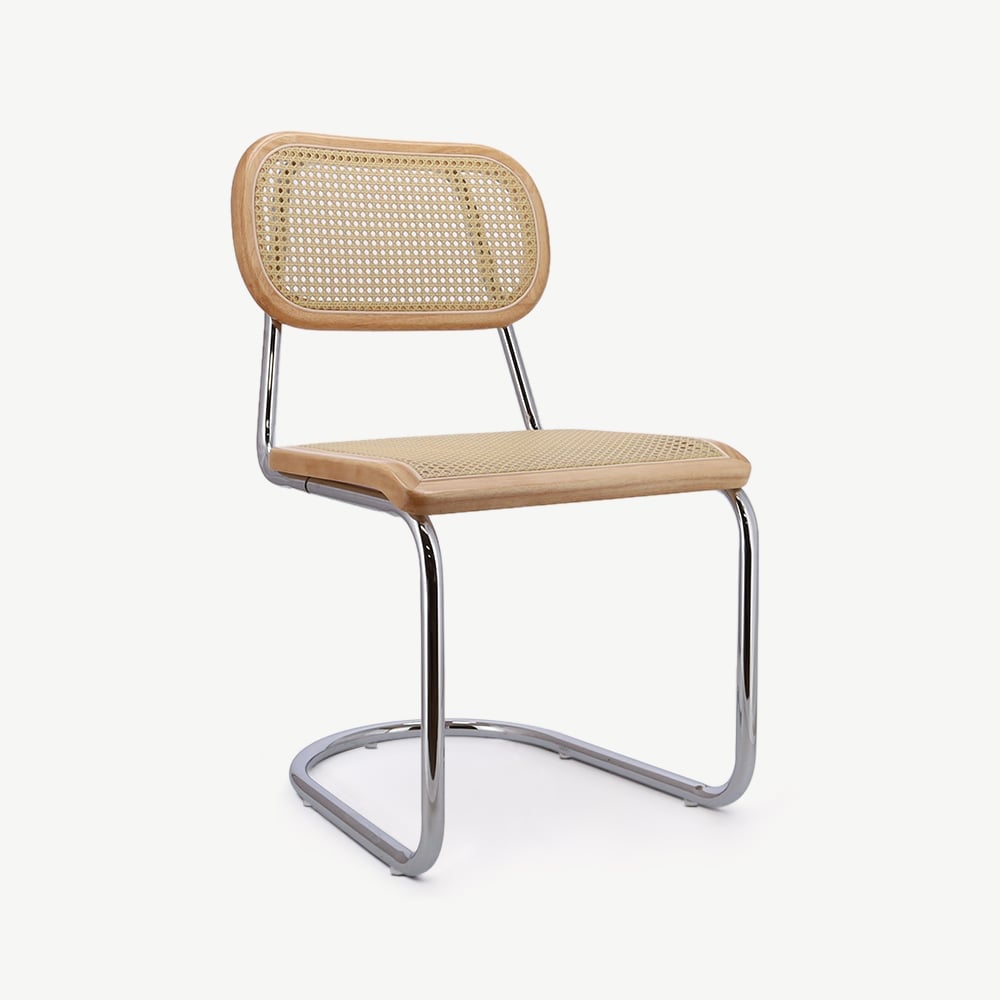
Cantilever
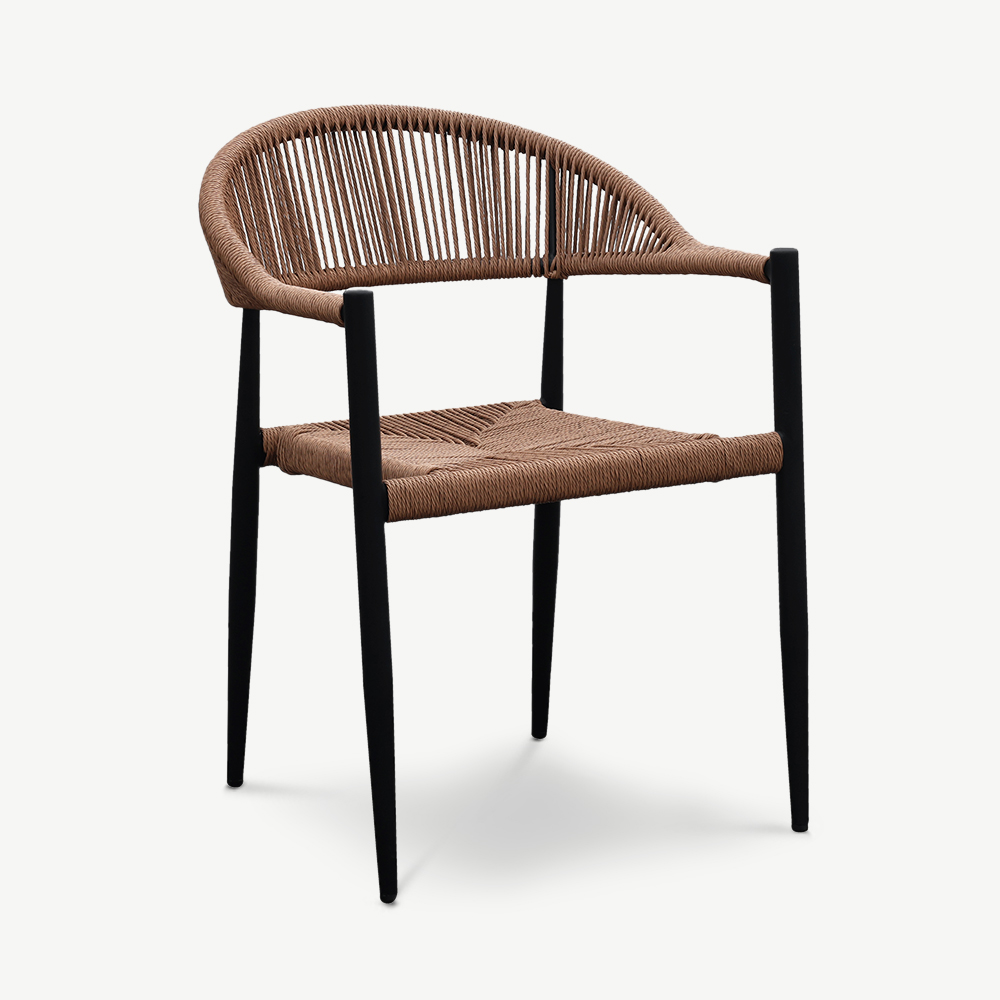
A tubular frame in powder-coated steel or bent rattan that omits the rear legs. The weave stretches across the seat shell and gives a small natural flex. Visual lightness is the strength, ideal for modern rooms and Japandi schemes.
Seat height 42 to 44 cm. Our Noor cantilever lounge piece sits in this category.
Barrel chair
A curved back that flows into the armrests without a break. The shape wraps the shoulders and supports the back 360 degrees, the most comfortable rattan shape for long sitting. Classic mid-century vocabulary.
Seat height 38 to 41 cm. Deeper than the cantilever, suited to relaxed posture with book or drink.
Peacock
The high, fan-shaped back that sweeps upward. The iconic Indonesian 1950s model, copied worldwide in the 1970s. Reads as sculpture more than daily seat. Best as an accent, less as a TV chair.
Seat height 40 to 43 cm. Upright sit, needs 90 cm of clear wall behind it to read properly.
Featured in this guide

What to measure before you buy
The most common complaint on rattan lounge chairs is not quality, it is fit. The piece arrives and doesn't suit the room, or the sit doesn't suit the buyer. Three figures to check on the spec sheet.
| Measure | Standard range | What it means |
|---|---|---|
| Seat height | 38 to 44 cm | Lower than a dining chair (46 cm), relevant for knee comfort |
| Seat depth | 48 to 58 cm | Deep = relaxed, shallow = upright; under 165 cm tall, look for 48 to 52 cm |
| Inner width | 52 to 64 cm | Should be 10 to 14 cm wider than the buyer's hips |
| Load rating | 110 to 130 kg | Check the spec sheet, varies more here than on dining chairs |
For more than two hours a day of sitting, plan for a 5 to 8 cm seat cushion. It protects the weave at contact points and noticeably raises comfort. Linen, wool, or corduroy covers pair particularly well with the rattan texture.
Where the chair actually works
In most homes, the rattan lounge chair lands in one of three spots. Avoid thinking of it as a second sofa; it is not built for that.
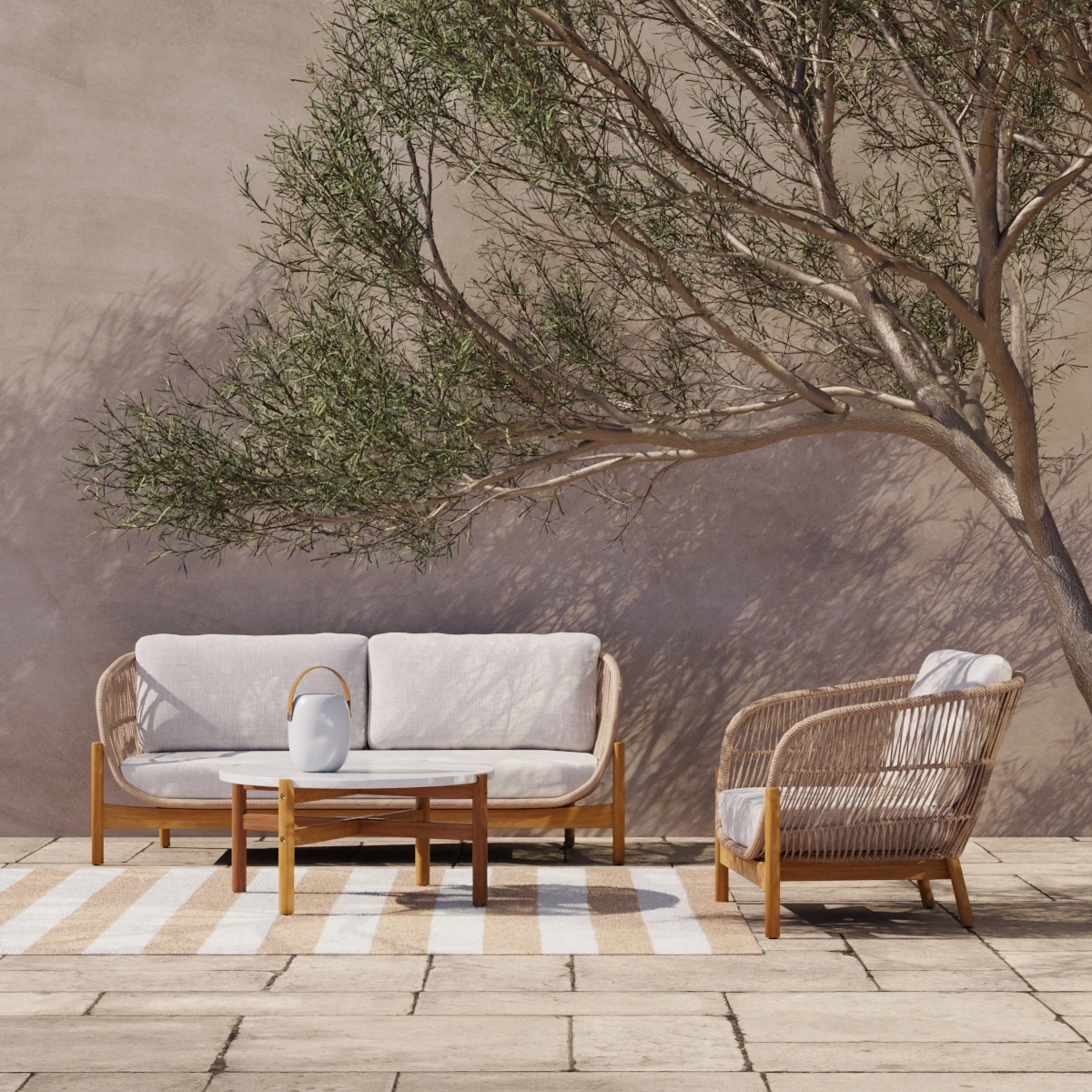
Reading corner: floor lamp to the side, side table at 50 to 65 cm height beside the chair, rug underneath. 90 cm of clear wall behind so the silhouette reads.
Bedroom: in front of a window or beside a chest of drawers. This is where rattan shines: visually light, doesn't crowd the room. A sheepskin over the back or a folded throw turns the chair into usable second seating.
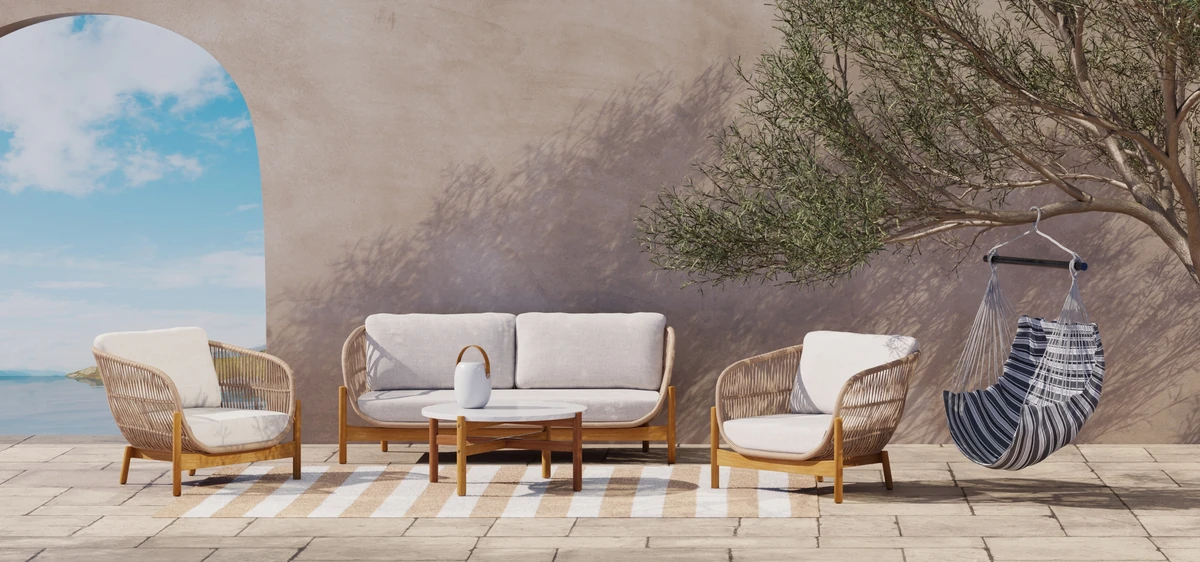
Living-room accent: angled toward the sofa, never parallel. The angle opens the room and makes the chair functional for conversation, not decorative dead weight.
Where the sweet spot lives
A solid rattan lounge chair sits between €189 and €449. The private-buyer sweet spot: €249 to €349.
Below €150, you mostly get paper rush on chipboard that shows visible wear within two years. Above €600, you pay for the brand rather than the material. The middle is honest: real frame, real weave, EU delivery included.
Our rattan range starts with dining chairs from €99 and includes lounge chairs from €189. For a wider view of the category, the buying rattan furniture guide covers the material and origin side. For terminology, see rattan vs wicker.
To place the chair in a wider scheme, the Japandi collection covers compatible side tables, lamps, and rugs. The pillar rattan furniture guide sets the full context.
Frequently asked.
Where does a rattan lounge chair belong in a room?
Three standard spots: a reading corner (with a floor lamp and side table), a bedroom (in front of the bed or in a window corner) and as a living-room accent (against a pale wall, angled slightly toward the sofa). A classic rattan lounge chair takes 70 to 85 cm of floor width, far less than a sofa but far more visual presence than a dining chair.
What is the difference between a lounge chair and an armchair?
Everyday English uses the two interchangeably. In trade language, armchair usually means a deeper, more upholstered piece, lounge chair the broader category that includes cane-and-rattan models and cantilever frames. In our catalogue you will find both under rattan lounge chairs.
Which shape is the most comfortable?
The barrel chair. The curved back wraps the shoulders and supports 360 degrees of the back. Peacock chairs are theatrical but often too upright for long sitting. Cantilever frames give a small flex and suit medium sit-times. For more than two hours at a stretch, plan for a seat cushion or test-sit first.
Can a rattan lounge chair hold a heavier weight?
Our rattan lounge chairs are rated to 130 kg; most competitor models stop at 110 kg. The difference is the frame: solid rattan poles over a beech core hold more than hollow plywood frames. Always check the load rating on the spec sheet, it varies more between lounge models than between dining chairs.
Are rattan lounge chairs suitable for daily use?
Yes, with a caveat. The seat handles daily use without issue, the weave shows light indentations at contact points after five years. For more than two hours a day of TV viewing, a 5 to 8 cm seat cushion protects the weave and meaningfully raises comfort. Linen, wool, and corduroy covers pair well visually.
How much does a good rattan lounge chair cost?
A solid rattan lounge chair on a real frame sits between €189 and €449. Below €150, expect paper rush over chipboard that shows wear within two years. Above €600, you are usually paying for the brand, not the material. The sweet spot for private buyers is €249 to €349.
