 9800+ TRUSTPILOT REVIEWS


 EN
EN DE
DE FR
FR NL
NL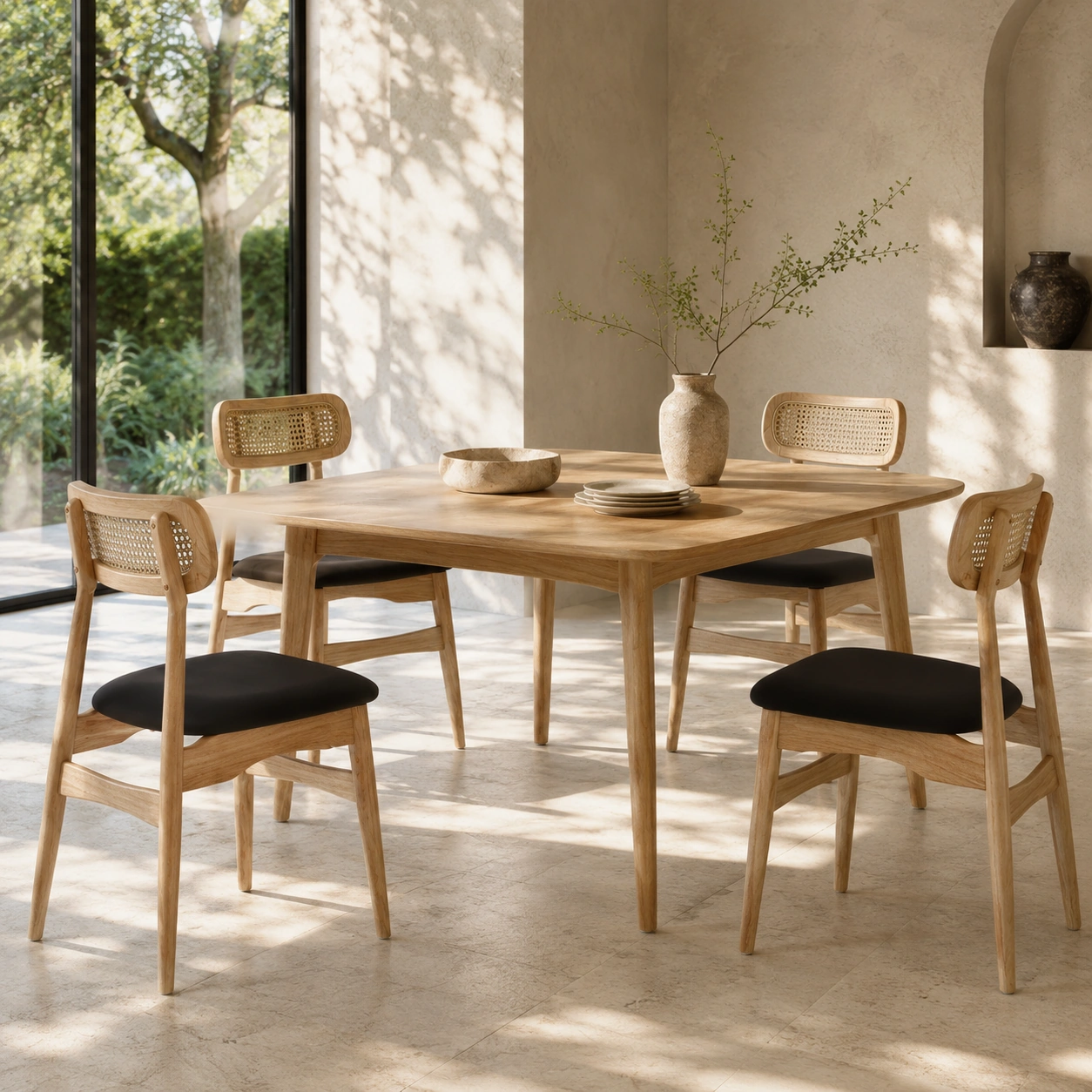
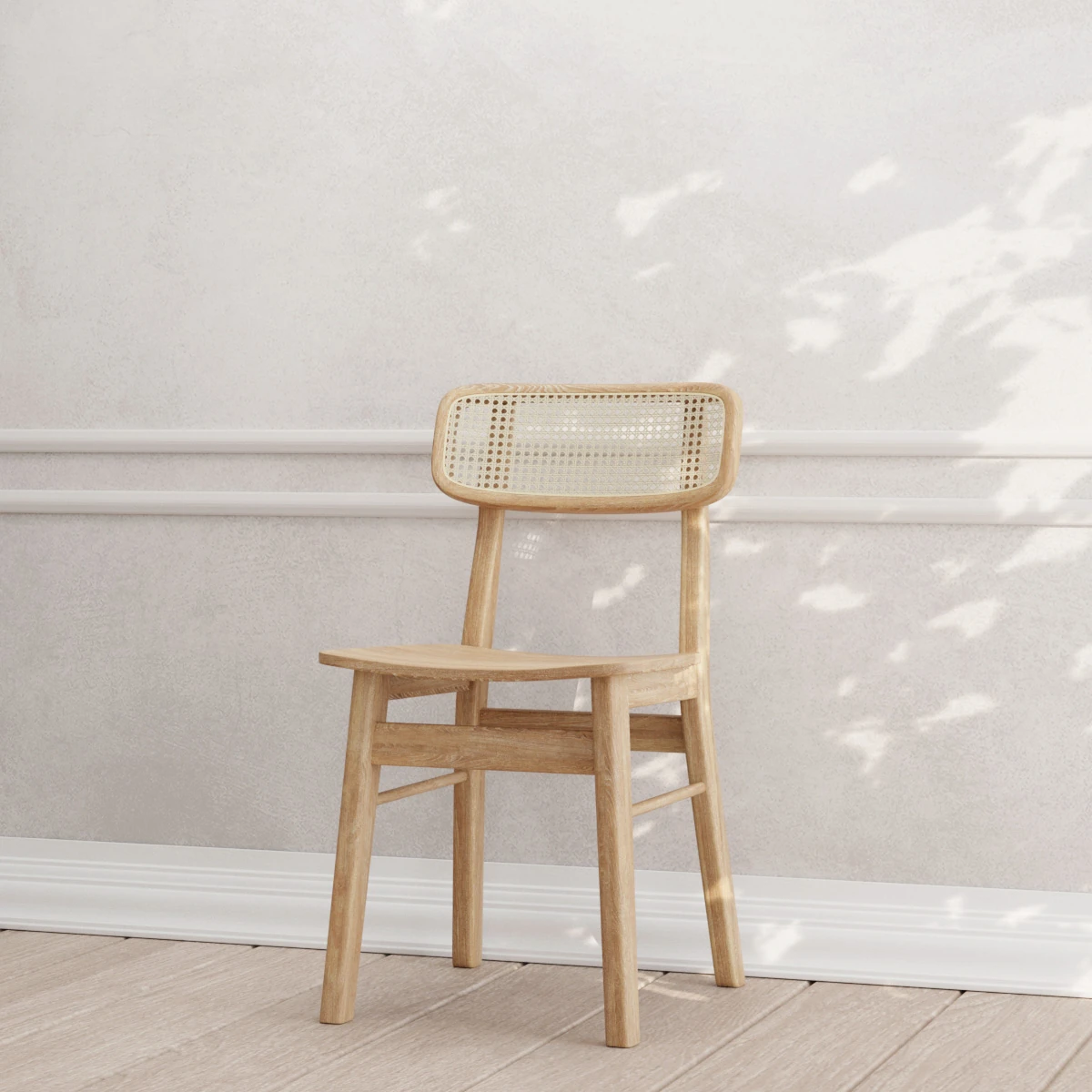
A Japandi chair is not a style category on its own; it is the intersection of three traits: a light wood frame, a natural-fibre seat, and a silhouette without decorative shaping. Hit those three, and the chair reads Japandi whether it shipped from Vietnam, Denmark, or Poland.
This guide covers what separates a Japandi chair from a pure Scandinavian or pure Japanese one, which material combinations work, how many chairs realistically pair with a dining table, and which Furnicher models (Scandi, Jenson, Peter, Noor) hit the definition cleanly.
What makes a chair Japandi
Three traits show up in every chair that actually carries the style. Miss one and it reads as a Scandi chair, a bistro chair, or a designer piece without a clear style reference.
- Light wood frame: oak, ash, or beech, oiled or matte-lacquered. Visible joinery (mortise and tenon) rather than hidden screws. Legs 18 to 22 mm thick, no thicker.
- Natural-fibre seat: rattan weave, paper cord, oiled leather, or bouclé. No buttoned upholstery. The seat can be a different colour from the frame, that is intentional.
- Quiet silhouette: back rest flat or gently curved, no cut-outs, spindles, or shaped flourishes. The chair reads behind the table, never in front of it.
Hit all three and you have a Japandi chair. Hit two and swap the wood frame for black metal and you have an industrial hybrid that works in a loft but no longer reads Japandi.
The Japandi chairs you will actually find
The category splits into three sub-types. They differ by material, price, and which dining room they belong in.
Wood with rattan seat
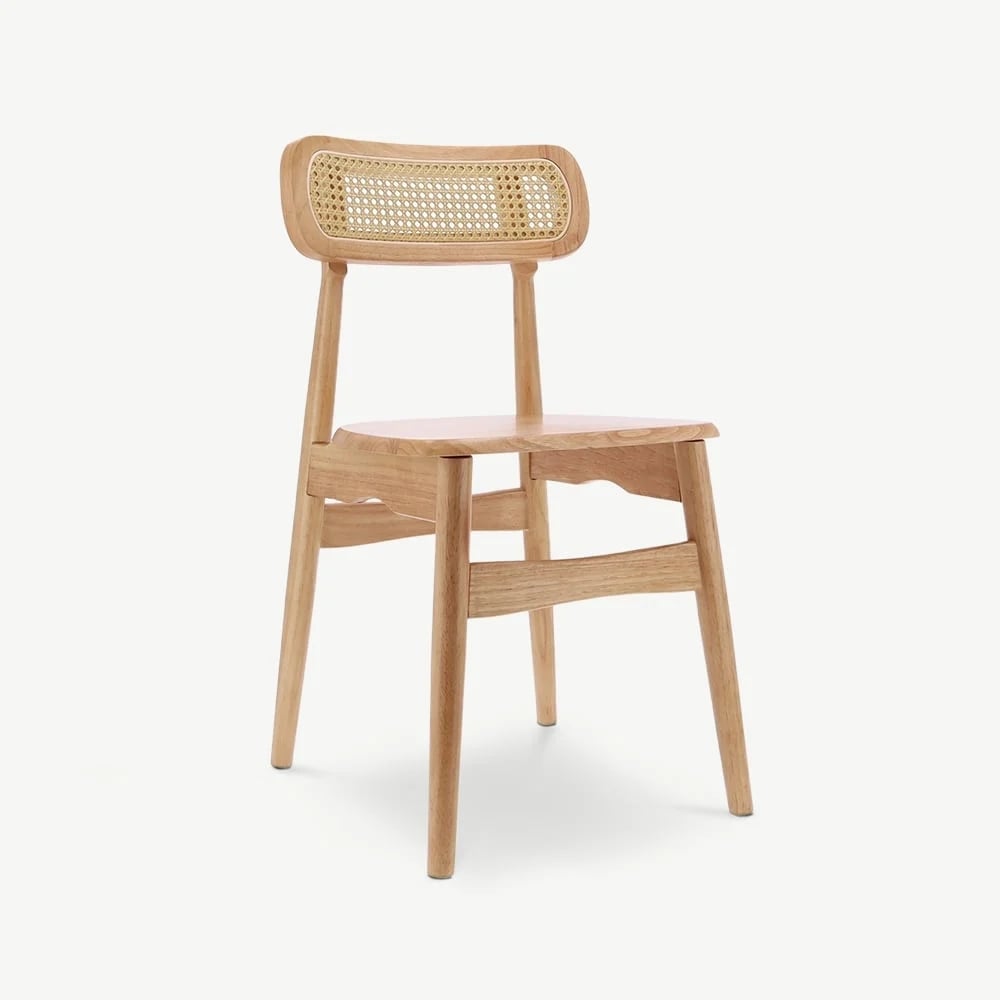
Oak or ash frame, natural rattan weave on the seat. The Furnicher Scandi and Jenson both sit here. Lasts 15 to 25 years, re-weavable if the panel is damaged.
Works in any Japandi dining room, including ones where the table is darker than the chair.
Wood with paper cord
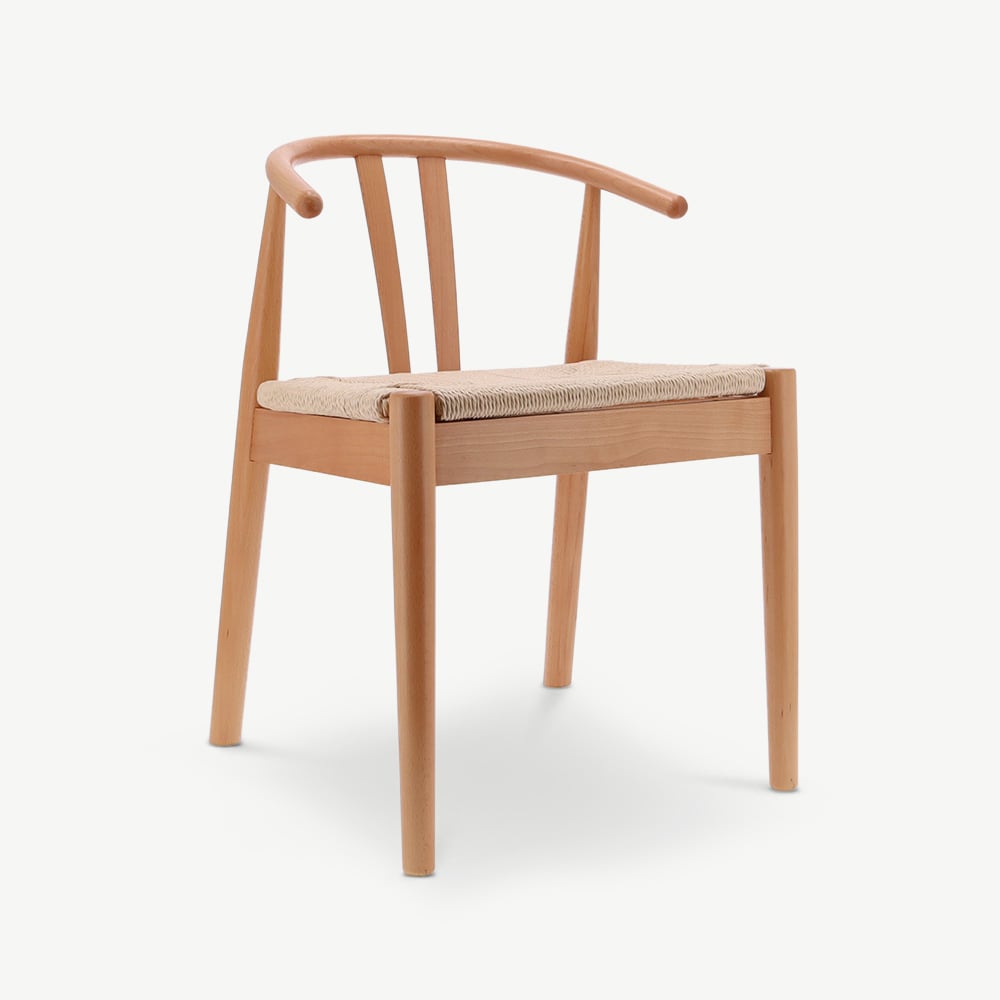
Seat woven from twisted paper cord in natural or hemp tones. Visually closer to the Danish Wegener tradition than to Japanese references. Lifespan 8 to 12 years before re-weaving is needed.
Better in very light dining rooms; in darker ones the seat reads too pale.
Wood with leather seat
Oak frame with a thin core-leather seat (cognac, black) or PU leather. The Furnicher Jenson in Brown PU and Black PU sits here. Brings the dark anchor into an otherwise light room.
More family-practical than rattan: a damp cloth cleans it.
Featured in this guide


Where the difference actually lives
In a showroom, Scandi and Japandi blur fast. Three tests separate them reliably.
| Trait | Scandi chair | Japandi chair |
|---|---|---|
| Wood tone | Light oak, birch | Oak, ash, or smoked oak |
| Symmetry | Strictly symmetrical | Often asymmetric joinery |
| Seat material | Paper cord, wood | Rattan, paper cord, leather |
| Accent colour | Rarely black | Often one black detail |
| Set layout | 6 identical chairs | 4 chairs plus a bench |
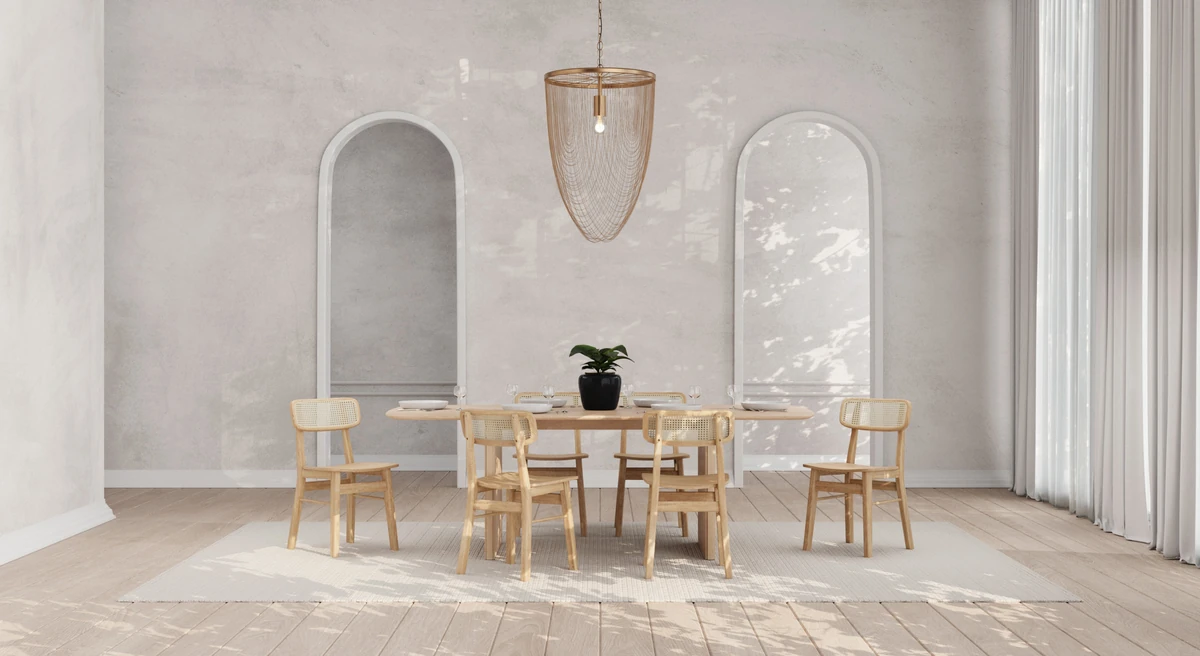
The practical version: the same oak chair with a rattan seat reads Japandi the moment a black floor lamp sits next to it and a bench replaces two chairs on the wall side of the table. The composition does as much work as the individual chair.
Which chairs to buy
Four models cover 90% of Japandi dining rooms.
For the classic look: the Scandi Wooden Dining Chair with rattan in natural, black, or cognac (€119 per chair). For more comfort: the Jenson in Brown PU or Black PU (€139). For an asymmetric table: two chairs plus a wooden bench from €249, instead of six matching chairs.
Browse our rattan dining chairs for the standard Japandi shortlist, or go straight to the Japandi collection, where the chairs are already paired with matching tables. To frame the style first, read our piece on Japandi living room furniture or the what is Japandi style article.
For dining chairs in the broader sense, see our dining chairs guide; for purely Nordic models, the Scandinavian furniture guide. The complete Japandi interior guide frames how the seating fits the wider scheme.
Frequently asked.
What makes a chair a Japandi chair?
Three traits: a light wood frame in oak, ash, or beech (sometimes smoked), a natural-fibre seat (rattan, paper cord, linen, or bouclé), and a restrained silhouette with no decorative shaping. A Japandi chair rarely weighs over 6 kg and sits visually behind the table, not in front of it.
How are Japandi chairs different from Scandinavian chairs?
Scandinavian chairs are typically symmetrical, oak or birch, with uniform back rests. Japandi chairs use the same base but introduce asymmetric details (black metal joins, mixed materials for frame and seat) and lean more often on darker woods like smoked oak or ash.
What seat height suits Japandi dining chairs?
45 to 47 cm seat height, matching standard dining tables at 75 cm. That is the same range as Scandinavian dining chairs. Japandi chairs are not lower than other dining chairs, unlike Japandi sofas or coffee tables.
Are all rattan chairs Japandi?
No. Rattan fits the Japandi palette, but a rattan chair with an ornately curved back or basket-chair shape reads pure Scandinavian or bohemian. Japandi rattan chairs have flat backs, straight legs, and at most one geometric weave on the seat.
How many Japandi chairs go with a dining table?
For a 6-seater table (180 to 200 cm), four chairs plus a bench on the wall side reads more Japandi than six identical chairs. If you want six chairs, keep the same frame but vary the seat colour: two natural, two cognac, two black.
