 9500+ TRUSTPILOT REVIEWS


 EN
EN DE
DE FR
FR NL
NL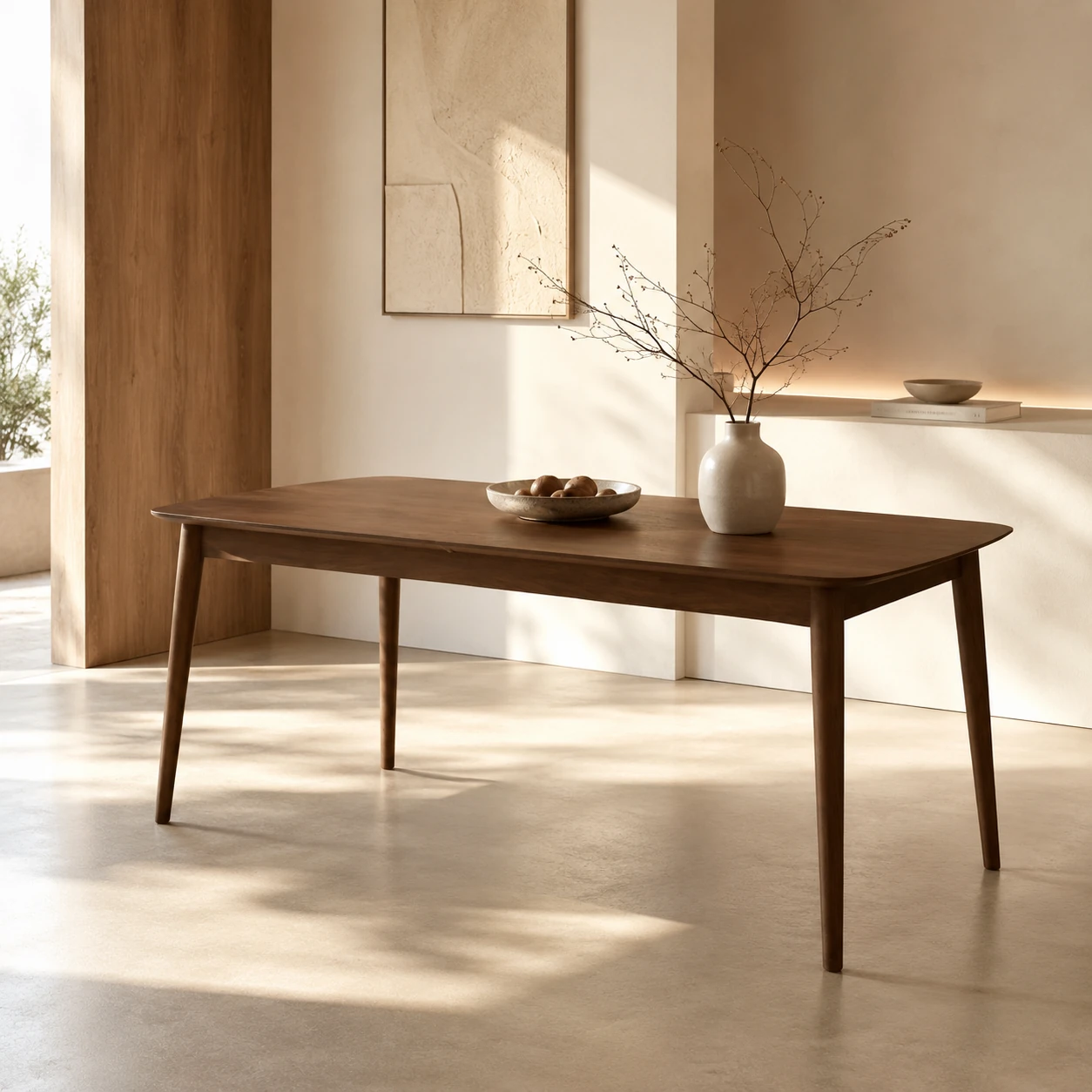
A Japandi dining table is not a Scandinavian table with a Japanese paint job. It is a table missing the things dining tables usually have: no apron, no carved legs, no visible hardware, no high-gloss finish. What remains is a wood top, a clean base, and the grain.
If you live in a 60 m² apartment in Berlin, Amsterdam, or Lyon and you searched for "Japandi dining table", you are probably looking for the same thing: a table that does not visually swallow a small room, that pairs with rattan-back chairs, and that will not look dated in four years. This guide covers how to find that table, which materials actually read as Japandi, and which sizes fit your space.
What makes a dining table actually Japandi
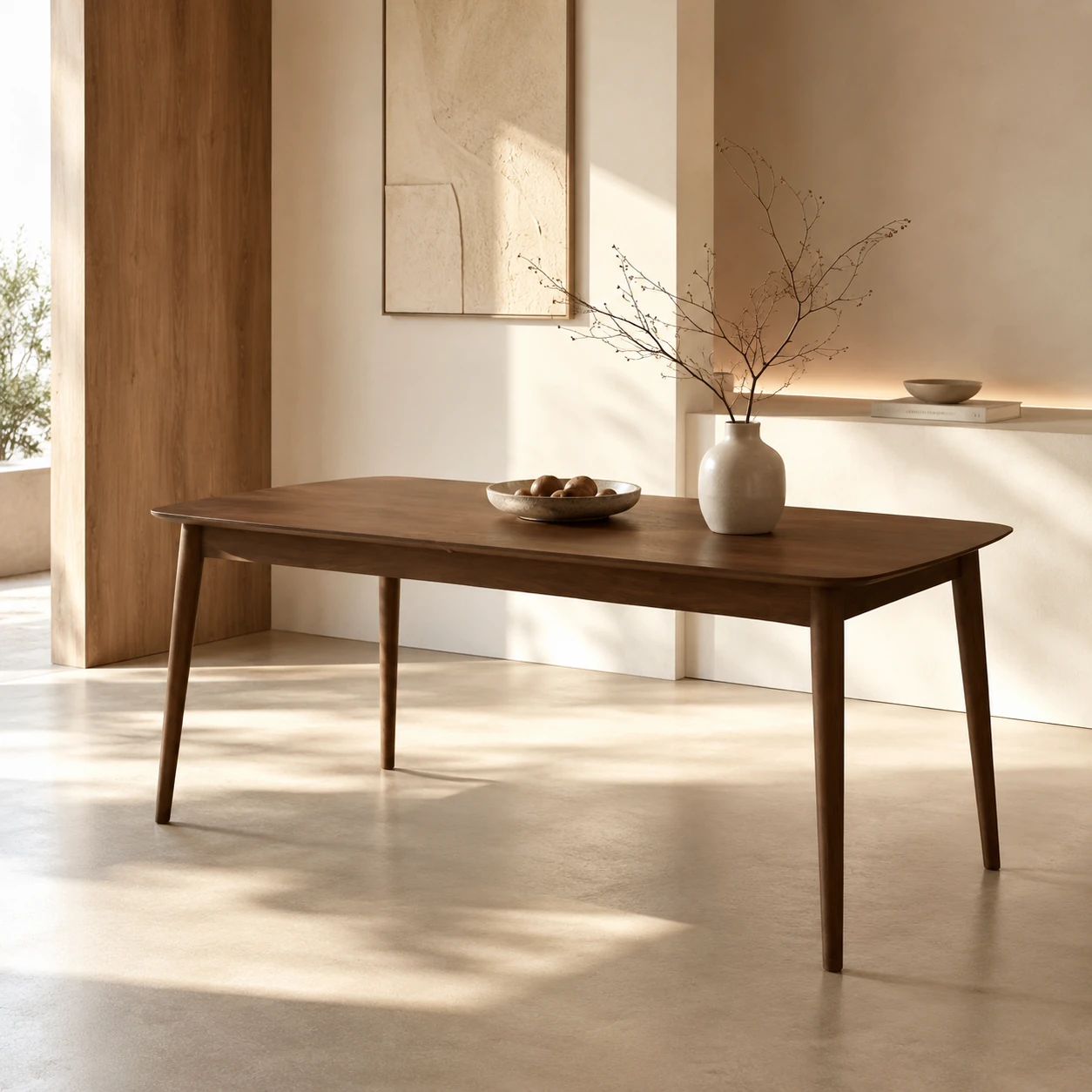
Japandi blends two traditions: the Scandinavian workshop heritage (Wegner, Mogensen) and the Japanese reduction principles of shibui and wabi-sabi. On a dining table that translates into four features every honest Japandi piece shares.
- Clean geometry: round, oval, or rectangular with softened edges. No carving, no edge profile.
- Concealed joinery: legs are mortised or bolted out of sight. Screws are hidden. No apron under the top.
- Quiet grain: white-oiled oak, natural ash, sometimes black-stained ash. Walnut sits at the edge of the style because it can read heavier than the language allows.
- Matt finish: oil or wax, never high-gloss lacquer. Lacquered surfaces reflect light in a way that breaks the calm Japandi wants.
Tables that meet all four read as Japandi. Tables that meet two or three read as Scandi-light. For more on the wider style, see our Japandi interior guide.
Three wood choices, three different rooms
The wood decision sets the mood of the room. The three main variants all share the Japandi geometry, but they tell different stories.
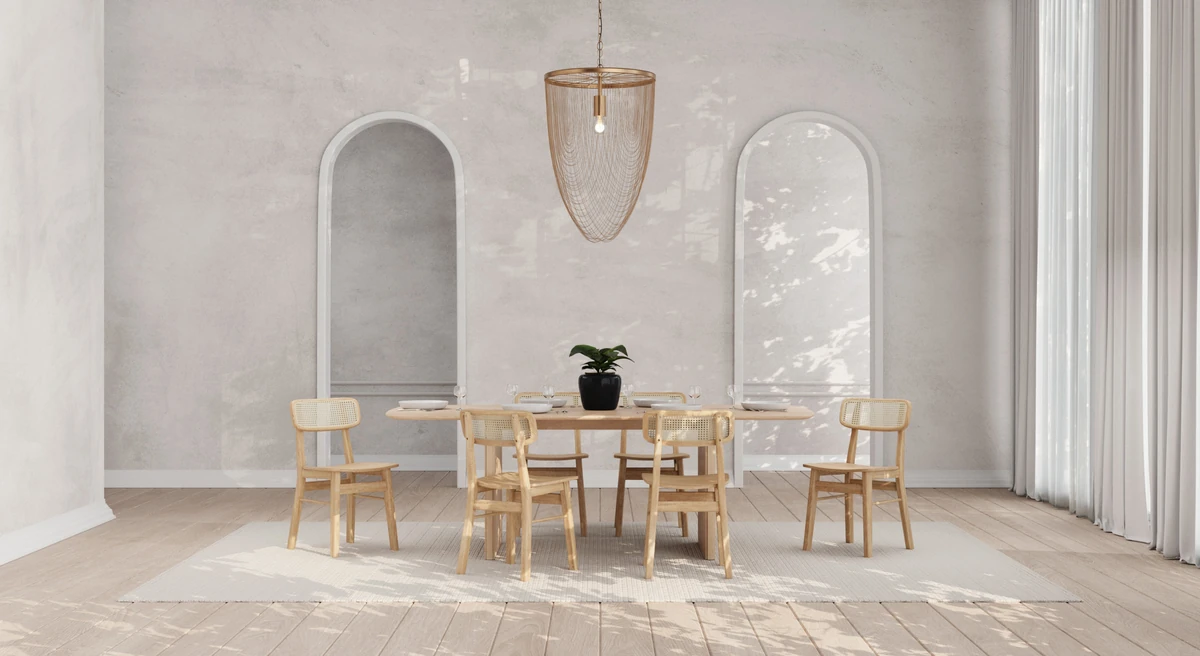
White-oiled oak
The safe-season choice. Makes even a 12 m² kitchen-diner read bigger and picks up window light without glare. Grain stays clearly visible, which keeps the surface interesting without making it the focal point.
Works with almost any chair. At Furnicher a 120 cm round table in this finish runs €699 to €799.
Black-stained ash
The more dramatic pick. Black-stained ash keeps the open grain of ash but reads as an architectural element in the room. Only works if walls and chairs are light; in a dark room it simply disappears.
Less forgiving of water rings than oak: the stain lightens when it bleaches. Oiling every 4 to 6 months is critical, not optional.
Natural ash
Lighter than oak with a more pronounced grain pattern. Reads younger and more overtly Nordic than the other two. Works when you already have a lot of light wood in the room and want a soft visual handoff.
Ash is harder than oak but scratches show more visibly because its grain has less depth for a small mark to hide in.
Featured in this guide


The size that actually fits your room
Japandi tables are often picked for small rooms: Berlin Altbau dining nooks, Paris pied-à-terre kitchens, Amsterdam canal-house dining zones. The sizes below assume the table sits centred with 90 cm clearance on the long sides.
| Shape & size | Seats | Room from |
|---|---|---|
| Round 100 cm | 4 | 8 m² |
| Round 120 cm | 4 to 5 | 10 m² |
| Oval 160 x 90 cm | 6 | 11 m² |
| Rectangular 140 x 80 cm | 4 to 6 | 10 m² |
| Rectangular 180 x 90 cm | 6 to 8 | 13 m² |
For a family of four in a city flat, the practical sweet spot is round 110 or 120 cm. That seats 4 daily, can stretch to 5 or 6 with a slight squeeze for a Sunday meal, and does not block circulation routes.
If you regularly host six or more, an extendable dining table pairs the Japandi profile with real flexibility.
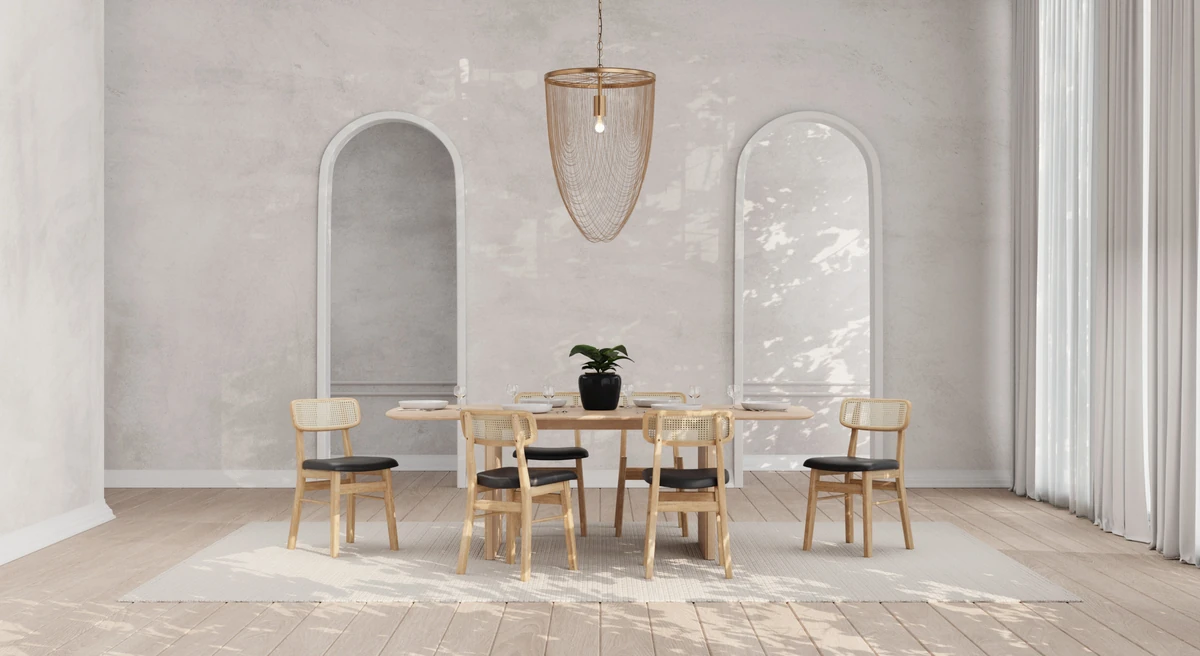
The three chairs that work with this table
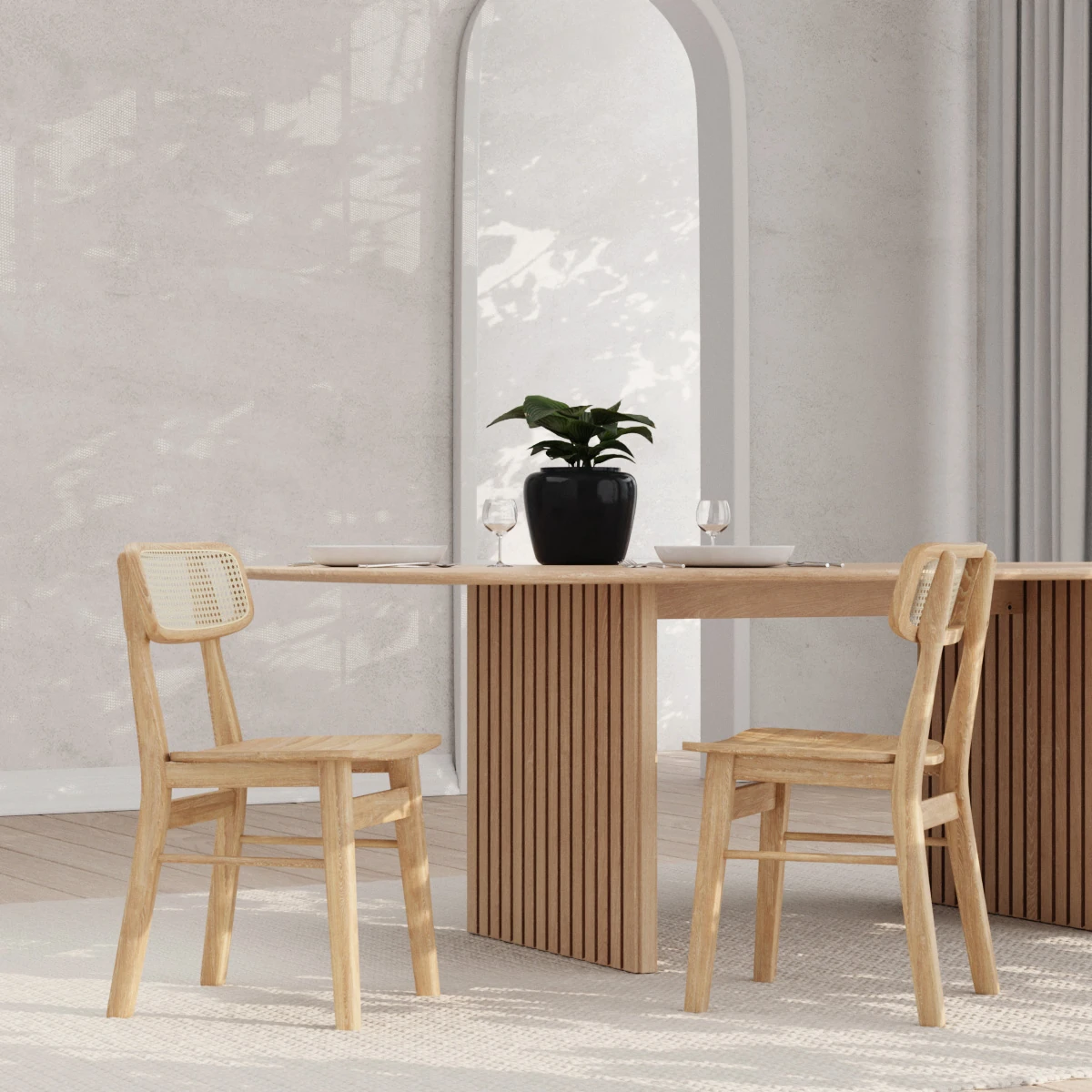
The chair decision is the second half of the table choice and often decides whether the room reads Japandi or just unfinished. Three chair types pair reliably.
Cane-back or rattan-back chairs: the classic. Light wood frame with a woven back panel adds texture without visual weight. Seat height 45 to 47 cm pairs with table height 75 to 78 cm. See our rattan chair guide.
Black-stained ash chairs: sets a contrast against a light table. Slim profiles, woven or thin-padded seats. Avoid models with pronounced back curves; Japandi wants straight lines.
Light bouclé upholstered chairs: the warmer option for households where long meals happen. Cream or light grey bouclé over a slim wood or metal frame. Skip velvet here, which reads too opulent.
For the full range, see the dining chairs buying guide.
Find the right Japandi table for your space
White-oiled oak, black-stained ash, round and oval shapes. Prices from €399 to €1,200.
Every table ships with the measurements you need to check against your room before ordering. Free delivery and free returns across the EU. Klarna available to split the payment.
Browse all dining tables at Furnicher. For the full style framework, read the dining tables buying guide.
Quick answers.
What defines a Japandi dining table?
Light oak or black-stained ash, clean geometry, no apron, no carving, no visible hardware. Often round or oval, sometimes rectangular with softened edges. Slim legs or a column pedestal. Standard 75 to 78 cm height to pair with regular dining chairs at 45 to 48 cm seat height.
What size Japandi table works for 4 people?
A round Japandi table 110 to 120 cm in diameter seats 4 and fits rooms from 9 to 10 m². Rectangular: 140 by 80 cm. In small city flats, round usually wins because it carries less visual weight and has no sharp corners for children to walk into.
Which chairs go with a Japandi dining table?
Cane-back, rattan-back, or slim wooden chairs work best. Seat height must be 45 to 48 cm. Black-stained ash chairs against a light oak table give the typical Japandi contrast. Avoid bulky upholstered chairs and anything with visible screws or chrome details.
Light or black Japandi table?
A light table (white-oiled oak, natural ash) makes a small room read bigger and is the safe pick if your chairs are darker. Black-stained ash reads focused and pairs with light chairs and cream walls. When in doubt: pick light, because light suits almost any later interior change.
How do I care for an oiled Japandi table?
Wipe spills immediately. Every 6 months apply a thin coat of hardwax oil or pure linseed oil with a soft cloth, let it absorb for 30 minutes, wipe off excess. Use trivets under hot dishes. Sand surface scratches with 240-grit in the grain direction and re-oil.
How much does a Japandi dining table cost?
At Furnicher, Japandi dining tables range from €399 to €1,200 depending on size and solid-wood content. Veneered MDF starts at €299. Solid oak or black-stained ash starts at €599. A 120 cm round table in solid oak typically costs €699 to €899.
