 9800+ TRUSTPILOT REVIEWS


 EN
EN DE
DE FR
FR NL
NL
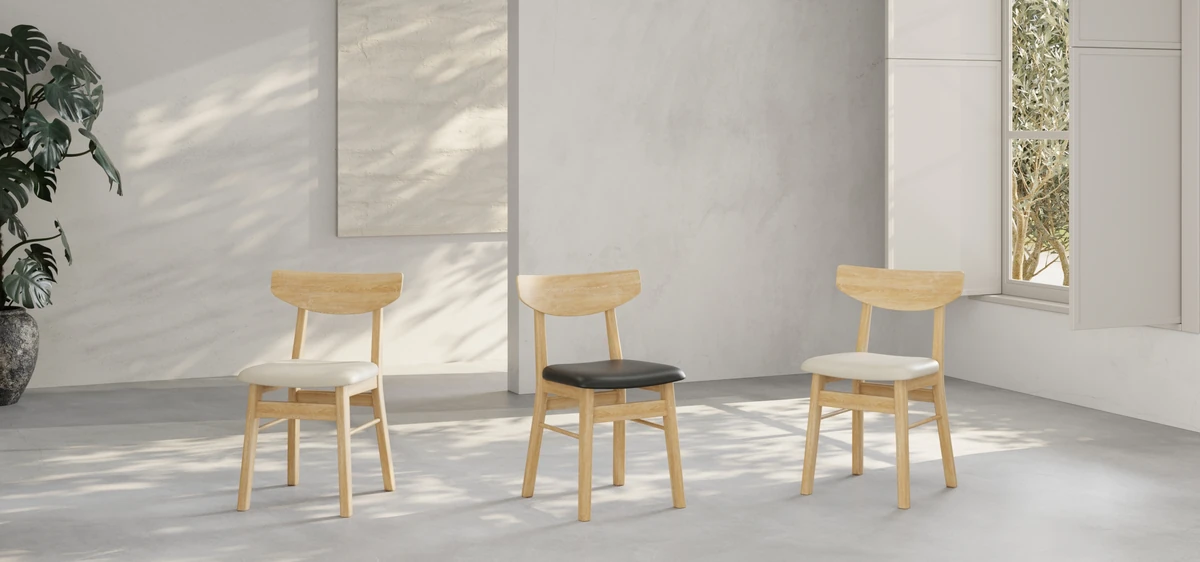
Japandi is the considered cross of two traditions that already had a lot in common. Japanese interiors had been pursuing restraint, craft, and asymmetry for centuries. Scandinavian interiors had been pursuing warmth, light, and functional furniture for a hundred years. Around 2016, designers stopped pretending the two were separate and gave the overlap a name.
This guide explains what Japandi actually is, where the term came from, the five principles that repeat in every credible example, the real differences between the Japanese and Scandinavian halves of it, and how to apply Japandi to a real home without ending up with a generic Pinterest interior.
Where Japandi came from
Japan and the Nordic countries have been quietly influencing each other for over a century. Danish designers travelled to Japan in the 1950s and brought back details that show up in Børge Mogensen and Hans Wegner chairs. Japanese architects of the same era studied Scandinavian functionalism. The overlap was always there.
The term "Japandi" entered interior design vocabulary around 2016, mostly through UK and Australian design blogs. By 2018 it had a Pinterest board and a recognisable visual language. The 2020 to 2022 period (when many people redid their homes during lockdowns) cemented it. By 2026 it has stopped being a trend and started being a recognisable category, the way "mid-century modern" or "industrial" stabilised in earlier decades.
The shared roots are honest: both cultures put a premium on craft over decoration, on materials over branding, and on a room that can be lived in for decades.
What every Japandi room shares
Strip away the Pinterest gloss and Japandi rests on five repeating principles. A room that hits all five reads Japandi. Hit three and the room reads Scandinavian with Japanese influence, which is also a perfectly good destination.
Visible craft
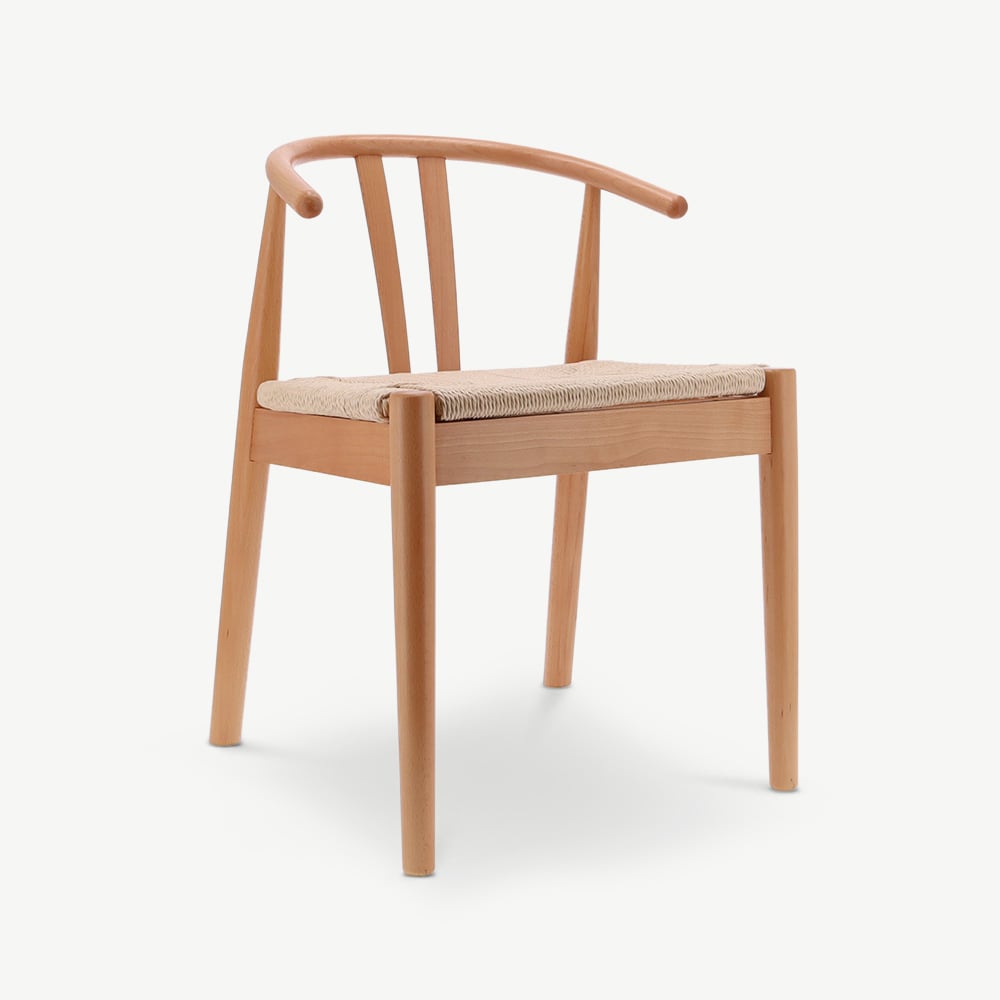
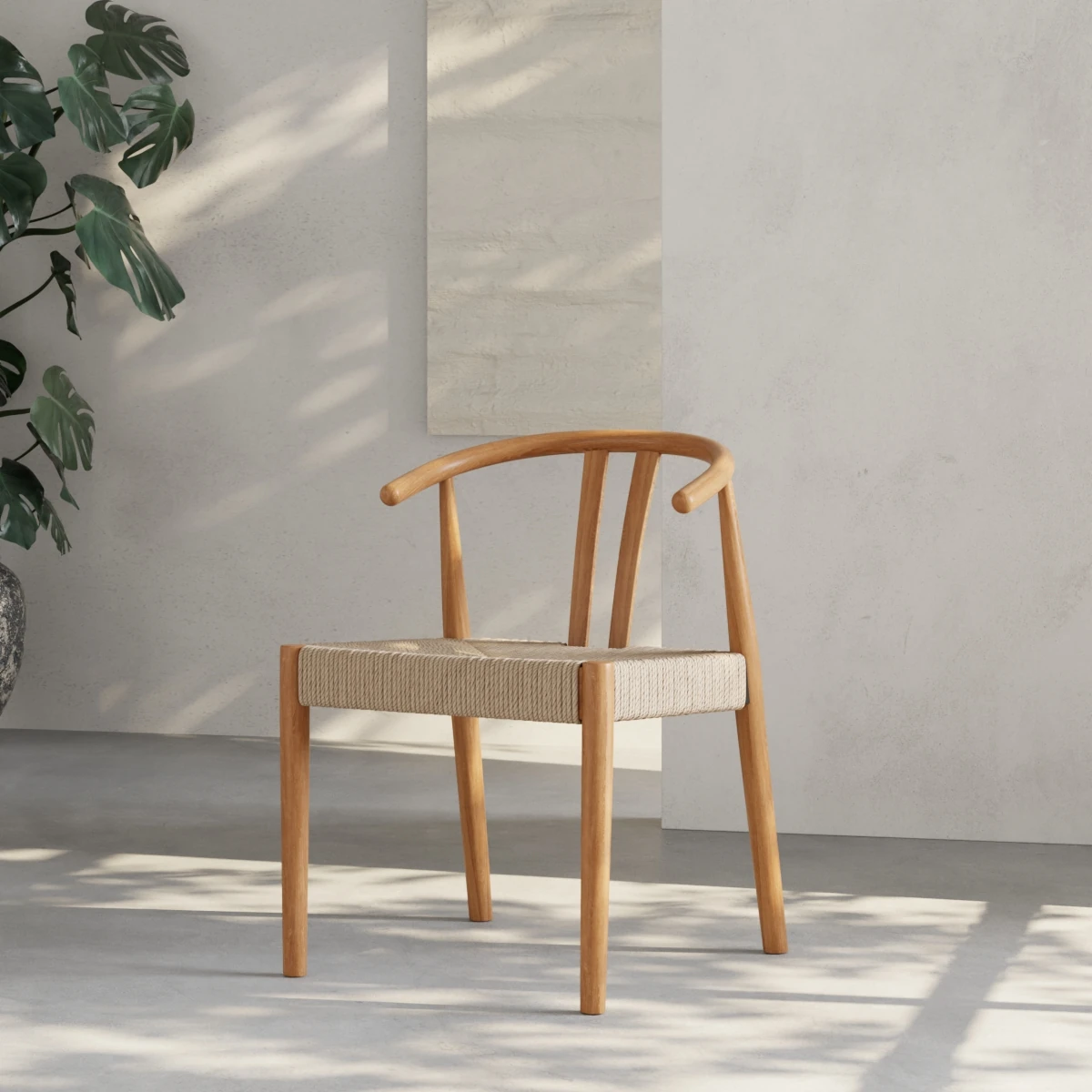
Mortise and tenon joints left visible. Dovetails on drawer fronts. Hand-woven seat panels with their irregular tension showing. The room asks you to notice how things are made, not how they are styled.
Natural materials
Solid oak or ash, rattan, paper cord, linen, cotton, terracotta, soapstone. Synthetics are not banned but earn their place by function (a wool-blend rug that handles spills better than pure wool, for instance).
Muted palette plus one anchor
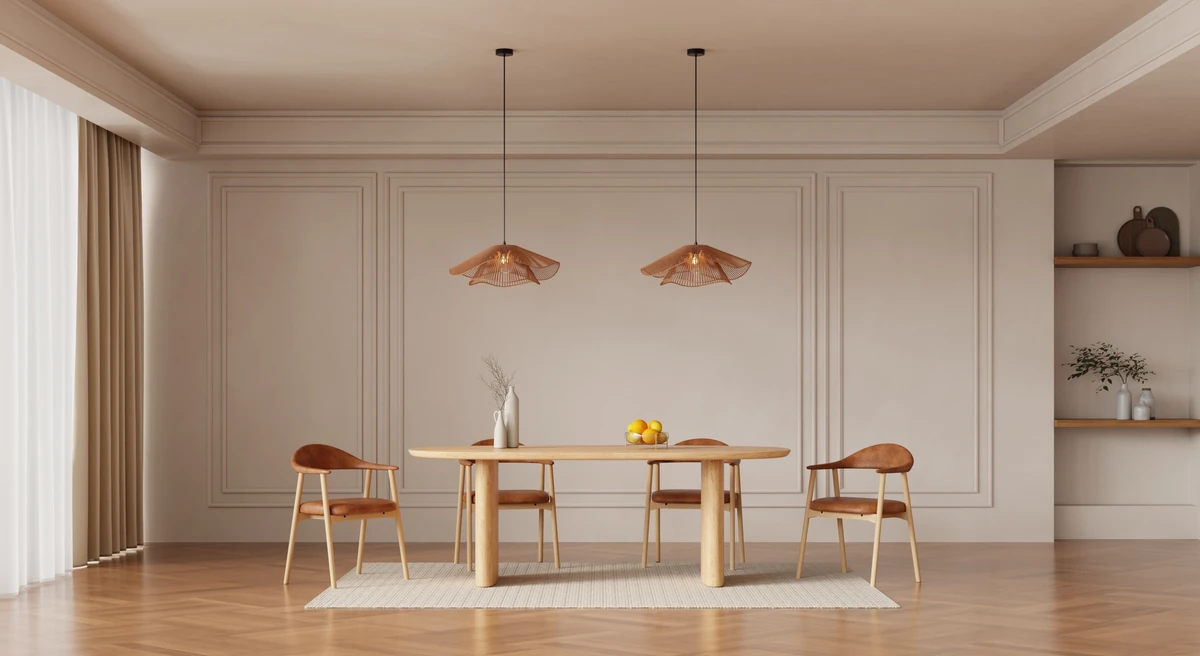
Off-whites, sand tones, warm grey, one light wood, and a single dark anchor (black metal, smoked oak, dark stoneware). Pure white reads too Scandinavian; the dark anchor is what tips a room from Scandi into Japandi.
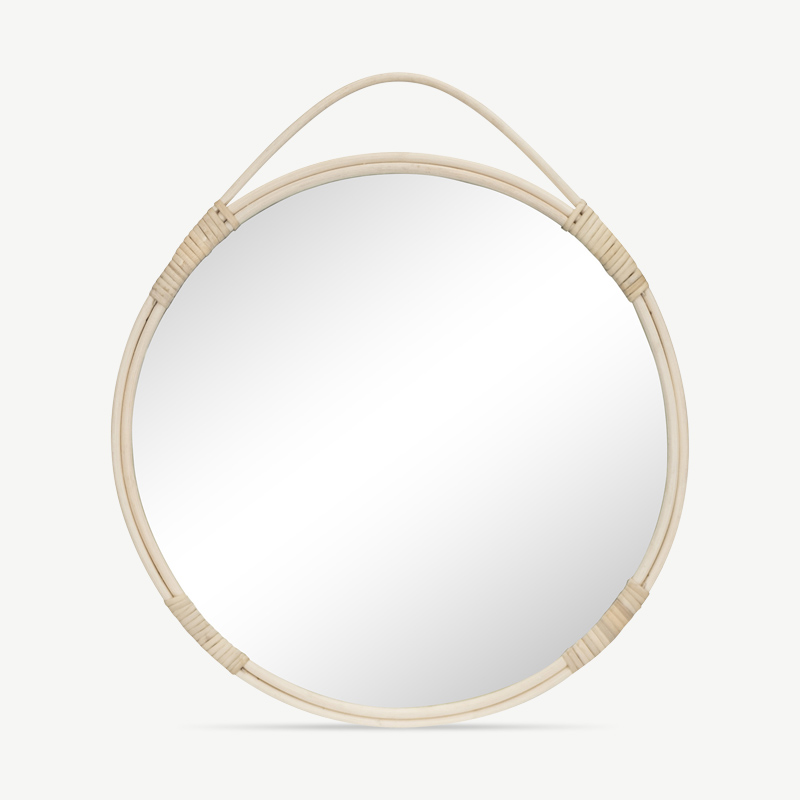
Featured in this guide


Where the two traditions diverge
Japandi is often described as "Scandinavian with a Japanese accent" but that under-sells the differences. Five tests separate a Japandi room from a Scandinavian one when both are sitting in front of you.
| Trait | Scandinavian | Japandi |
|---|---|---|
| Wood tone | Light (oak, birch, pine) | Mixed light and dark (smoked oak, ash) |
| Layout | Symmetrical, centred | Deliberately asymmetric |
| Furniture height | Standard EU heights | Lower sofas and tables |
| Pattern use | Folk motifs, soft geometric | Plain surfaces, one accent at most |
| Mood | Friendly, hyggelig | Quiet, contemplative |
The simplest test: a Scandinavian room invites you in for coffee; a Japandi room invites you to sit quietly. Both rooms can use the same furniture brands, the same materials, even the same colours. What separates them is the second layer: the asymmetric arrangement, the one black anchor, the lower sitting height, the rejection of pattern.
How to do Japandi in a real home
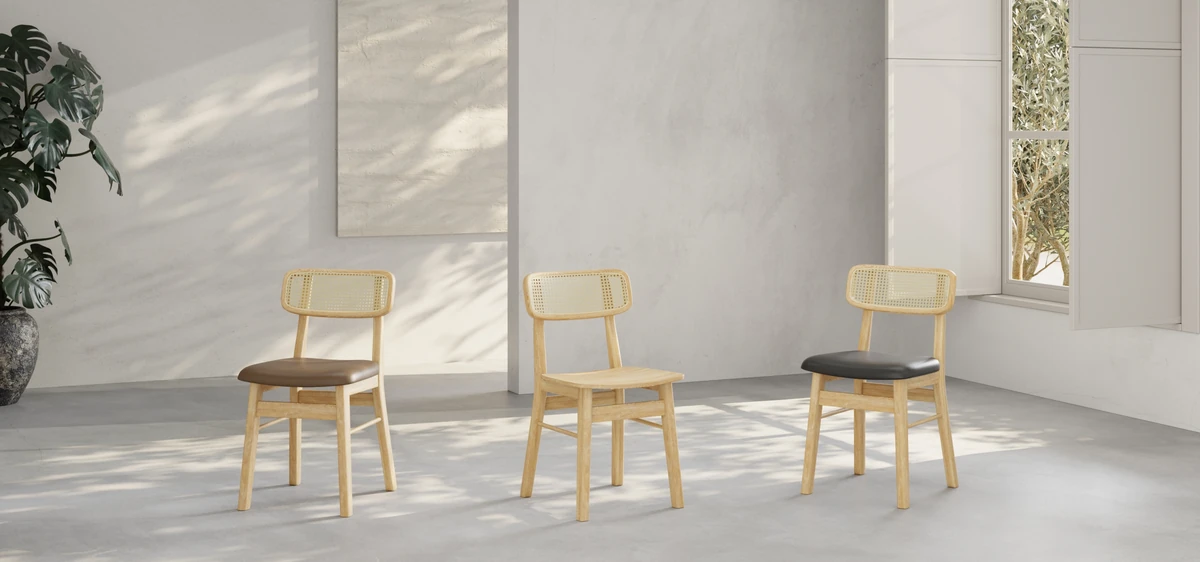
Most Japandi rooms on Pinterest are styled for a photograph, not for a real life. Four habits separate a Japandi room you can actually live in from a Japandi mood board you cannot.
Furnishing a Japandi home
Pick three rooms, not the whole house, and start with seating.
Most Japandi interiors are built room by room over six to twelve months. Living room first (sofa, coffee table, one accent chair), dining room second (table, four chairs plus a bench), bedroom third (low bed, side table, paper-shade lamp). The hallway, bathroom, and kitchen can stay closer to neutral and still read as the same house.
Browse our Japandi collection for pieces that are already coordinated. For the seating side, read Japandi chairs and Japandi armchairs. For specific room layouts, see Japandi living room furniture. For French-apartment specifics, read Japandi decoration.
If you are also weighing Scandinavian as an alternative, our Scandinavian furniture guide covers the ground that overlaps. For the dining-side of Japandi, the dining chairs guide is the cross-cluster start.
Frequently asked.
What is Japandi style?
Japandi is an interior style that combines Japanese principles of restraint, craft, and asymmetry with Scandinavian warmth, light, and functionality. It uses natural materials (light solid wood, rattan, linen, paper, stone), a muted palette of off-whites, sand tones, and one dark anchor, and a low-profile furniture line that leaves significant floor space open.
When did Japandi originate?
The term Japandi was coined around 2016 to 2018 by interior magazines and design blogs that noticed a recurring crossover between Japanese and Scandinavian aesthetics. It is not an academic style. It is a name applied to a long-running affinity between two traditions that share minimalism, craft respect, and a preference for natural materials.
What are the key principles of Japandi?
Five principles repeat: visible craft over surface decoration, natural materials over synthetics, a muted neutral palette with one dark anchor, intentional negative space (at least 40% of the floor stays visible), and asymmetric arrangement rather than mirror-image symmetry.
What is the difference between Japandi and Scandinavian?
Scandinavian style is brighter, more symmetrical, and uses lighter woods (oak, birch). It prioritises function and hygge. Japandi takes the same base but darkens it slightly (smoked oak, ash, black metal accents), arranges pieces asymmetrically, and embraces visible imperfection from the Japanese wabi-sabi tradition. A Scandinavian room reads friendly; a Japandi room reads quiet.
What is the difference between Japandi and wabi-sabi?
Wabi-sabi is a Japanese philosophy of finding beauty in imperfection, impermanence, and incompleteness. It informs Japandi but is not the same thing. Japandi is a contemporary interior style influenced by wabi-sabi (and by Scandinavian functionalism). Wabi-sabi is a way of seeing; Japandi is a way of furnishing a room.
Is Japandi expensive?
Not necessarily. Because Japandi favours fewer pieces in a room, the total furniture spend is often lower than for a fully-furnished traditional living room. The pieces themselves are often mid-priced (€100 to €400 for chairs, €500 to €1,200 for sofas), with most of the visual quality coming from material choices (real wood, natural fibres) rather than expensive brand names.
