 9800+ TRUSTPILOT REVIEWS


 EN
EN DE
DE FR
FR NL
NL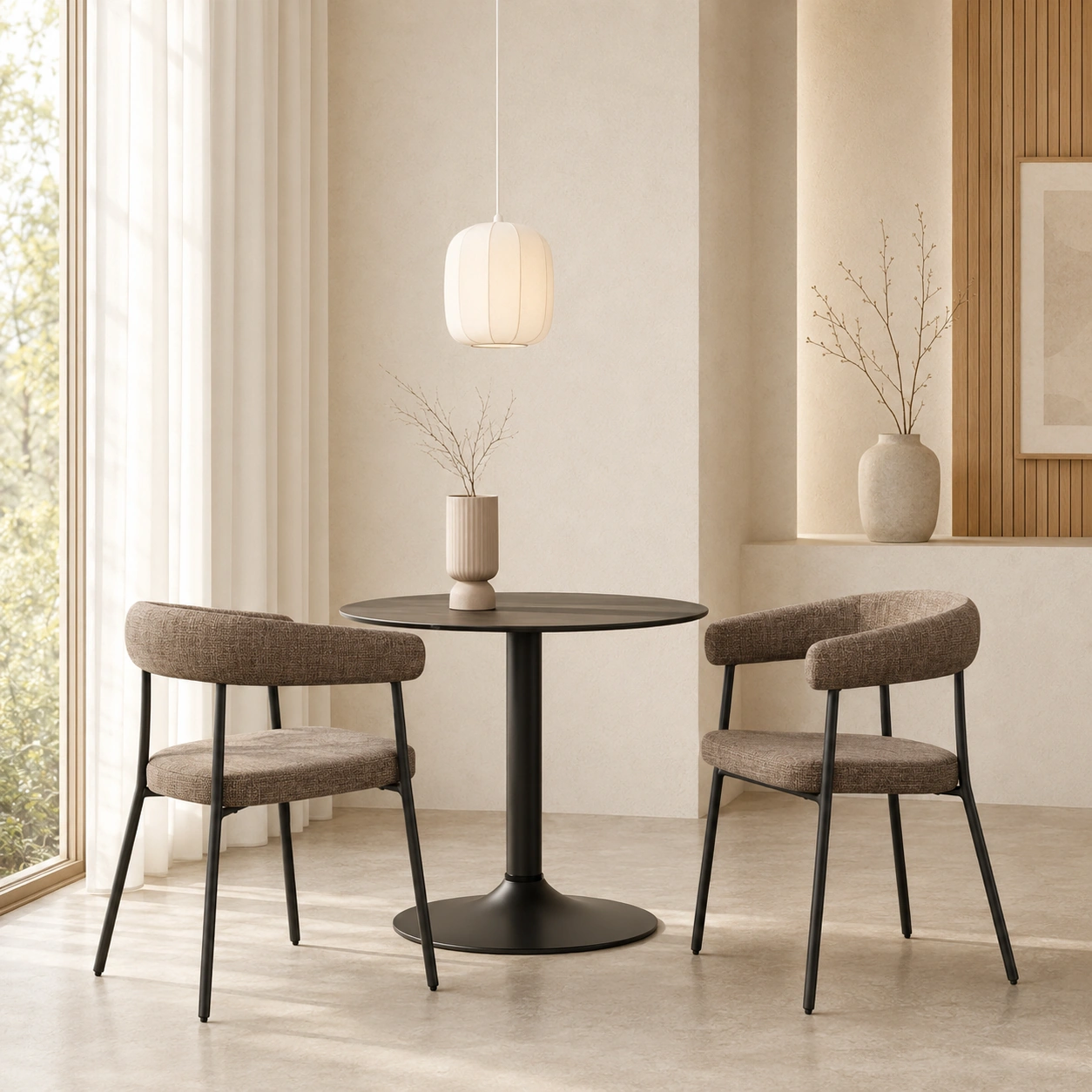
The armchair is the anchor piece in a Japandi living room. The sofa takes up the floor area, the coffee table holds the centre, but the armchair carries the material statement of the room. A rattan chair tips the room toward Japan; a bouclé chair tips it toward Scandinavia; a cognac leather chair brings the dark anchor.
This guide explains what makes an armchair Japandi, which four materials work, the form and seat height that fit a typical living room, where the chair should sit in the room, and which specific Furnicher models hit the definition.
What defines a Japandi armchair
Four traits show up in every Japandi armchair. Miss one and the chair reads Scandinavian, mid-century, or a comfy wing chair without a clear style reference.
- Low to mid back: overall height 75 to 85 cm. Standard EU armchairs sit at 95 to 110 cm, which reads too tall beside a Japandi sofa.
- Light frame: exposed wood or black metal, slim legs (15 to 25 mm). The chair looks like it could be lifted, even if it does not have to be.
- Natural-material upholstery: bouclé, linen, rattan, or oiled leather. No button-tufting, no decorative welts, no upholstery tacks.
- One sitting position: not built for lying down. A Japandi armchair is meant for 30 to 90 minutes of seated use, not a full film evening. That is the sofa's job.
The most common confusion: a high-back Scandinavian chair with a wooden frame often gets sold as Japandi, but it is too large for the style. Seat height and overall height are the reliable tests.
Which chair for which room
Three materials work in most Japandi living rooms. They tip the room in different directions, which is useful when the sofa is already in place and the chair has to balance what is left.
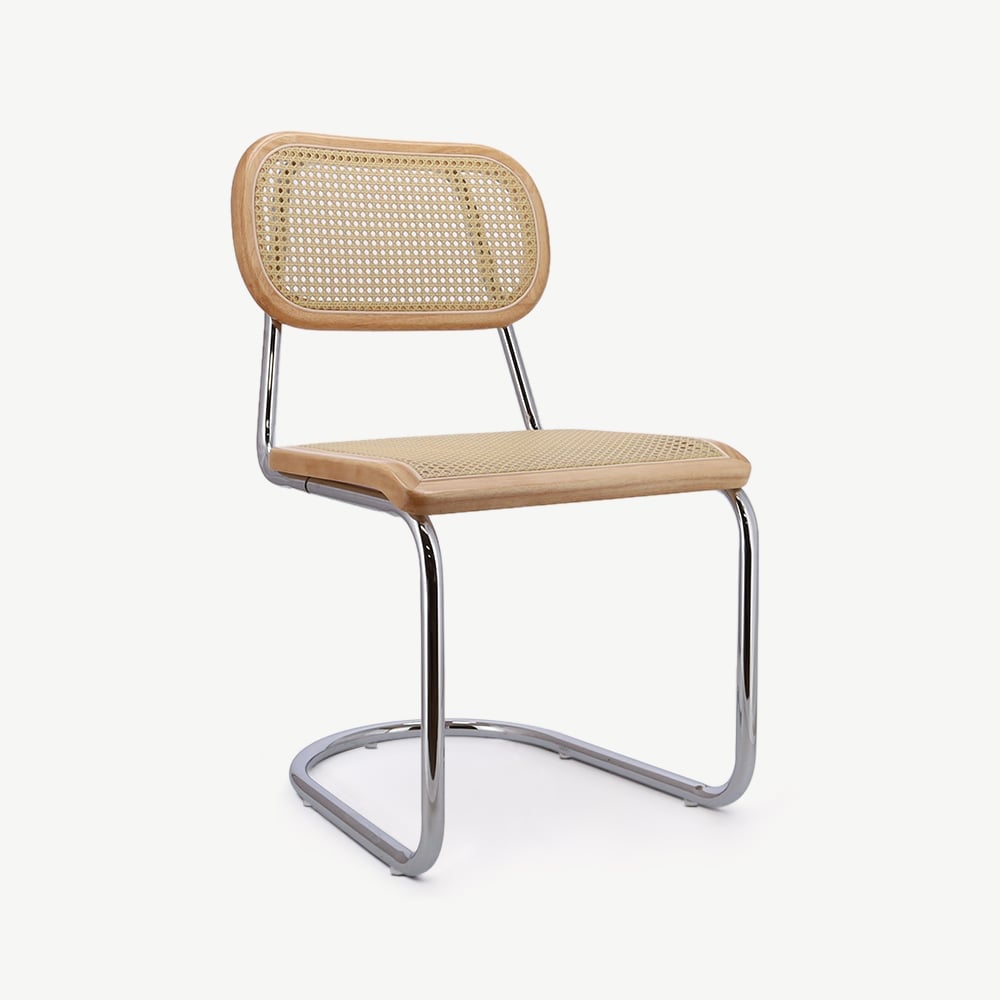
Rattan armchair
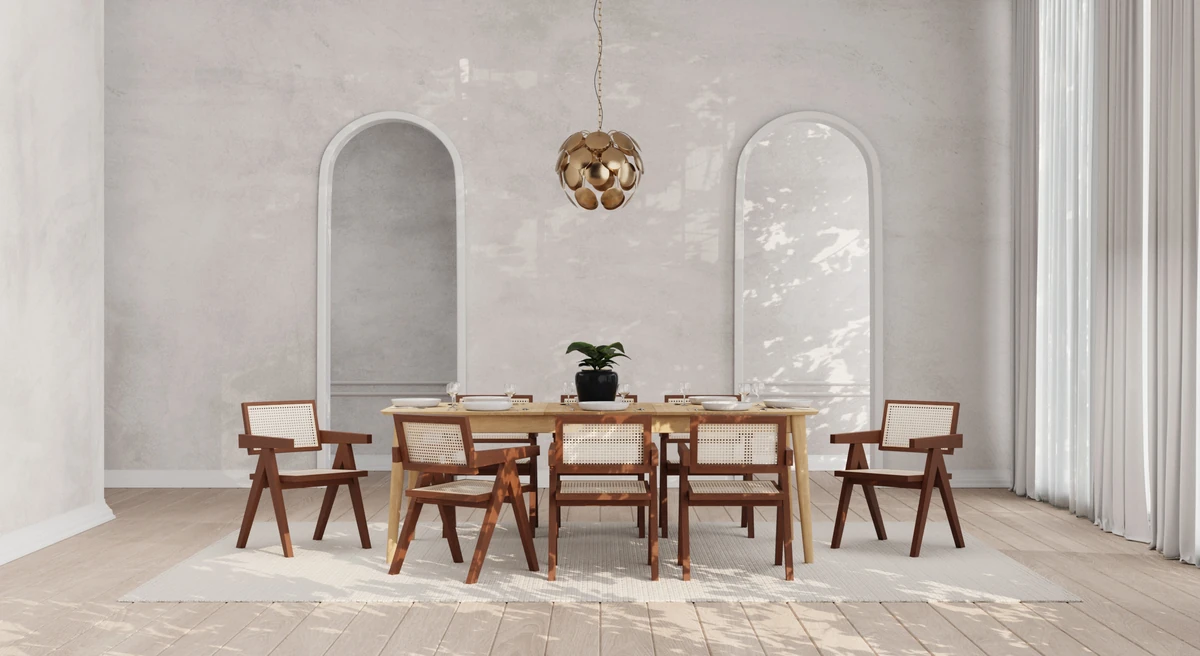
Oak or ash frame, woven rattan back, thin seat cushion. Brings natural-fibre texture without adding textile upholstery. Works best in a room with a linen sofa and a small wool rug.
Pick: Noor Rattan Cantilever in natural with chrome foot.
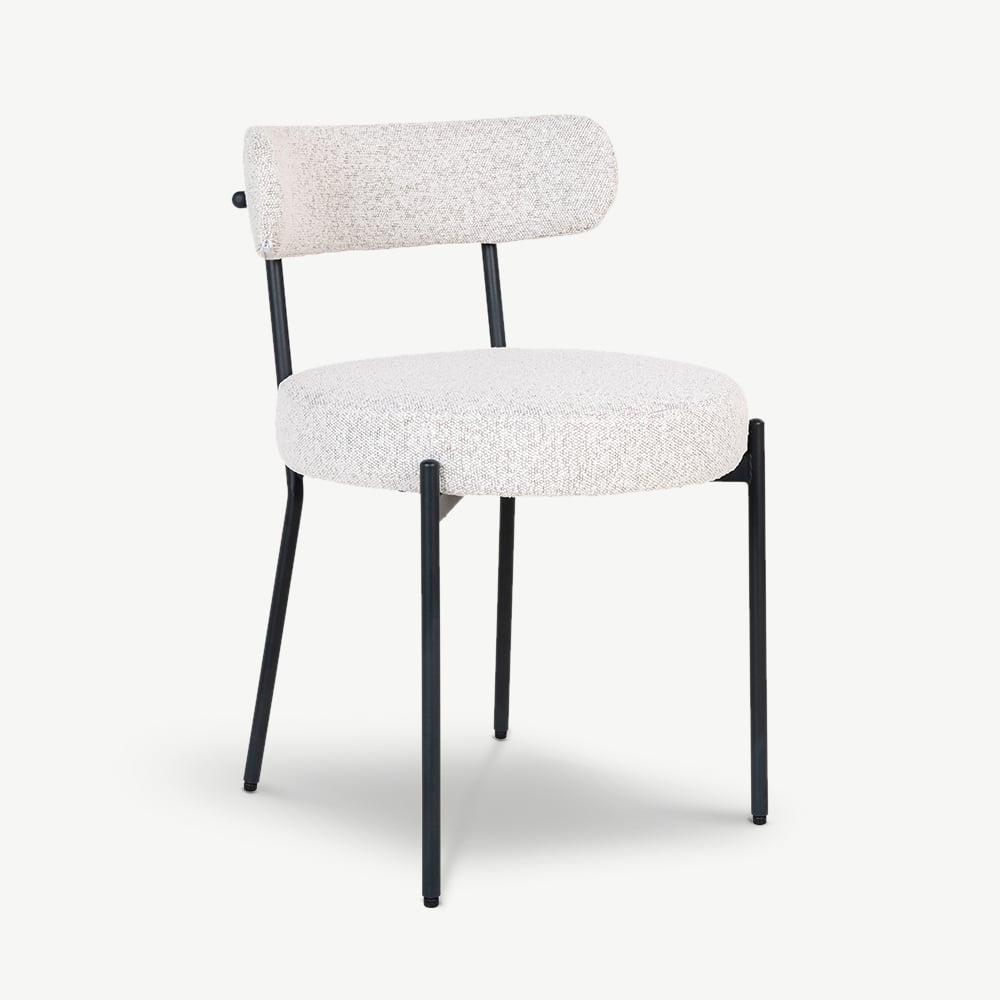
Bouclé armchair
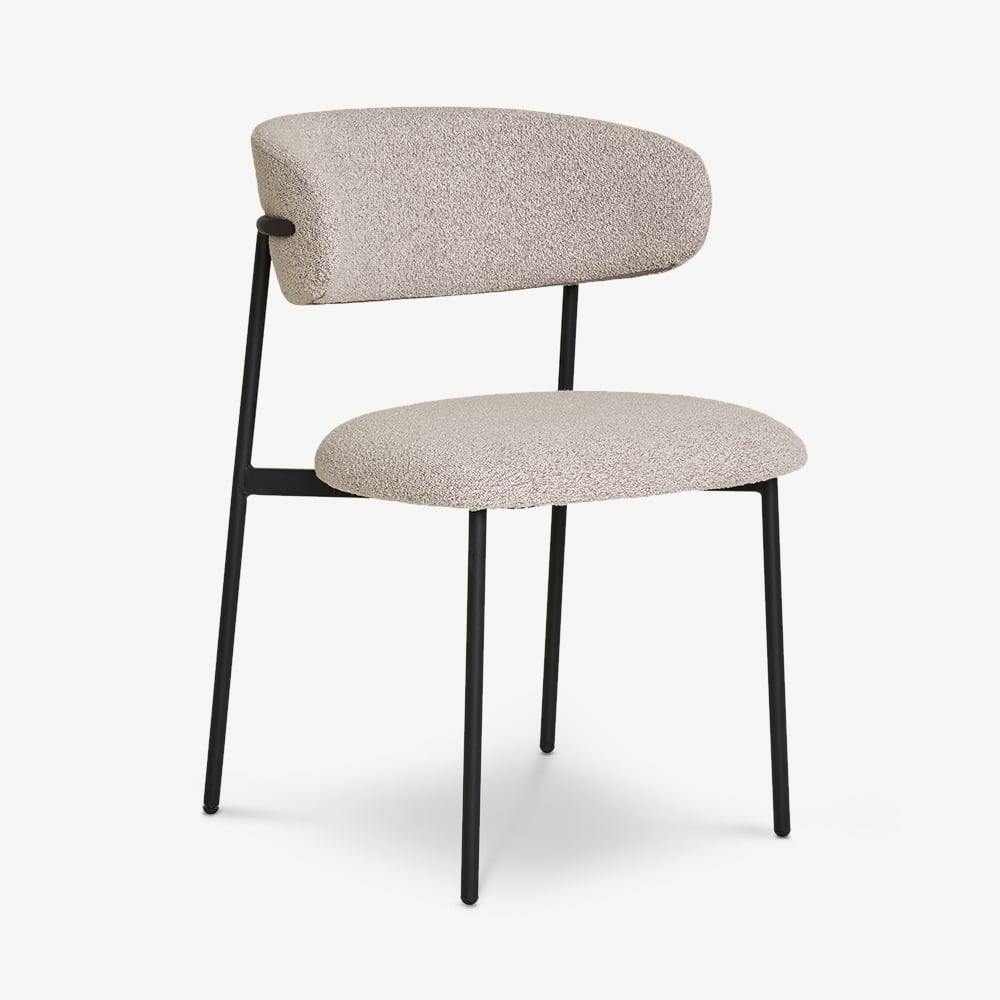
Bouclé upholstery (loosely looped wool weave) in wool white, sand, or light grey. Brings softness into a room that could otherwise read too hard. Care: a soft brush vacuum head, every two weeks.
Pick: pairs well with a leather sofa or a linen sofa.
Leather armchair
Cognac or black oiled full-grain leather over a slim wood frame. Brings the dark anchor every Japandi living room needs in one piece. Lasts 20 years and develops patina.
Pick: in rooms with a too-light sofa, used to balance.
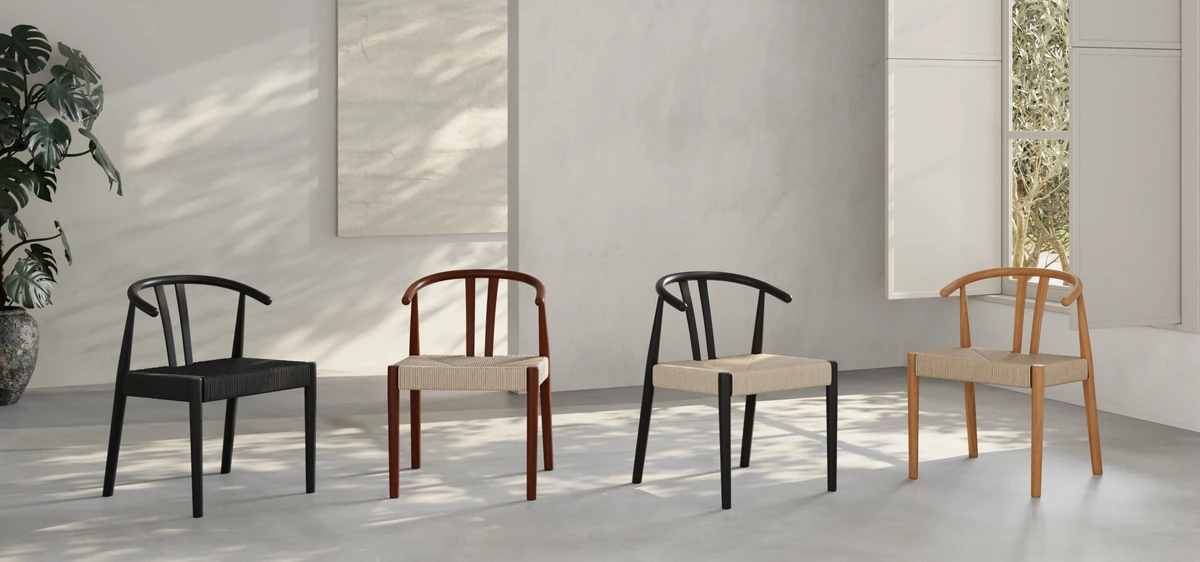
Featured in this guide


Where the armchair sits
The most common misplacement: two matching chairs flanking the sofa or facing it with a side table between them. That reads as a hotel lobby. A single chair in a corner, next to a low side table (40 to 45 cm tall) and a paper-shade floor lamp, is the standard Japandi arrangement.
Three rules from 80+ Furnicher deliveries to living rooms:
- Distance from the sofa: 50 to 90 cm. Closer reads cramped, further reads isolated.
- Rotation: 15 to 30 degrees toward the sofa, not parallel. Easier conversation.
- Side table: always present, always lower than the chair's armrest (typically 40 to 45 cm).
In tall-ceiling apartments the chair can float in the room (1.5 to 2 m from the sofa) if the living room is at least 22 m². In new-build flats under 20 m², the corner is almost always right.
Which chair fits
It depends on what is already in the room.
With a linen sofa: a rattan chair or a leather chair. With a bouclé sofa: a wood-and-rattan chair that adds the texture. With a dark sofa: a wool-white bouclé chair as the light point. That logic drives the choice more than personal taste.
Browse our Japandi living collection. Armchairs start at €199 (rattan), €349 (bouclé), €499 (leather). All coordinated with the collection's sofas.
For the sofa next to it, read Japandi living room furniture. For dining seating: Japandi chairs. For the style from the start: what is Japandi style. For the Scandinavian backdrop: Scandinavian furniture guide. For how the armchair fits the whole room, see our Japandi interior guide.
Frequently asked.
What makes an armchair a Japandi armchair?
A low to mid back (75 to 85 cm overall height), a light wood or metal frame, upholstery in bouclé, linen, rattan, or oiled leather, and no button-tufting or decorative trim. The chair typically sits in a corner of the living room rather than centred.
What materials work for a Japandi armchair?
Four work well: bouclé (most common, in sand or wool white), natural linen, rattan (for the strictest Japandi form), and cognac or black oiled leather as the dark anchor in the room. Two-material combinations are fine: wood frame with linen seat, metal frame with bouclé.
What seat height should a Japandi armchair be?
40 to 45 cm seat height, slightly lower than a standard EU armchair (47 to 50 cm). That matches the low line of a Japandi living room where the sofa sits at 38 to 42 cm. Taller armchairs read as accidentally added next to a Japandi sofa.
Where should a Japandi armchair go in the room?
Not centrally. The classic placement is a single chair in a corner, beside a small side table and a paper-shade floor lamp. This asymmetry is part of the Japandi logic: a pair of matching armchairs with a side table between them reads Scandinavian or hotel-lobby, a single chair in a corner reads Japandi.
What does a good Japandi armchair cost?
A good Japandi armchair sits between €249 and €599. Below that, manufacturers usually compromise on foam quality and chipboard frames that sag in three to five years. Furnicher rattan chairs start at €199, bouclé from €349, leather from €499.
