 9800+ TRUSTPILOT REVIEWS


 EN
EN DE
DE FR
FR NL
NL
Japandi rooms are built from eight materials, not eighty. Two woods (one light, one dark), two textiles (linen, boucle), one woven plant fibre (rattan), one paper, one ceramic, one stone. Every piece in a Japandi room belongs to one of these eight families. Materials outside the list pull the room toward another style.
This guide covers each of the eight materials, why it belongs, how to combine them, and the texture-over-pattern principle that holds the palette together. The goal is to give you a buying filter you can use in the shop: if it is not one of these eight, you do not need it.
Texture beats pattern, always
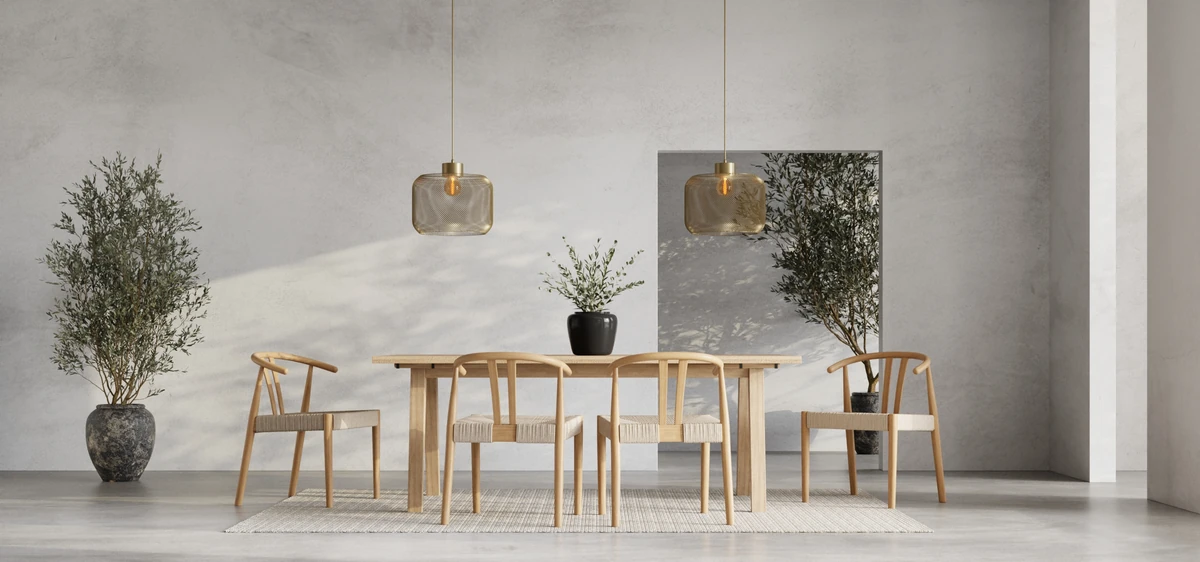
The single rule that holds the Japandi material palette together: the visual interest comes from texture, not pattern. A linen sofa reads as linen because the weave is visible at arm's length. A rattan chair reads as rattan because the over-under structure of the cane catches light. A ceramic vase reads as ceramic because the thrower's marks remain on the surface.
Pattern, by contrast, is graphic. Stripes, florals, geometric prints. Japandi rooms allow almost none of it. The exception is the natural pattern that materials themselves produce: wood grain, the texture of a flat-weave rug, the irregularity of a hand-thrown bowl. These are textures, not patterns, even though they create visual variation.
- In: wood grain, weave, knots, glaze irregularities, stone veining
- Out: printed graphics, geometric repeats, floral prints, bold stripes
- Edge case: a single hand-drawn ink work on paper is allowed; framed colour photography usually is not
What belongs in a Japandi room
Each material has a default role. Some carry the bulk of a room (wood, linen). Others appear in small doses for craft and contrast (paper, ceramic, stone). All eight share natural origin and low visual saturation.
Light wood
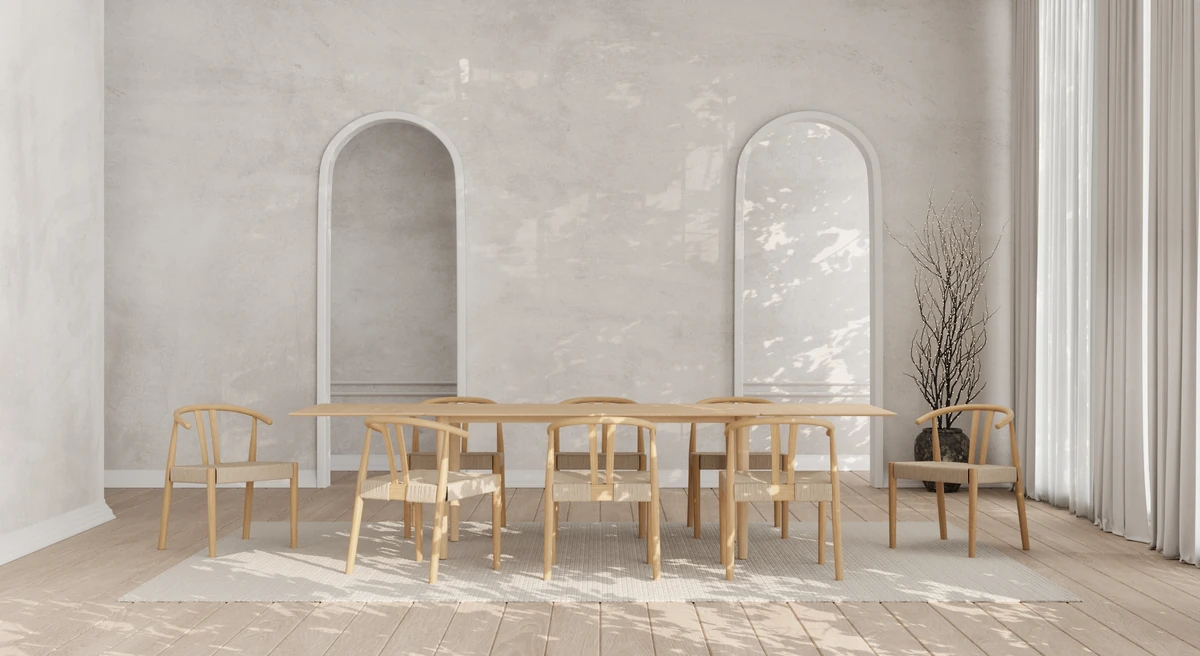
The base. Oiled oak is the safest choice for floors, dining tables, and chair frames. Ash and beech behave similarly. Avoid lacquered or high-gloss finishes; the wood needs to read as wood, not as a surface.
Dark wood
The Japanese half of the wood palette. Smoked oak (oak treated with ammonia, not stain) or walnut. Used on a side table, a stool, a shelf, or a single dining chair against a lighter floor.
Linen
The default upholstery. Unbleached natural, oat, soft black. The weave should be visible. Wash-shrinks and softens over time, which is the point. Heavy-weight linen wears at 8 to 15 years on a sofa.
Boucle
Looped wool or wool-blend yarn that reads more textured than linen. Works well on a single accent chair or a throw, not on a whole sofa (the loops snag on belt buckles and pet claws).
Rattan
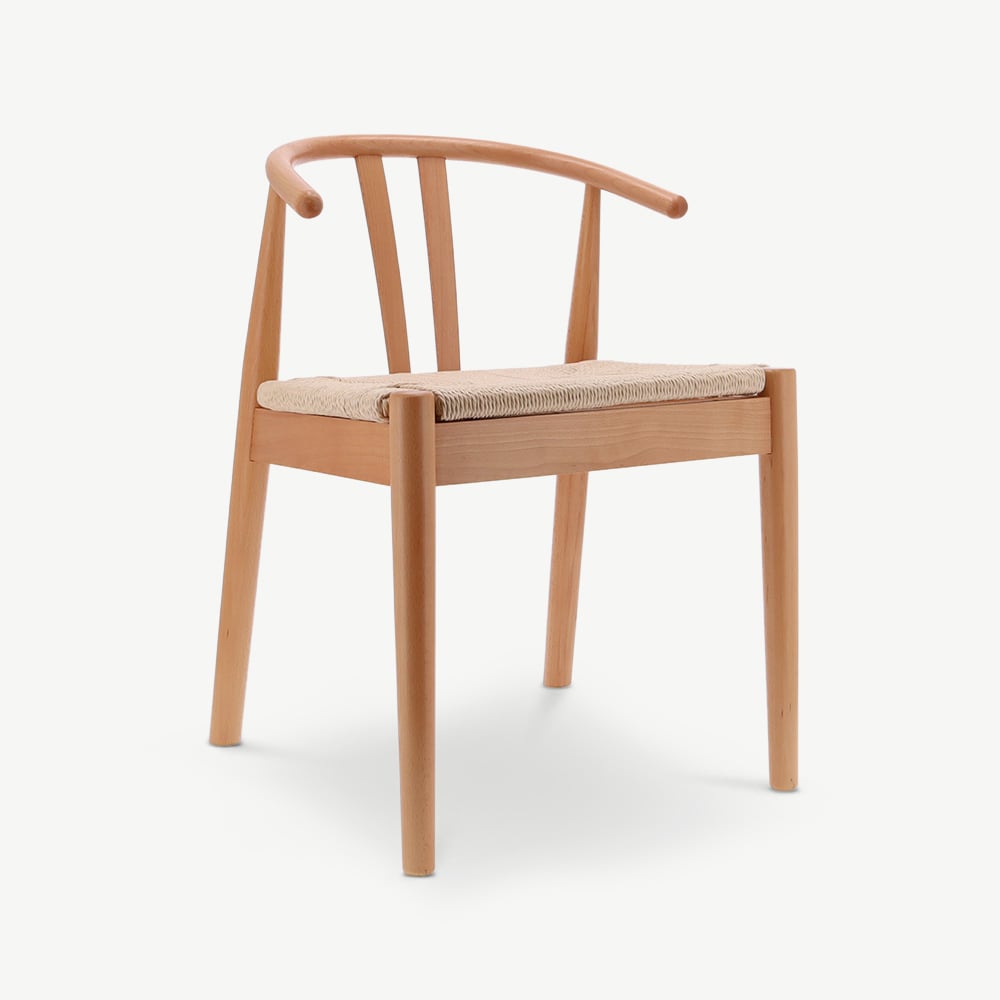
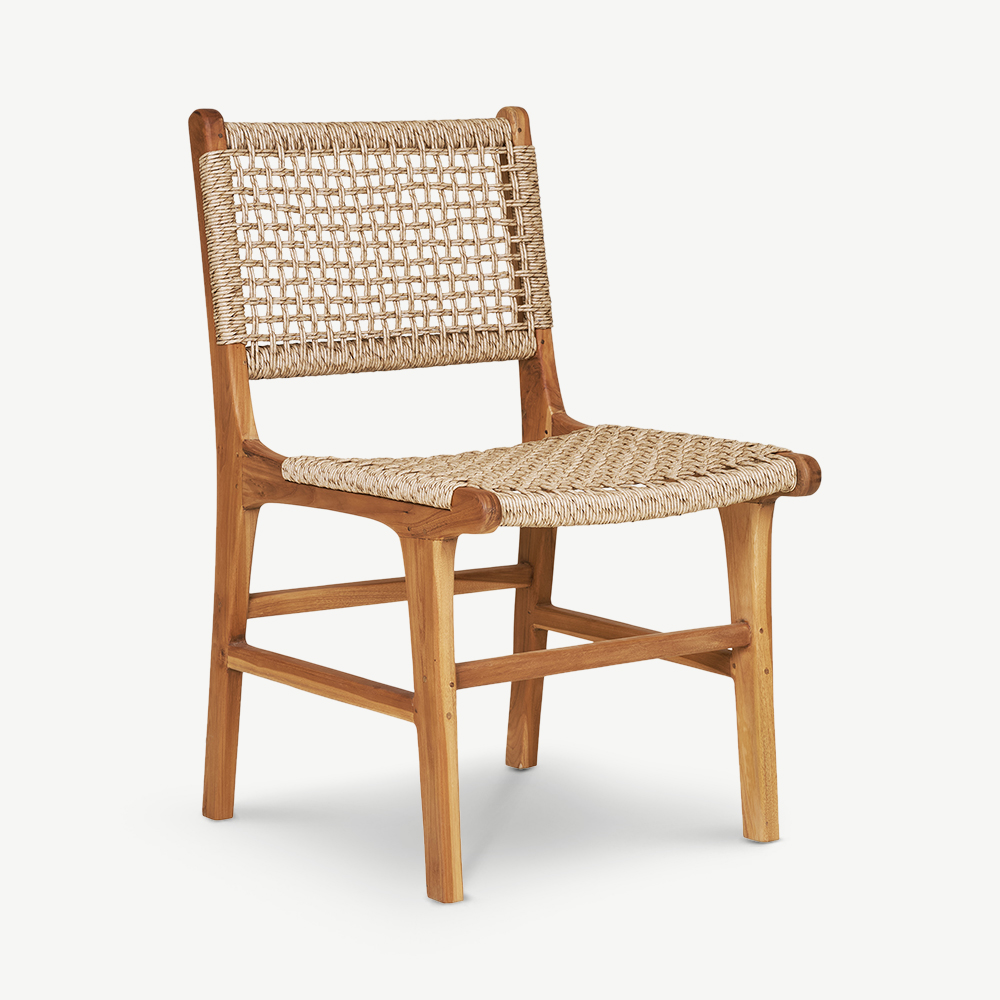
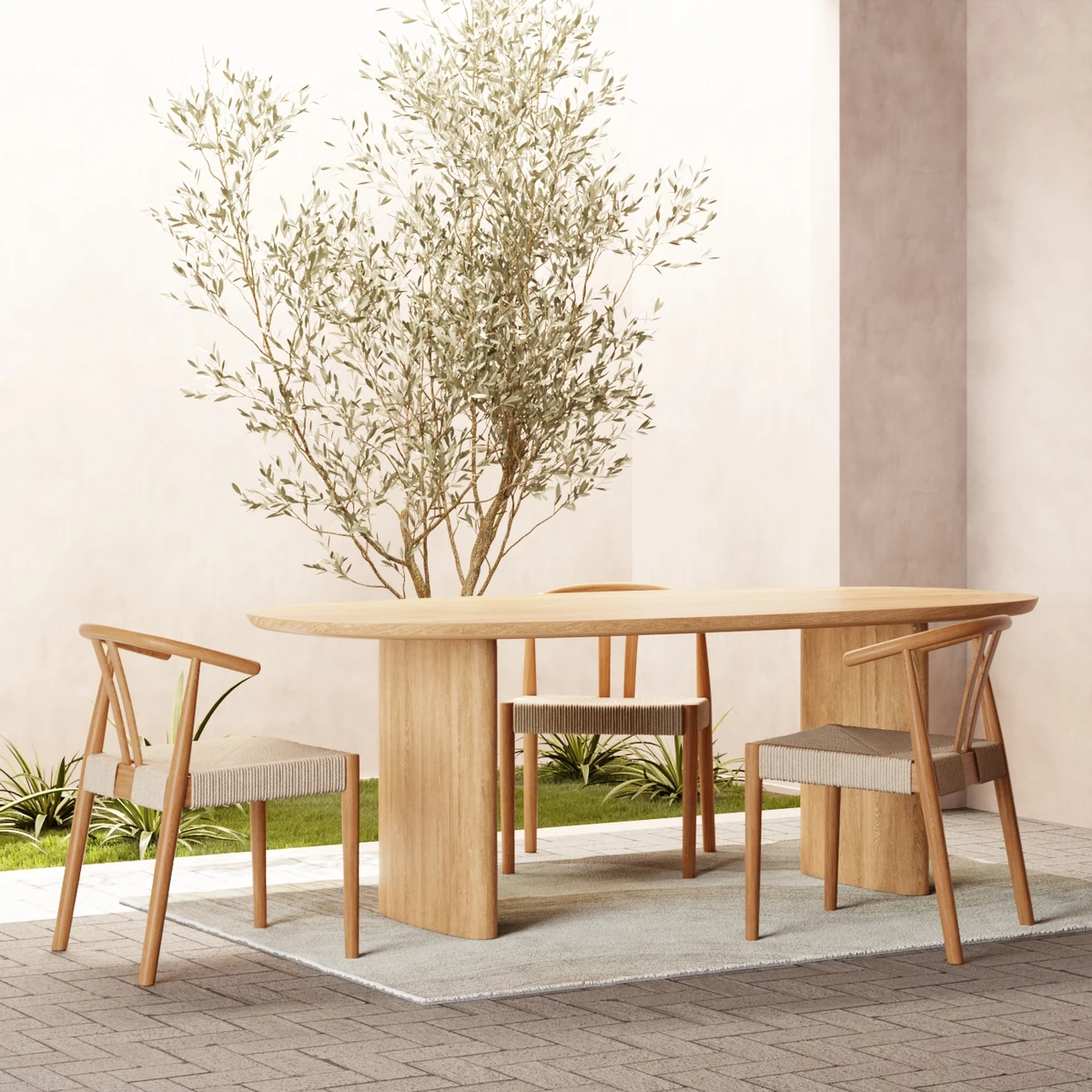
The most direct Japanese reference. Natural rattan on dining chair seats and backs, pendant lamp cages, small storage baskets. Matte finish only. See our rattan chair guide for material details.
Paper
Rice paper or thick handmade paper. Used as pendant lampshades (the soft diffuse light is core to the Japandi look), ink-and-paper artwork, occasionally as a screen room divider.
Ceramic
Hand-thrown when possible, with visible thrower marks and matte glazes. Stoneware in clay, oat, charcoal, or muted sage. One or two pieces per room. Glossy mass-produced ceramic does not work.
Stone
Travertine, limestone, or honed marble in pale tones. Used on small pieces (a side table top, a candle holder, a planter). The matte, slightly rough surface fits the texture-over-pattern rule.
Featured in this guide



How many materials per room
A complete Japandi room runs five to seven of the eight materials. Fewer reads sparse; more reads cluttered. The default mix for a living room or dining room is:
| Surface | Material | Approx share |
|---|---|---|
| Floor | Light oak | 25% |
| Sofa / large upholstery | Linen | 20% |
| Dining table or coffee table | Light oak or walnut | 15% |
| Accent chairs | Rattan or boucle | 10% |
| Lighting | Paper shade | 5% |
| Side tables, shelving | Smoked oak or walnut | 10% |
| Decor objects | Ceramic, stone | 5% |
| Soft accents | Cushions in linen + boucle mix | 10% |
The 70/30 wood split (light wood dominant, dark wood accent) is the most important number on the table. The next most important is keeping all textiles in the linen / boucle / unbleached cotton range. Velvet, leather, and shiny synthetics do not belong, even in small doses.
The materials to skip
Five material families show up in Pinterest searches labelled Japandi but pull the room toward other styles. If you find yourself drawn to any of these for a Japandi room, look at the closest acceptable alternative instead.
- Velvet: reads luxury or maximalist; replace with boucle for similar visual weight without the sheen
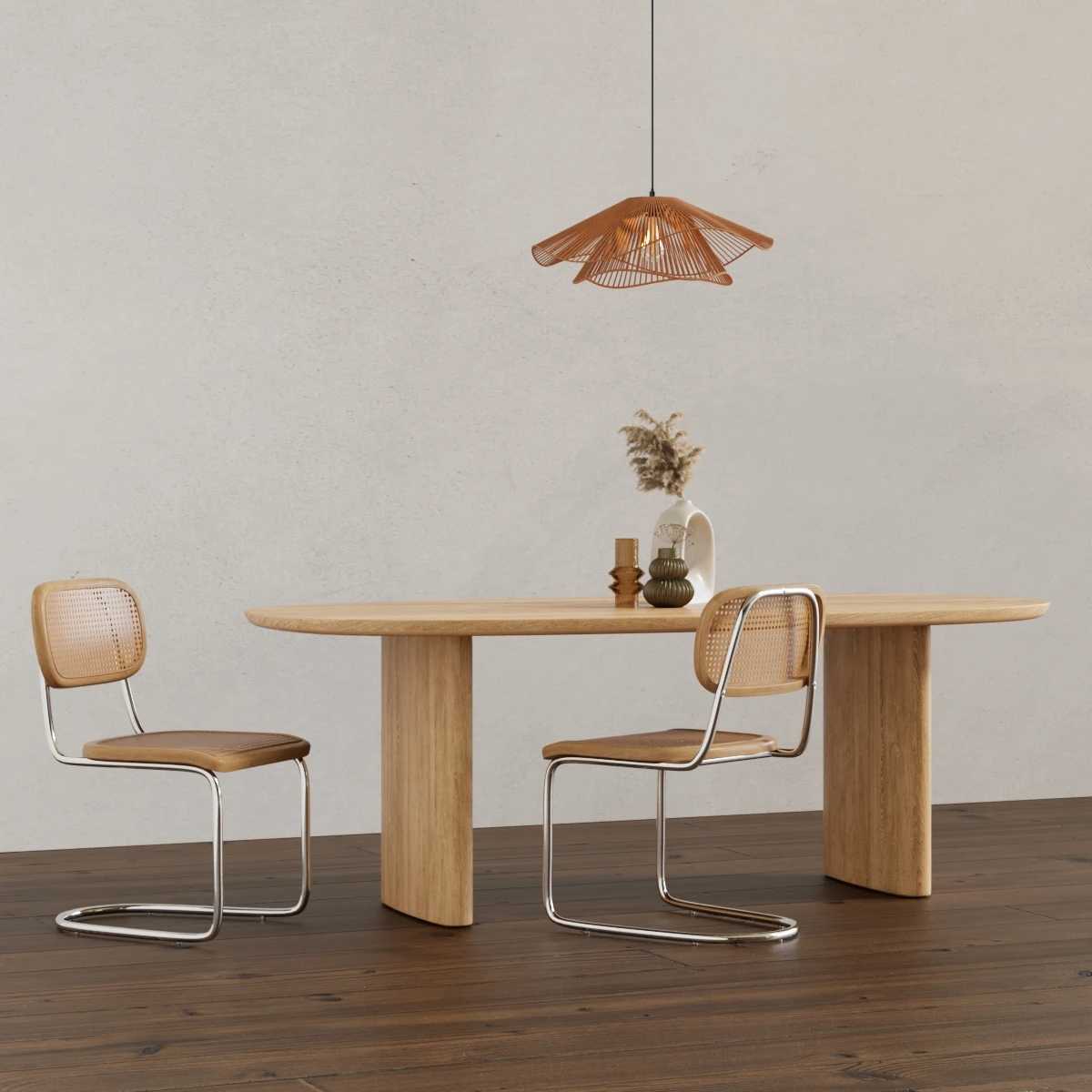
- Chrome and polished metal: tips toward modern or industrial; use black-stained wood frames or matte black metal instead
- Smooth leather: reads mid-century or contemporary; aged, matte leather is acceptable in small doses (a chair seat), polished leather is not
- High-gloss laminate: reads cheap and contemporary; matte solid wood or oiled veneer is the Japandi version
- Synthetic shag rugs: reads boho or 70s revival; flat-weave wool, sisal, or jute in neutral tones is the Japandi version
If a piece you love has one of these materials in a small accent (say, a brass handle on an otherwise solid-wood cabinet), it usually still works. The exception proves the rule; a chrome leg on a sofa would not.
Eight materials, built to age together
The Japandi material palette is short on purpose. Eight is enough to furnish a room. Each material gets better with use, which is the long-term reason to choose this style over something more trend-led.
The other long-term reason is repair. Solid wood can be sanded and re-oiled. Linen washes and softens. Rattan can be re-woven. Ceramic chips and stays beautiful. Stone is stone. None of these materials forces a replacement; all of them tolerate a decade of daily use.
Most pieces in our Japandi furniture collection belong to one of these eight families. Prices start at €99, with most pieces between €119 and €890. For the wood end of the palette specifically, our dining tables and dining chairs collections include both light and dark wood options; for the rattan end, the rattan furniture collection covers chairs and small storage.
For the colour side of the palette, see our Japandi colour guide. For the bigger style picture, the complete Japandi guide ties materials, colour, and arrangement together.
Frequently asked.
What materials are used in Japandi furniture?
Eight materials carry the style: light wood (oak, ash, beech), dark wood (smoked oak, walnut), linen, boucle, rattan, paper, ceramic, and stone. All of them are natural, low-saturation, and respond to light and touch. Veneer, chrome, high-gloss plastic, and synthetic leather do not belong.
Oak or walnut for Japandi furniture?
Both, in different roles. Oak (especially light oiled oak) is the main wood, used for floors, tables, and most chairs. Walnut and smoked oak appear as accents on smaller pieces: a side table, a stool, a shelf. The rule of thumb: oak covers 70 to 80% of the wood in the room, walnut or smoked oak the remaining 20 to 30%.
Why is linen the default fabric in Japandi?
Linen has visible weave irregularities, drapes with weight rather than stiffness, and ages well: it softens with washing rather than wearing thin. Those three qualities match the Japandi preference for materials that show their handling and improve with use. Cotton is acceptable; polyester and viscose do not work in the style.
Does rattan still belong in Japandi rooms?
Yes, on accent pieces. Natural rattan is one of the eight core Japandi materials, used on dining chairs, light pendant shades, and small storage. It carries the Japanese half of the style: woven, irregular, hand-finished. Avoid bright synthetic rattan and over-glossy varnish; matte natural finish is the Japandi version.
Should I mix wood tones in a Japandi room?
Yes, with a dominant tone. Most Japandi rooms run a light oak base (floor, dining table) and add one or two darker wood pieces (smoked oak stool, walnut shelf). Three or more wood tones in one room reads chaotic. Two tones with a 70/30 split reads composed, which is the Japandi target.
Is ceramic essential in Japandi styling?
Not essential, but the easiest way to add the Japanese half of the style on a budget. One or two hand-thrown ceramic pieces (a vase, a bowl, a small lamp base) signal craft and asymmetry without changing the furniture. Look for visible thrower marks, irregular glazing, and matte rather than glossy finish.
