 9500+ TRUSTPILOT REVIEWS


 EN
EN DE
DE FR
FR NL
NL
Most people spend more time choosing a dining table than the chairs around it. That is the wrong order. You sit in the chairs for every meal. The table just holds the plates.
Dining chairs are one of the most-used pieces of furniture in any home, yet the buying decision is often rushed. Style catches the eye, but seat height, material durability, and how to choose dining chairs that actually fit your table are what determine whether a set works for the next ten years or becomes a source of daily minor annoyance.
This guide covers everything: the six main chair styles and what each suits best, how to match seat height to your table, how many chairs fit your table size, the honest durability breakdown by material, care routines that extend lifespan by years, and how to mix chair styles without the result looking accidental.
At Furnicher, we have helped over 50,000 customers furnish their dining rooms across Europe. Everything in this guide comes from what actually works, backed by 9,500+ verified reviews.
Six styles, one clear decision framework
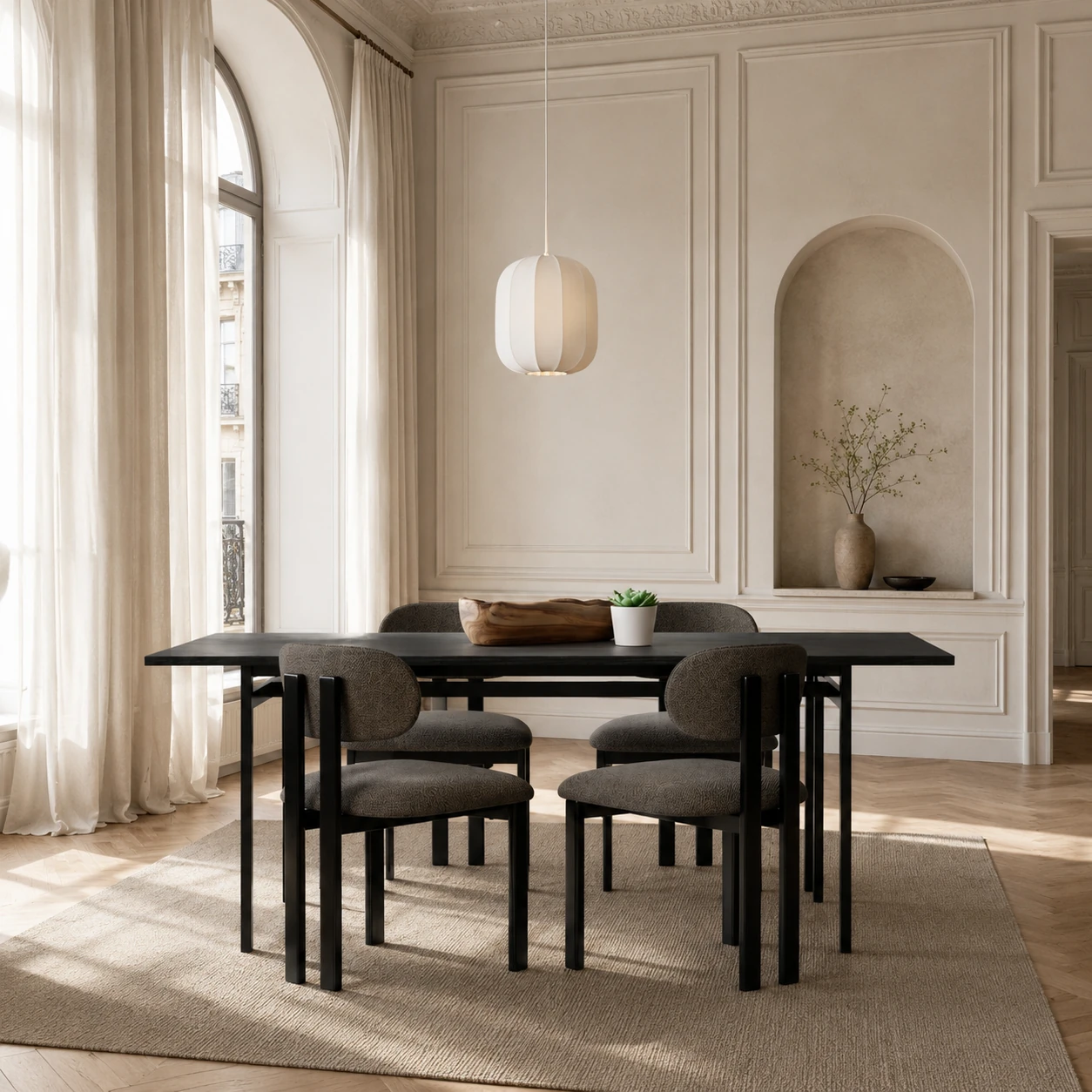
Dining chair style is not just about aesthetics. Each style signals a set of practical trade-offs: weight, stackability, seat comfort for long dinners, and how it ages over years of daily use. Knowing this turns style browsing into a real decision.
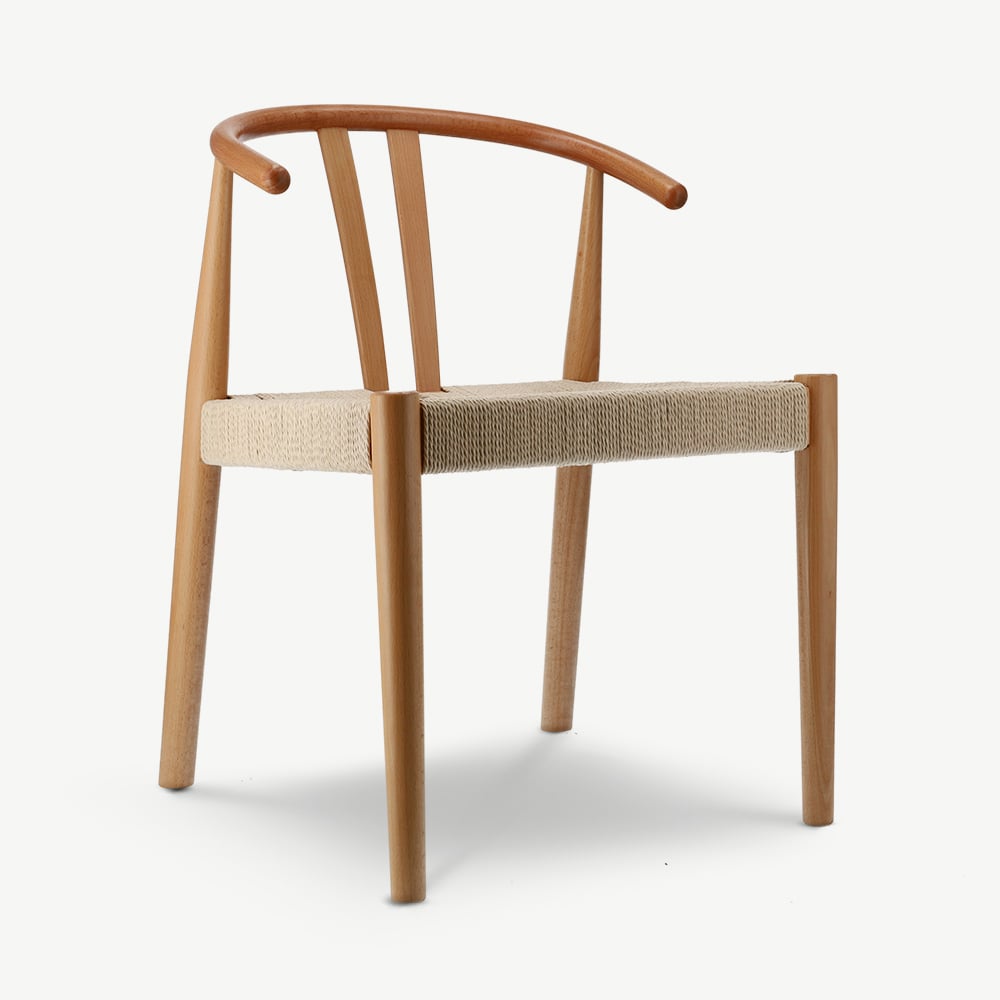
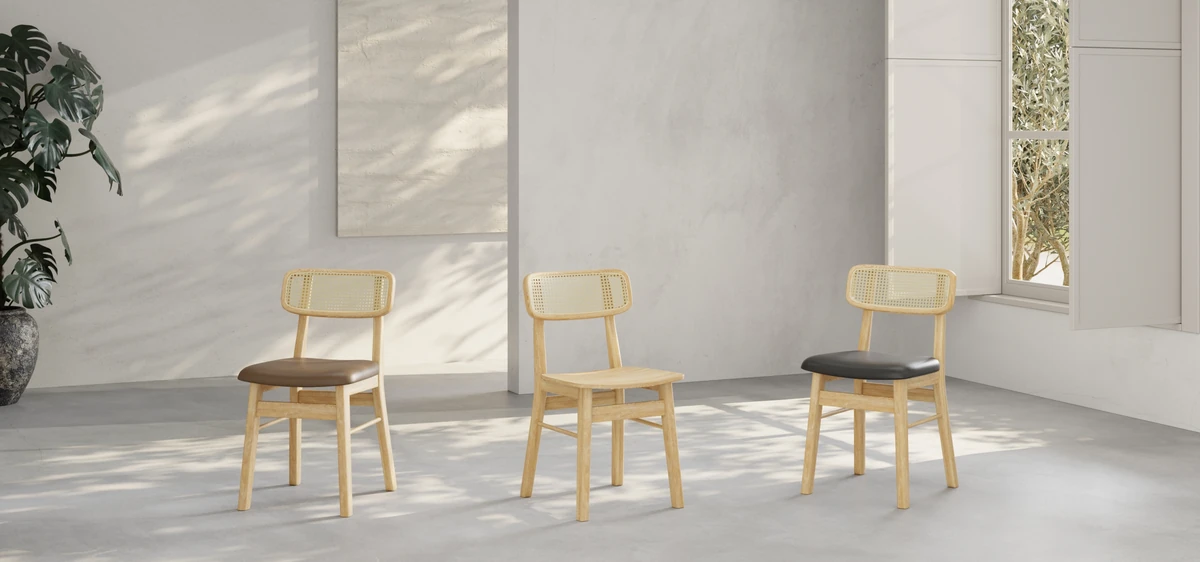
- Scandinavian wooden chairs: light beech or oak frames, clean lines, rattan or fabric seats. Durable, easy to move, suit most interiors. The safest long-term choice for most homes.
- Upholstered dining chairs: padded seat and often a padded back. Highest comfort for long dinners. Fabric wears over time; removable covers extend lifespan significantly.
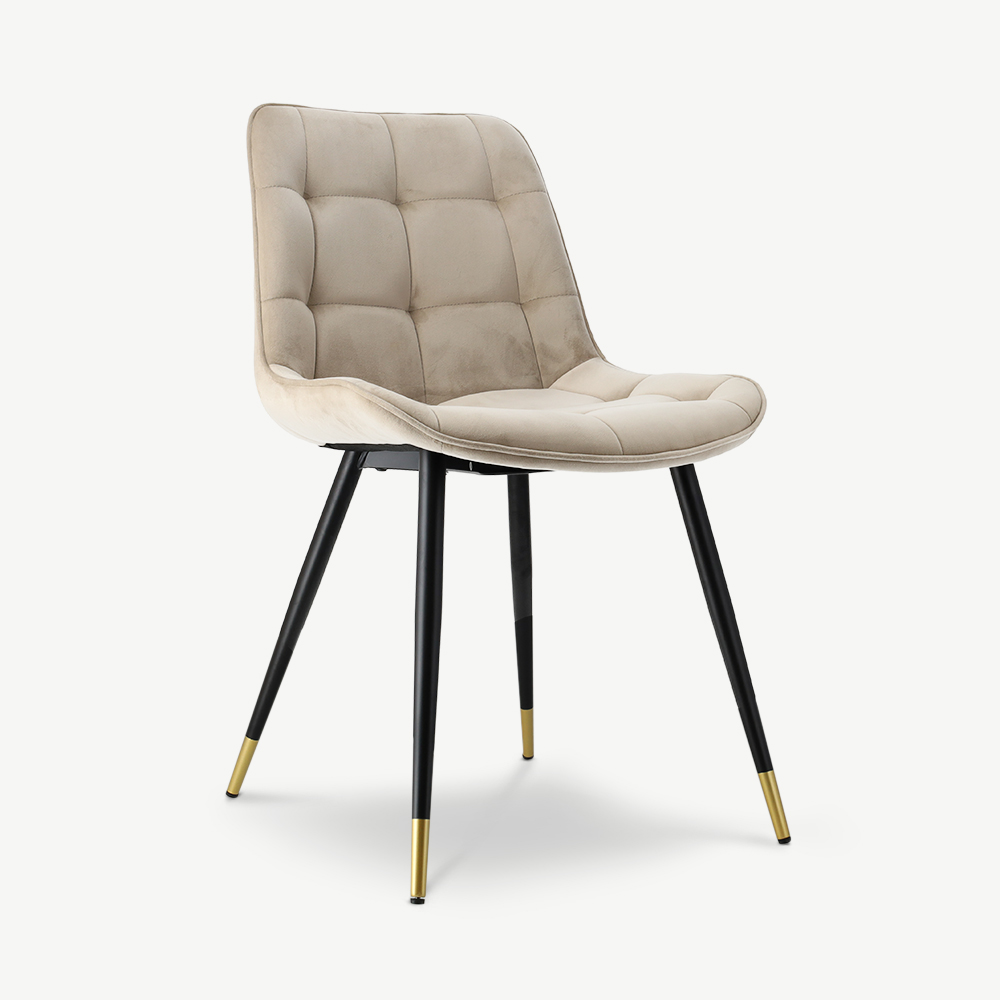
- Velvet dining chairs: upholstered in cut pile. Luxurious look, soft to sit on. Requires more maintenance; attracts lint and pet hair. Best in rooms with lower traffic.
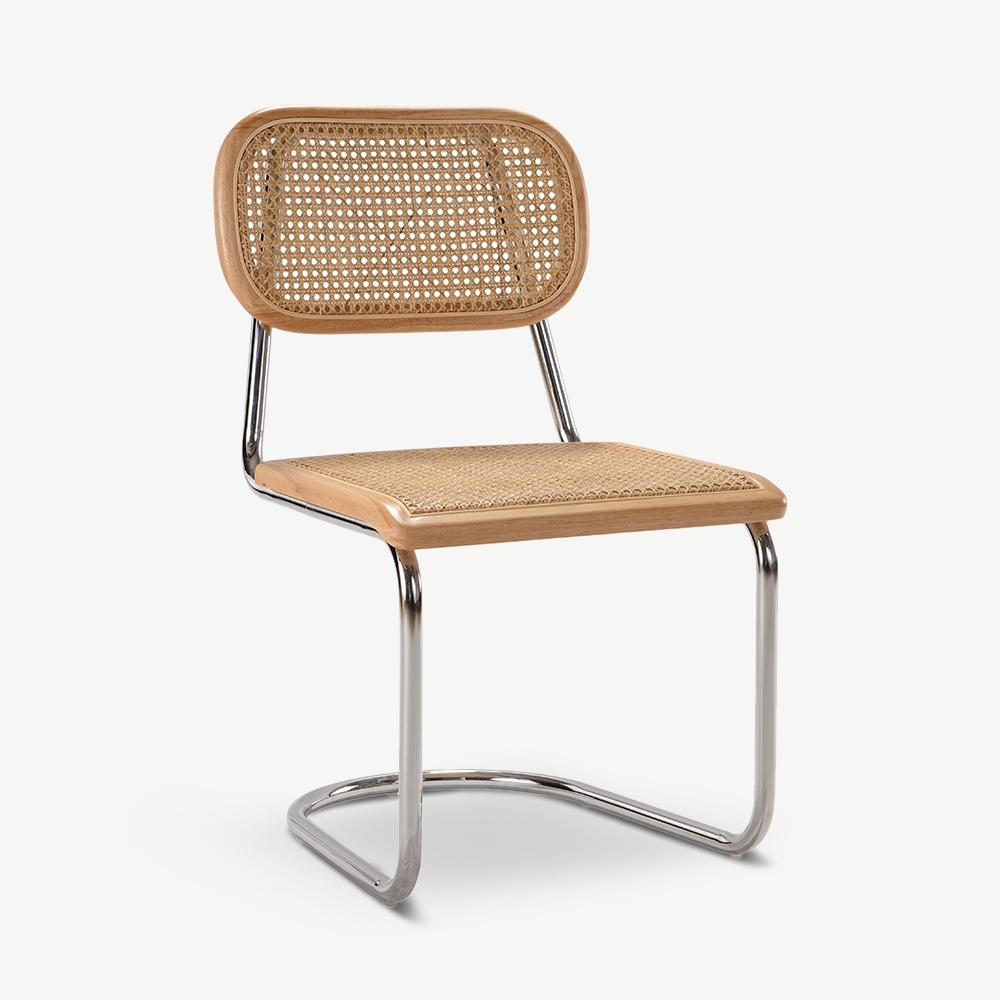
- Rattan dining chairs: natural or synthetic rattan seat panel on a wood or metal frame. Lightweight, tactile, very popular in Japandi and coastal interiors. Natural rattan lasts 15 to 25 years indoors. For a primer on the material itself, see what a rattan chair actually is.
- Wooden and metal dining chairs: powder-coated steel frames or solid oak/beech, often with a padded seat. Industrial, mid-century, and farmhouse styles. Very durable frames; upholstery is the wear item.
- Japandi chairs: minimal wood or metal frames with clean profiles, muted finishes, often a rattan or woven seat. Designed to recede visually rather than dominate the room.
The three dining room archetypes
Most dining rooms fall into one of three categories. Each has a different priority order for chair selection.
The everyday family table
Used three times a day, seven days a week. Chairs take daily knocks, spills, and the weight of children climbing. The frame material is the priority: solid wood or powder-coated steel outlasts upholstered-only options by years. See our dining chair care guide for the routines that keep them looking new.
For seating fabric: faux leather and performance-weave microfibre wipe clean in seconds. Avoid velvet and untreated linen if young children use the table regularly. Removable, machine-washable covers on upholstered chairs are worth every penny.
Browse the full dining chairs collection for durable everyday options.
The dinner party table
Used less frequently but for longer sittings. Two to three hours at the table for a dinner party means comfort matters more than it does for a 20-minute weeknight meal. A padded seat depth of at least 44 cm and a back that supports the lower spine make the difference between guests who linger and guests who shift around. The restaurant-style dining chairs built for hours of service work well here too.
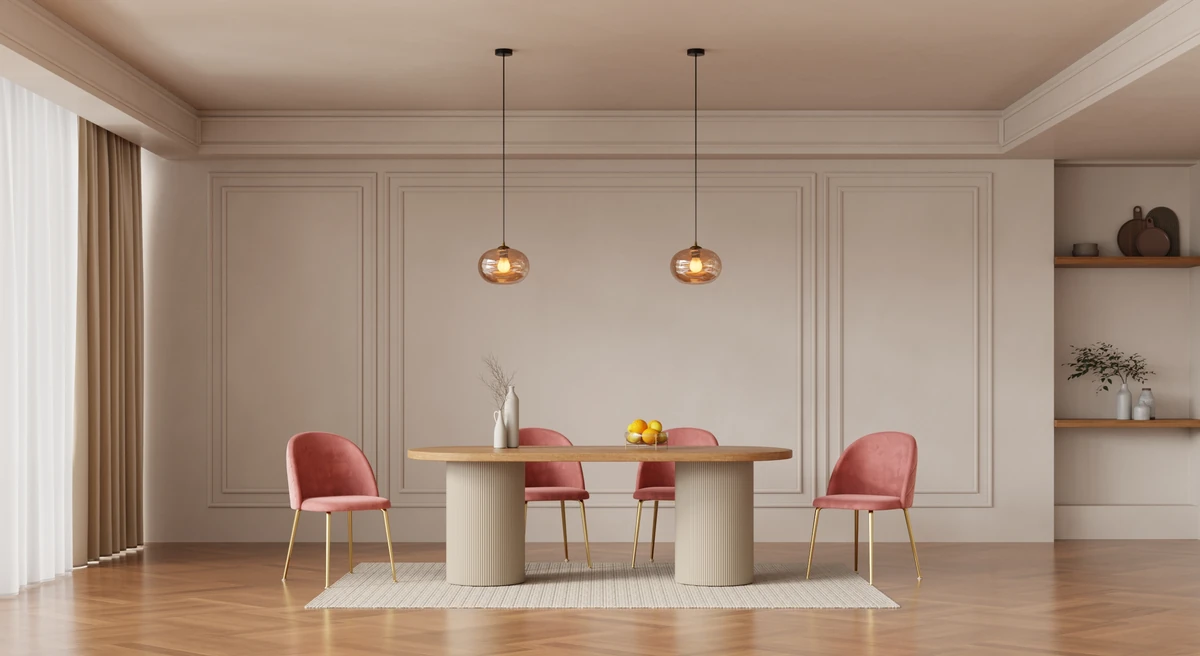
Upholstered chairs in velvet or structured fabric create the right visual weight. Upholstered dining chairs in a statement colour or texture work particularly well here, where visual impact takes precedence over daily-use practicality.
The open-plan dining area
When the dining area flows directly into a living space, the chairs need to work at two distances: up close at the table, and from across the room as part of the overall interior. Heavy, visually dominant chairs can make an open-plan space feel cluttered. The same logic applies to dining chairs for small spaces, where every chair has to earn its footprint.
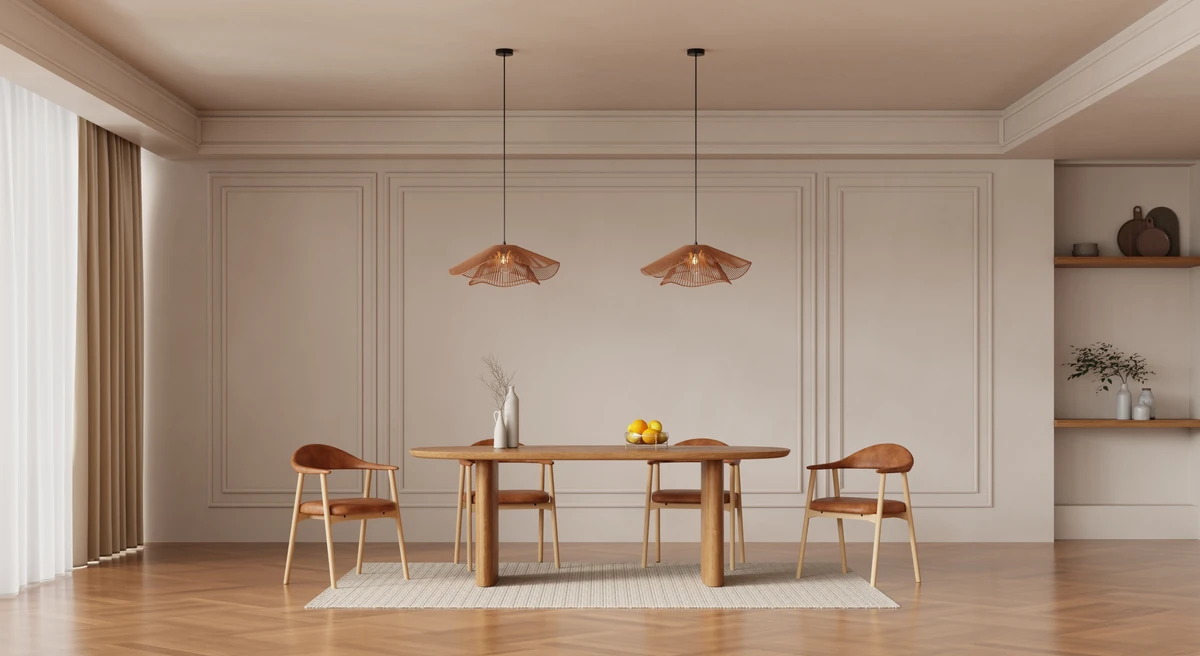
Lighter profiles, natural materials (rattan, oak, cane), and chairs with open backs reduce visual weight significantly. Rattan dining chairs are particularly effective in open-plan settings: the woven material adds texture without bulk, and the warm tones bridge dining and living zones naturally.
Featured in this guide


Getting the numbers right before you buy
Two numbers determine whether a dining chair set works: seat height versus table height, and table length versus number of chairs. Getting either wrong means chairs that do not fit under the table, or a set where guests are elbowing each other at every meal.
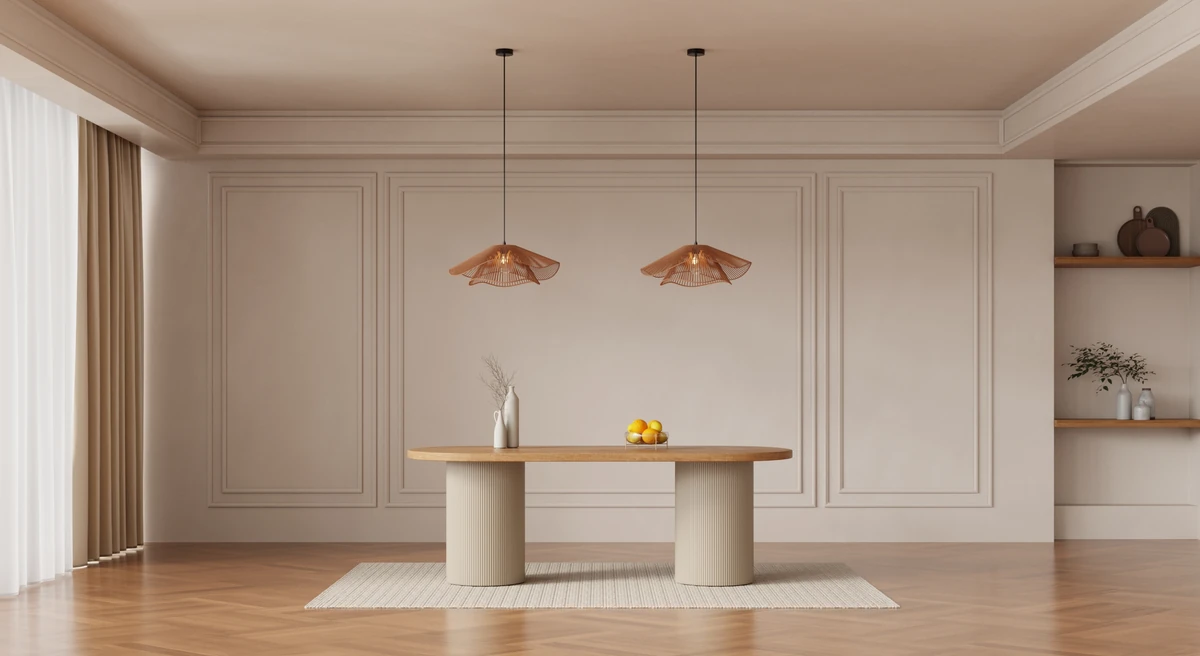
Seat height vs table height: The standard dining table height in Europe is 75 to 78 cm. Standard chair seat height is 45 to 48 cm. This gives 29 to 30 cm of clearance between seat and table underside, which is the ergonomic minimum for adult comfort. A chair with a 43 cm seat at a 78 cm table creates a cramped posture for taller adults.
How many chairs per table: Allow 60 cm of table edge per person as the comfortable minimum. At 55 cm per person, guests can sit, but dinner with serving dishes on the table becomes tight. At 65 cm, conversation across the table is easy and place settings have breathing room.
| Table length | Seats comfortably | Maximum (tight) | Seat height to match |
|---|---|---|---|
| 120 cm | 4 | 4 | 45 to 48 cm |
| 140 cm | 4 to 6 | 6 | 45 to 48 cm |
| 160 cm | 6 | 6 to 8 | 45 to 48 cm |
| 180 cm | 6 to 8 | 8 | 45 to 48 cm |
| 200 cm | 8 | 10 | 45 to 48 cm |
| Round 120 cm | 4 to 5 | 5 | 45 to 48 cm |
| Round 150 cm | 6 | 8 | 45 to 48 cm |
For extension tables, size the chair count to the table's extended length. You may only use it extended for special occasions, but having the right number of chairs stored away or stackable is far less disruptive than borrowing mismatched chairs from another room.
Material choice is a durability decision, not just an aesthetic one
Every dining chair material has a realistic lifespan, a cleaning method, and a failure mode. Knowing these before you buy prevents disappointment when a chair that looked perfect in the shop becomes a maintenance problem at home. For a deeper look, see our full dining chair materials guide.
- Solid beech or oak frame: 20 to 30 years with basic care. The frame rarely fails; it is the joints and seat material that age first. Wipe with a damp cloth; oil natural wood once a year if unsealed.
- Powder-coated metal frame: 15 to 25 years before the coating chips significantly. Very stable under daily weight loads. Prone to cold-to-touch feeling in winter; often combined with upholstered seats to counteract this.
- Natural rattan seat: 15 to 25 years indoors. Avoid direct sunlight and moisture sources (radiators, dishwasher steam). Can be professionally re-woven if panels loosen.
- Upholstered fabric seat: 5 to 8 years before visible wear under daily dining use. Velvet shows wear sooner than structured weaves. Performance fabrics (bouclé, treated linen) extend this to 8 to 12 years.
- Faux leather (PU): 6 to 10 years before the surface begins to crack at stress points. Easiest to clean. Does not breathe, which can be uncomfortable in summer. Genuine leather lasts significantly longer but requires conditioning.
- Paper rush or seagrass woven seat: 8 to 12 years under regular dining use. Damaged more quickly by spills than natural rattan. A classic choice for Scandinavian and mid-century styles.
Four habits that double the life of your dining chairs
Most dining chair damage is preventable. These four habits address the most common failure points across all chair types sold in European homes.
Over 50,000 customers have found their chairs here
Scandinavian wood frames, rattan seats, upholstered velvet, Japandi minimal: the full range is in one place, with free delivery and free returns across Europe.
Every chair in our collection comes with the sizing specifications you need to match it to your table. Same-day dispatch on in-stock items. Klarna available if you want to split the payment.
Dining chair questions, answered
What is the standard height for dining chairs?
The standard seat height for dining chairs is 45 to 48 cm, which pairs correctly with a dining table 75 to 78 cm tall. This gives roughly 29 to 30 cm of clearance between the seat and the table underside, enough for most adults to sit comfortably with thighs roughly parallel to the floor. If you have a table at an unusual height (some farmhouse and industrial tables run higher at 80 to 90 cm), look for chairs specifically labelled as counter-height or check the seat height specification in the product description before ordering.
How many dining chairs do I need for my table?
Allow at least 60 cm of table edge per person for comfortable seating: shoulders have room, elbows can move, and a full place setting fits without crowding. At 55 cm per person it is manageable but noticeably tighter. A 140 cm table seats 4 comfortably (70 cm each side). A 160 to 180 cm table seats 6. A 200 cm table seats 8. For round tables, divide the circumference by 60 cm: a 120 cm round table has a circumference of roughly 377 cm, giving 6 seats at 60 cm each. In practice, most people seat 4 at a round 120 cm table and use 5 to 6 for special occasions with some squeeze.
What is the most durable material for dining chairs?
Solid wood frames (beech, oak) are the most durable: well-made examples last 20 to 30 years with basic maintenance. The frame itself rarely fails; it is the seat material that ages first. Powder-coated metal frames are similarly long-lived but feel cold without upholstery. For the seat surface: faux leather (PU) is the most practical for families, lasting 6 to 10 years before surface cracking, and it wipes clean in seconds. Natural rattan is durable indoors (15 to 25 years) but sensitive to moisture. Fabric upholstery varies widely by weave: performance fabrics last 8 to 12 years; plain cotton or linen at a dining table may show wear in 4 to 6 years of daily use.
Are upholstered dining chairs practical?
Yes, with the right fabric choice and ideally removable covers. Upholstered dining chairs are the most comfortable option for long meals. The practical question is maintenance: a velvet chair in a household with young children will look noticeably worse within two years, while the same chair in a household of adults who entertain occasionally can look fresh for a decade. The most practical upholstered dining chairs have zip-off covers that go in a washing machine. If fixed upholstery, choose a performance fabric: bouclé, treated linen, or microfibre all resist staining far better than plain cotton or velvet.
Can I mix different dining chair styles?
Yes, mixing works well when one design variable is held consistent. The most common approach: matching chairs on the two long sides plus two different dining chairs with armrests at each end of the table. Another option is mixing the same chair model in two different colours, which reads as intentional contrast rather than mismatch. Black dining chairs in particular work as a unifying anchor when the rest of the set varies in tone. What to avoid: mixing chairs that are at different seat heights, or mixing very different visual weights (delicate rattan with chunky velvet, for instance) unless there is a clear material or colour linking element that ties them together.
What dining chair style suits a Scandinavian interior?
Light wood frames in beech, oak, or birch with fabric or rattan seats are the natural fit. Clean lines without ornamentation, neutral tones (white, light grey, oatmeal, sage), and natural materials are the defining characteristics of Scandinavian dining furniture. Rattan-seat dining chairs are particularly popular for adding warmth and texture without adding visual weight. If you prefer upholstered seats in a Scandinavian room, stick to linen or structured cotton in muted, earthy tones rather than deep jewel colours or pattern.
How do I stop dining chairs from scratching the floor?
Attach self-adhesive felt pads to the base of every leg and replace them once or twice a year. The pads wear down with use and collect grit underneath that can scratch more than bare wood. Round felt dots (25 mm diameter) work for most chairs; square or rectangular pads are available for larger flat-based legs. Rubber caps are an alternative that grips better on smooth floors but can leave marks on some laminates over time. For upholstered chairs with metal legs, check the leg cap condition twice a year: worn plastic caps expose bare metal that scratches floors immediately.
