 9800+ TRUSTPILOT REVIEWS


 EN
EN DE
DE FR
FR NL
NL
Three layers decide how a dining chair ages: the wood the frame is made from, the material on the seat, and the finish on the wood. Each layer has trade-offs that are obvious once you know what to look for and invisible if you do not.
This is the long-form reference: every common dining chair material, how hard it is on the Janka scale, how it wears in a real household, and which one matches your situation. Use it as a lookup when you are reading product specs and want to know what beech 1300 actually means.
The wood that holds it together
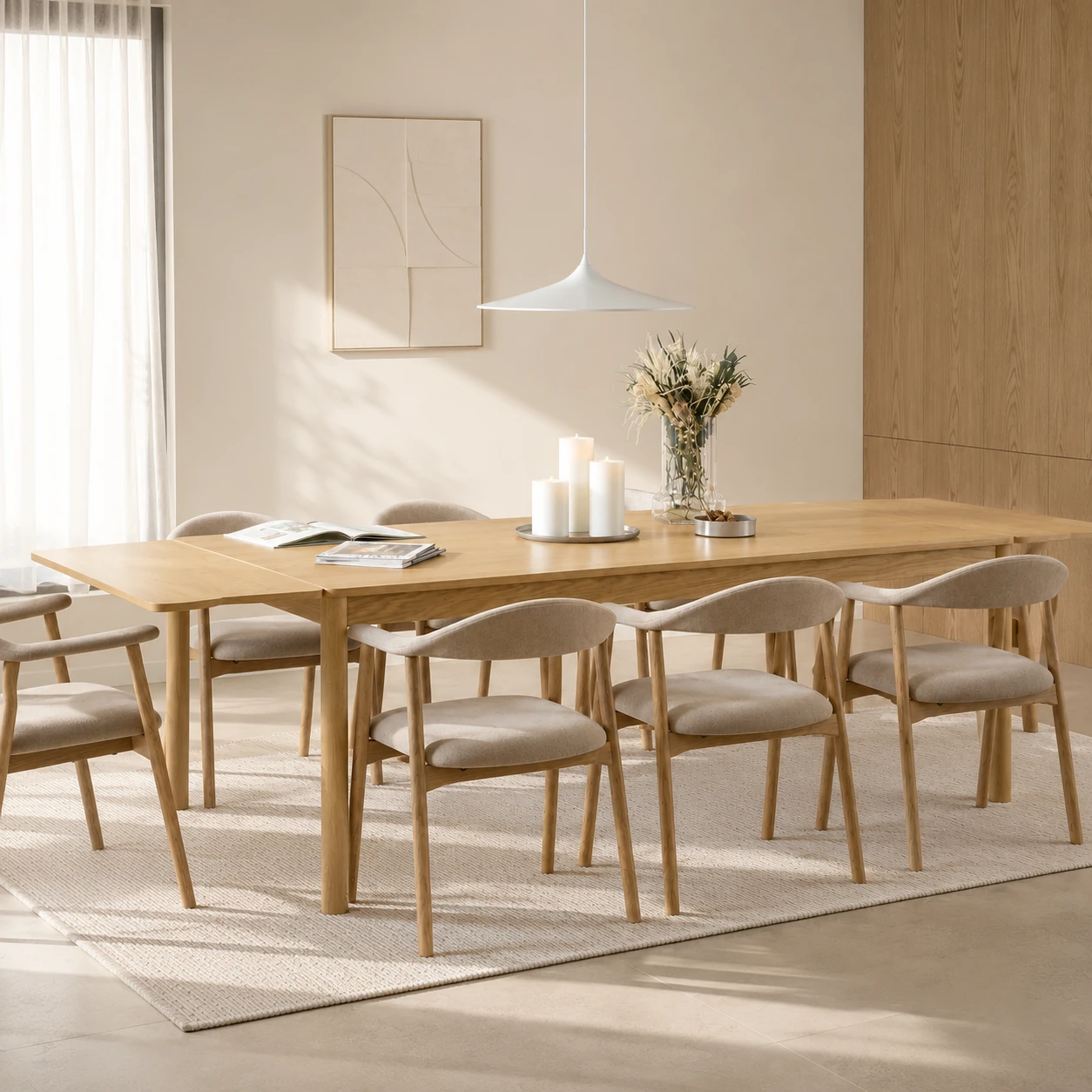
The frame is what fails first when a chair fails. Joints loosen, legs split where they meet the seat, the back rail breaks when somebody rocks too hard. Hardwood with mortise-and-tenon joinery survives 15 to 25 years. Softwood with dowels and glue survives 4 to 7.
Janka hardness measures how much force it takes to push a steel ball halfway into the wood. Higher number means harder wood. For dining chairs, anything 1,000 or above is durable enough; below 800 dents under a dropped fork.
| Wood | Janka | Notes |
|---|---|---|
| Oak (European) | 1,360 | Hardest of the common four. Strong grain pattern. Heavy. |
| Ash | 1,320 | Slightly springy. Light cream colour. Used in mid-century reissues. |
| Beech | 1,300 | Bends well under steam. Most common in dining chairs. |
| Walnut | 1,010 | Softer but the most beautiful grain. Premium price. |
| Pine | 420 | Avoid for dining chairs. Dents and splinters fast. |
Metal frames are powder-coated steel (heavy, 8 to 12 kg per chair, cheap, susceptible to rust in coastal homes) or aluminium (light, 3 to 5 kg per chair, more expensive, immune to rust). Both outlast wood by decades if the powder coat is intact, but they cannot be repaired locally when a weld cracks.
What you actually sit on
The seat material is the second-biggest decision and the first one a guest notices. Six common options, each with a clear use case.
Solid wood seat
The seat is the same wood as the frame, sometimes shaped (Windsor-style) for a contoured fit. Wipes clean with a damp cloth. Develops patina from elbow oils after about 2 years. Hard on the legs after 90 minutes; most owners add a tied-on cushion.
Natural rattan or cane
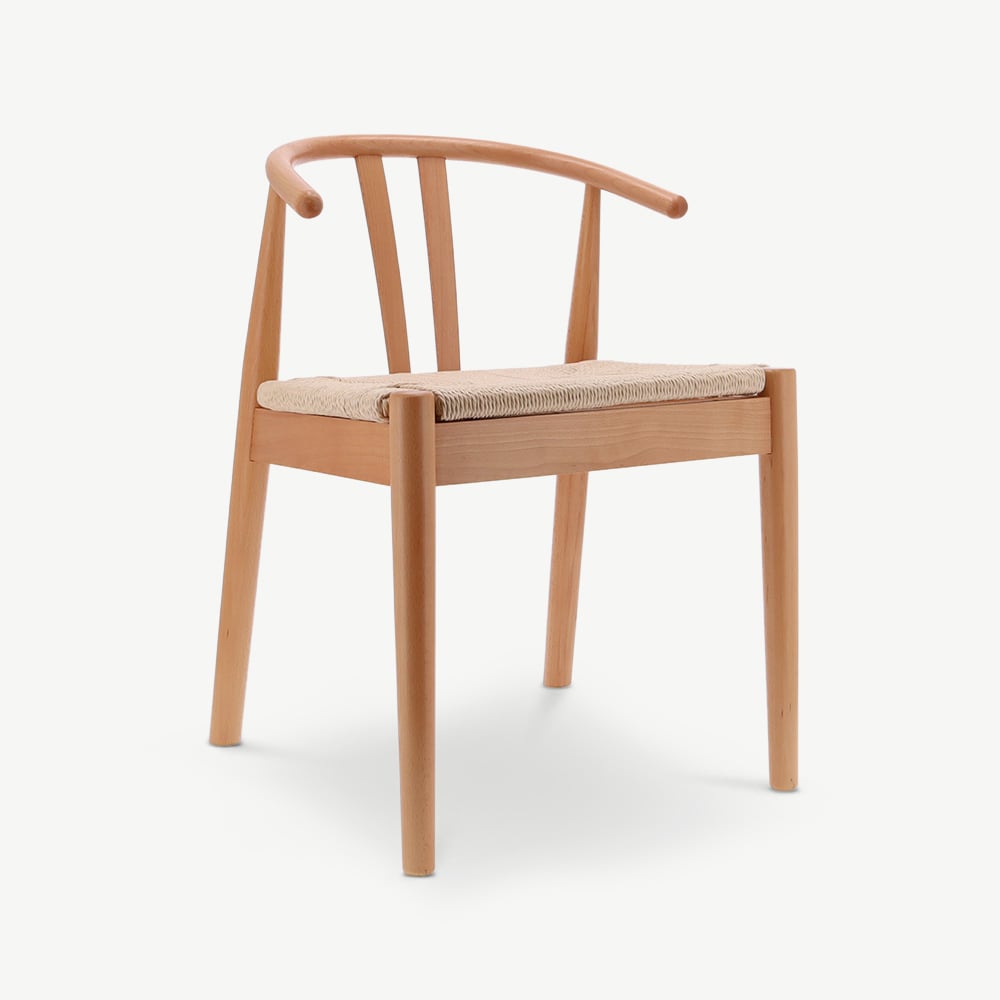
Hand-woven panel from split rattan cane. Light, repairable for €40 to €80 by a craftsman if a panel breaks. Does not tolerate humidity above 70 percent or direct sun. See our rattan deep-dive.
Plain weave fabric
Most common upholstery. Affordable, breathable, but stains absorb on contact. Better with a removable cover (zipped) and Scotchgard treatment. Worse with red wine, olive oil, and toddlers.
Performance fabric
Tightly woven synthetic with stain-resistant finish baked in (not sprayed on). Costs 15 to 25 percent more than plain weave and survives twice as long under family use.
Velvet
Polyester velvet outlasts cotton velvet by 3 to 5 years in dining use because it does not flatten. Shows hair from cats and dogs immediately. Wipe-clean if liquid is caught within an hour.
Leather and faux leather
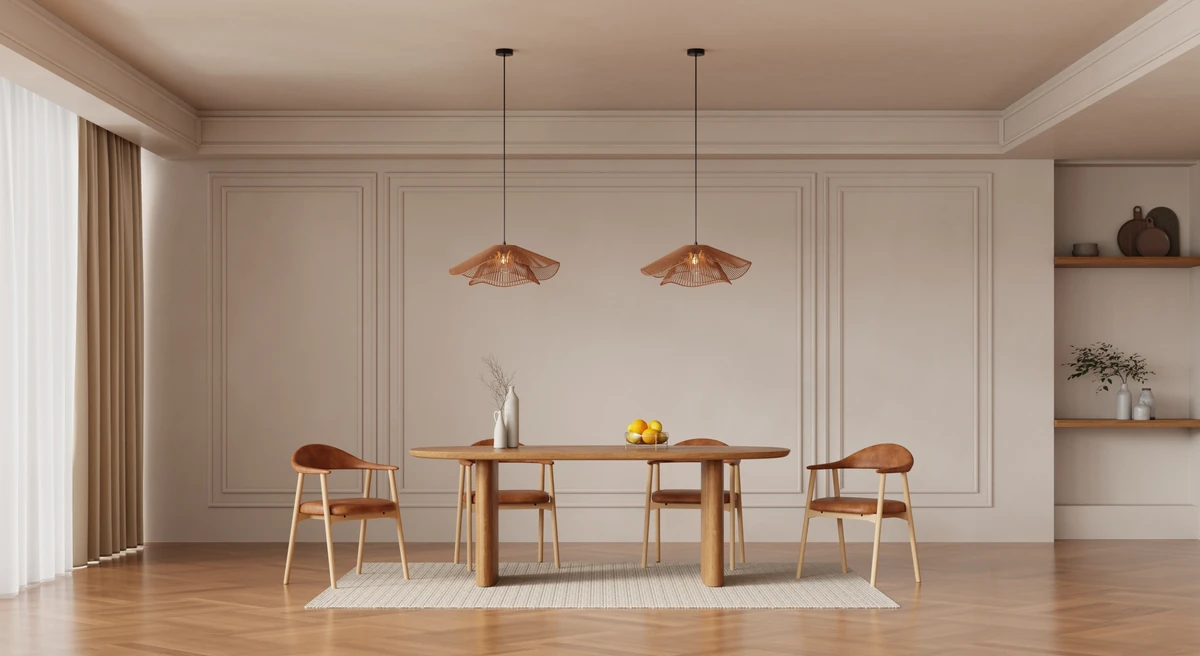
Real leather develops patina and can be repaired. Faux leather (polyurethane, PU) wipes clean, costs 60 percent less, and replaces rather than repairs when it cracks. Faux leather is the right answer for families with toddlers.
Featured in this guide

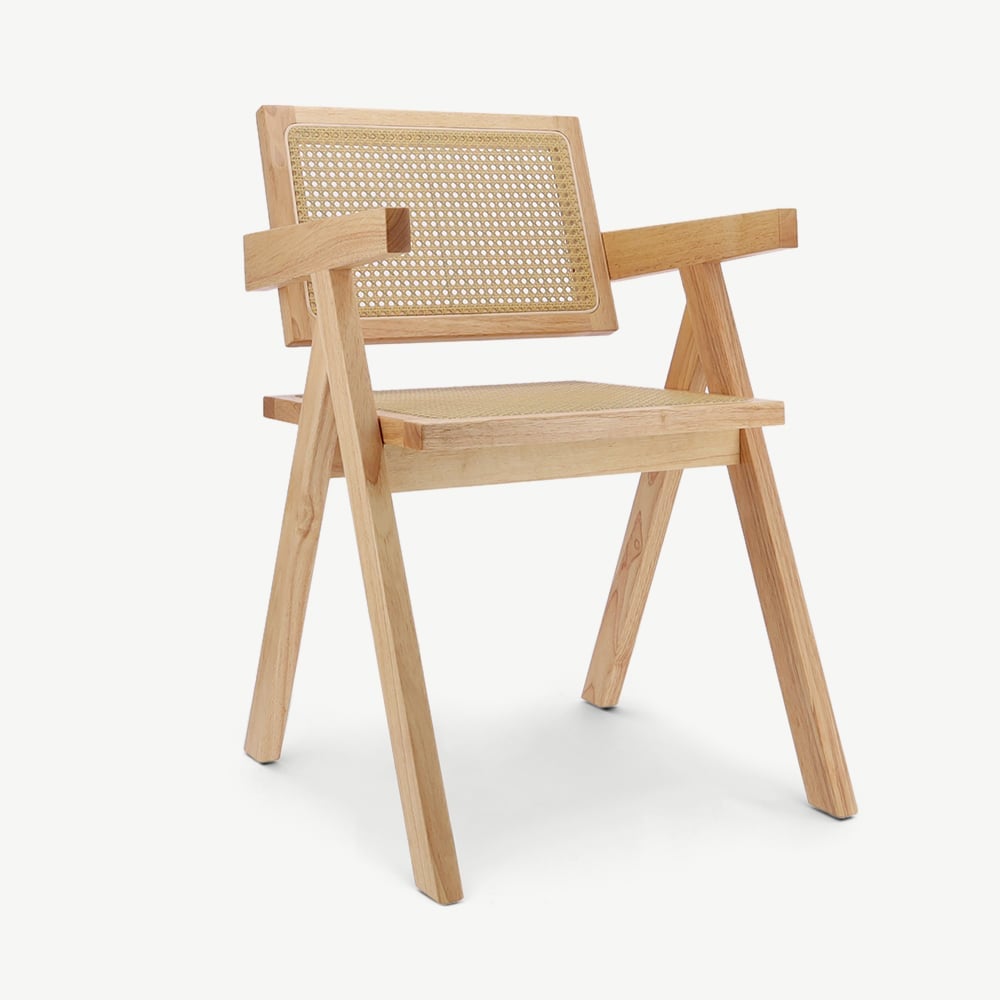
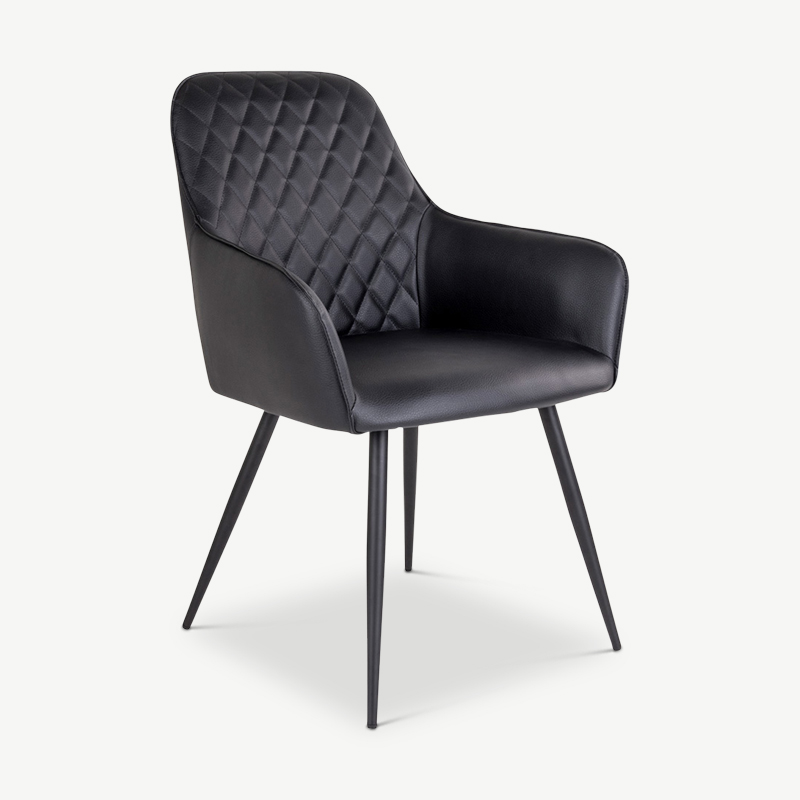
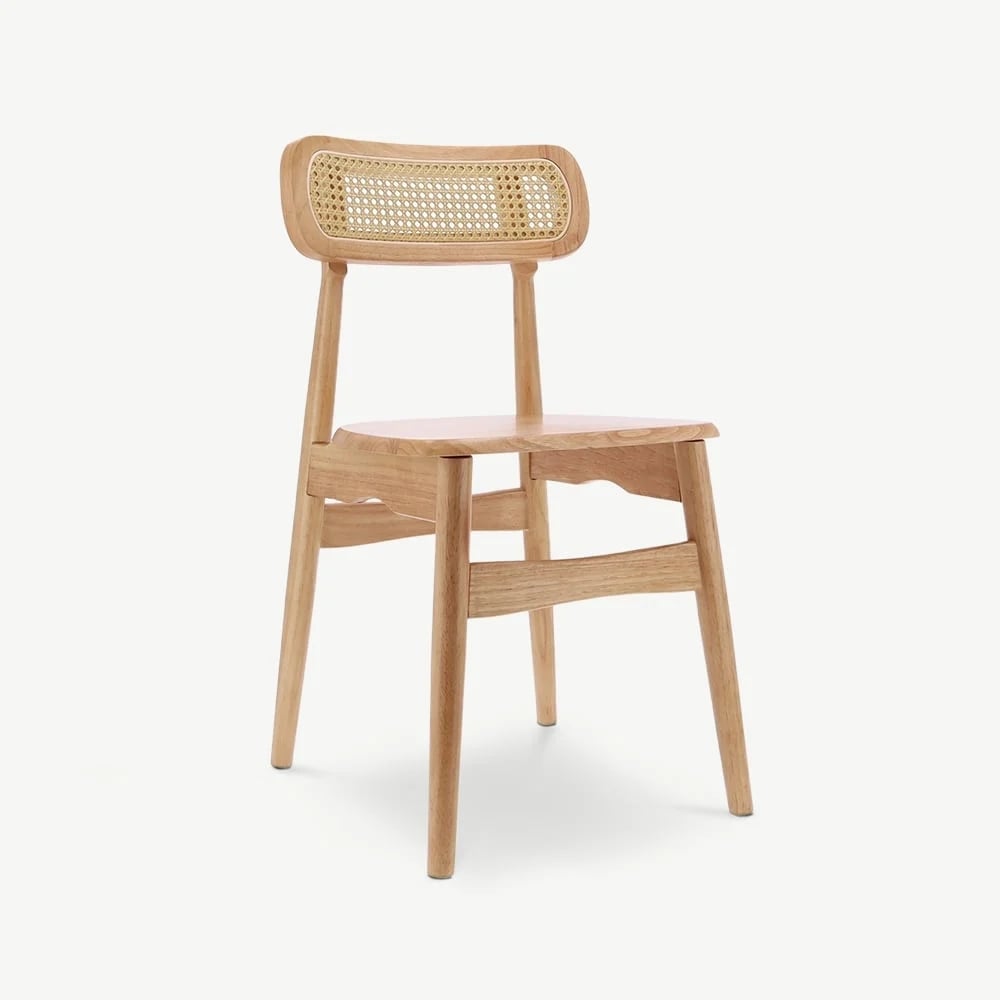
The coat that decides repairability
The finish is the layer between the wood and your wine glass. It does three things: protects against water, sets the colour, and decides whether you can repair a scratch or have to refinish the whole chair.
| Finish | Look and feel | Repair |
|---|---|---|
| Penetrating oil (linseed, tung, hardwax) | Natural matte, wood feels like wood | Spot-repair with sandpaper and reapply |
| Surface lacquer | Glossy or matte film, plastic feel | Whole-chair refinish if scratched through |
| Stain + oil | Colour-shifted wood, still feels like wood | Spot-repair possible but matching is hard |
| Stain + lacquer | Colour film, plastic feel | Whole-chair refinish |
| Raw / unfinished | Natural wood, no protection | Easy to refinish anything |
The right choice depends on the household. Oil for design-minded households who care about texture and can do a 10-minute refresh every 18 months. Lacquer for households with children, in-laws who bring wine, or anybody who does not want to think about it. Stain is independent of either: it adds colour, and the oil or lacquer adds protection.
Water-based finishes (oil or lacquer) are now the EU norm. Solvent-based finishes have largely disappeared from new furniture because of VOC restrictions.
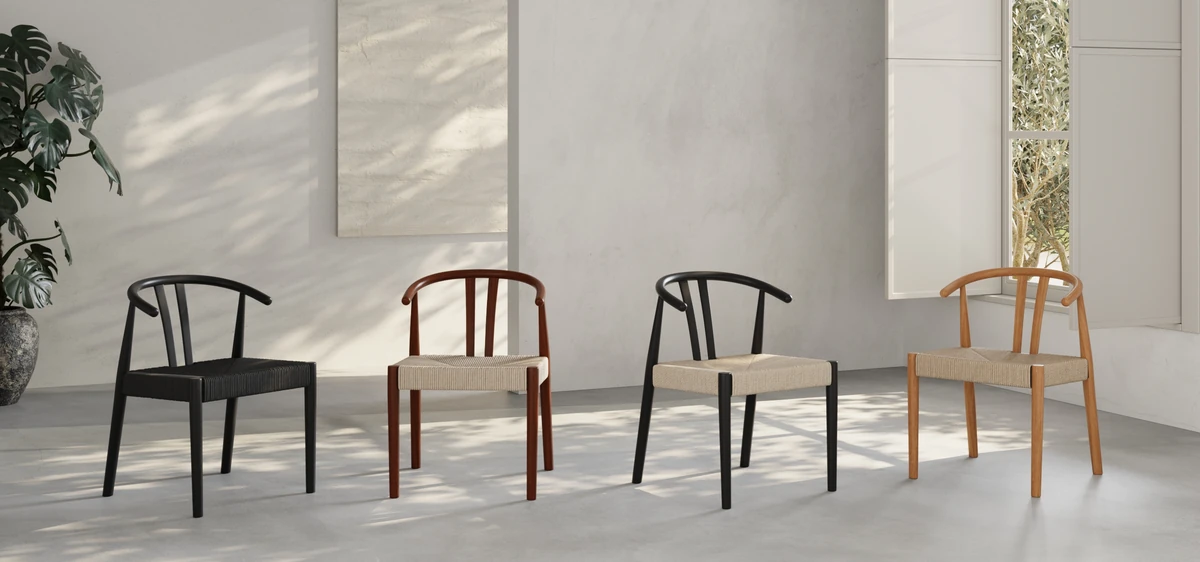
Three layers, three decisions
Frame for longevity. Seat for daily use. Finish for repairability.
The chair that lasts is the one where all three layers fit your house. Oak frame with rattan seat and oil finish suits a quiet adult household. Beech frame with performance fabric and lacquer suits a kitchen with two toddlers. Walnut frame with leather and oil suits a household who plans to keep the chair 25 years and patinate it deliberately.
Browse our full dining chair collection filtered by material. Wooden chairs start at €89, velvet from €119, rattan from €99, leather from €169. Pillar reference: the dining chairs buying guide.
Frequently asked.
What is the most durable wood for dining chairs?
Oak (Janka 1360) and ash (Janka 1320) are the two most durable common woods. Beech (Janka 1300) is nearly as hard and is the most-used dining chair wood in Europe because it bends well under steam, which is how curved chair backs are made. Walnut is softer (Janka 1010) but rarely fails on a dining chair because it is used in lower-impact pieces.
Is faux leather worth it?
Yes for households with young children or pets. Polyurethane faux leather (PU) wipes clean, holds up 5 to 8 years, and costs 60 percent less than real leather. The trade-off is it does not develop a patina, and when it cracks at the corners (years 5 to 7) you replace the chair rather than repair it. Real leather repairs forever.
What is paper rush?
Paper rush is twisted kraft paper cord, dyed and waxed, woven into the seat panel of a dining chair. It looks similar to natural rush or rattan and is common on Scandinavian dining chairs from the 1950s. It re-weaves every 8 to 12 years under normal dining use; a craftsman charges €30 to €50 per chair to redo it.
Oil or lacquer finish on dining chairs?
Oil (linseed, tung, hardwax) penetrates the wood, repairs spot-by-spot, and feels natural to the touch. Lacquer sits on the surface, resists water and stains better, and is harder to repair without refinishing the whole chair. Oil for households who care about feel, lacquer for households who care about stains.
How long does upholstered velvet last on a dining chair?
6 to 10 years with monthly vacuuming and stain treatment within an hour of spills. Polyester velvet outlasts cotton velvet by 3 to 5 years in everyday dining use because it does not flatten as fast. Crushed velvet (deliberate textured nap) hides wear better than smooth velvet.
What is the most sustainable dining chair material?
FSC-certified European beech or oak with a water-based finish has the lowest footprint of the common materials. Rattan is renewable (harvested at 5 to 7 years of growth) but ships from Southeast Asia, which adds transport emissions. Recycled aluminium frames are also low-impact and last 20 plus years without refinishing.
