 9800+ TRUSTPILOT REVIEWS


 EN
EN DE
DE FR
FR NL
NL
A dining chair has to fit the table, fit the room, hold the people who will sit in it for two-hour dinners, and not look dated in five years. None of that shows up in a product photo. This is the framework we use ourselves.
Seven steps, in order. Each one rules out chairs that look right in the listing but fail in your kitchen. Take the steps in sequence and you will end up with a shortlist of three to five chairs that all work, not a wishlist of fifty that mostly do not.
Start with the table, not the chair
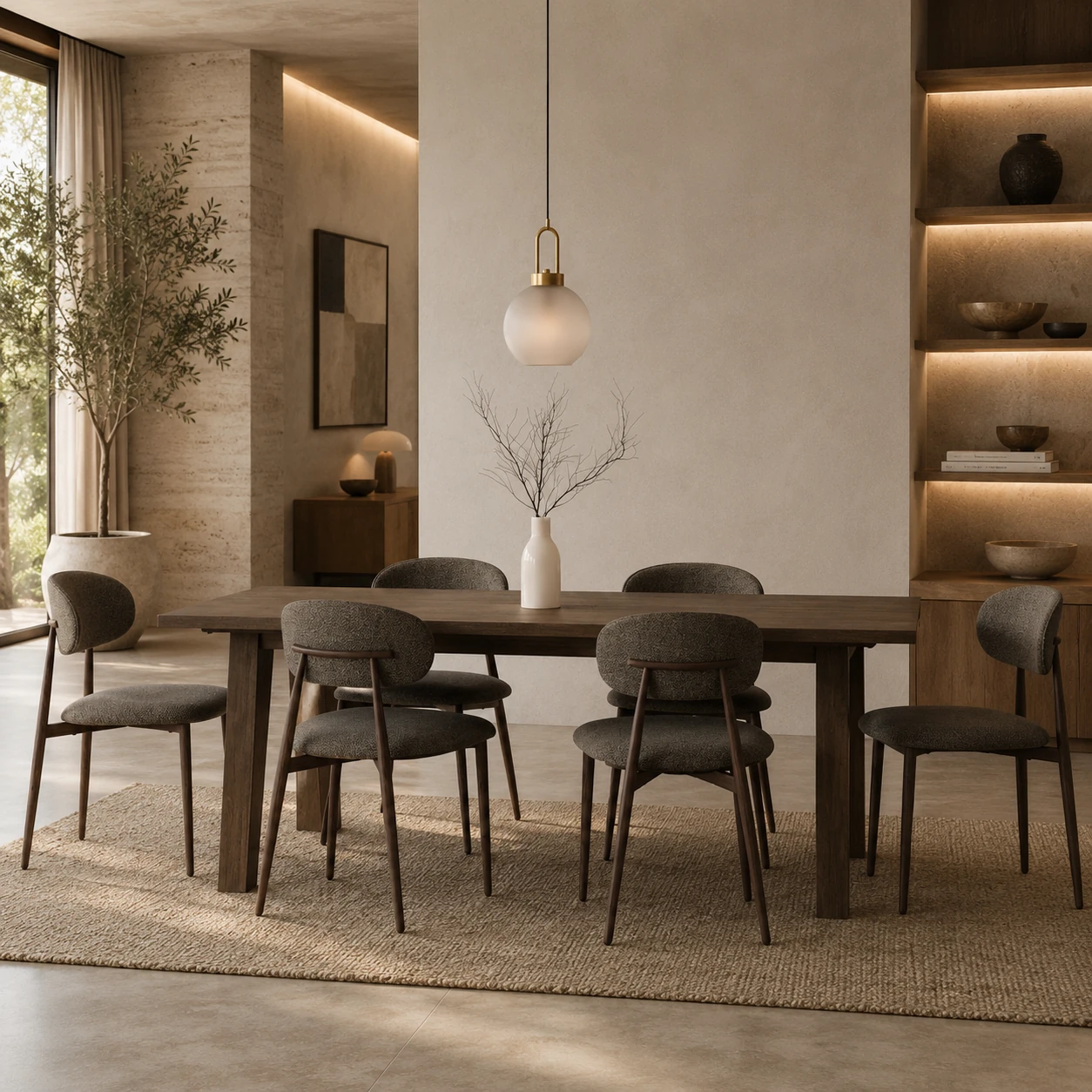
Most people pick the chair first and then notice the table is the wrong height. Reverse it. The table is fixed: it has dimensions you cannot change. The chair has to fit around them.
- Length and width: measure the table top edge to edge and the apron underneath. The apron is the wooden skirt that joins the legs to the top. A deep apron eats your knee clearance.
- Height: dining tables are almost always 74 to 76 cm. If yours is 78 cm or 72 cm, the standard 46 cm seat height will feel wrong.
- Knee clearance: measure from the floor to the underside of the apron. You need at least 60 cm for comfortable sitting, 65 cm if the chairs have arms.
- Per-seat width: 60 cm of table edge per place setting for daily use, 70 cm if you host. Below 55 cm and plates overlap.
A 160 cm rectangular table seats 6 in everyday use (60 cm × 2 places per long side + 2 ends), 4 if you want armchairs at the heads. A 180 cm seats 6 comfortably. A 200 cm seats 8.
Style and material
The chair is the largest piece of upholstery in most dining rooms, even if it is wooden. It sets the tone. Two questions to answer before scrolling product pages.
Pick one anchor
Identify the dominant material already in the room. Light oak floor, walnut floor, white walls with a brass pendant, dark beam ceiling. The chair should either echo that anchor or contrast it cleanly. Echoing reads quiet and considered. Contrasting reads deliberate.
What does not work: a third material that matches neither. A grey velvet chair next to a brown leather sofa next to a pine table reads as a furniture set assembled by accident.
Match material to use
Wood seats wipe clean and last 15 years. Rattan adds warmth but does not handle humidity above 70 percent. Fabric needs a removable cover or a stain-resistant treatment in a house with children or red wine. Velvet shows pet hair the day after you buy it. Faux leather looks like leather and survives small kids; real leather develops a patina but costs three times more.
See our breakdown of dining chair materials for the full comparison.
Decide echo or contrast
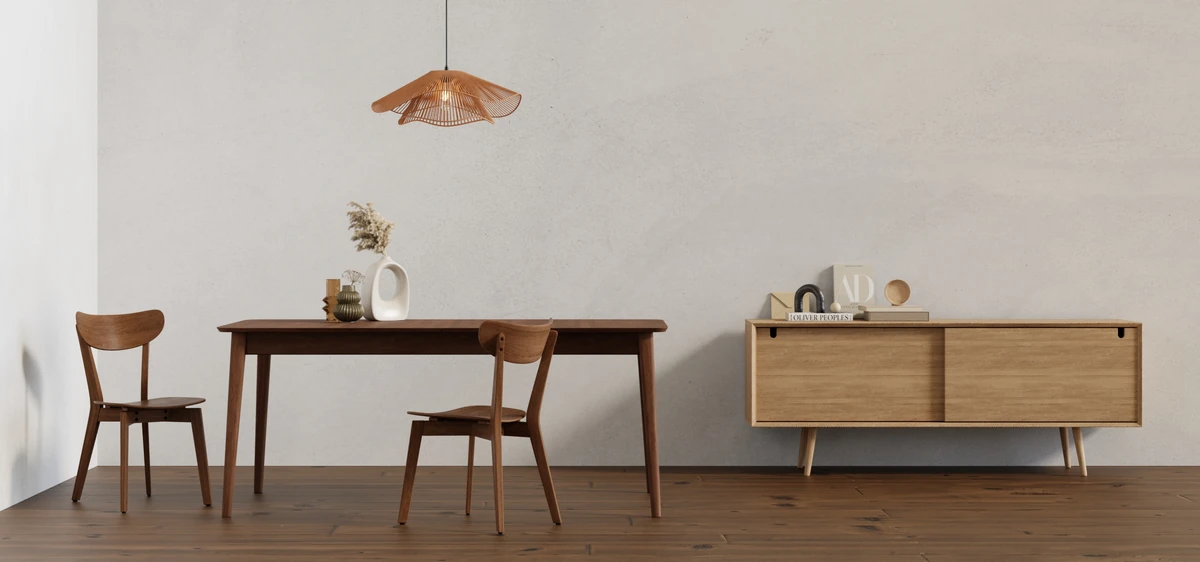
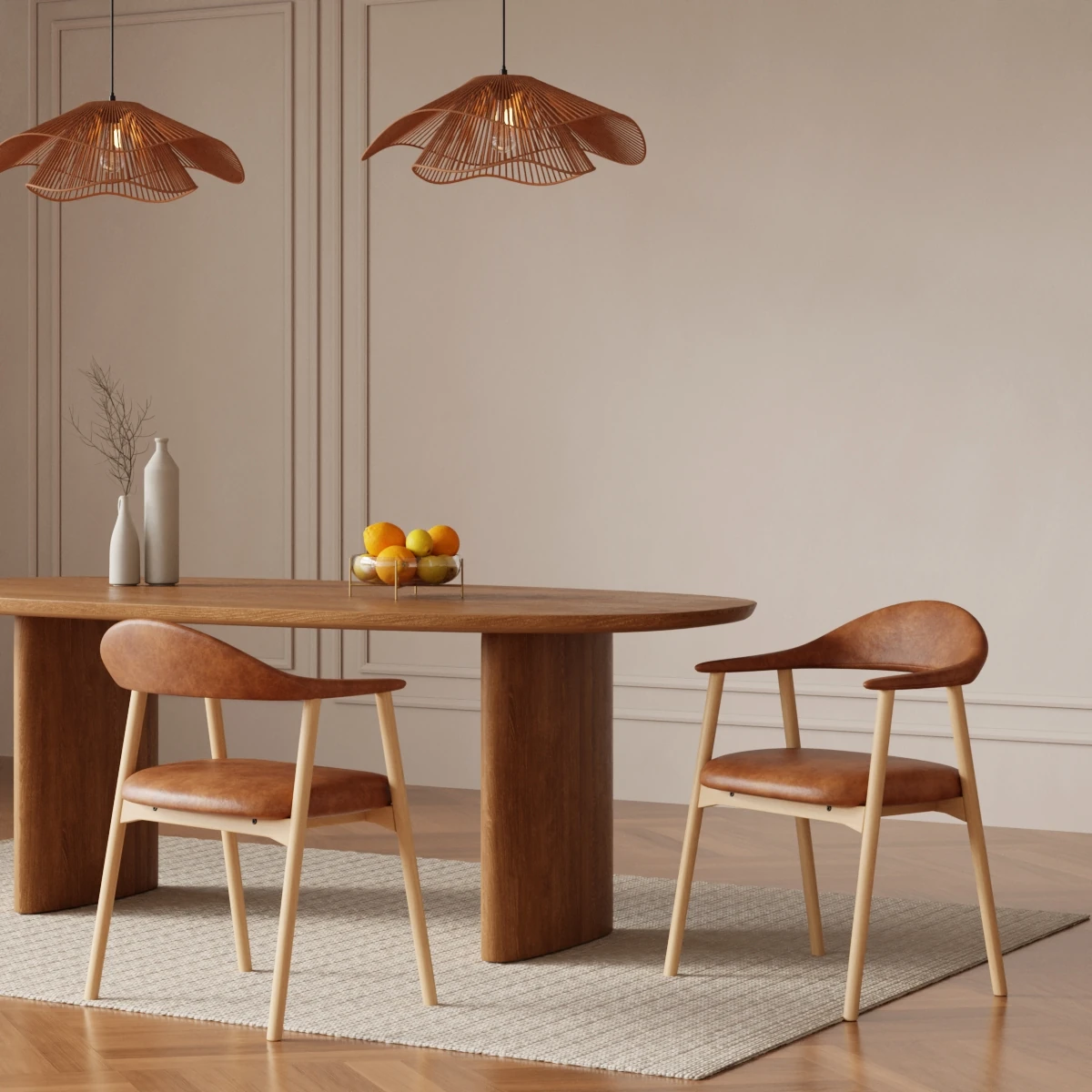
Oak table + oak chair = echo, reads as a set. Oak table + black metal-framed chair = contrast, reads modern. Walnut table + rattan chair = contrast, reads warm. Walnut table + walnut chair = echo, reads heavy.
Pick echo if the rest of the room is busy. Pick contrast if the rest of the room is plain.
Featured in this guide

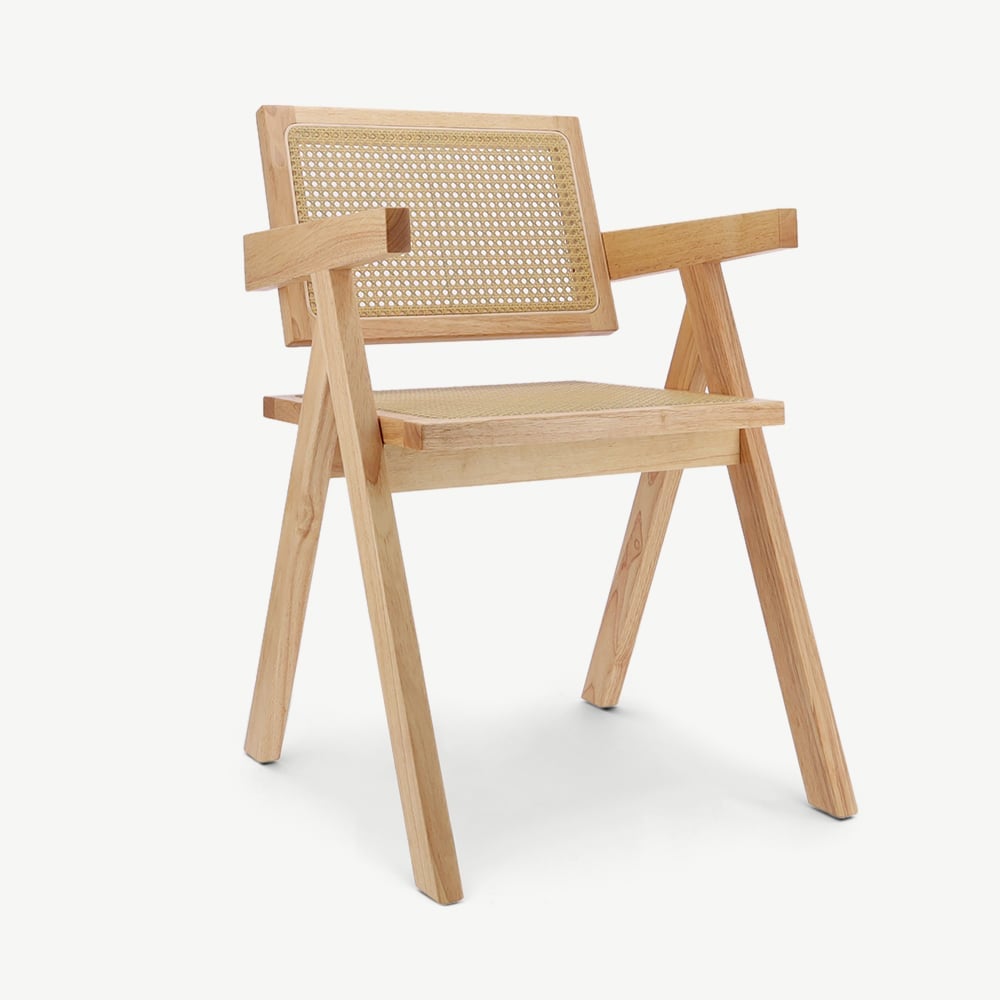
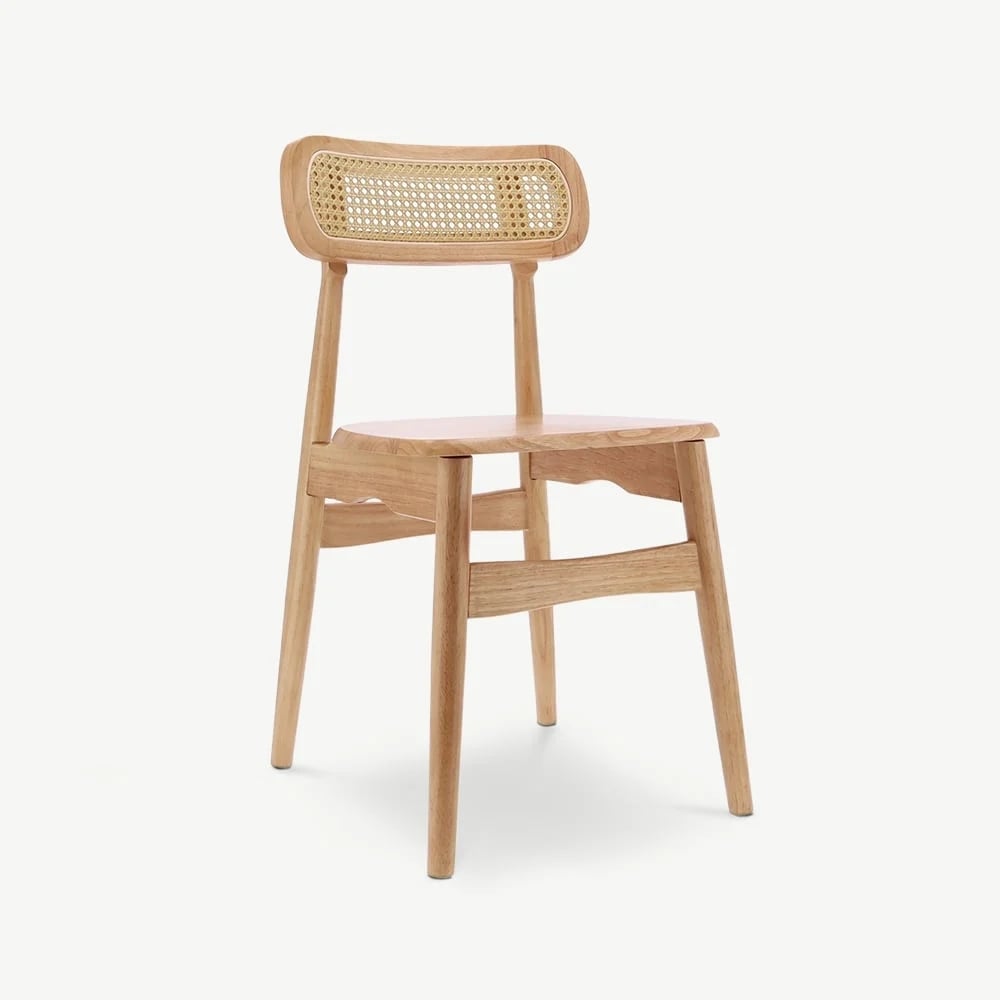
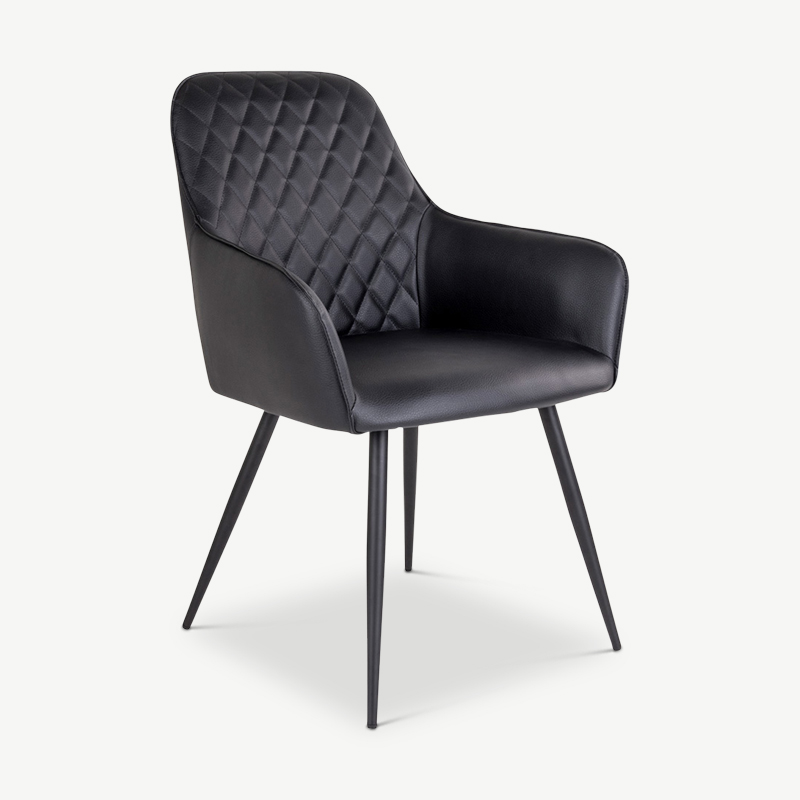
The two numbers that quietly ruin a dining set
Seat height and weight rating are the two specs people skip. Both produce a chair that looks correct in photos and feels wrong in the room. Check them on the spec sheet before adding to basket.
| Table height | Correct seat height | Why |
|---|---|---|
| 72 cm (low) | 42 to 44 cm | Older European farmhouse tables |
| 74 to 76 cm (standard) | 45 to 47 cm | Most dining tables sold today |
| 78 cm (tall) | 48 to 50 cm | Some American imports, breakfast bars |
| 90 cm (counter) | 63 to 66 cm | Use bar stools, not dining chairs |
Seat height should leave 28 to 32 cm between the seat top and the table top. Less and you cannot fit your legs under. More and your shoulders sit below the table edge, which gets uncomfortable inside an hour.
For weight rating, look for 110 kg static load minimum, certified to EN 16139 if available. The certification matters because chairs are tested by rocking back on two legs, which is how most chairs fail. A 110 kg rating without the EN standard is a marketing number.
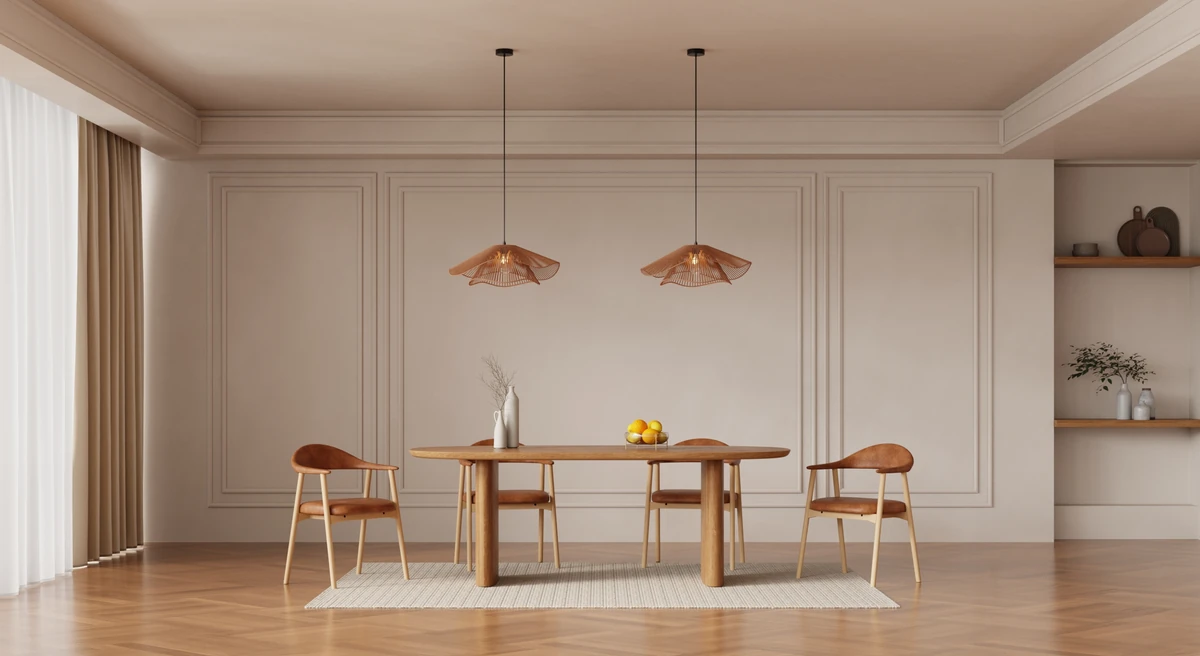
Make sure it actually fits through your door
The final check costs nothing and saves the most stress. Six in ten households live in flats, and three of those six have a lift that fails on dining chairs at some point.
One framework, seven minutes
Table first. Then style. Then material. Then numbers. Then delivery.
Skip any of the seven and you end up with a chair that looks correct in product photos and lives wrong in your kitchen. Most of the chairs returned to us in the first month are returned because of seat height (chair too low, knees hit the apron) or delivery (lift too narrow, customer cannot get the box upstairs). Both are caught at step 5 and step 7.
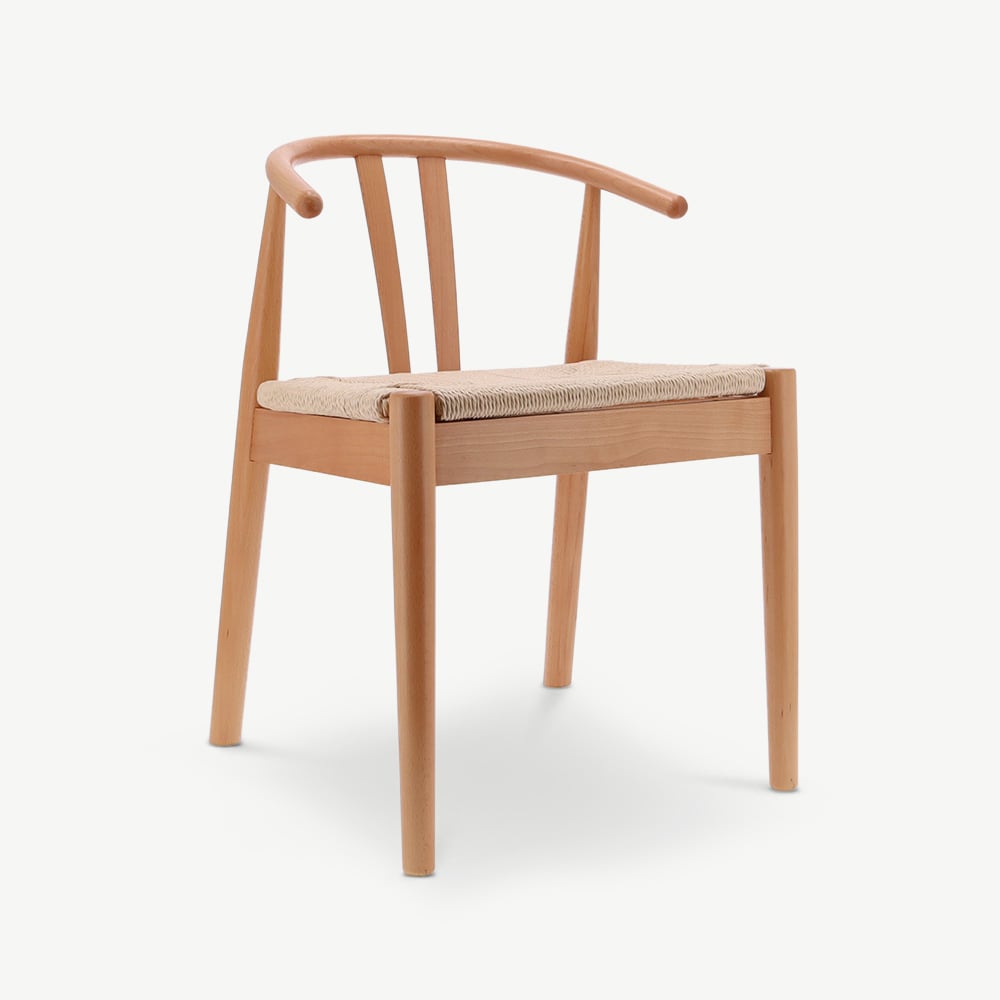
Browse the full dining chair collection with filters for seat height, material, and weight rating built into the sidebar. Prices start at €89 for a single beech chair and run to €199 for the upholstered range. Pillar reference: the dining chairs buying guide.
If the table is also still to be chosen, our dining tables collection uses the same 75 cm height across the range so chair sizing is predictable.
Frequently asked.
What is the standard dining chair seat height?
Standard seat height is 45 to 47 cm, sized to fit a 75 cm dining table with about 28 to 30 cm of clearance between the seat top and the table top. If your table is taller or shorter than 75 cm, adjust the chair height by the same difference: a 72 cm farmhouse table wants a 43 cm seat, a 78 cm table wants a 48 cm seat.
How much space per person at a dining table?
Allow 60 cm of table edge per person for daily use and 70 cm if you want elbow room or plan to host. Below 55 cm, place settings start to overlap and conversation gets crowded. For round tables, work out the circumference (diameter × 3.14) and divide by 60 cm.
Do dining chairs need to match the table?
No. Matching reads as a furniture set bought together (correct, but quiet). Contrasting one anchor material with a different chair, for example a light oak table with a black metal-framed chair, or a walnut table with a rattan chair, feels more deliberate and dates more slowly. Mixing three or more woods in the same room rarely works.
Are armchairs at the head of the table worth it?
Yes if you have the space. Two carvers (armchairs) at the heads of a 200 cm table add about 12 cm of width each, so check that the chairs still tuck under the table when not in use. On a 160 cm table the maths is tight: prefer four side chairs and two carvers only if you have a 70 cm overhang at each end.
What weight should a dining chair hold?
Look for 110 kg static load minimum, certified to EN 16139 or BS 5459 if available. Without the certification, the number is a marketing claim. Restaurant-grade chairs are tested to 150 kg under the same standard and are worth the extra €30 to €50 if you have heavy adults at every dinner or kids who rock back on two legs.
How do I know a dining chair will be comfortable for long dinners?
Look for a back angle of 100 to 105 degrees, lumbar support in the lower third of the back, and a seat depth of 40 to 45 cm. Hard wooden seats are fine for an hour; longer dinners benefit from a 3 to 5 cm padded seat or a tied-on cushion. Avoid chairs marketed as "occasional" for dining use, the cushioning is rated for 20 minutes at a time.
