 9500+ TRUSTPILOT REVIEWS


 EN
EN DE
DE FR
FR NL
NL
A wooden dining chair is a two-decade decision, not a two-season one. The species you pick, the way the frame is joined, and how the surface is finished decide whether the chair wobbles at year eight or your grandchildren still sit on it.
This guide covers four common European species with their Janka hardness values, three joinery methods, three finish types, and which interior style suits which wood. Honest prices from €89 to €160, plus the three weak points that cheap wooden chairs share.
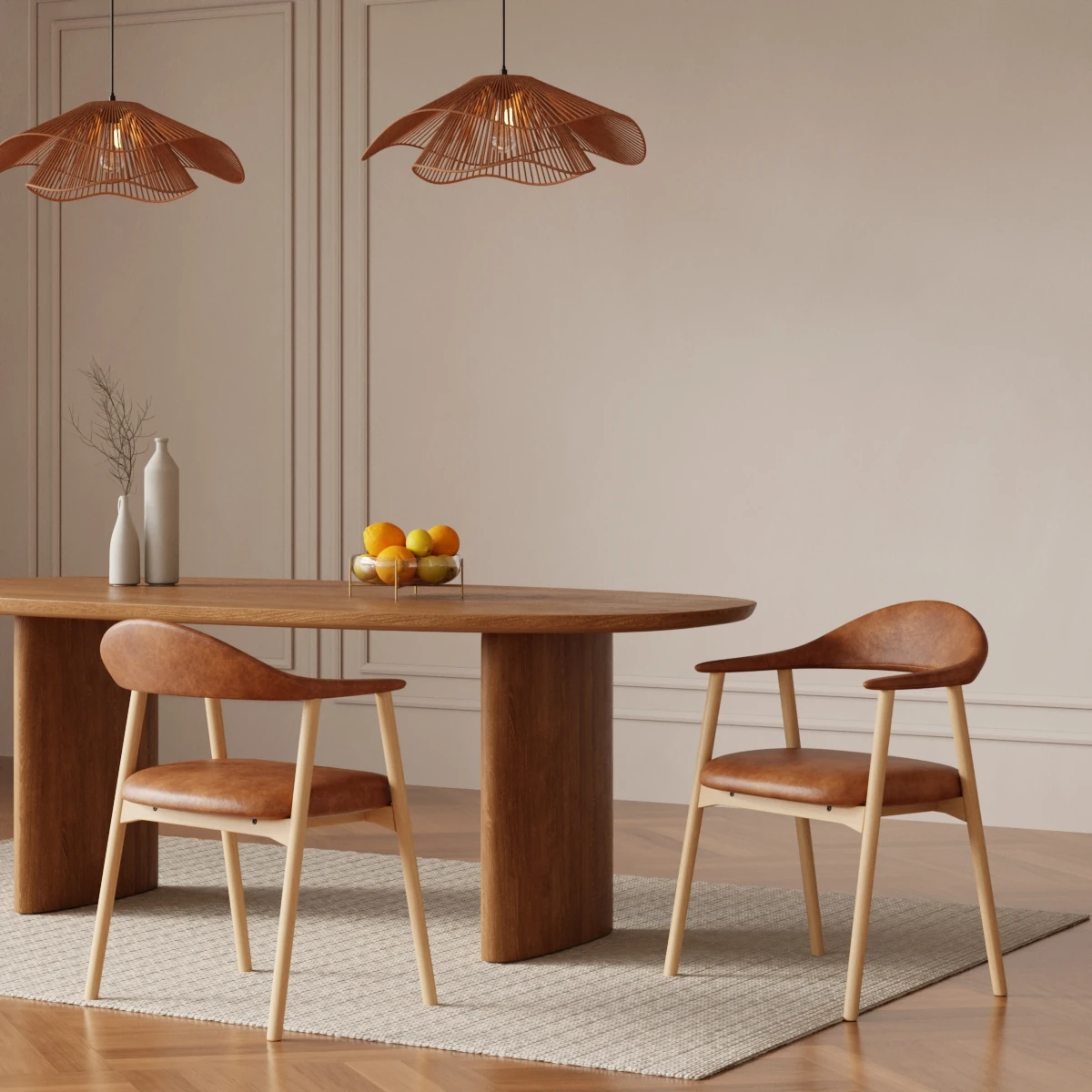
Solid wood ages, particleboard fails
A dining chair carries 60 to 100 kg every day, gets pushed back from the table several times per meal, and survives tens of thousands of sit-stand cycles a year. Solid wood absorbs that load because the grain runs continuously through the frame. Veneer over particleboard chips at the edges as soon as the glue starts to give, usually around year 5 to 8.
The difference does not show on day one. Both chairs look identical in the showroom. You can spot it by weight (solid wood runs 4 to 8 kg per chair, particleboard often closer to 3 kg) and by sound when you tap the seat frame. A hollow note means veneer.
- Solid wood: repairable, sandable, 20+ years of use
- Solid frame with veneer seat: reasonable compromise, 12 to 15 years
- Fully veneered: looks the part for a while, life of 5 to 8 years
Four woods, four characters
The Janka hardness scale measures the force needed to press a steel ball halfway into the wood. For dining chairs it predicts how readily the seat will dent, scratch, and show its age.
Oak
The default wood for European dining rooms. Hard, with a pronounced grain that takes stain and oil evenly. Works against almost any table, from a pale Scandi oak top to a black industrial steel base.
Typical weight 6 to 8 kg per chair. Price range €119 to €160. Lifespan 20 to 30 years with mortise-and-tenon joinery.
Beech
Pale yellow to reddish-brown with fine, even grain. The traditional European choice for school chairs and restaurant seating because it resists splitting under repeated load. Visually quieter than oak.
Weight 5 to 7 kg. Price range €89 to €130. Takes stain readily, so it can be brought to almost any tone.
Ash
Similar hardness to oak but lighter in tone, with more pronounced grain. The classic timber of 1950s and 60s Scandinavian and Danish chair design. Slightly more flex than oak, which makes it more comfortable on long sittings.
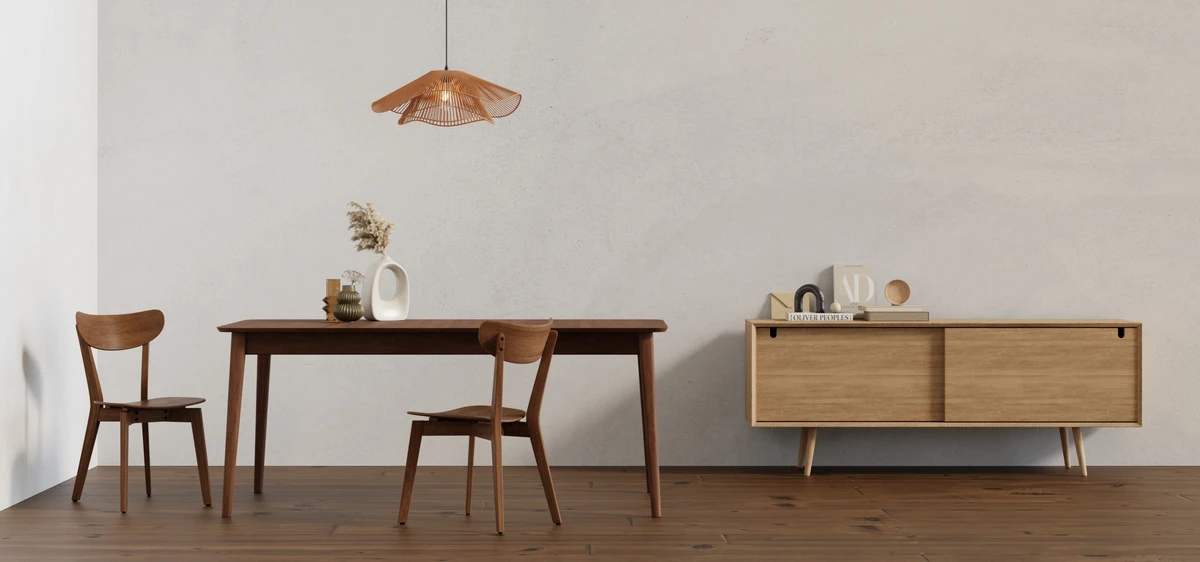
Weight 5 to 7 kg. Price range €129 to €160. Pairs well with Scandinavian dining chairs and teak tables.
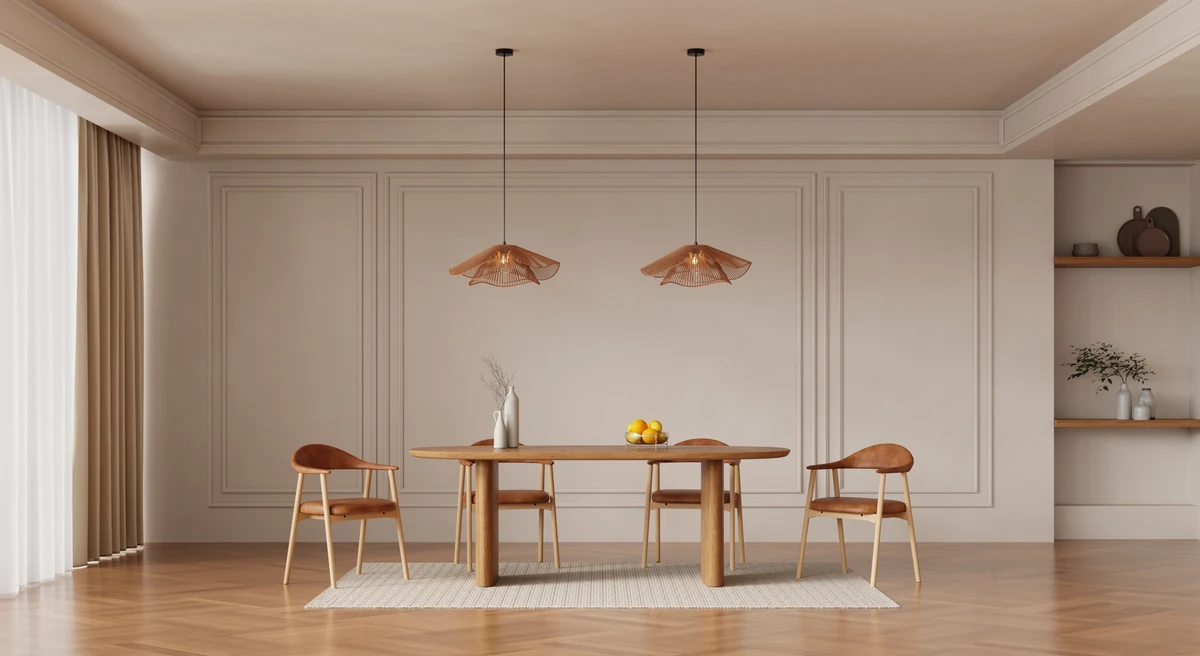
Featured in this guide
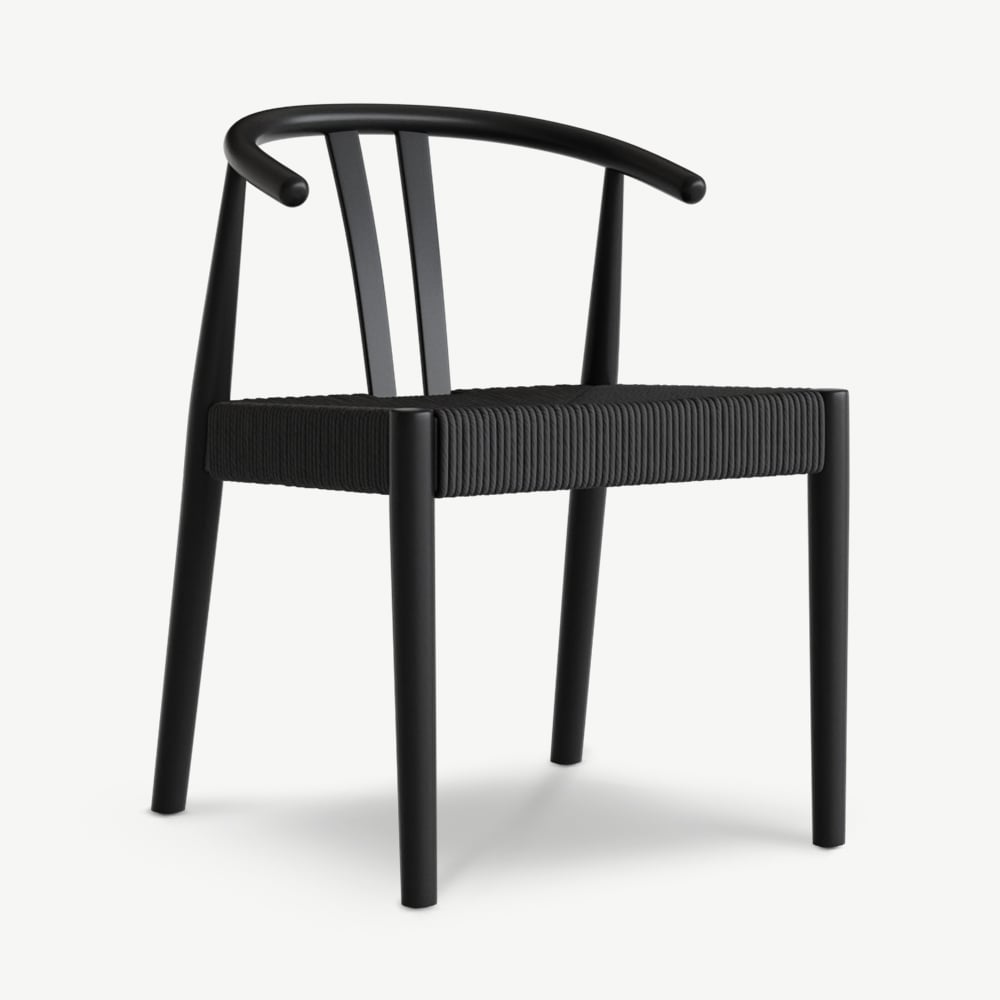


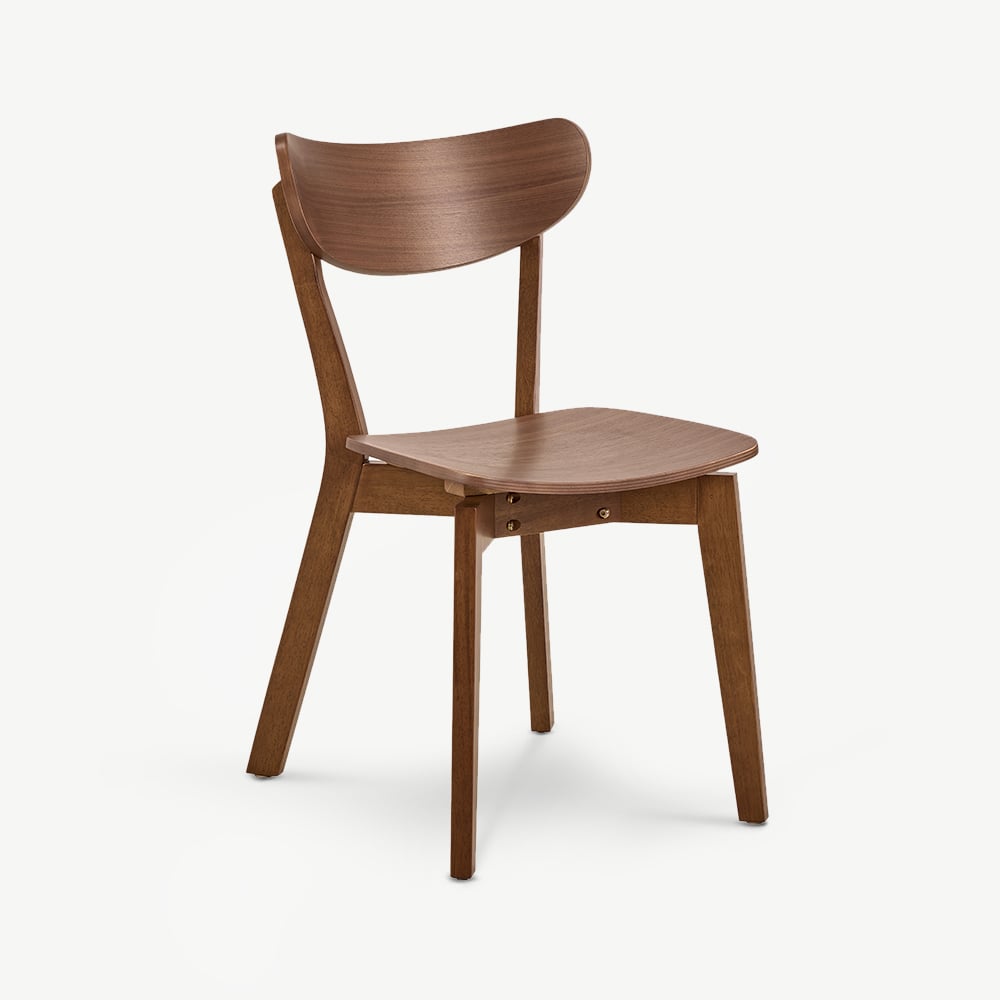

Where the chair actually holds or fails
The most expensive oak in the world will not save a chair if the joint between seat frame and leg gives up at year five. Three joinery methods are common, and they have dramatically different lifespans.
| Joint type | Lifespan | Repairable? |
|---|---|---|
| Mortise and tenon | 20 to 40 years | Yes, re-glue |
| Dowel (glued) | 10 to 15 years | Partially, new dowels needed |
| Screw with corner block | 15 to 25 years | Yes, tighten screw |
| Screw, no corner block | 5 to 8 years | Hole strips out |
You can spot mortise and tenon by looking at where the leg meets the seat: it goes in flush, with no visible screw or dowel. To find dowels or corner blocks, flip the chair over. A triangular wood block in each corner of the seat frame is a good sign; nothing but a screw straight into the leg is a bad one.
Oil, lacquer, or raw: what to know
The finish decides what you can do about red wine spills, whether a scratch is repairable, and how the surface ages. Three options are common, each with clear trade-offs.
Which wooden chair fits your room?
Oak if you cannot decide. Ash for midcentury. Walnut for formal dining rooms. Beech when the budget is tight and the quality still has to hold up.
The honest version: a solid oak chair with mortise-and-tenon joinery at €130 lasts longer than three veneered chairs at €60 each. You pay more once and save replacement twice. Not the most emotionally satisfying answer, but the mathematically correct one.
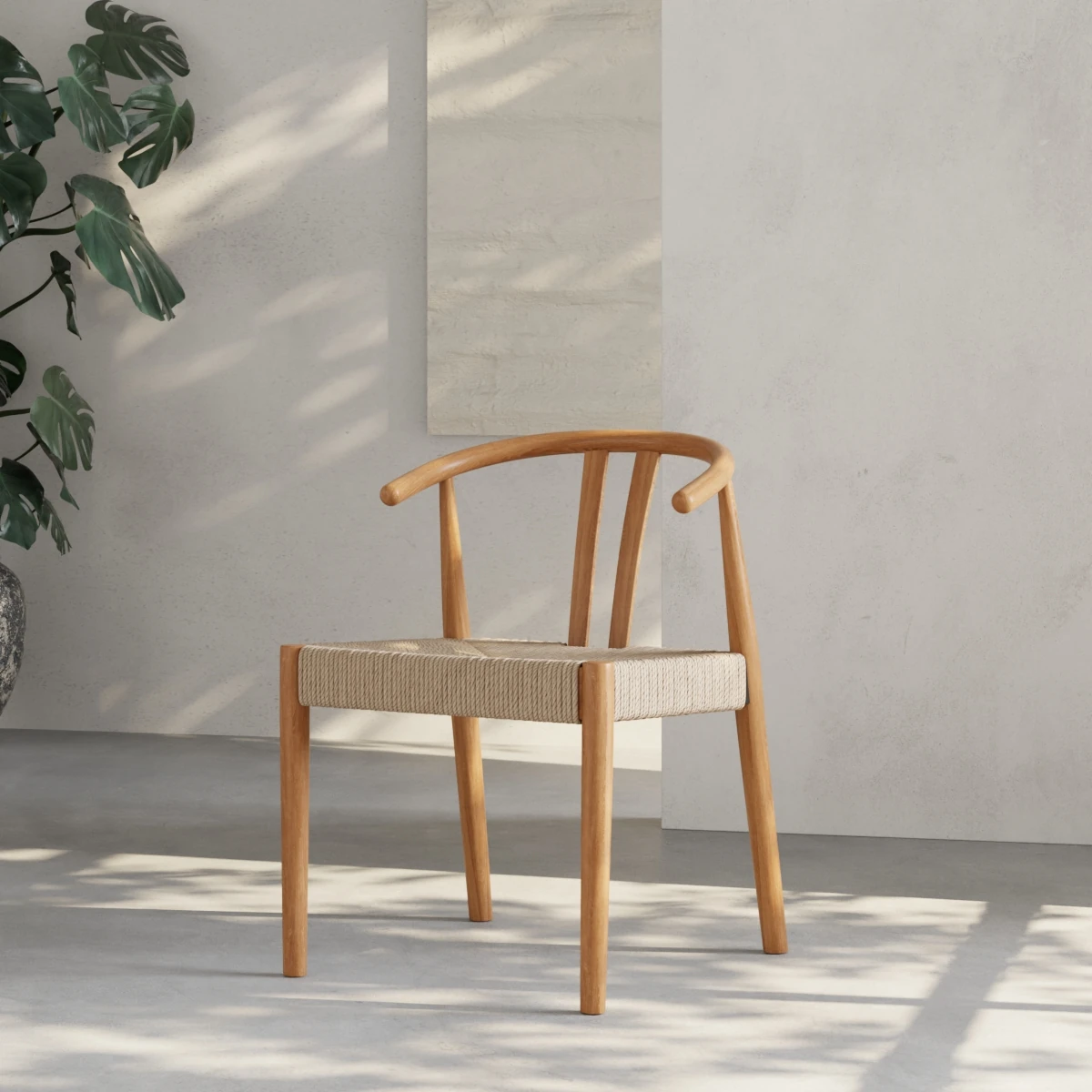
Browse our wooden dining chair selection. Prices from €89 to €160, all with solid wood legs and proper joinery. If you like the natural look mixed with woven elements, see the rattan dining chairs or the Scandinavian range. Looking for a softer aesthetic, the velvet dining chairs pair well with a wooden table.
For the matching table, see our dining tables buying guide. For the full picture on style direction, our Japandi guide, the Scandinavian furniture guide, and the cluster overview in our dining chairs pillar.
Frequently asked.
Which wood lasts longest in a dining chair?
Oak (Janka 1360 lbf) is the most durable of the common European dining-chair woods. Ash (1320) and beech (1300) are nearly equivalent and cost less. Walnut looks more formal but is softer at 1010 Janka, so it dents more readily. For a 20-year horizon, choose solid oak or ash with proper joinery, not veneer over particleboard.
What does a good solid wood dining chair cost?
A well-built solid wood dining chair with mortise-and-tenon joinery costs between €89 and €160 per seat. Below that range you almost always get veneered particleboard with dowel joints, which start to loosen within 5 to 8 years. Restaurant-grade construction with screw-plus-corner-block joinery begins around €180.
Oil, lacquer, or raw: which finish is best?
Oiled finishes are repairable: a scratch can be sanded locally and re-oiled without redoing the whole surface. Lacquer is tougher against stains but cannot be spot-repaired; damage means refinishing the entire piece. Wax looks warm but needs reapplying every 6 to 12 months. For families with kids: choose oil or lacquer, not wax.
Can wooden chairs work with a white or black dining table?
Yes. Oak and ash read neutral enough to work with white lacquered tables and black metal-leg tables alike. Walnut pairs better with black or marble tops; against a white table the contrast can feel heavy. Beech is the safest choice for buyers who are undecided, since it suits almost any tabletop tone.
How heavy should a good wooden dining chair be?
A solid wood dining chair typically weighs 4 to 8 kg. Under 4 kg usually means hollow legs, thin seat panels, or veneered construction. Over 8 kg becomes awkward in daily use, especially if the chair is pulled out several times a day. Oak chairs are typically 6 to 8 kg, ash and beech 5 to 7 kg.
What do you do if a wooden chair starts to wobble?
If a mortise-and-tenon joint is loose, the glue has failed. A cabinetmaker takes the joint apart, cleans the tenons, and re-glues. Cost €30 to €50 per chair. If a screw joint wobbles, it often just needs tightening. If the screw hole has stripped, the fix is to plug it with a wood dowel and drive the screw in again.
