9800+ TRUSTPILOT REVIEWS

 EN
EN DE
DE FR
FR NL
NL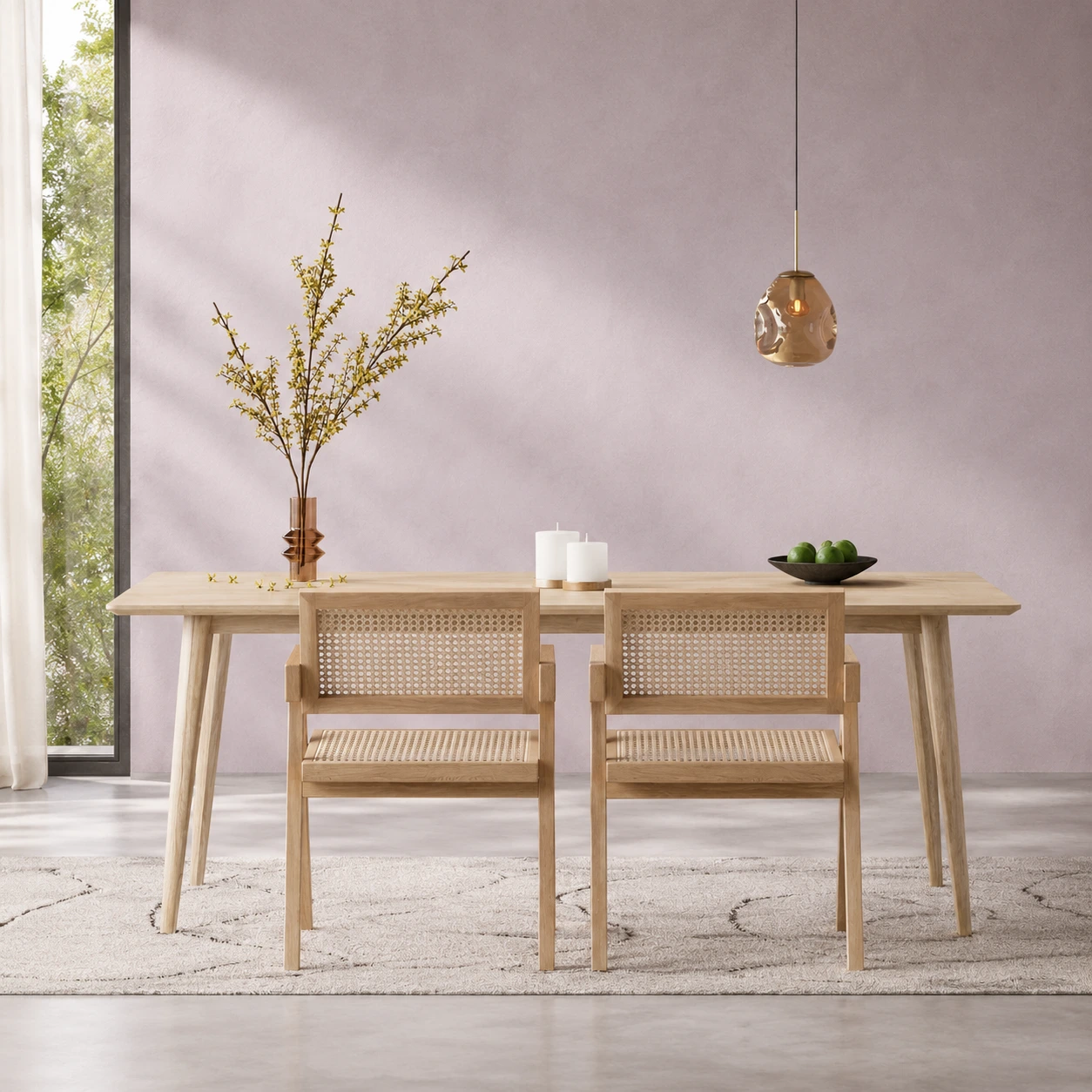
Most people confuse the material with the weave. Rattan is a climbing palm harvested in tropical Asia. Wicker is what you do with it: a technique, not a thing. A rattan chair is made from the stem of that palm, bent into a frame, woven into a seat panel, or both.
This guide covers what rattan is made of, the three types of construction sold under the rattan label, how long each lasts in different conditions, and the four maintenance habits that extend the lifespan by years. For the full buying framework around the chair itself, see our dining chairs buying guide; for the wider material context across sofas, beds, and tables, see the rattan furniture guide.
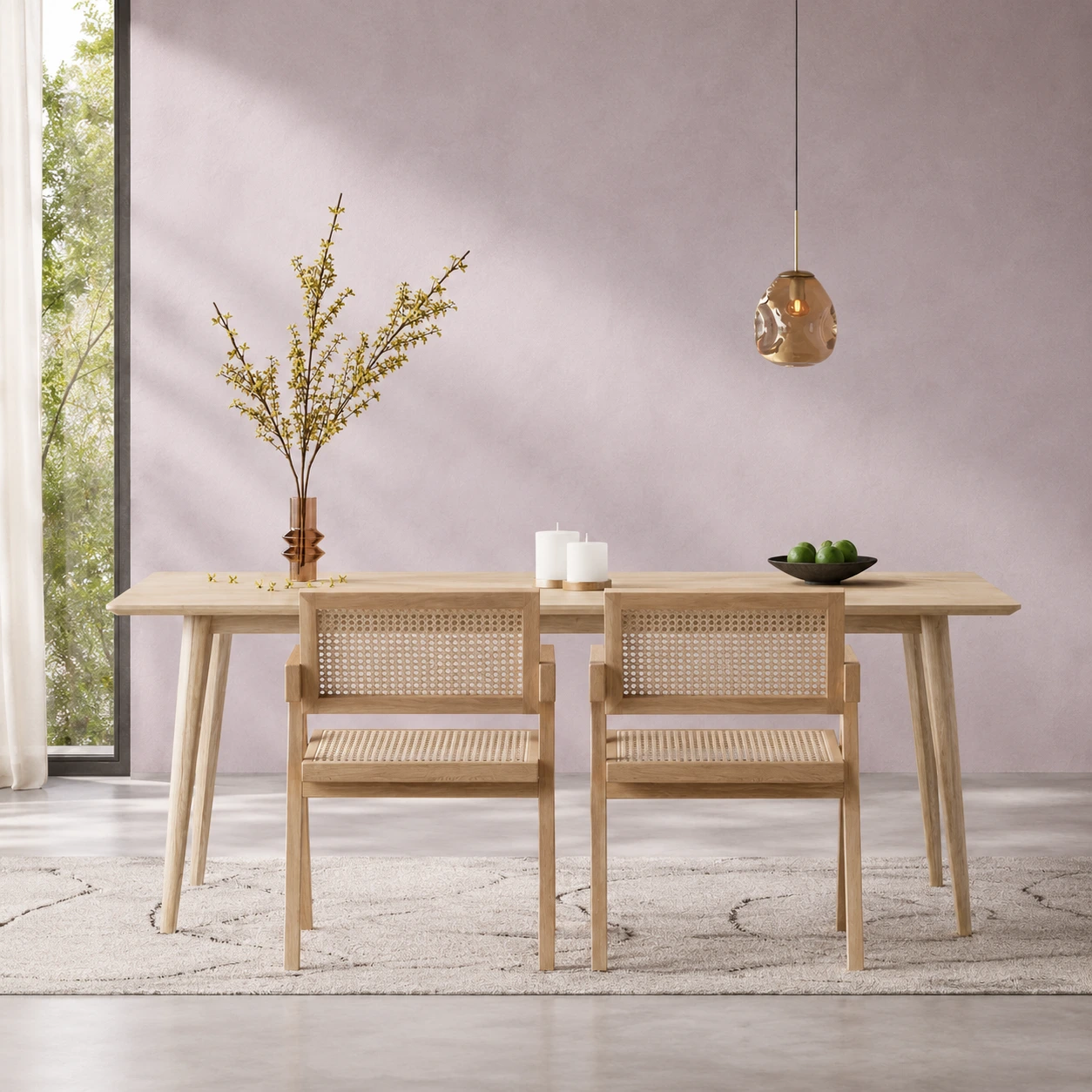
It starts as a vine, not a tree
Rattan grows in the tropical forests of Southeast Asia, Indonesia, and the Philippines. Unlike wood, it is a climbing palm: a long, flexible stem that runs through the forest canopy before harvest. Growers cut it at 5 to 7 years of growth, when the cane has hardened enough to hold its shape permanently.
The cane is peeled, steam-bent into furniture frames, and dried. The outer skin strips into the split cane used for weaving seat panels and backrests. The inner pith becomes the binding material at the joints. One pole provides all three components of the finished chair.
- Solid poles: form the legs, arms, and backrest frame
- Split cane: woven into seat and back panels in the pattern you see
- Inner pith: thinner strips used for wrapping and binding joints
Three things sold as rattan chairs
The word rattan covers more than one material. Here is what each construction means in practice, and what it tells you about durability and repairability.
Natural rattan
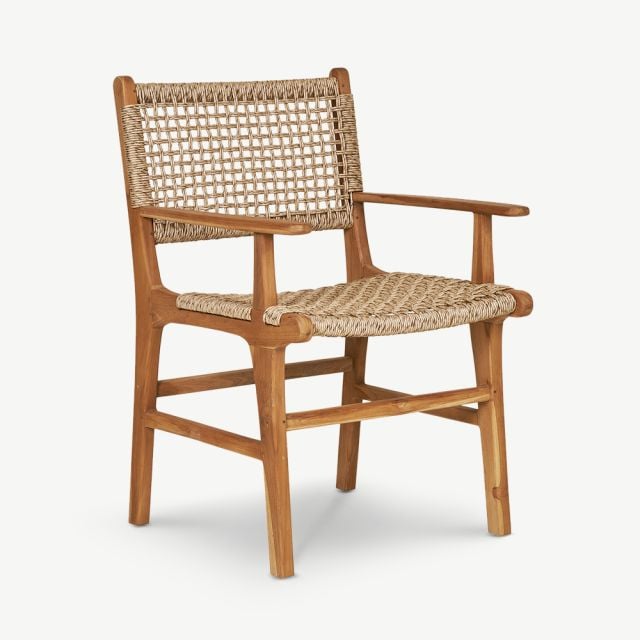
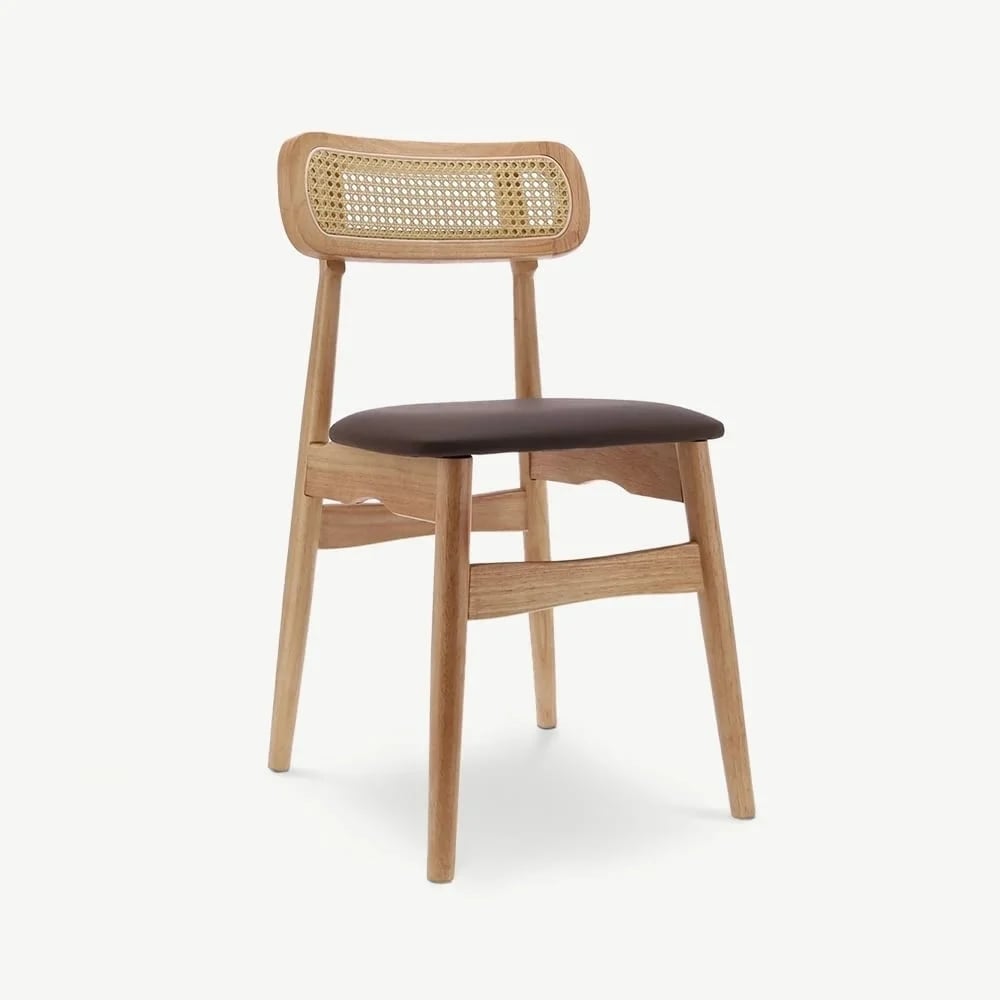
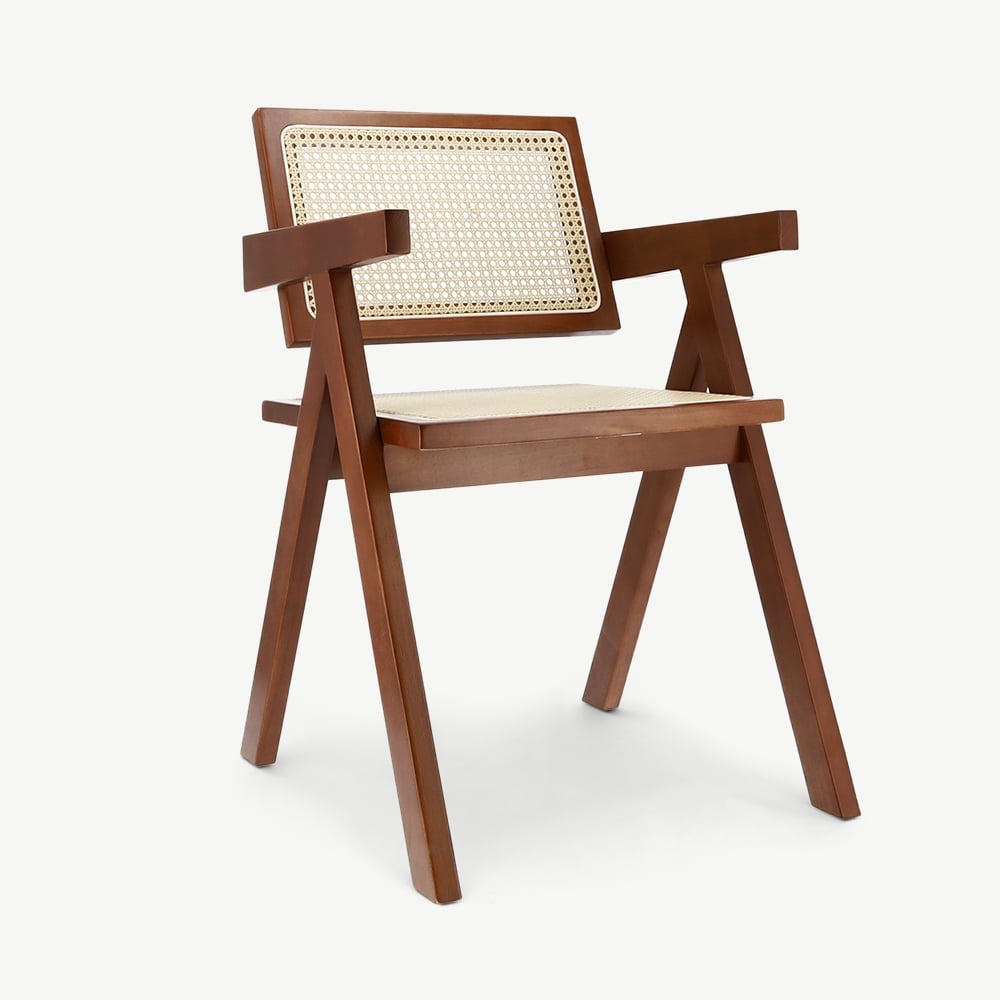
The real thing: solid rattan poles for the frame, split-cane panels woven into the seat and back. Identifiable by slightly irregular poles, visible nodes (the joints along the cane), and a warm honey-to-dark finish that varies between pieces.
Dents rather than cracks under impact. A damaged panel can be re-woven by a craftsman for €40 to €80. Lasts 15 to 25 years indoors with basic care.
Synthetic rattan (PE)
Polyethylene strands woven over a powder-coated steel or aluminium frame. Looks similar to natural rattan at a glance, but has no nodes, uniform colour throughout, and a slightly waxy texture on close inspection.
Better for outdoor and high-humidity environments. Lifespan depends mostly on the frame: aluminium lasts 10 to 18 years; cheap steel rusts within 3 to 5.
Paper rush / seagrass
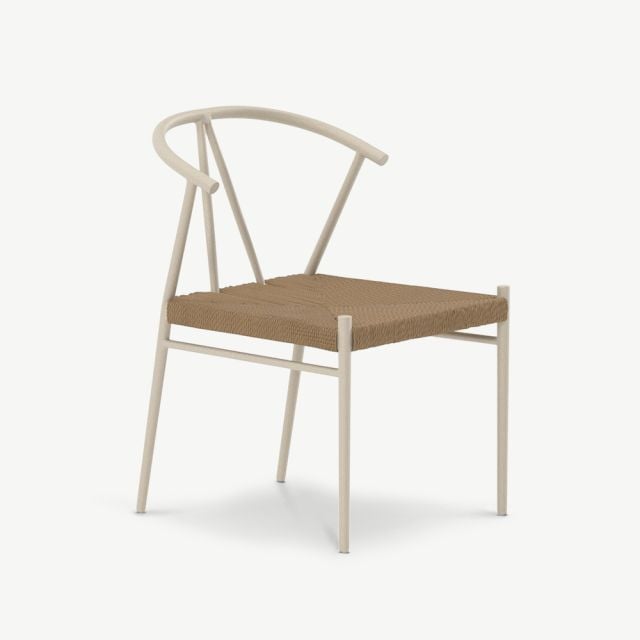
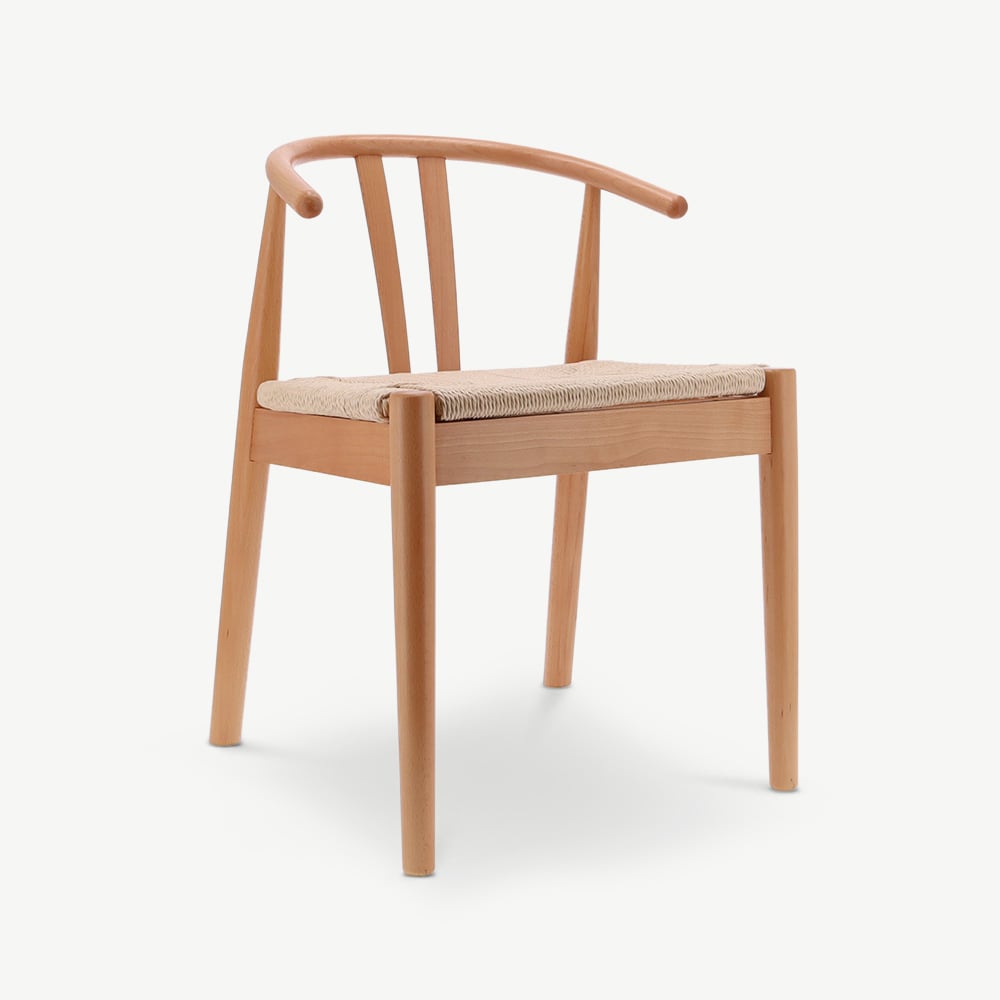
Twisted paper cord or natural seagrass woven into the seat. Common on Scandinavian dining chairs from the mid-20th century, revived in the current natural-materials trend. Not the same material as rattan.
Water damages paper rush quickly. Expect re-weaving every 8 to 12 years under normal dining use, more frequently than natural rattan requires.
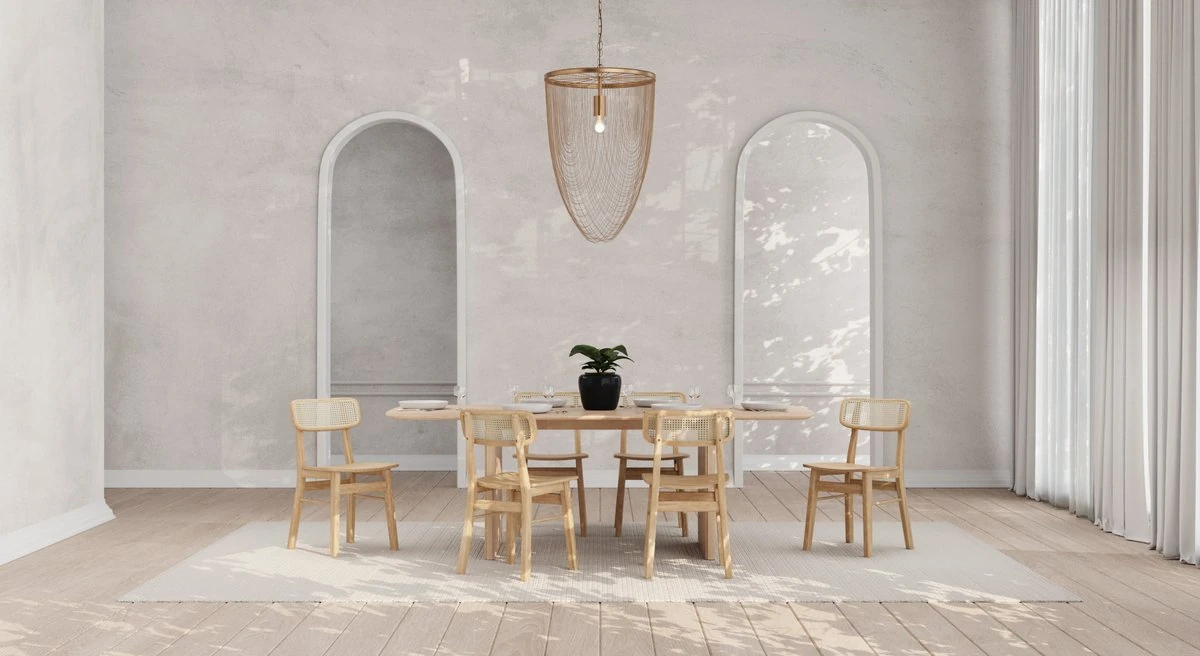
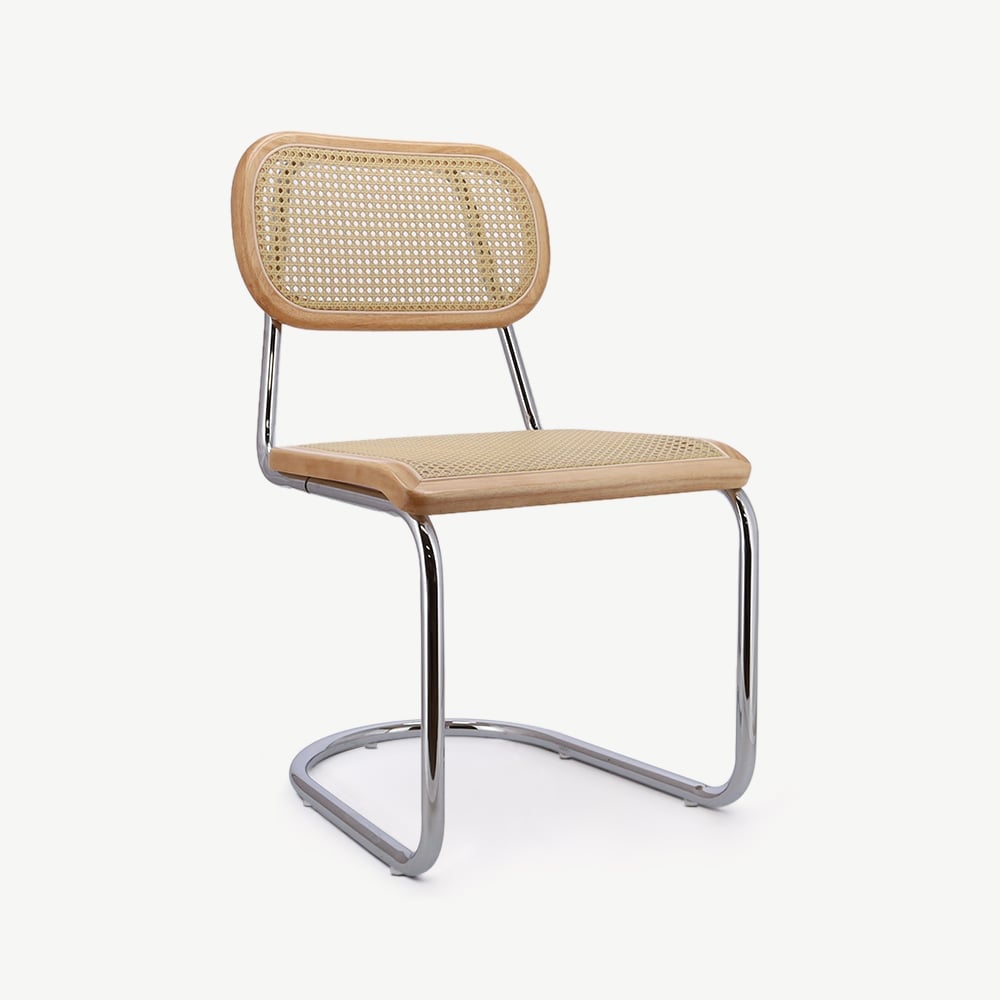
Rattan chairs from this guide

How long does rattan actually last?
The answer depends almost entirely on where you keep it. Natural rattan is hygroscopic: it absorbs and releases moisture as humidity changes, which is what keeps it flexible. That same quality makes it sensitive to extremes in either direction.
| Condition | Natural rattan | Synthetic (PE) |
|---|---|---|
| Indoors, temperate | 15 to 25 years | 10 to 15 years |
| Covered outdoor (verandah) | 5 to 8 years | 12 to 18 years |
| Fully exposed outdoor | 2 to 3 years | 8 to 12 years |
| High humidity (conservatory) | 3 to 5 years | Not affected |
The 15 to 25 year indoor figure assumes the chair is kept away from radiators and direct sun. Both dry the fibres and accelerate cracking at the joints. Most chairs that fail early do so because of one summer next to a south-facing window.
Four habits that keep rattan in good condition
Rattan does not need much attention. These four habits cover everything a natural rattan dining chair needs to reach the upper end of its lifespan.
Is a rattan chair worth it?
Yes, if it is natural rattan and it stays indoors.
Synthetic alternatives outperform natural rattan in outdoor conditions, but natural rattan outlasts most upholstered dining chairs when kept inside, and it can be repaired rather than replaced. A split-cane panel re-woven by a craftsman costs €40 to €80. A replacement chair costs €100 to €150. The maths favour repair.
Browse our rattan dining chair collection. Prices start at €99, with most natural-rattan dining chairs sitting between €119 and €139. For outdoor use, our synthetic rattan range starts at the same price point with the UV and moisture stability that outdoor conditions require.
If you are drawn to the natural aesthetic, our Japandi furniture collection pairs rattan with light oak and linen in a style that suits rattan very well.
Frequently asked.
What is the difference between rattan and wicker?
Rattan is a material: the stem of a climbing palm grown in Southeast Asia. Wicker is a technique: the over-under weaving method used to make seat panels and backrests. A rattan chair uses rattan as the raw material and wicker as the construction method. The two terms describe different things and are not interchangeable, though they are often used as if they were.
What is rattan made of?
Rattan comes from the stem of a climbing palm (genus Calamus) grown mainly in Indonesia, Malaysia, and the Philippines. The cane is harvested at 5 to 7 years of growth, steam-bent into furniture frames, and dried. The outer skin becomes the split-cane weaving material on seat panels. The inner pith is used for binding the joints and smaller detail work.
How long does a rattan chair last indoors?
Natural rattan dining chairs typically last 15 to 25 years indoors with basic care. The main threats are direct sunlight, which fades and dries the fibres, and proximity to radiators, which causes the joints to crack. Keep it away from both and rattan will outlast most upholstered dining chairs bought in the same price range.
What happens to a rattan chair if it gets wet?
Occasional moisture is fine: rattan can handle a spill wiped up quickly. Prolonged saturation is the problem. It causes the fibres to swell, the weave to loosen, and mould to form in the joints. If a rattan chair gets thoroughly soaked, let it dry completely in a ventilated room before sitting on it again. Do not dry it next to a heat source, which causes the opposite problem.
Are rattan chairs good dining chairs?
Natural rattan dining chairs are a practical choice for most homes. They are lighter than solid wood, repairable when damaged, and durable over 15 to 25 years indoors. The main limitation is moisture sensitivity, which rules them out for conservatories, bathrooms, and covered outdoor spaces in wet climates. For those environments, synthetic rattan over an aluminium frame is the better option.
Can rattan chairs be used outdoors?
Natural rattan is not suited to exposed outdoor use. It lasts 2 to 3 years fully outdoors and 5 to 8 years in a covered position such as a verandah. For outdoor dining, synthetic rattan (PE weave over a powder-coated aluminium frame) is the correct choice: 8 to 12 years exposed, up to 18 years in a covered outdoor position.