 9800+ TRUSTPILOT REVIEWS


 EN
EN DE
DE FR
FR NL
NL
Scandinavian design in the dining room is less a style than a discipline. Light hardwoods, clean lines, visible joinery, no gloss. What started as a workshop principle in Copenhagen and Stockholm in the 1950s is now the most copied furniture aesthetic in Europe, which is precisely why the real thing has become harder to spot.
This guide covers what actually makes a dining chair Scandinavian, which wood species are typical, how to separate honest joinery from Scandi-styled imitation, and which Furnicher chair families fit which dining tables. With specific dimensions, named wood species, and prices between EUR 119 and EUR 179.
Function first, decoration never
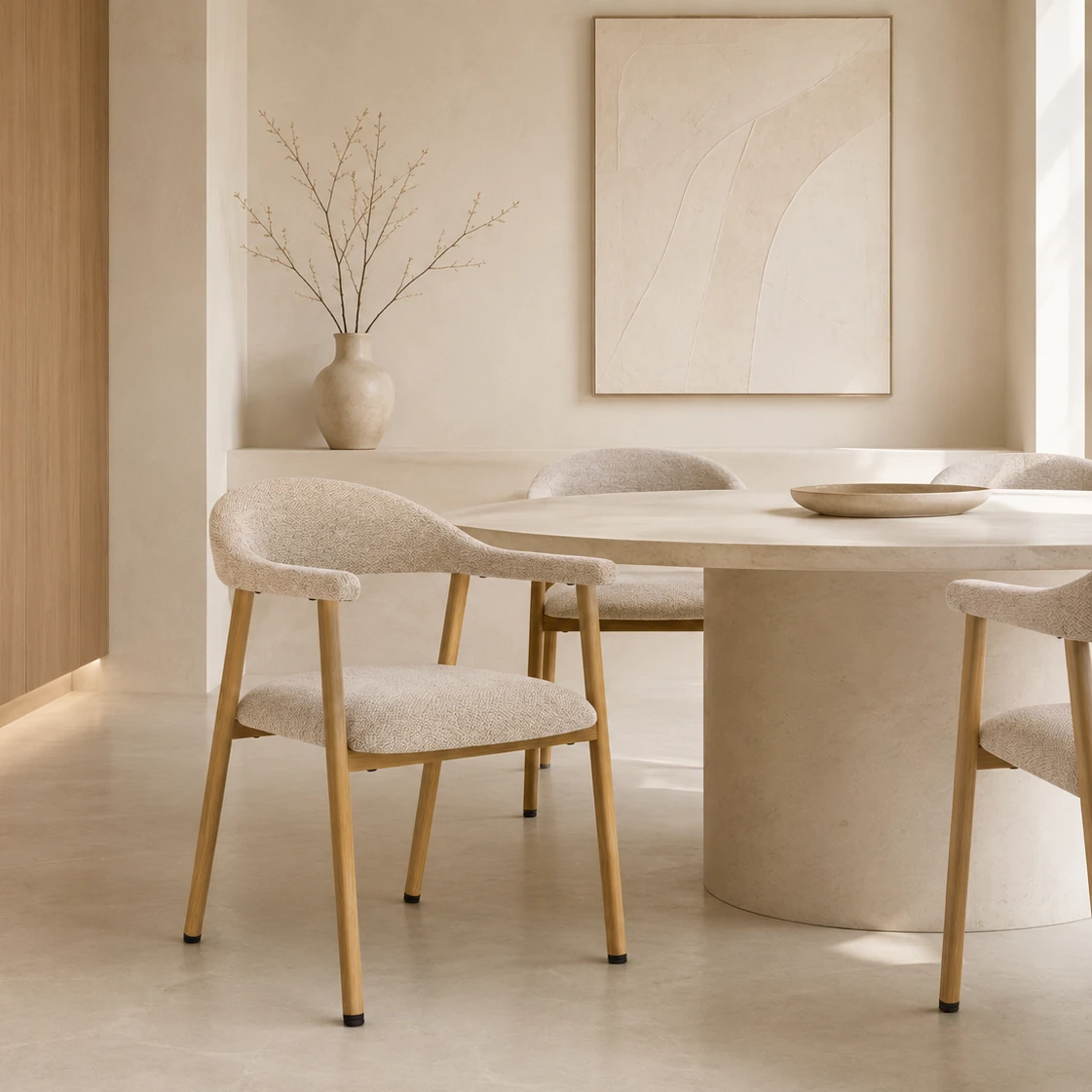
The Scandinavian school strips the dining chair back to what it has to do: hold an adult comfortably through a two-hour dinner, take 110 kg of load, fit a small flat, and look as good after a decade as on day one. Anything that does not serve that brief is left out.
In practice that means solid wood instead of veneer on MDF, pale natural tones instead of dark stains, matte oil-wax instead of gloss lacquer. Legs are usually tapered (wider at top than bottom), backrests follow the spine instead of running flat upwards, and a finished chair weighs under 5 kg so you can move it with one hand.
- Light wood: beech, ash, oak, occasionally birch
- Visible joinery: mortise and tenon, no hidden screws
- Matte finish: oil-wax or satin lacquer, never gloss
- Minimal padding: wood seat or thin 2 to 4 cm cushioning
Beech, ash, oak: what changes between them
Scandinavian chairs live or die by the wood. The species you choose affects price, grain pattern, weight, and what the chair looks like after five years of use.
Beech
The workhorse of Scandinavian chair production. Beech is dense, stable, and accepts stain evenly. The grain is fine and visually quiet, which suits the restrained aesthetic of the style.
Weakness: in direct sunlight, untreated beech yellows slightly to a reddish tone within two years. Oil the chair once a year and the tone stays put. Price: typically EUR 119 to EUR 149.
Ash
Ash has a long, straight grain that stays visible and gives the chair character. The wood flexes a little under load, which noticeably improves seating comfort without any padding.
Ash chairs often weigh half a kilo less than equivalent beech models. Price: EUR 139 to EUR 169. The right choice when you want visible wood character without paying for oak.
Oak
Pale rough-oak, often sold as natural-oak finish, is the modern standard for higher-end Scandinavian dining chairs. Hard, scratch-resistant, with a warm golden tone that patinas over time instead of fading.
Oak can serve 30 years and more if the joinery is solid. Price: EUR 159 to EUR 179. Main argument: no maintenance other than oiling every two years.
Featured in this guide
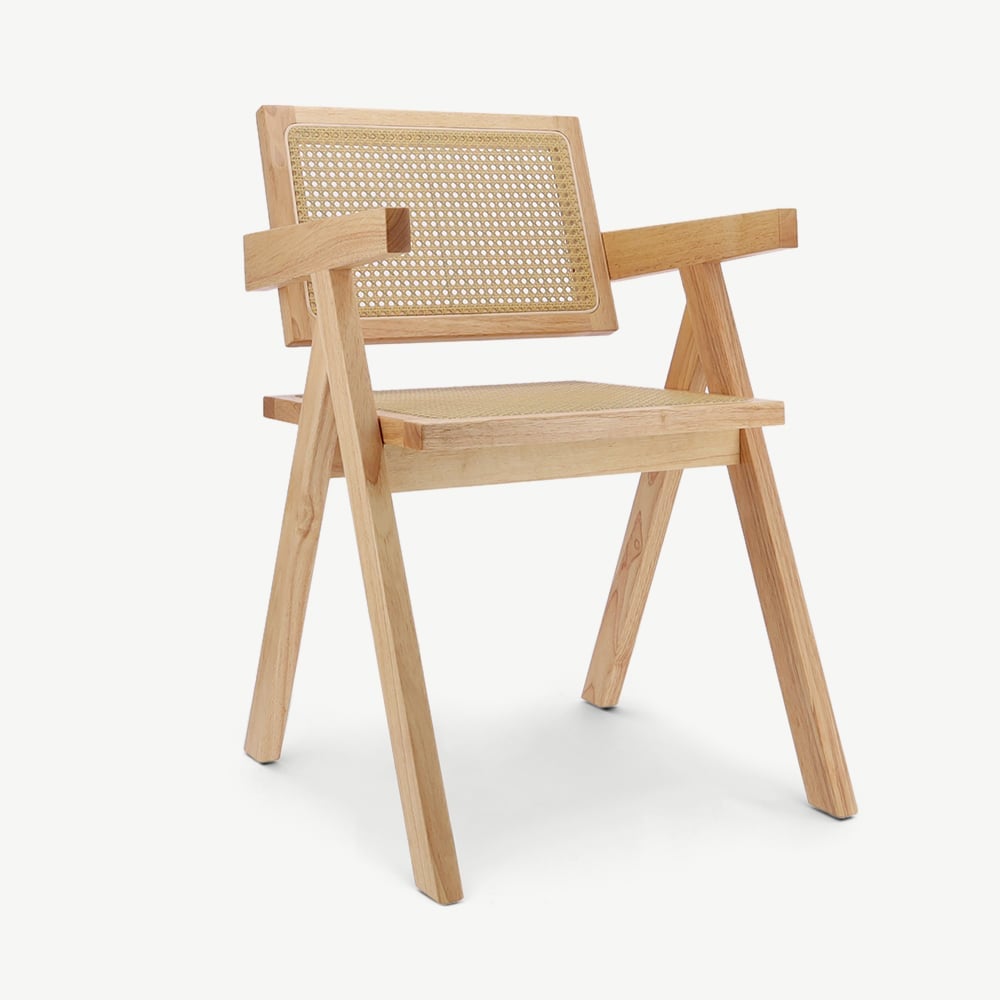
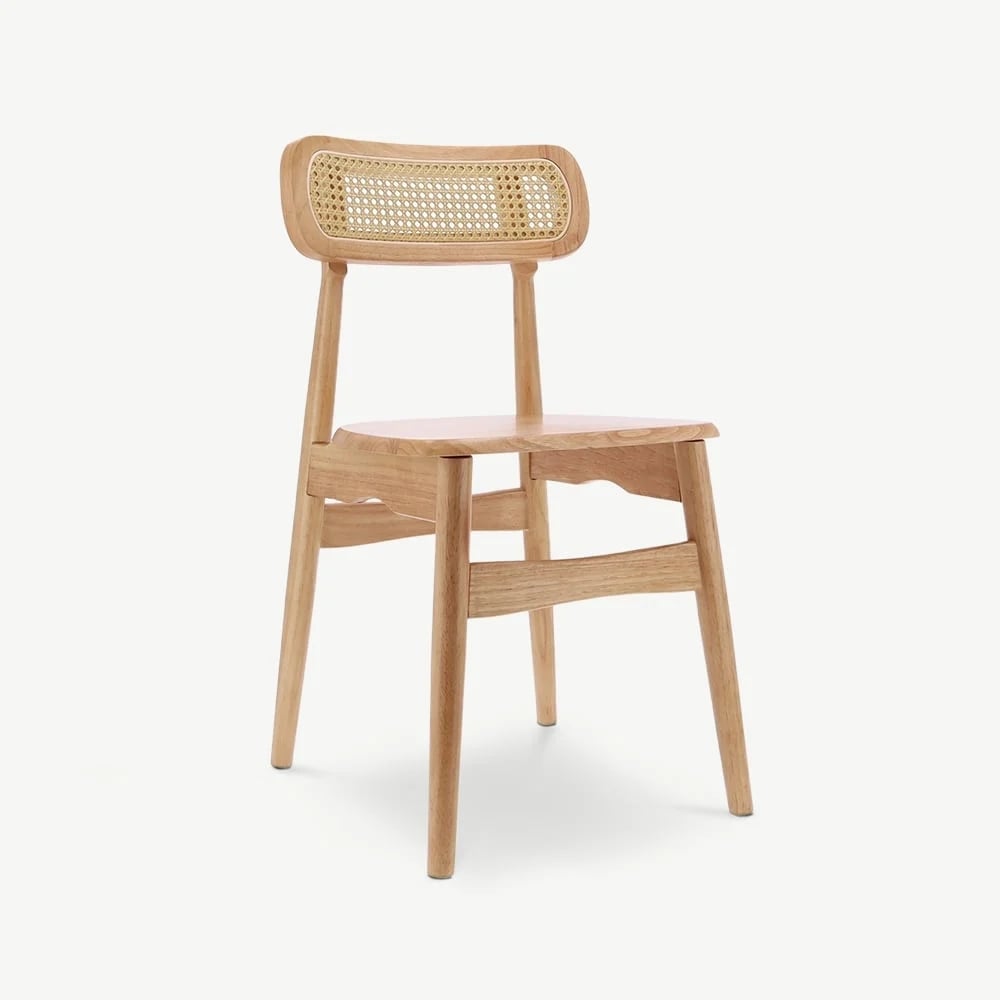


The real thing or just Scandi-styled?
Three out of four chairs sold as Scandinavian in EU online retail are imitations with shortcut construction. This is not a question of taste, it is a question of how long the chair will last. Three checks you can run in 30 seconds.
| Detail | Real Scandinavian | Faux-Scandi |
|---|---|---|
| Leg joint | Mortise and tenon, recessed | Screw in plastic sleeve |
| Seat panel | Solid wood or caning | MDF with wood veneer |
| Finish | Oil-wax, matte | Gloss lacquer, tacky in summer |
| Weight (standard chair) | 4.5 to 5.5 kg | 2.5 to 3.5 kg (too light) |
| Load rating | 110 to 130 kg | 80 to 100 kg |
Flip the chair over in the showroom or unboxing. Plastic sleeves with screw heads at the leg joints mean it is a Scandi-styled imitation, not a traditional Scandinavian build. Real chairs use mortise-and-tenon joinery, the same method used in Danish and Swedish workshops since the 1950s.
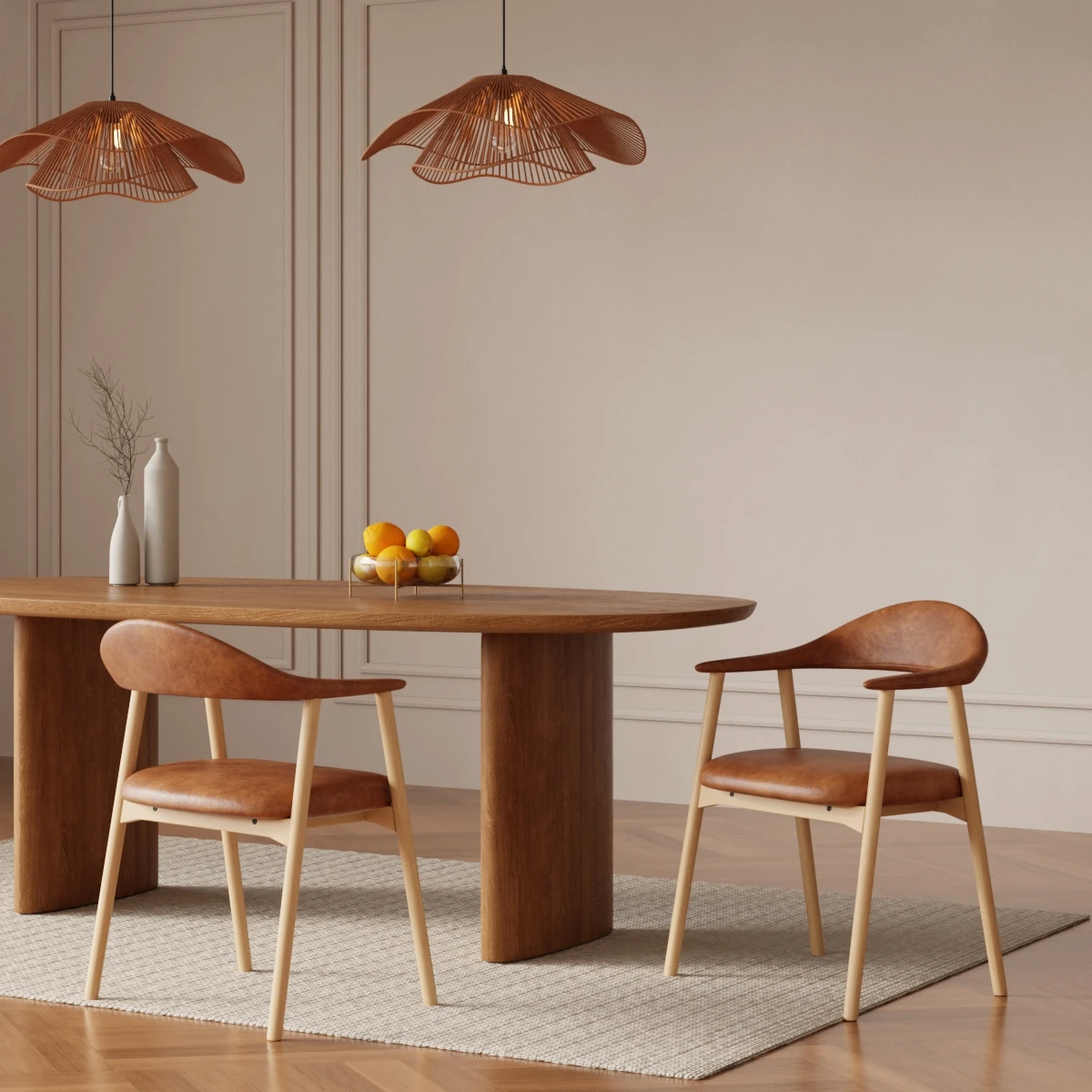
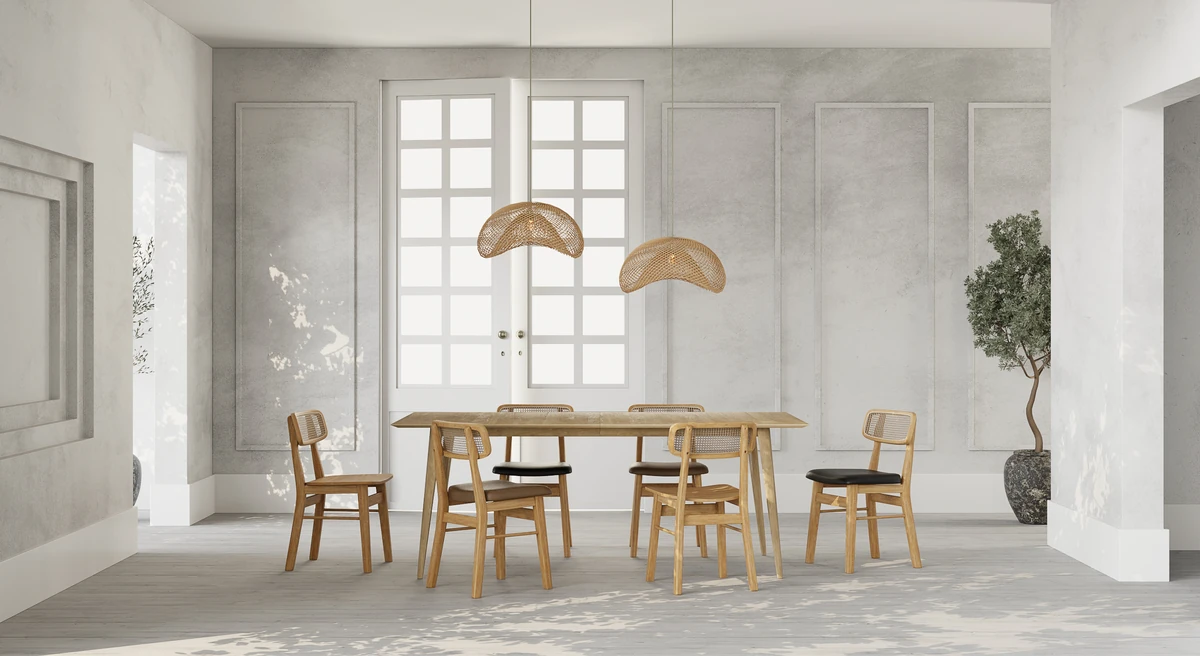
Which chair pairs with which table?
The number that matters most is the height gap: 28 to 30 cm between the seat surface and the underside of the tabletop. For a standard 75 cm dining table, that means a seat height of 45 to 47 cm. All Furnicher models sit at 46 cm, which covers most common table heights.
Which chair is right for your room?
It depends on the table, not the chair on its own.
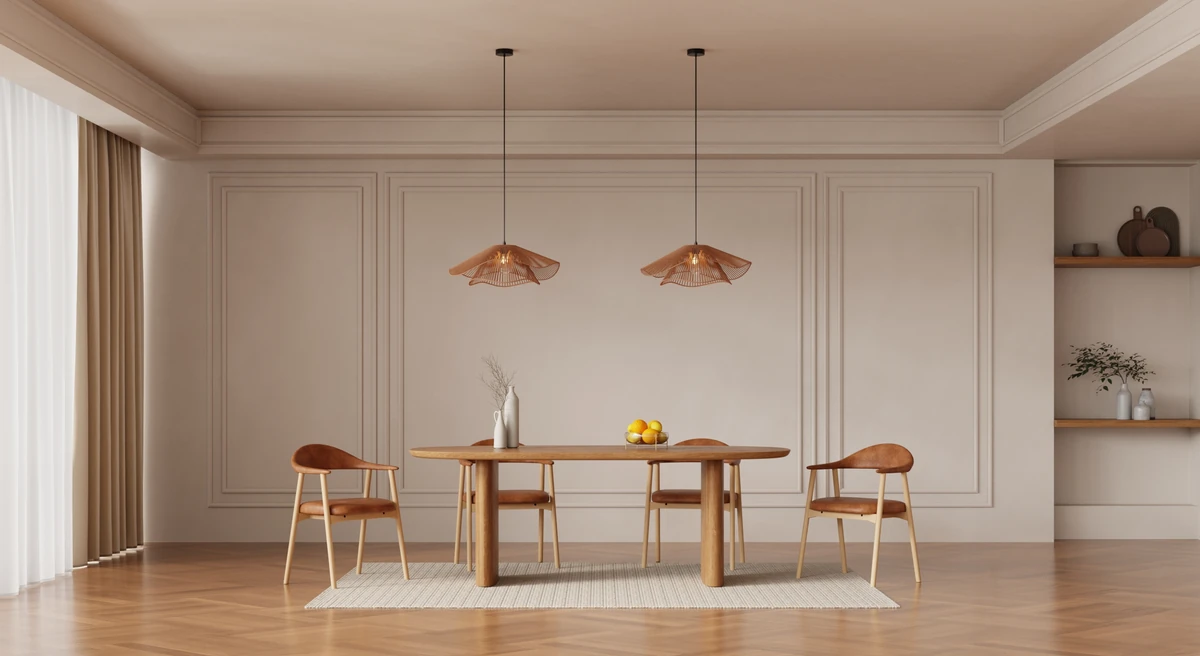
If your table is a pale oak, a beech or ash chair in the classic Scandinavian shape will land well. If you lean Japandi, a darker oak table paired with chairs that combine solid wood and rattan caning (the Jenson or Peter families) is the most coherent pairing. The Scandi family itself works in both directions, which is why it remains our best-selling dining-chair range across the EU.
Browse our Scandinavian dining chair collection. Prices start at EUR 119 for beech models and go up to EUR 179 for oak versions with hand-woven rattan caning. All models have a 46 cm seat height and stack four high.
For wider context, the dining chairs buying guide compares wood, rattan, velvet, and upholstered options side by side, and the Scandinavian furniture guide covers the broader style across the rest of the home.
Frequently asked.
What makes a dining chair Scandinavian?
Light solid hardwood (beech, ash, oak), clean lines without ornament, visible joinery, and matte natural finishes such as oil-wax instead of gloss lacquer. The form follows function: ergonomic backrest, seat height 45 to 47 cm, weight under 5 kg per chair. No gloss, no heavy upholstery, no decorative flourishes. If a detail does not serve a purpose, it gets left out.
What woods are typical for Scandinavian dining chairs?
Beech, ash, and oak dominate. Beech is the most affordable and stable, but unprotected beech yellows slightly under direct sun within two years. Ash has a strong straight grain and flexes slightly under load, which adds comfort without padding. Oak is the most expensive and longest-lasting, usually in pale rough-oak finish with an oil-wax topcoat. Birch shows up less often, mostly in Finnish designs.
How do I tell a real Scandinavian chair from a faux-Scandi one?
Three checks: mortise-and-tenon joinery (not glue alone), solid wood instead of veneer on MDF, and a matte or satin finish without gloss. Turn the chair over. If you see screw heads sitting in plastic sleeves at the legs, it is not a traditional Scandinavian chair but a Scandi-styled imitation. The weight tells too: a real solid-wood chair sits between 4.5 and 5.5 kg.
What seat height do I need for my dining table?
For a standard 75 cm dining table, the ideal seat height is 45 to 47 cm. That gives 28 to 30 cm of leg room under the tabletop, enough for most adults. For 73 cm tables a 44 cm seat is fine; 78 cm tables need 47 to 48 cm. Always measure the table, not the previous chair, because table heights vary by manufacturer by up to 5 cm.
Do Scandinavian chairs work with a Japandi dining table?
Yes, it is one of the most harmonious combinations in current design. Japandi blends Japanese restraint with Scandinavian warmth. An oak table with a low frame paired with ash or beech chairs with rattan caning works particularly well. Match wood tones: warm natural with warm natural, washed tones with washed tones. Do not mix light and dark wood in the same pairing; it reads as accidental rather than considered.
Are chairs with rattan caning still Scandinavian?
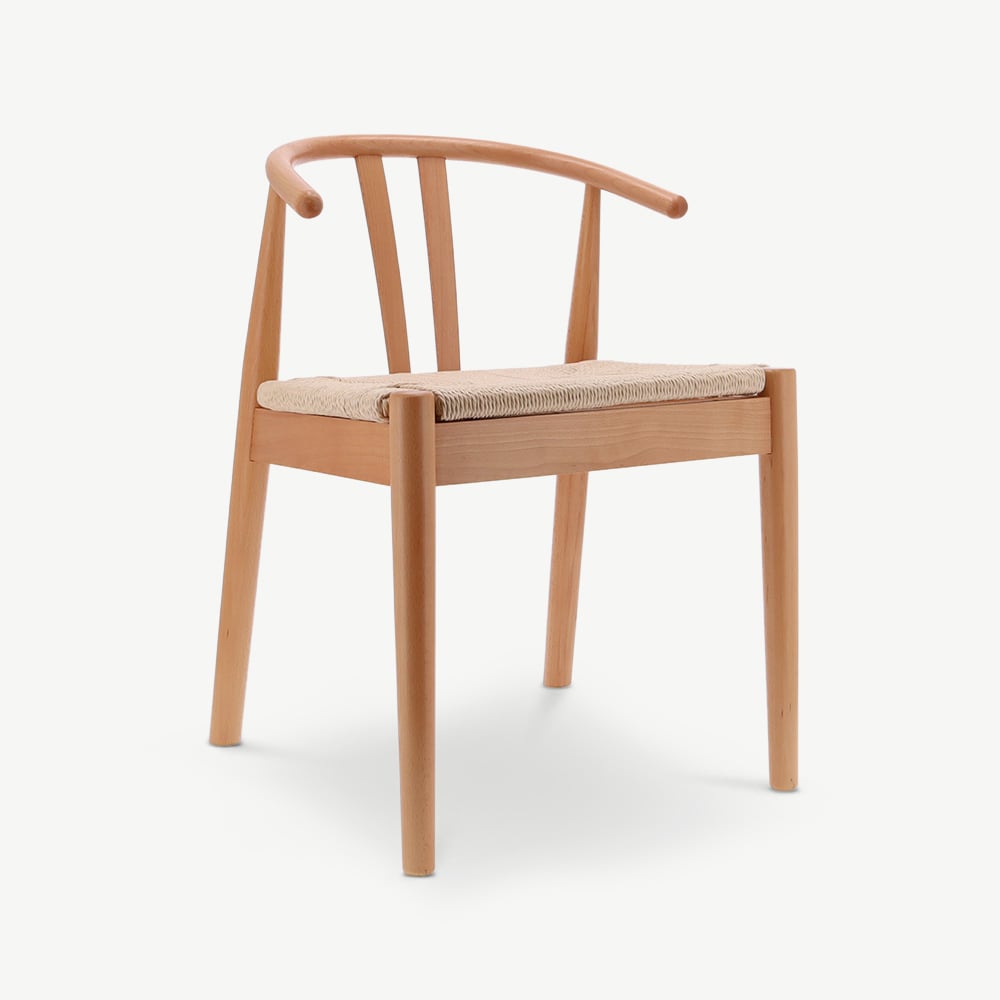
Yes. Hans Wegner used paper cord caning in the legendary CH24 (Wishbone Chair) in 1949. Modern chairs with rattan or paper caning continue that tradition. What matters is the build: hand-woven natural rattan on a solid wood frame is in the Danish tradition; plastic weave on MDF is not. The Jenson and Peter chairs at Furnicher combine solid beech or oak with hand-woven rattan in this same lineage.
