 9800+ TRUSTPILOT REVIEWS


 EN
EN DE
DE FR
FR NL
NL
Velvet dining chairs photograph better than almost any other category. They also wear out faster than almost any other category, if you buy the wrong velvet. The gap between a velvet chair that lasts six years and one that flattens in eighteen months comes down to the fabric spec, not the price tag.
This guide separates plain cotton velvet from performance velvet, the Martindale figures that actually matter for dining use, the colours that forgive daily life with pets and children, and the specific cases where velvet is the right call versus the wrong one.
Performance velvet and cotton velvet are different products
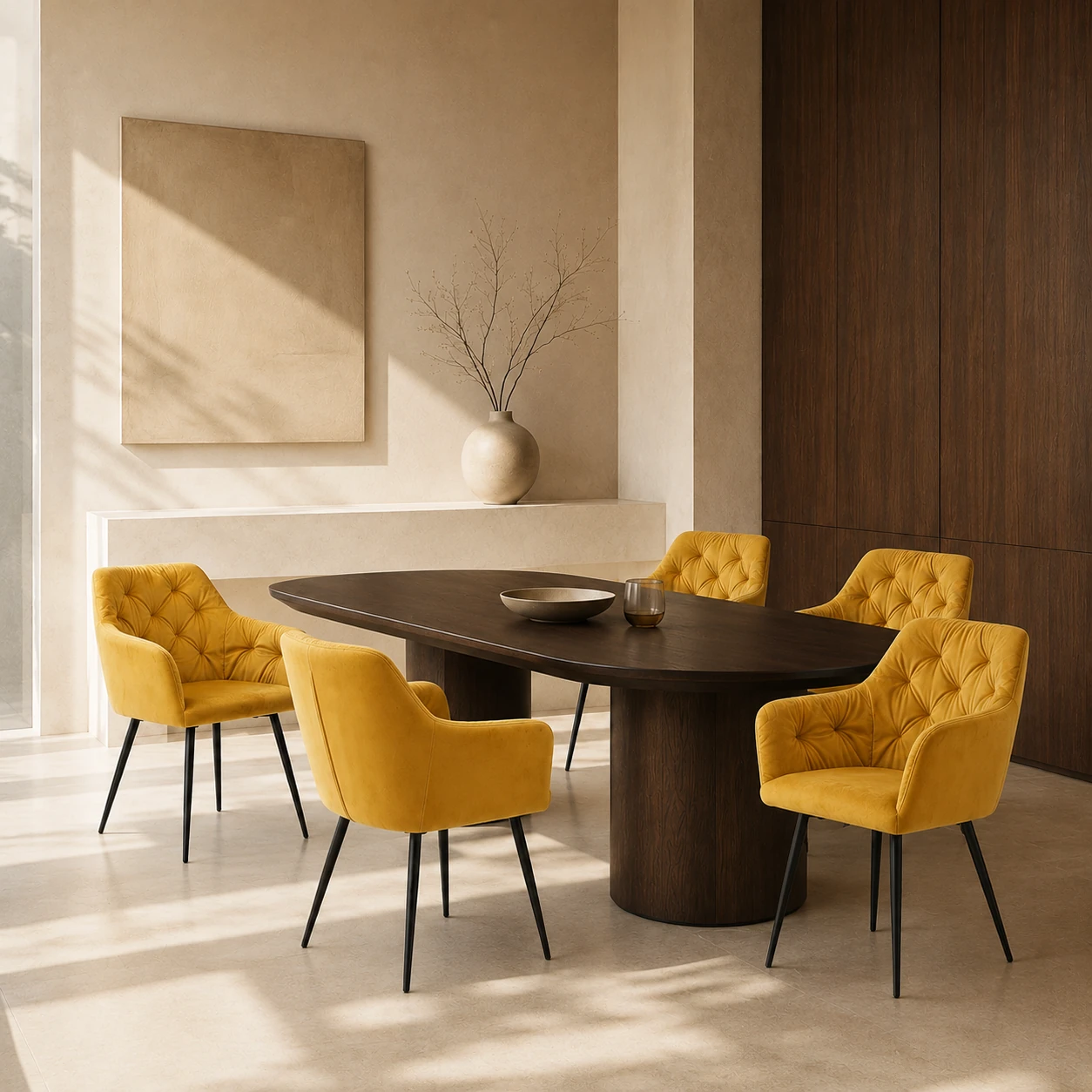
The word velvet covers two very different families. Traditional cotton velvet has a soft hand and a deep drape, but its natural fibres flatten under weight and mark under rubbing. Placed around a dining table where someone sits for two hours every evening, it pills and crushes within 18 to 24 months.
Performance velvet is solution-dyed polyester woven tight, with a stain treatment applied at the mill. It is the velvet that goes into restaurant booths, and it is the velvet that belongs in a dining room if the chairs are used daily. The hand is slightly less plush than premium cotton velvet, but the difference disappears with use and the fabric stays presentable far longer.
- Martindale rating: 30,000 cycles minimum for daily dining use, 40,000 cycles ideal
- Fabric weight: 280 to 350 g/m2 for a dining chair (below that, the fabric is too thin)
- Stain treatment: applied at the mill, not sold separately as an aftermarket spray
Three things sold as velvet
Before you pick a colour or a leg style, understand what the spec sheet means by velvet. These are the three constructions you will see most often, and what each one tells you about daily wear.
Cotton velvet
Traditional velvet woven from cotton fibres. Soft hand, generous drape, ages with character if the chair is used lightly. Under daily dining use, it flattens at pressure points (seat centre, backrest middle) within 2 to 3 years.
Best for occasional dining chairs, lightly used desk chairs, or formal dining rooms used less than weekly. Martindale ratings of 30,000 to 50,000 cycles on the spec sheet drop sharply in real-world daily use.
Performance velvet
Tightly woven synthetic fibres, solution-dyed (the colour runs through each strand, so it does not fade when cleaned). Factory-applied stain treatment. Holds up to 40,000+ Martindale cycles and lasts 5 to 8 years in a dining room without flattening.
This is the option to specify for daily use. The hand is slightly less plush than a premium cotton velvet, but the difference becomes invisible after the first month and the fabric outlasts cotton velvet by several years.
Ribbed velvet (corduroy weave)
Velvet woven in vertical ribs, more structured than a flat-pile velvet. Available in either cotton or performance polyester. The rib catches light differently depending on the angle, giving the fabric more visual presence and hiding minor wear better than a smooth-pile velvet.
Heavily featured in contemporary dining chair collections over the last three seasons. Go for the performance version if the chair will be used every evening.
Featured in this guide


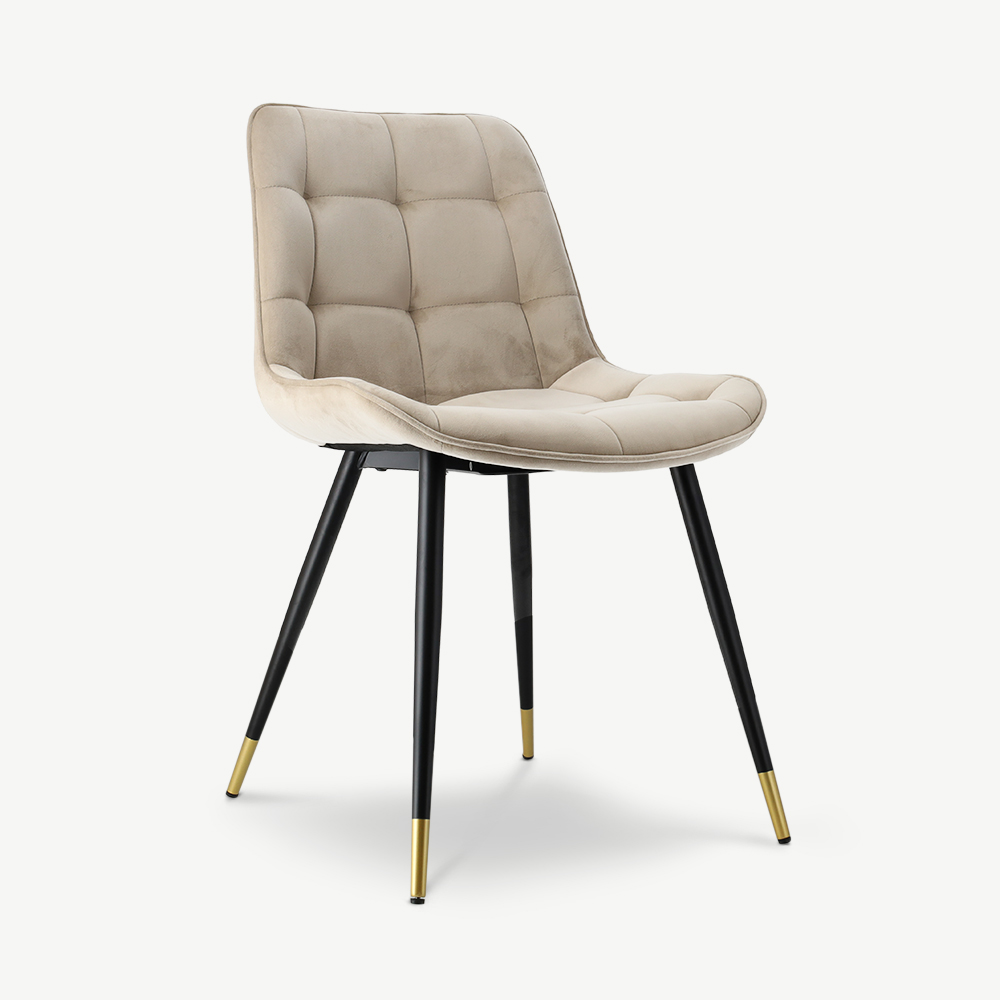
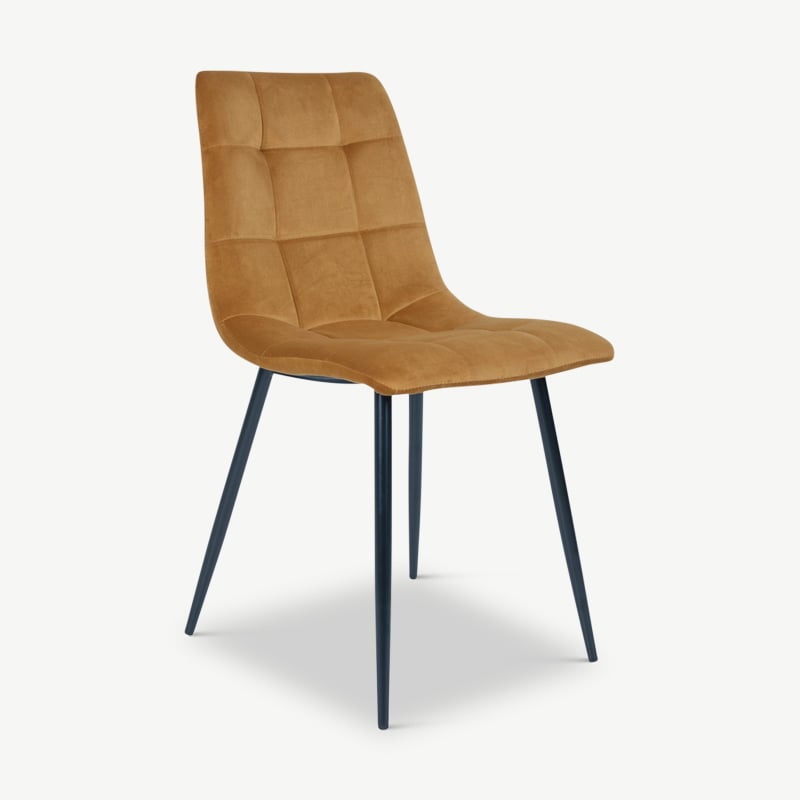
Which velvet colour actually survives daily life?
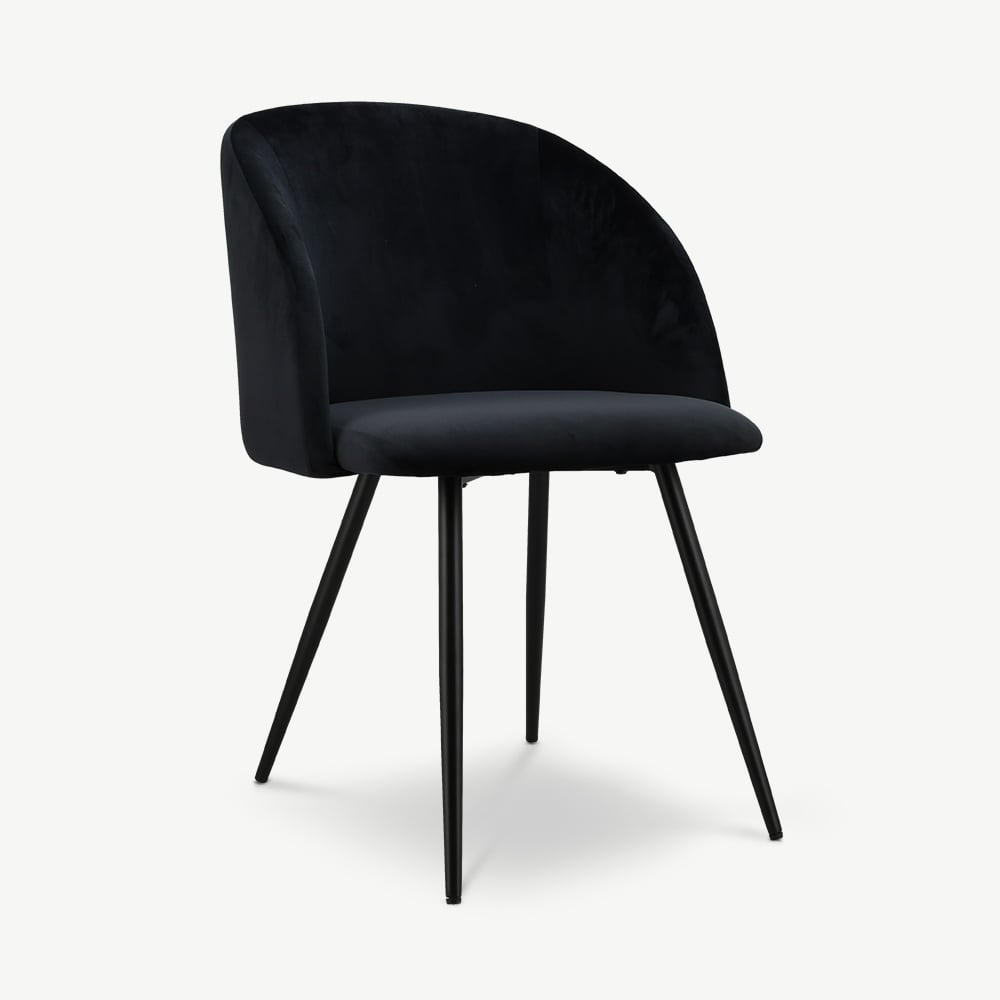
Showroom photography hides the truth about colour. A black velvet chair looks dramatic in a lookbook; it looks dusty within an hour in a real home with a real cat. Mid-tones hide both pet hair and dust far better than the extremes of the colour wheel.
| Colour | Pet hair | Dust & daily marks |
|---|---|---|
| Velvet black | Highly visible | Highly visible |
| Cream & light beige | Highly visible | Visible from first meal |
| Sage green | Hidden well | Hidden well |
| Petrol / midnight blue | Hidden well | Hidden well |
| Terracotta | Discreet | Discreet |
| Mouse grey | Discreet | Discreet |
If you commit to black, plan on a weekly vacuum with a soft brush attachment, no exceptions. Cream is the hardest velvet colour to maintain: marks show after the first meal, even with a stain-resistant treatment. Best reserved for formal dining rooms used less than weekly.
Four habits that add years to a velvet chair
A well-maintained velvet chair lasts 5 to 8 years under daily dining use. A neglected one loses its look within 18 months. The gap is closed by four habits, none of them complicated.
Are velvet dining chairs worth it?
Yes, if it is performance velvet and your household is the right fit.
Velvet works in formal dining rooms, in kid-free households, and in low-pet homes. With performance velvet in a mid-tone, a solid hardwood frame, and a weekly vacuum, you reliably get 5 to 8 years. At year 8, reupholstering costs EUR 60 to 90 per chair and adds another decade. A chair on a plywood frame does not allow this refresh: the fixings give up at the same time as the fabric, and the whole chair has to go.
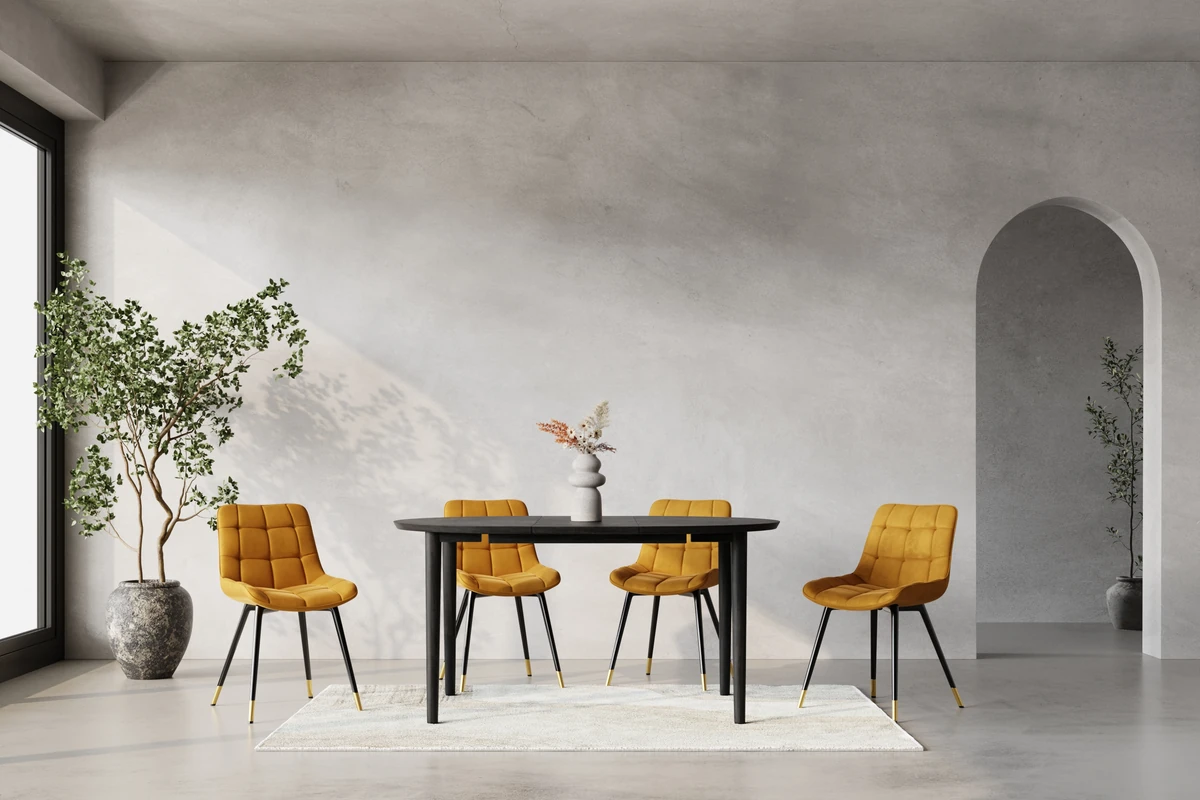
Browse our velvet dining chair collection. Prices run from EUR 139 to 199 per chair, with 40,000+ Martindale across the range and solid beech or oak frames on every chair sold for daily use.
If the household has young children or shedding pets, our Scandinavian wooden dining chairs and Japandi collection deliver warmth without the upkeep velvet asks for.
Frequently asked.
Is velvet durable enough for daily dining use?
Performance velvet rated 30,000 Martindale cycles or higher is built for daily dining use. Plain cotton velvet is not: it flattens at pressure points within 18 to 24 months. Check the fabric spec sheet before buying, not the marketing copy on the page. The numbers that matter are Martindale cycles, fabric weight in g/m2, and whether the stain treatment was applied at the mill or sold as an aftermarket spray.
How do you clean a velvet dining chair after a spill?
Dab the stain with a dry microfibre cloth working from the outside in. Never rub: rubbing breaks the pile fibres and leaves a permanent mark. For grease, sprinkle bicarbonate of soda, leave for 30 minutes, then vacuum off with a soft brush attachment. Weekly vacuuming prevents the abrasive dust build-up that causes most premature wear in velvet upholstery.
Which velvet colour hides pet hair and dust best?
Mid-tone colours hide both pet hair and dust better than extremes: sage green, mouse grey, petrol blue, terracotta. Black and cream show everything, from single hairs to fine dust. If you commit to black velvet, plan on weekly vacuuming without fail. Cream is the hardest velvet colour to maintain and is best reserved for formal dining rooms used less than weekly.
How much does professional velvet chair cleaning cost in Europe?
Expect EUR 40 to 80 per chair from a specialist upholstery cleaner, depending on soil level and location. Capital cities sit at the top of the range, regional cities at the bottom. Spot cleaning a single stain costs EUR 15 to 25 if you act within 48 hours, before the stain oxidises into the fibre and becomes harder to lift.
How long do velvet dining chairs last?
Performance velvet over a solid hardwood frame typically lasts 5 to 8 years under daily dining use. The fabric wears before the frame: reupholstering at year 8 costs EUR 60 to 90 per chair and adds another decade of life. Plywood-framed chairs do not allow this economical refresh because the fixings fail at the same time as the fabric, so the chair has to be replaced rather than refurbished.
Are velvet chairs a bad idea with pets or young children?
With pets, choose performance velvet in a mid-tone with a factory-applied stain treatment, not an aftermarket spray. With young children, untreated cotton velvet is a poor choice: juice, tomato sauce and pen ink soak into the pile within seconds. Polyester velvet that is solution-dyed throughout is the most forgiving option in both scenarios, though even then a wooden dining chair or a wipeable PU-covered chair will be less stressful day to day.
