 9800+ TRUSTPILOT REVIEWS


 EN
EN DE
DE FR
FR NL
NL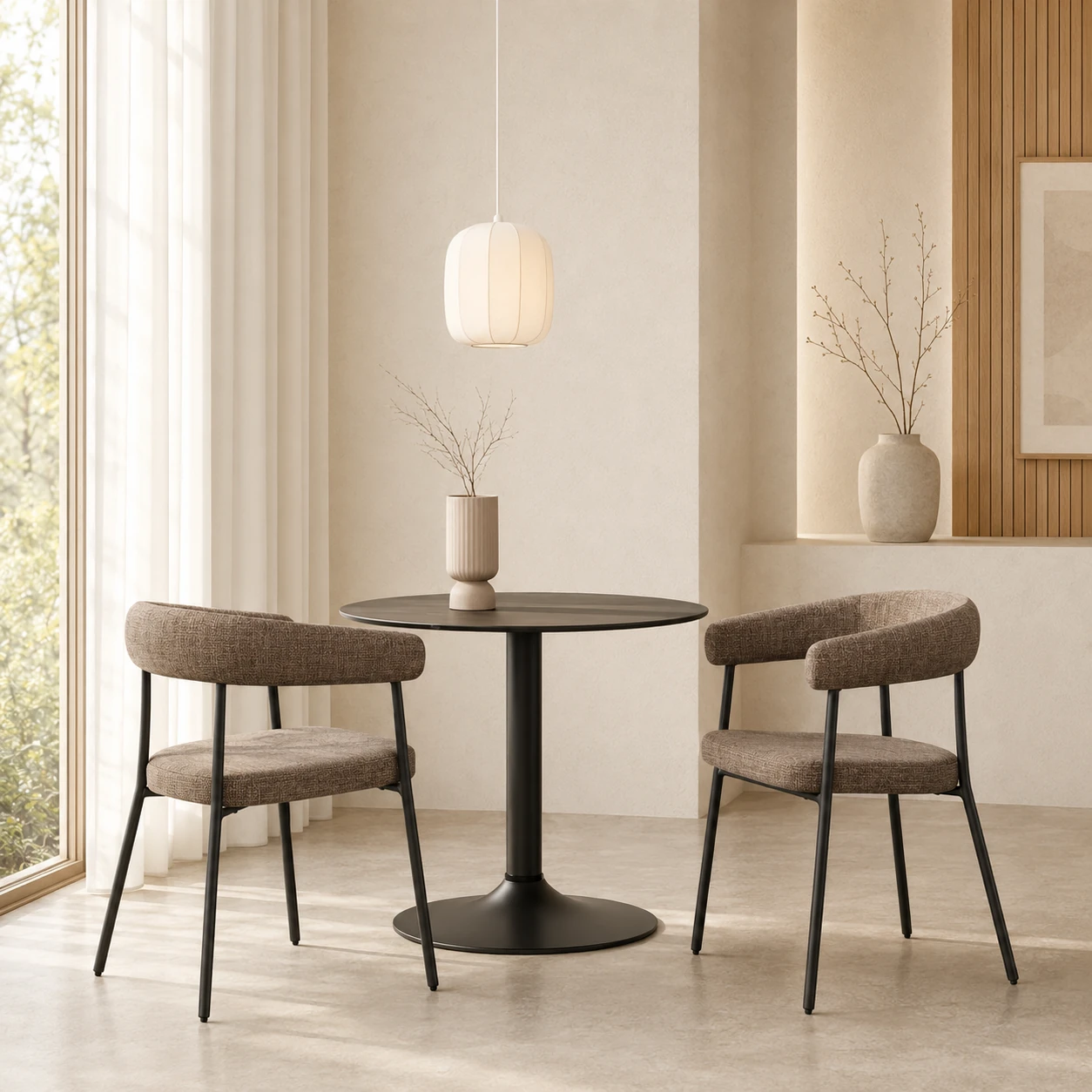
Black dining chairs are one of the few pieces of furniture that change a room before you finish putting them down. They anchor the space, set the dining area apart from the rest of the open-plan kitchen, and force every other colour in the room to react to them. They are also the easiest way to make a small, dark room feel smaller and darker.
This guide covers when black actually works (light walls, wood accents, two light sources), when it does not (north-facing rooms with grey walls), the finish question that matters more than the colour, and how to pair black chairs with the table you already own.
Where black actually earns its place
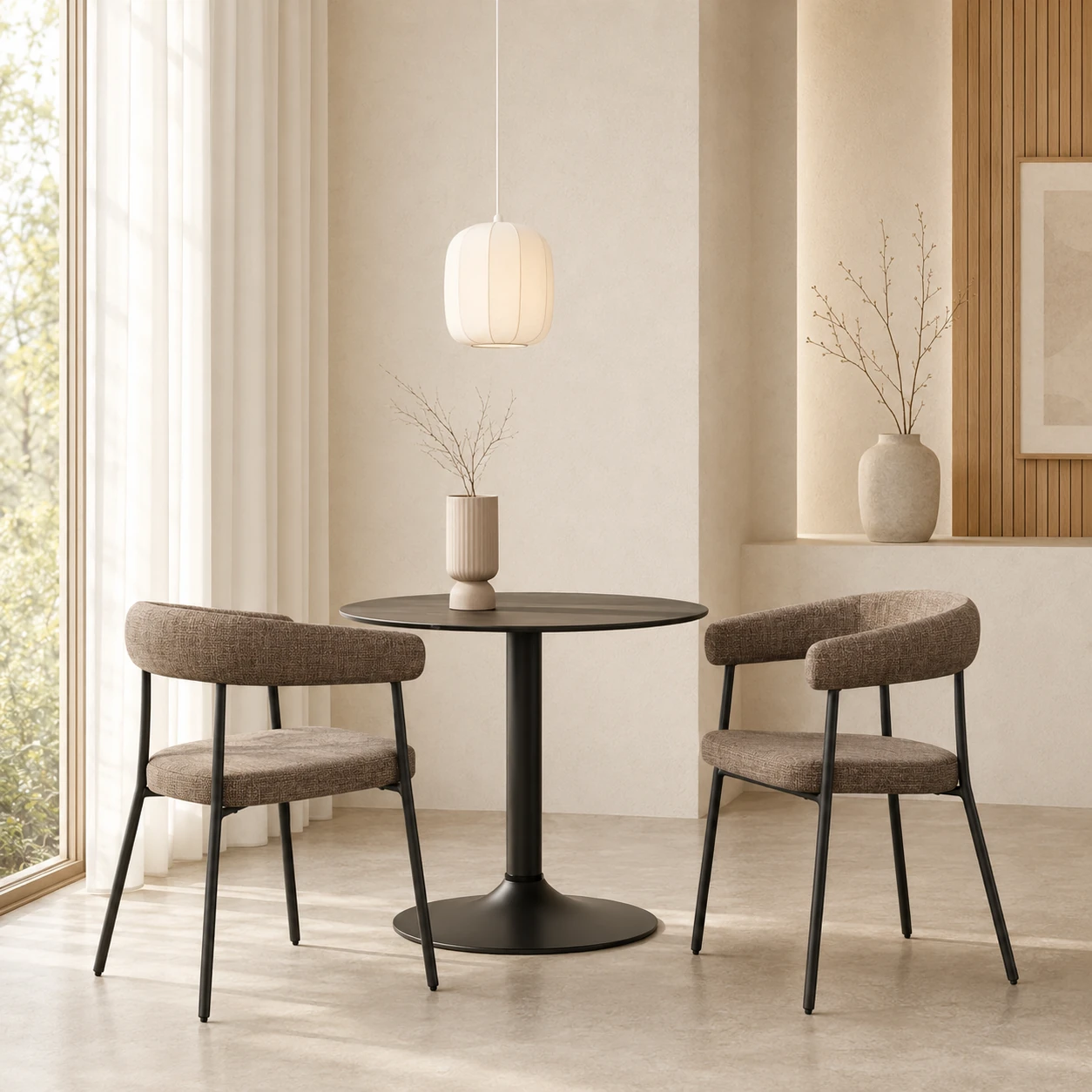
Black is the most powerful colour in furniture for one reason: it reads as a graphic line rather than as mass. A black chair frame against a white wall is closer to a sketch on paper than to a heavy object in a room. That is why Scandinavian interiors lean on it so heavily: the trick is to keep everything else light.
The three conditions that make a room ready for black chairs are reflectance, contrast, and light sources. If the walls are above 70% reflectance (white, off-white, pale grey), the floor is light (oak, pale beech, painted concrete), and there are at least two light sources (a window plus a pendant), black anchors the space without crowding it.
- Wall colour: white or warm off-white, RAL 9010 or Farrow & Ball Pointing
- Floor: oak, beech, or pale ash. Avoid walnut or wenge floors
- Tabletop: light wood, marble, or painted oak. Not dark veneer
Black is a colour, finish is the buy
Most people choose black thinking about the colour. The finish (matt stain, lacquer, or open-grain) matters more for how the chair will look in five years and how much you will wipe it.
Matt stained
The stain colours the wood without filling the grain. The result is a soft, slightly textured black that ages quietly: scuffs blend into the grain rather than showing as bright lines. The right choice for households with children, pets, or daily dining.
89 to 139 EUR. Re-stain a worn edge in 20 minutes with a 6 EUR colour-match marker.
Lacquered black
Pure pigment under a clear lacquer coat. Looks like the chair has just come out of the box for the first six months. Then every chip and scratch becomes a bright white line under the gloss. Plan to refinish at year 5 to 7.
119 to 169 EUR. Better for feature dining rooms used twice a week than for daily family tables.
Painted with open grain
Pigmented paint applied thinly over solid wood so the grain ridges remain visible. Sits between stain and lacquer. The closest finish to a Japandi or industrial-modern interior, with patina that builds rather than damage that shows.
99 to 149 EUR. Easy to touch up: matt paint sample, soft cloth, 5 minutes.
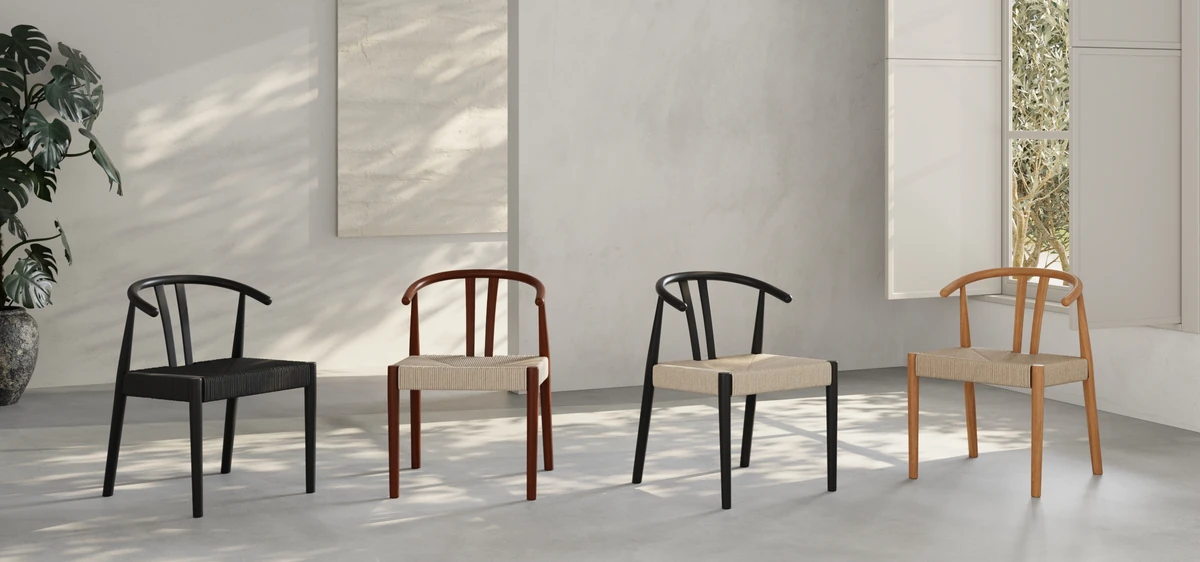
Featured in this guide
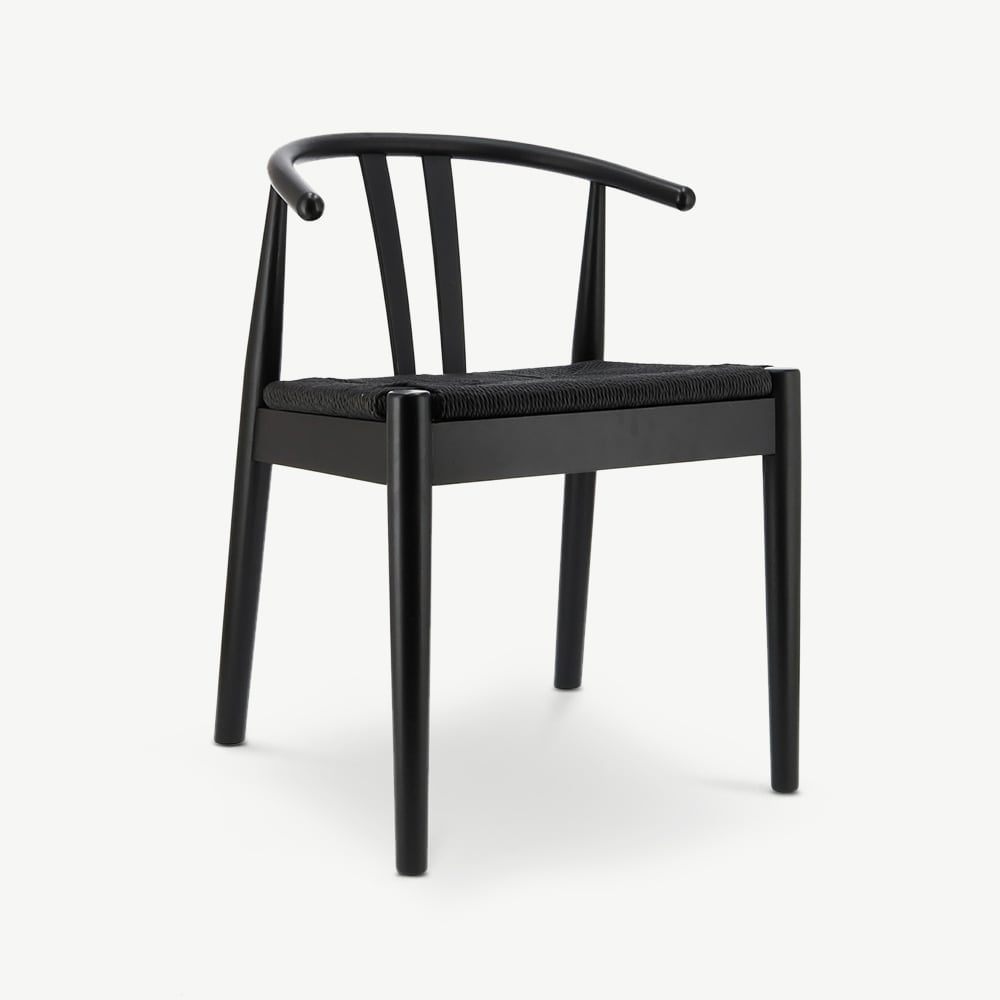

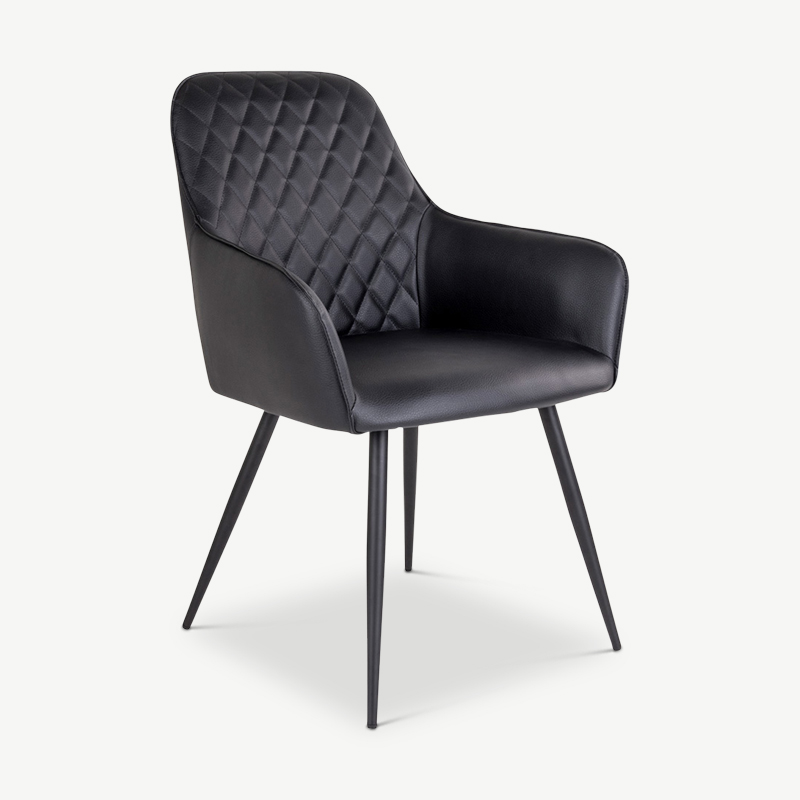

The rooms where black fights you
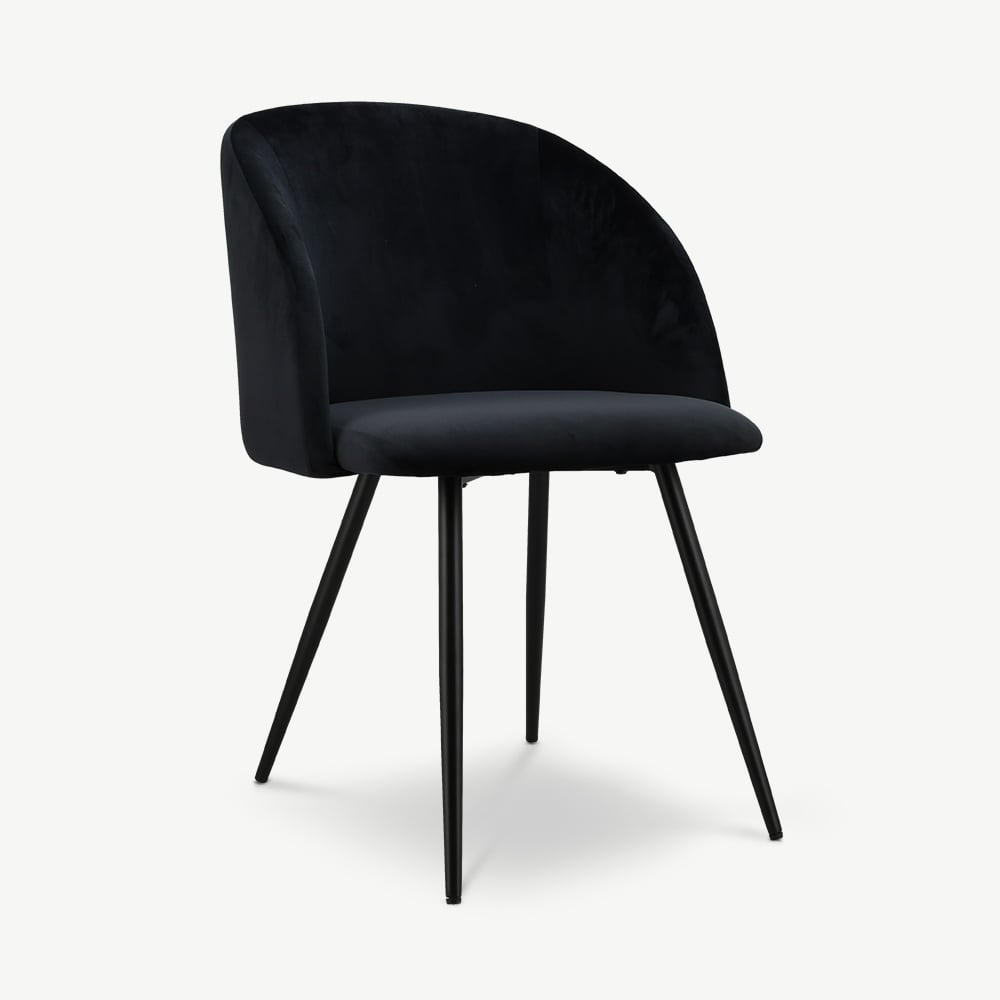
Black chairs in the wrong room do not look bold. They look heavy. Specifically, they look like a piece of furniture that did not commit to either reading as a frame or as a shape. The two conditions to watch for both come down to light.
| Room condition | Black chair verdict |
|---|---|
| White walls, oak floor, south-facing | Excellent |
| Off-white walls, pale ash, two windows | Very good |
| Mid-grey walls, walnut floor | Avoid |
| North-facing, no pendant | Avoid, or add overhead light |
| Dark walls (any) with dark table | Black chairs disappear |
The mid-grey wall is the most common failure case. It looks neutral but reflects 35 to 50% of the light, which is not enough to push black into graphic territory. The chairs then read as a second layer of darkness rather than as a line drawing.
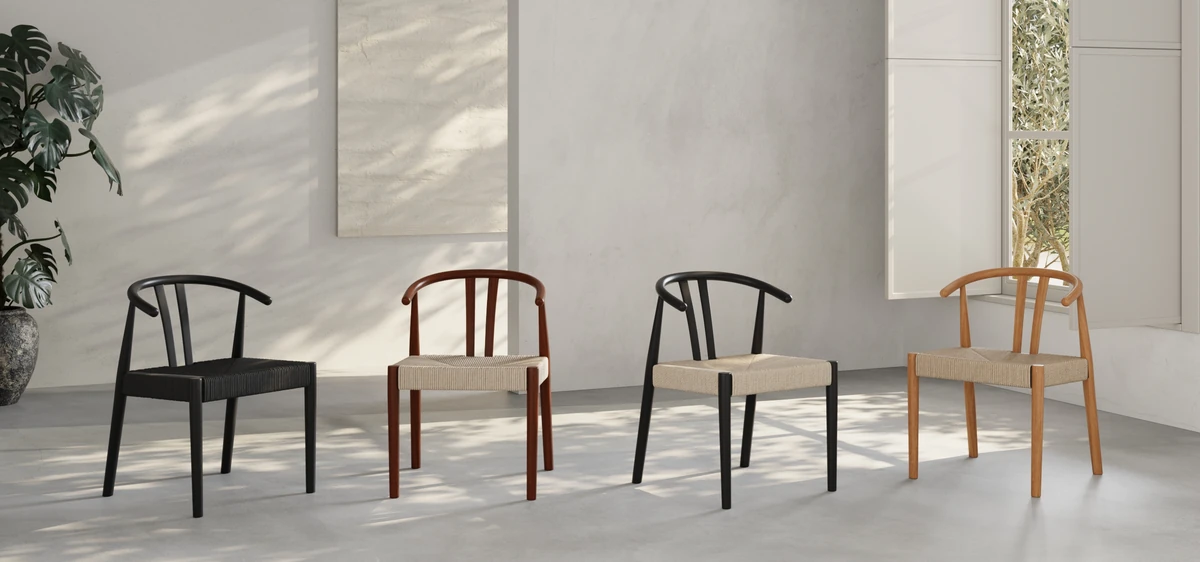
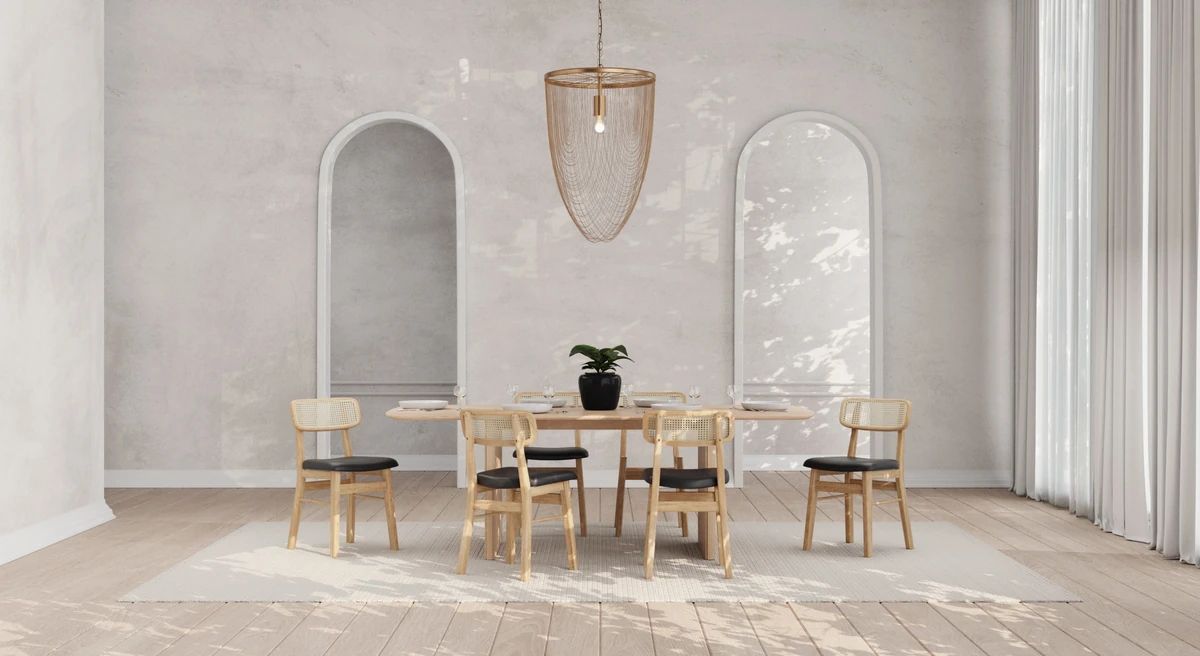
Four pairings that work, one that doesn't
Black chairs are a strong starting point. The pairing decisions around them are what makes the room. These four work in most homes, the fifth is the trap.
Black is a commitment, not a colour swap
It works brilliantly in the right room and works against you in the wrong one.
If your dining room has white or off-white walls, a light wood floor, and a window plus a pendant, black dining chairs are one of the best buys in the category. They cost the same as their natural-wood counterparts, last as long, and define the space the moment they go in. If your room is north-facing with mid-grey walls and a single overhead light, a natural-finish or warm-stained chair will serve you better.
Browse our dining chairs collection. Black models sit between 89 and 179 EUR. Six matching black Scandinavian chairs around a 180 cm oak table is the most-bought combination in our EU range, and the configuration we see hold up best in real customer rooms three years on.
For the full picture, the dining chairs buying guide covers dimensions, materials, and matching to your table. For mood, our Japandi interior guide is the cleanest reference for how black chairs sit in the broader scheme.
Frequently asked.
Do black dining chairs make a small room feel smaller?
Only when the room is already dark. Black chairs in a room with white or off-white walls and 4+ metres of natural light per day read as graphic, not heavy. In a north-facing room or one with grey walls below 60% reflectance, the same chairs will absorb the available light and make the space feel cramped. If you are unsure, hold a black sheet of paper against your wall at midday: if it reads as a strong dark shape, your room is bright enough.
Are black chairs harder to keep clean?
Lacquered black shows fingerprints and dust visibly: a microfibre cloth weekly is non-negotiable. Stained or matt finishes hide both. If you have toddlers, pets, or eat regularly at the table, choose matt or open-grain stained over lacquered. You will wipe the chair 70% less often, and small scuffs blend into the grain rather than showing up as bright marks.
What colour wood goes best with black dining chairs?
Light oak (natural or whitewashed) and pale beech. The contrast between black chair frame and light tabletop is what makes the look work. Black chairs with a dark walnut or wenge table merge visually and lose all the graphic appeal that made you want them in the first place. If you already own a dark-wood table and still want black chairs, look for ones with a fabric or rattan seat that adds a lighter element.
Black lacquered or black stained, which is better?
Stained finishes show the wood grain through the colour. They wear quietly: small scuffs blend into the grain. Lacquered finishes are pure black with a sheen, which photographs beautifully but shows every scratch within 18 months of daily use. For a household, stained matt is the buy that ages well. For a feature dining room used twice a week, lacquered is fine and the high gloss is part of the appeal.
Do black chairs work in a Scandinavian interior?
Yes, this is where they shine. Scandinavian rooms use pale walls, light wood floors, and one or two graphic anchors to break the calm. Black dining chairs are the most common of those anchors. Aim for 4 to 6 black chairs, one black object elsewhere in the room (lamp shade, picture frame, a single black ceramic), and stop there. Adding more black tips the room from calm-with-an-anchor to heavy.
Should all six dining chairs match in black?
Six identical black chairs is the strongest possible statement and the most common configuration. A softer alternative is four black sides with two natural-wood end chairs, which lifts the graphic weight slightly and is more forgiving if your dining room is below 14 m². The all-black six-set works best in rooms above 16 m² with two or more light sources. For everything below that, the four-and-two split is the more reliable buy.
