 9800+ TRUSTPILOT REVIEWS


 EN
EN DE
DE FR
FR NL
NL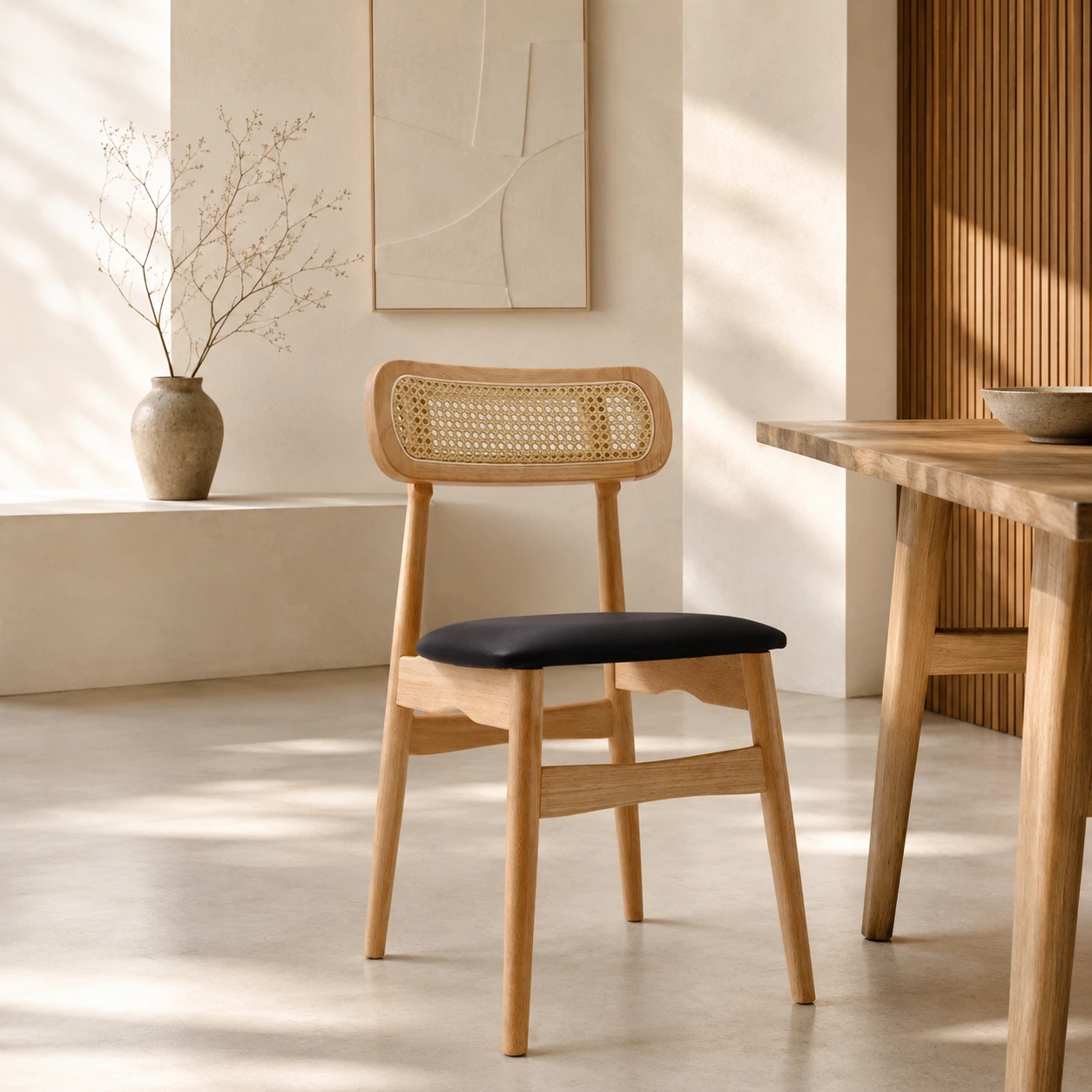
A rattan dining chair lives or dies on three things: how tightly the cane is woven, what the frame is made of, and whether the seat height matches your table. Get those right and the chair will see twenty years of family dinners. Get one wrong and the weave starts rattling by the second winter.
This guide covers how to spot a solidly built rattan chair, which chair families suit which kind of dining table, where the price line sits for real quality, and what the material actually needs from you in the way of care. Specific figures throughout, no marketing softness.
Three things to check on the weave
Natural rattan comes from the stem of a climbing palm grown in Indonesia, Malaysia, and the Philippines. Growers harvest the cane at 5 to 7 years, steam-bend it, and dry it. The outer skin strips into the cane used for weaving; the inner pith binds the joints.
What separates a dining chair from a living-room chair is the density of the weave. A dining chair gets loaded every day, often for two hours at a stretch. A loose weave starts sagging within a year.
- Weave spacing: On a good dining chair the cane strips sit no more than 2 mm apart
- Frame timber: Solid beech or oak only, no plywood, no pine in the load-bearing parts
- Load rating: At least 110 kg static load, listed in the product spec, not hidden
Three rattan chair families that hold up
Our recommendations for three common dining-room situations. Each family is built around a specific table height and a specific aesthetic.
Scandi
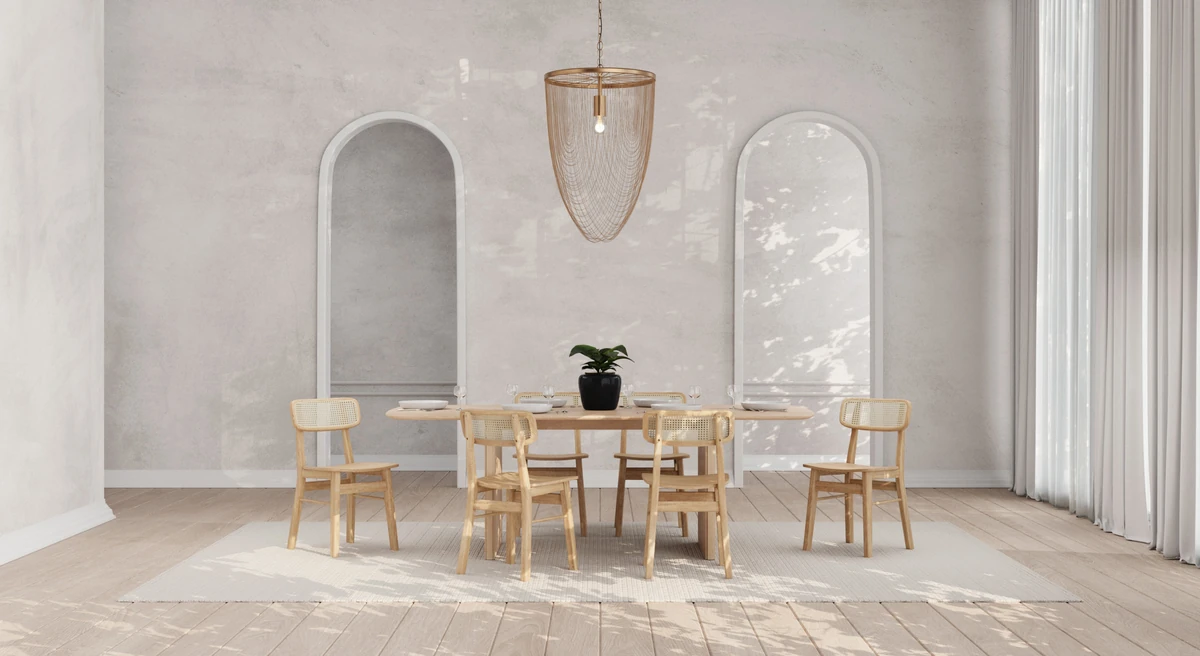
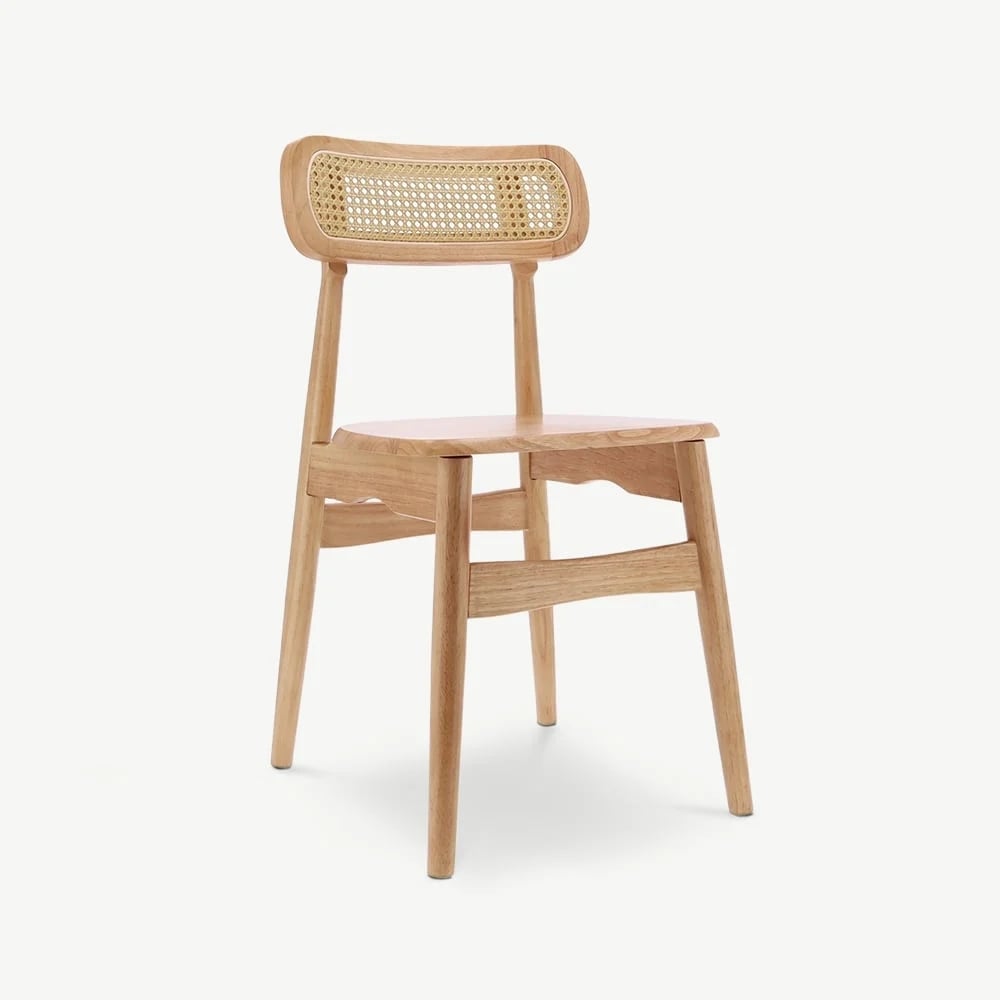
Slim beech frame, high backrest, tight natural-rattan weave on the seat. Seat height 46 cm, sized for the standard 75 cm dining table. Stackable up to four high, useful in flats where the chairs need to disappear between meals.
Available in natural, black, and cognac. The obvious choice for Scandinavian and Japandi interiors. Rated to 110 kg.
Jenson
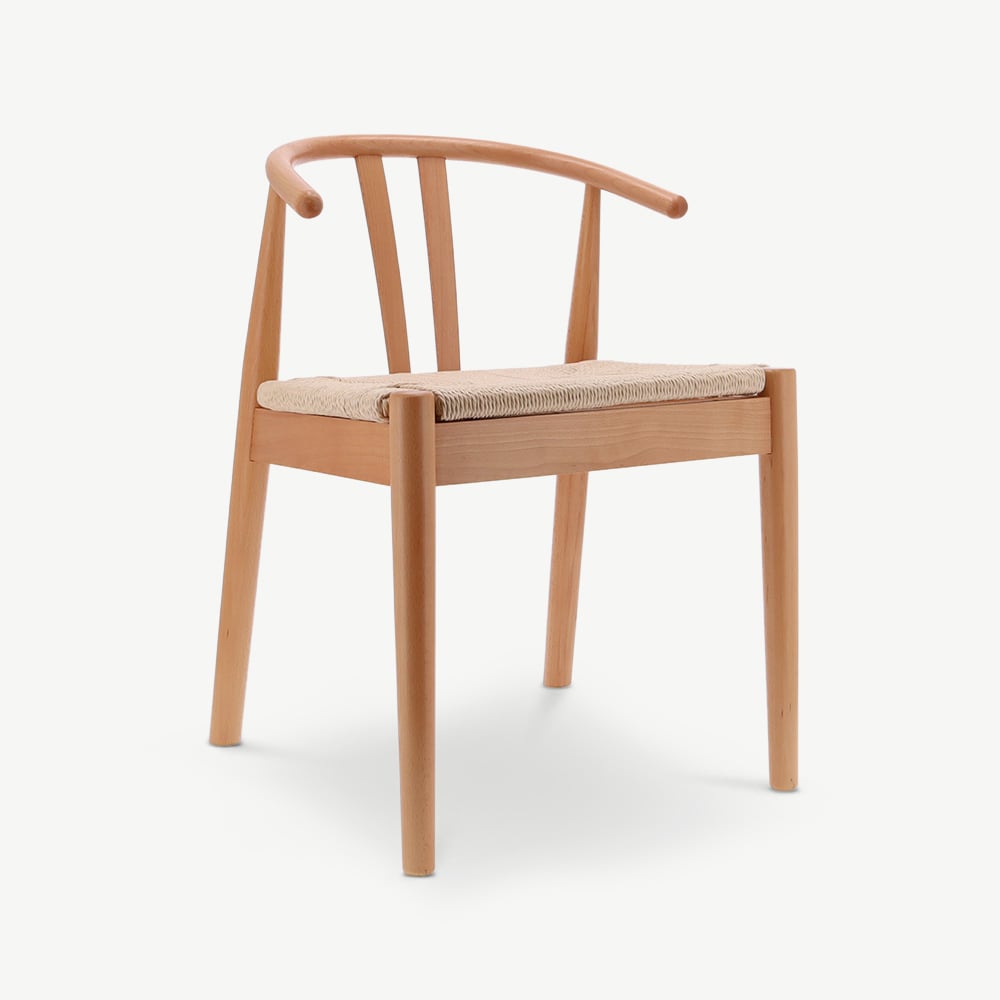
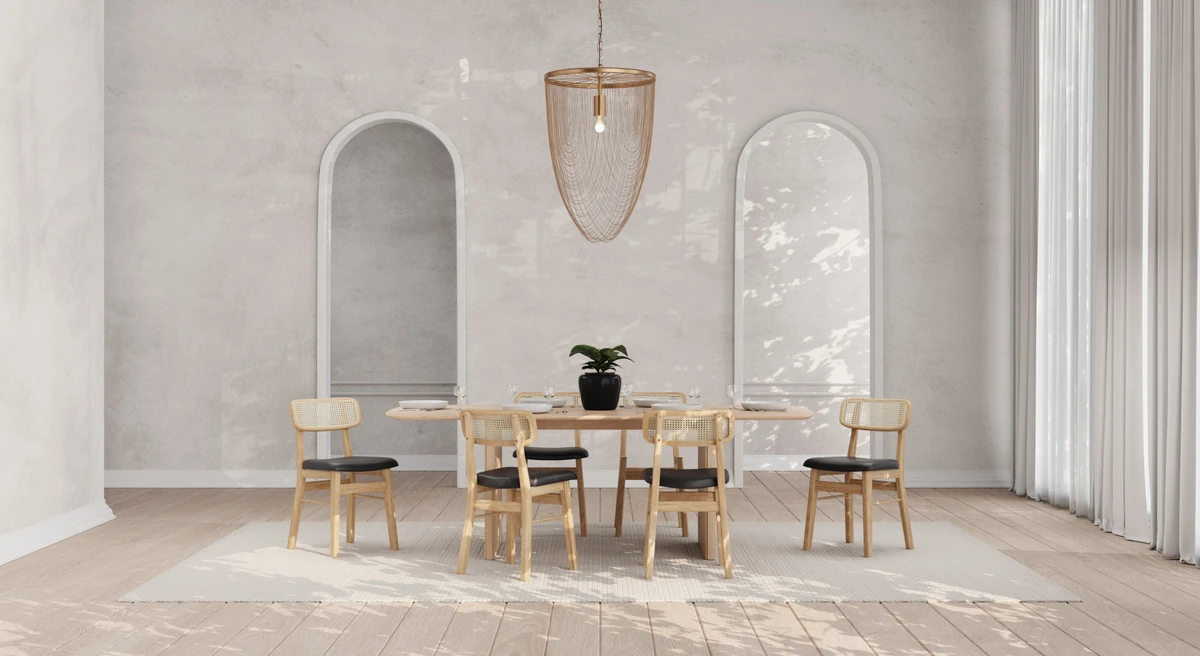
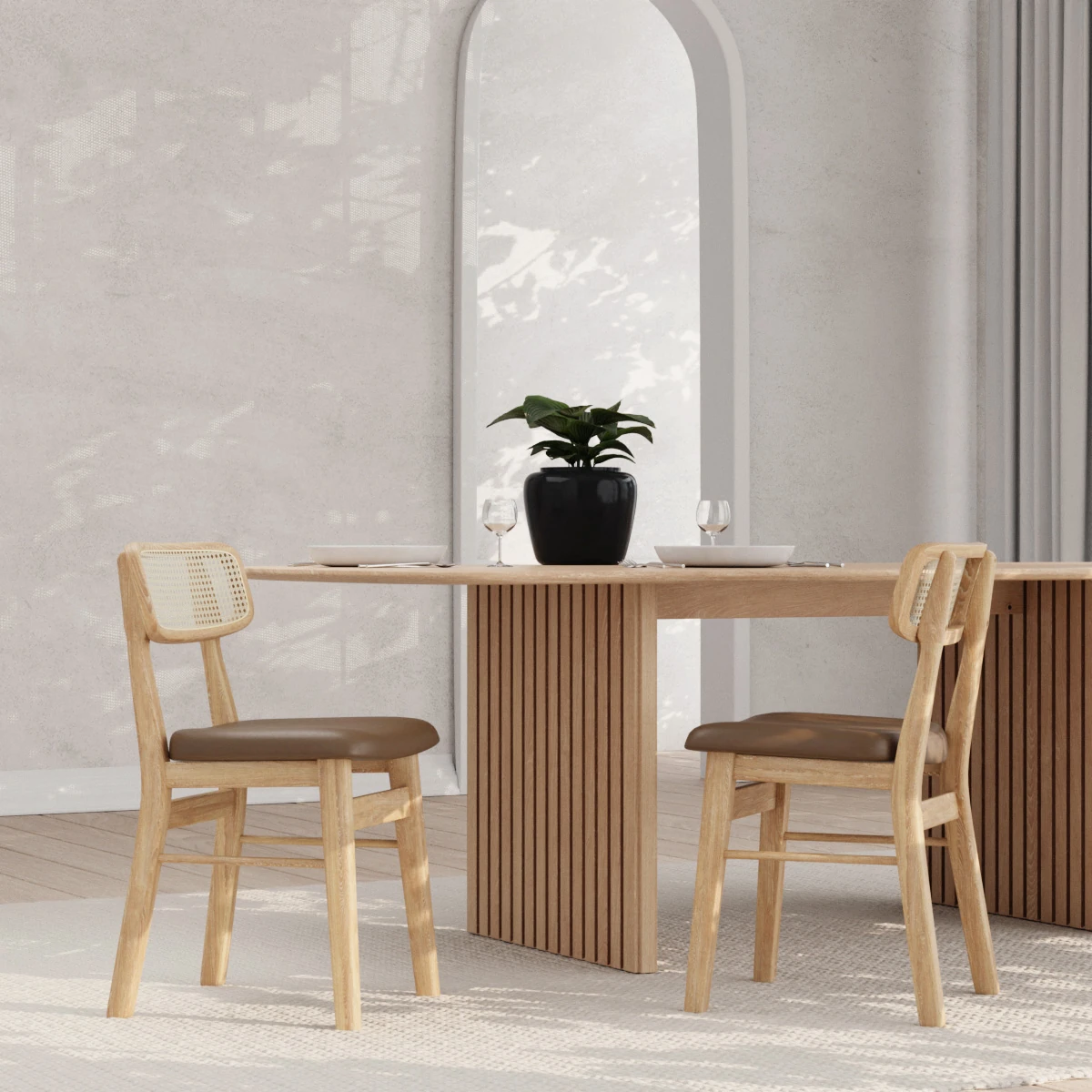
Curved beech frame with a contoured backrest, woven rattan on both the seat and the back panel. Seat height 47 cm. Available with a plain natural seat or with a brown or black PU leather seat pad for added cushioning.
Pairs well with mid-century tables with tapered legs and with modern dining tables in light oak. Rated to 120 kg.
Peter
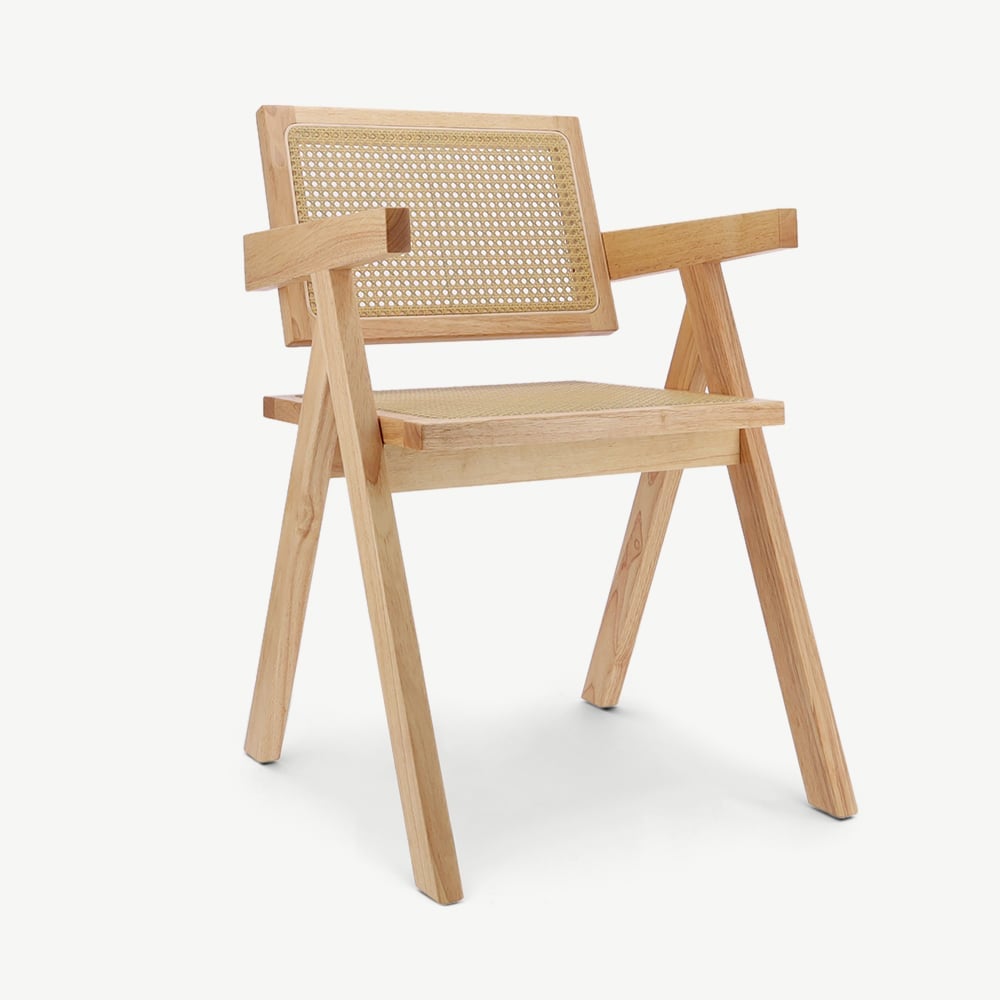
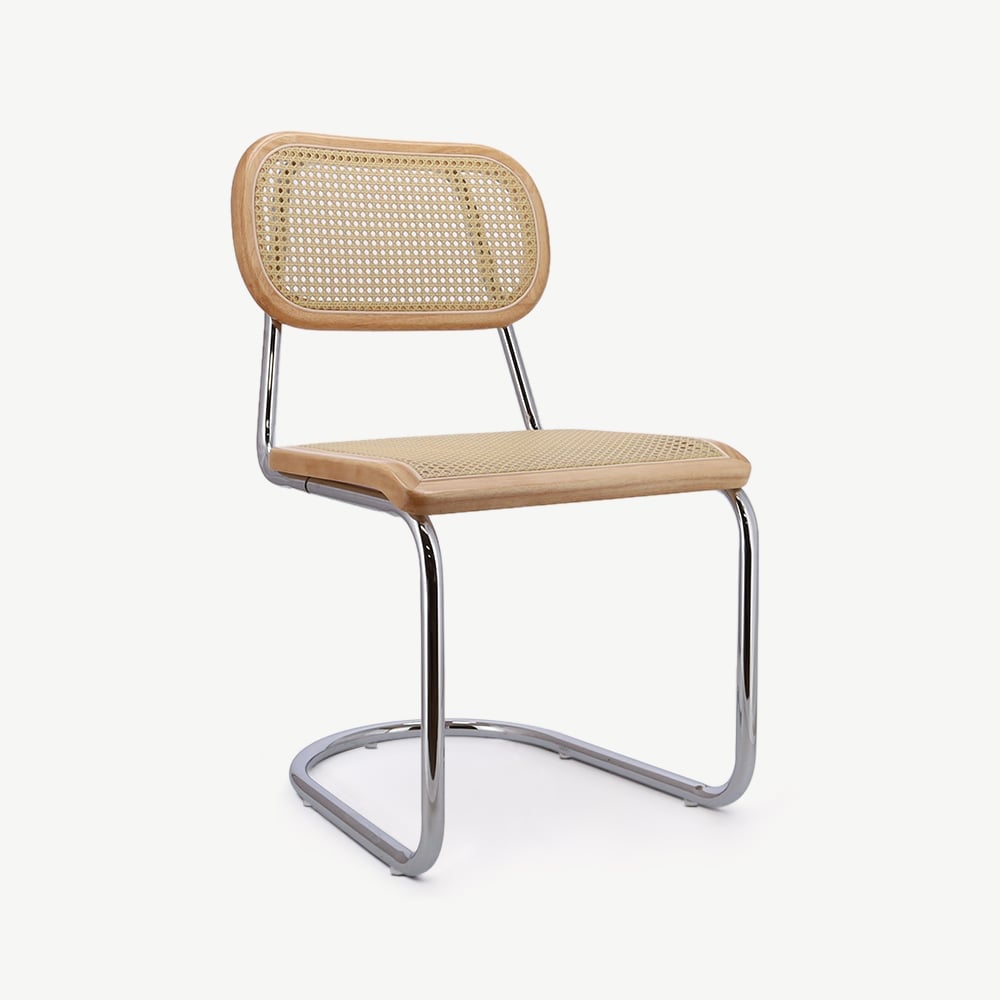
A cantilever-style chair with a rattan back and solid wood seat. Seat height 46 cm. The most visually distinct of the three; works best when you want the chairs themselves to carry the design weight of the room.
Available in natural, cognac, and black. Particularly strong against a plain solid-wood table, where the chairs become the visual accent without overpowering the setting.
Featured in this guide

Which chair fits which table?
Most regretted purchases come from a mismatch between the seat and the table. A two-centimetre gap in seat height feels fine for a quick meal and noticeably wrong after half an hour. Here are the working figures for common table heights and the rattan chairs you should pair with them.
| Table height | Ideal seat height | Leg clearance |
|---|---|---|
| 72 cm (rare, mid-century) | 43 to 44 cm | 28 cm |
| 75 cm (EU standard) | 45 to 47 cm | 28 to 30 cm |
| 78 cm (modern) | 47 to 48 cm | 30 to 31 cm |
| 80 cm (solid wood) | 48 to 50 cm | 30 to 32 cm |
Rattan dining chairs are almost always built at 46 cm because most tables sit at 75 cm. At 80 cm the gap starts to feel tight: look for a chair with a taller backrest or accept a slimmer cushion. Measure your own table before ordering, the product description is not always accurate to the millimetre.
Four habits and rattan needs no more
Rattan is low-maintenance, but unforgiving of the wrong maintenance. People who wet-wipe it weekly wear it out faster. People who oil it once a year see twenty years of use.
Which rattan dining chair is the right one?
For the standard 75 cm table, Scandi is the obvious starting point.
For a dining room set up in a Scandinavian or Japandi register, Scandi or Jenson sit naturally with the rest of the furniture. For a more characterful solid-wood table, Peter gives you the contrast: the cantilever silhouette reads as a deliberate design choice against a heavier piece. A set of six chairs lands at €600 to €850 across all three families.
Browse our rattan dining chair collection. Prices start at €99, with most chairs sitting between €119 and €139. If you want a wider comparison, the full dining chair range covers wood and upholstered options side by side, and our velvet dining chairs guide covers the soft-seating alternative.
Still deciding on materials? Our dining chair buying guide compares rattan against wood and upholstered options across price, durability, and care. The rattan chair explainer covers the material itself in more depth.
Frequently asked.
How long do rattan dining chairs last?
Natural rattan dining chairs last 15 to 25 years indoors with basic care. The placement matters more than the price tag: keep them off a south-facing window and at least two metres from any radiator. Both dry the fibres and cause cracks at the joints. Most chairs that fail early do so after a single summer next to direct sun, not because of weak material.
What seat height do rattan dining chairs need?
For a standard 75 cm dining table you want a seat height of 45 to 47 cm. That gives you 28 to 30 cm of clearance between the seat and the underside of the table, enough room for your thighs without pressure. Rattan chairs are almost always built at 46 cm. For a taller 80 cm solid wood table, look for 48 to 49 cm instead, otherwise you sit at the table as if it were a bar.
Are rattan chairs comfortable for long dinners?
Yes, if the weave is tight and the frame has a slight curve to the back. Natural rattan flexes very lightly under body weight, unlike a hard wooden seat. For meals over two hours, a 3 to 5 cm linen or cotton seat cushion is worth adding. It also protects the weave from concentrated pressure points, which is what causes the centre of a seat to sag over the years.
Natural rattan or synthetic rattan, which is better?
Indoors, natural rattan. It ages well, can be re-woven by a craftsman, and outlasts synthetic at the same price point. PE weave over an aluminium frame is only worth it for conservatories, covered terraces, or genuinely humid rooms. Inside, synthetic has no real advantage and looks slightly plastic at close range. Natural rattan also takes finish stains better, so the cognac and black versions read deeper.
How do I clean a rattan chair?
Dust once a month with a soft brush or the upholstery attachment on your vacuum. Blot any spills with a well-wrung cloth, never wet-wipe. Once a year, apply a thin coat of linseed oil with a soft cloth to keep the fibres supple. In a centrally heated room, a humidifier in winter prevents the weave from becoming brittle, which is the most common cause of cracks at the joints.
What does a good rattan dining chair cost?
Solidly built rattan dining chairs sit between €99 and €139 per chair. Below that, the saving usually comes from a looser weave or a pine frame instead of beech. Above €150, you are mostly paying for the brand. For a set of four to six chairs, €100 to €130 per chair is the sensible range, which puts a full set at €400 to €780.
