 9800+ TRUSTPILOT REVIEWS


 EN
EN DE
DE FR
FR NL
NL
Armrests on a dining chair sound like an upgrade. More comfort, more presence at the table, more support for two-hour Sunday lunches. They are also wider, often do not fit under the table, and break the visual unity of a six-set when only two chairs have arms. Whether they are right depends on three things you can measure before buying.
This guide covers when armrest dining chairs earn their place (long meals, older diners, formal rooms), where they cost you (small dining rooms, low-apron tables, mixed sets), the table dimensions that decide fit, and the configuration that works for most homes.
What armrests actually do
The forearm rest on a dining chair shifts load away from the shoulders and lower back. For meals of 30 to 60 minutes, you do not notice this. For meals over 90 minutes (the family Sunday, the dinner party that becomes a long conversation, the tasting menu at home), the difference is measurable. Restaurants that serve sittings over 2 hours use chairs with arms. Cafés that turn tables every 45 minutes do not.
The second function is logistical, and it matters more in households than people expect. Armrests help with getting up from the chair. For older diners, anyone recovering from back surgery, or pregnant guests in the third trimester, the arms are the difference between a chair that works and one that requires effort every time.
- Long meals: measurable shoulder and lower-back relief over 90 minutes
- Getting in and out: the single biggest dining-chair issue for older guests
- Visual presence: defines a chair as the head of the table, where one is wanted
How armrest chairs are actually used
Three configurations cover almost every dining room. The differences are visual, practical, and a question of how much space you have.
Captain chairs at the ends
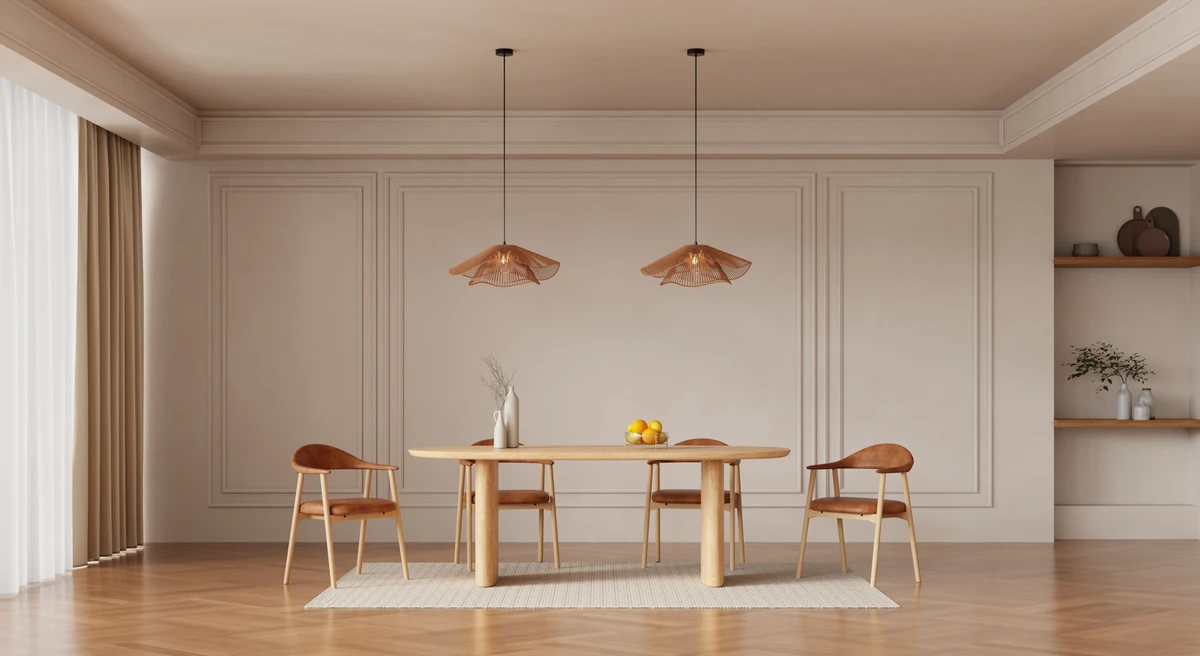
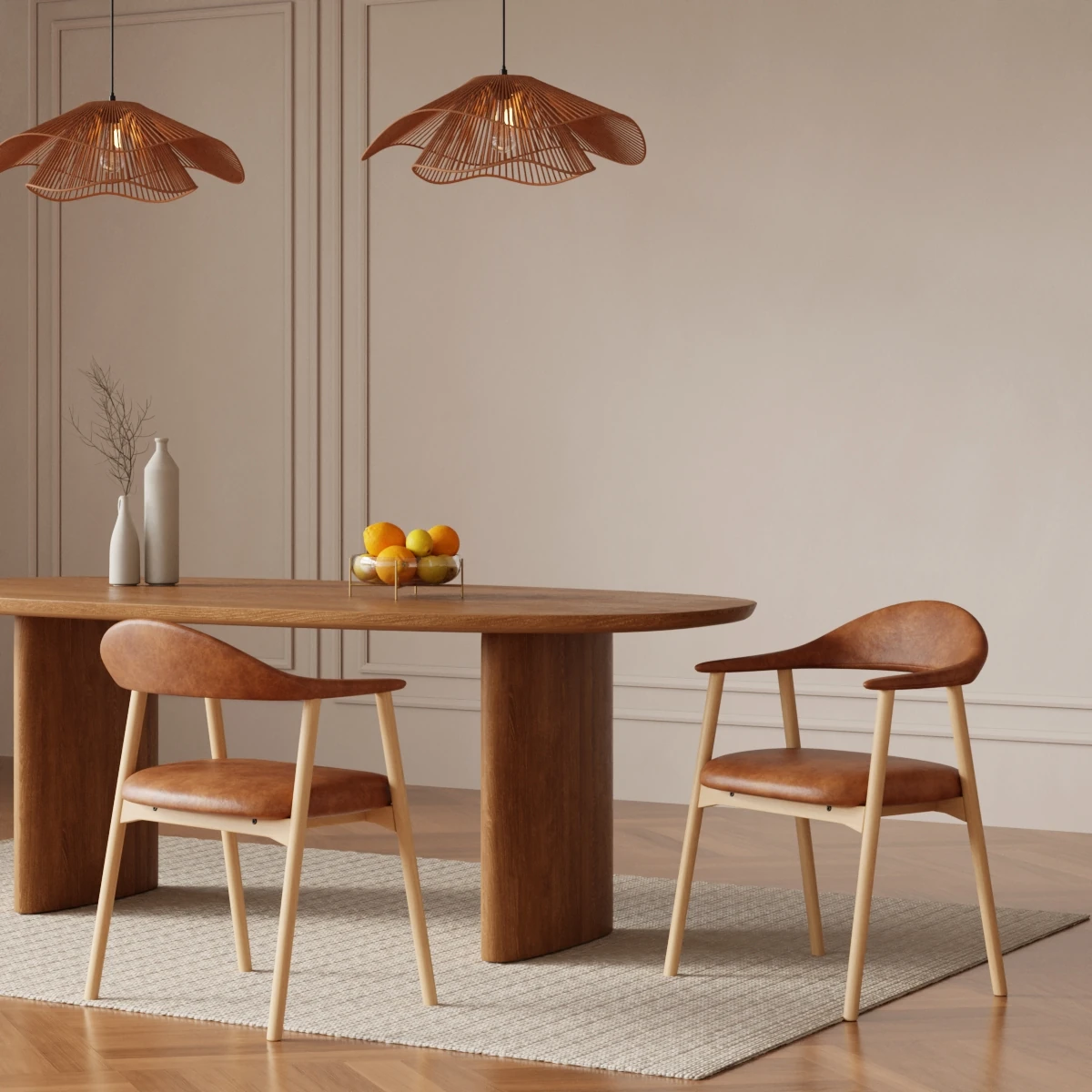
Two armrest chairs at the heads of the table, four armless sides. Reads as intentional rather than mixed. The most space-efficient configuration. The right choice for tables of 160 to 200 cm in dining rooms of 14 to 18 m².
The default choice for most dining rooms. Pick this if the table sees mixed adult and kid use and you do not want to lose seat width on the long sides.
All armrest
Six matching armrest chairs around a long table. Reads as a formal dining room rather than a kitchen-dining area. Works in rooms above 18 m² with a table of 200 cm or more. Below that, the armrests crowd each other and reduce the usable seat width by 4 to 6 cm per place.
Skip this if your room is under 18 m² or your table under 200 cm. The armrests steal usable seat width fast.
Armrest dining-chair pair
Two armrest chairs at a 4-person table or breakfast bench. The arms function more as armchair than as dining captain. Useful when one or both regular diners need the support, or when the dining area doubles as a reading nook. Pairs well with our Scandinavian-style ranges.
The right pick when the dining area doubles as a reading nook, or when one regular diner needs the lumbar support.
Featured in this guide



Will they fit under your table?
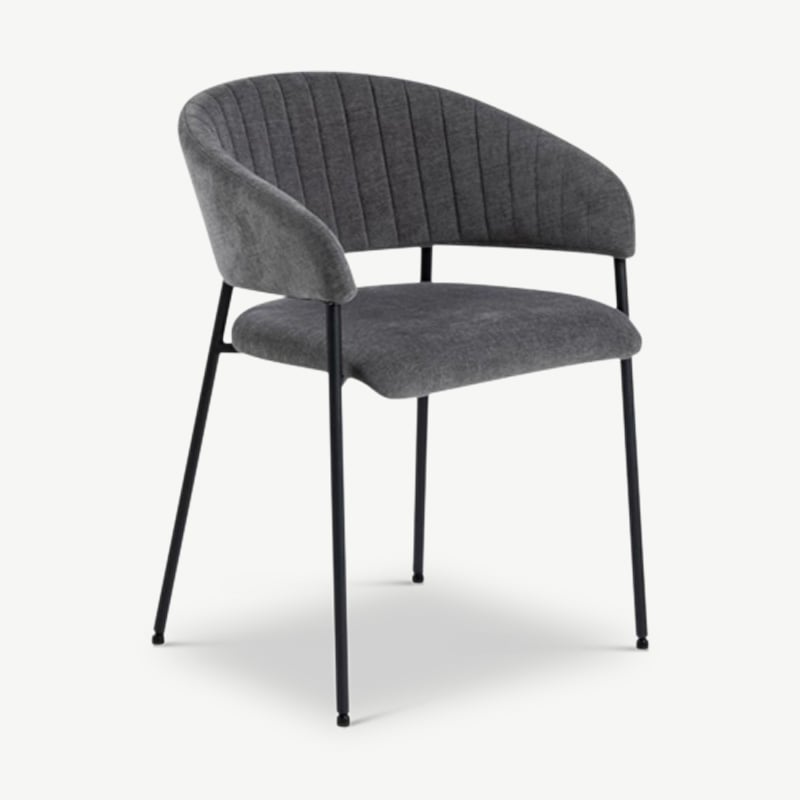
This is the single biggest reason armrest chairs get returned. The standard dining table has an apron (the wood frame below the tabletop) at 60 to 64 cm from the floor. Most armrest chairs measure 64 to 68 cm to the top of the arm. The maths is tight, and the chair often does not slide fully under the table.
| Table type | Apron clearance | Armrest fit |
|---|---|---|
| Pedestal table, no apron | 73 to 75 cm | Fits |
| Trestle table | 68 to 72 cm | Usually fits |
| Standard 4-leg table | 60 to 64 cm | Tight, often does not fit |
| Farmhouse table, deep apron | 55 to 60 cm | Does not fit |
Before buying armrest chairs, measure from the floor to the underside of your tabletop or apron. If it is under 65 cm, look at low-arm dining chairs (arms at 60 to 62 cm), or stay armless and add seat pads for comfort. A chair that cannot slide under the table sticks 8 to 12 cm into the walkway, which is the difference between a usable and an unusable dining room in tight European spaces.
Four things to check before you commit
Armrest chairs photograph well and feel substantial in showrooms. The realities that matter at home come down to four numbers you can measure before buying.
Captains for the heads, armless for the sides
This is the configuration that works in most European dining rooms.
Two armrest captains at the ends signal the heads of the table without crowding the sides. Four armless side chairs slide fully under the table when not in use, freeing the walking space that 14 to 18 m² dining rooms cannot afford to lose. The captains take the long-meal load; the sides take the day-to-day. A 6-piece set costs 660 to 780 EUR, the same as six identical chairs in the same line.
Browse our dining chairs collection. Armrest captains sit between 119 and 199 EUR each; armless sides between 89 and 159 EUR. Most chairs in our range come in captain and side variants from the same family, so the contrast reads as intentional rather than as a mismatch.
The dining chairs buying guide covers materials and matching to your table. For the table itself, our dining tables collection lists apron clearances on every product so you can check fit before ordering.
Frequently asked.
Will dining chairs with armrests fit under my table?
Most armrest chairs measure 64 to 68 cm at the top of the arm. Standard dining tables have an apron clearance of 60 to 64 cm. The maths is tight: armrest chairs often do not slide fully under the table. Measure from the floor to the underside of your tabletop or apron before buying. If it is under 65 cm, choose armless or specify a chair with arms below the tabletop. Pedestal and trestle tables, with no apron, almost always accept armrest chairs.
Should I put armrest chairs at the heads only or all around?
Two armrest chairs at the heads with armless sides is the most common configuration and the most space-efficient. It marks the heads of the table visually without crowding the sides. All-armrest is reserved for tables of 200 cm or more, in dining rooms of 18 m² or more, where the visual weight of six matching armrest chairs balances the length of the table. Below those dimensions, all-armrest crowds the room.
Are armrests important for back support during long meals?
For meals over 90 minutes, yes. The forearm rest takes load off the shoulders and lower back, which is why captain chairs are standard in restaurants with long tasting menus. For everyday family dinners under an hour, the back support comes from the chair back, not the arms. Armrests in that context are visual rather than functional, which is a valid reason to choose them, but worth being honest about.
Do armrest chairs take up significantly more space?
Yes. An armless dining chair is 44 to 46 cm wide; an armrest chair is 56 to 62 cm wide. For a 180 cm table seating six, this is the difference between everyone fitting comfortably and your guests bumping elbows. In a small dining room (under 14 m²), the space cost is real and the captains-only configuration is almost always the right call.
Can I mix armrest and armless chairs at one table?
Yes, this is the right configuration for most dining rooms. Two armrest captains at the ends, four armless sides. Choose chairs from the same family (same wood, same fabric, same back shape) so the contrast reads as intentional rather than as a mismatch. This is the configuration most furniture brands sell as a set for exactly this reason. It also gives you a clearer head of the table for hosting.
Are armrest dining chairs better for older diners?
Yes, the arms help with getting up and down from the chair, which is the single biggest source of dining-chair discomfort for older guests. If you regularly host parents or grandparents, two armrest captains and four armless sides covers the practical case without making the whole set heavy or harder to fit under the table. The captains naturally fall to the older guests at family meals, which is also the social norm in most European households.
