 9800+ TRUSTPILOT REVIEWS


 EN
EN DE
DE FR
FR NL
NL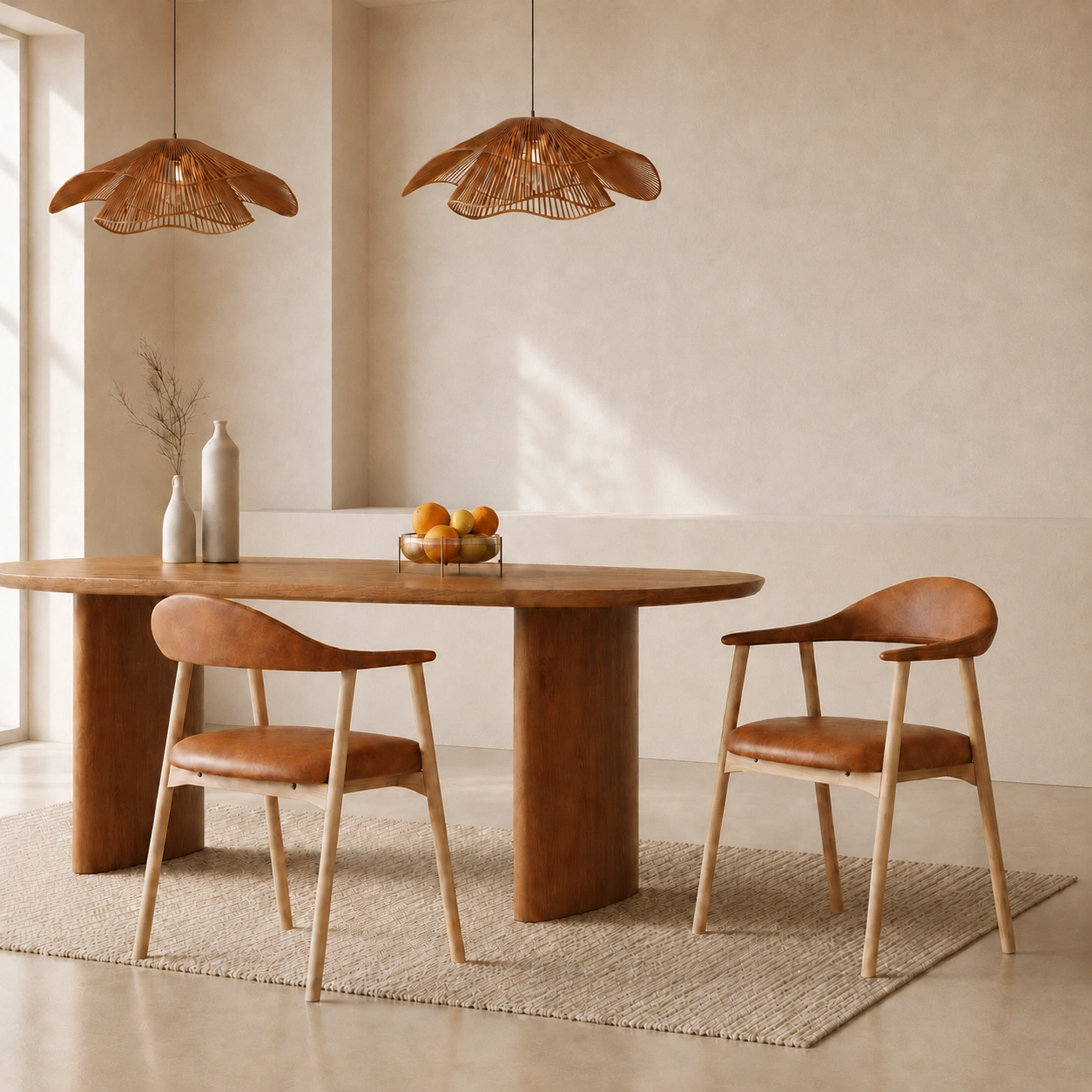
Scandinavian Furniture: The Complete Buying Guide (2026)
Scandinavian design is the most consistently copied furniture style in the world. It is also the most misunderstood. The hallmarks are simple to list, but the execution is where most interiors fail. This guide explains what genuine Scandinavian furniture is, why it endures, and how to buy it without being misled by surface-level imitations.
The Scandinavian design movement emerged in Denmark, Sweden, Norway and Finland in the early twentieth century as a response to two converging pressures: long dark winters that made the quality of home environments a genuine quality-of-life issue, and a cultural tradition of skilled woodworking and craft. The result was a design philosophy centred on light, natural materials, human-scale proportions, and the principle that good design should be accessible to ordinary people, not only to the wealthy.
This guide covers the four principles that distinguish genuine Scandinavian design from its many imitators, the primary materials and wood species used, the five furniture categories where the style excels, a comparison table for choosing the right piece for each room, four care habits that preserve Nordic furniture over decades, and answers to the questions buyers ask most before purchasing.
Four principles that separate genuine Scandinavian design from imitation
The word Scandinavian has been applied to so many furniture products over the last two decades that it has almost lost meaning. These four principles are the filter that restores it. A piece that satisfies all four is genuine Nordic design. A piece that satisfies two or three is a Nordic-influenced design. A piece that satisfies one is using the label as a marketing device.
- Form follows function, always: Every element of a Scandinavian piece earns its presence through utility. Decorative carving, applied ornamentation and purely visual complexity are absent. The aesthetic emerges entirely from the resolution of structural problems: how the joint is made, how the leg is shaped to resist racking, how the seat is angled to support the body. Beauty is a byproduct of good engineering, not an addition to it.
- Natural materials, honestly expressed: Scandinavian furniture shows what it is made of. Oak grain is visible and untinted. Beech retains its pale warmth. Wool upholstery is not hidden under a synthetic cover. The material's natural texture, colour variation and imperfections are features of the finished piece, not problems to be concealed. This is partly a philosophical position and partly a practical one: honest materials age well; concealed ones do not.
- Human-scale proportions: Nordic furniture was designed during a period when the philosophy was that everyone deserves well-designed objects in their home, not only the wealthy. This produced pieces that are appropriately scaled for real rooms rather than showrooms: seat heights that work for actual people, table heights calibrated for daily use, chair weights that adults can move without effort. This is a structural feature of the design tradition, not an accident.
- Light as a design material: In countries where winter daylight lasts six hours, the way furniture interacts with light is not a secondary concern. Scandinavian pieces are designed to let light pass through them (open chair backs, tapered legs that do not block sightlines), to reflect it (pale woods, light upholstery tones), and not to compete with it (clean silhouettes without heavy visual mass). The result is furniture that makes rooms feel larger and brighter rather than smaller and heavier.
The three Nordic furniture categories worth investing in
Scandinavian design covers every room. These are the three categories where the Nordic tradition produces consistently superior results and where the investment in quality pays back over the longest period.
Dining chairs
The dining chair is arguably the object in which Scandinavian design achieved its highest concentration of quality. The tradition of Danish design furniture and Swedish chair-making from the mid-twentieth century produced some of the most influential chair designs ever made: pieces that solved the ergonomic problem of sitting at a table for hours while using the minimum possible material.
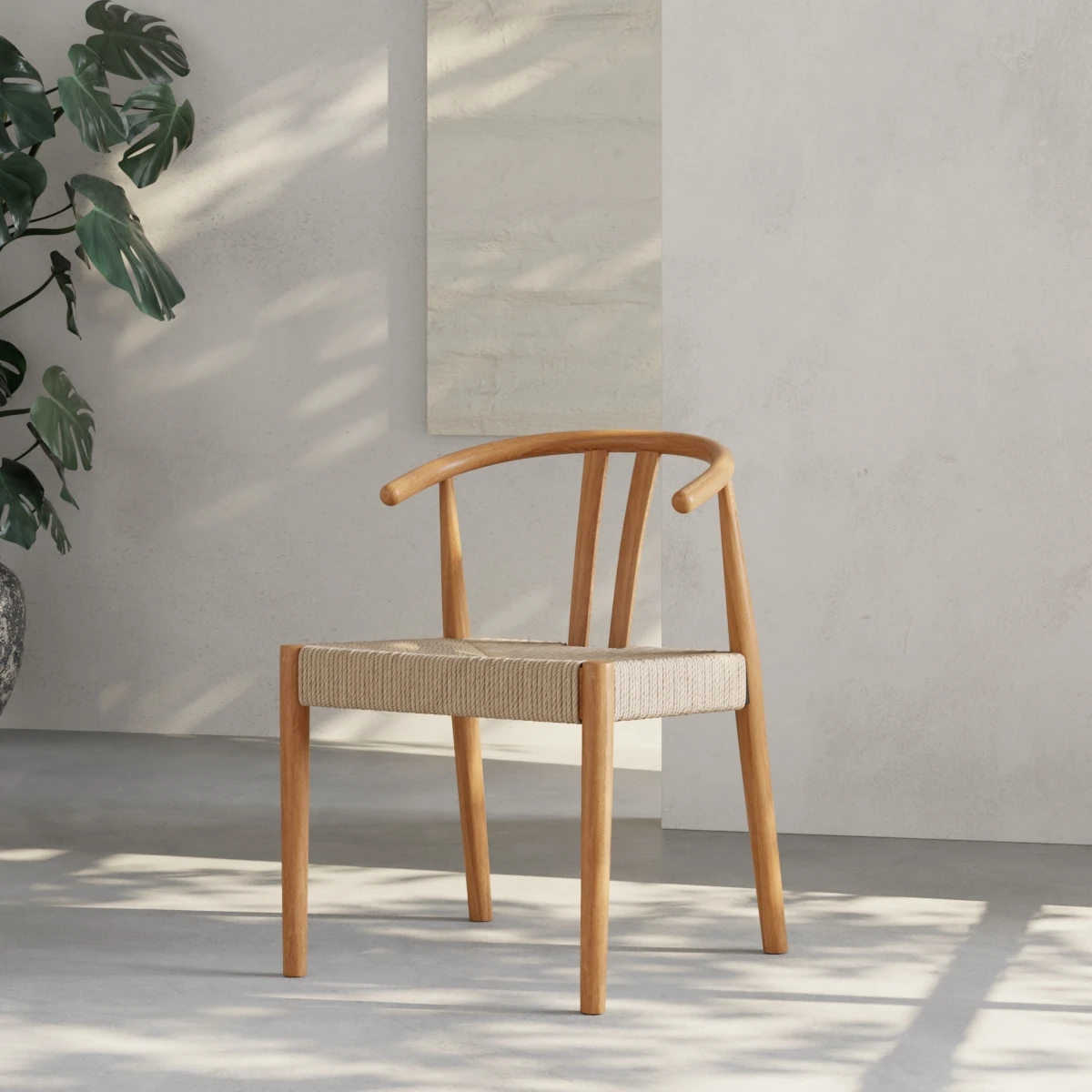
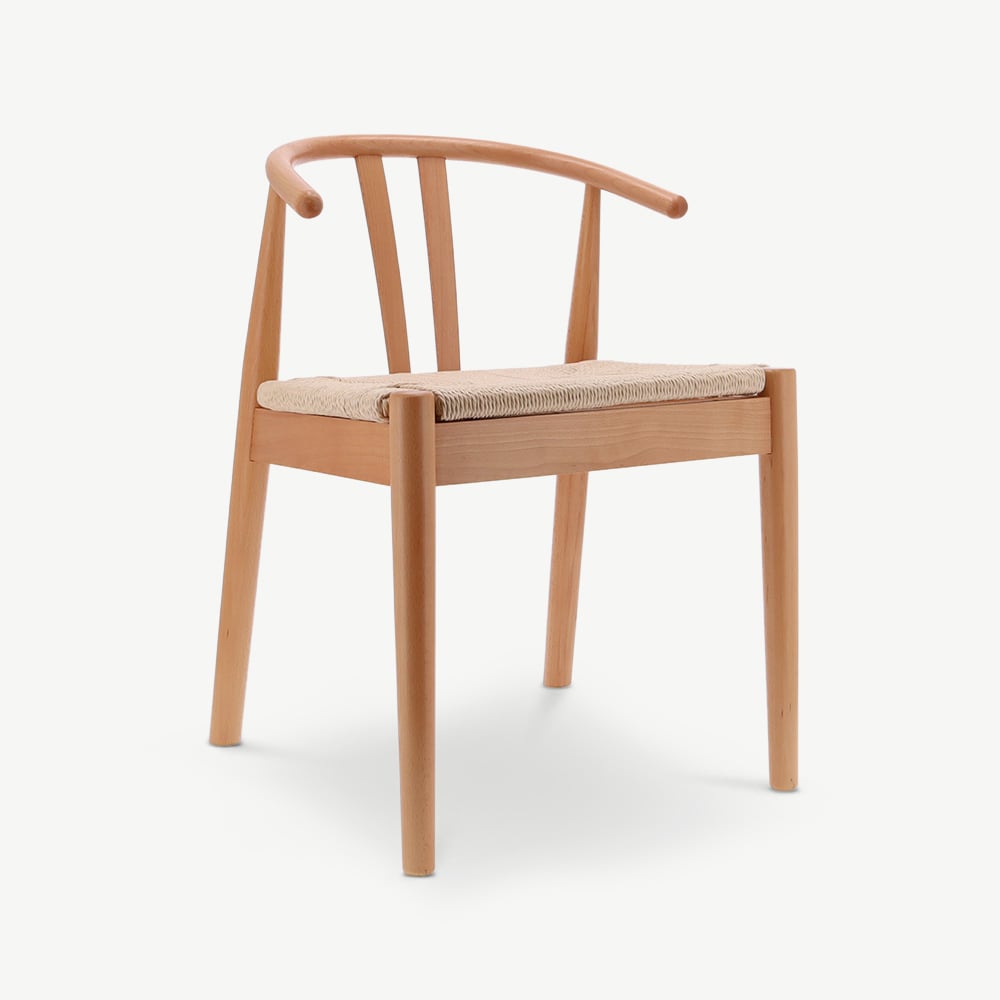
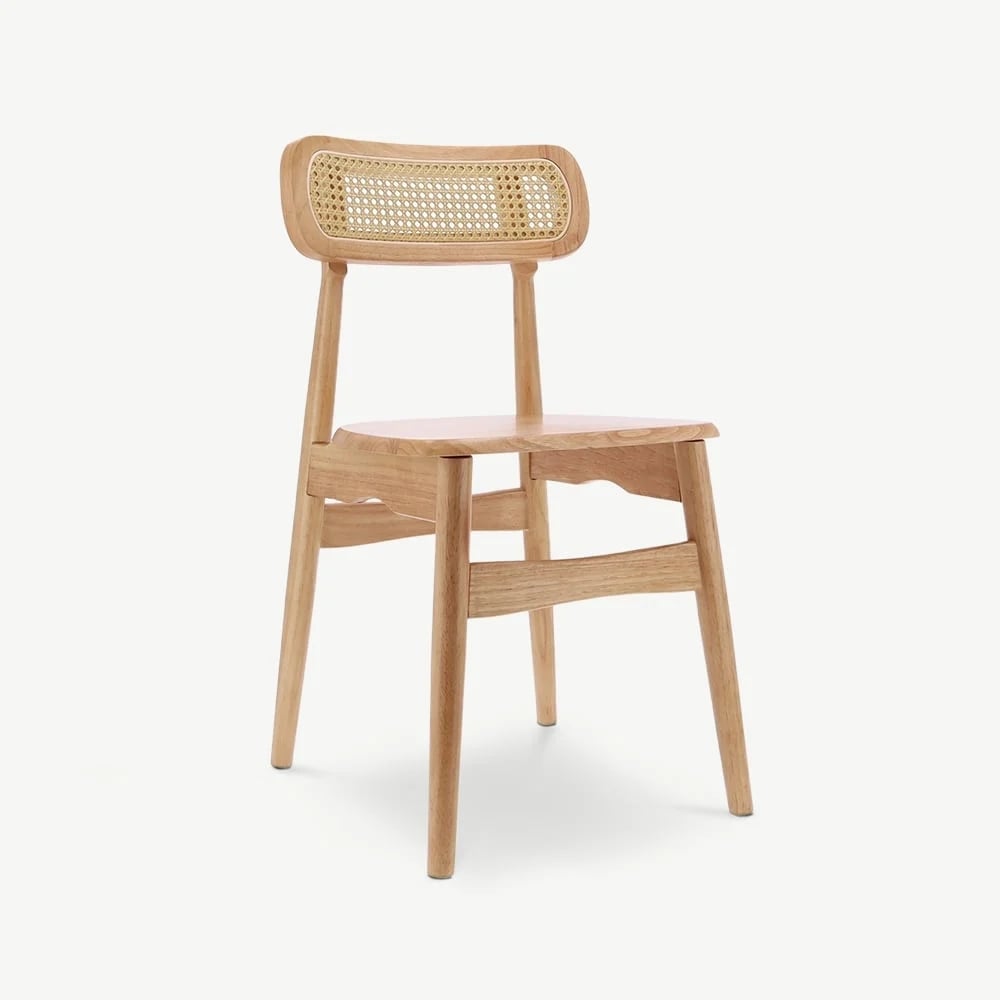
The identifying features of a genuine Nordic dining chair: solid wood construction (beech, oak or ash), tapered legs that narrow toward the floor, an open or semi-open back that does not block light, a seat that is slightly wider at the front than the back to allow natural leg positioning, and proportions that look right at both 75 cm and 72 cm table heights. The joinery is typically mortise-and-tenon or dowel, not metal brackets. For a fuller breakdown of seat heights, leg shapes and frame styles, see our Scandinavian dining chairs guide.
Furnicher Nordic dining chairs are made from FSC-certified European oak and beech, with natural oil finishes that allow the wood to breathe and age gracefully. Available in seat finishes from solid wood through to upholstered linen and woven rattan, covering the full range of Scandinavian style chairs.
Dining and work tables
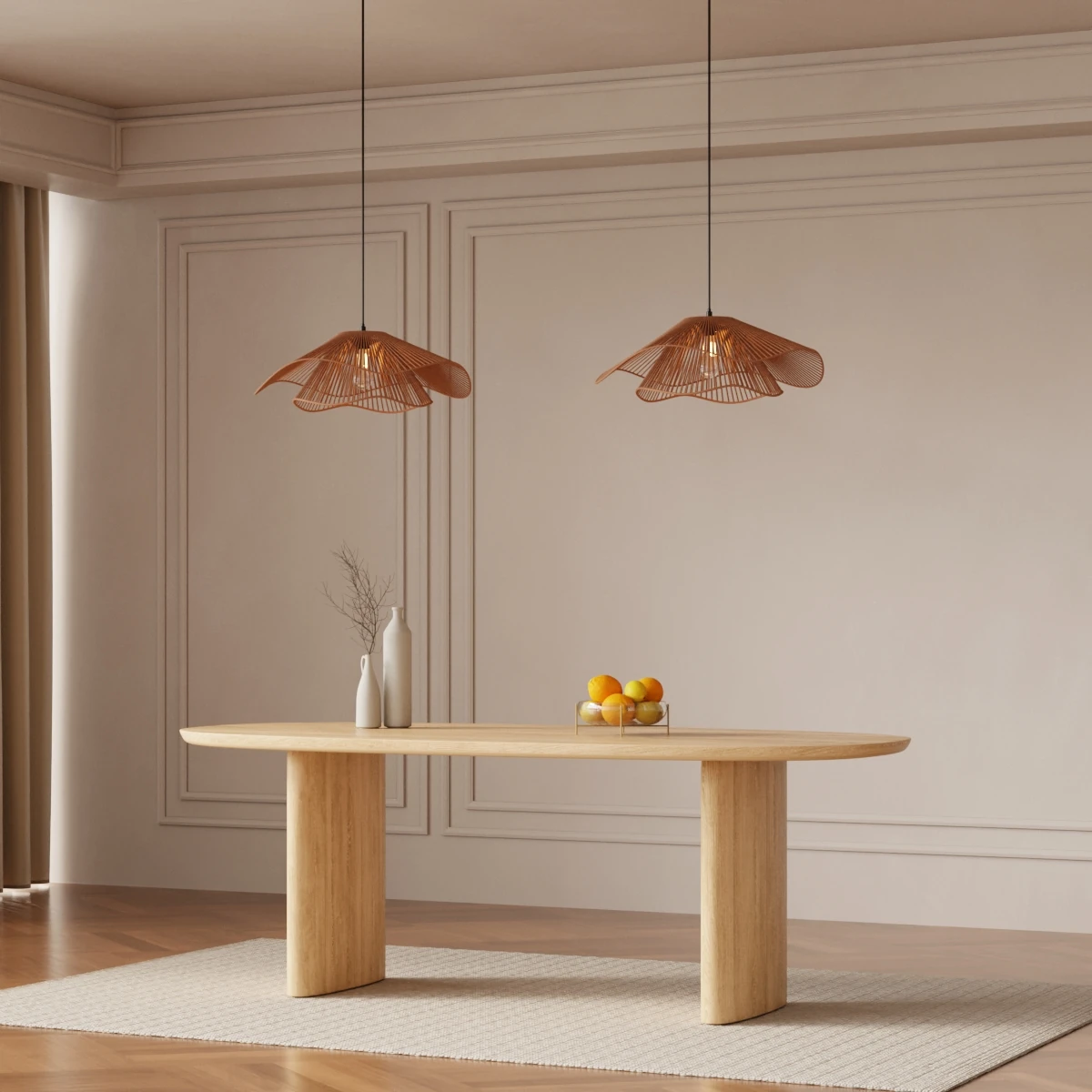
A Scandinavian dining table is the piece in the home that receives the most daily contact and, if well made, the longest service life. The Nordic tradition produces tables built to be used: surfaces that develop a patina over decades rather than deteriorating, structures that do not wobble after two years, sizes that fit real dining rooms rather than magazine spreads.
The critical specification questions for a Nordic table: Is the top solid wood or veneer over MDF? Solid wood expands and contracts with humidity and must be allowed to do so through a proper frame design; veneered MDF does not have this characteristic and will eventually delaminate at the edges. Is the frame joinery mechanical fasteners or traditional woodworking joints? Is the finish an oil that can be refreshed or a lacquer that cannot?
Standard dining table sizes: 120 x 80 cm for two to four people (compact); 160 x 90 cm for four to six; 200 x 90 cm for six to eight. Extendable tables in the Nordic tradition use butterfly or pull-out mechanisms that add 40 to 50 cm without compromising the silhouette of the closed table.
Lounge and accent chairs
The Scandinavian lounge chair tradition produced some of the most recognisable furniture forms of the twentieth century: generous, enveloping shapes in natural materials that look as comfortable as they are. The Nordic approach to lounge seating is that comfort and visual restraint are not in conflict: a well-engineered chair can hold the body correctly without requiring deep foam padding or heavy upholstery.
The identifying features of a quality Nordic accent chair: a visible wood frame that forms part of the aesthetic rather than being hidden inside upholstery, seat cushions in natural textiles (wool, cotton, linen), proportions that suit the scale of European living rooms (seat height 40 to 45 cm, total height 75 to 82 cm), and a structure that remains stable without requiring wall support or heavy anchoring.
Rattan and paper cord accent chairs occupy a specific position in the Nordic tradition: they provide the visual lightness of an open structure with the tactile warmth of natural fibre. They work particularly well in smaller rooms where a fully upholstered chair would create too much visual mass.
The Nordic materials reference: what to look for and what to avoid
The material choices in a piece of Scandinavian furniture determine both how it looks on day one and how it looks after ten years. This table maps the key decisions and their consequences.
| Category | Nordic standard | What to avoid |
|---|---|---|
| Wood construction | Solid hardwood: oak, beech, ash, birch | MDF core, particleboard, hollow construction |
| Surface finish | Natural oil or hard-wax oil (renewable) | High-gloss lacquer, thick varnish, painted finishes |
| Upholstery | Wool, cotton, linen, natural leather | Synthetic microfibre, PU leather, polyester blends |
| Joinery | Mortise-and-tenon, dowel, traditional woodworking | Cam lock fittings, metal corner brackets, glue only |
| Frame colour | Natural, oiled, soap-treated, or matte black/white | High-gloss painted, chrome, mirror finishes |
| Certification | FSC or PEFC timber, EU VOC compliant finishes | No provenance information, unknown supply chain |
The single most important distinction is solid wood versus MDF. A solid oak chair will last 20 to 30 years in normal domestic use and can be refinished when the surface weathers. An MDF-core chair with an oak veneer will look identical on the shop floor but will deteriorate at the edges and joints within five to ten years. The price difference is real and the value difference is larger still. Our guide to buying Scandinavian furniture walks through every spec question to ask before you commit.
Four habits that keep Nordic furniture looking right for decades
Solid wood Scandinavian furniture requires very little maintenance but does require consistent attention to four basics. Miss any of them and the deterioration is slow but cumulative. Follow them and the furniture improves over time rather than declining.
How to style a Scandinavian interior that does not look like a furniture catalogue
The visual language of Nordic design has been so widely reproduced that many interiors styled around it end up looking like a template rather than a home. These five principles prevent that.
- One anchor piece per room: Choose one genuinely exceptional piece per room, the piece you would keep if you had to sell everything else. Build the rest of the room around it. A room built around one great table reads as a considered Nordic interior. A room where every piece is of equal (mediocre) quality reads as a furniture package.
- Mix warm and cool neutrals deliberately: Scandinavian interiors are not exclusively white and grey. The tradition includes warm cream walls, natural linen, aged wood tones and terracotta accents. The error most people make is staying entirely in the cool range (white, grey, black) and ending up with a room that feels cold rather than calm. Introduce at least one warm tone: a honey-oak table, a sand linen cushion, a warm white wall tone. Our Scandinavian color palette guide shows the exact ratios that read as Nordic rather than sterile.
- Let wood species contrast: Using two or three different wood species in the same room is not a mistake in Nordic design; it is a feature. Pale beech chairs against a darker oak table, ash shelving against whitewashed pine floors. The contrast of warm and cooler wood tones is a natural effect in actual Scandinavian homes and reads as authentic rather than matchy.
- Use textiles to add warmth, not pattern: Nordic textiles are overwhelmingly solid, woven or subtly textured rather than patterned. A chunky knit wool throw, a woven cotton rug, a linen cushion in an undyed natural colour. Bold patterns, graphic prints and high-contrast textiles are not Scandinavian references; they are accents that pull against the style.
- Plants and candles as the finishing layer: Nordic homes use both as functional elements, not decorations. Plants bring the outside in during long winters. Candles provide the warm-toned ambient light that overhead fixtures cannot. Both belong in a well-executed Scandinavian interior decoration scheme regardless of the season. If you are weighing it against its closest cousin, our Japandi vs Scandinavian design comparison maps where the two traditions overlap and where they diverge.
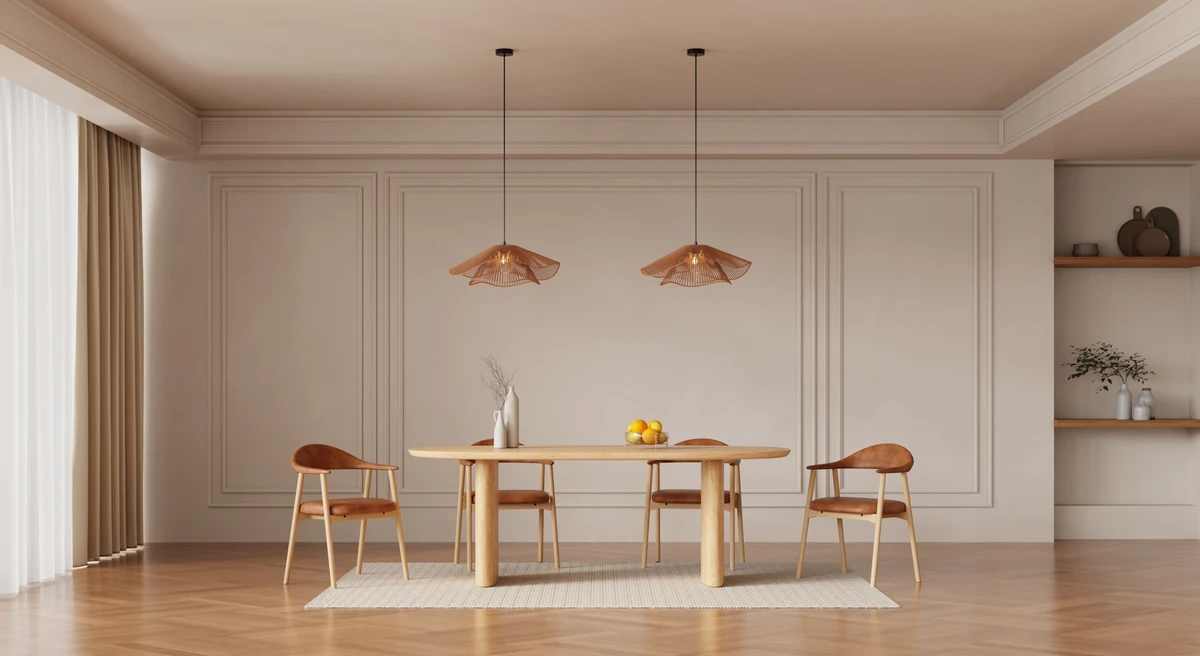
Featured in this guide


Nordic furniture made to last a generation, not a rental cycle
The Furnicher Scandinavian collection is built on one conviction: that the right piece of furniture, made correctly, should outlast the room it was bought for and still look right in the next one.
FSC-certified European oak and beech. Traditional joinery rather than cam locks. Natural oil finishes that can be renewed. Seat fabrics in wool, linen and cotton. Proportions calibrated for room dimensions. Free delivery across Europe and free returns on everything, with same-day dispatch on all in-stock pieces.
More than 50,000 customers have furnished their homes with Furnicher. More than 9,500 have left reviews. The collection is edited carefully: we add pieces that meet the Nordic standard, not pieces that merely reference it.
Browse the full Scandinavian furniture collection at Furnicher
Scandinavian furniture buying questions, answered directly
What is the difference between Scandinavian and Nordic design?
The terms are used interchangeably in most furniture retail contexts but technically Nordic design includes Finland, while Scandinavian design refers to Denmark, Sweden and Norway. In practice, all four countries share the same fundamental design principles: functionalism, natural materials, human-scale proportions and a democratic design philosophy. Finnish design, particularly furniture and glassware, sits fully within the same tradition. When buying furniture, the distinction is not meaningful; the quality criteria are the same. We unpack the labels in detail in Nordic vs Scandinavian style.
What wood is most authentically Scandinavian?
Beech has the longest history in Nordic furniture-making and is the traditional wood of many mid-century Danish and Swedish designs. Its pale, even grain and reliable structural properties made it the preferred workshop timber. Oak is warmer in tone and has a more pronounced grain, making it the more popular choice for contemporary Nordic interiors. Ash is lighter still, with a very visible grain pattern. All three are correct choices; the decision is aesthetic rather than historical. Birch is common in Finnish design and is the lightest of the four.
What is the right dining table height for Scandinavian chairs?
Standard European dining table height is 74 to 76 cm. Scandinavian dining chairs are typically designed for this range with a seat height of 44 to 46 cm, providing a comfortable 28 to 32 cm gap between seat and table underside. This is the range that allows comfortable seated posture for adults of 160 to 190 cm height. Café-height tables (90 to 92 cm) require bar-height chairs (60 to 66 cm seat height), which are a different product category.
Is Scandinavian furniture good for small apartments?
Nordic design is particularly well suited to smaller European apartments precisely because it was developed with ordinary home dimensions in mind. The emphasis on visual lightness (open chair backs, tapered legs, pale materials that reflect light), human-scale proportions, and multipurpose pieces means Nordic furniture does not make small rooms feel smaller. A solid oak dining table with tapered-leg chairs creates far less visual mass than the equivalent in a darker, heavier style. Extendable table designs are common in the Nordic tradition specifically because not every home has a large dining room.
How can I tell genuine Scandinavian design from imitation?
Four checks work reliably. First, look at the wood: solid hardwood (oak, beech, ash) has visible end grain at cut edges; MDF and particleboard do not. Second, examine the joints: traditional Nordic construction uses visible wood joinery (dowels, mortise-and-tenon) rather than metal cam-lock fittings. Third, check the finish: an oil finish looks slightly matte and feels like the wood surface; a lacquer finish looks like plastic and feels like a sealed surface. Fourth, check for timber certification (FSC or PEFC): furniture made without certified timber typically has no provenance information at all. For the broader definition behind those four checks, read what is Scandinavian design.
What colours work best in a Scandinavian interior?
The classic Scandinavian palette is light, bright and warm: warm white walls (not cool white), pale wood tones, natural textile colours (undyed linen, oatmeal, sand, cream), and restrained use of accent colours in muted tones. Sage green, dusty blue, terracotta and soft rust are all historically consistent Nordic accent colours. The approach is always to keep the dominant tones light and the accent colours secondary. A Scandinavian interior that has tipped into all-white-and-grey has lost the warmth that the tradition actually produces.
