9800+ TRUSTPILOT REVIEWS

 EN
EN DE
DE FR
FR NL
NL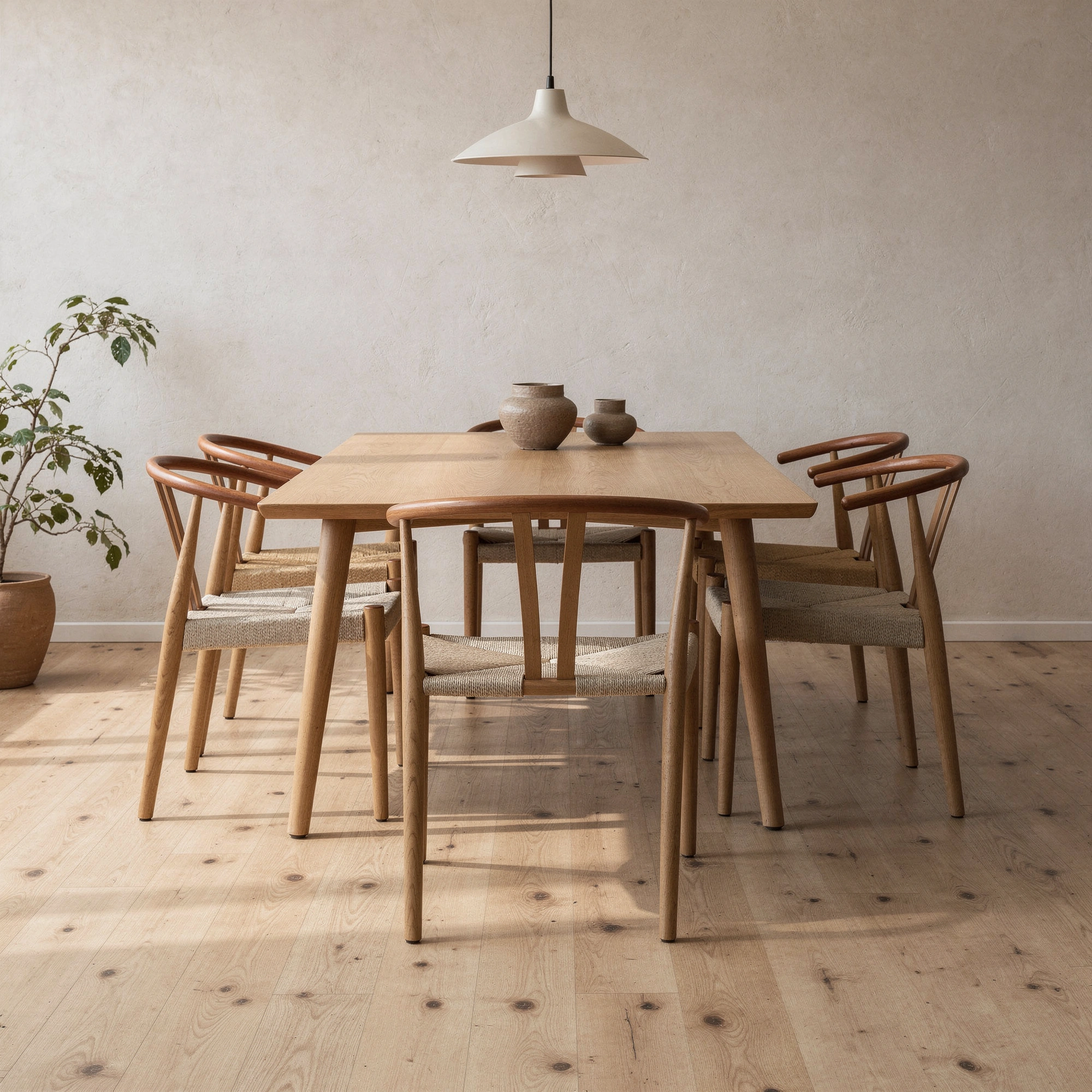
Scandinavian wooden chairs are almost always made from one of four species: oak, beech, ash, or black-stained oak. The choice is not aesthetic. These woods are hard enough for daily dining use, light enough for the Nordic look, and elastic enough to allow curved backs.
This guide explains why these four and not others, how to spot real solid wood versus chairs that only look like wood, and which Furnicher chairs (€89 to €179) come in which species and finish.
Why four woods are almost always enough
The historic workshops in Denmark and Sweden had access to dozens of European woods. They consistently chose four. The reasons are technical, not aesthetic.
A dining chair has to do a tricky combination: hold up to 110 kg of daily load, support a curved backrest, balance on slim legs without wobble, and not warp as room humidity changes through the year. Only a handful of woods do all of that:
- Oak: Janka hardness ~5,000 N, dense grain, stable across humidity swings
- Beech: Janka ~6,500 N, harder than oak, evenly grained
- Ash: Janka ~5,900 N, elastic enough for moulded plywood backs
- Birch (rarely): softer at ~4,500 N, but affordable and easy to work
Pine, spruce, and larch are too soft for a daily-use dining chair. They show up elsewhere in Scandinavian design (cabinetry, shelving) but not in seating.
Oak, beech, ash, black-stained
Each species reads differently in a room. Here is the short description of what you actually see.
Oak
Light-toned with distinct open grain. Develops a warm honey patina over 6 to 18 months that stabilises after about five years at normal room temperature.
Oak is the standard at Carl Hansen, Fritz Hansen, and most other serious Scandinavian makers. Hard, durable, easy to repair when scratched.
Beech
Slightly pinker than oak, with quiet, fine grain. Harder than oak, so more resistant to dents, but less visually characterful.
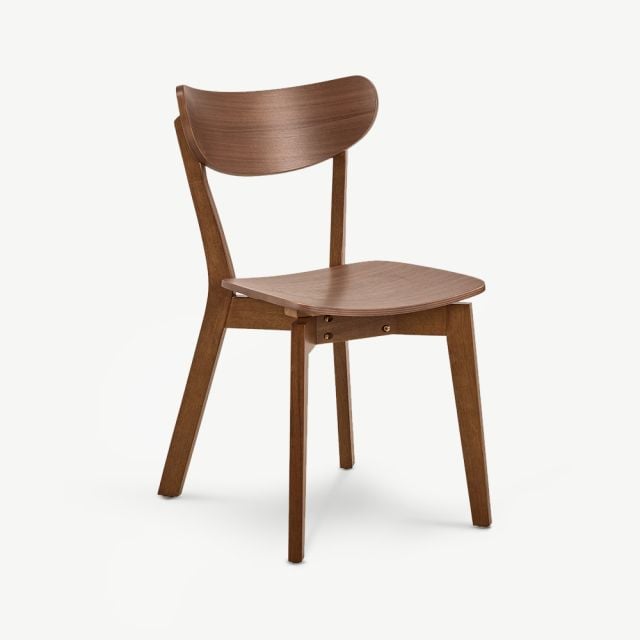
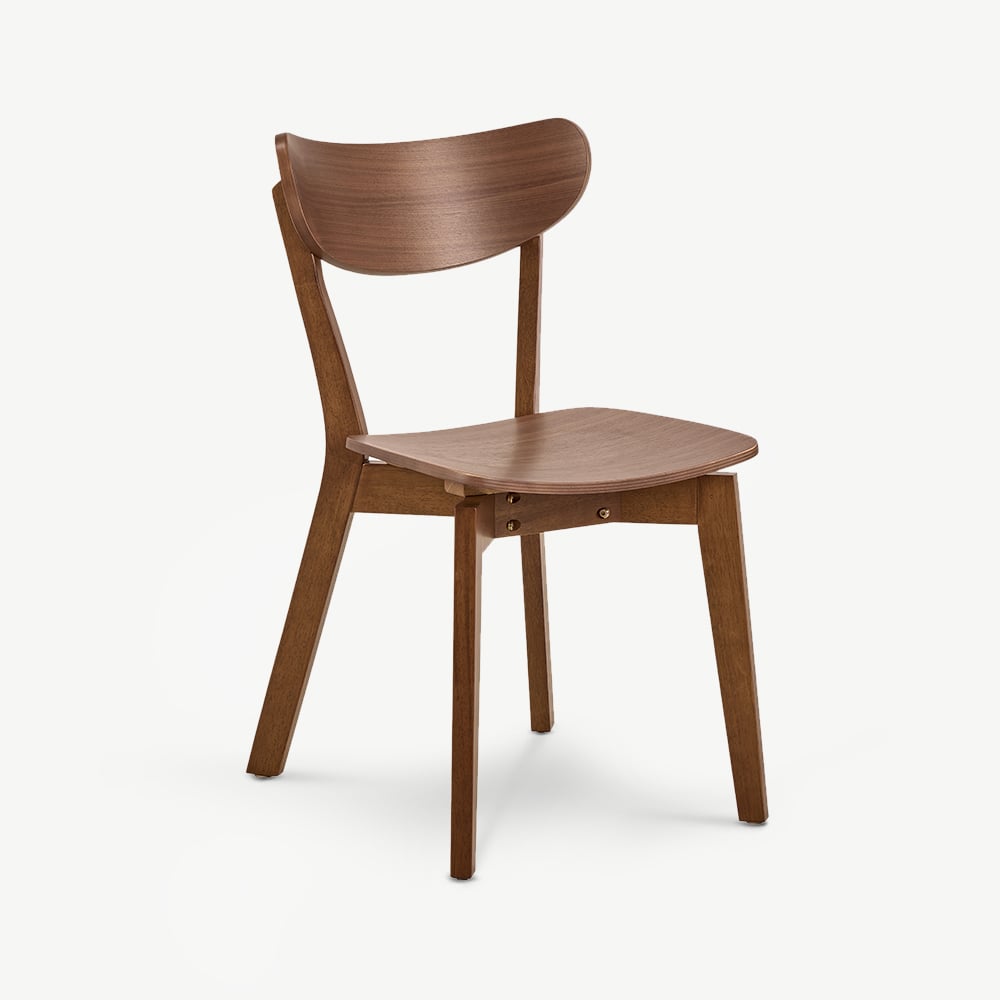
Often the choice for volume reproductions (IKEA Wegner-style) and for Furnicher's Scandi model. Easy to confuse with oak at a glance, distinguishable up close.
Ash / black
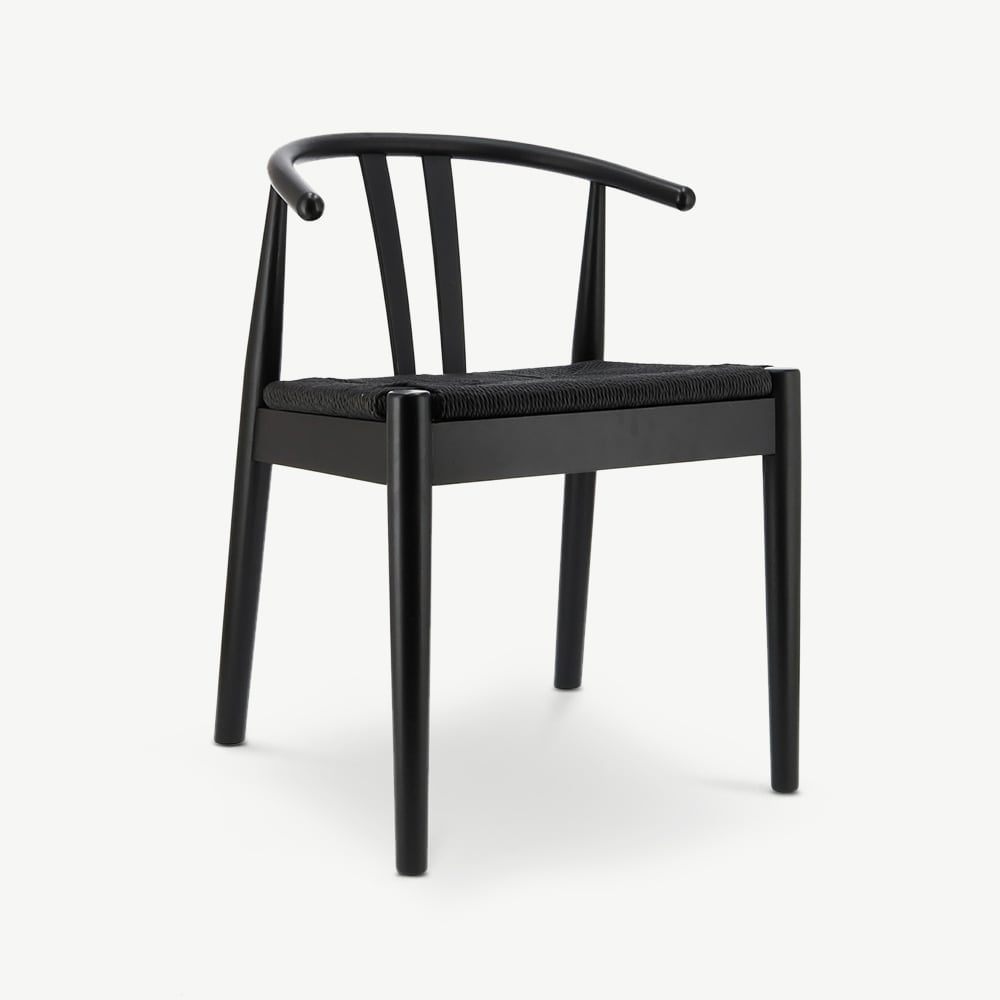
Ash is finer-grained than oak and more elastic, which makes it ideal for curved backs (Series 7). Black-stained oak or ash reads more emphatically in the room and suits modern interiors.
Black-stained chairs became popular from the 1960s onwards. Not a passing trend but an established variant of the tradition.
Featured in this guide


Solid wood versus wood-look: six tests
The current online market sells a lot of "oak" that is actually 0.3 mm oak foil over MDF. Six tests that settle it in 30 seconds:
| Test | Solid wood | Wood-look (foil/MDF) |
|---|---|---|
| End grain at leg base | Annual rings visible | Smooth, no grain |
| Grain flow over joints | Broken, natural | Continuous, printed |
| Weight per chair | 7 to 12 kg | 4 to 7 kg |
| Sound when tapped | Full, resonant | Hollow, dead |
| Smell when unboxed | Wood, oil | Chemical (glue) |
| Edges and transitions | Wood on wood | Foil visible |
If a chair sold as Scandinavian is under €70 and passes most of these tests, it is a lucky find. The usual crossover point to real solid wood is around €85 to €100, depending on species and construction.
Furnicher's wooden chairs, sorted by species
Three models, six wood-and-finish combinations. Here is what to expect in each:
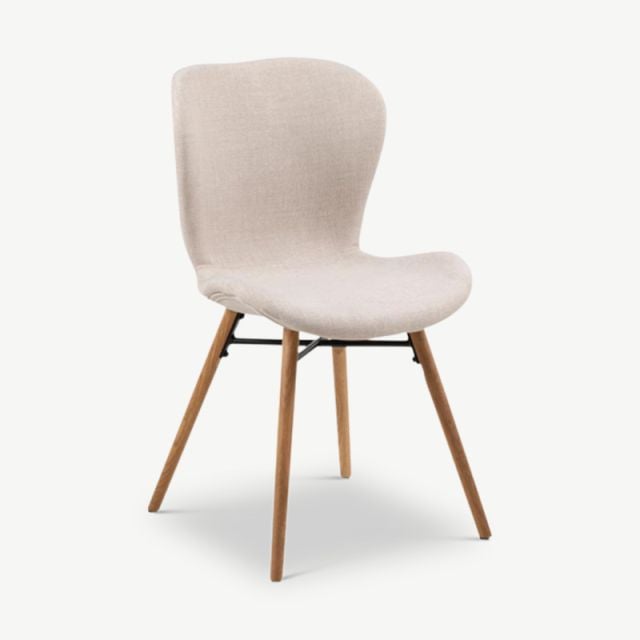
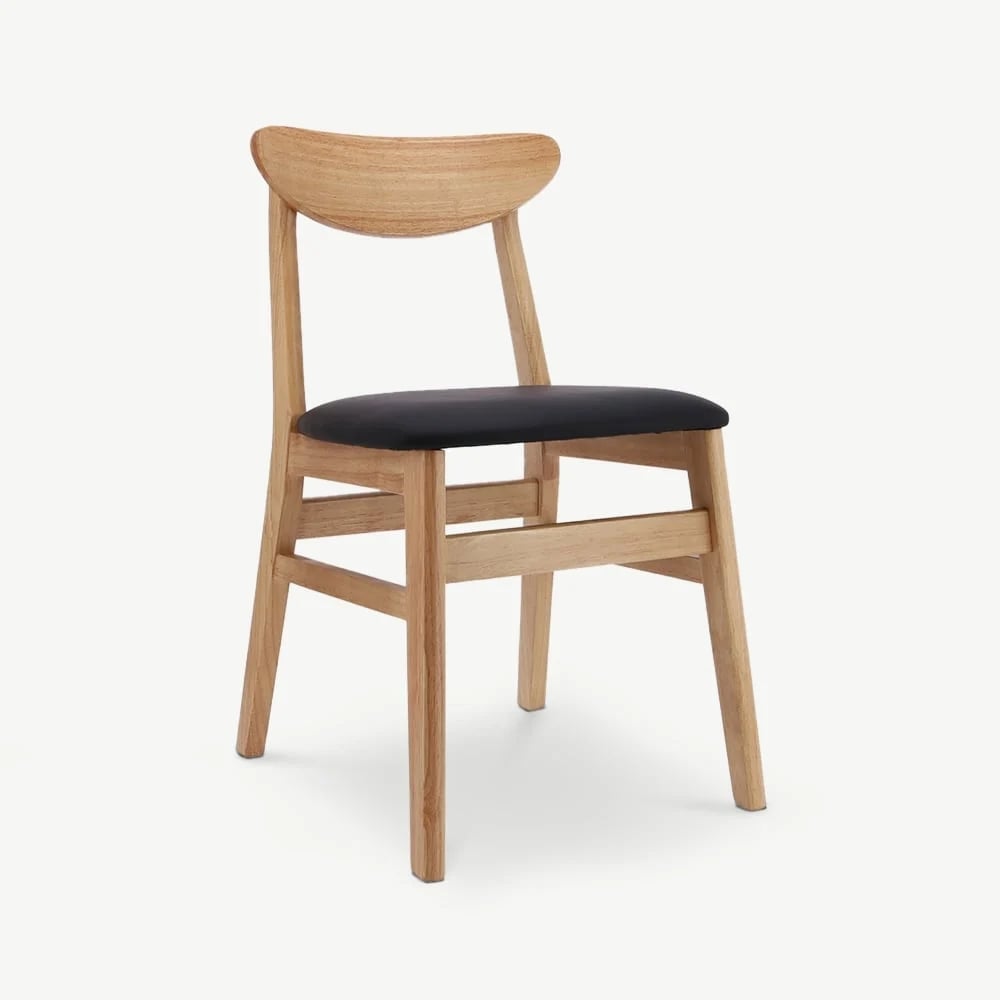
- Scandi Beech (€89): pinker tone, waxed, turned legs. The lowest entry.
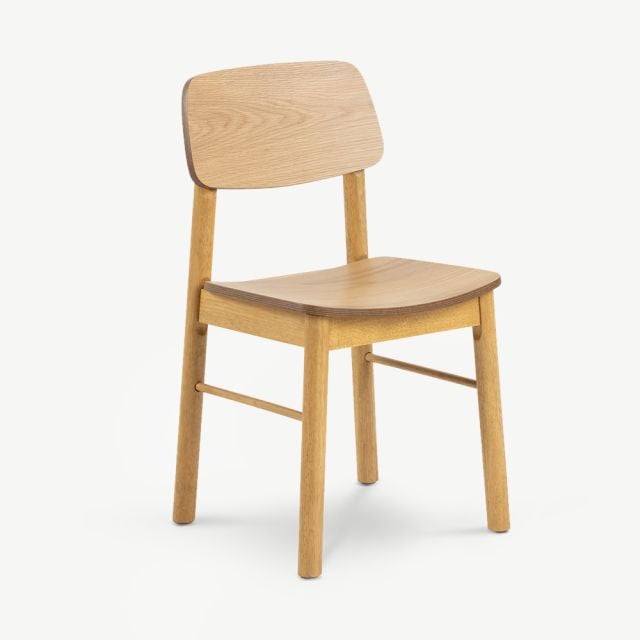
- Scandi Oak (€109): light oak, oiled, same shape as the beech version.
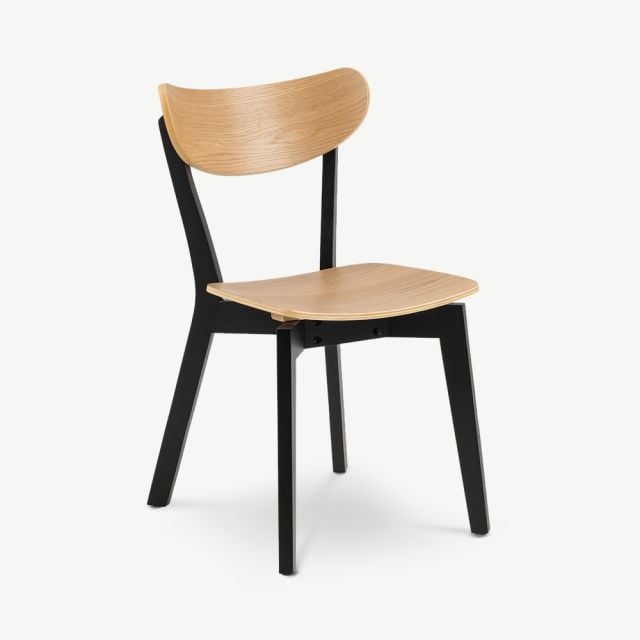
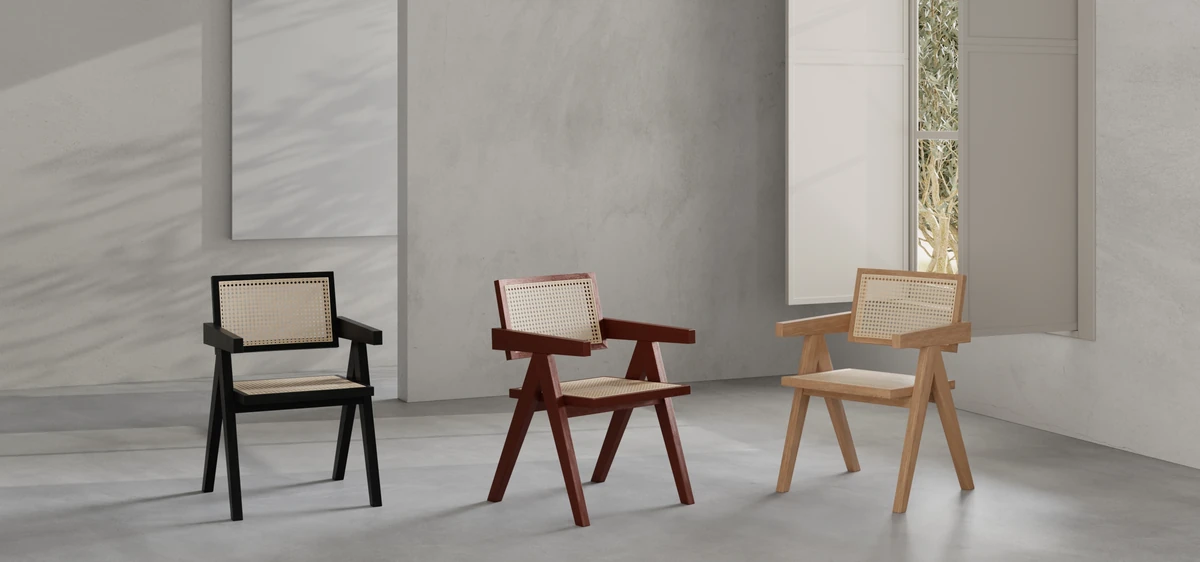
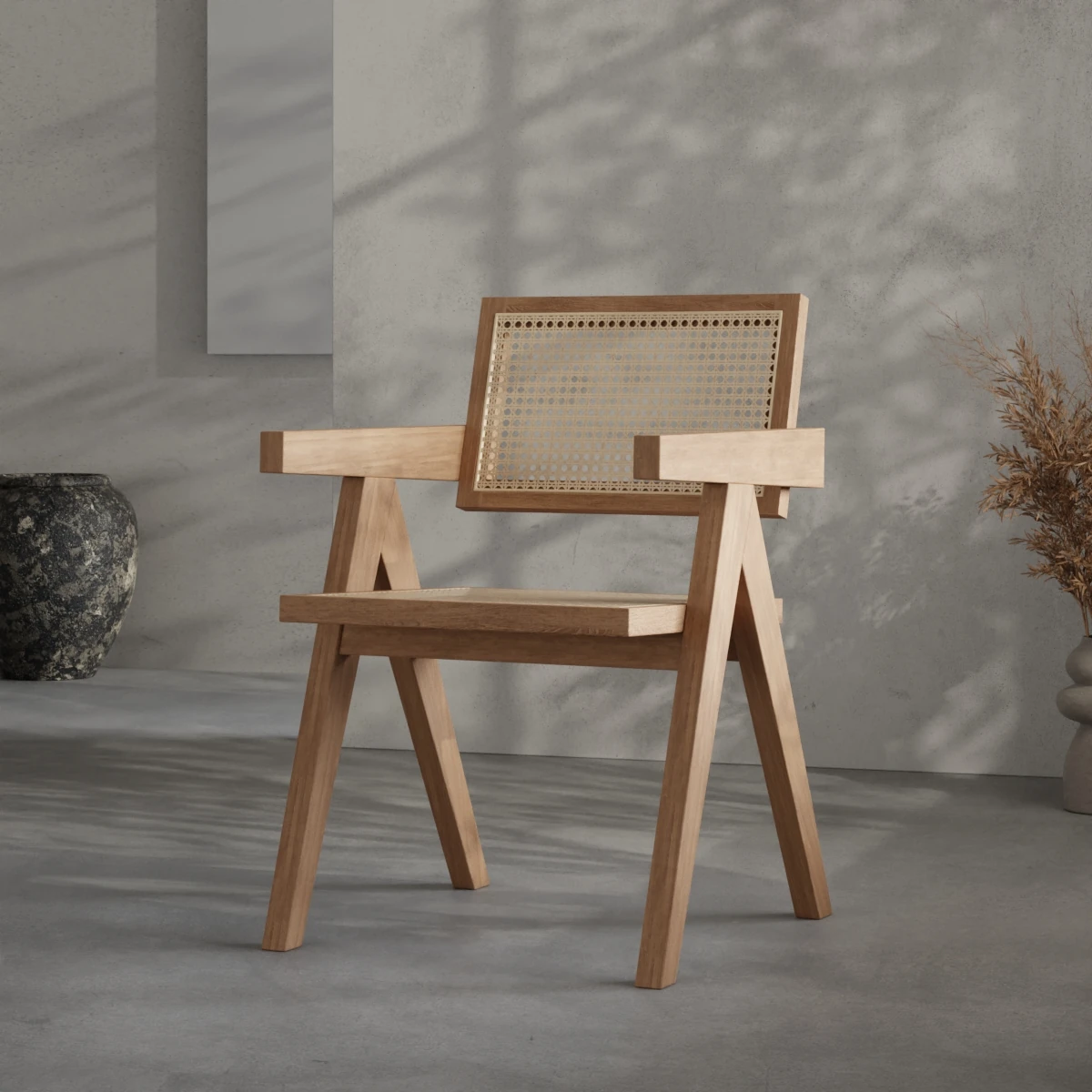
- Peter Oak natural (€119): lightest variant, most visible grain, best in bright rooms.
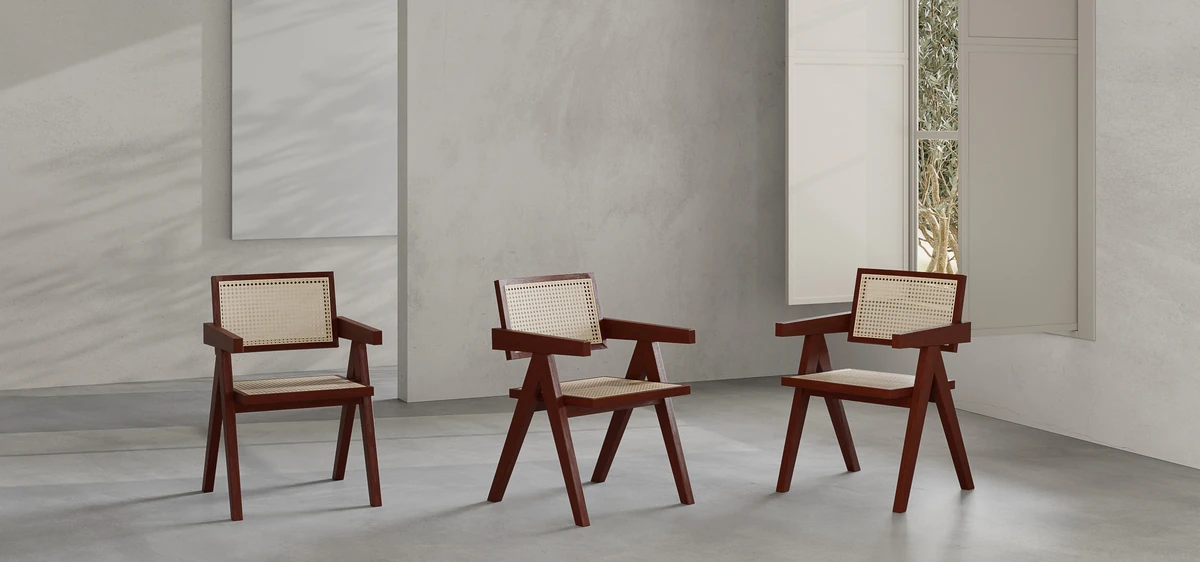
- Peter Oak cognac (€129): mid-brown tone, neutral all-rounder, works with almost any table.
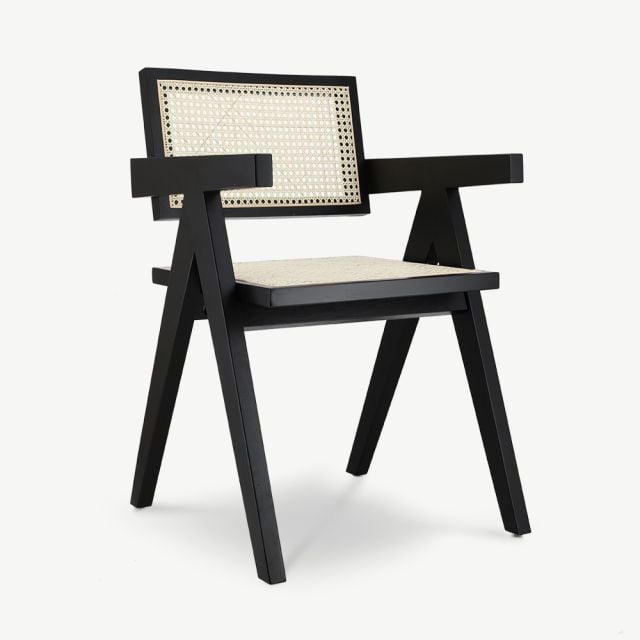
- Peter Oak black-stained (€149): deep black, most visually present, suits high-contrast rooms.
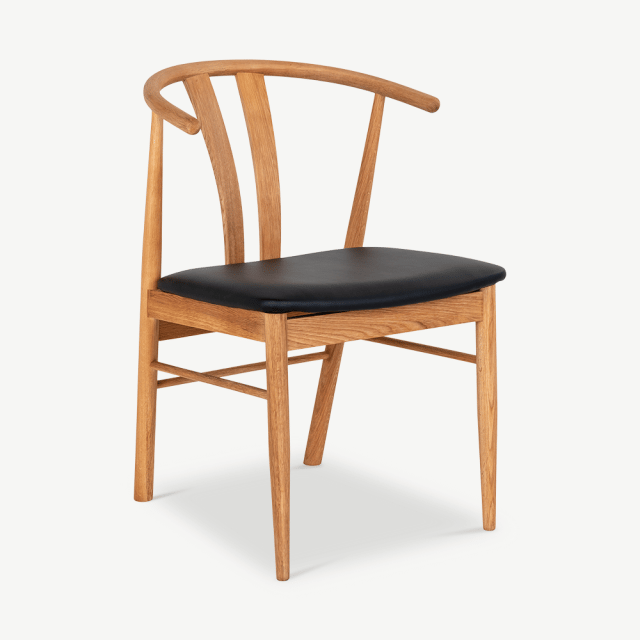
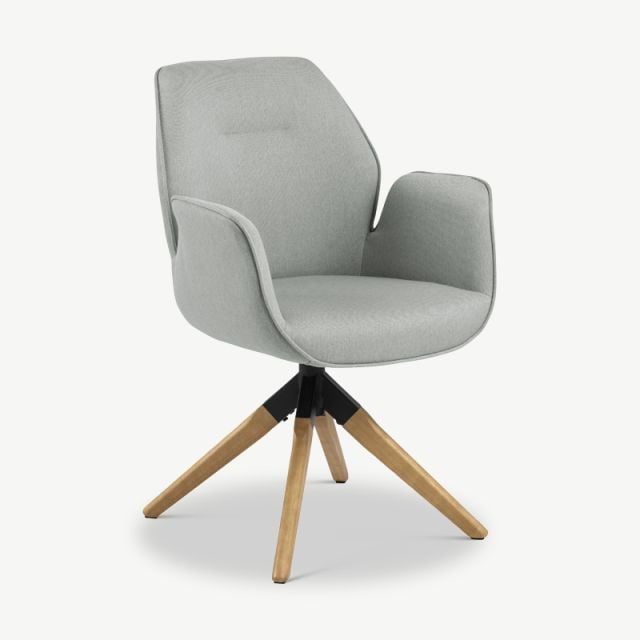
- Jenson Ash dark (€179): darker-stained ash combined with rattan and upholstery, warmest reading.
All woods are FSC-certified and sourced in Europe (mainly Germany, France, Scandinavia). Delivery in 2 to 4 working days.
Which wood belongs in your kitchen?
If you cannot decide, pick cognac-tone oak.
Cognac oak is the most neutral wood tone: warm enough for rustic rooms, quiet enough for modern kitchens. Natural is the second safe choice, black is the most assertive. Beech is the price-conscious pick without quality loss. Ash is the choice when you want the chair to read with a bit more character.
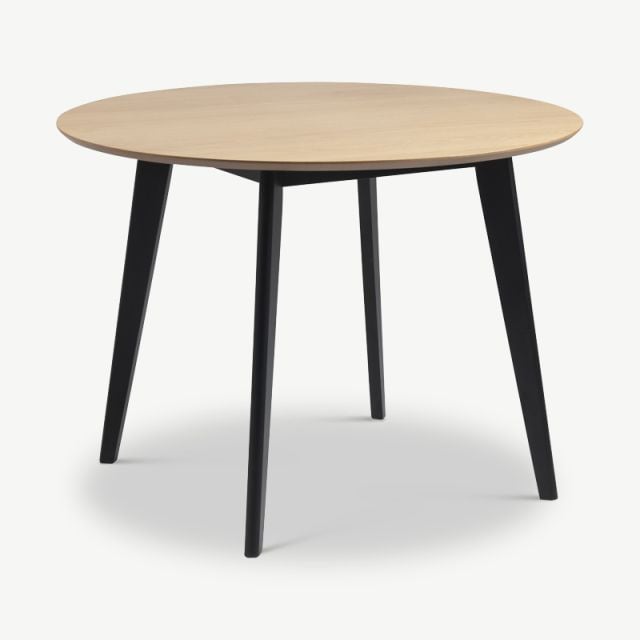
Browse our Scandinavian chair selection filtered by wood, or our full Scandinavian furniture range. If you are also choosing the table, our dining tables buying guide helps match wood and form.
For the style context, read our Scandinavian furniture guide. For ergonomic and design context, see Scandinavian chairs: the design lineage and our dining chairs buying guide.
Frequently asked.
Which wood is best for Scandinavian chairs?
Oak is the first choice: hard, light-toned, with a warm patina that develops over time. Beech is cheaper and harder, but its grain is quieter and less characterful. Ash is finer-grained and more elastic, which makes it ideal for curved backs. Black-stained oak has been an established variant since the 1960s, used for more visually present pieces in modern interiors.
How do I tell solid wood from a wood-look chair?
Six tests: end grain at leg bases shows annual rings on solid wood; grain flow breaks naturally over joints; weight is 7 to 12 kg per chair; tapping sounds full not hollow; opening the box smells of wood and oil rather than glue; edges show wood on wood, not foil. Solid wood ages and develops patina; foil finishes peel after 2 to 4 years.
What is the difference between oiled and lacquered oak?
Oiled wood keeps the grain visible and develops a patina, but needs re-oiling every 2 to 3 years. Lacquered wood is lower maintenance and stain-resistant but reads more artificial. Matte oiled or waxed finish is the Scandinavian tradition; clear lacquer is acceptable, gloss finish is not part of the form.
How do I care for an oak chair?
Dust weekly with a soft cloth, wipe monthly with a damp (not wet) cloth. Re-oil every 2 to 3 years with natural oil such as linseed, tung, or specialised furniture oil. Avoid direct radiator and sun contact, both dry the wood and lead to cracking at the joints. Wipe spills immediately, as water marks can sink deeper into oiled finishes than lacquered ones.
Which Scandinavian oak chair is the best pick?
At Furnicher, the Peter (€119 to €149) is the purest oak chair in the range: three tones (natural, cognac, black-stained), solid wood construction, visible dowel joints. The Scandi (€89 to €119) is available in beech or oak; the Jenson (€139 to €179) comes in oak or dark ash combined with rattan and upholstery.
Does solid wood warp on underfloor heating?
Properly dried wood (residual moisture 8 to 10 percent) does not warp. Problems happen when wood was kiln-dried inadequately or when room humidity drops below 35 percent. In winter with central heating, a humidifier holding humidity at 45 to 55 percent extends the life of all wooden furniture by years and prevents the most common joint failures.