 9800+ TRUSTPILOT REVIEWS


 EN
EN DE
DE FR
FR NL
NL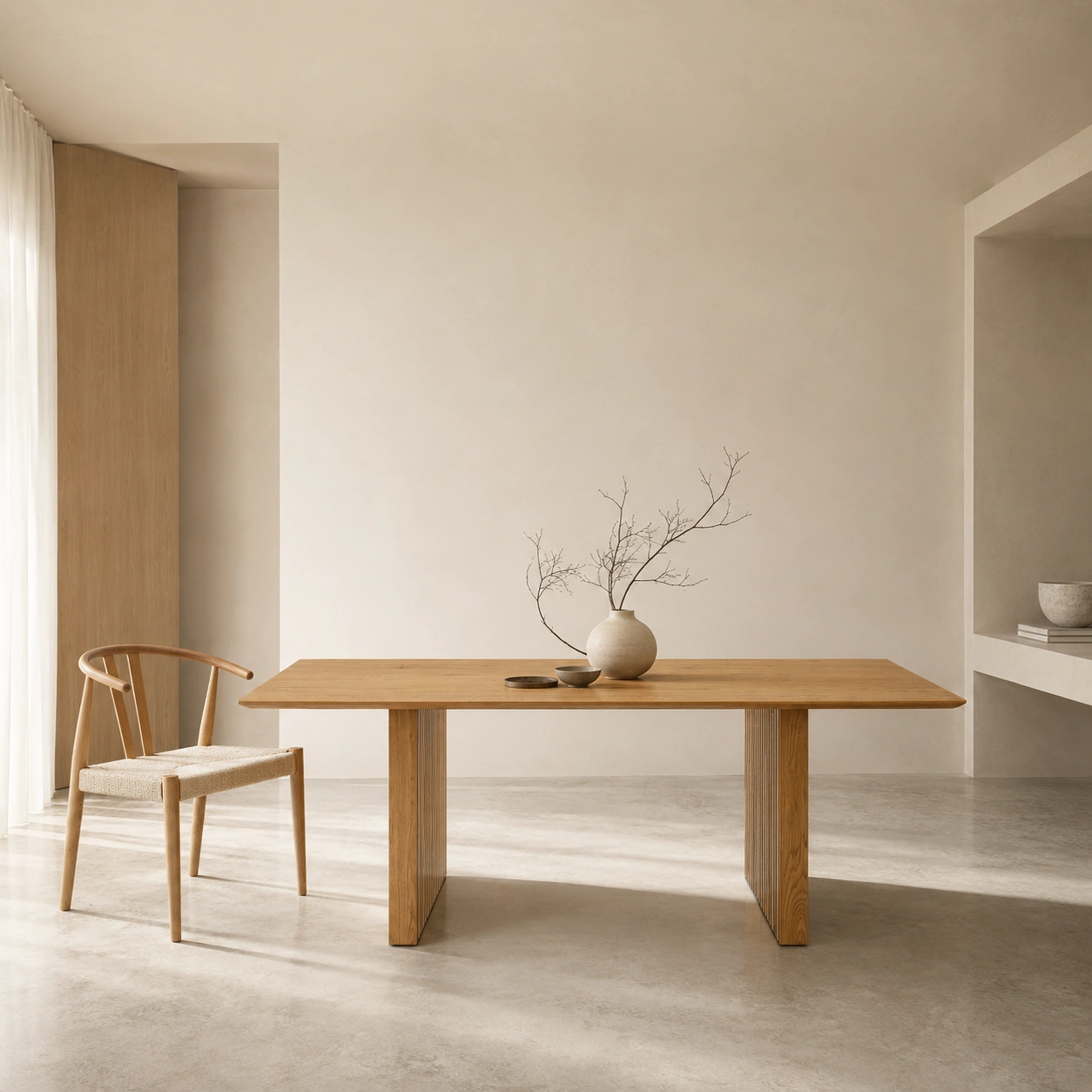
Scandinavian design is not a look. It is a working philosophy born in 1950s Copenhagen and Stockholm: that beautiful, well-made objects should be available to ordinary people, that form follows what an object does, and that a chair made in 1949 should still feel correct in 2026.
This guide covers where Scandinavian design came from, the five principles that hold it together, the four designers whose work defined the canon, and why pieces from a 70-year-old movement still anchor most European interiors today.
Stockholm 1930, Copenhagen 1949
The Stockholm Exhibition of 1930 introduced Nordic audiences to functionalism, the German Bauhaus idea that form should serve function. Swedish architect Gunnar Asplund built the fair pavilions in white concrete and glass: airy, light, deliberately stripped of ornament. The public did not love it. Critics did, and the seed was planted.
Twenty years later, Hans Wegner unveiled the Y chair (1949) at the Copenhagen Cabinetmakers' Guild exhibition. Within five years, the 1954 Design in Scandinavia exhibition was touring 22 North American cities, and the term "Scandinavian design" entered English as a marketing label. The movement had a name, a canon, and a global audience.
- 1930: Stockholm Exhibition popularises functionalism in the Nordics
- 1949: Wegner's Y chair debuts at the Copenhagen Cabinetmakers' Guild
- 1951 to 1970: The Lunning Prize crowns designers like Tapio Wirkkala, Hans Wegner, and Verner Panton
- 1954 to 1957: Design in Scandinavia tours North America, defining the movement abroad
What holds the movement together
Scandinavian design is not defined by a colour palette or a wood species. It is defined by five values that show up in every canonical piece, from a 1949 Wegner chair to a 2024 HAY stool.
Functionalism
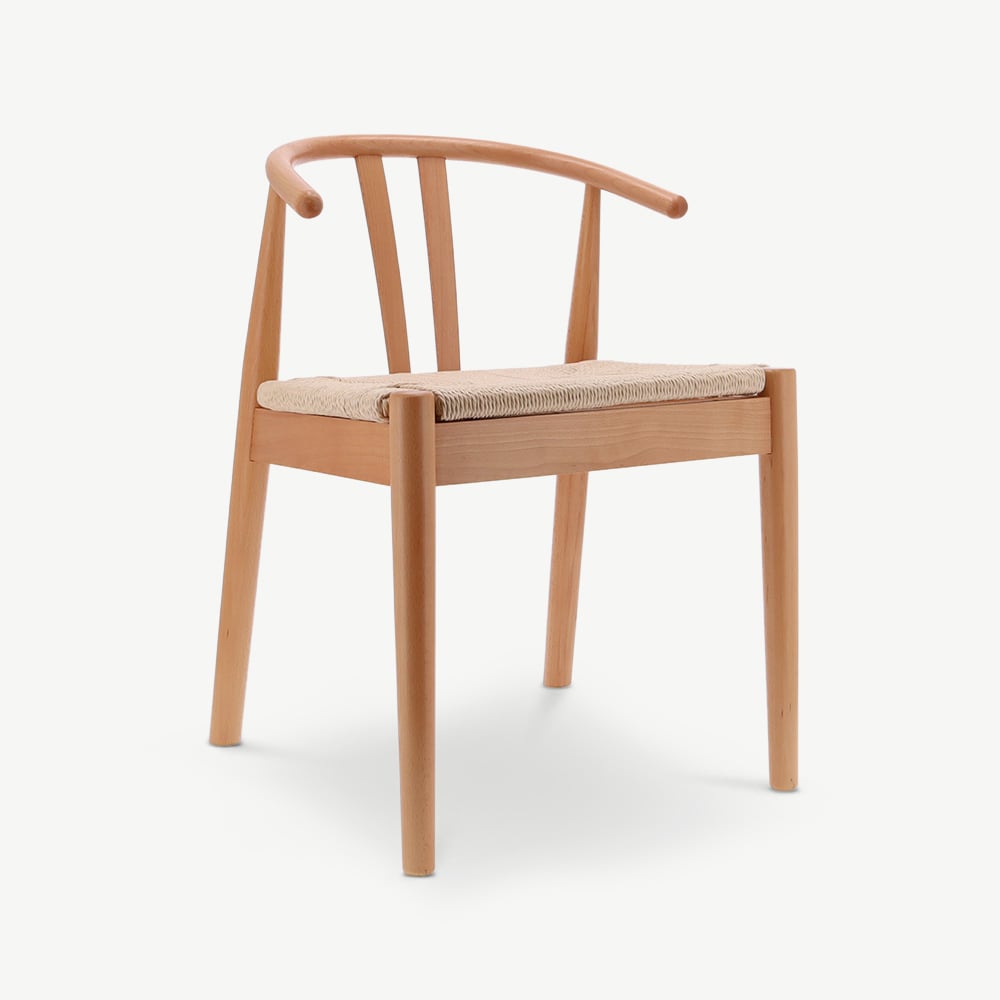
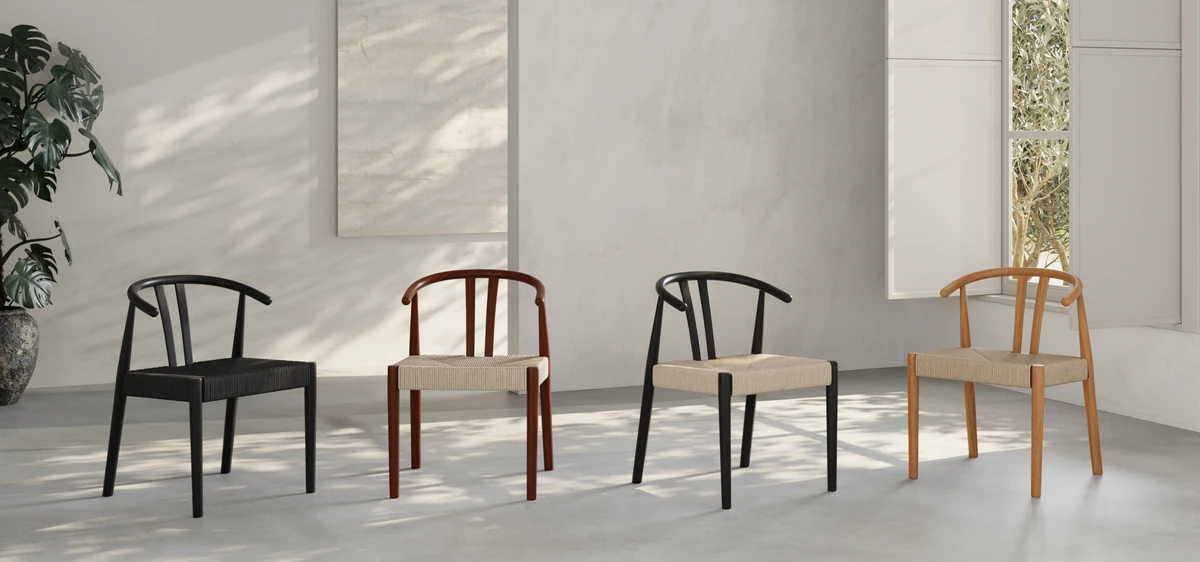
If a part of the object does not serve the user, it is removed. The Wegner Y chair has no decorative carvings; every line on the back is structural. The seat is paper cord because paper cord is strong, breathable, and replaceable when worn.
Democratic design
The founding ambition was that a well-designed chair should not be a luxury good. Production methods chosen to keep prices accessible: steam-bent beech, paper cord, plywood, pressed steel. IKEA built an empire on this principle.
Light-driven
Stockholm gets four hours of daylight in December. The pale walls, blond woods, and large windows are not aesthetic preferences, they are survival strategies. Poul Henningsen's PH lamp (1925) made the same point: every light source should diffuse, not glare.
Natural materials
The materials are local, renewable, and they age visibly. A 50-year-old oak table has darkened in the spots a hand rests; a paper-cord seat sags slightly where the heaviest user sits. Wear is treated as character, not damage.
Craftsmanship as daily practice
Joinery, finish, and proportion are expected baseline, not premium features. The Cabinetmakers' Guild ran the exhibition that launched Wegner because the guild expected this standard from every member.
Longevity over trend
The canon is full of pieces designed in the 1940s and 50s that have been in continuous production for 70 years. The implicit promise: this is not throwaway furniture, and it is not meant to be replaced when fashion shifts.
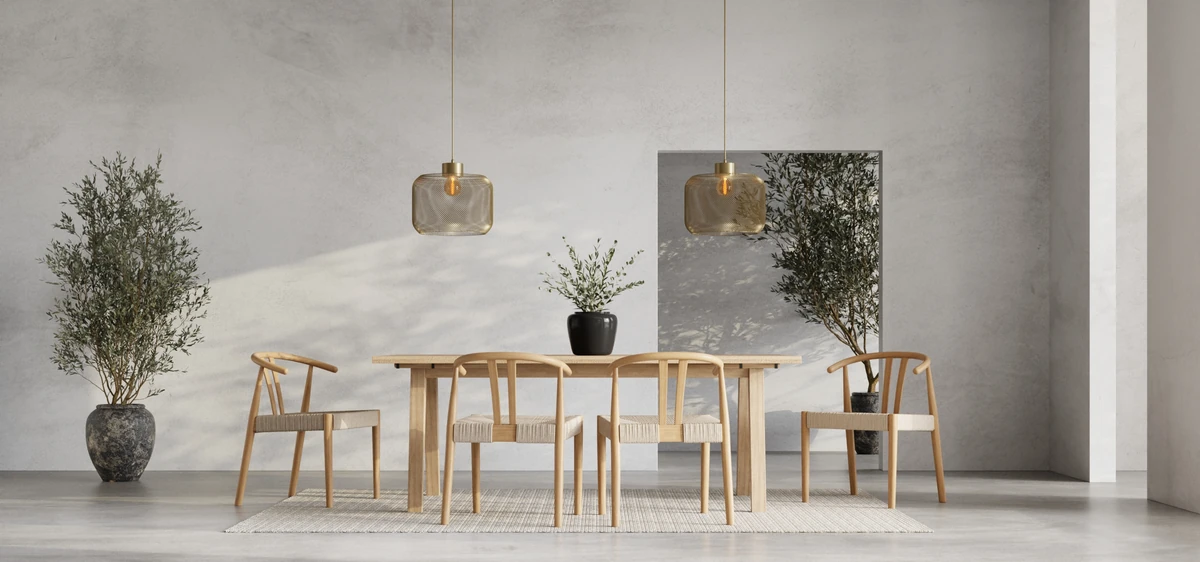
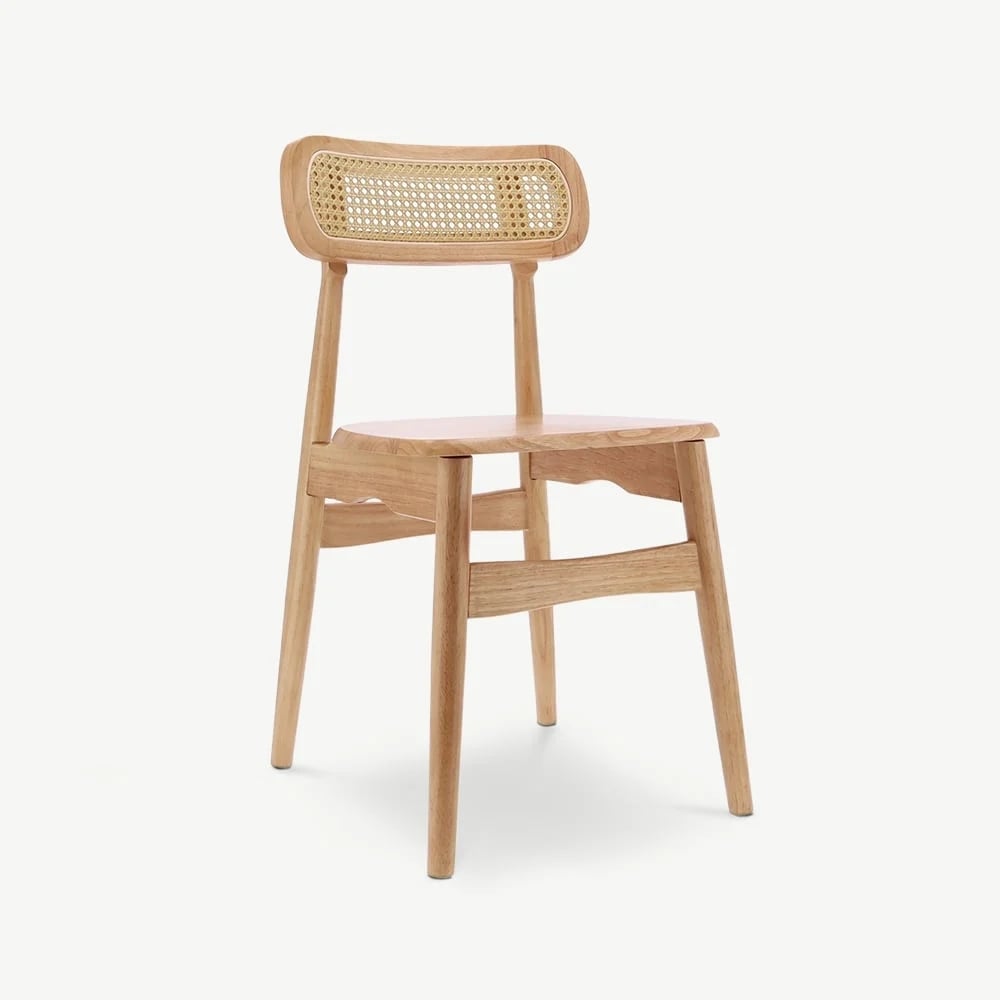
Featured in this guide



The designers who defined the canon
Hundreds of Nordic designers contributed to the movement. Four names hold most of the weight: Wegner, Jacobsen, Aalto, Henningsen. Knowing what each one did is the shortest path to understanding the style.
Hans Wegner (1914 to 2007, Denmark). The chair designer. Over 500 chairs in his career, of which roughly 100 were put into production. The Wishbone (CH24, 1949) is the most quietly famous chair in the world: handmade, paper-corded, in continuous production since 1950. His Round Chair (1949) was the chair John F. Kennedy sat in for the 1960 televised debate with Nixon.
Arne Jacobsen (1902 to 1971, Denmark). An architect first, but his furniture defined a different side of the movement: sculptural, moulded, willing to use industrial materials. The Egg and Swan (both 1958) were designed for the SAS Royal Hotel in Copenhagen. The Series 7 chair (1955) has sold more than nine million units and is probably the bestselling designed chair in history.
Alvar Aalto (1898 to 1976, Finland). The bentwood pioneer. Aalto's stool 60 (1933) was the technical breakthrough: a method for bending solid birch into an L-shape strong enough to take a person's weight without metal fasteners. His work pulls the Scandinavian canon eastward, toward Finland's slightly warmer, more organic interpretation of the style.
Poul Henningsen (1894 to 1967, Denmark). The lighting designer. The PH series of lamps (designed from 1925 onwards) solved the problem of diffusing an electric bulb so the eye never sees the filament. Every Scandinavian interior with a glowing, glare-free pendant is following his blueprint.
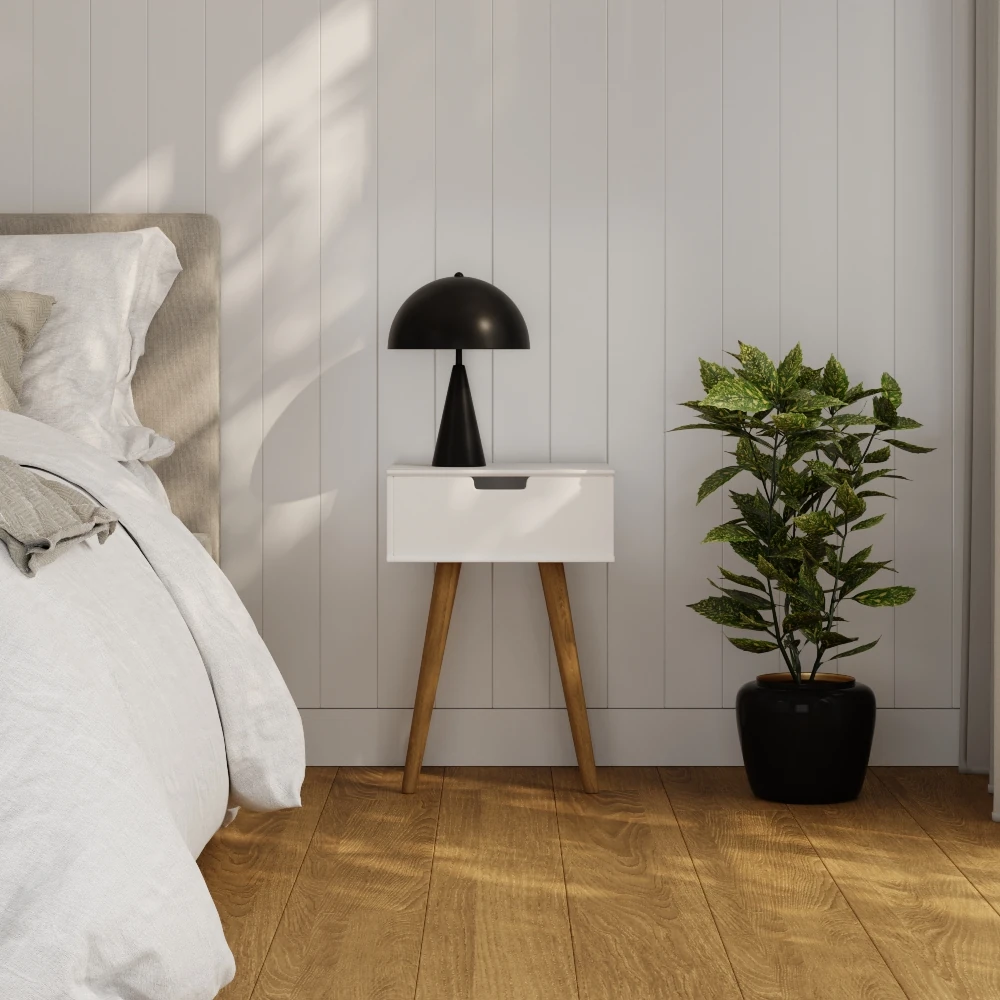
Four habits that translate the principles into a real room
Reading about Scandinavian design and applying it in a Berlin Altbau or a Paris one-bedroom are different problems. These four habits handle most of the translation.
Why a 1949 chair still feels current
Because the problem has not changed. Small apartments. Limited daylight. Wanting fewer, better things. Scandinavian design was built for exactly that, and 70 years later most of Europe lives that way by default.
Our complete guide to Scandinavian furniture walks through how the principles apply to every room. For the dining room specifically, our Scandinavian dining chairs guide covers the chair types and price ranges. Or browse the Scandinavian furniture collection directly. Prices start at €99 for a paper-cord dining chair, with most oak pieces sitting between €179 and €399.
If the principles resonate, the closest contemporary evolution is Japandi style, which pairs Scandinavian wood and light with Japanese restraint. The materials are similar; the discipline is tighter.
Frequently asked.
When did Scandinavian design start?
The movement crystallised in the 1950s, with the 1954 Design in Scandinavia exhibition that toured North America for three years and defined the term internationally. The roots go back further: the Stockholm Exhibition of 1930 introduced functionalist principles to a Nordic audience, and the Lunning Prize (awarded 1951 to 1970) named the designers who became the canon.
What are the principles of Scandinavian design?
Five principles run through every piece in the canon: functionalism (form follows use), democratic design (beautiful things for everyone), respect for natural materials (oak, beech, wool, leather, paper), light (pale palettes and large windows for the dark Nordic winter), and craftsmanship as an everyday value rather than a luxury feature.
Who are the key Scandinavian designers?
Four names cover most of the canon. Hans Wegner (Denmark) for chairs, particularly the Wishbone (Y) chair of 1949. Arne Jacobsen (Denmark) for the Egg, Swan, and Series 7. Alvar Aalto (Finland) for bentwood furniture and the Savoy vase. Poul Henningsen (Denmark) for the PH lamp series. Add Verner Panton, Borge Mogensen, Finn Juhl, and Bruno Mathsson for the deeper canon.
Why is Scandinavian design so popular?
It works in small spaces, the materials age well, the palette adapts to almost any room, and it does not date the way more decorative styles do. Pieces designed in 1949 still sell in 2026. That longevity is the point: democratic design was never meant to be replaced every few years.
What is the difference between Scandinavian and Nordic design?
Geographically, Scandinavia is Norway, Sweden, and Denmark; Nordic adds Finland and Iceland. In design history the terms are used loosely because Finnish designers (Aalto, Tapio Wirkkala) and Icelandic makers are part of the same canon. Most museums and design historians use Scandinavian as the catch-all term for the postwar movement.
Is Scandinavian design still relevant today?
Yes, arguably more than in the 1950s. The principles (function over decoration, longevity over trend, light over clutter) match how most Europeans now live: smaller apartments, less storage, a preference for fewer better things. Japandi, the current style trend pairing Japanese and Scandinavian sensibilities, is a direct continuation.
