 9800+ TRUSTPILOT REVIEWS


 EN
EN DE
DE FR
FR NL
NL
Hans Wegner drew the Wishbone Chair in 1949. Arne Jacobsen designed the Series 7 in the same decade. Finn Juhl made chairs that now sit in museums. What those chairs share is not a look. It is a working method: show the material, show the joinery, follow the body rather than a grid.
Scandinavian chairs at Furnicher sit in that lineage. This guide covers how to spot a real Scandinavian chair, the woods and dimensions that belong to the form, and where our pieces (€89 to €179) fit in relation to the historical designs.
One idea, three generations
Scandinavian chairs are not an aesthetic that happened by accident. They follow a body of design work that started in Copenhagen and Stockholm in the 1920s, and reached an international audience after the Second World War. Kaare Klint set the teaching, Hans Wegner turned it into a workshop practice, and Arne Jacobsen brought the language into series production.
Three names that any good Scandinavian chair is still measured against:
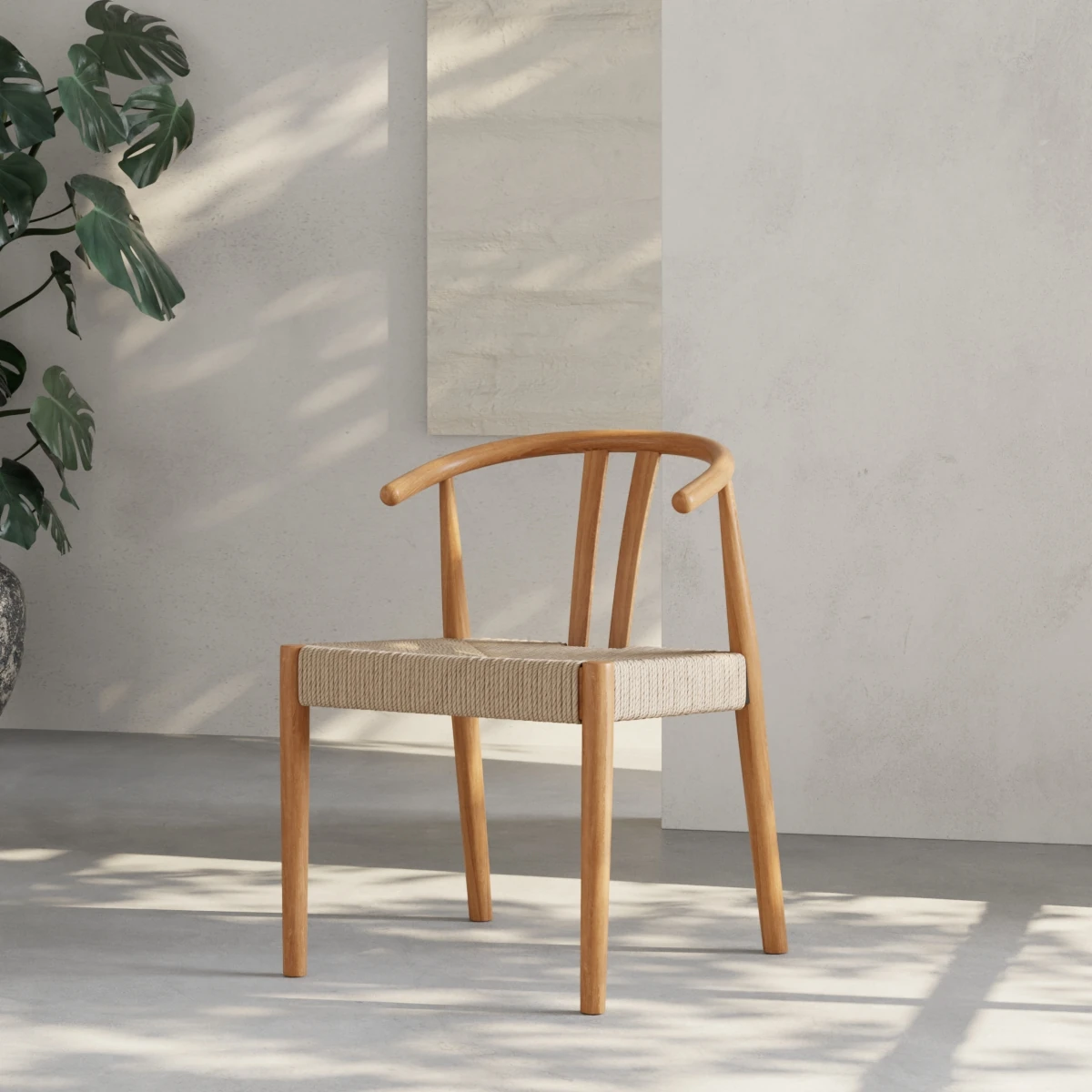
- Hans Wegner: the Wishbone Chair (1949), clean line, turned legs, paper-cord seat
- Arne Jacobsen: the Series 7 (1955), moulded plywood, three slim legs and one standing
- Finn Juhl: the Chieftain (1949), sculptural lines, visible joinery
If a chair is described as Scandinavian today and shows none of those three reference points, the word is doing marketing work. A real Scandinavian chair carries traces of that teaching, even at the price of a sub-€200 dining chair.
Three things that make a chair Scandinavian
It is not the hashtag. These three qualities separate a Scandinavian chair from a chair that only looks like one.
Organic form
The backrest is curved, not flat. The seat has a slight dish, not a flat board. The transitions between legs and apron are rounded, not square-cut.
This is not a style preference, it is an ergonomic decision. Wegner said a chair should be built so the backrest supports the back, rather than the back having to adjust to the chair.
Light solid wood
The wood stays visible: oiled, waxed, occasionally clear-lacquered. Rarely stained dark, almost never finished like a piano. The grain is part of the look, not a flaw to hide.
The most common choice is oak, which stays light and develops a warm patina. Beech is harder and cheaper, ash is finer-grained.
Visible joinery
A good Scandinavian chair shows its construction. Mortise-and-tenon at the seat frame, dowels at the legs, sometimes visible wedges at the backrest stretchers.
Concealed joints with no wood-on-wood contact are the first warning sign. They hold for 3 to 5 years, then the chair starts to wobble.
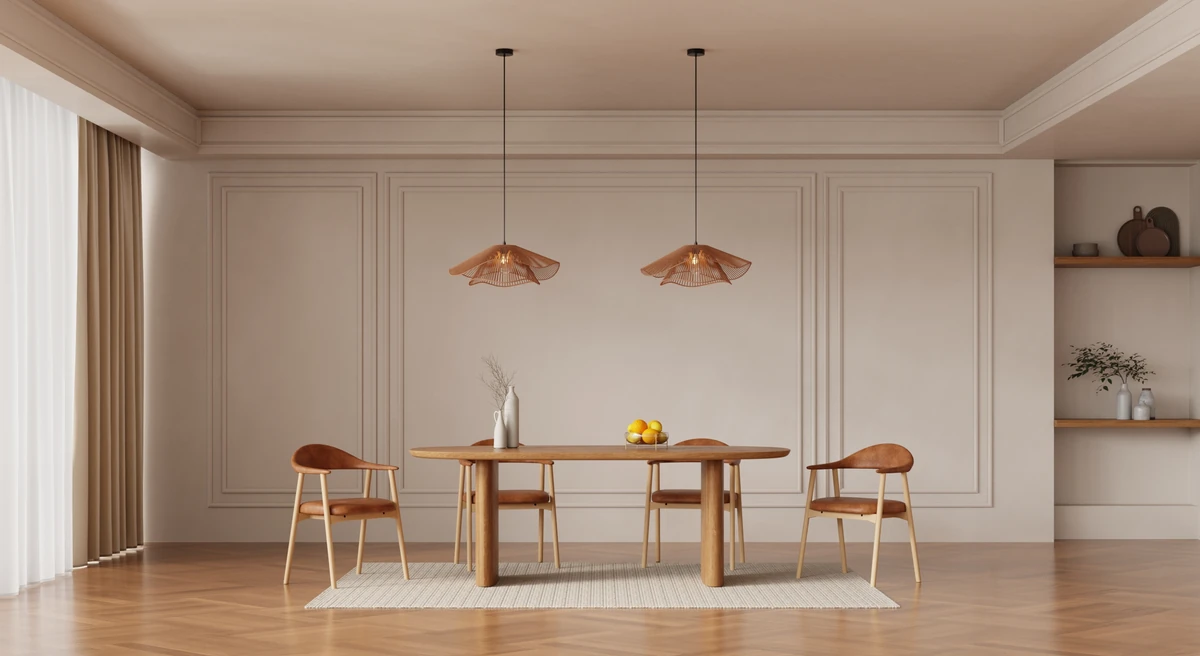
Featured in this guide


What actually fits your table?
Most complaints about Scandinavian chairs come down to wrong measurements, not the design. Table height and seat height have to match, otherwise you sit too high or you knock your knees on the apron.
| Table height | Recommended seat height | Knee clearance |
|---|---|---|
| 72 to 74 cm | 44 cm | 28 to 30 cm |
| 74 to 76 cm (standard) | 45 to 46 cm | 28 to 31 cm |
| 76 to 78 cm | 46 to 47 cm | 29 to 32 cm |
| Over 78 cm (bar-style) | Use a stool, not a chair | n/a |
The historic originals (Wegner, Jacobsen) stay at 45 cm seat height. Furnicher chairs do the same. If you own a table that is taller than 78 cm, the right move is usually to change the table to a standard height rather than hunt for a taller chair.
Where Furnicher fits in the lineage
Our Scandinavian chairs are not Wegner. They are an honest application of the same design principles at a price the original cannot match. Where a Wishbone Chair costs €1,200, ours sit between €89 and €179.
Three models cover the range:
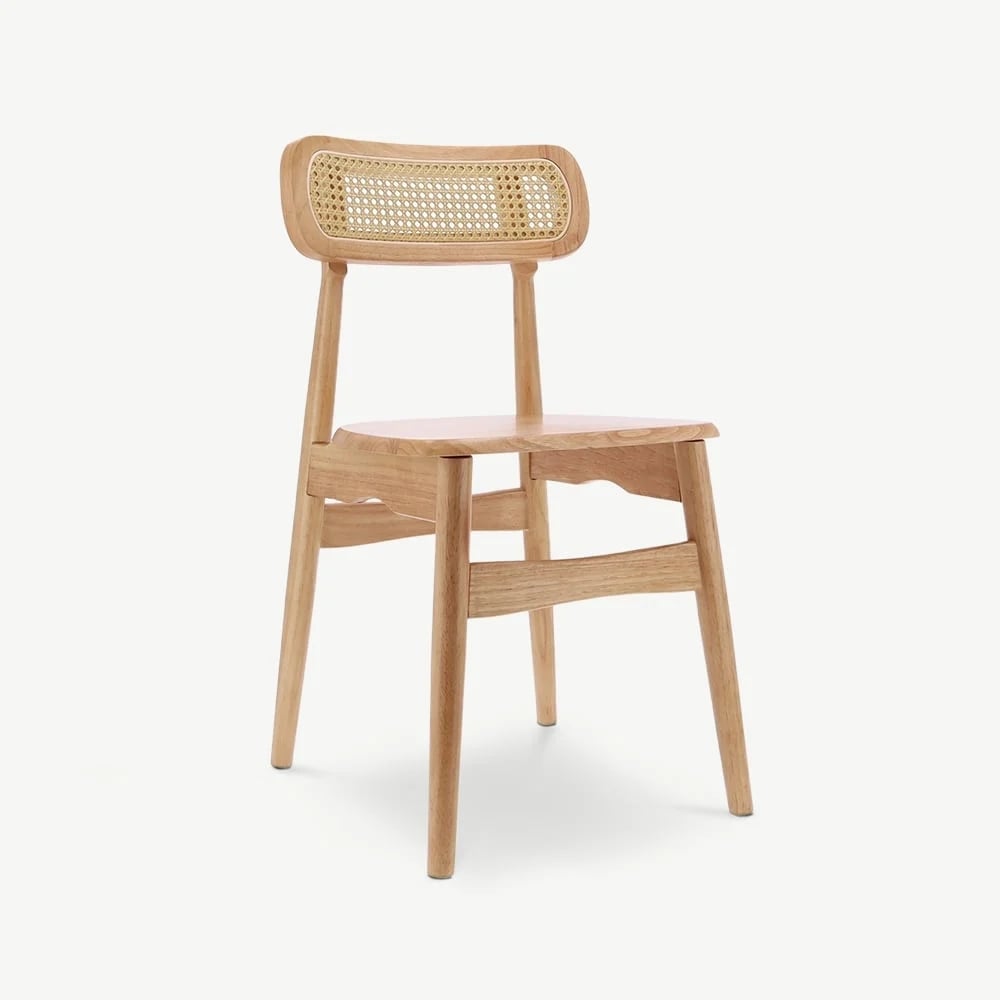
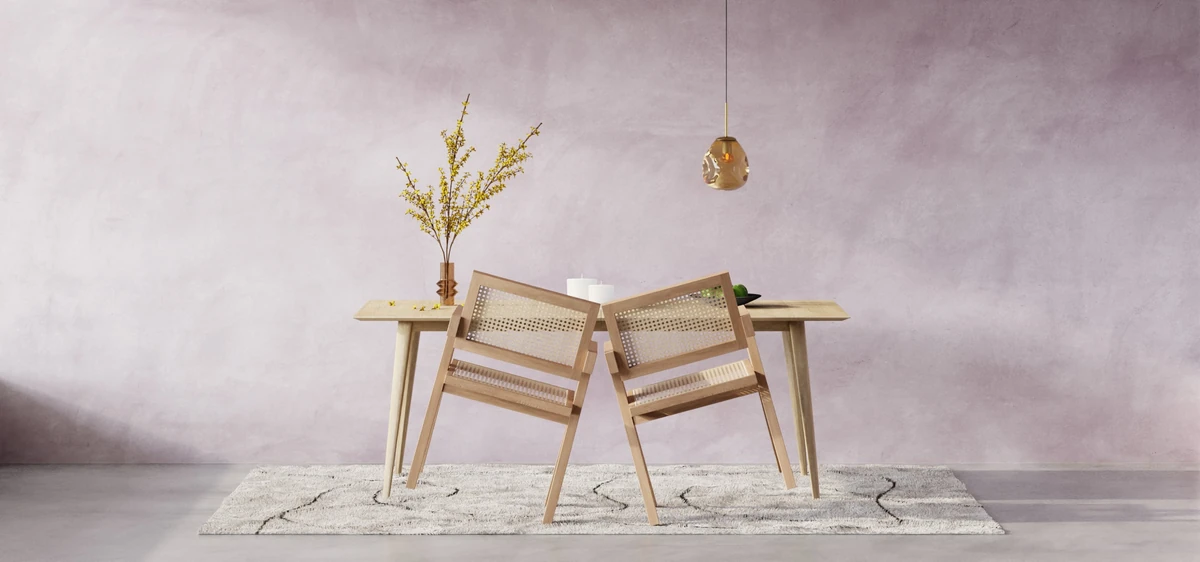
- Scandi (€89 to €119): turned legs, beech or oak, rattan back panel, mortise-and-tenon at the seat frame
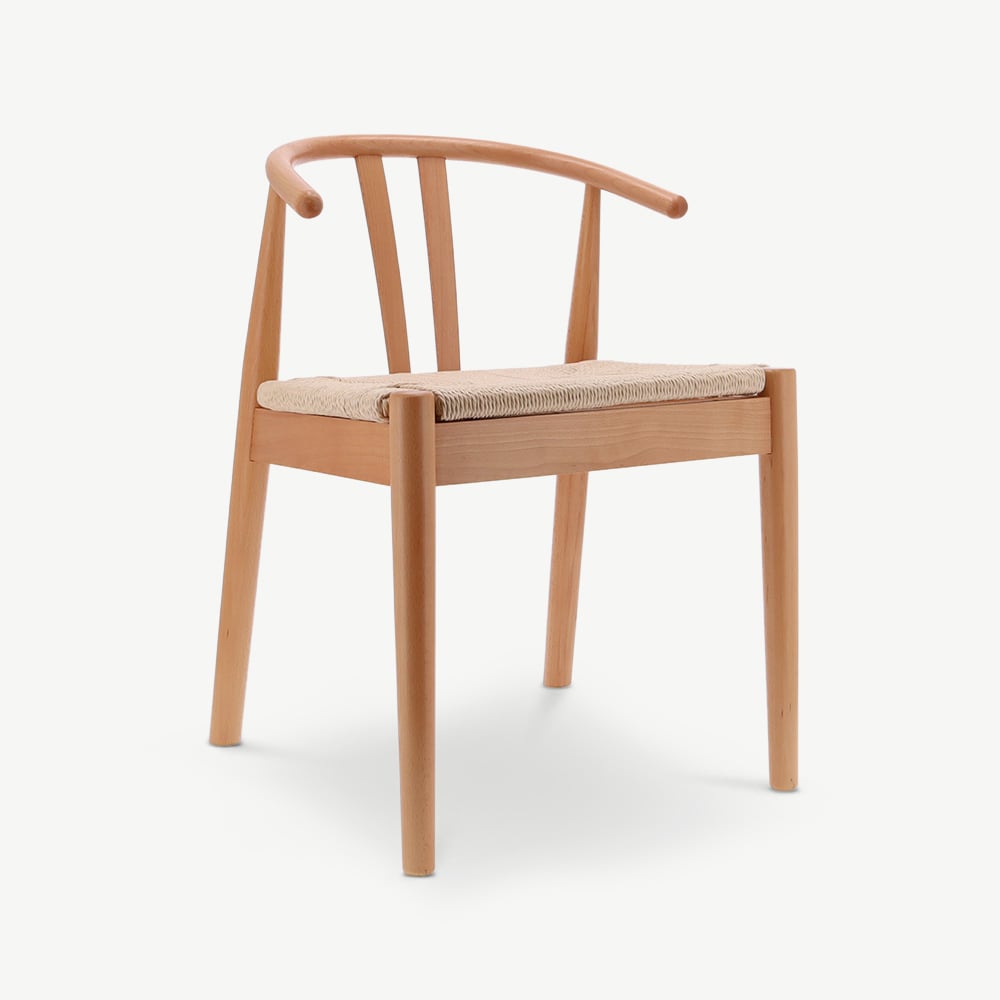
- Peter (€119 to €149): solid oak, curved backrest, visible dowels, three wood tones
- Jenson (€139 to €179): rattan-and-upholstery combination, slightly more visually present, oak or dark ash frame
All three come with a 10-year frame guarantee. Delivery in two to four working days, assembly with the included hex key in about 15 minutes per chair.
When is a Scandinavian chair the right chair?
When you want a chair that still makes sense ten years from now.
Scandinavian chairs are the quietest choice for a dining room. They do not disappear, but they do not demand attention either. They work alongside a rustic farmhouse table as well as a minimal white-and-grey kitchen. That is the point the historic designs share: built to stay.
Browse our Scandinavian furniture range, or go straight to our Scandinavian chair selection between €89 and €179. The full style context lives in our Scandinavian furniture guide.
If you are choosing specifically for the dining room, our dining chairs buying guide helps you compare wood, rattan, and upholstered options. For the quieter Japanese-Scandinavian look, read our Japandi interior guide.
Frequently asked.
What makes a chair Scandinavian?
Three things that have to come together: organic shaping rather than hard angles, light solid wood (oak, beech, ash) rather than veneer or foil-wrapped board, visible joinery rather than concealed screws. A Scandinavian chair sits quietly in a room without disappearing. Material and construction are part of what you see, not hidden behind a finish.
What seat height do Scandinavian chairs have?
Standard is 44 to 46 cm from floor to seat top, designed to work with dining tables of 74 to 76 cm. The original Wegner and Jacobsen designs stick to those dimensions, and so do Furnicher chairs. For tables of 78 cm or taller, a 47 cm seat is more comfortable, otherwise you sit too low relative to the table surface.
What wood are real Scandinavian chairs made from?
Oak (most common), beech, ash, occasionally birch. Black-stained oak has been an established variant since the 1960s. Avoid chairs made from foil-wrapped MDF or thin-veneer plywood: that is not Scandinavian, that is Scandinavian-look. The difference shows after about three years when the veneer starts lifting at the edges and the chair starts to wobble.
How does a Scandinavian chair differ from a Shaker or Bauhaus chair?
Shaker chairs are strictly vertical and deliberately plain, often with a paper-rush seat. Bauhaus works with tubular steel and an industrial vocabulary. Scandinavian chairs sit between the two: wood like Shaker, but with organically curved backrests, rounded transitions, and a warmth that Bauhaus consciously avoids.
What does a good Scandinavian chair cost?
At Furnicher, dining chairs in the Scandinavian range sit between €89 and €179. Original pieces from heritage makers (Carl Hansen, Fritz Hansen) start at €600 per chair. Below €70 you usually get veneer over MDF with screwed joints that loosen within three years. The sweet spot for long use is €100 to €150.
Which Scandinavian chair suits longer sitting?
Models with an armrest and a lightly padded seat, like the Jenson, are more comfortable for dinners over three hours. Pure wooden chairs without padding (Scandi, Peter) are designed for the typical one to two hour meal. If you regularly work at the dining table, a dining chair with a seat cushion or a separate task chair is the better option.
