 9800+ TRUSTPILOT REVIEWS


 EN
EN DE
DE FR
FR NL
NL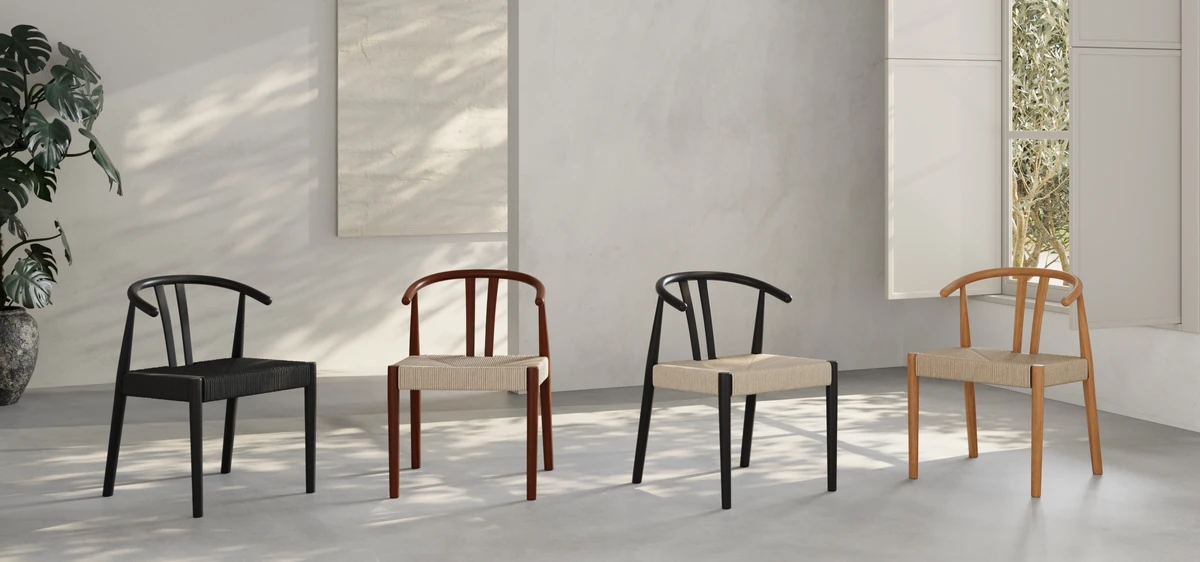
When most people say Scandinavian furniture, they mean Danish furniture. Denmark is the smallest of the three Scandinavian countries, but it produced the chair canon (Wegner, Jacobsen, Juhl) that defines the look. Swedish pieces are more straightforward; Finnish pieces are more bentwood; Danish pieces are sculptural, chair-led, and visually warmer.
This guide separates Danish design from the broader Scandinavian label. The four chairs that built the canon, how Danish design differs from Swedish and Finnish, and what to look for when buying a Danish-style piece today.
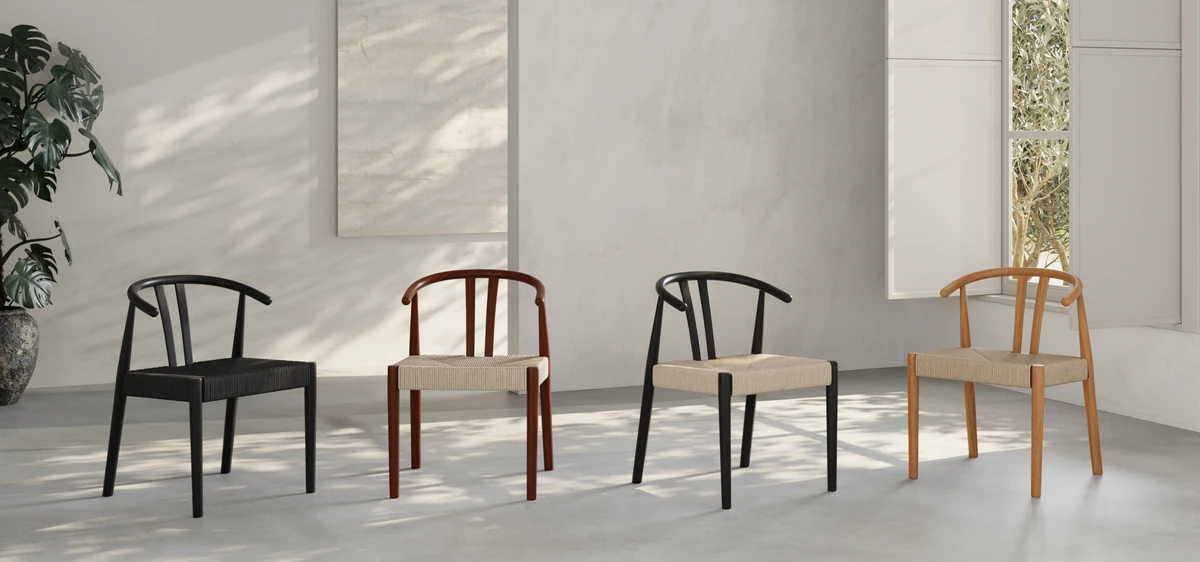
Where the canon was built
Four Danish chairs carry most of the design history of postwar Scandinavian furniture. Each one solved a problem no one had solved before, and each has been in continuous production for 60 to 75 years.
- Wegner Wishbone (CH24), 1949: the Y-shaped back made from a single piece of bent oak, paper cord seat. The chair that defined the canon.
- Jacobsen Series 7 (3107), 1955: moulded plywood shell on chrome legs. Over nine million units sold, the bestselling designed chair ever produced.
- Jacobsen Egg, 1958: sculptural lounge chair on a swivel base, designed for the SAS Royal Hotel lobby in Copenhagen.
- Juhl Pelican, 1940: the chair that predates the canon. Organic curves, exposed wood legs, defined the sculptural direction Danish design would take.
What actually changes between the three traditions
Scandinavian is a marketing term. Danish, Swedish, and Finnish design are three different traditions that share principles but diverge on execution.
Danish
Curves are deliberate. Wood is sculpted, not just straight-cut. The Y back, the Egg, the Pelican: organic forms that read as natural rather than engineered. Heavier use of oak and teak. The most internationally famous tradition.
Swedish
Cleaner lines, less curve. The Stockholm furniture firm Svenskt Tenn (Josef Frank) sits at the warmer end. IKEA descends from this tradition, scaled to mass production. Birch and pine appear more often.
Finnish
Alvar Aalto's plywood bending technique (Stool 60, 1933) defined the Finnish approach. Less sculptural than Danish, more about engineered curves in laminated birch. Slightly warmer than Swedish, slightly more abstract than Danish.
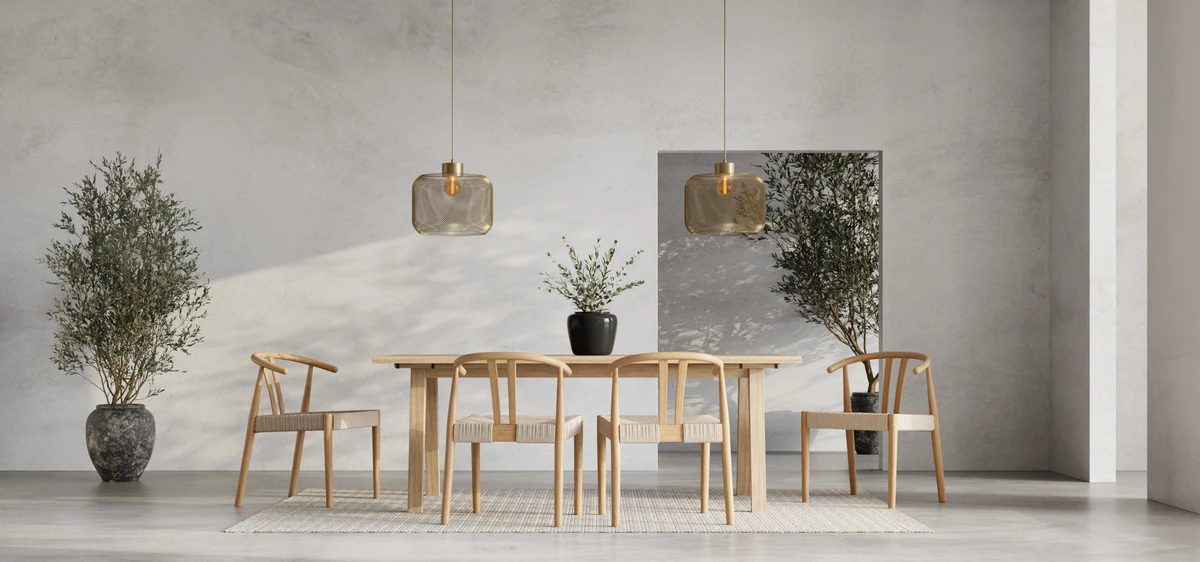
Featured in this guide
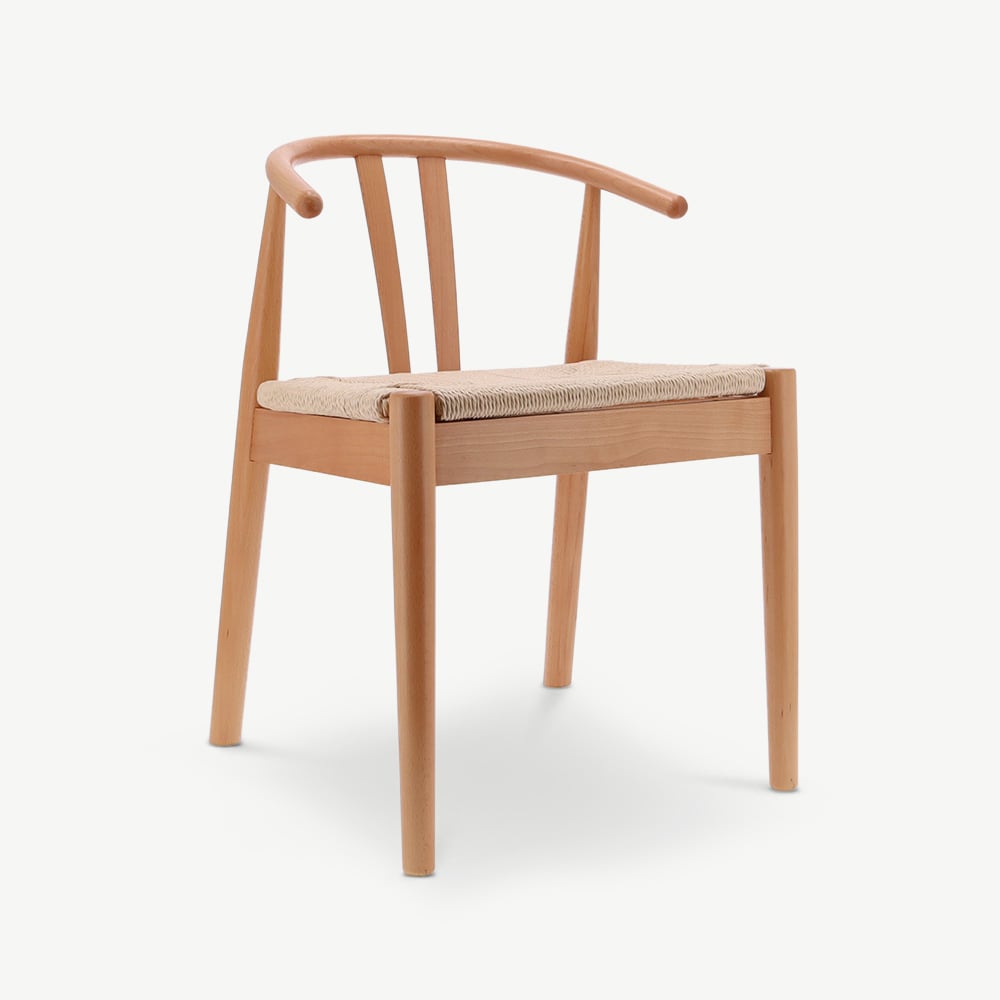
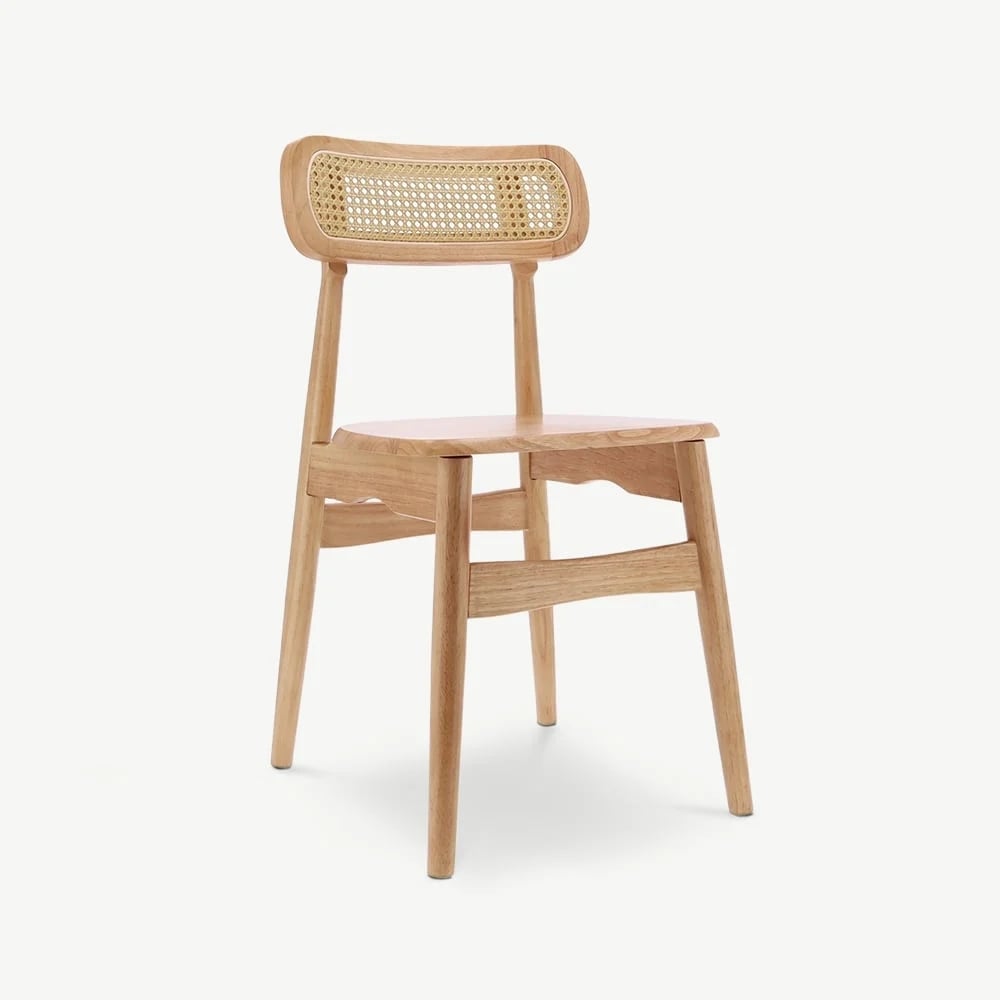


Looking for Danish design today
Buying a Danish piece in 2026 falls into three categories: vintage (1950s to 70s originals from auction or vintage dealers), licensed reproductions (Carl Hansen, Fritz Hansen, PP Mobler producing the original designs under licence), and Danish-style contemporary (modern pieces in the tradition without being direct reproductions). Each has its place.
| Type | Typical price | What you get |
|---|---|---|
| Vintage original | €1,500 to €15,000 | Real provenance, patina, investment value |
| Licensed reproduction | €600 to €3,500 | Identical construction, brand new, full warranty |
| Danish-style contemporary | €99 to €699 | The aesthetic and proportions, accessible price |
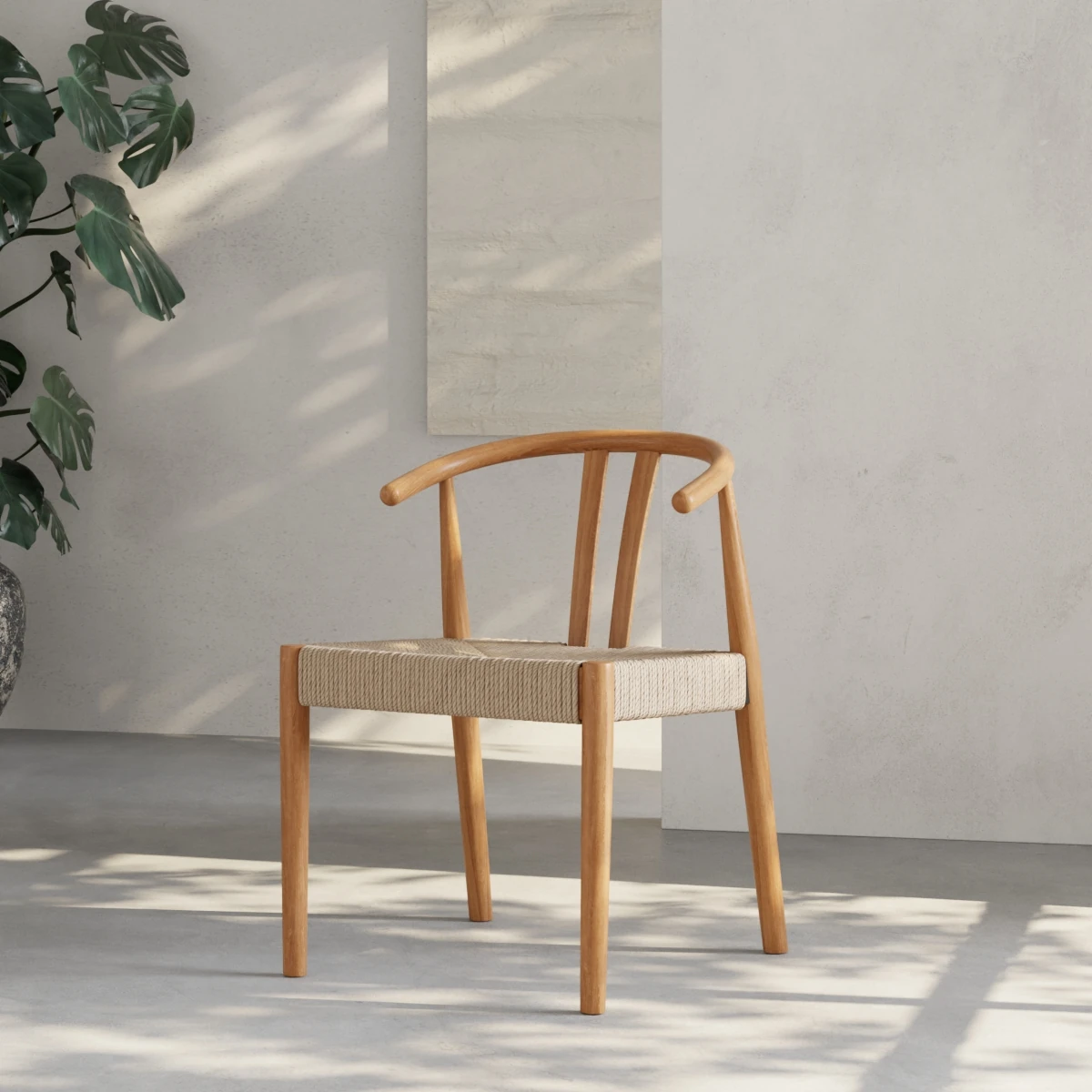
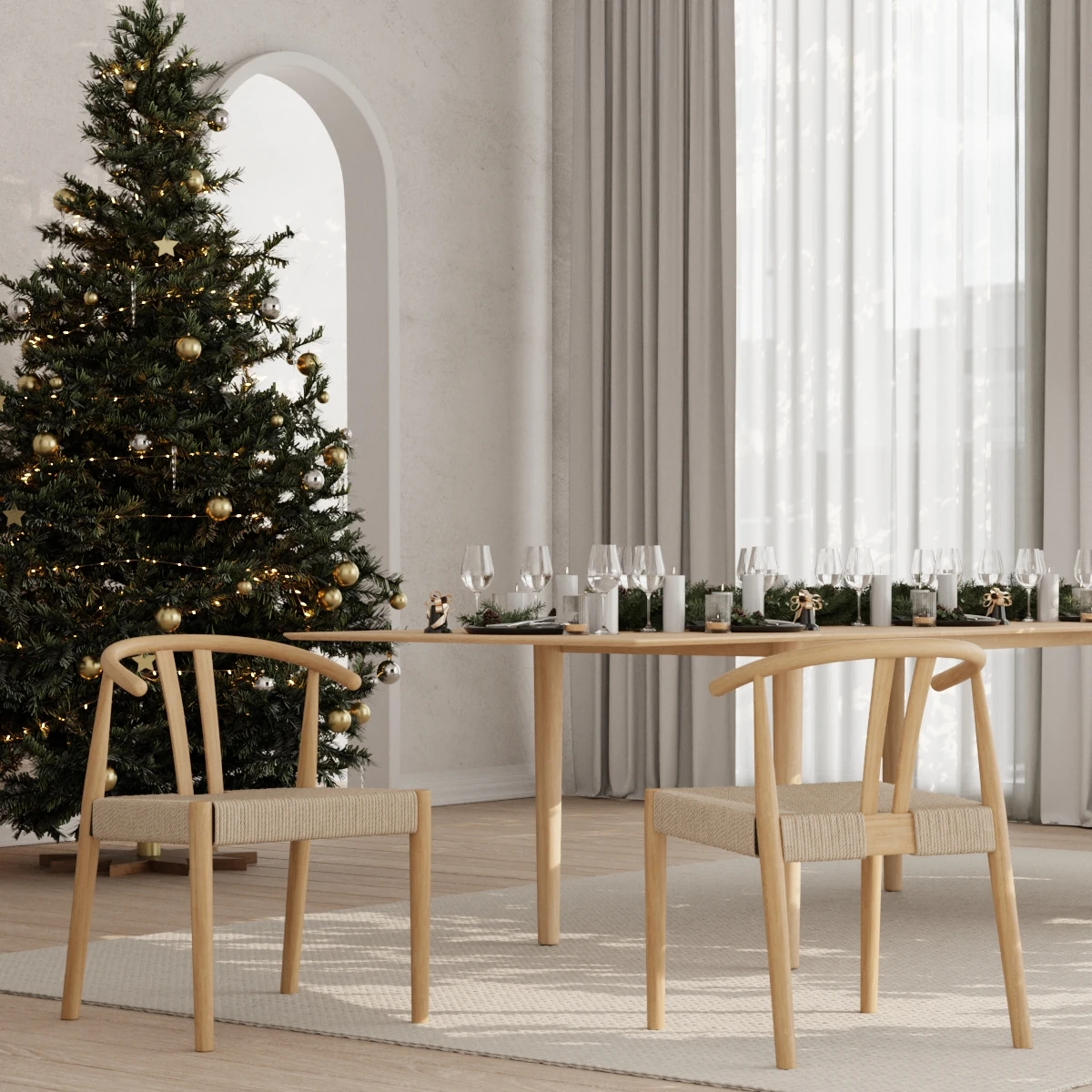
For most buyers, Danish-style contemporary is the entry point. You get the design language (the Y back, the curved arm, the oak frame) at a price that fits a normal furniture budget. A Carl Hansen original Wishbone is a €795 chair; a faithful contemporary interpretation is €119 to €149.
The four marks of a real Danish-style piece
Danish design has a specific construction language. These four marks tell you whether a piece is in the tradition or just borrowing the look.
- Visible joinery, not concealed: mortise and tenon, finger joints, or dovetails shown openly. Hidden fasteners (screws filled with plugs, cam-and-dowel) are the budget-furniture giveaway.
- Solid wood frames, not veneer: the legs, arms, and rails are solid oak, beech, or teak. Veneer is acceptable on cabinet sides but never on structural members.
- Honest finishes: oil or soap finish on wood, not high-gloss lacquer. Paper cord, leather, or wool upholstery rather than synthetic fabric.
- Designed proportions: a Danish chair has specific seat height (45 cm), back height (typically 75 to 80 cm above floor), and arm height. Cheap copies often miss the proportions even when they get the silhouette right.
Where Danish design lives in our range
Dining chairs, lounge chairs, and sideboards. The three categories where Danish design holds the strongest grip on the contemporary market.
Our Scandinavian furniture collection includes a focused selection of Danish-style pieces. The Y-back oak dining chair sits at €119 to €149, the paper-cord version at €129 to €169. Lounge chairs in the Jacobsen tradition start at €399. Teak-style sideboards from €699.
For the broader history, our what is Scandinavian design guide covers the full movement. For the dining setup in particular, the Scandinavian dining chairs guide breaks down chair types and pairings.
Frequently asked.
What defines Danish design furniture?
Sculptural curves, exposed solid-wood joinery, paper cord or leather upholstery, and proportions worked out for daily human use. The four canonical chairs (Wegner Wishbone, Jacobsen Series 7 and Egg, Juhl Pelican) carry the tradition. Danish pieces tend to be warmer and more chair-led than Swedish or Finnish design.
Is Danish design the same as Scandinavian design?
Danish design is the most internationally famous part of Scandinavian design. When buyers and retailers say Scandinavian, they often mean Danish. The broader Scandinavian label also covers Swedish (cleaner, more functional) and Finnish (more bentwood) traditions, plus by extension Norwegian and Icelandic work.
How much does authentic Danish design cost?
Licensed reproductions of canonical chairs sit between €600 and €3,500. Vintage 1950s to 70s originals from auction or dealers range from €1,500 to €15,000, depending on designer and condition. Danish-style contemporary pieces with the same aesthetic and proportions cost €99 to €699.
Who are the most important Danish furniture designers?
Four core names: Hans Wegner (chairs, the Wishbone and Round Chair), Arne Jacobsen (Egg, Swan, Series 7), Finn Juhl (Pelican, Chieftain), Borge Mogensen (Hunting Chair, J39). Behind them: Verner Panton, Poul Kjaerholm, Hans Olsen, Kaare Klint.
What woods are used in Danish design?
Oak is the most common, especially for chairs and dining tables. Teak was heavily used in the 1950s and 60s but is no longer in regular production for environmental reasons. Rosewood appears in vintage pieces and is similarly out of contemporary production. Modern Danish-style pieces use oak, beech, and walnut as the dominant woods.
