 9800+ TRUSTPILOT REVIEWS


 EN
EN DE
DE FR
FR NL
NL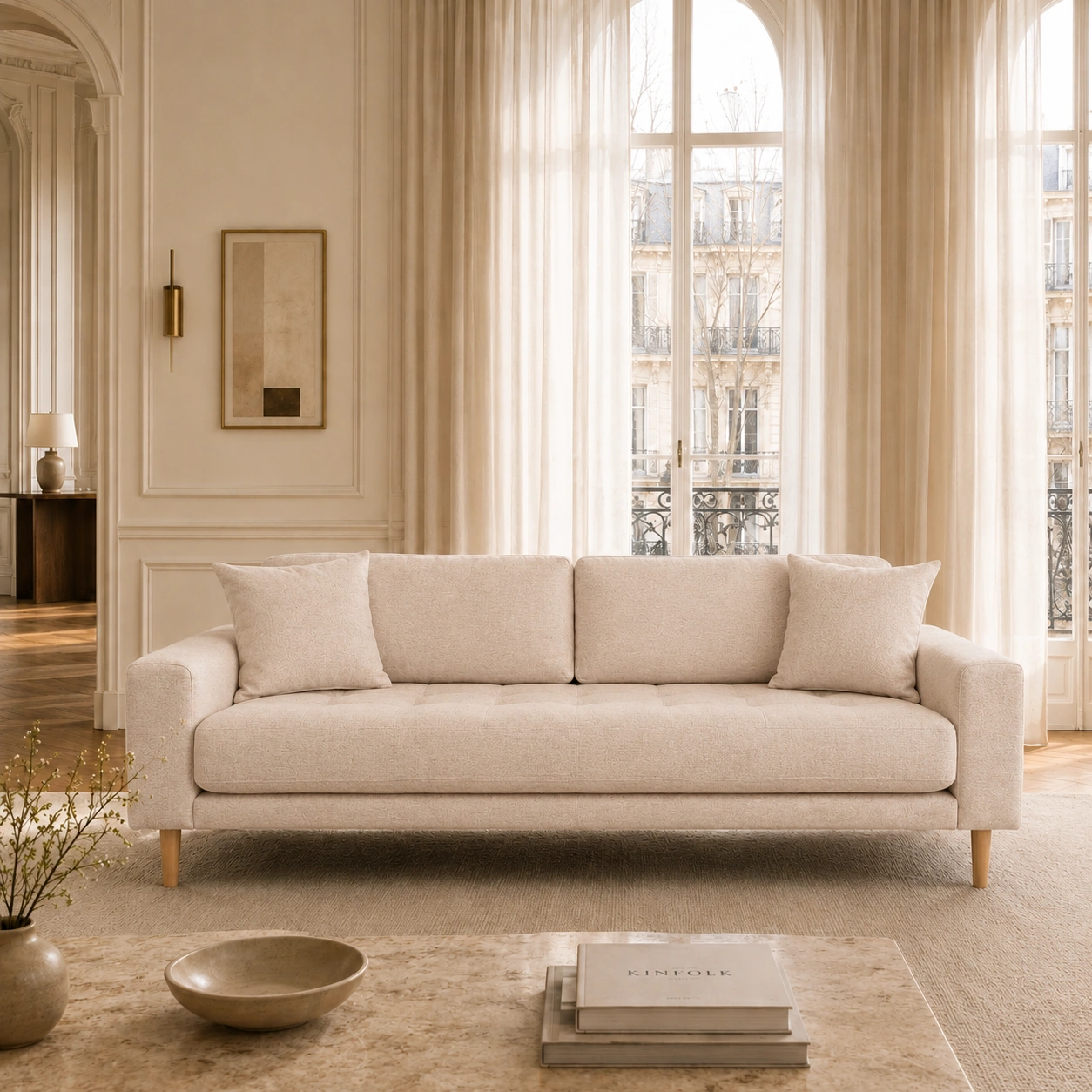
Scandinavian interior decoration is not painting everything white and putting an oak chair in the corner. It is knowing, room by room, which natural material leads, where the dark anchor sits, and how the lighting should be built in a flat that gets three hours of winter sun.
This guide walks through five rooms (living, dining, bedroom, kitchen, bathroom) with concrete recommendations, dimensions for older European apartments and typical new builds, and the mistakes you see most often.
The room that sets the rest
The living room decides whether a flat reads as Scandinavian or just looks like a magazine cutout. Three things are non-negotiable: a sofa that is actually comfortable, a visible floor surface (rug or floorboards on show), and three to four light sources, none of them on the ceiling.
In older buildings (Altbau, Haussmannian, Victorian) the high ceilings help: a 220 cm sofa does not look oversized because the room has vertical breathing room. In modern apartments with 2.5 m ceilings, 200 cm is usually the upper limit before the seating group flattens the space.
- Sofa: pale (natural linen, wool blend) on visible wooden legs, 200 to 220 cm
- Coffee table: oak or beech, oval or round, no sharp glass corners
- Armchair: one chair with character (Wegner style, wool upholstery), not two identical
- Rug: wool or jute, plain, at minimum under the front legs of the sofa
- Light: pendant 1.4 to 1.6 m above the coffee table, a floor lamp, one table lamp
Where Scandinavian living is most visible
The dining table is the social centre of Nordic interiors and the single point where material and lighting choices have to align with daily use.
Dining table
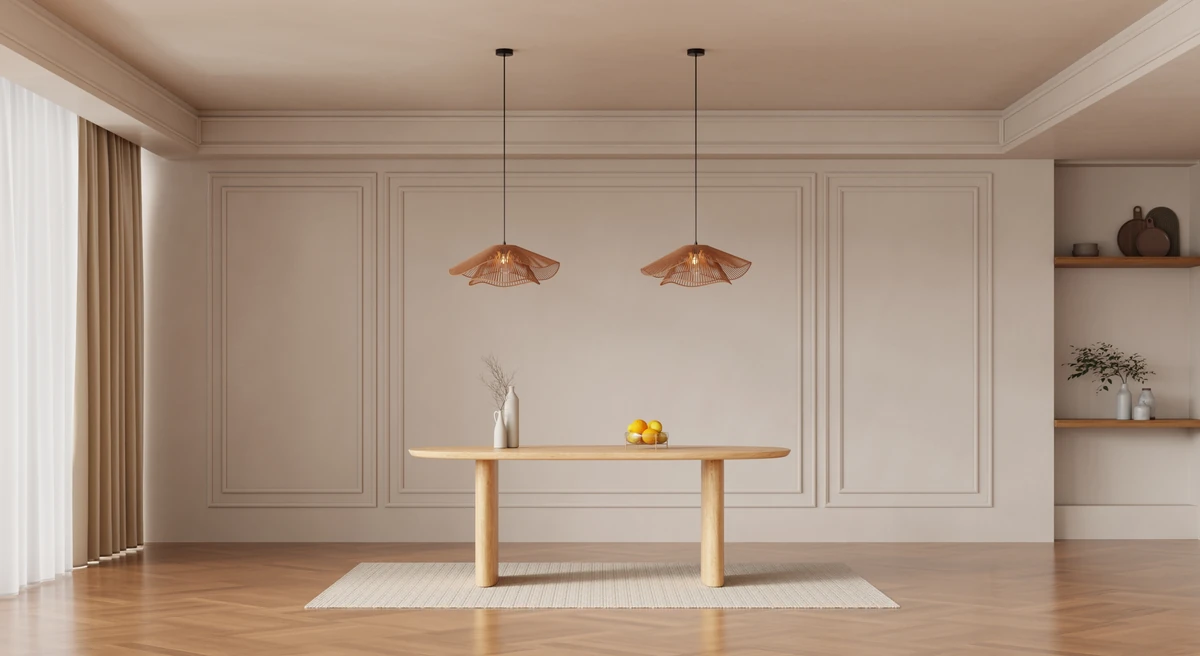
Solid wood, natural oil finish, 180 to 220 cm for four daily, extending to 260 to 300 cm for guests. Glass tops contradict the Scandinavian approach (too cold, too reflective).
Chairs
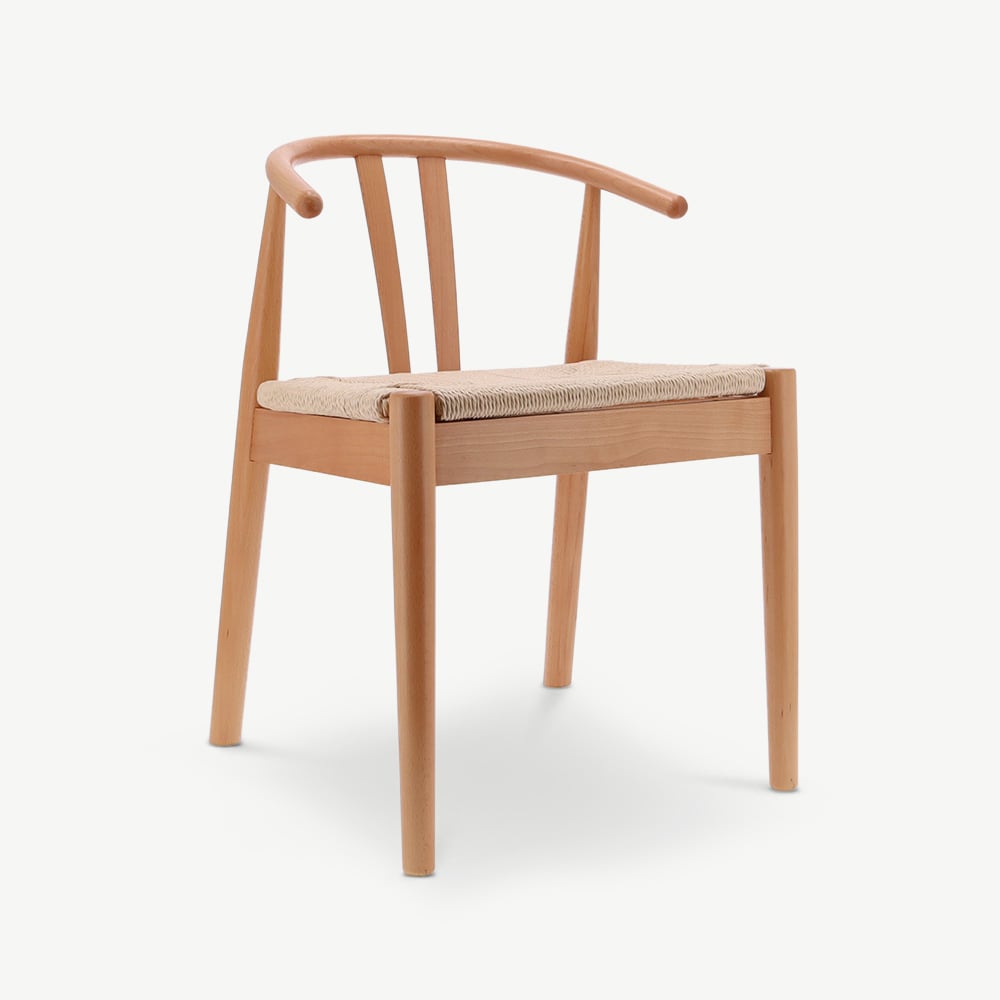
Four to six matching chairs. Y chair style with paper cord seat, or a modern variant with rattan and an oak frame. Seat height 45 to 47 cm, matching 75 cm tables.
Pendant
One large or three smaller pendants over the table, lower edge 60 to 70 cm above the tabletop. PH-style louvre shades or a simple brass half-sphere.
Sideboard
Maximum 80 cm tall, 150 to 200 cm long. Functional: tableware, linen, candles. In small flats it replaces the traditional dresser.
Rug
If a rug, large enough that the back chair legs stay on it when pulled out (minimum 200 x 300 cm). Otherwise skip it; oak floors handle dining-room wear well.
Walls
A framed poster or a single large piece is enough. Gallery walls feel cluttered, which works against the quiet Nordic character.
Featured in this guide


Few pieces, good textiles
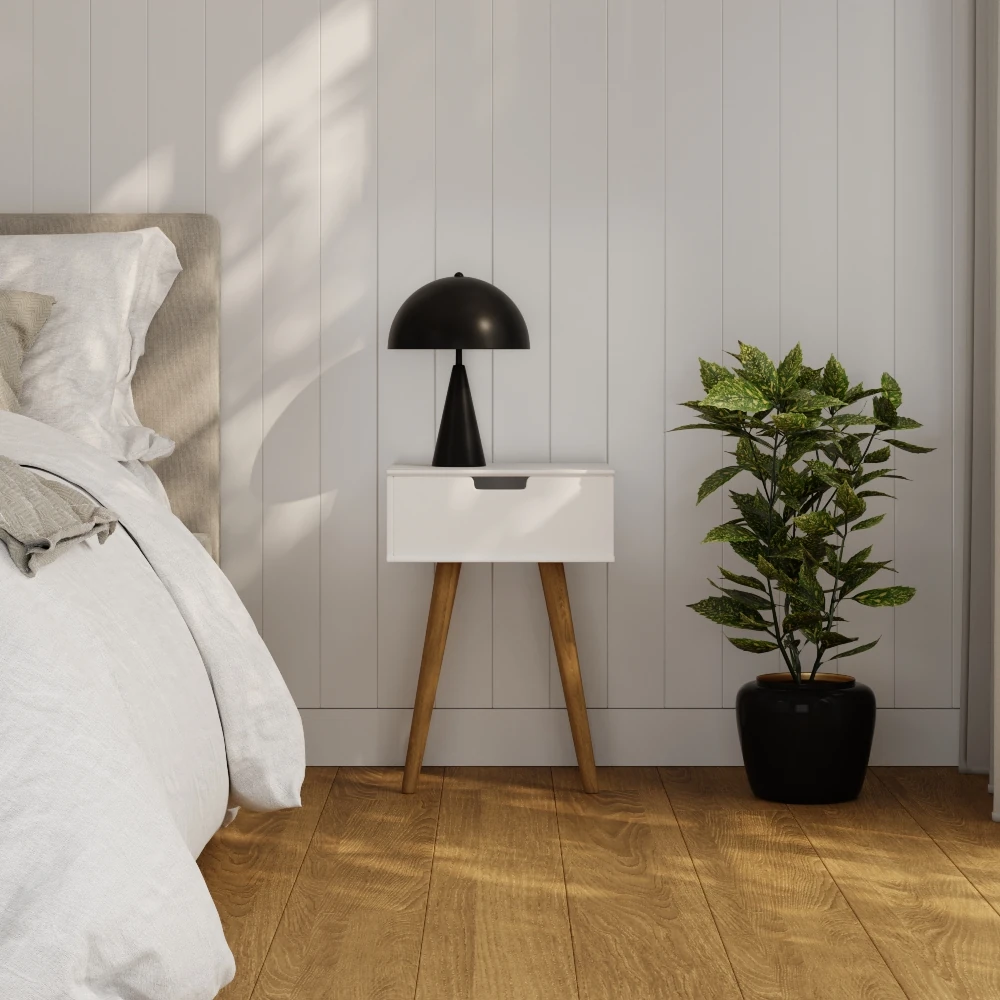
Bedrooms are usually overdone. Scandinavian bedrooms live on a few high-quality pieces: a low oak bed, off-white linen bedding, two matching bedside tables, a wool rug at the foot. The room does not need more.
In older buildings the bed often sits free in the room because moulded walls divide the space visually. In new builds the bed usually goes against a wall; paint that wall one or two tones darker (warm greige, muted olive) to avoid the hotel-room feel.
Curtains: floor-length, linen, pale. They filter summer sun in south-facing windows and keep the Nordic character in winter, even when the world outside is grey. If you need blinds, use sheers or narrow wood slats, never plastic.
Storage should be hidden: built-in wardrobes rather than freestanding ones, or an open hanging corner with an oak rail and hooks. Three freestanding pieces is the maximum before the room starts to feel like a showroom.
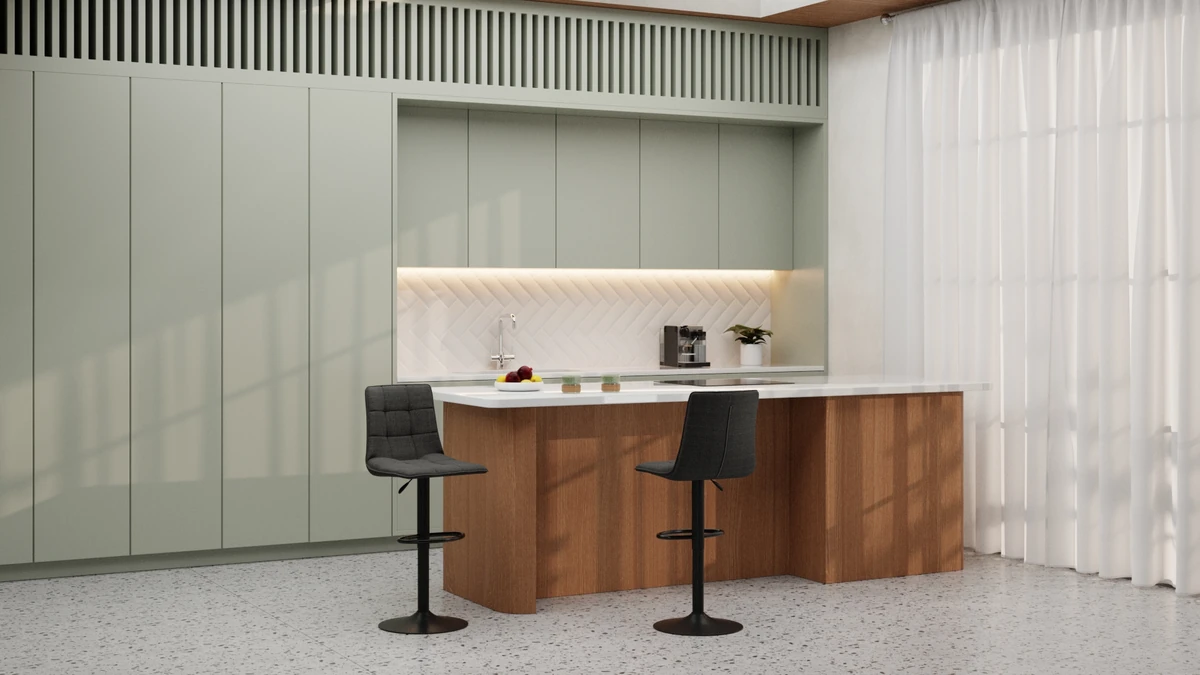
Functional, without going clinical
Scandinavian kitchens are rarely all white. That reads too cold. The usual elements: pale oak fronts or warm cream-to-clay lacquer fronts, a counter in natural stone or oiled wood, matt black or brass hardware, and visible wood somewhere on the floor or as open shelving.
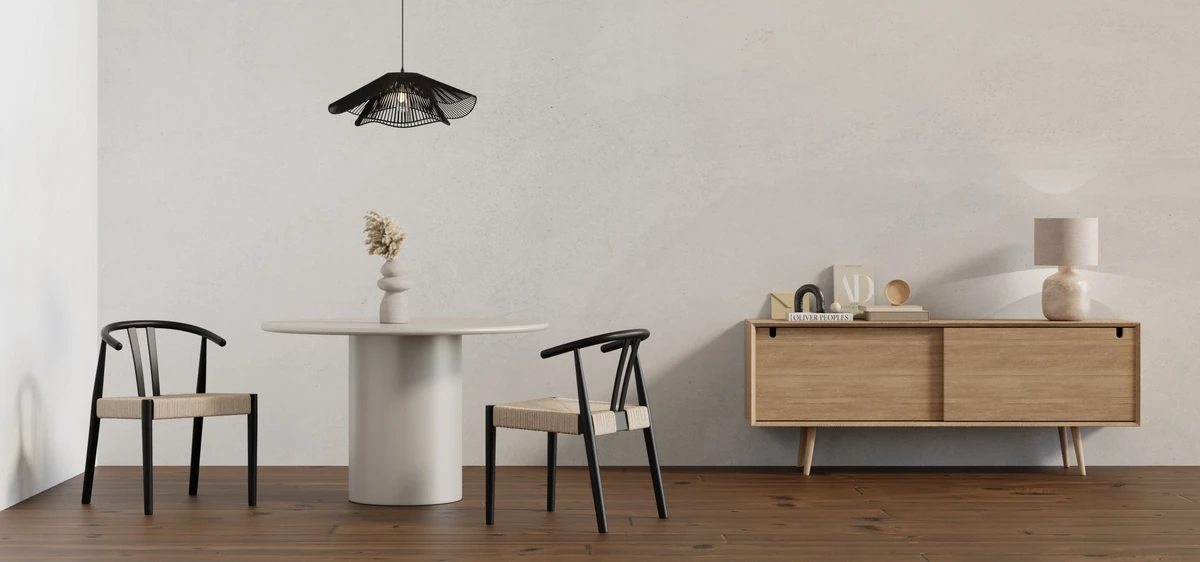
Wood that can handle moisture
The bathroom is where many Scandinavian schemes fail because raw oak hates moisture. The fix: treated wood (hardwax oil or marine oil), only on surfaces that do not get directly wet (vanity, mirror frame, wall shelf), and microcement floors instead of wood.
Colours: warm off-white, muted greige, or one dark accent (matt black taps, deep green mirror frame). No clinical white. Skip high-gloss tiles; matt rectangular stoneware in mid-format (60 x 30 cm) reads calmer.
Textiles are the fastest upgrade: dense terry towels in natural tones, a washable wool mat next to the bath, one seagrass basket for laundry. Three elements, not a pile of patterns.
What makes the difference
Older buildings (Berlin, Paris, Amsterdam). High ceilings, mouldings, floorboards. Scandinavian decoration reads naturally here, because the architecture meets the style halfway. Important: do not paint floorboards white, sand and oil them. Leave mouldings in pure white, do not accent them. Larger pieces are allowed.
New builds (apartments from 2000 onwards). 2.5 to 2.6 m ceilings, laminate or neutral tiles, no architectural ornament. Scandinavian style here needs more discipline: smaller pieces, a quality rug, a strong lighting scheme, otherwise the room reads as anonymous. Spend on lighting first, then on a real oak sideboard.
Shared flats and small apartments. Multi-function is the task. An extendable dining table that becomes a desk; a bench with storage instead of chairs; a sofa that fits one person. The principles scale to small spaces if you let every piece do two jobs.
Where to begin
With the sofa and the dining table. They are the pieces you use daily and the ones you spend the most time in proximity to.
Concrete pieces from our range: the Scandinavian furniture collection. For the story behind the style, start with what is Scandinavian design. For the dining room in detail: Scandinavian dining chairs guide. Sofas from €599, oak dining tables from €449, chairs from €99.
For a stricter take on the same principles, the Japandi guide covers the Japanese-disciplined version. The complete Scandinavian furniture guide ties the pieces to the principles.
Frequently asked.
What colours belong to Scandinavian decoration?
Three base colours define the palette: off-white, warm grey, and natural wood-brown (oak, ash, beech). One accent tone per room is enough, often ochre, mustard, muted olive, or dusty blue. Pure white reads too cold; black is used sparingly as an accent.
Which wood fits Scandinavian living?
Oak is the most common choice, followed by beech, ash, and birch. Darker woods like walnut work as restrained accents but should not be the main wood in the room. Naturally oiled wood is preferred to high-gloss lacquer.
How many light sources should a room have?
Three to four per main living space: a pendant (or warm-light ceiling spots), a floor lamp, one or two table lamps or wall spots. A single ceiling light as the only source contradicts the style, since it misses Henningsen's principle of diffused, multi-source lighting.
Does Scandinavian style work in a small rented flat?
Yes, especially well. The style was developed for small apartments, not villas. Key adjustments: smaller dimensions, multifunctional pieces (extendable table, bench with storage), pale wall colour, plenty of light. Three or four high-quality pieces beat ten cheap ones.
What separates Scandinavian from Japandi?
Japandi takes Scandinavian materials (pale wood, natural fabrics) and adds Japanese discipline: fewer pieces, darker accents, more empty space. Scandinavian style allows more warmth and homeliness; Japandi is stricter and more meditative.
Where do you invest first?
Sofa and dining table. They are used daily and shape the room visually more than anything else. A good sofa lasts 15 to 20 years; a solid oak table often 30. Chairs, lighting, and textiles can be added later without disrupting the character.
