9800+ TRUSTPILOT REVIEWS

 EN
EN DE
DE FR
FR NL
NL
A Scandinavian dining chair is not a styling choice. It is a piece from a specific design tradition that started in Danish cabinetmaking schools in the 1920s and spread through Copenhagen workshops over the next thirty years. The form has rules: light wood, curved backrest, a seat that follows the body, and joinery you can see.
This guide separates the real form from the look. It covers the classic versus contemporary split, how Scandinavian dining chairs differ from Shaker, Japanese, and Italian modern alternatives, and which of Furnicher's chairs (€89 to €179) sit closest to each tradition.
Not a style, a workshop tradition
The Scandinavian dining chair as a recognisable form is mostly Danish. Kaare Klint taught furniture design at the Royal Danish Academy starting 1924, and built the curriculum around studying historic chairs and the human body in equal parts. His students included Hans Wegner and Børge Mogensen. Within twenty years that workshop output was on display at the Milan Triennale and selling internationally.
The form has consistent traits across makers:
- Seat height: 44 to 46 cm, paired with a 74 to 76 cm dining table
- Backrest: curved in one plane, sometimes two; never a flat board
- Seat construction: paper cord, rattan, or upholstery; rarely a wooden board
- Joinery: mortise-and-tenon at the apron, dowels at the legs, wood-on-wood contact visible
If a dining chair sold as Scandinavian misses two or more of those traits, it is in the style, not of the tradition.
Classic, contemporary, and look-alike
"Scandinavian dining chair" covers three different things in the current market. Knowing which one you are looking at saves the wrong buy.
Classic reproduction
Direct reproduction of a 1949 to 1965 design. Wegner Wishbone, Jacobsen Series 7, Mogensen J39. Either licensed by the original maker (Carl Hansen, Fritz Hansen) or unlicensed at lower prices.
Licensed pieces run €600 to €1,200 per chair. Quality unlicensed reproductions, like Furnicher's Scandi, run €89 to €119 and follow the same dimensions and joinery, with beech or oak instead of premium European oak.
Contemporary Scandi
Designs from current Danish, Swedish, and Norwegian studios (HAY, Muuto, Ferm Living) that apply the rules to today's tastes: slightly deeper seats, more upholstery options, more colour, sometimes metal accents.
Reads as Scandinavian without copying a specific historic chair. Furnicher's Jenson sits in this category: rattan-and-upholstery combination at €139 to €179, recognisably Scandi without being a Wegner copy.
Scandinavian look
Chairs that picked up the visual cues (light wood, simple legs) but ignored the rules. Foil-wrapped MDF frames, glued joints, flat plywood seats, often sold under "Nordic" or "minimalist" labels at very low prices.
Cheap to buy, but they fail at 3 to 5 years. The visual cues alone do not survive daily use. This is the category most internet shoppers buy by accident.
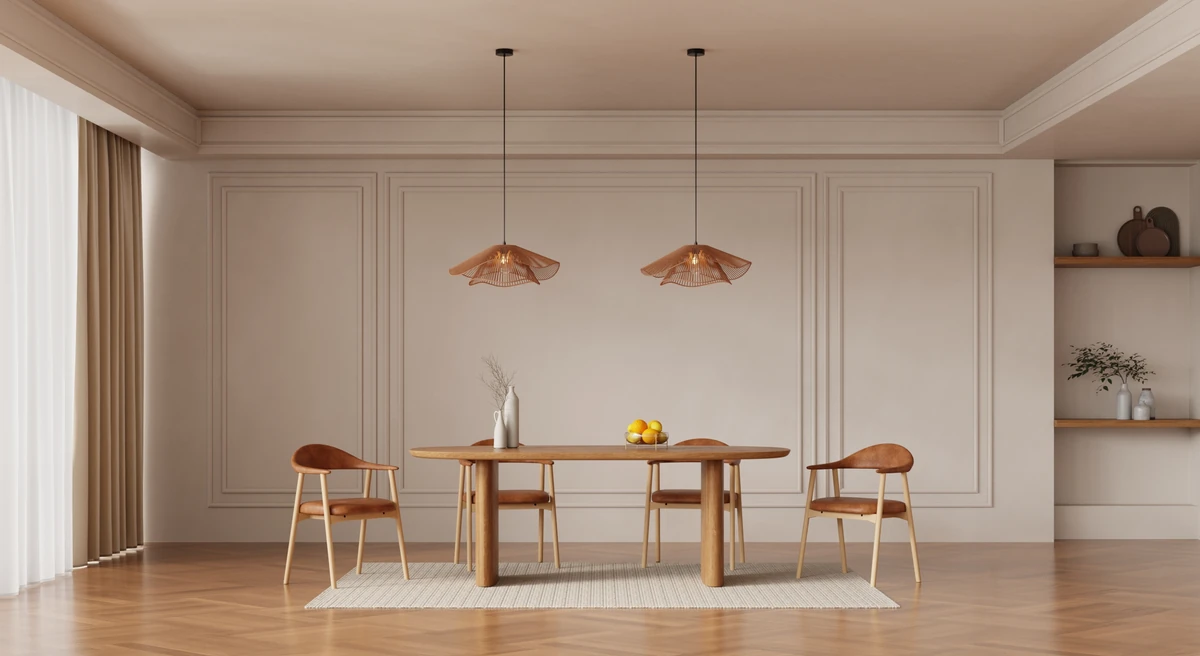
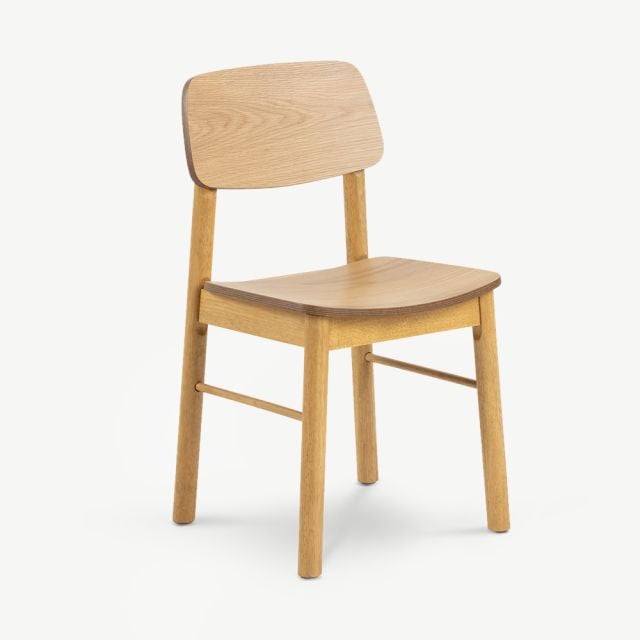
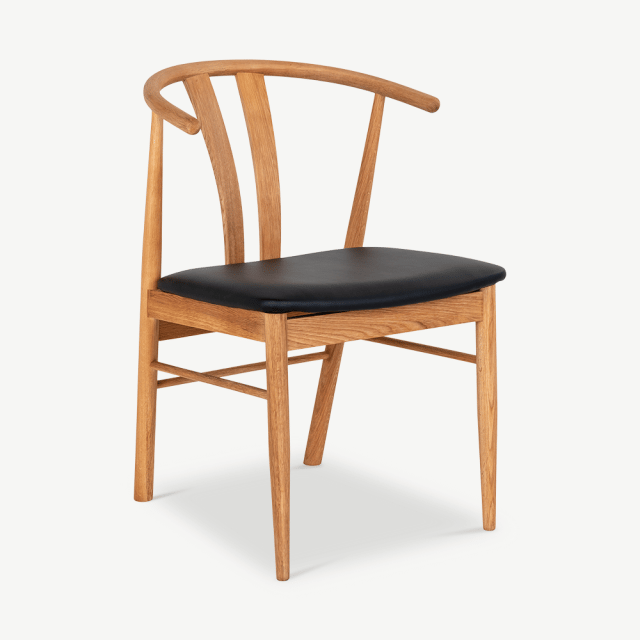
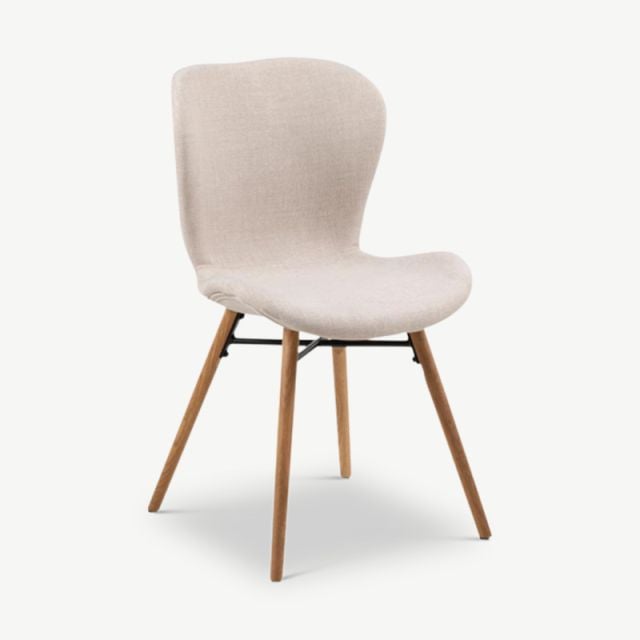
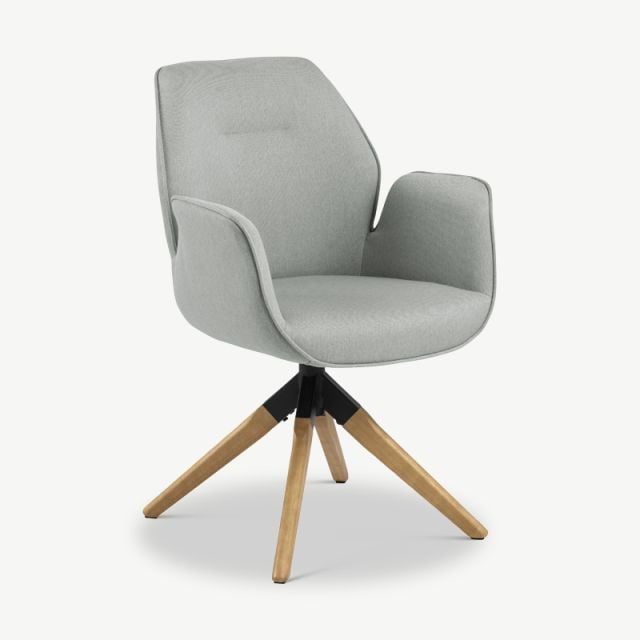
Featured in this guide


How a Scandi dining chair compares to its neighbours
Several other wood-focused chair traditions are sometimes grouped together with Scandinavian. They are different in specific, measurable ways.
| Tradition | Seat height | Backrest | Reads as |
|---|---|---|---|
| Scandinavian (Danish) | 44 to 46 cm | Curved, ergonomic | Warm, humanist |
| Shaker (American) | 43 to 45 cm | Straight slats | Plain, functional |
| Japanese (modern) | 40 to 42 cm | Low, flat | Quiet, restrained |
| Italian modern | 45 to 47 cm | Bold, sculpted | Confident, designed |
The Japandi style, which has grown fast in the last decade, is essentially Scandinavian dining chairs paired with Japanese tables and low-contrast palettes. The chair stays Scandinavian; the styling around it borrows from elsewhere.
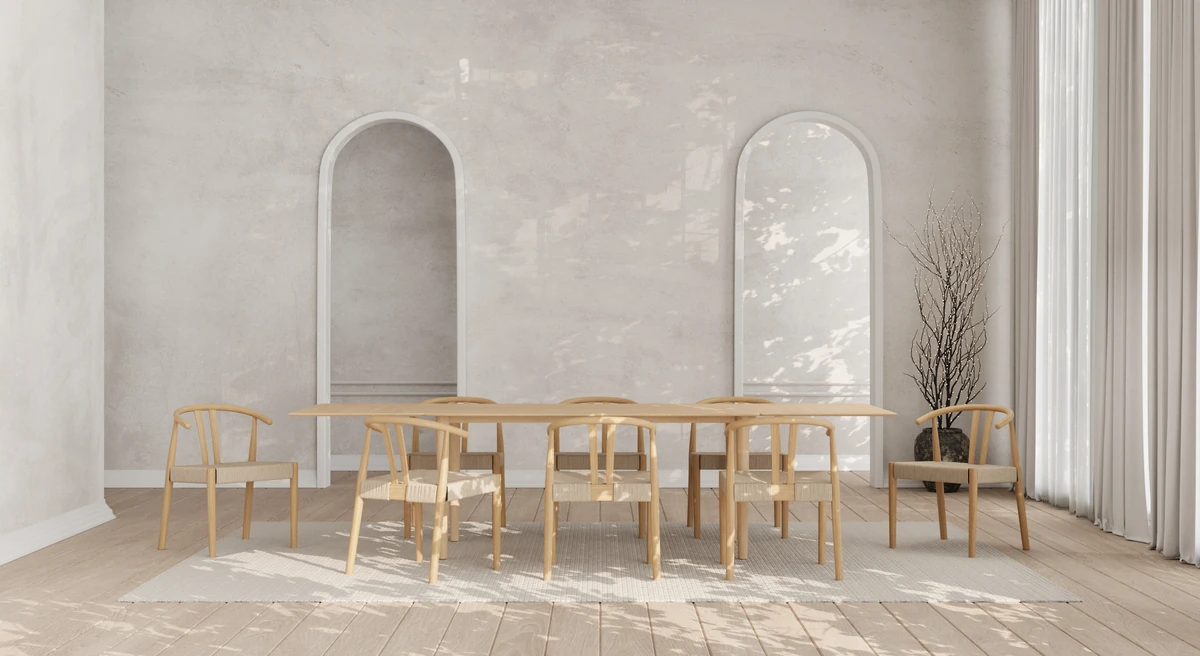
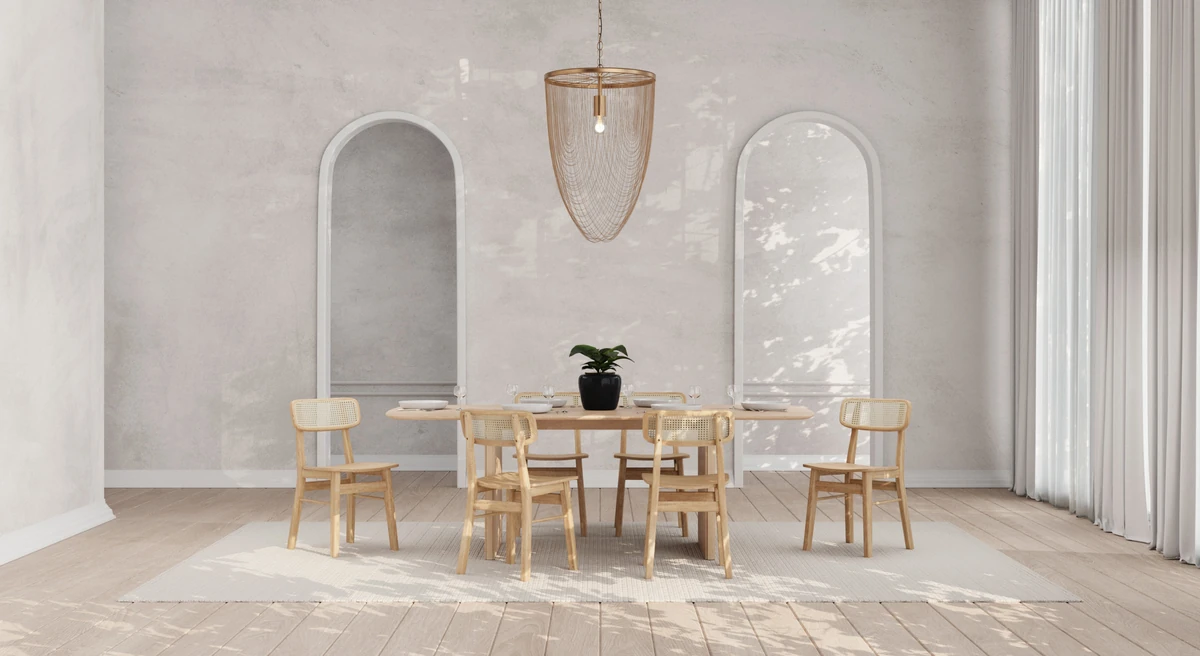
Three Furnicher options, three intentions
Our Scandinavian dining chairs follow the form in three different ways. Choosing between them comes down to how visually present you want the chair to be.
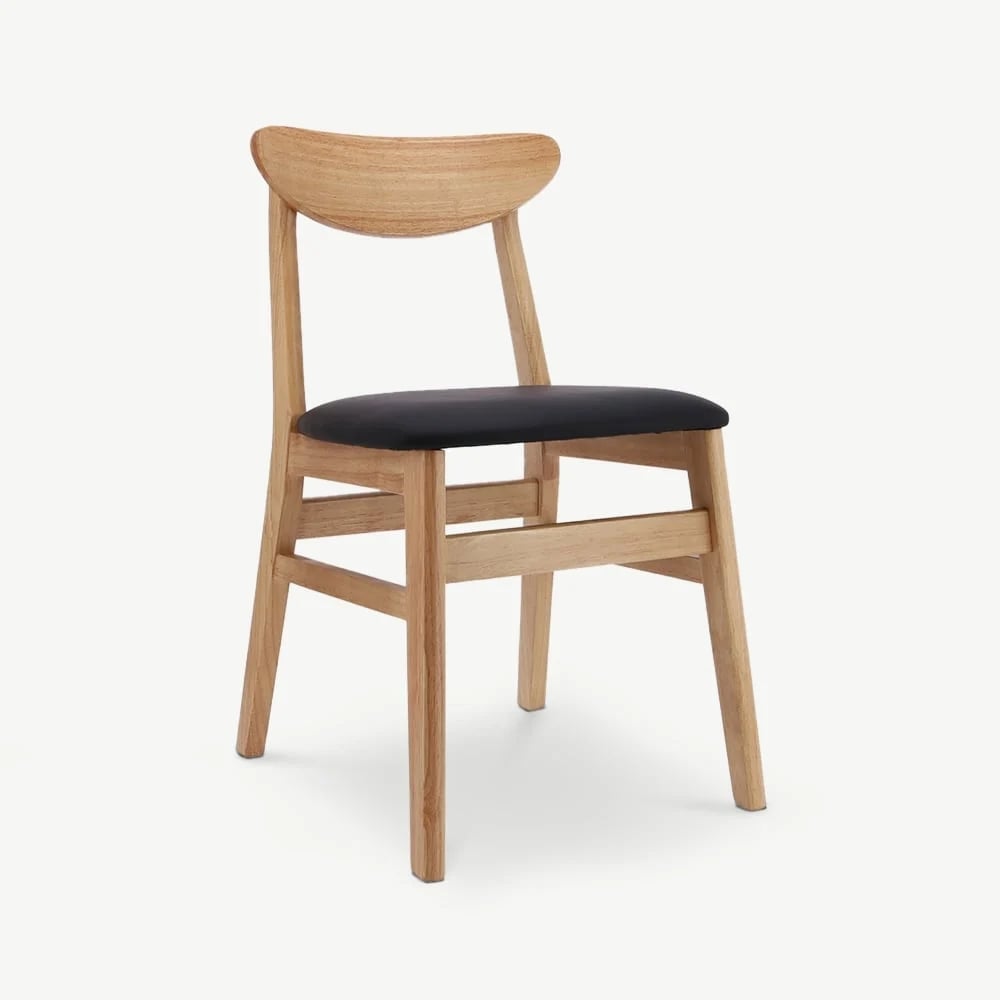
- Scandi (€89 to €119): closest to classic reproduction. Turned legs, beech or oak frame, rattan back panel, mortise-and-tenon at the seat. Quiet in the room.
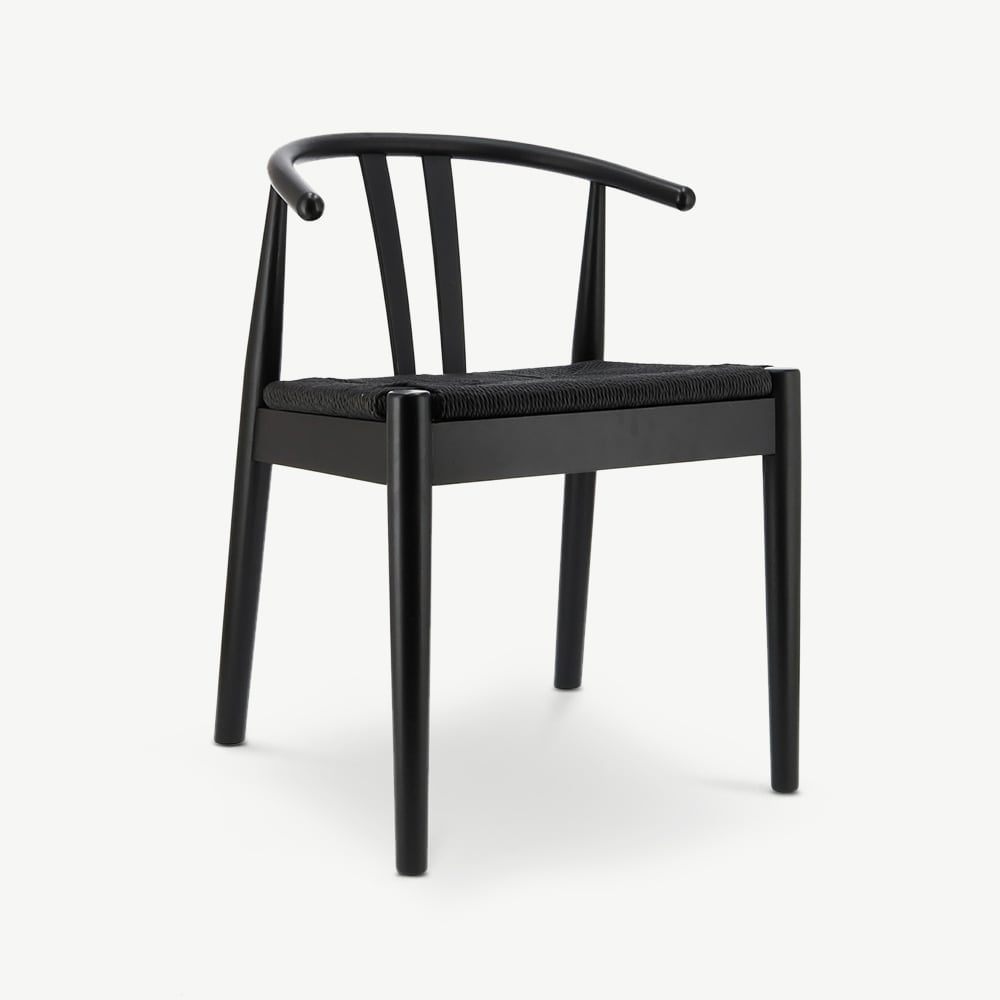
- Peter (€119 to €149): contemporary interpretation. Solid oak, curved backrest with visible dowels, three wood tones (natural, cognac, black-stained). Slightly more presence.
- Jenson (€139 to €179): contemporary with comfort priority. Rattan-and-upholstery combination, oak or dark ash frame. The right pick for long meals over 2 hours.
All three are stack-able for storage, hold up to 110 kg, and ship with a 10-year frame guarantee. Free delivery and free exchange in the first 30 days, so it is workable to order one chair first and decide before ordering the full set.
Which Scandinavian dining chair fits your home?
If you sit down for the long meal, pick the Jenson. If you want the chair to disappear, pick the Scandi.
Most dining rooms only need to make that one decision. The other variables (wood tone, seat material, finish) follow from how present you want the chair to be in the room. Classic reads conservative and ages well. Contemporary reads more designed and feels better at hour three.
See our Scandinavian furniture range for the full collection, or go directly to Scandinavian chairs from €89 to €179. For wider context on dining-chair choice, our dining chairs buying guide covers rattan, upholstered, and metal alternatives.
To understand the full style context, read our Scandinavian furniture guide. For the quieter Japanese-Scandinavian register, see our Japandi interior guide. And if you have not chosen the table yet, our dining tables buying guide helps match table height to chair height correctly.
Frequently asked.
What is a Scandinavian dining chair?
A chair from a Danish-led design tradition that started in the 1920s: light solid wood, curved backrests, paper-cord or rattan seats, exposed joinery. Hans Wegner and Arne Jacobsen are the central figures. A real Scandinavian dining chair carries traces of that tradition even at lower price points, which is what separates it from cheaper chairs that only borrow the visual cues.
How do Scandinavian dining chairs differ from Shaker chairs?
Shaker chairs are strictly vertical with straight stretchers and a paper-rush seat woven flat. Scandinavian chairs use curved backrests, slightly dished seats, and rounded transitions. Shaker is religious-functional, Scandinavian is humanist-ergonomic. Both use solid wood and visible joinery, but they treat the body differently.
What is the difference between Scandinavian and Japanese dining chairs?
Japanese dining chairs (where they exist, since floor-sitting is the older tradition) emphasise lower seat heights of 40 to 42 cm, flat seats, and minimal curvature. Scandinavian dining chairs sit higher at 44 to 46 cm, curve to follow the lower back, and use lighter woods. The two traditions overlap in the Japandi style, which borrows from both.
Classic or contemporary, which Scandinavian dining chair is better?
For longevity and resale value, classic shapes (Wishbone-style, Series 7-style) hold their look. For daily comfort over long meals, contemporary versions with slightly deeper seats and modest padding work better. The Furnicher Scandi sits closer to classic, the Jenson closer to contemporary. The Peter sits between the two.
How many Scandinavian dining chairs do I need?
For a four-person table (140 cm), four chairs. For a six-person table (180 cm), six chairs. Buy in pairs and keep at least one spare per six, since dining chairs are the most-replaced single item in a home: stains, breakages, and changing households shorten the average lifespan to 8 to 12 years even for well-made pieces. Furnicher keeps each model in stock for at least five years from launch, so adding chairs later is reliable.
Are Scandinavian dining chairs comfortable for long meals?
Classic shapes without padding are made for the typical one to two hour meal. For meals over three hours, choose a model with light padding and an armrest (the Jenson) or pair the chairs with thin seat cushions. The curved backrest does most of the comfort work; padding makes a smaller difference than people expect.