 9800+ TRUSTPILOT REVIEWS


 EN
EN DE
DE FR
FR NL
NL
Garden furniture is the only category most buyers shop for once, then forget about for fifteen years. The decisions made in that first hour at the laptop, what wood, what frame, what size, set the next decade and a half of how the terrace looks and how often you replace anything.
This guide covers the five materials that survive weather, how to size dining sets for real patios and balconies, the three style families that actually translate from indoors to outdoors, and what storage looks like when winter arrives. Prices in euros, climate context from Hamburg to Marseille, and no advice that ignores the fact that your terrace probably gets less direct sun than the catalogue photo.
Material sets everything else
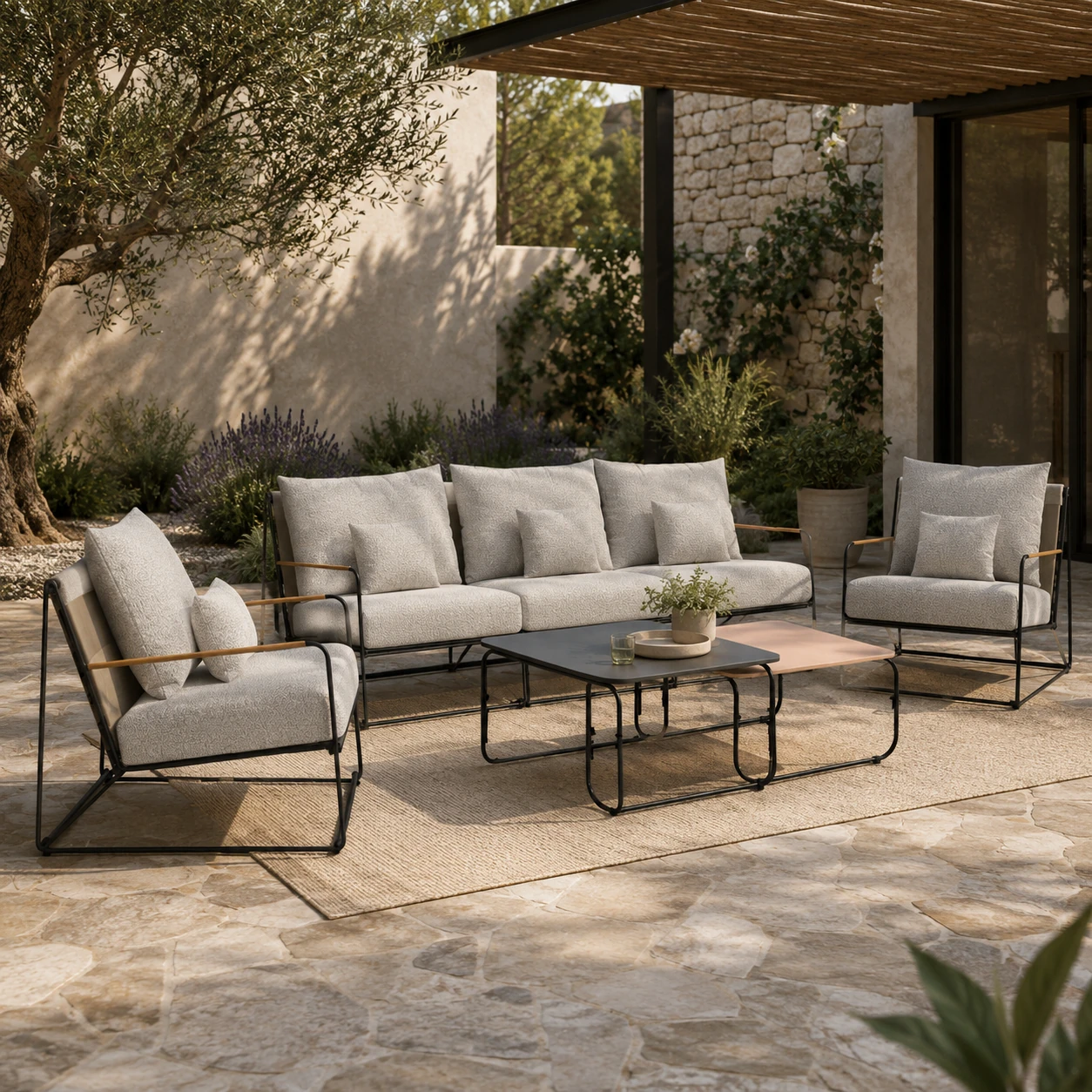
The first decision is what the furniture is made of. Material decides lifespan (3 to 25 years), maintenance routine (none to annual oiling), weight (which decides whether you can move the set seasonally), and roughly 60 percent of the price. Style is a downstream consequence: teak reads warm and Scandinavian, aluminium reads modern and Mediterranean, polywood reads American coastal, rattan reads Japandi terrace.
Five materials hold up in weather. One does not. The one that does not is raw pine: it is cheap, abundant in big-box outdoor sets, and warped through by the third winter. If a bench or chair feels light at 79 euros, it is pine. Skip it.
- Teak: 20 to 25 years, lowest maintenance, highest price
- FSC eucalyptus: 12 to 18 years, teak-like at two-thirds the price
- Polywood (recycled HDPE): 20+ years, completely maintenance-free
- Powder-coated aluminium: 15 to 20 years, light, rust-proof
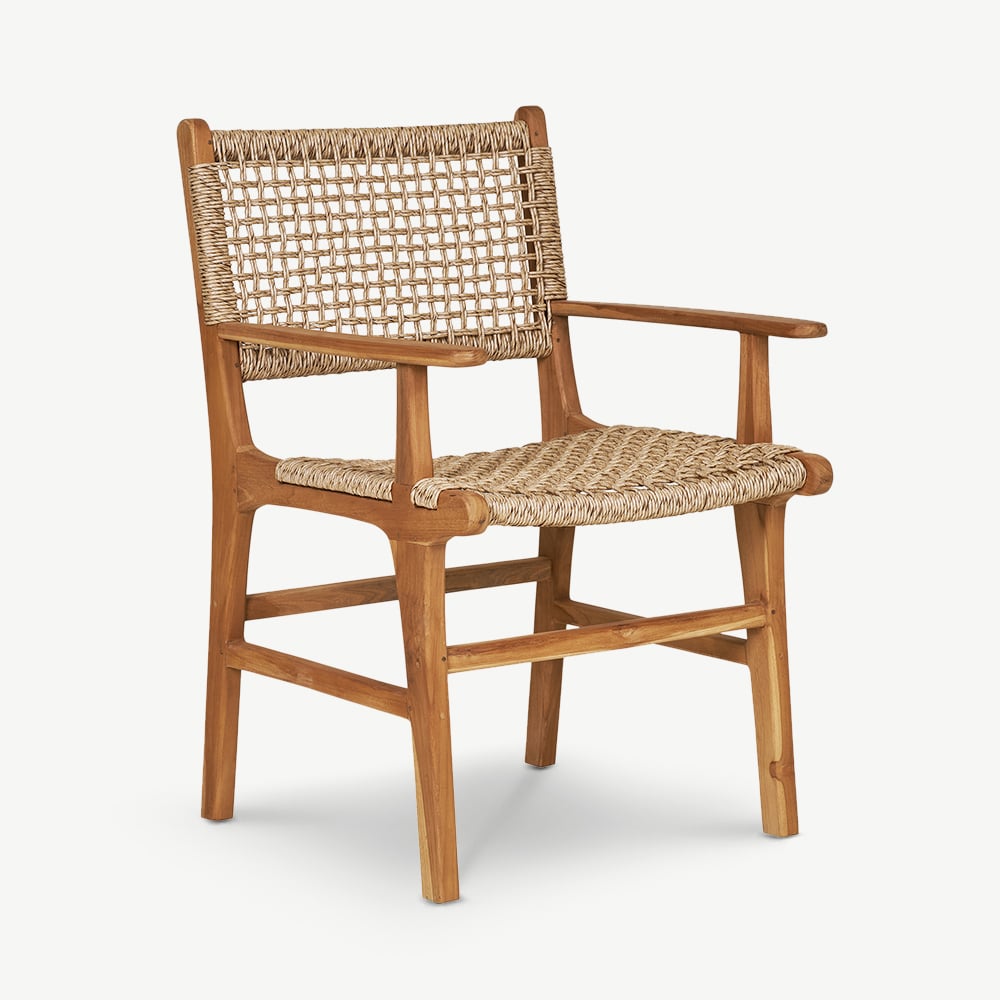
- Synthetic rattan over aluminium: 8 to 12 years, softer woven look
What each one gives you
Pick by climate, by maintenance appetite, and by aesthetic. Teak and eucalyptus warm a space, aluminium and polywood read modern, synthetic rattan adds texture without natural rattan's humidity problem.
Teak
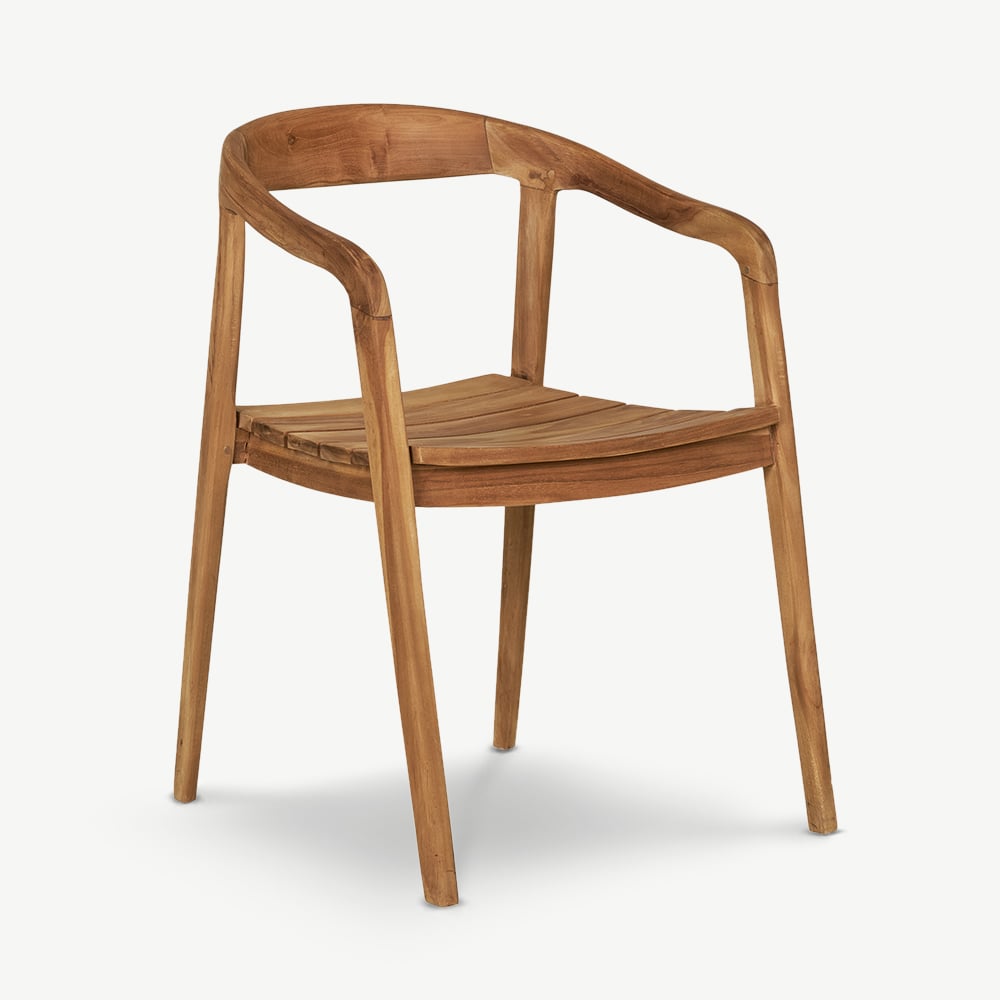
Dense tropical hardwood with natural oils that resist water, insects, and fungi. Plantation-grown stock from Indonesia and Myanmar. FSC or PEFC certification on the label matters; uncertified teak risks driving illegal logging.
Untreated teak weathers to silver-grey in 6 to 12 months. The wood underneath stays structurally identical for two decades. Mortise-and-tenon joinery is standard above 400 euros per piece.
FSC eucalyptus
Fast-growing hardwood with similar density to teak. Less dimensionally stable in extreme humidity swings (Lisbon coast, southern Italy in August) but excellent across central and northern EU.
Greys faster than teak. A coat of clear hardwood oil every spring holds the original red-brown tone. Most of our customers choose eucalyptus when the budget is 200 to 350 euros per piece, not 500 plus.
Polywood (recycled HDPE)
Recycled high-density polyethylene milled into board-like profiles. Looks like painted wood, feels denser, does not splinter, fade, or absorb water. Most pieces carry 20-year structural warranties.
Heavier than aluminium (a polywood Adirondack weighs 18 to 22 kg), so it stays put in coastal wind. Available in matte white, black, anthracite, and the saturated colours that suit American coastal style.
Powder-coated aluminium
Aluminium frame coated in baked polyester powder. Looks like painted metal, does not rust even if the coating chips. Lighter than wood at the same dimensions, which matters if you move chairs onto a covered terrace each November.
The coating may fade or thin after 10 years on south-facing terraces under heavy UV. A touch-up with the manufacturer's matched paint is cosmetic. Matte black, anthracite, and white are the standard finishes.
Synthetic rattan over aluminium
UV-stabilised PE fibre woven over a powder-coated aluminium frame. Genuinely weather-resistant, unlike natural rattan, which absorbs moisture and loosens within 2 to 3 seasons outdoors.
Look for fibre rated to at least 1,500 hours of UV exposure on the spec sheet. Cheaper synthetic rattan sets use thin, brittle PVC that cracks within 3 years. For full detail on the natural-versus-synthetic split, see our rattan furniture guide. Specific weatherproofing data (UV hours, freeze-thaw performance, coating tests) is in our outdoor rattan weatherproofing guide.
What to avoid
Raw pine, untreated softwood, and hollow steel benches. Pine warps and splits within 3 winters across central EU. Hollow steel rusts at the welds within 4 to 5 years. Cast iron lasts longer but needs a rust-resistant repaint every 2 to 3 years.
If the price tag for a full 4-person dining set is under 400 euros, the material is almost certainly in this category. The replacement cycle eats the saving.
Featured in this guide



What weather actually does to garden furniture
EU outdoor furniture lives through four conditions: UV (south-facing Provence and Andalusia), driving rain (Atlantic coast, Belgium, the Netherlands), freeze-thaw cycles (alpine France, Austria, southern Germany), and salt (anywhere within 5 km of the coast). Materials fail differently in each.
UV bleaches wood and fades powder coating. Freeze-thaw splits poorly seasoned softwood. Rain swells natural rattan and rots low-grade plywood seat panels. Salt corrodes aluminium fasteners (use stainless steel only) and accelerates rust on cast iron.
| Material | Lifespan exposed | Annual maintenance |
|---|---|---|
| Teak (FSC) | 20 to 25 years | Rinse twice a year |
| FSC eucalyptus | 12 to 18 years | Optional oil in spring |
| Polywood (HDPE) | 20+ years | Wipe down twice a year |
| Powder-coated aluminium | 15 to 20 years | Wipe, touch up chips year 10 |
| Synthetic rattan over aluminium | 8 to 12 years | Soft brush, mild soap |
| Raw pine | 3 to 5 years | Stain or paint annually |
The most common maintenance mistake is over-caring. Scrubbing teak weekly removes the patina without extending lifespan. Continuous winter covers trap moisture and grow mildew under the cover. A breathable cover during prolonged wet stretches, then air-dry between storms, is the right rhythm.
Patio, balcony, garden: what fits
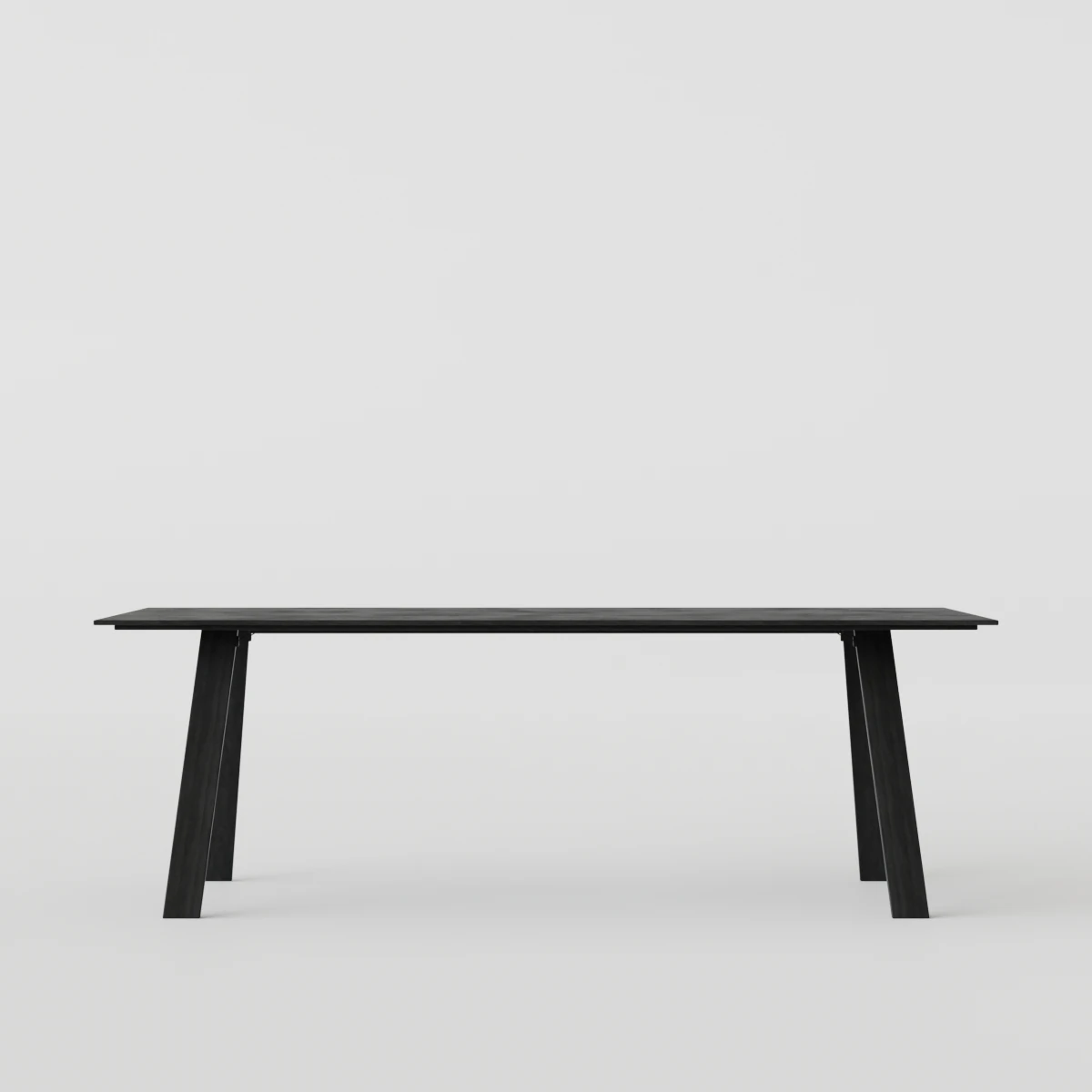
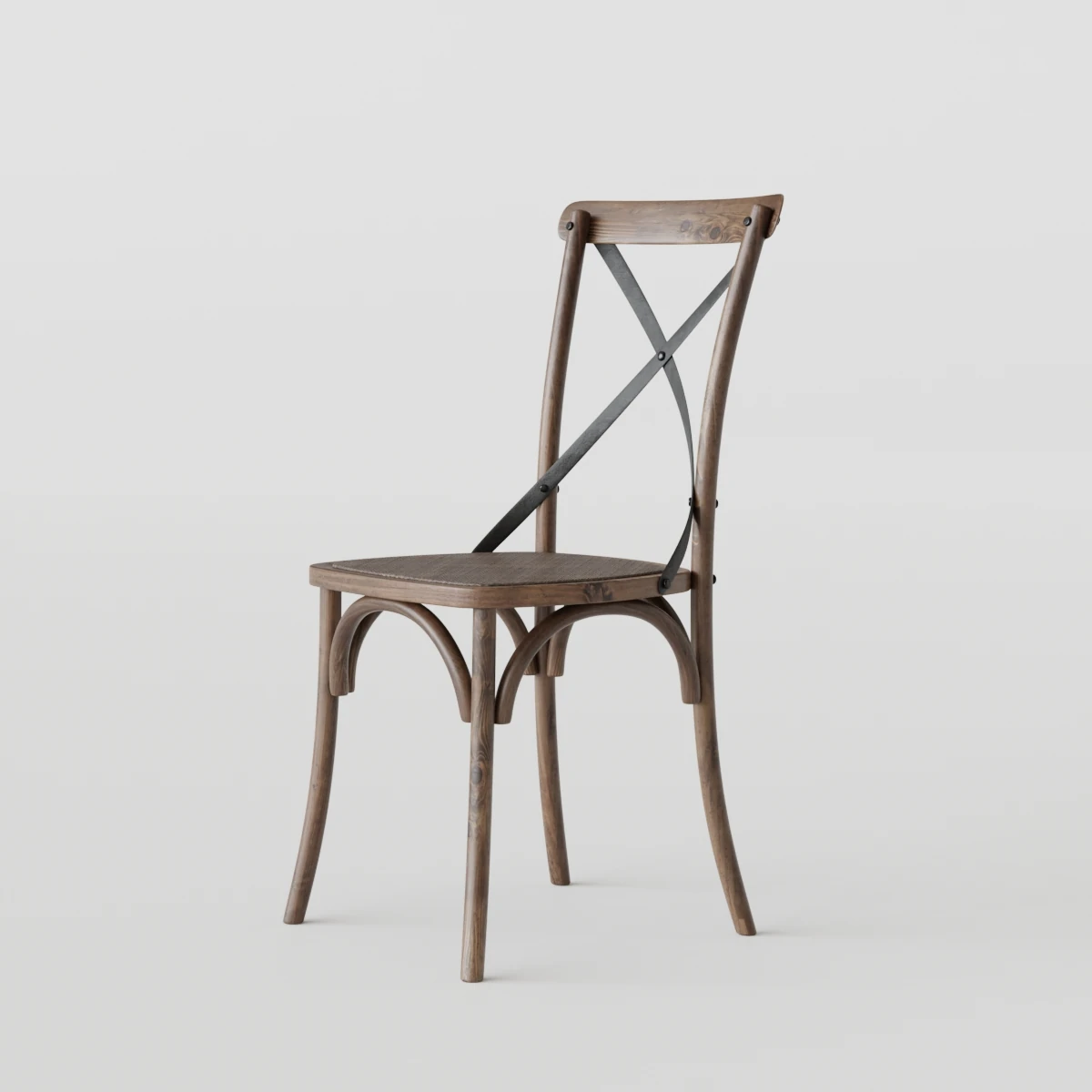
Outdoor sizing follows three patterns. Balconies under 4 m² take a folding bistro set, nothing else. Mid-sized terraces (4 to 12 m²) take a 4-person dining set or a 2-seat sofa with a coffee table. Larger gardens accept a 6-person set plus a lounge zone.
- Balcony, under 4 m²: 60 to 70 cm bistro table, 2 folding chairs, total footprint 1.2 m²
- Small terrace, 4 to 8 m²: 4-person dining set OR 2-seat lounge sofa with coffee table
- Medium terrace, 8 to 12 m²: 4 to 6-person dining set, no lounge
- Garden, 12 m² plus: 6-person dining zone plus separate lounge zone of 2 armchairs and a coffee table
Chair pull-back clearance is the figure most buyers forget. Each dining chair needs 75 cm behind it to push back from the table comfortably. A 4-person set with chairs all around the table needs 2.4 by 2.4 m of usable space, not the 1.4 by 0.8 m of the table itself. For dimensioning a full dining setup, our dining tables buying guide covers the same clearance rules indoors. For a complete outdoor-specific sizing worksheet, see our patio furniture sizing guide.
Three families that translate outdoors
Indoor furniture style does not always carry to outdoors. Three families do, cleanly: Scandinavian outdoor, Japandi terrace, and Mediterranean. Each picks different materials and sits in a different palette.
Scandinavian outdoor
Pale teak or untreated FSC eucalyptus left to grey naturally. Clean lines, low backrests, no ornament. Cushions in linen-look outdoor fabric, off-white or oat. Reads at home on a Copenhagen rooftop and on a Munich back garden equally.
See the indoor counterpart in our Scandinavian furniture guide.
Japandi terrace
Darker teak or oiled iroko with synthetic rattan accents. Lower seat heights (40 to 42 cm versus the standard 45). Earthy palette: charcoal, terracotta, deep moss. Works on a covered Amsterdam terrace and on a Lyon courtyard alike.
See the full style at our Japandi interior guide.
Mediterranean
Powder-coated aluminium frames in matte white or anthracite, paired with cushions in saturated colours (terracotta, olive, navy). Open-weave seating, often synthetic rattan or rope-wrapped. Reads correct under the Provence sun and on a Barcelona patio.
The right palette depends on your wall colour and floor tile, not on the catalogue photo.
Winter: what comes in, what stays out
Three rules cover winter storage for outdoor furniture. Cushions and natural rattan always come indoors or into a dry shed. Hardwood, polywood, and aluminium stay outside without damage. Cast iron needs covering or repainting on a 2 to 3 year cycle.
Choose garden furniture that lasts
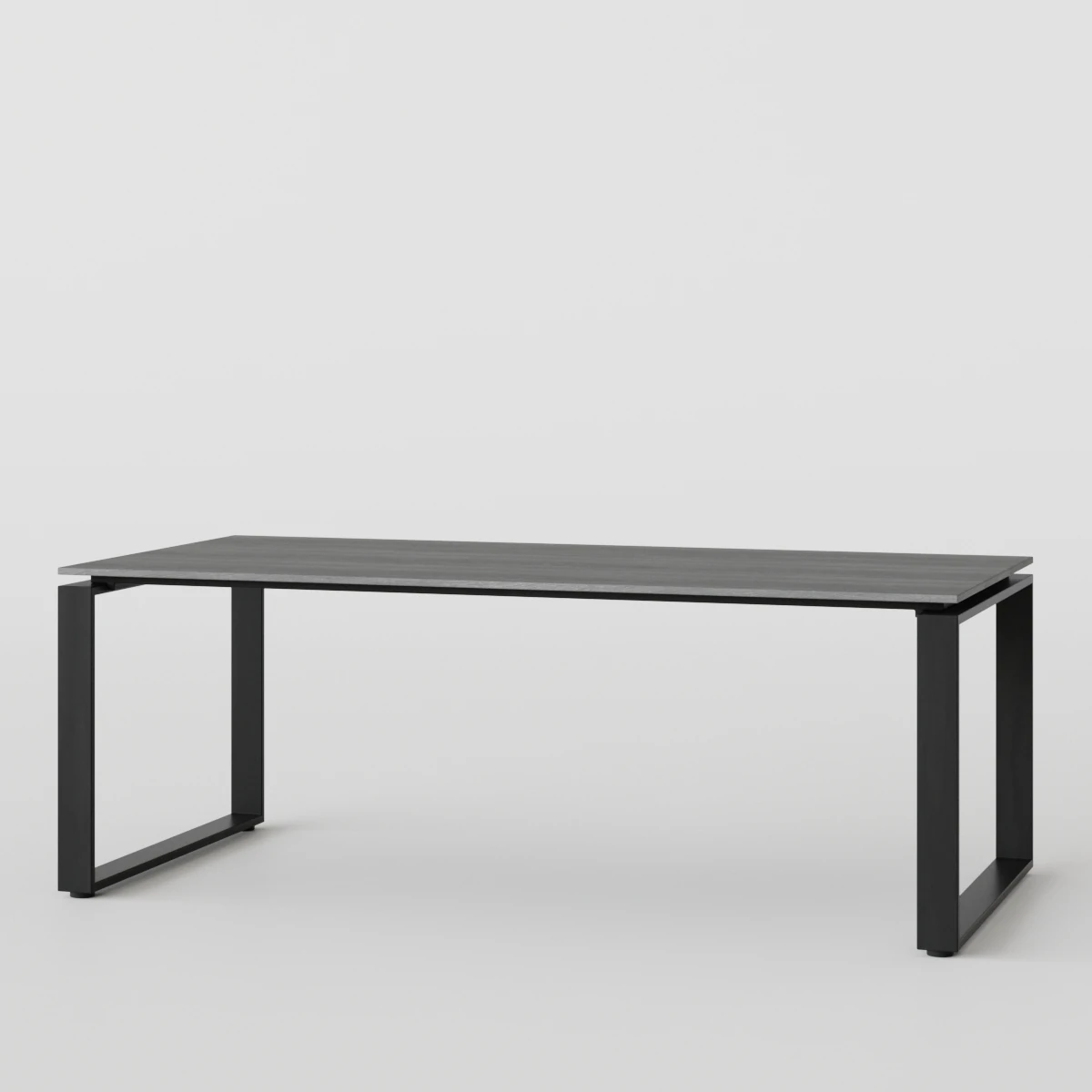
A full 4-person outdoor setup built to last 15 years is FSC teak, powder-coated aluminium, or solid polywood: the three materials that hold up through European weather with minimal maintenance.
Single statement pieces (a teak bench, a polywood Adirondack, a 2-seat aluminium sofa) are the entry point. A 4-person dining set with chairs is the mid tier. A lounge group of sofa, two armchairs, and a coffee table is the full outdoor living setup. Below the quality threshold for each tier, you are buying replacement cycles, not furniture.
Browse our outdoor furniture selection. For deeper coverage on specific outdoor topics, see our garden bench guide, our rattan garden bench guide, our garden table design guide, our teak care guide, our balcony furniture for small spaces, or the garden furniture sets comparison.
If you want a softer woven aesthetic outdoors, our rattan furniture guide covers where synthetic rattan beats natural and where neither belongs.
Frequently asked.
What is the most durable garden furniture material?
Teak is the most durable, lasting 20 to 25 years untreated in climates. FSC eucalyptus lasts 12 to 18 years for roughly two-thirds the price. Powder-coated aluminium lasts 15 to 20 years and never rusts. Synthetic rattan over aluminium lasts 8 to 12 years fully exposed. Polywood (recycled HDPE) lasts 20+ years and is the most maintenance-free option of the five.
Can garden furniture stay outside in winter?
Teak, FSC eucalyptus, polywood, and powder-coated aluminium pieces stay outside year-round in most climates without structural damage. Use a breathable cover during prolonged wet stretches. Cushions and natural rattan always come indoors. Cast iron needs a rust-resistant coat every 2 to 3 years if left exposed in coastal or northern regions.
How much patio space do I need for a 4-person dining set?
A 4-person outdoor dining set needs roughly 2.4 by 2.4 metres of usable floor area. The table footprint is about 80 by 140 cm, and each chair needs 75 cm of pull-back clearance behind it. For 6 people, plan for 2.6 by 3.0 metres. Add 60 cm against any wall, and 90 cm if the chairs face a planted edge to leave room for growth.
Is polywood real wood?
Polywood is not wood. It is recycled high-density polyethylene (HDPE) milled and finished to look like painted wood. It does not splinter, fade, rot, or absorb water. It is heavier than aluminium and harder to move, but it is the closest thing to a fit-and-forget outdoor material on the market. Most polywood pieces carry 20-year structural warranties.
What is the best garden furniture for small balconies?
For balconies under 4 square metres, choose a folding bistro table (60 to 70 cm diameter) with two folding chairs in powder-coated aluminium or FSC acacia. Total footprint under 1.2 square metres when set up. Wall-mounted drop-leaf tables save more space. Avoid loungers and full dining sets on small balconies, they look right in the photo and become unusable in practice.
How much should I budget for a full garden furniture set?
A full 4-person outdoor dining set, well-made and built to last 15 years, costs 599 to 1,299 euros. A lounge sofa setup with two armchairs and a coffee table sits between 1,200 and 2,800 euros. Single statement pieces (a teak bench, a polywood Adirondack) sit between 199 and 599 euros. Below 400 euros for a full set usually means a 3 to 5 season lifespan.
