 9800+ TRUSTPILOT REVIEWS


 EN
EN DE
DE FR
FR NL
NL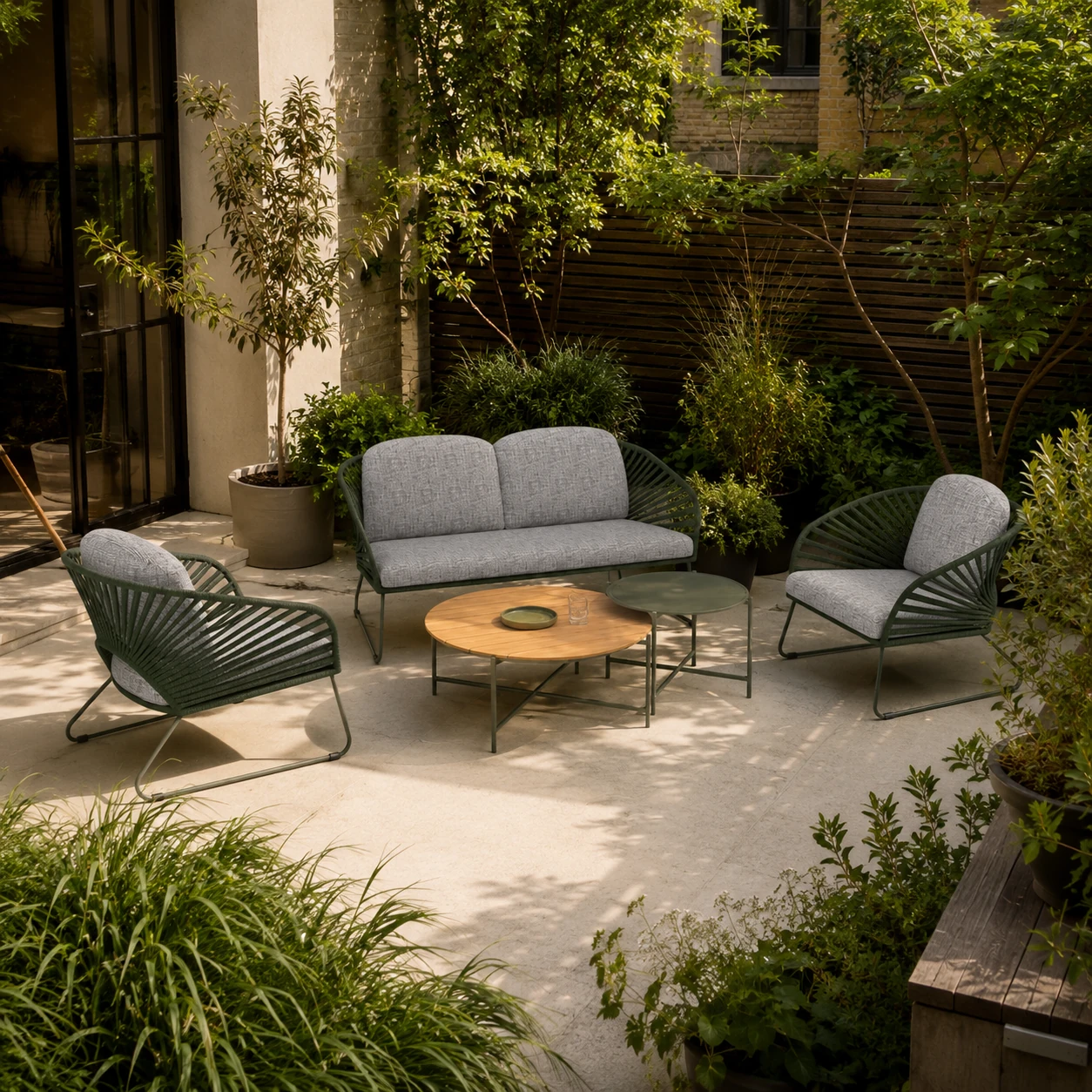
A rattan garden bench on a small EU back garden looks like an obvious choice until you find out that half of what gets sold as rattan loosens within three summers. Natural rattan is an indoor material wearing a costume. Synthetic rattan over aluminium is what you actually want.
This guide separates natural from synthetic, the specs that decide whether a bench lasts 3 years or 12 (UV hours, frame material, fibre core), how to maintain rattan in weather, and realistic price ranges for benches built to hold up. Sizes in cm, prices in euros, climate context from Amsterdam wet springs to Provence summer sun.
Which rattan actually belongs outdoors
Natural rattan comes from a climbing palm in Southeast Asia. It is porous. a winter hits it hard: moisture soaks in, frost expands what is inside, the weave loosens. Three seasons, maximum. It belongs indoors, or on a fully covered, dry terrace through summer.
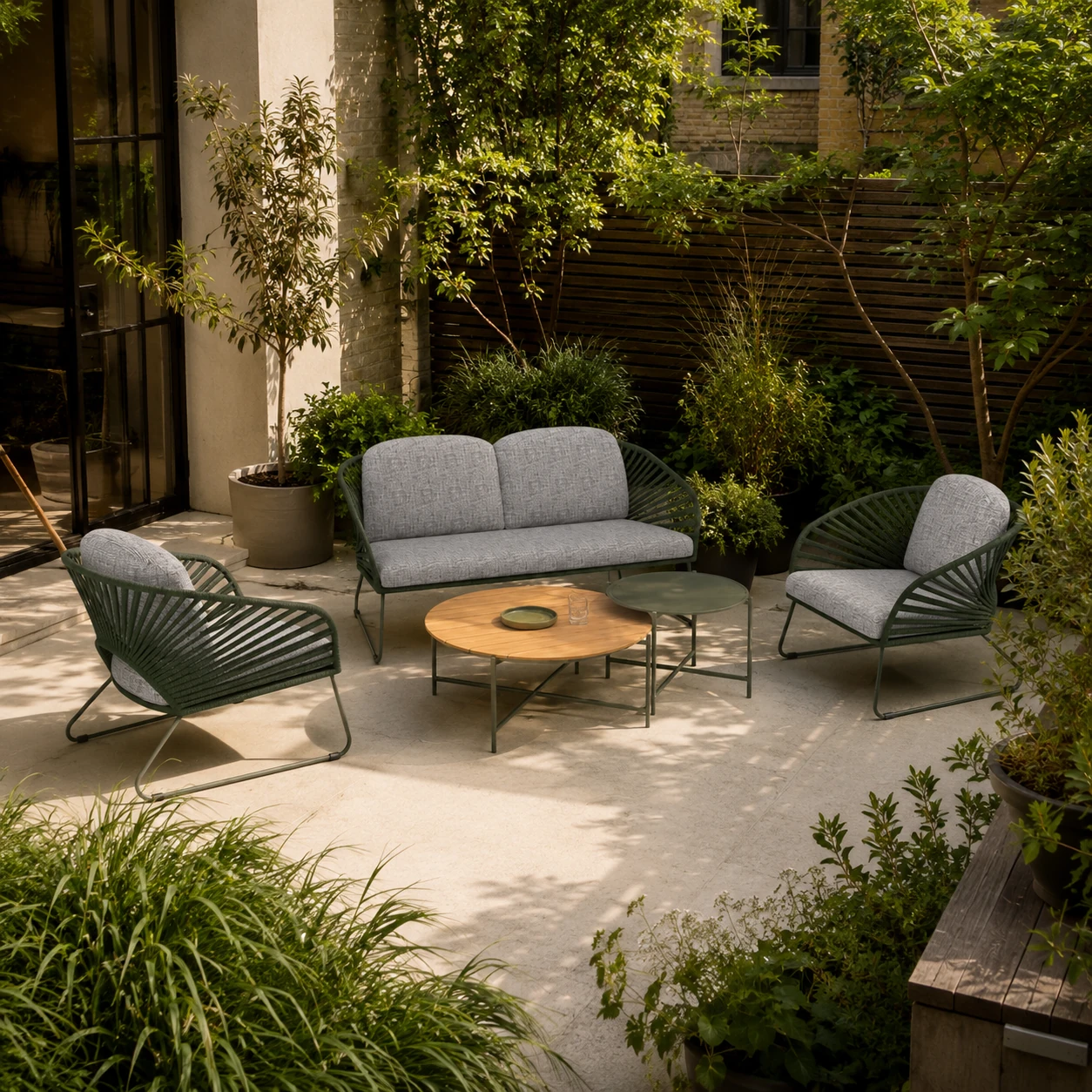
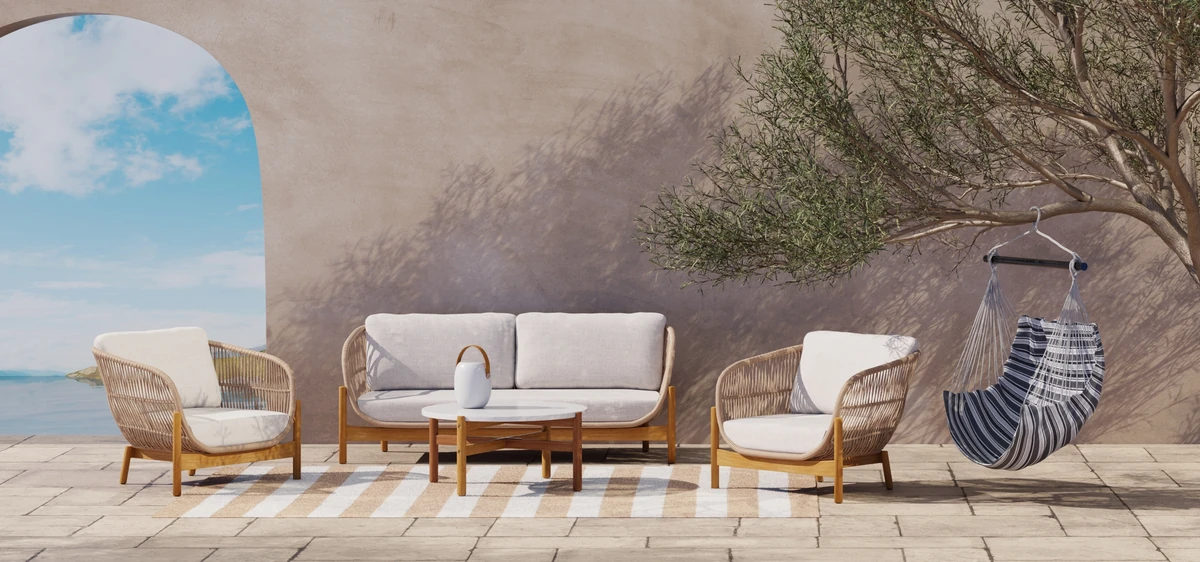
Synthetic rattan is UV-stabilised PE fibre woven over a powder-coated aluminium frame. The fibre does not absorb moisture, the frame does not rust, the structure holds for 10+ years. That is what an outdoor bench in the EU actually is. Not all "polyrattan" is equal: cheap PVC imitation cracks in 3 winters.
- Natural rattan: indoors or summer-only on dry cover
- UV-stabilised PE on aluminium: real outdoor furniture, 10+ years
- PVC rattan: 2 to 3 years, avoid below 200 euros
- Fibre core: solid PE creaks less than hollow PE
Three numbers that decide lifespan
Not every "rattan garden bench" is the same product. Three specs separate a 3-year bench from a 12-year bench. Ask for them before buying if they are not on the listing.
UV testing
Good synthetic rattan fibre is tested in a UV chamber for 1500 to 2500 hours before measurable colour shift. Below 1000 hours, the fibre is not stable for summer sun and will fade visibly within 4 to 6 years.
Ask for the ISO test report. Honest manufacturers have it ready.
Frame material
The weave is not the load-bearing structure. The frame beneath holds the bench together. Aluminium with powder coating does not rust, even if the coating chips. Steel frames rust at the welds within 5 years in humid climates.
Lift the bench: aluminium is noticeably light for the size.
Fibre construction
Solid PE fibres (filled cross-section) hold shape better under repeat sitting. Hollow fibres dent and creak with daily use. Good benches use solid or semi-solid profiles, recognisable by a matte side sheen and slightly more weight.
Cheap benches pad out with thin hollow profile that splits in season three.
Featured in this guide



Which bench fits which garden
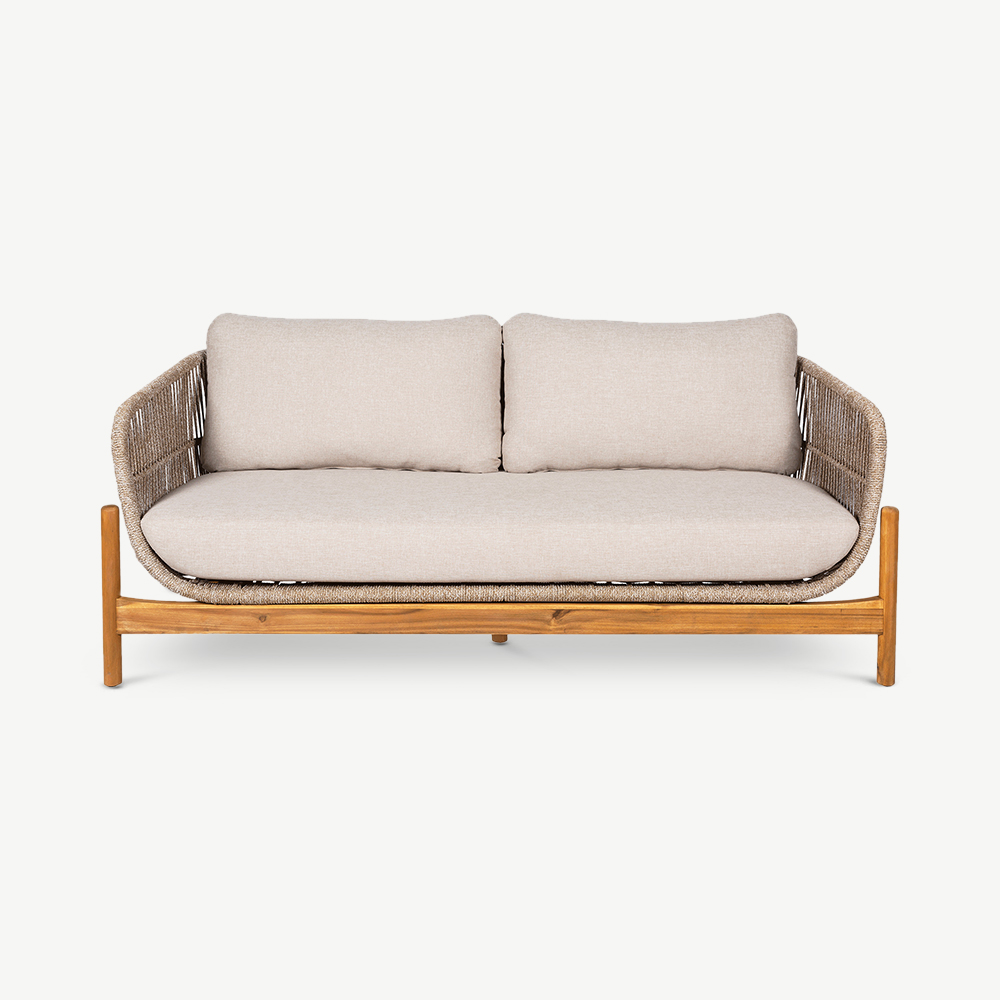
Rattan garden benches come in three main shapes: straight 2-seat for path or wall placement, 3-seat lounge with separate cushions, and modular corner pieces for a larger conversation set. The right choice depends on square metres and how often you actually seat two people simultaneously.
| Type | Size (W x D x H) | Price range |
|---|---|---|
| Straight 2-seat, classic | 120 x 65 x 85 cm | 249 to 449 euros |
| Lounge 2-seat, deep | 140 x 85 x 75 cm | 399 to 649 euros |
| Lounge 3-seat with cushions | 200 x 85 x 75 cm | 599 to 999 euros |
| Corner module per piece | 85 x 85 x 75 cm | 299 to 499 euros |
For Japandi terraces, pair dark brown or anthracite weave with low backs (75 cm) and earth-tone cushions. For Scandinavian outdoor, combine light or natural rattan with a white or matte black frame and linen-coloured cushions. Our Scandinavian furniture guide and Japandi interior guide cover both styles in full.
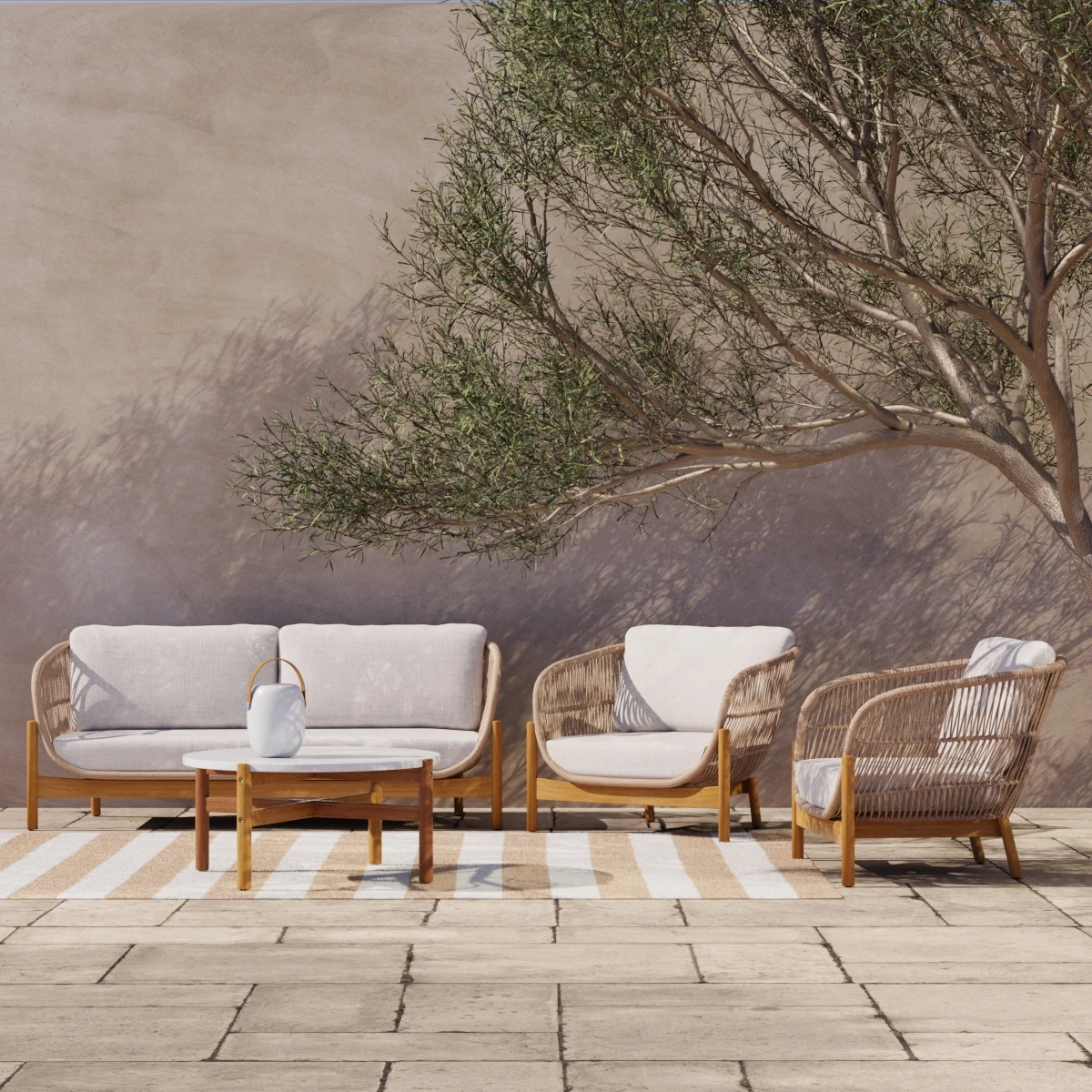
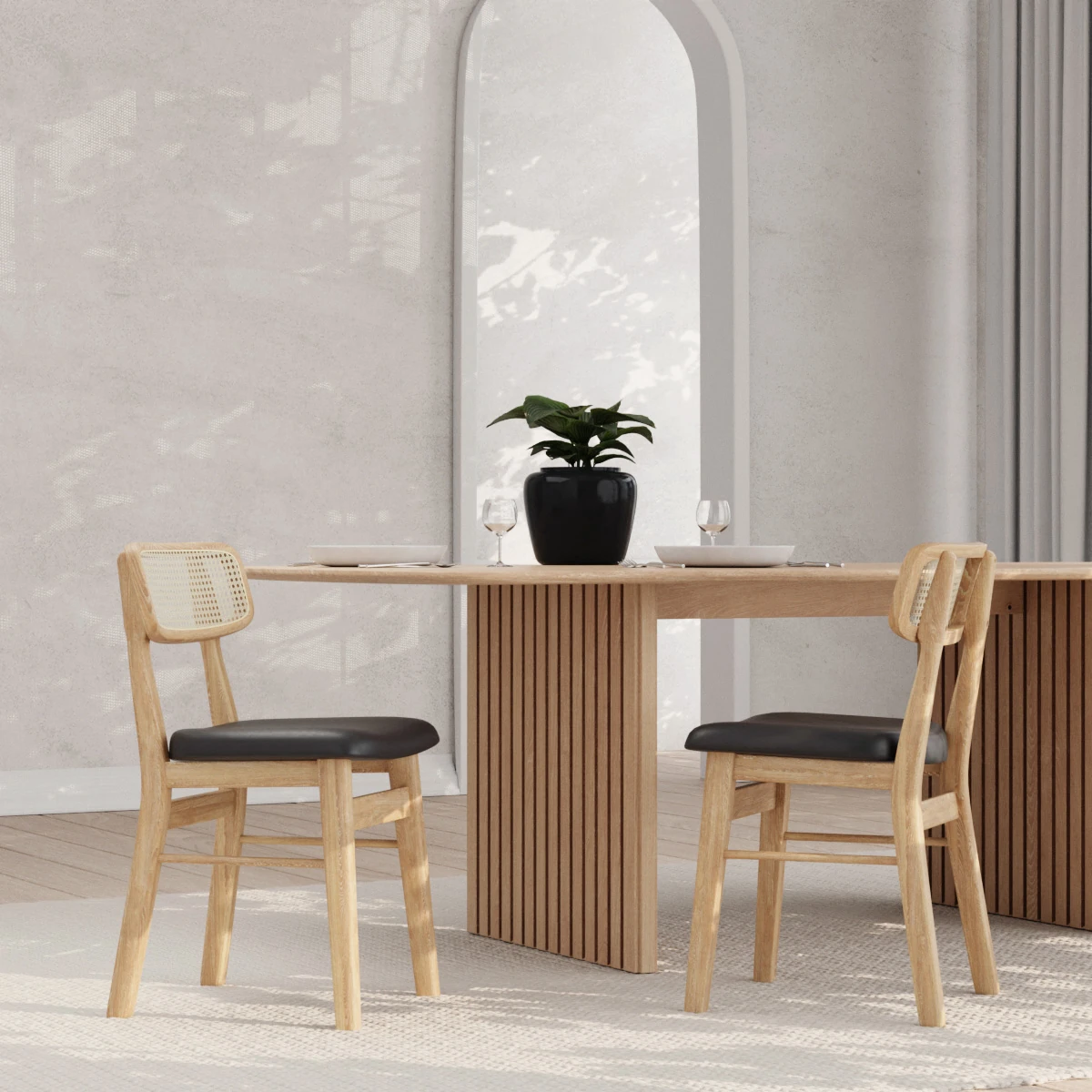
Keeping rattan good for ten years
Synthetic rattan maintenance is light but regular. Wipe twice a year, take cushions inside in rain, do not use a pressure washer on full power. Those three habits get you to 10 years without surprises.
What a good rattan garden bench costs
A synthetic rattan bench built to last uses UV-stabilised PE fibre on a powder-coated aluminium frame with solid-profile weave.
Below the quality threshold, the fibre is thin PVC or hollow PE that breaks in three seasons. Well-made benches use UV-stabilised PE on a powder-coated aluminium frame with solid-profile weave. Lounge benches come with full cushion packages included. Above the durable tier, you are paying for designer naming, not for a longer-lasting bench.
Browse our outdoor furniture selection and our rattan furniture collection. For the wider rattan context, our rattan furniture guide. For the wider outdoor picture, our garden furniture buying guide.
Looking for a wooden alternative? Our garden bench buying guide covers teak, eucalyptus, and aluminium benches for those who would rather skip the weave entirely.
Frequently asked.
Can natural rattan benches stay outside?
Not long term. Natural rattan absorbs moisture and the weave loosens within 2 to 3 seasons. On a fully covered, dry terrace it can sit through summer, but it comes indoors by October. For year-round outdoor use, choose synthetic rattan on an aluminium frame.
How long does a synthetic rattan bench last?
A well-made synthetic rattan bench lasts 8 to 12 years fully exposed and up to 18 years on a covered terrace. The frame is powder-coated aluminium with UV-stabilised PE fibre rated for at least 1500 hours of UV exposure. Cheap polyrattan is thin PVC and cracks within 3 years.
What does a rattan garden bench cost?
A well-made 2-person synthetic rattan bench costs 249 to 549 euros. Below 200 euros, the fibre is thin PVC that cracks in 3 years. Between 249 and 449 euros covers UV-stabilised PE on an aluminium frame that lasts 10+ years. Lounge benches with cushion sets run 599 to 999 euros.
How do you clean a rattan garden bench?
A soft brush with mild soap and warm water, no pressure washer. For synthetic rattan, a low-pressure rinse from 50 cm distance is fine. Rinse with a garden hose and air-dry in shade. Cushions always come off in rain and go indoors or under cover.
What colour of synthetic rattan ages best?
Anthracite and grey-brown fade least visibly under UV. White rattan yellows visibly after 5 to 7 years, especially on south-facing terraces. Black stays sharp but shows dust and pollen faster. For Japandi terraces, warm brown over a matte anthracite frame typically reads best.
Does rattan fit a Scandinavian garden?
Yes, with restrictions. Choose light or natural-coloured synthetic rattan on a white or matte black aluminium frame, low backs, and cushions in linen-look outdoor fabric in off-white or oat. That reads correct on a Copenhagen rooftop and on a Hamburg back garden.
