 9800+ TRUSTPILOT REVIEWS


 EN
EN DE
DE FR
FR NL
NL
A garden bench is the one piece of outdoor furniture most people buy without measuring anything. Then it arrives, sits 8 cm too wide for the path, and ends up wedged against the shed for a decade. The bench itself is fine. The decision was rushed.
This guide covers the four materials that actually hold up to weather, how to size a bench for the path, terrace, or lawn you are putting it on, what to expect in terms of lifespan and care, and where the price differences between a 99 euro bench and a 499 euro bench come from.
Material decides everything else
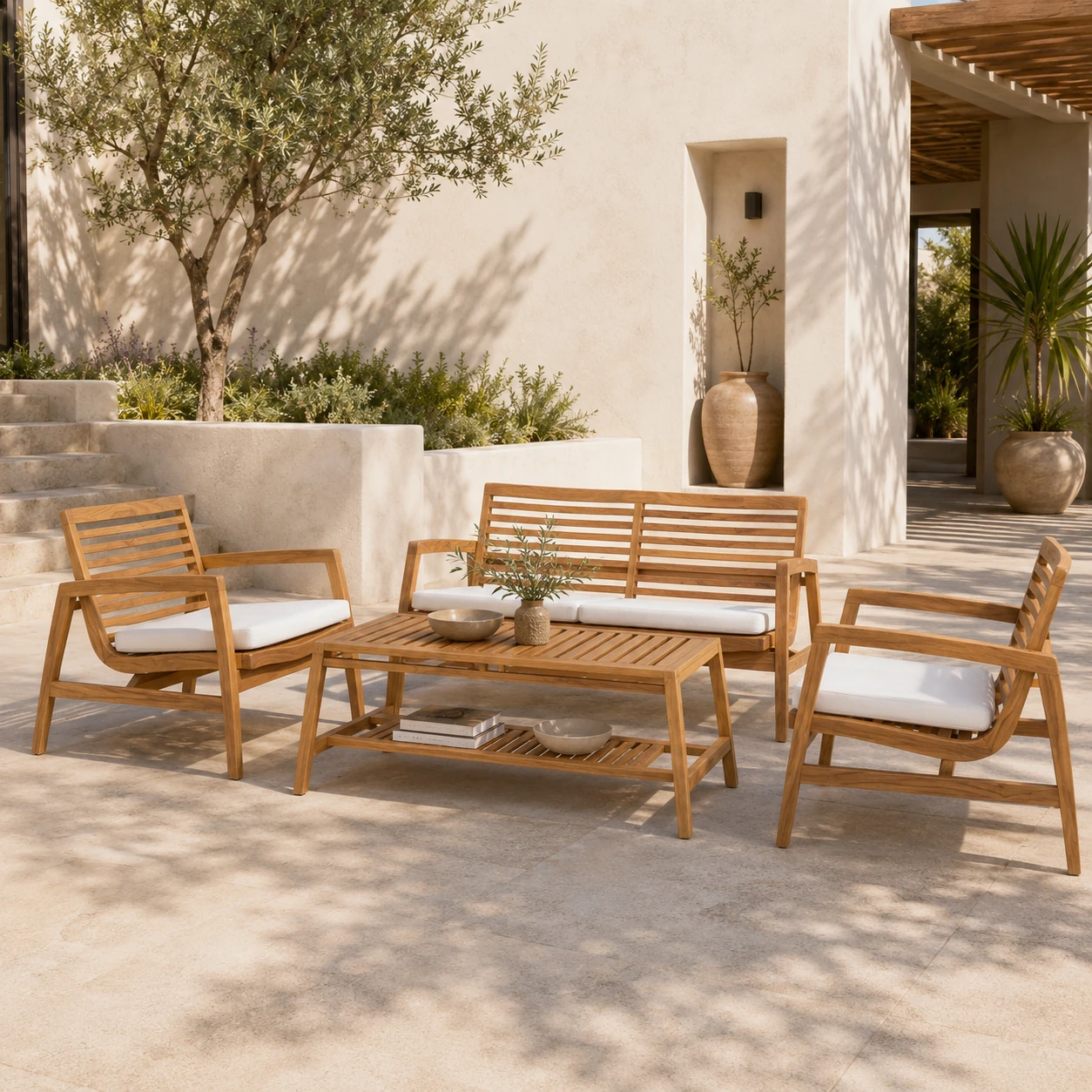
The first decision is what the bench is made of. Material sets the lifespan, the maintenance routine, the weight (which decides whether you can move it), and roughly 60 percent of the price. Style is a downstream choice that follows from material.
In climates, four materials hold up well and one does not. The one that does not is raw pine: cheap, abundant, and warped through by its third winter. Avoid it unless the bench is genuinely temporary.
- Teak: longest-lived, lowest maintenance, highest price
- FSC eucalyptus: teak-like performance, two-thirds of the price
- Powder-coated aluminium: light, rust-proof, modern aesthetic
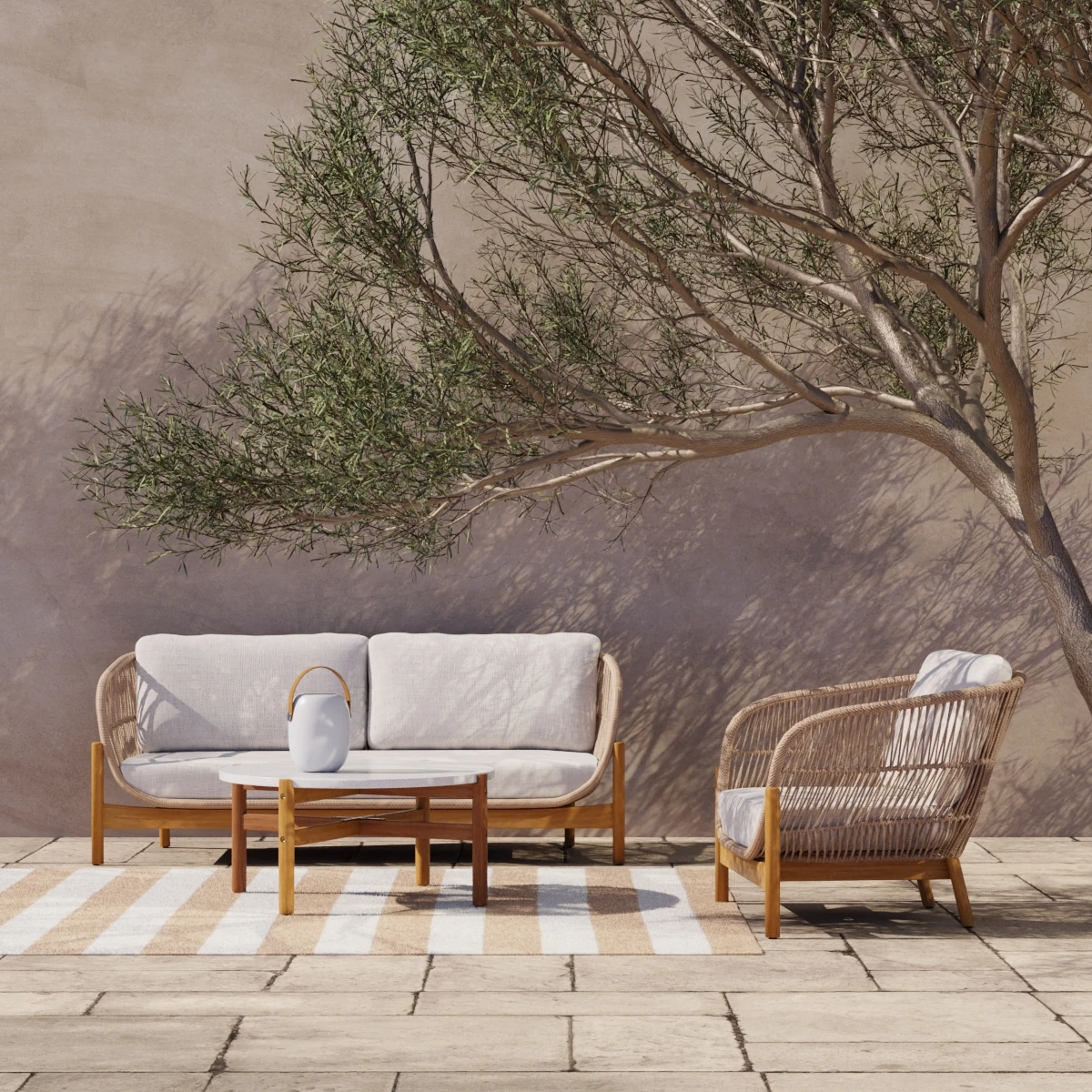
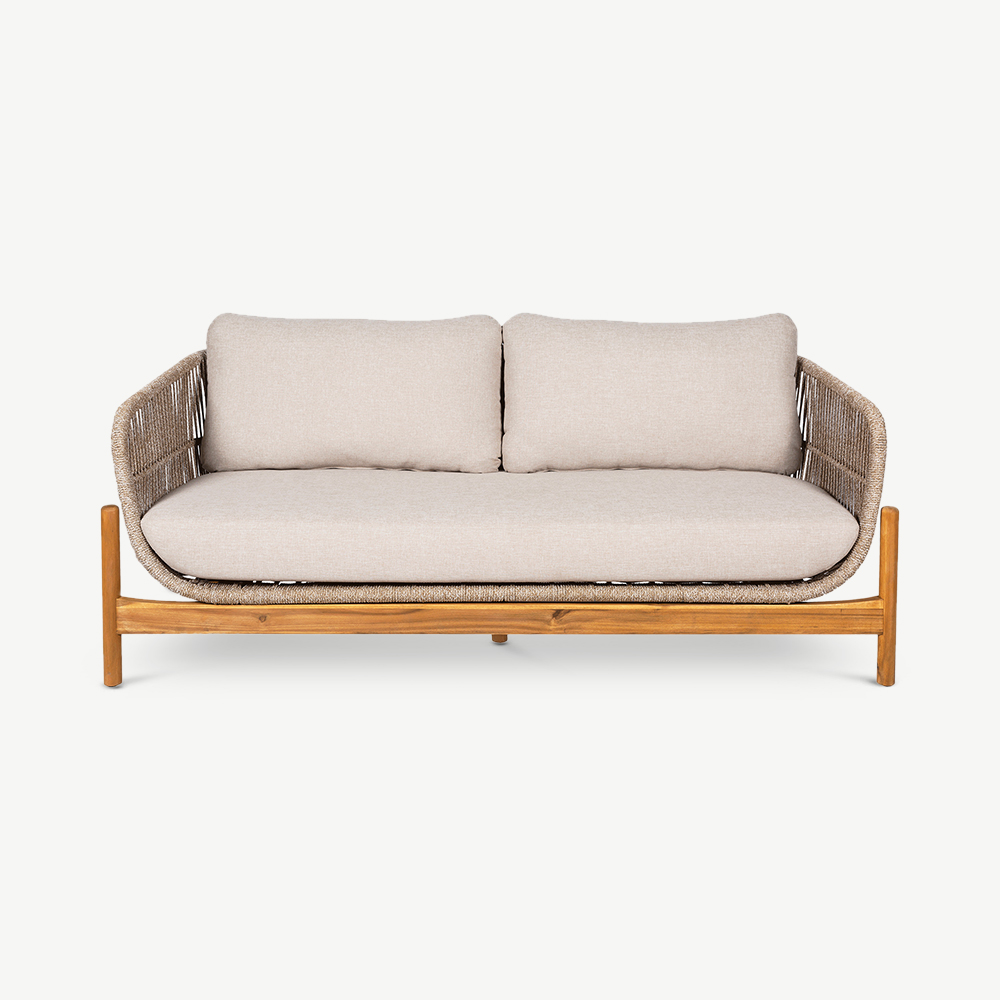
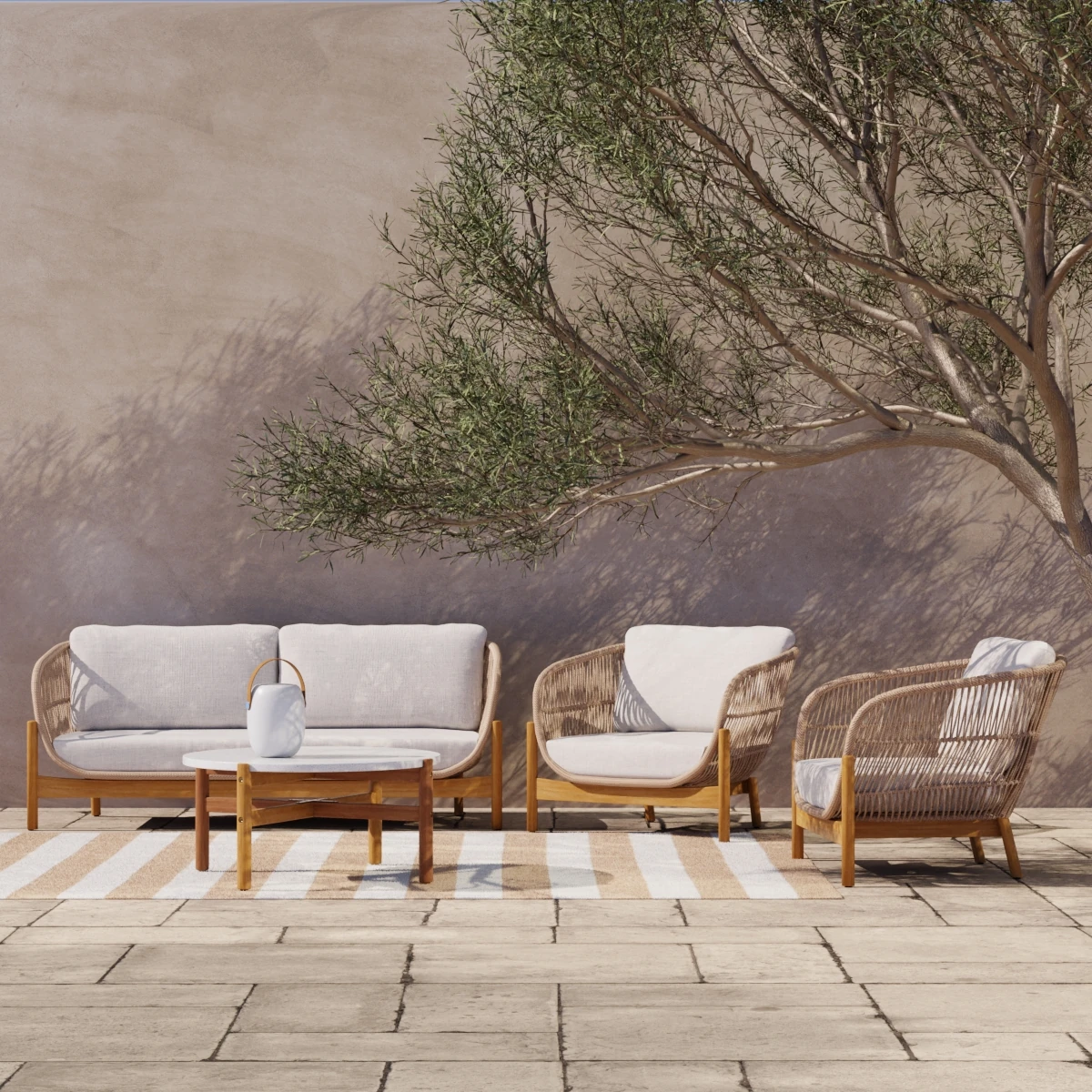
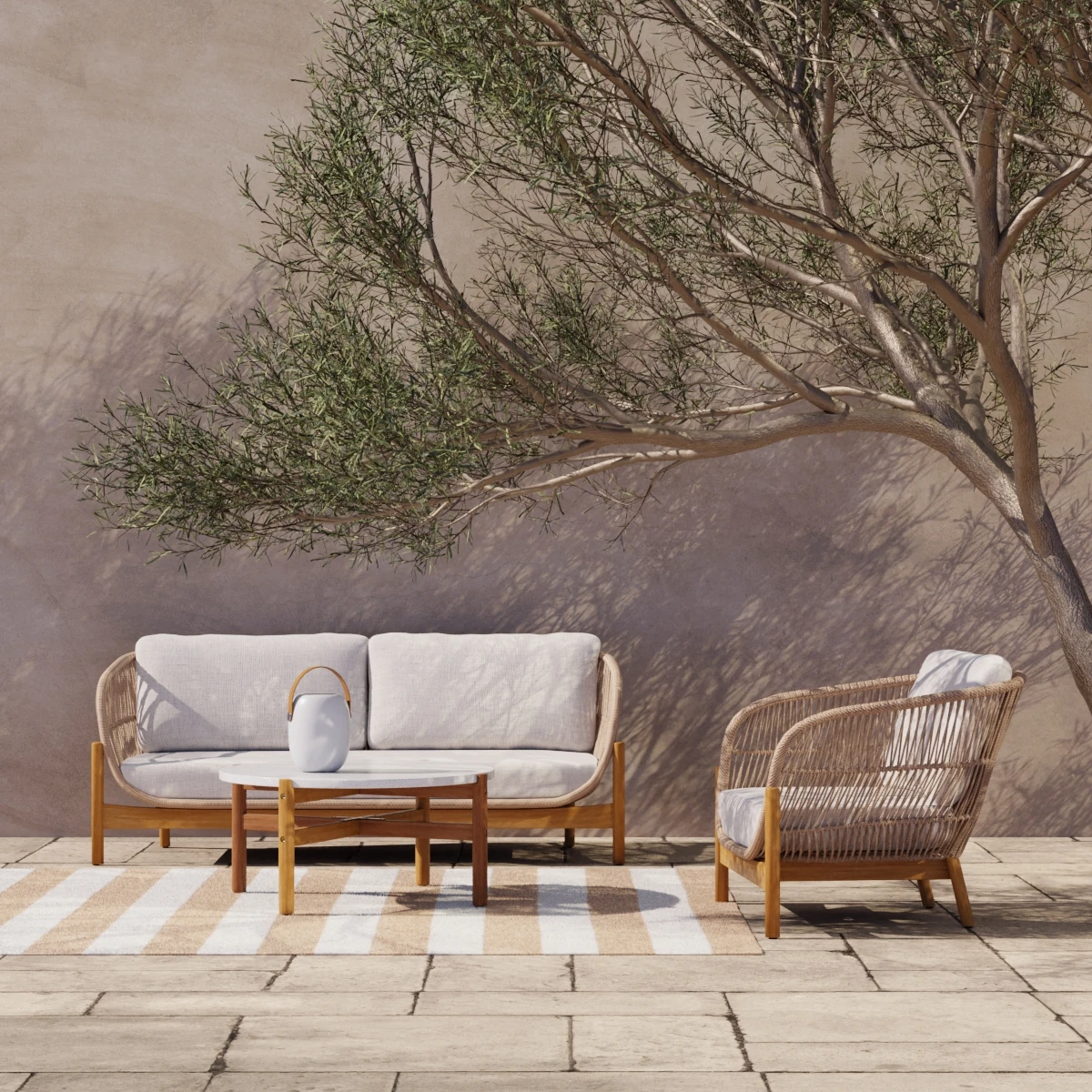
- Synthetic rattan over aluminium: for a softer, woven look outdoors
What each material gives you
The right material depends on three things: how exposed the bench will be, how much you want to maintain it, and what aesthetic suits the rest of the garden.
Teak
Dense tropical hardwood with natural oils that resist water, insects, and fungi. Comes from plantation-grown stock in Indonesia and Myanmar. Look for FSC or PEFC certification on the label.
Untreated teak weathers to a silver-grey patina in 6 to 12 months. The wood underneath stays structurally identical for 20+ years. Mortise-and-tenon joinery is standard at this price tier.
FSC eucalyptus
Fast-growing hardwood with similar density to teak. Less dimensionally stable in extreme humidity swings, but cheaper and just as good for most climates outside coastal southern Europe.
Greys faster than teak. A coat of clear hardwood oil every spring keeps the original red-brown colour. Many of our customers buy eucalyptus when the budget is set at 200 euros rather than 400.
Powder-coated aluminium
Aluminium frame coated in baked-on polyester powder. Looks like painted metal but does not rust, even if the coating chips. Lighter than wood at the same dimensions, which matters if you move the bench seasonally.
The frame holds up indefinitely. The coating may need a touch-up after 10 years on south-facing terraces where UV has faded it. Available in matte black, anthracite, and white most often.
Featured in this guide


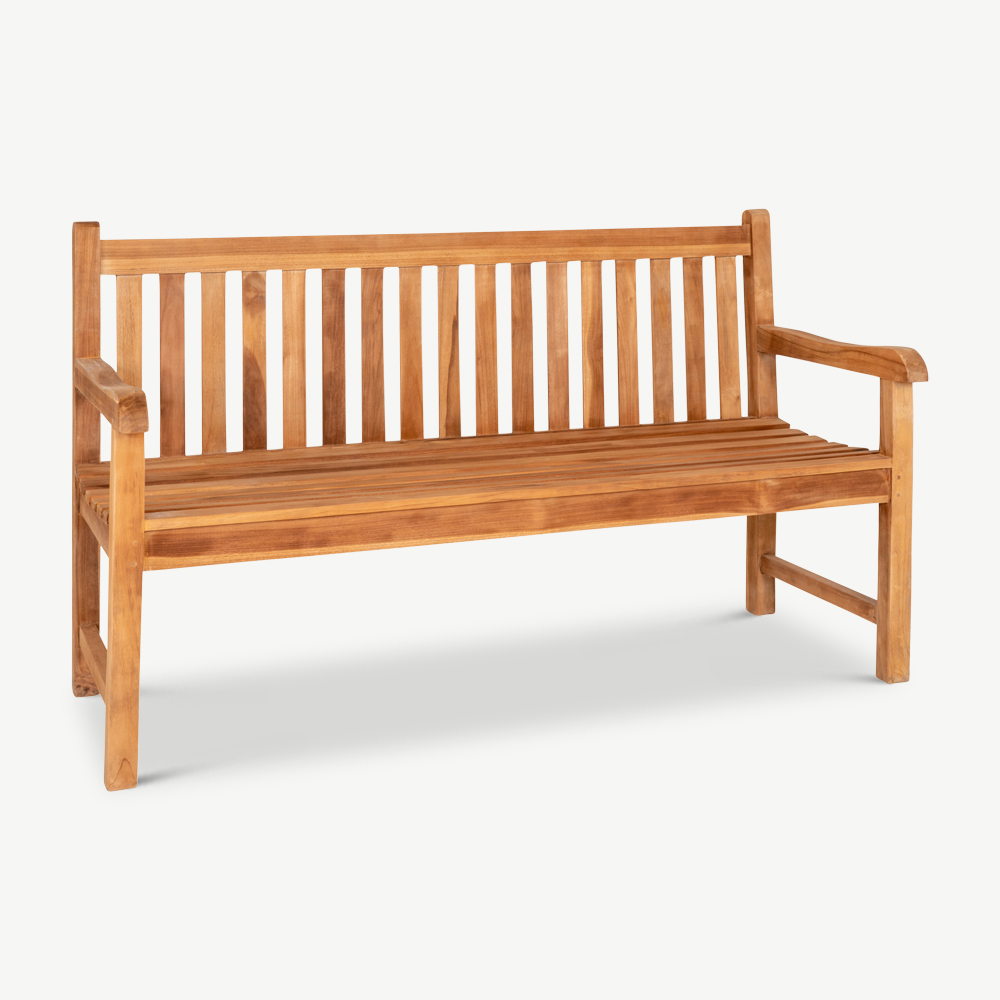
How wide does it actually need to be?
Garden bench sizing comes down to two questions: how many people sit on it, and what path or terrace width does it have to fit. Allow 55 to 60 cm of seat width per adult, plus 10 cm of breathing room on each end. Most EU paths are 80 to 120 cm wide, which is the constraint that catches buyers out.
| Use case | Width | Depth |
|---|---|---|
| 1 person, narrow path | 80 to 100 cm | 38 to 42 cm |
| 2 people, terrace or lawn | 120 to 140 cm | 40 to 45 cm |
| 3 people, larger terrace | 160 to 180 cm | 42 to 48 cm |
| Outdoor dining, against a wall | 160 to 220 cm | 38 to 42 cm |
Bench depth of 40 to 45 cm fits most adults without cushions. Anything deeper than 50 cm asks for a cushion to be comfortable, because the user cannot get their back against the rest without sliding forward. Seat height stays around 42 to 45 cm regardless of width, which matches a 72 cm outdoor dining table.
What it takes to keep it good
Maintenance differs by material. None of the four good options require constant attention. The most common mistake is over-caring, not under-caring: scrubbing teak weekly or repainting aluminium that does not need it.
How much does a good garden bench cost?
A bench that lasts 15 years is FSC eucalyptus, mid-grade teak, or powder-coated aluminium.
Below the quality threshold, the material is almost always raw pine or hollow steel that fails within five seasons. FSC eucalyptus, mid-grade teak, and powder-coated aluminium hold up through 15 winters. Premium teak with mortise-and-tenon joinery lasts long enough to outlive the buyer.
Browse our outdoor furniture selection, spanning FSC eucalyptus, teak, and powder-coated aluminium benches. For the full picture across all outdoor pieces, see our garden furniture buying guide.
If you are drawn to a softer, woven look outdoors, our rattan furniture guide covers how synthetic rattan performs in weather, and where natural rattan stops being a sensible outdoor choice.
Frequently asked.
What is the best material for a garden bench?
Teak is the most durable, lasting 20 to 25 years untreated. FSC eucalyptus offers similar performance for half the price and lasts 12 to 18 years. Powder-coated aluminium suits modern gardens and resists rust for 15 to 20 years. Avoid raw pine, which deteriorates in 3 to 5 years in climates. The cheapest viable option in real terms is FSC eucalyptus around 200 euros, not pine around 80 euros.
How wide should a 2-person garden bench be?
A 2-person garden bench should be 120 to 140 cm wide. Allow 55 to 60 cm of seat width per adult plus 10 cm for elbow space. For 3 seats, go to 160 to 180 cm. Bench depth of 40 to 45 cm fits most body sizes; deeper benches need cushions to be comfortable because the user cannot reach the backrest without sliding forward on the seat.
Do I need to oil a teak garden bench?
Oiling is optional. Untreated teak weathers to a silver-grey patina that is purely cosmetic. The wood underneath remains structurally sound for decades. If you prefer the golden honey colour, apply teak oil once a year in spring after light sanding. Oiled teak shows water rings more visibly than weathered teak, so the maintenance becomes ongoing once you start.
Can I leave a garden bench outside in winter?
Teak, FSC eucalyptus, and aluminium benches stay outside year-round in climates without damage. Cover them with a breathable furniture cover during heavy rain periods to reduce surface staining. Cast-iron benches need a coat of rust-resistant paint every 2 to 3 years if left exposed. Raw pine and untreated softwood benches should come indoors or under cover for winter.
How much should I spend on a garden bench?
A well-made 2-person garden bench costs between 149 and 499 euros. Below 100 euros, expect pine or low-grade hardwood that lasts 3 to 5 seasons. Between 200 and 400 euros covers FSC eucalyptus or solid teak that lasts 15 years or more. Premium teak benches with mortise-and-tenon joinery run 500 to 800 euros and last long enough that the buy-once maths is favourable.
Are rattan garden benches weatherproof?
Only synthetic rattan (PE weave over aluminium) is genuinely weatherproof. Natural rattan absorbs moisture and lasts 2 to 3 years outdoors before the weave loosens. Synthetic rattan benches last 8 to 12 years fully exposed and up to 18 years on a covered terrace. Look for UV-stabilised PE fibre rated for at least 1500 hours of sun exposure on the spec sheet.
