 9800+ TRUSTPILOT REVIEWS


 EN
EN DE
DE FR
FR NL
NL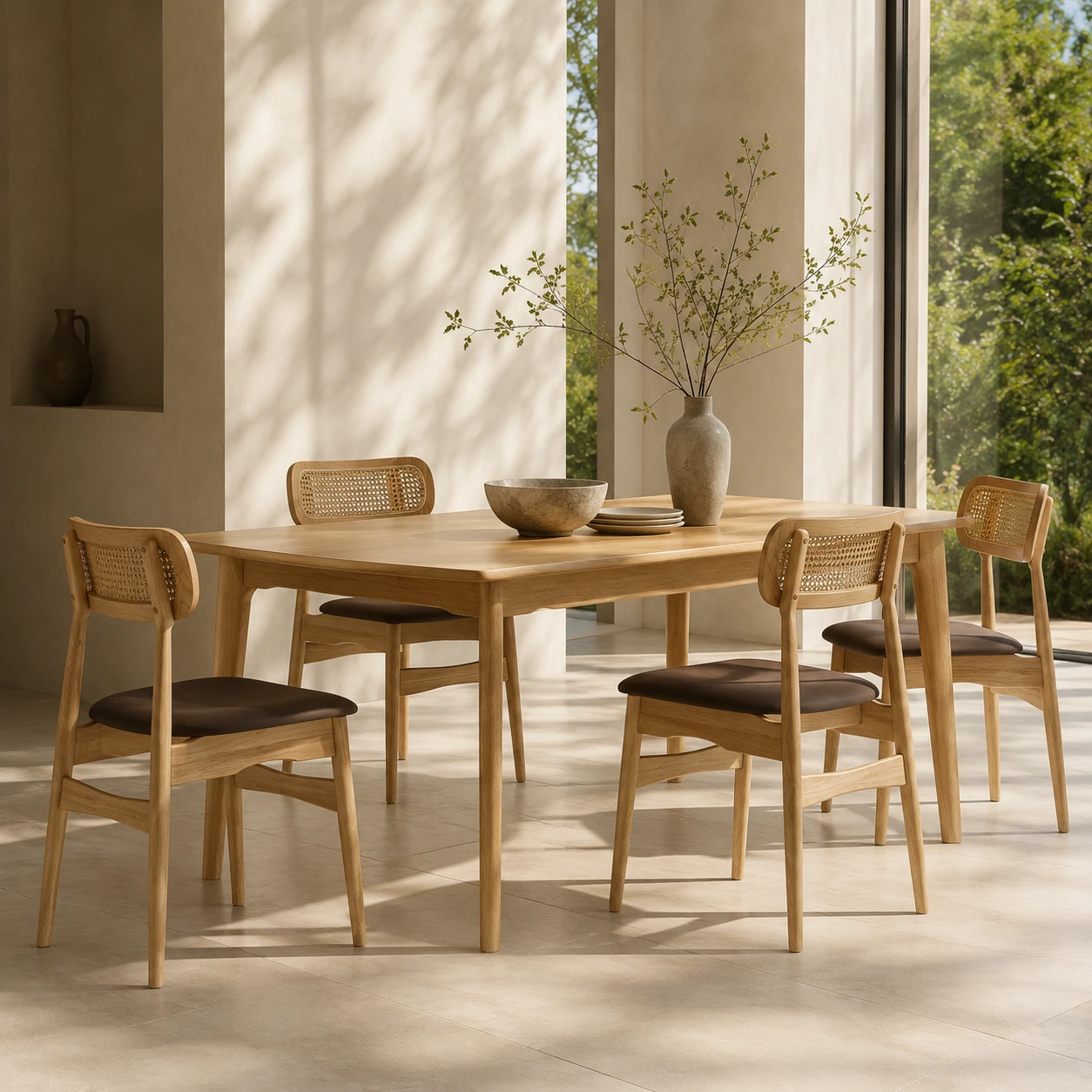
Rattan Furniture: The Complete Buying Guide (2026)
Rattan is the most misunderstood furniture material in the home. Most people confuse the plant with the weaving technique, buy the wrong type for their environment, and end up with furniture that deteriorates within two years instead of lasting fifteen. This guide corrects all three mistakes.
Rattan is a tropical climbing palm. Wicker is a weaving technique that uses rattan, reed, bamboo, or synthetic substitutes. When a product is labelled "rattan furniture," it could mean any of three very different constructions: natural rattan cane, synthetic PE rattan, or a hybrid frame with a woven rattan surface. Each behaves differently indoors versus outdoors, in dry versus humid environments, and under different maintenance regimes. The distinction matters enough that we wrote a dedicated explainer on rattan vs wicker covering the terminology in detail.
This guide covers the three rattan constructions and when each is appropriate, the six furniture categories where rattan excels, a lifespan comparison table, four care habits that distinguish 5-year furniture from 15-year furniture, and answers to the questions that come up most before purchase. The Furnicher rattan collection is referenced throughout as a benchmark for what good looks like in each category.
Natural rattan, PE rattan and hybrid: three very different products
The label "rattan furniture" conceals three distinct constructions with completely different behaviours. Understanding which you are buying determines where the piece can live, how long it will last and how much maintenance it requires.
- Natural rattan cane: The real plant, harvested in Southeast Asia. The stem is steamed, bent and woven to form the structure. Genuinely beautiful, warm to the touch, uniquely repairable. The cane can be re-woven if individual strands break. Natural rattan must stay indoors or in a covered, dry space: prolonged rain and direct sun cause cracking and brittleness. Properly maintained with annual oiling, a quality natural rattan piece lasts 15 to 20 years indoors.
- PE rattan (synthetic wicker): Polyethylene filament wound over a metal or aluminium frame. Weather-resistant, UV-stable in quality grades, and the correct choice for uncovered outdoor use. Lower grades yellow and become brittle within two to three seasons in direct UV exposure. Quality PE rattan on a powder-coated aluminium frame lasts 8 to 12 years outdoors with minimal maintenance. It does not have the warmth of natural rattan but its practical advantages are undeniable.
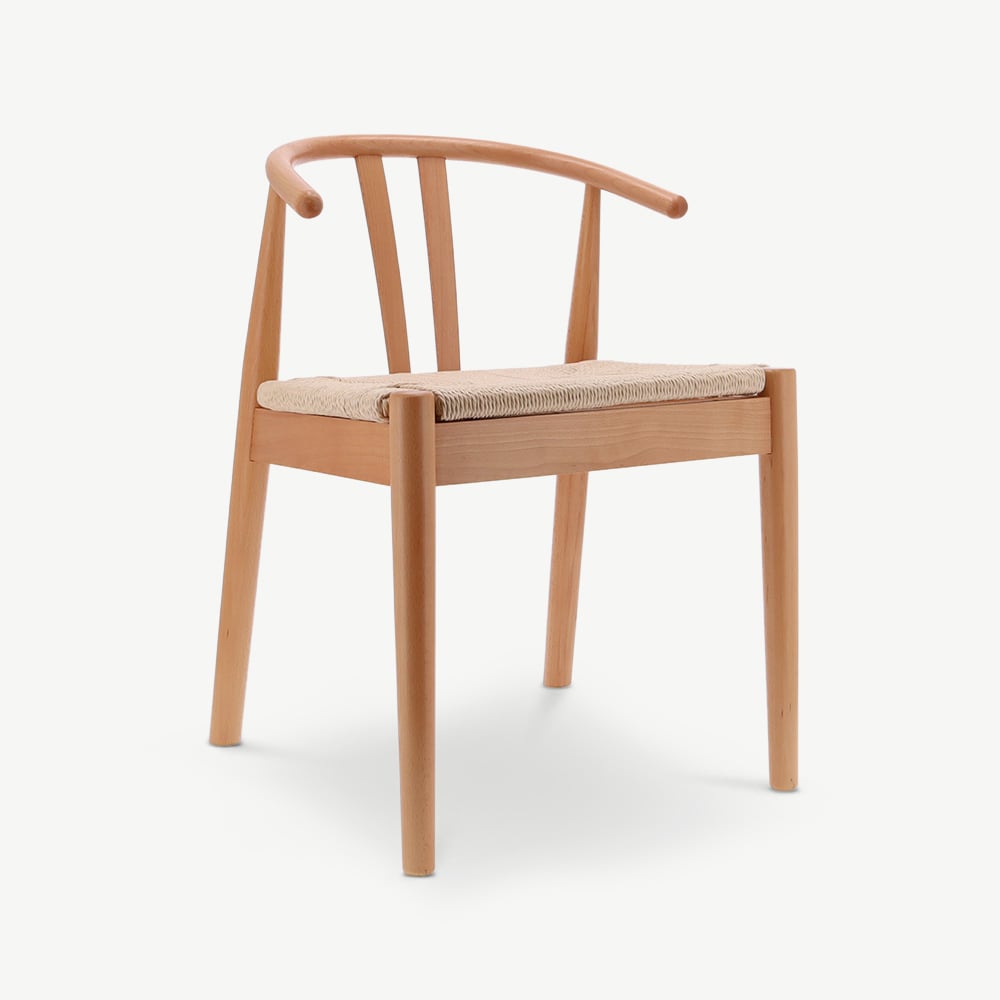
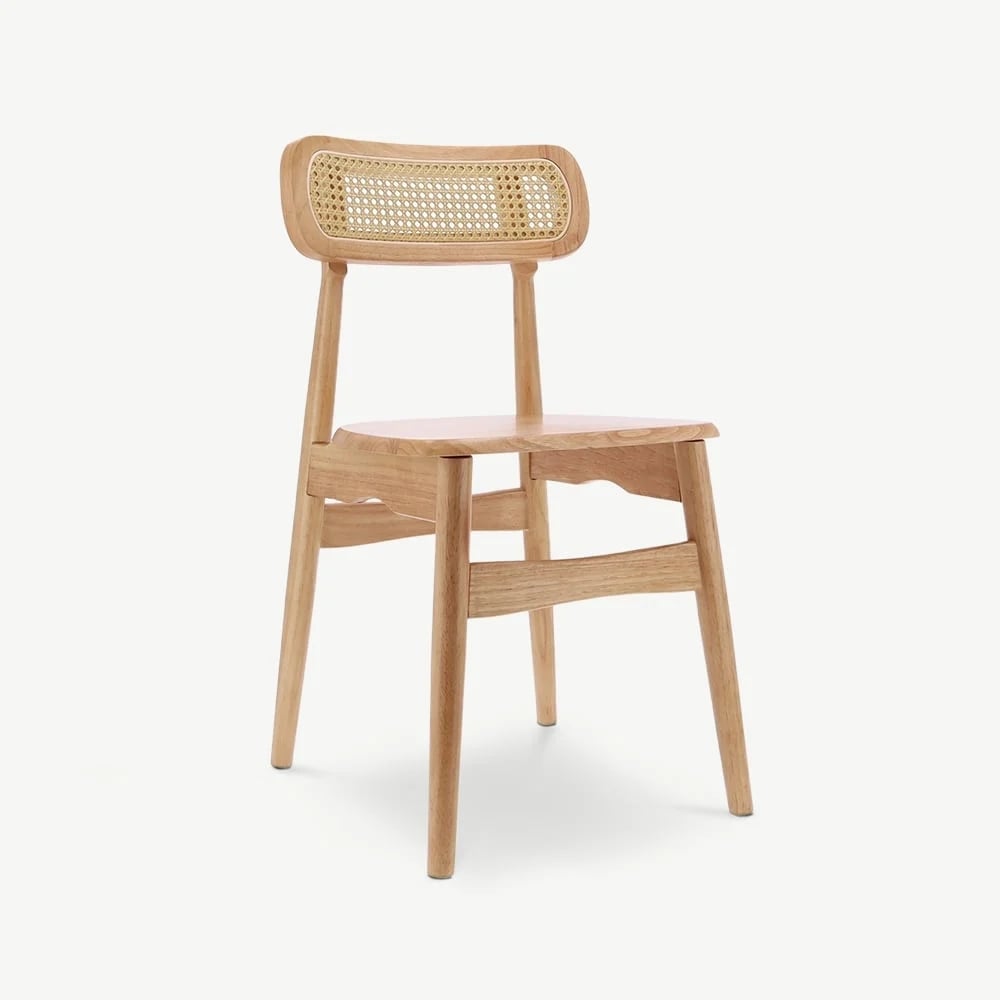
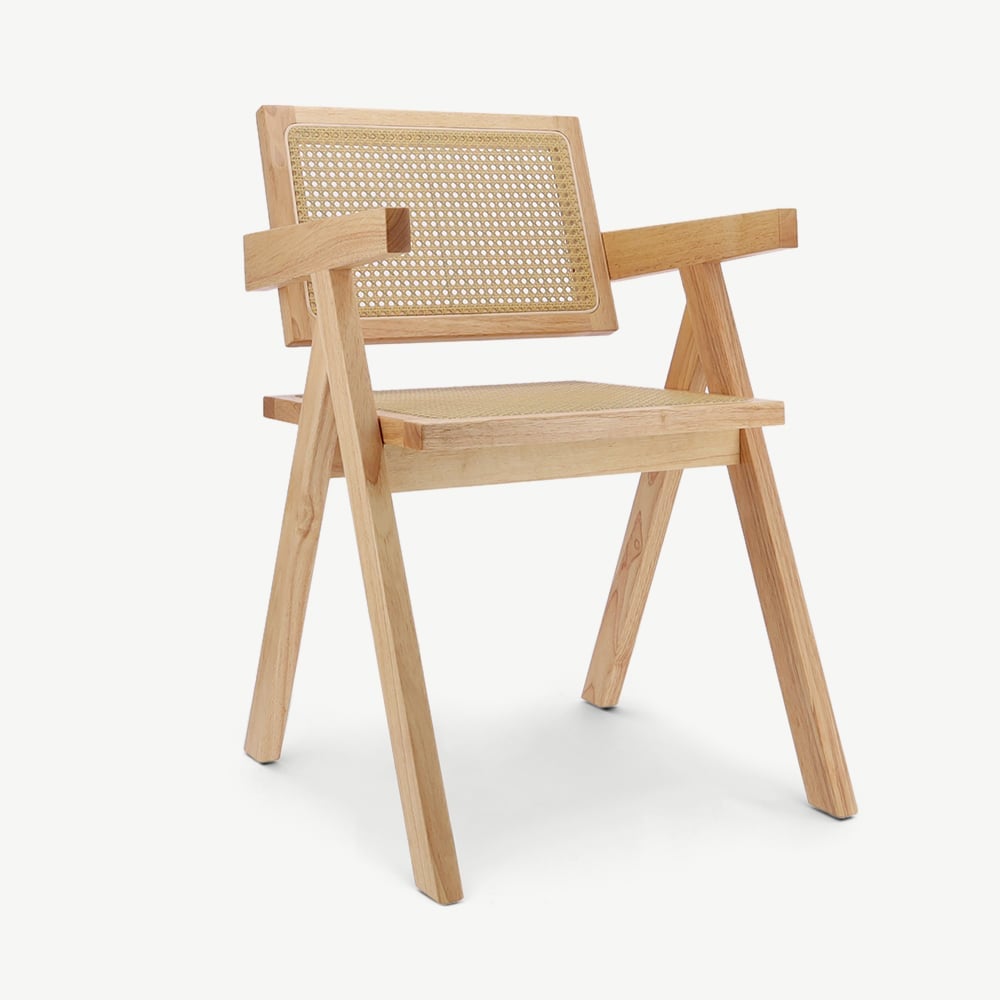
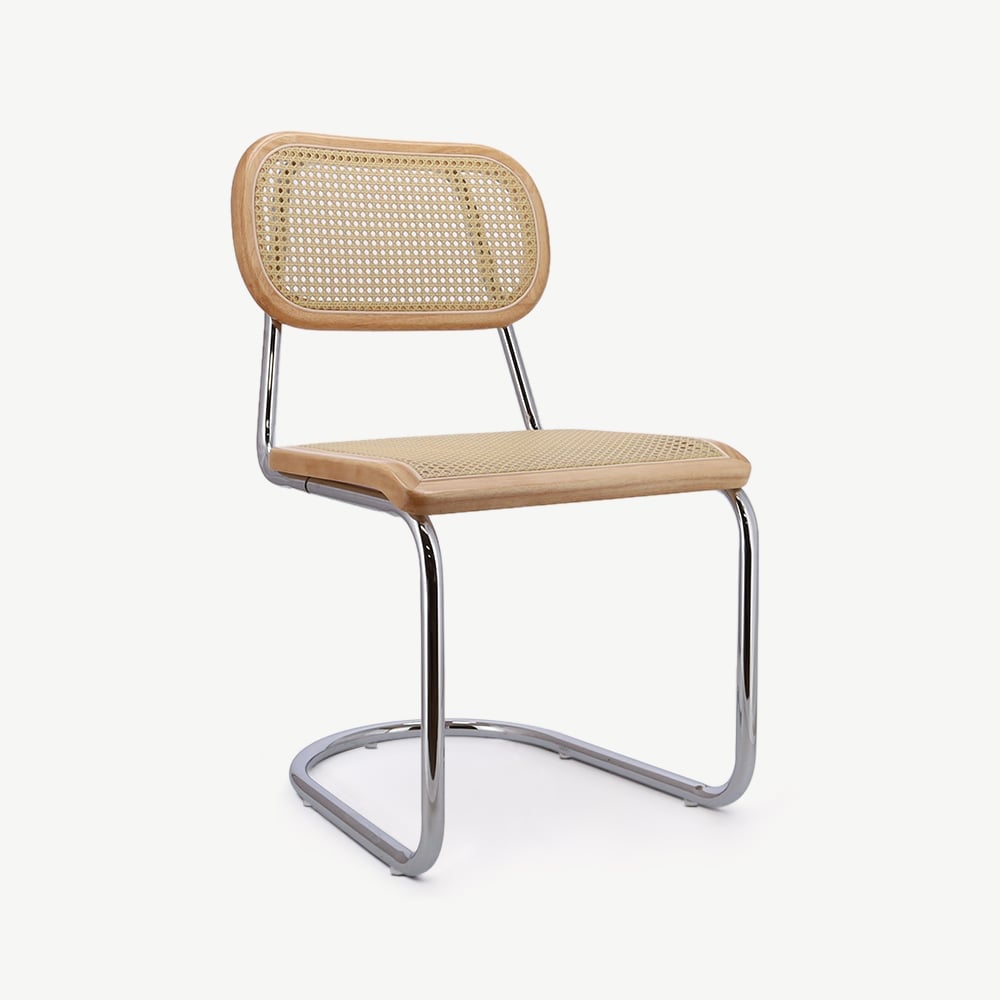
- Hybrid construction: A natural rattan or bamboo frame with a woven rattan surface, sometimes mixed with paper rush cord seats. Very common in dining chairs. The frame provides structural rigidity; the woven surface provides texture and character. Durability depends on both components: a strong frame with a fragile weave will outlive neither. Furnicher hybrid pieces use kiln-dried rattan frames to prevent warping and hand-woven seats rated for long-term indoor use.
Three categories, three rules for choosing right
Rattan furniture spans every room in the home. These are the three most popular categories from the Furnicher collection and the specific questions to ask before buying each.
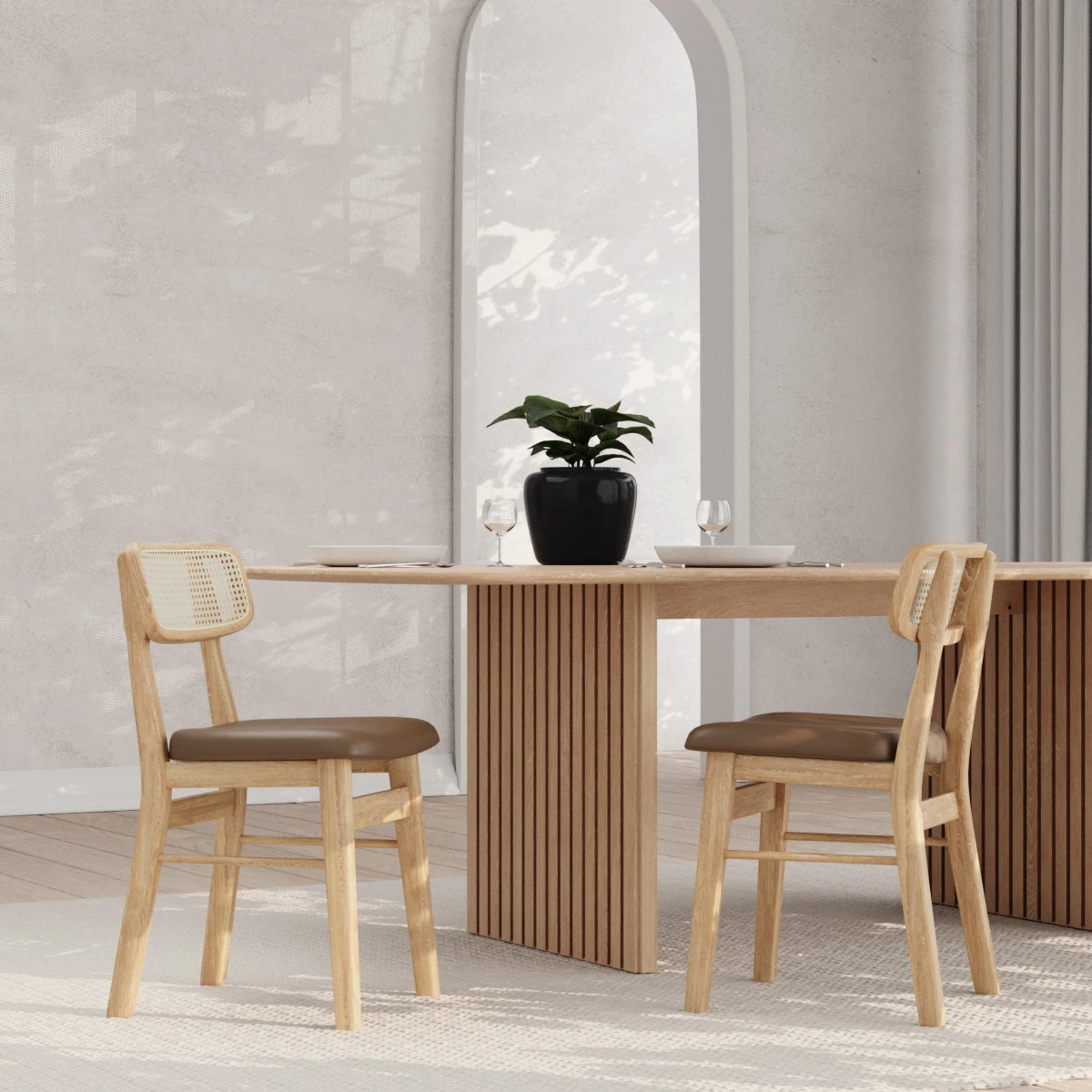
Rattan dining chairs
The most popular entry point into rattan furniture. A rattan dining chair softens the hard geometry of a contemporary dining table and introduces warmth and texture without pattern or colour. Natural rattan and hybrid constructions dominate here.
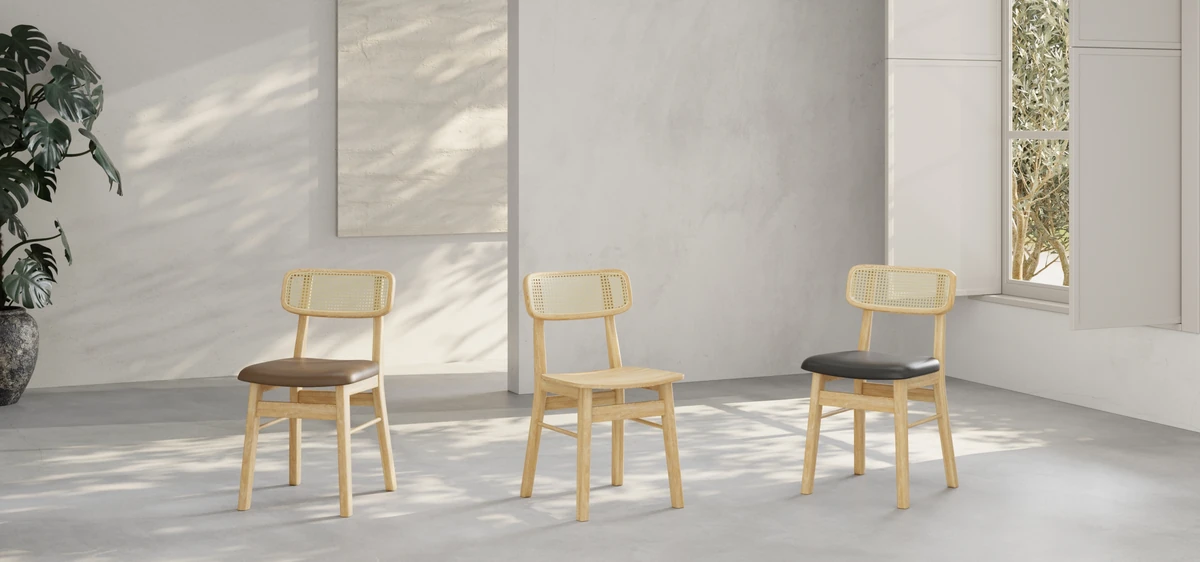
The critical question for dining chairs is seat construction. A woven seat has natural give but requires more care than a solid wood or upholstered seat. Paper rush cord, a common alternative, is beautiful but should be kept away from prolonged moisture. For households with young children, an upholstered seat pad over a rattan chair frame is the most practical combination.
Furnicher's rattan dining chair range covers natural cane, paper rush and cushioned seat variants, all with solid kiln-dried frames tested for daily dining use. Read more on what makes a rattan chair and our deeper guide to rattan chair styles before deciding.
Rattan lounge and accent chairs
The egg chair, peacock chair and shell chair silhouettes are the most iconic rattan forms. These are statement pieces: a single rattan lounge chair can anchor an entire room and introduce organic warmth that no other material achieves as naturally.
For lounge chairs, the cushion is as important as the frame. A well-made rattan shell with a thin, cheap cushion will feel uncomfortable within months. Look for cushions with at least 8 cm of foam depth and a removable, washable cover. The rattan frame itself should be smooth with no sharp strand ends visible at the weave transitions.
Furnicher's lounge rattan chairs include reversible cushions with linen-blend covers, all available in natural, whitewash and black-painted finishes. See the full breakdown of rattan chair colors that fit different rooms.
Rattan outdoor sets
For outdoor use, only PE rattan on a powder-coated aluminium frame is appropriate. Natural rattan placed outdoors, even in a covered space with high ambient humidity, will deteriorate faster than any other construction. The visual similarity between quality PE rattan and natural rattan means there is no aesthetic trade-off for outdoor settings. Our detailed guide on outdoor rattan furniture walks through frame thickness, cushion specs and seasonal storage.
The frame material matters as much as the weave. Aluminium does not rust and weighs less than steel, making it ideal for furniture that is moved seasonally. Look for wall thickness above 1.2 mm on frame tubes and a powder-coat finish rather than spray paint, which chips.
Furnicher's outdoor rattan sets use Grade A PE rattan on 1.5 mm aluminium frames, with UV-treated cushion covers included as standard.
How long does rattan furniture actually last?
The lifespan gap between well-maintained and poorly maintained rattan furniture is enormous. A quality natural rattan chair cared for properly outlasts most upholstered furniture. The same chair neglected in a damp conservatory may not survive five years.
Use this table as a planning reference when deciding between construction types for a specific location in your home.
| Construction type | Location | Expected lifespan | Main risk factor |
|---|---|---|---|
| Natural rattan | Indoors, dry room | 15 to 20 years | Drying out without annual oiling |
| Natural rattan | Conservatory, humid | 5 to 8 years | Mould in weave, frame softening |
| Natural rattan | Outdoors, uncovered | 1 to 3 years | Rain saturation, UV bleaching |
| PE rattan (quality) | Outdoors, exposed | 8 to 12 years | UV degradation in low-grade PE |
| PE rattan (quality) | Indoors | 12 to 15+ years | Minimal if framed on aluminium |
| Hybrid (cane frame + weave) | Indoors, dry | 10 to 18 years | Weave wear at seat-edge contact points |
The single most effective thing you can do to extend the life of natural rattan is annual oiling. The second most effective thing is keeping it out of direct sunlight. A window that receives morning sun is fine; a south-facing window with afternoon sun on the rattan for hours will dry and bleach the cane within two to three years regardless of how well you oil it.
Which interior styles work with rattan furniture?
Rattan is one of the most versatile materials in contemporary interiors. These are the four home styles where it integrates most naturally.
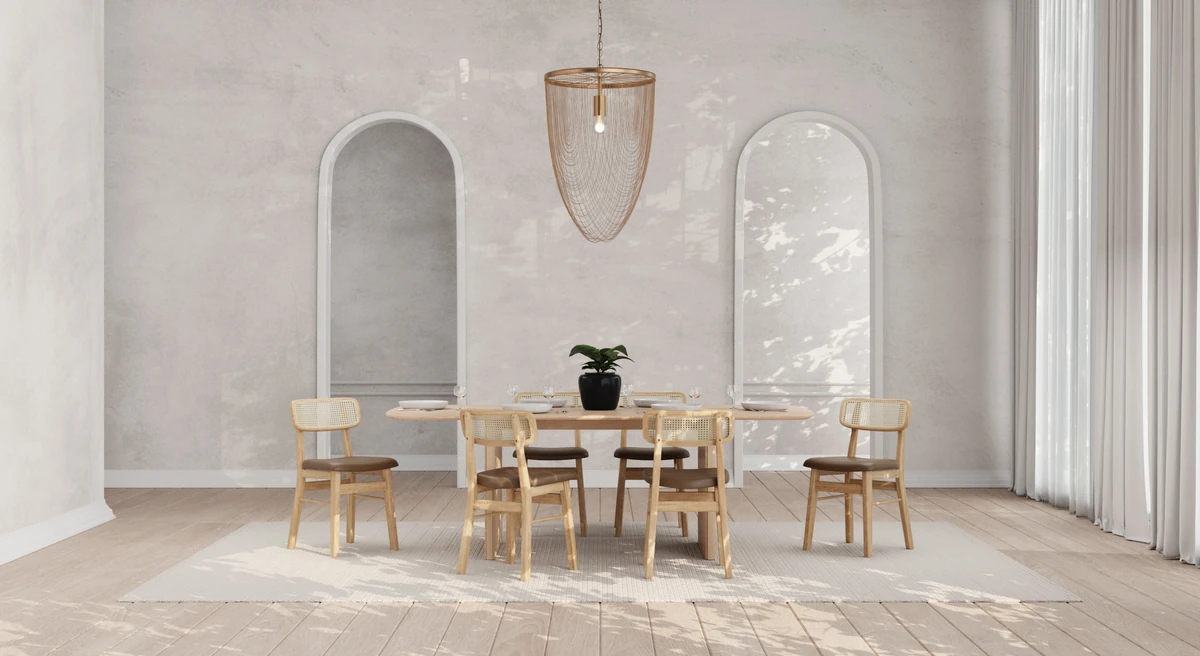
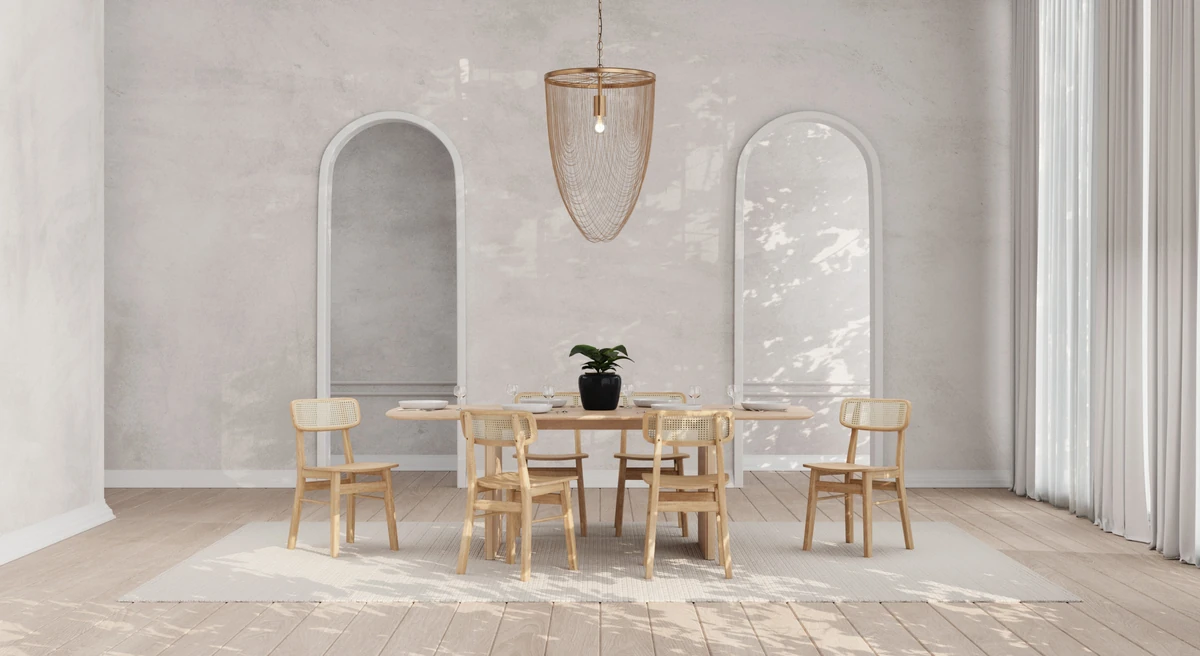
- Japandi and wabi-sabi: The organic irregularity of natural rattan weave fits perfectly with the Japandi philosophy of finding beauty in imperfection. A single rattan accent chair or a rattan pendant lamp against a muted plaster wall is one of the most photographed contemporary interior combinations. Keep the surrounding palette neutral: stone, off-white, warm grey and aged wood.
- Scandinavian: Nordic interiors have incorporated rattan since the 1950s. The classic Scandinavian rattan chair has a simple cane-wrapped frame and a slim profile. It reads light and functional while adding natural warmth to an otherwise cool palette of white, pine and concrete. Avoid oversized statement rattan pieces in a true Scandi setting; they belong in more maximalist contexts.
- Coastal and Mediterranean: Pale washed rattan, linen cushions and whitewashed walls. This combination has defined European coastal living rooms for decades and shows no signs of fading. The key is restraint: two rattan pieces in a room, not seven. Let the material breathe against simple backgrounds.
- Bohemian and eclectic: The peacock chair, hanging egg chair and layered rattan baskets belong here. More is more in a boho context and rattan provides the organic texture that balances printed textiles and patterned rugs. Mixing natural rattan with macrame, dried flowers and terracotta pots is the defining visual language of this style.
Four habits that separate 15-year rattan from 5-year rattan
Natural rattan is not fragile, but it is not self-maintaining either. These four habits apply to all natural rattan and hybrid constructions. PE rattan requires far less intervention. For a step by step routine, see our full guide to rattan furniture care.
Featured in this guide

Natural materials, lasting quality, delivered to your door
Over 50,000 customers have furnished their homes with Furnicher. 9,500+ verified reviews, free delivery across Europe, same-day dispatch and Klarna at checkout.
The Furnicher rattan collection spans dining chairs, lounge and accent chairs, bar stools and outdoor sets. Every natural rattan piece uses kiln-dried cane frames to prevent warping. Every PE rattan outdoor piece uses Grade A polyethylene on powder-coated aluminium frames. Product pages specify the construction type, cane source and cushion specifications so you know exactly what you are buying.
Ordering for a hospitality project or a full room refurnish? B2B Finance through Mondu is available for orders of ten pieces or more. Klarna instalment payment covers individual purchases.
Continue learning about rattan furniture
Eight focused articles that go deeper than this pillar on the questions that come up most before purchase.
- How to buy rattan furniture: the full pre-purchase checklist for frame, weave and finish.
- Tips for buying rattan chairs: focused on dining and accent chairs specifically.
- Rattan chair styles: peacock, shell, egg, ladder back and the silhouettes worth knowing.
- Rattan chair colors: natural, whitewash, black, walnut and how each reads in a room.
- Rattan lounge chair guide: cushion depth, frame width and what makes one comfortable for hours.
- Outdoor rattan furniture: PE grades, frame metals, cushion treatments for European weather.
- Rattan furniture care: the full annual maintenance routine for natural cane.
- Rattan vs wicker: material versus technique, settled in plain language.
- What is a rattan chair?: the cross-category primer for first-time buyers.
The most common rattan questions, answered directly
What is the difference between rattan and wicker?
Rattan is a material: a tropical climbing palm whose stems are harvested, dried and used to make furniture. Wicker is a technique: a method of weaving flexible strands over a rigid frame. A wicker chair is not necessarily made from rattan. Wicker can be woven from bamboo, reed, rush, paper cord or synthetic PE. When you see "wicker furniture" without further specification, it is often PE synthetic material. When you see "rattan furniture" it should mean the actual rattan palm has been used, though this label is unfortunately also misapplied to synthetic PE products. Always check the product description for the specific material.
Can rattan furniture be used outdoors?
Natural rattan cannot be used outdoors in an uncovered, exposed position without deteriorating rapidly. Rain saturation causes the cane to swell, crack and grow mould. Direct sun bleaches and dries it. Even in a covered patio with rain splash and high humidity, natural rattan degrades faster than indoors. For genuine outdoor use, choose PE rattan (synthetic wicker) on an aluminium frame. Quality PE rattan is visually indistinguishable from natural rattan at conversational distance and will comfortably survive 8 to 12 years outdoors.
How do I know if rattan furniture is good quality?
Five indicators: the frame should be rigid with no flex when you push firmly on the back or arms. The weave should be tight and uniform with no gaps, loose ends or uneven tension. The strand ends should be tucked cleanly into the structure, not left protruding. The finish should be smooth to the touch, not rough or splintered. The joints where the frame members meet should be tightly wrapped or pinned, not simply butted together. On a PE rattan piece, look for an aluminium (not steel) frame, which you can confirm with a magnet: steel is magnetic, aluminium is not.
Does rattan furniture scratch floors?
The feet of rattan chairs can scratch hardwood and laminate floors, particularly if they have no protective feet. Apply felt pads to the base of each leg. Most rattan dining chairs have small contact points that concentrate weight on a tiny area, so felt pads are not optional if you have a wood floor. Felt pads need replacing every six to twelve months as they compress. Rattan furniture is considerably lighter than solid wood or metal equivalents, which reduces the severity of any scratching from accidental dragging.
Can rattan furniture get wet?
Natural rattan tolerates occasional light moisture but should never be soaked or left wet. Prolonged exposure to moisture causes the frame to soften, the weave to stretch and mould to develop in the dense sections of the weave. If a natural rattan piece gets wet, dry it as quickly as possible in a well-ventilated space away from direct heat, which causes cracking. PE rattan can be rinsed with a garden hose and left to dry without concern. If you want rattan furniture for a bathroom, a conservatory or a space with persistent humidity, PE rattan is the only viable choice.
How do I clean rattan furniture?
For natural rattan: weekly vacuuming with a soft brush attachment, followed by a seasonal wipe-down with a solution of warm water and a few drops of mild washing-up liquid. Apply with a barely damp cloth and wipe dry immediately. Never leave water standing in the weave. For mould spots, diluted white vinegar on a soft brush, scrubbed gently and dried thoroughly. For PE rattan: warm soapy water with a soft brush, rinsed and air-dried. PE rattan can tolerate more moisture during cleaning than natural rattan.
How long does rattan furniture last?
A quality natural rattan piece in a dry indoor environment with annual oiling lasts 15 to 20 years. Quality PE rattan furniture outdoors lasts 8 to 12 years. The variables that most affect lifespan are sunlight exposure, humidity and whether the piece receives annual oil treatment. Natural rattan placed in direct sun without oiling may show significant deterioration within 3 to 5 years. The same piece in a shaded room with annual oiling can outlast most upholstered furniture.
