9800+ TRUSTPILOT REVIEWS




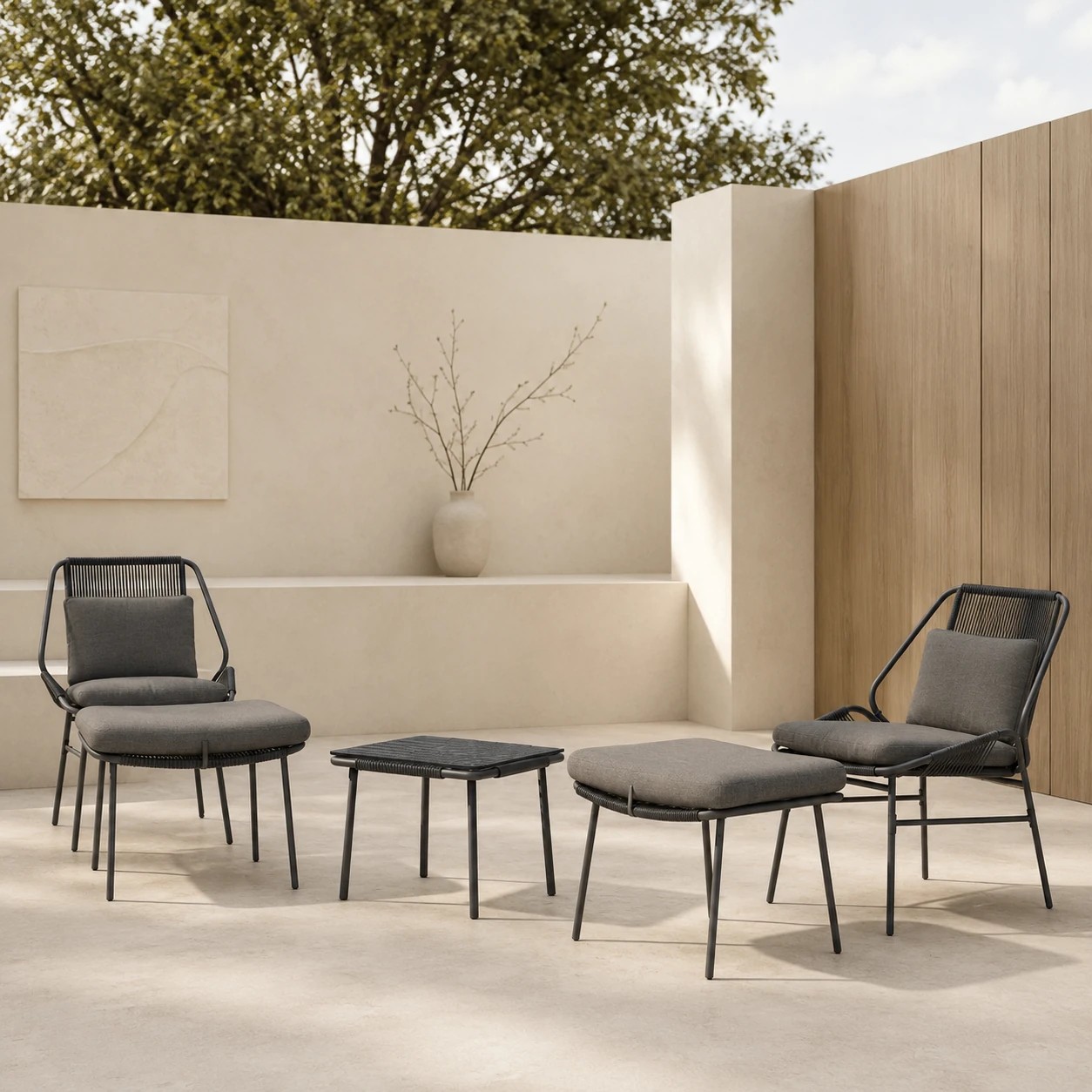
Most rattan garden sets sold in Europe are not made from rattan. They are made from polyethylene strands woven over an aluminium frame, designed to imitate the look of natural rattan while surviving conditions that natural rattan cannot.
This guide explains why natural rattan fails outdoors within 2 to 3 years, what synthetic PE rattan actually is, why the frame matters more than the weave, and how to read a product spec to spot the cheap versions that look identical in photos but will not last a winter.
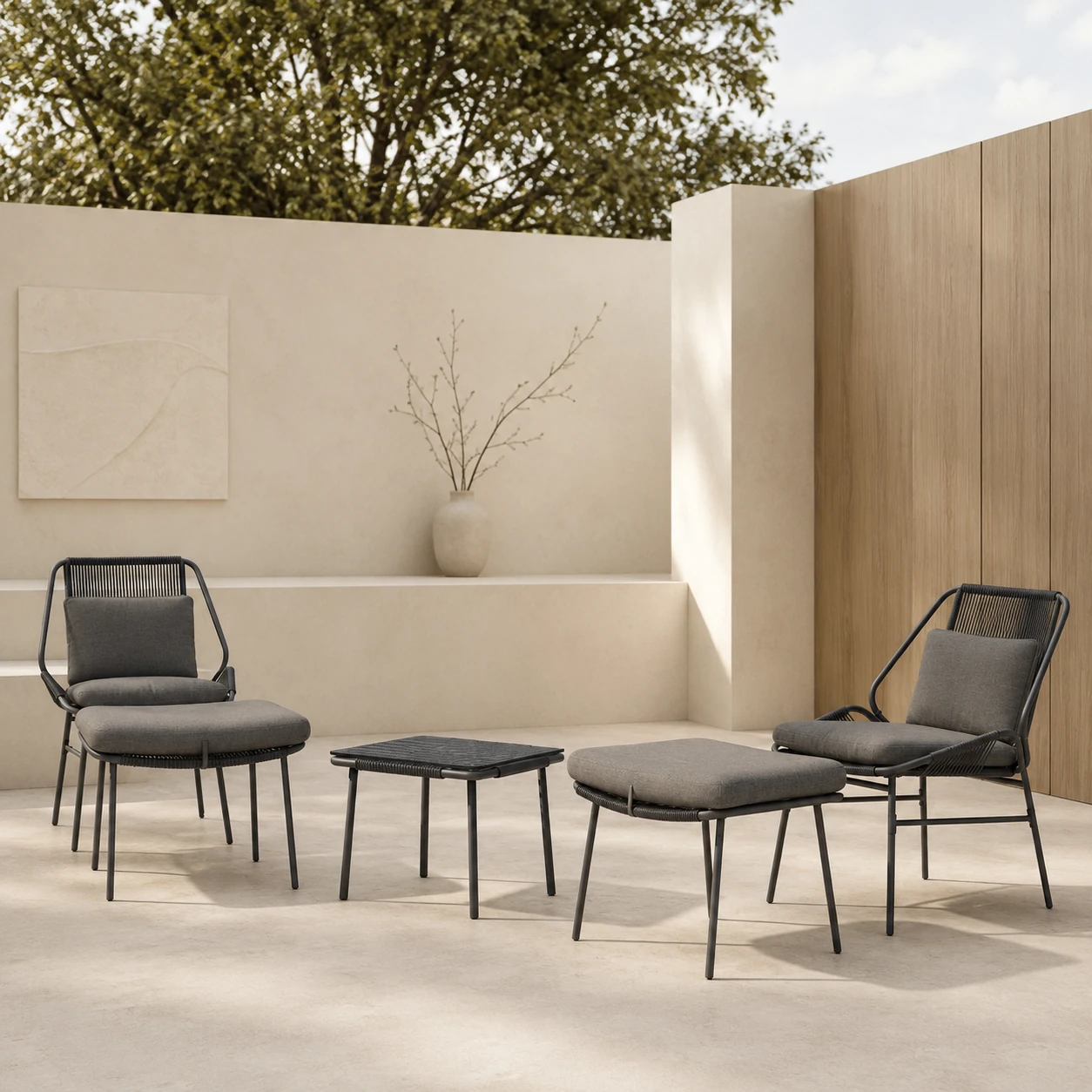
Why natural rattan does not survive outdoors
Natural rattan is the stem of a tropical climbing palm, harvested in Indonesia and the Philippines. The fibres are hygroscopic, meaning they take on moisture from the air and release it as conditions change. Indoors at 40 to 60 percent humidity, this is what keeps natural rattan flexible and quietly resilient for 15 to 25 years.
Outdoors in northern Europe, the fibres soak through with rain, swell, then dry out hard under the sun. After 30 to 50 cycles the cellulose structure starts to fail. Joints loosen, panels sag, and mould grows in the binding. Once the weave is gone, the chair cannot be repaired economically.
- 2 to 3 years: fully exposed in Germany, Netherlands, northern France
- 5 to 8 years: on a covered terrace or verandah, brought in over winter
- 15 to 25 years: indoors only, away from radiators and direct sun
For the full breakdown of how natural rattan is made and where it works, see our rattan furniture guide.
Three grades of outdoor rattan, ranked
The word rattan covers very different materials outdoors. Here is what each grade means and how long each lasts on a real European patio.
PE rattan, aluminium frame
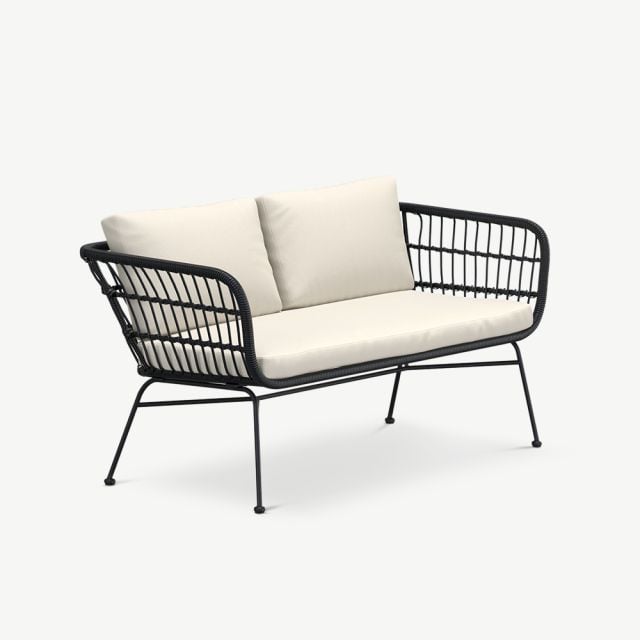
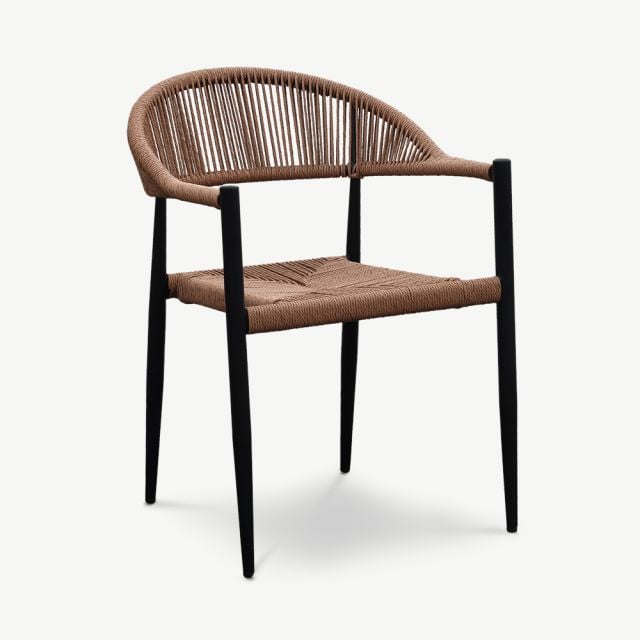
Polyethylene strands, UV-stabilised, woven by hand over a powder-coated aluminium frame. The aluminium does not rust. PE keeps its colour and flexibility from -30 °C to +60 °C. This is what every premium outdoor brand uses.
Recognise it by: uniform colour across the panel, slightly waxy texture, lightweight (a four-seat sofa weighs 20 to 30 kg). Price range €499 to €1,499 for a four-seat set.
PE rattan, steel frame
Same PE weave, much cheaper frame. Powder-coated mild steel looks identical out of the box, but micro-scratches from delivery and use let water reach the bare steel underneath. Rust shows within 18 months, structural failure within 4 years.
Recognise it by: heavy weight (50+ kg for a four-seat set), magnetic frame (an aluminium frame is not magnetic). Price range €299 to €549 for the same four-seat set.
PVC rattan, any frame
Cheaper synthetic, common on sub-€300 patio sets. PVC turns brittle below 0 °C and discolours under UV within two summers. The weave cracks at the corners first, then unwinds.
Recognise it by: shiny finish, smells faintly of plastic when warm, brittle when you flex a strand. Almost always paired with steel frames. Worth skipping at any price.
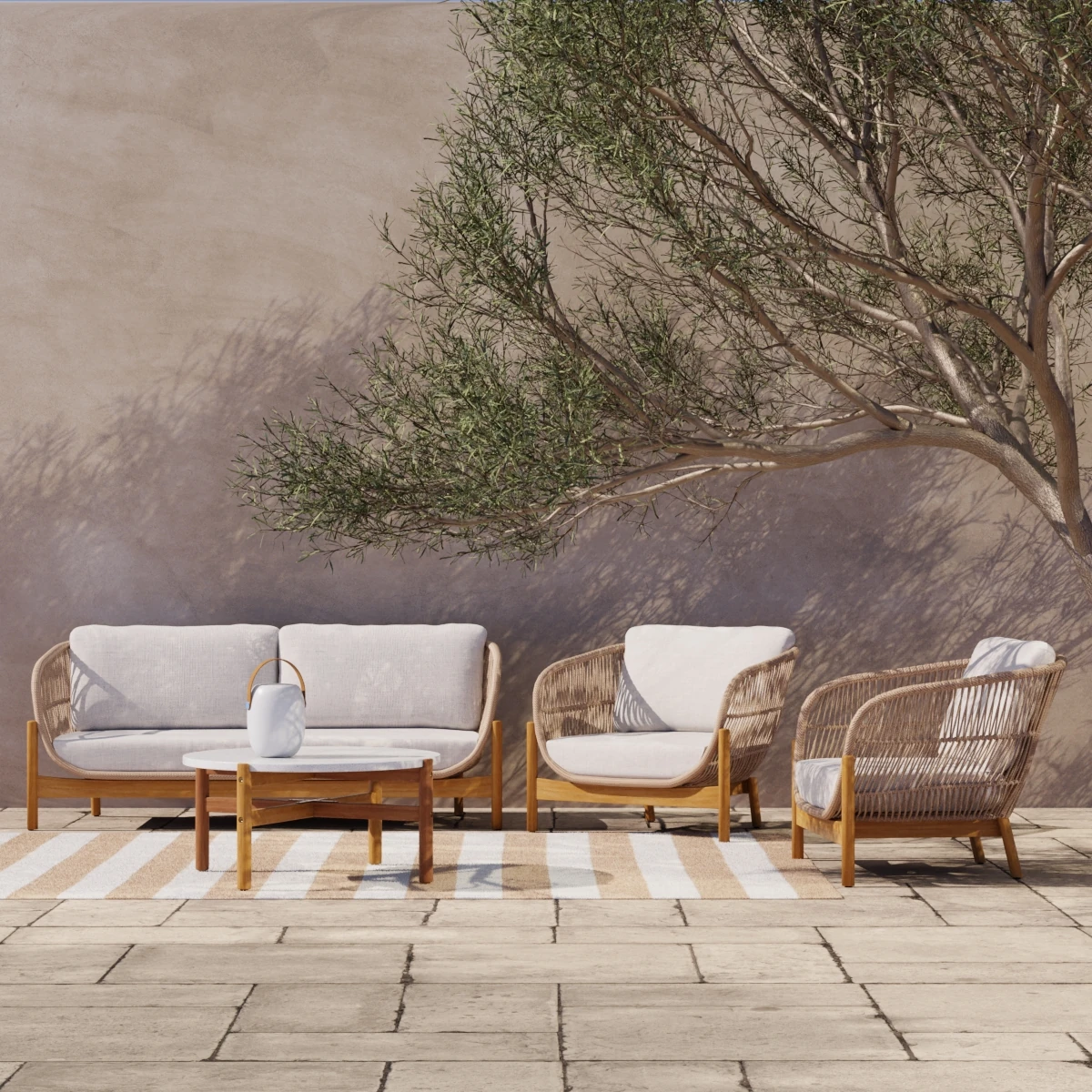
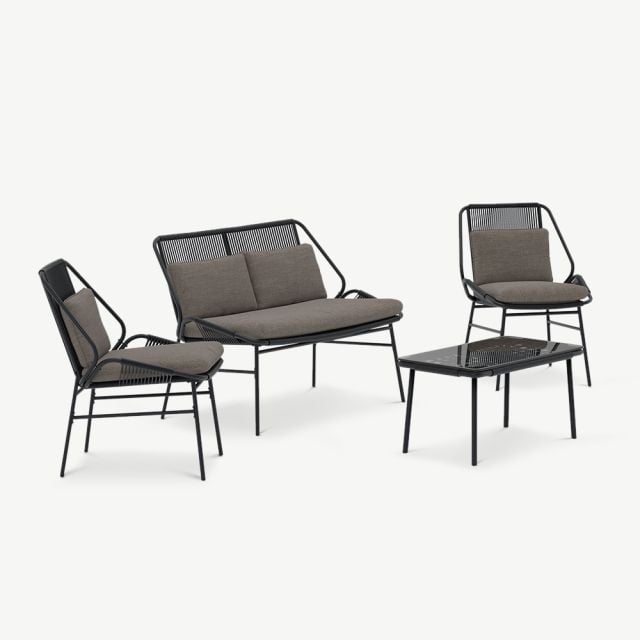
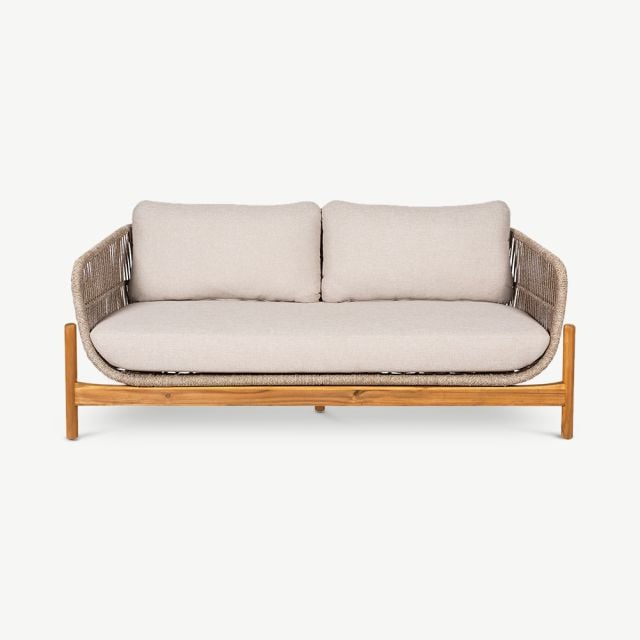
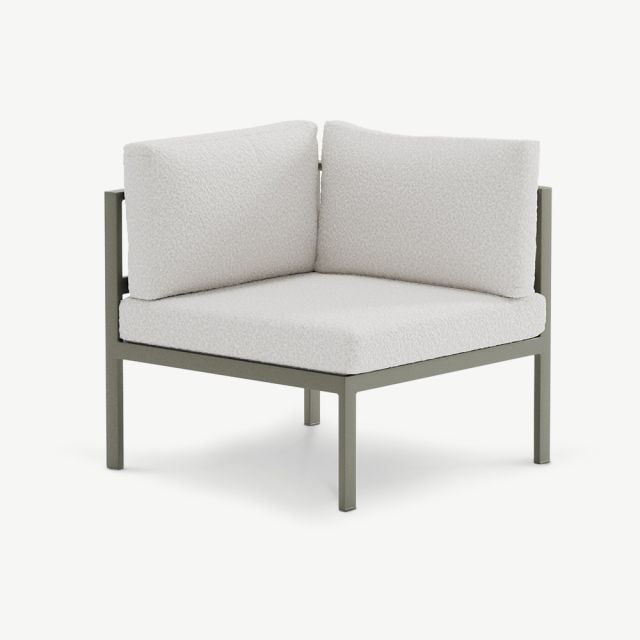
Featured in this guide

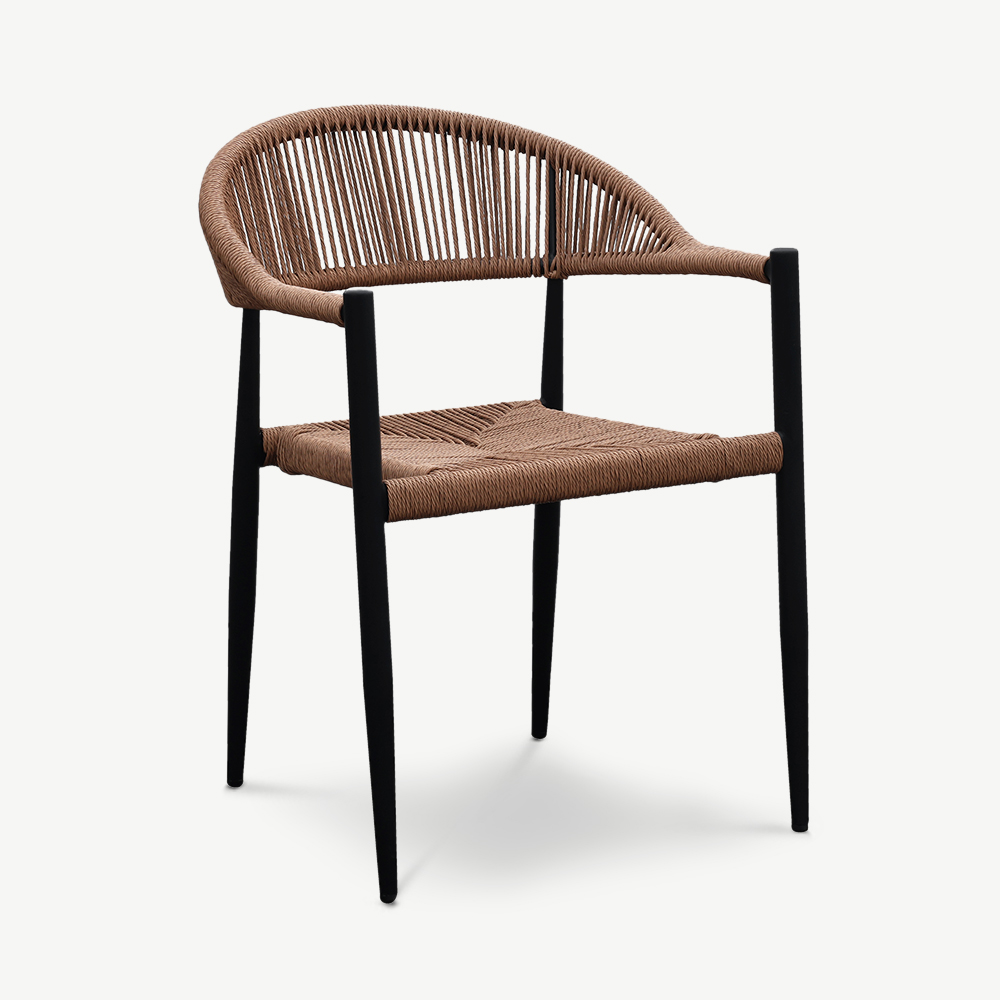
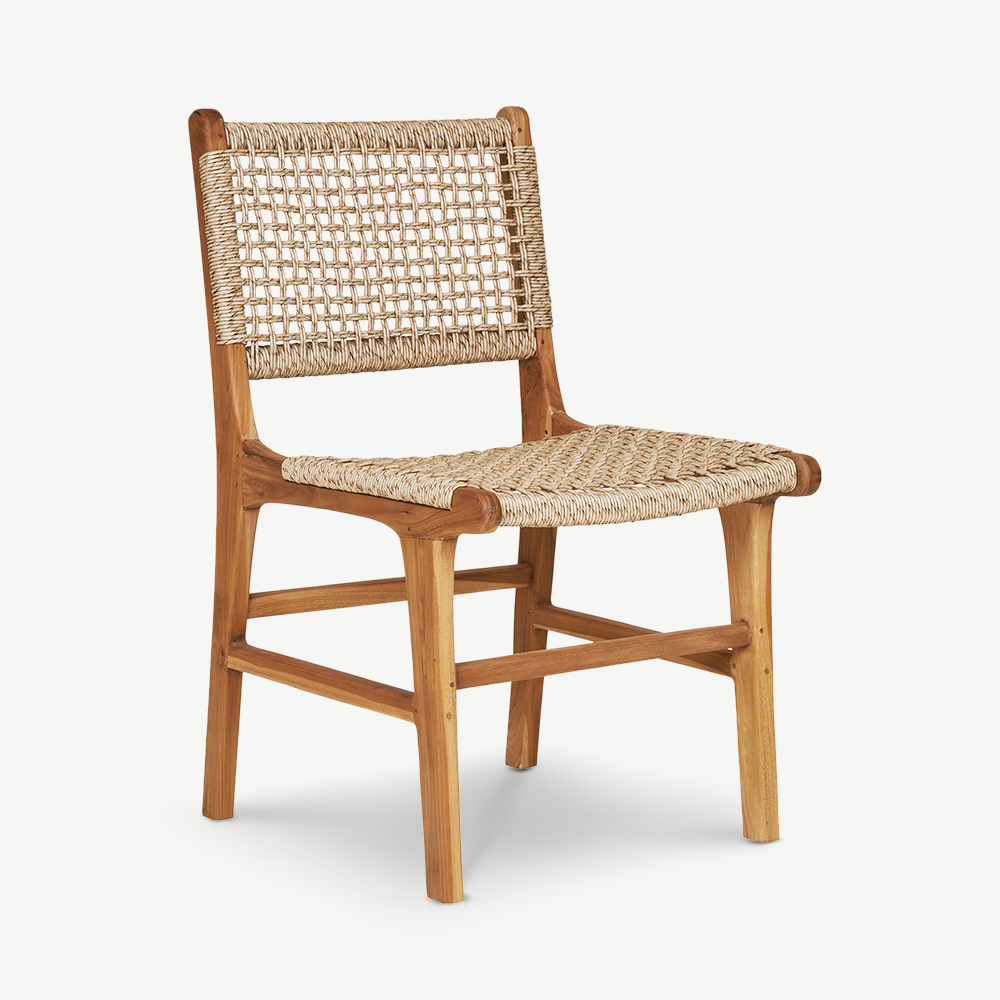
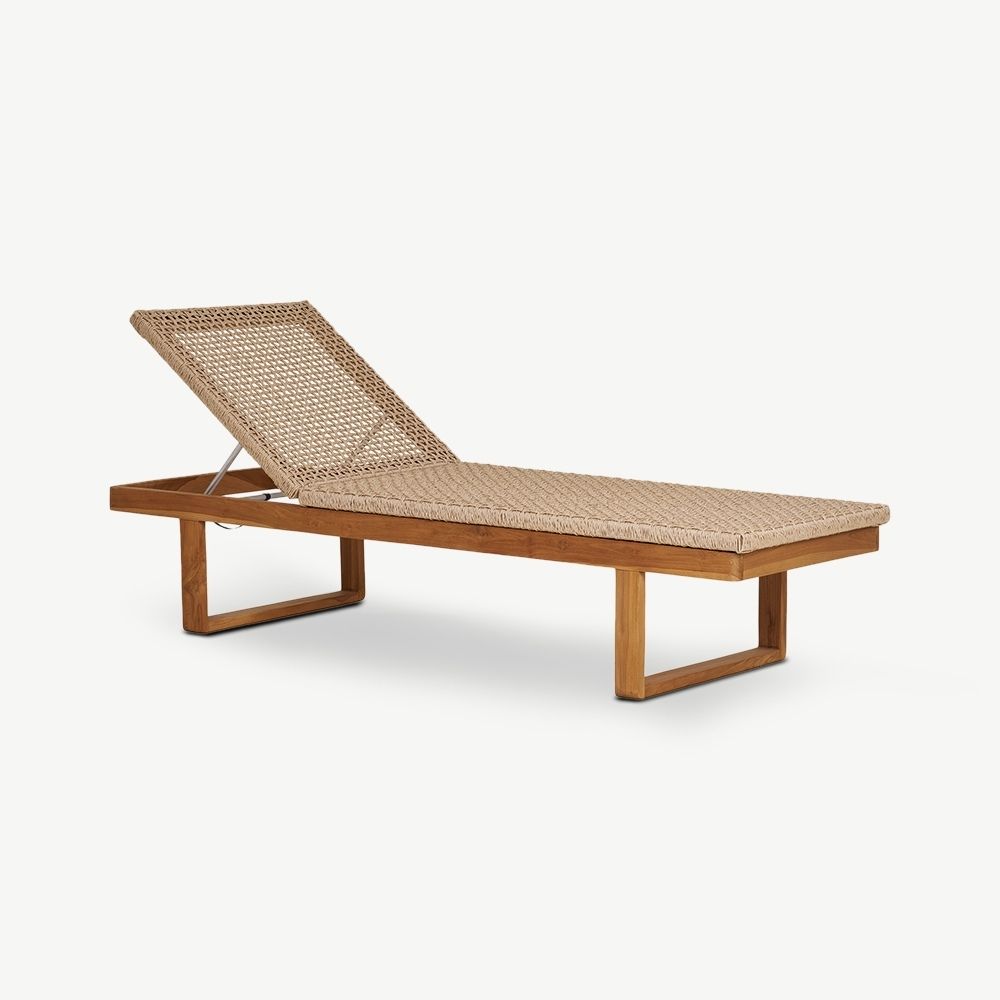

What actually ages outdoor rattan
UV light, frost, and standing water are the three forces that age outdoor furniture. PE handles all three reasonably well. The frame is where most sets fail first.
| Stress factor | PE weave | Aluminium frame | Steel frame |
|---|---|---|---|
| UV exposure (summer) | Slight fade by year 5 | No effect | No effect on coating |
| Freeze-thaw cycles | Stable to -30 °C | No effect | No effect |
| Standing water | Drains, no damage | Surface only | Rust within 2 yr |
| Salt air (coastal) | No effect | Pitting after 5 yr | Rust within 1 yr |
If you live within 5 km of the sea, an aluminium frame is the minimum and a stainless steel option is worth the upgrade. For inland use, powder-coated aluminium covers almost every European climate from southern Spain to Scandinavia.
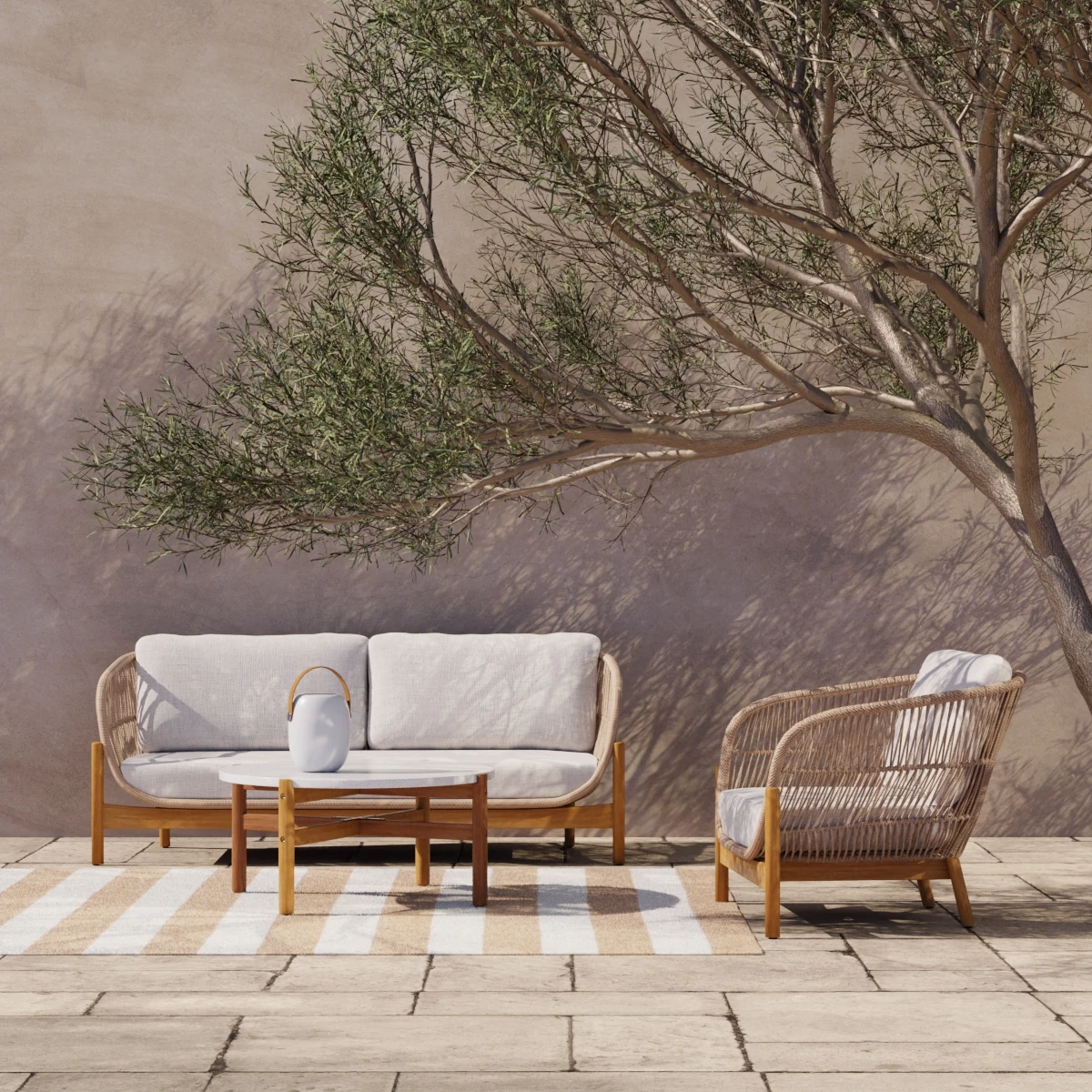
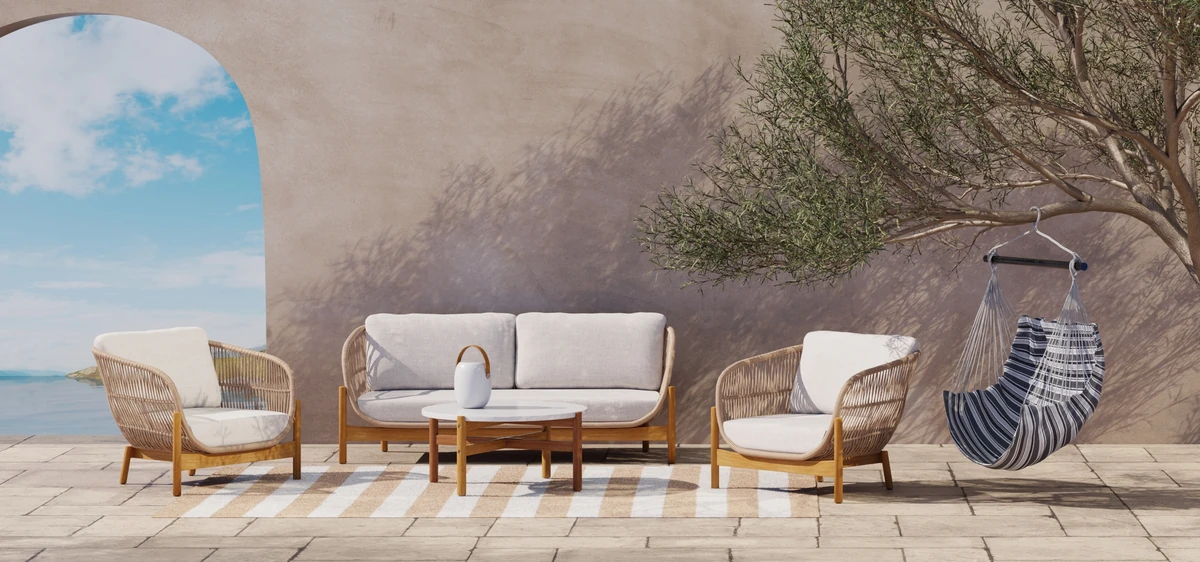
Four spec lines that tell you what you are buying
The product description does most of the work, if you read it. These four spec lines separate a set that will last a decade from one that will be on the verge of replacement next spring.
Outdoor rattan, chosen right
PE weave over powder-coated aluminium, with solution-dyed cushions. That is the long-life specification.
Skip natural rattan for any outdoor use beyond a covered terrace, and skip the sub-€300 patio sets that look identical in photos but cost more in replacements over five years. A €699 PE-and-aluminium set typically beats a €299 PVC-and-steel set on cost-per-year by year three.
Browse our outdoor furniture range: every rattan-style set we stock uses PE weave and powder-coated aluminium. Prices start at €299 for a two-seat balcony bistro set and run to €1,499 for a six-seat lounge group. For winter storage, breathable covers extend exposed-position lifespan by roughly 30 to 40 percent.
If you want the rattan look indoors and out, our outdoor furniture buying guide walks through the cross-room aesthetic choices, and the Scandinavian range pairs particularly well with synthetic rattan on a balcony or terrace.
Frequently asked.
Is natural rattan weatherproof?
No. Natural rattan is a tropical palm fibre that absorbs moisture, dries out under UV, and loses structural integrity within 2 to 3 years of fully exposed outdoor use in a northern European climate. It is an indoor material with a covered terrace as the safest semi-outdoor limit, and even then it benefits from being brought inside over winter.
How long does synthetic rattan last outdoors?
Synthetic rattan (PE, polyethylene) woven over a powder-coated aluminium frame lasts 8 to 12 years fully exposed and up to 18 years in a covered outdoor position, assuming UV-stabilised strands and a non-corroding frame. PE rattan over a steel frame lasts 3 to 5 years before the frame fails, even if the weave is still intact.
What is the difference between PE and PVC rattan?
PE (polyethylene) is the better outdoor synthetic: UV-stable, food-safe, and retains flexibility in cold conditions down to -30 °C. PVC rattan is cheaper to produce but turns brittle in frost and discolours within 2 to 3 seasons. Almost all reputable outdoor rattan in the European market today is PE, but cheaper sets sometimes still use PVC without stating it clearly in the spec.
Does the frame really matter more than the weave?
Yes. Good PE weave outlasts most frames it is wrapped around. Cheap steel frames rust through within 3 to 5 years even with intact weave, leaving you with a structurally unsafe chair. Powder-coated aluminium lasts 15 years and keeps the chair fully usable long after the weave shows surface wear. If you have to compromise on one, compromise on weave colour, not frame material.
Should I cover outdoor rattan in winter?
Yes, even synthetic. UV and freeze-thaw cycles still age PE weave gradually, and standing water inside the frame tubes corrodes aluminium from the inside out where the powder coating cannot protect it. Breathable furniture covers extend lifespan by roughly 30 to 40 percent. Avoid sealed plastic covers that trap condensation against the frame.
Can I use indoor rattan furniture on a covered terrace?
Briefly, yes. For seasonal use only, natural rattan can sit on a covered terrace for 5 to 8 years before significant fibre damage shows up. Anything beyond a covered position, or any year-round exposure including over winter, calls for synthetic. The decision point is honestly whether you are willing to move it indoors twice a year. If not, buy synthetic from the start.