 9800+ TRUSTPILOT REVIEWS


 EN
EN DE
DE FR
FR NL
NL
Teak garden furniture care is almost not a thing. A rinse twice a year, a soft brush if pollen lands heavy, and that is most of it. The danger is overcare, not undercare. Buyers who scrub teak weekly, oil it every spring, and cover it under continuous tarp are shortening its life, not extending it.
This guide covers the actual minimum teak needs in climates, when to oil and when not to, how to recover a piece that has been neglected for 5 years, the right products and brushes (and which to avoid), and how to handle teak in the four weather profiles: coastal Atlantic, alpine freeze-thaw, southern UV, and humid central Europe.

The minimum is almost nothing
Teak has natural oils (tectoquinones) that resist water, insects, and fungi. The wood does not need additional protection to last 20 years outdoors. Untreated teak goes silver-grey in 6 to 12 months. The grey patina is cosmetic. The wood underneath stays structurally identical.
The minimum routine for a teak piece in any climate is: a hose rinse twice a year, in spring and autumn. That is the full maintenance contract. Everything beyond is aesthetic preference, not preservation.
- Rinse twice a year: pollen, tree sap, bird mess
- Soft brush if needed: a deck brush, never wire
- Do not pressure wash: opens the grain, accelerates greying
- Do not seal: film-forming sealers trap moisture under them
The honey colour decision
The only legitimate reason to oil teak is aesthetic: you want to keep the original honey-gold colour. There is no structural reason. Once you start, you cannot easily stop without sanding.
Skip the oil
Leave the teak alone. It greys to silver in 6 to 12 months and stays there for 20 years. The grey is the wood's natural protective layer. A garden hose pass in March and October is all you do.
Pros: zero maintenance cost, zero time investment, no risk of uneven application. The patina also reads warmer with Scandinavian or Japandi exteriors than orange-honey new teak.
Oil annually if
Apply teak oil once a year in March, after a 220-grit sand to remove the existing patina. Use a clean linen cloth, two thin coats with 4 hours between, and wipe off all excess after 30 minutes.
Once you start, water rings show more visibly than on weathered teak. You commit to repeating it each March for the life of the piece.
Avoid sealers
Film-forming sealers (varnish, polyurethane, marine-grade clear coat) look fine for two seasons then trap moisture under the film. The trapped moisture darkens the wood and grows mildew you cannot reach.
If a piece has been sealed and is failing, sand back to bare wood with 80-grit, then 220-grit, and either leave it or apply a penetrating teak oil instead.
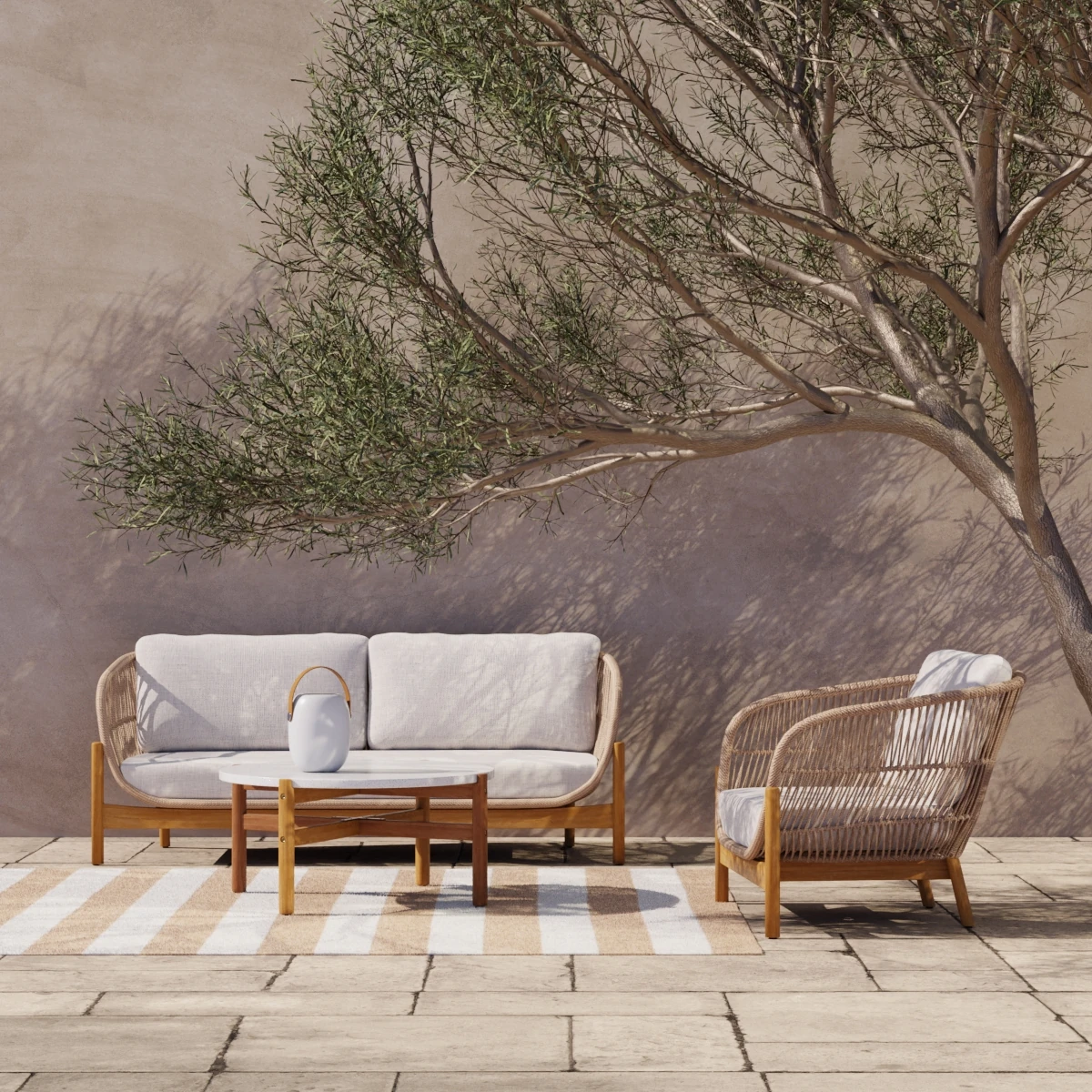
Featured in this guide
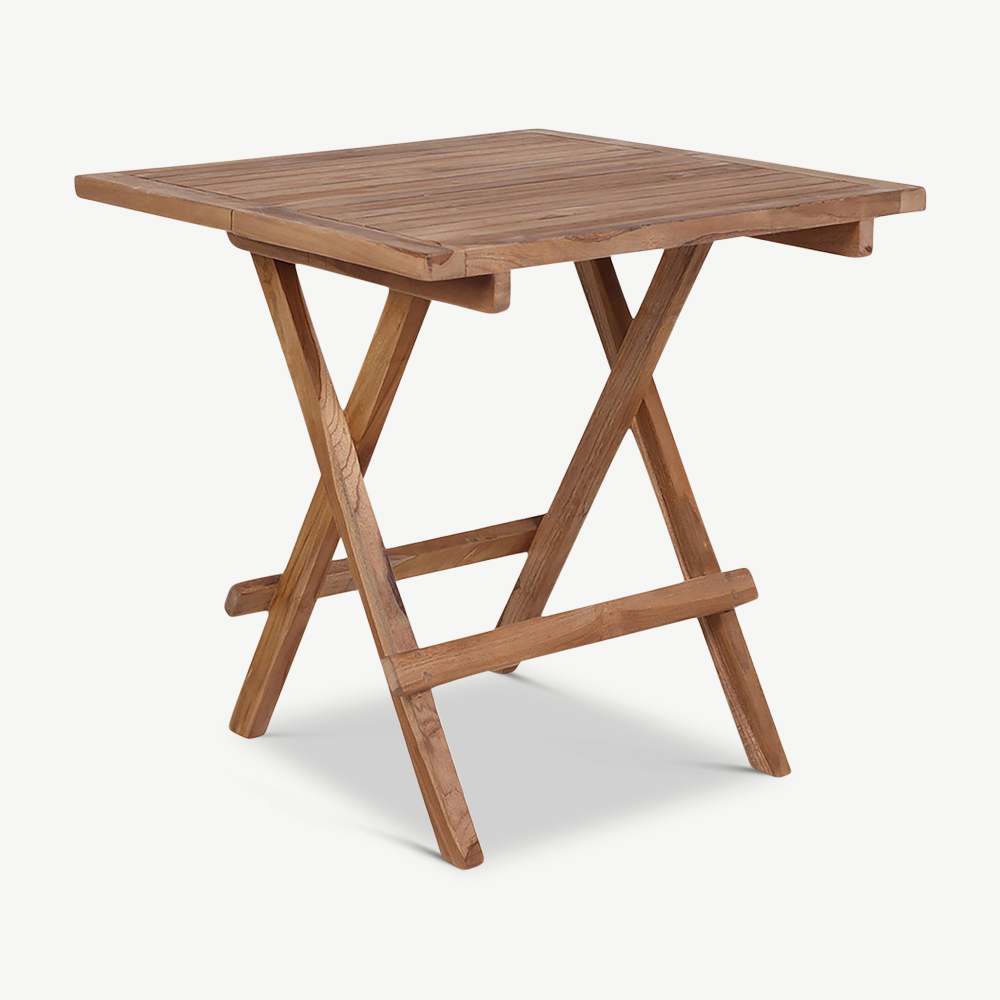
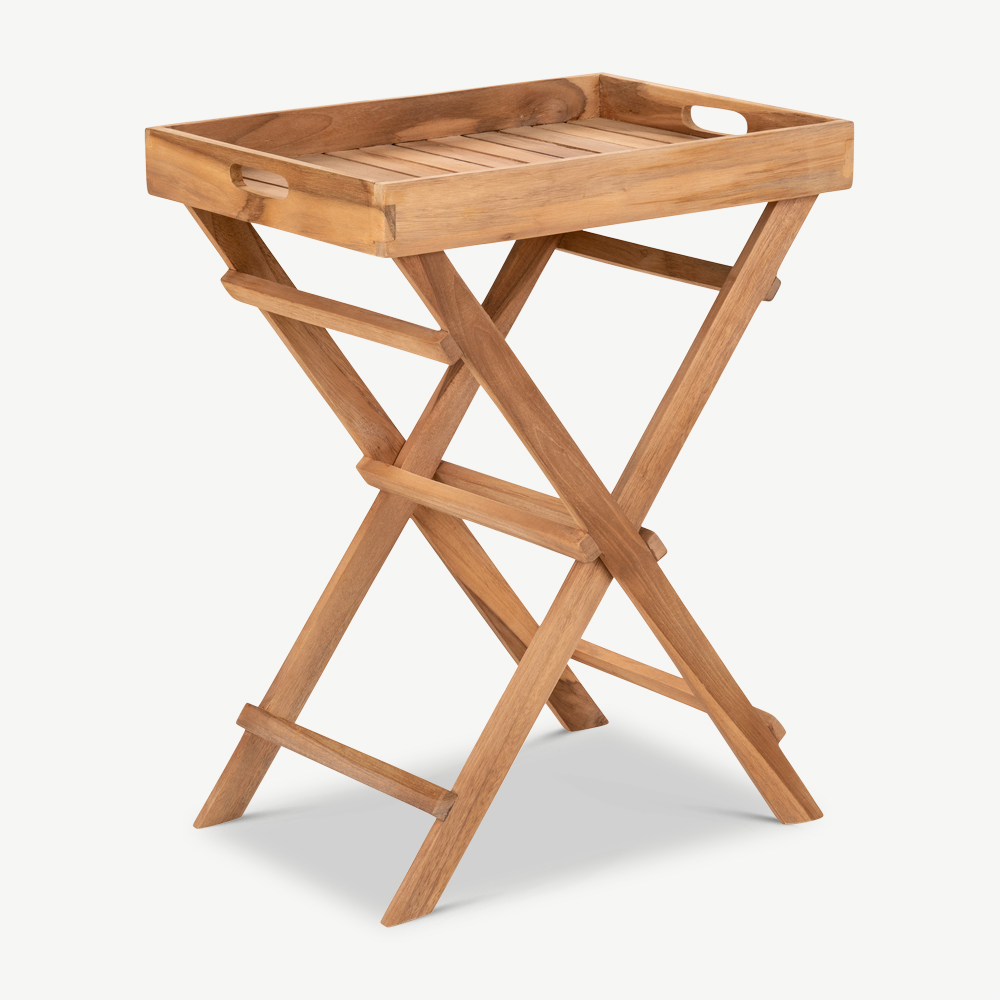
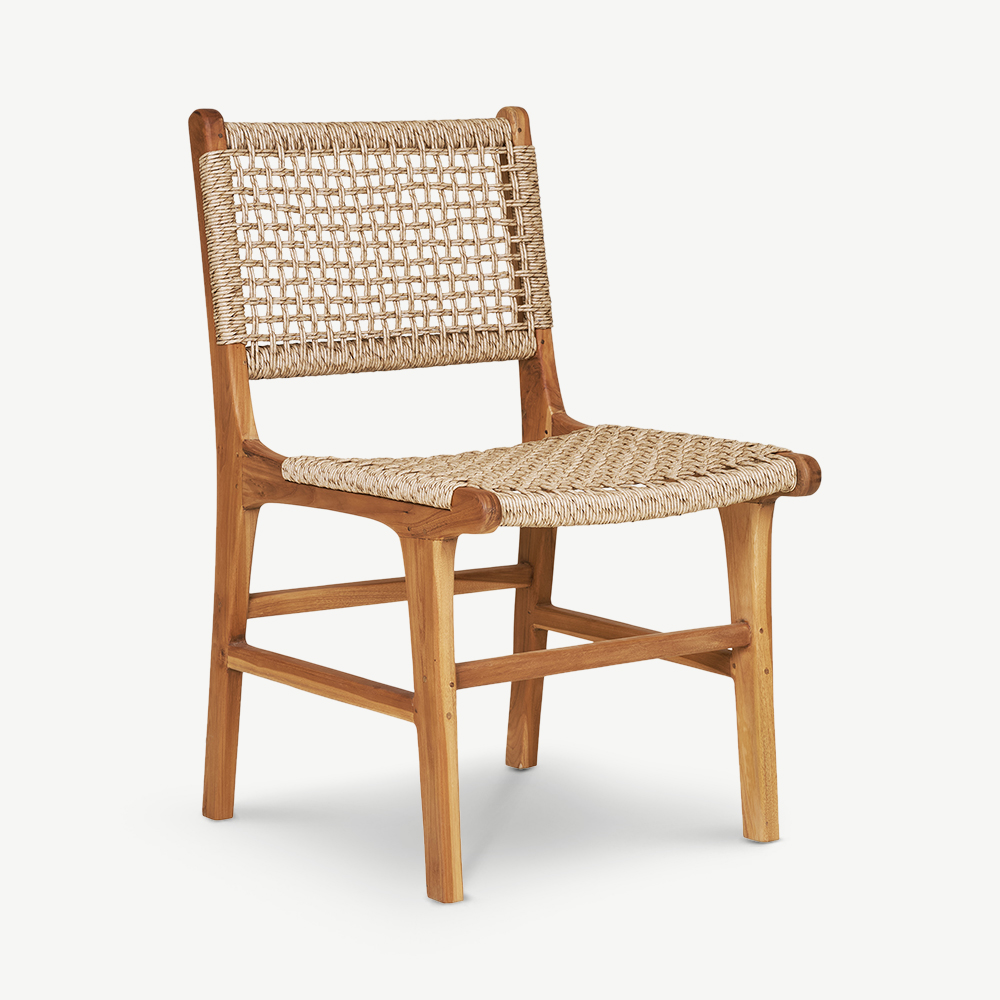
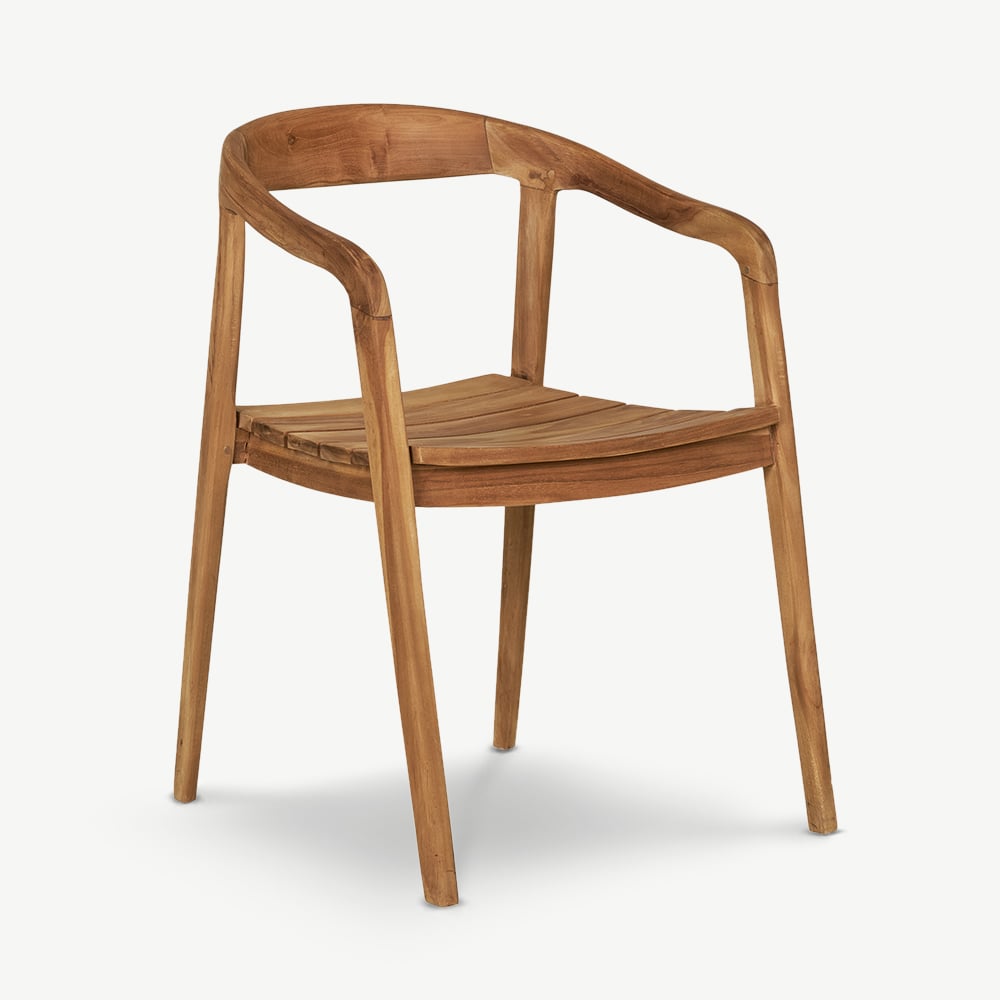
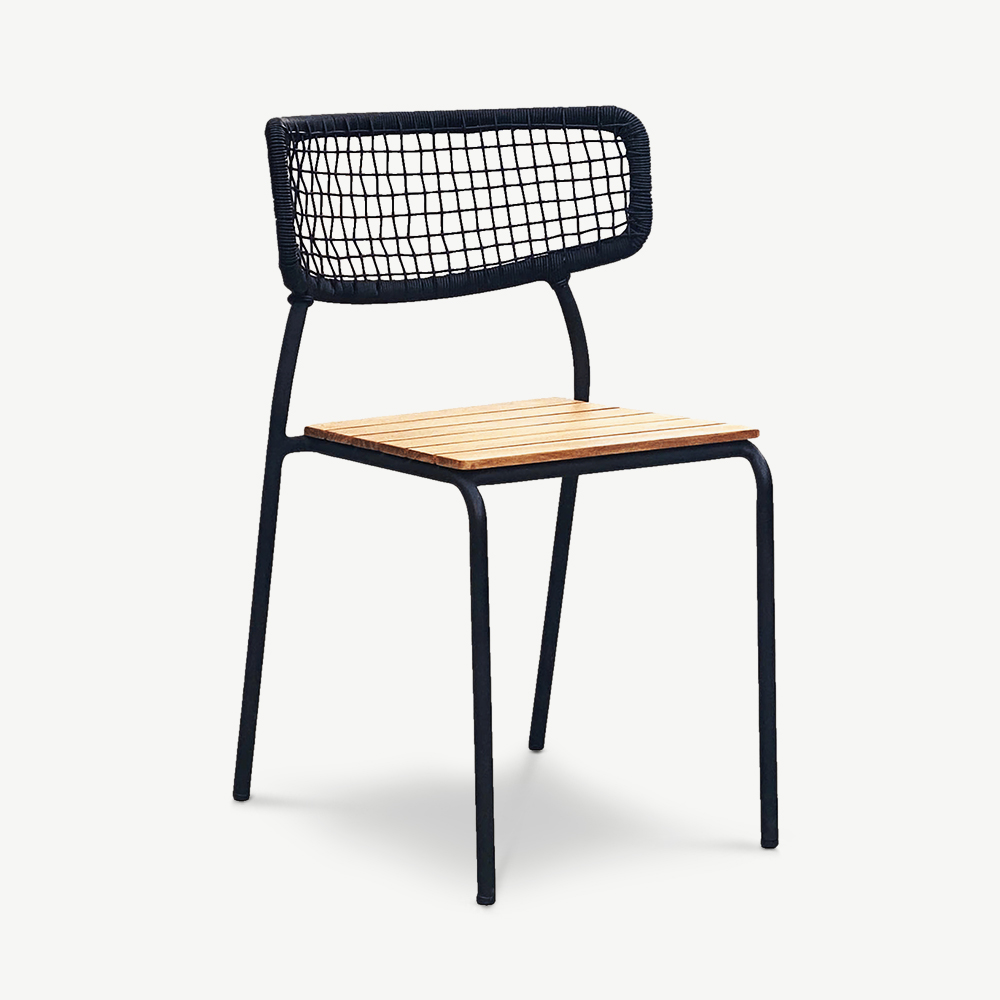
What to do, by month
Teak care follows the weather year. Two real maintenance windows: March for spring reset, October for winter prep. Between them, nothing scheduled.
| Month | Action | Time |
|---|---|---|
| March | Hose rinse, soft brush if mossy | 20 minutes |
| April | Optional: light sand and oil | 3 hours |
| May to September | Nothing scheduled | 0 |
| October | Hose rinse, lift table off legs slightly | 15 minutes |
| November to February | Breathable cover during long rain spells only | As needed |
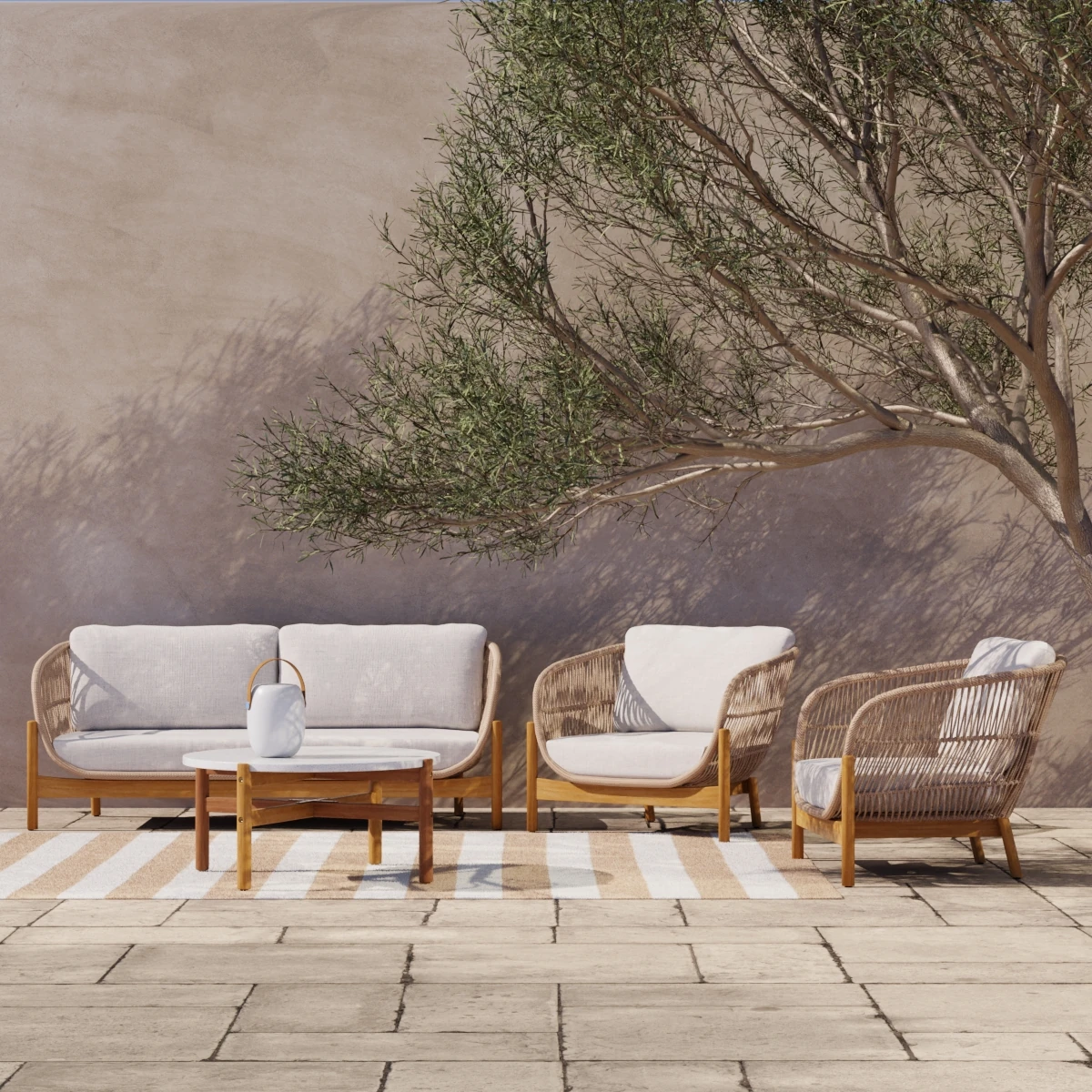
The table-on-legs trick: after the October rinse, place a 5 mm coin or small block under one foot. The slight tilt drains rainwater off the top instead of pooling. That is the entire winter prep for teak in central and northern EU.

How to bring back a piece you let slide
Teak that has been left untouched for 5+ years looks rougher than it actually is. Most of the time, the wood underneath is structurally fine. Three steps recover it without specialist help.
Teak is the lowest-maintenance outdoor wood
Twenty minutes twice a year is the full maintenance contract for teak.
Anything beyond that is aesthetic preference. Skip the seasonal-product industry built around teak: most teak cleaners, brighteners, and sealers correct problems caused by other teak cleaners, brighteners, and sealers. Untouched teak greys to silver and lasts 20 to 25 years. That is the deal.
Browse our outdoor furniture selection, where most teak pieces sit between 199 and 1,499 euros. For the full outdoor picture, see our garden furniture buying guide. For a teak bench specifically, our garden bench guide.
For matching design styles indoors, our Scandinavian guide and Japandi guide cover where weathered teak reads correctly.
Frequently asked.
How often should I oil my teak garden furniture?
You do not have to oil at all. Untreated teak weathers to silver-grey and lasts 20+ years without oil. If you prefer the original honey colour, oil once a year in March after light sanding. Once you start oiling, water rings show more visibly, so the maintenance becomes ongoing.
Can I pressure wash teak?
No. Pressure washers open the wood grain, lift loose fibres, and accelerate greying. Use a garden hose at normal pressure and a soft brush if needed. For deep cleaning, oxygen bleach (sodium percarbonate) with a soft brush removes moss and black spots without damaging the surface.
What is the grey colour on my teak?
The grey is patina from UV exposure. It is purely cosmetic, not damage. The wood underneath is structurally identical for 20+ years. The patina protects the surface from further weathering. Removing it by sanding only resets the cycle, the wood greys again in 6 to 12 months.
Can teak garden furniture stay outside in winter?
Yes, teak handles winter without protection. Cushions come indoors, but the wood stays outside year-round. Tilt the tabletop slightly so rainwater drains. Use a breathable cover only during prolonged rain stretches. Continuous covers trap moisture and grow mildew under the cover.
How do I remove black spots from teak?
Mix oxygen bleach (sodium percarbonate) with warm water per pack instructions, apply with a soft deck brush in the grain direction, leave 10 minutes, rinse with low-pressure hose. Repeat once if needed. The spots are usually mildew or iron staining, both lift cleanly.
Is FSC teak the same quality as unlabelled teak?
The wood itself is identical, the difference is sourcing. FSC certification ensures the tree was harvested from managed plantations, not illegally logged old-growth. Unlabelled teak may be either. For long-term durability, the source does not change the result. For environmental responsibility, FSC matters.
-
 Bellita Outdoor Coffee Table, Teak WoodSpecial Price €80 Regular Price €109
 - Asia Outdoor Chair, Teak & RattanSpecial Price €332 Regular Price €409
-
- Ria Outdoor Metal Chair, Teak Seat, Set of 4Special Price €170 Regular Price €209
- Debby Outdoor Sun Lounger, Teak & RattanSpecial Price €769 Regular Price €939
- Saffron Outdoor Dining Chair , Black TeakSpecial Price €119 Regular Price €139
- Wren Table Outdoor Round Dining , Beige TeakSpecial Price €819 Regular Price €979
- Palma Table Outdoor Rectangular Dining , Nature TeakSpecial Price €1,219 Regular Price €1,459
- Capri Outdoor Sun Lounge , Nature AcaciaSpecial Price €279 Regular Price €329