 9800+ TRUSTPILOT REVIEWS


 EN
EN DE
DE FR
FR NL
NL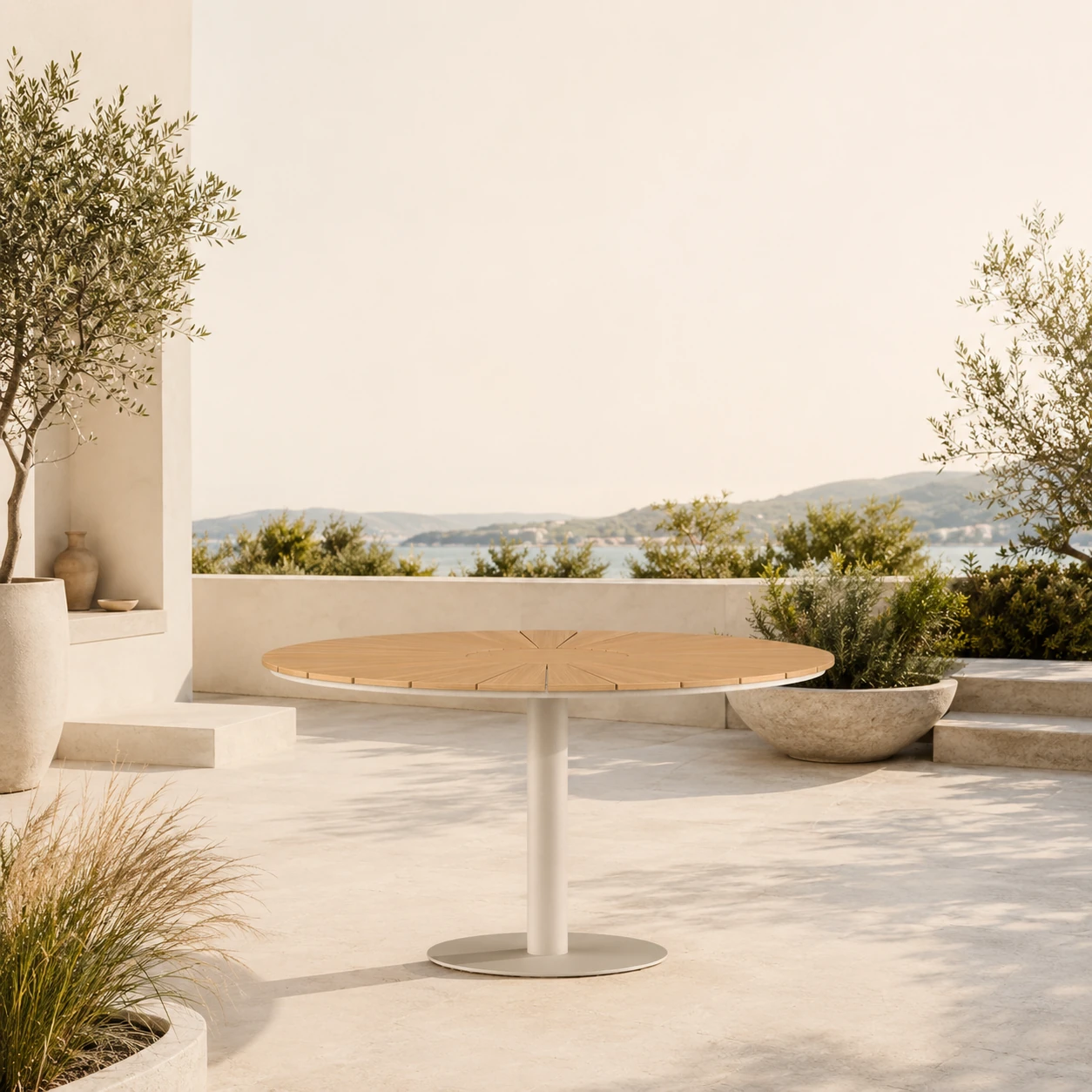
A design-led garden table is not a decorative object placed outdoors. It is a piece that has to survive 15 summers of EU sun, 15 winters of frost cycles, and every time someone puts a hot serving dish on the surface without thinking. Design alone does not hold if the material does not follow.
This guide covers the three materials that combine durability with design-grade looks (FSC teak, polywood, powder-coated aluminium with ceramic top), the shapes that work both visually and practically for 4 to 8 people, the dimensions that actually fit, and realistic EUR price ranges for a table that lasts a decade without warping.
Lasting design, not disposable design
A design garden table works on three materials. FSC teak for warm lines and the silver patina across summers, ceramic on powder-coated aluminium for sharp lines and thermal-shock resistance, and polywood for sculptural profiles that ask nothing.
The usual traps: tempered glass on steel (rusts at the welds in 4 years), mosaic on concrete (cracks in frost), and oiled pine sold as "Scandi style" (warps in 3 winters). They exist in design-looking form but do not last.
- FSC teak: 20+ years, natural patina, warm read
- Ceramic top on aluminium: ultra-thin, heat-resistant, modern line
- Polywood: chunky profiles, sculptural shapes, zero maintenance
- HPL (high-pressure laminate): the budget alternative to ceramic
What your style picks
The top material dictates the visual read. Three finishes dominate outdoor design: weathered wood, ceramic, matte polywood. Each pairs with specific leg geometry.
Weathered FSC teak
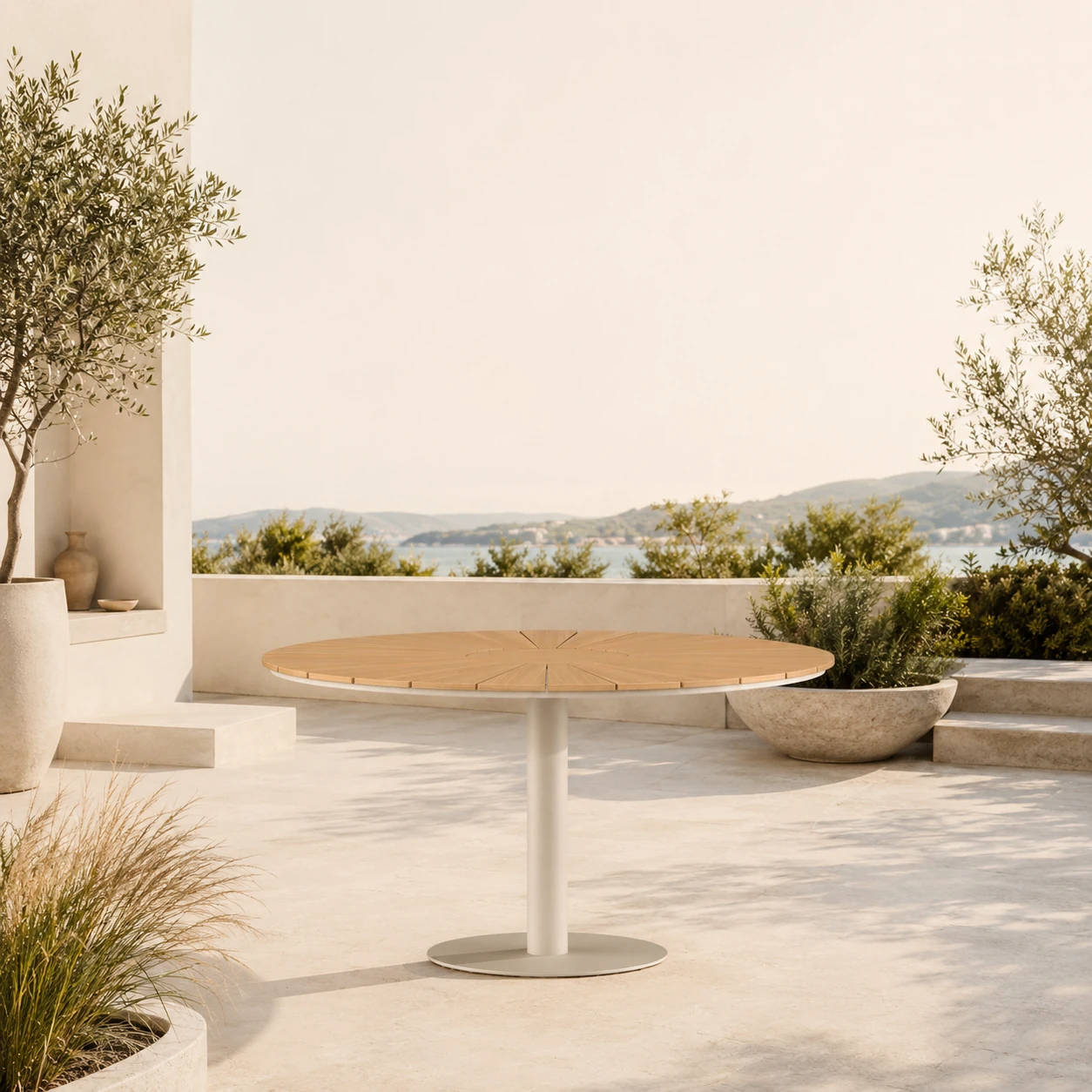
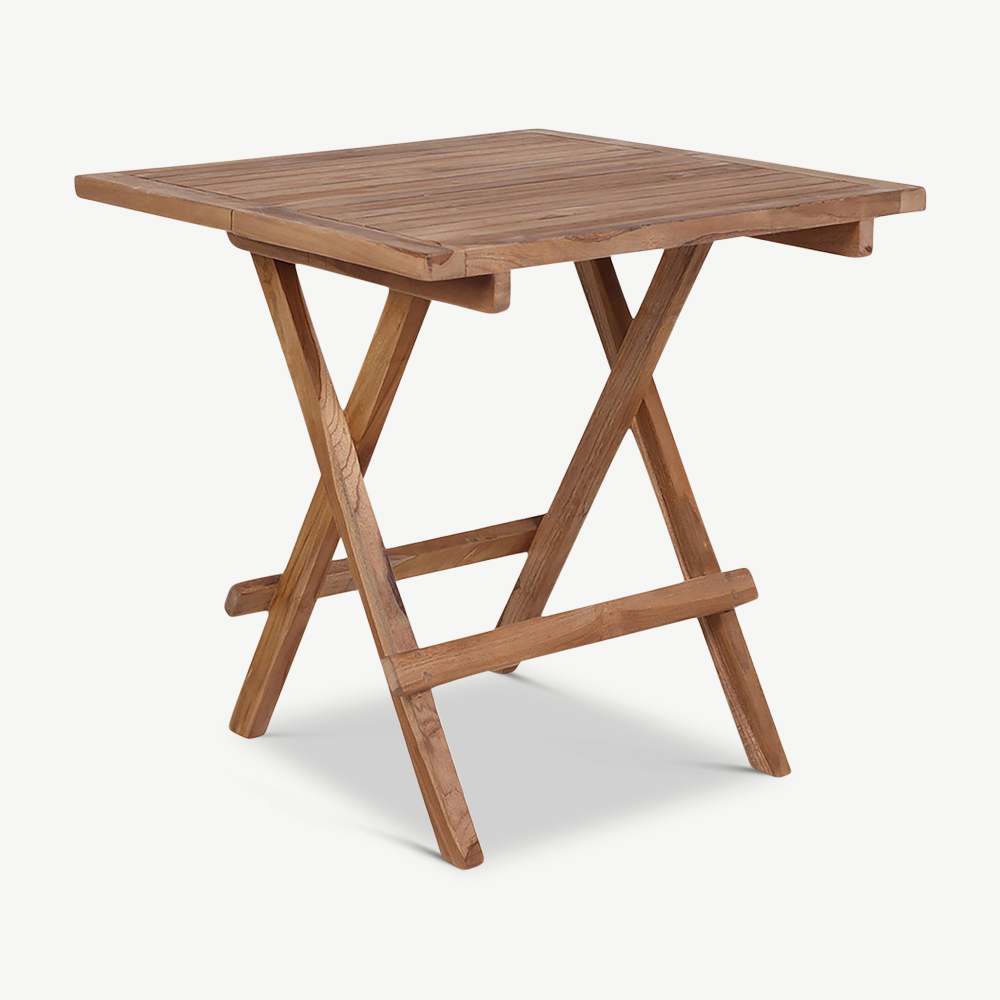
Slatted FSC teak top, central or X-frame leg. Patinas from honey-gold to silver in 12 to 18 months. Fits a Mediterranean patio, a Provence terrace, a Lyon walled garden.
Plan for 599 to 1,299 euros for an 8-seater. Premium models with cast aluminium legs go up to 1,999 euros.
Ceramic on aluminium
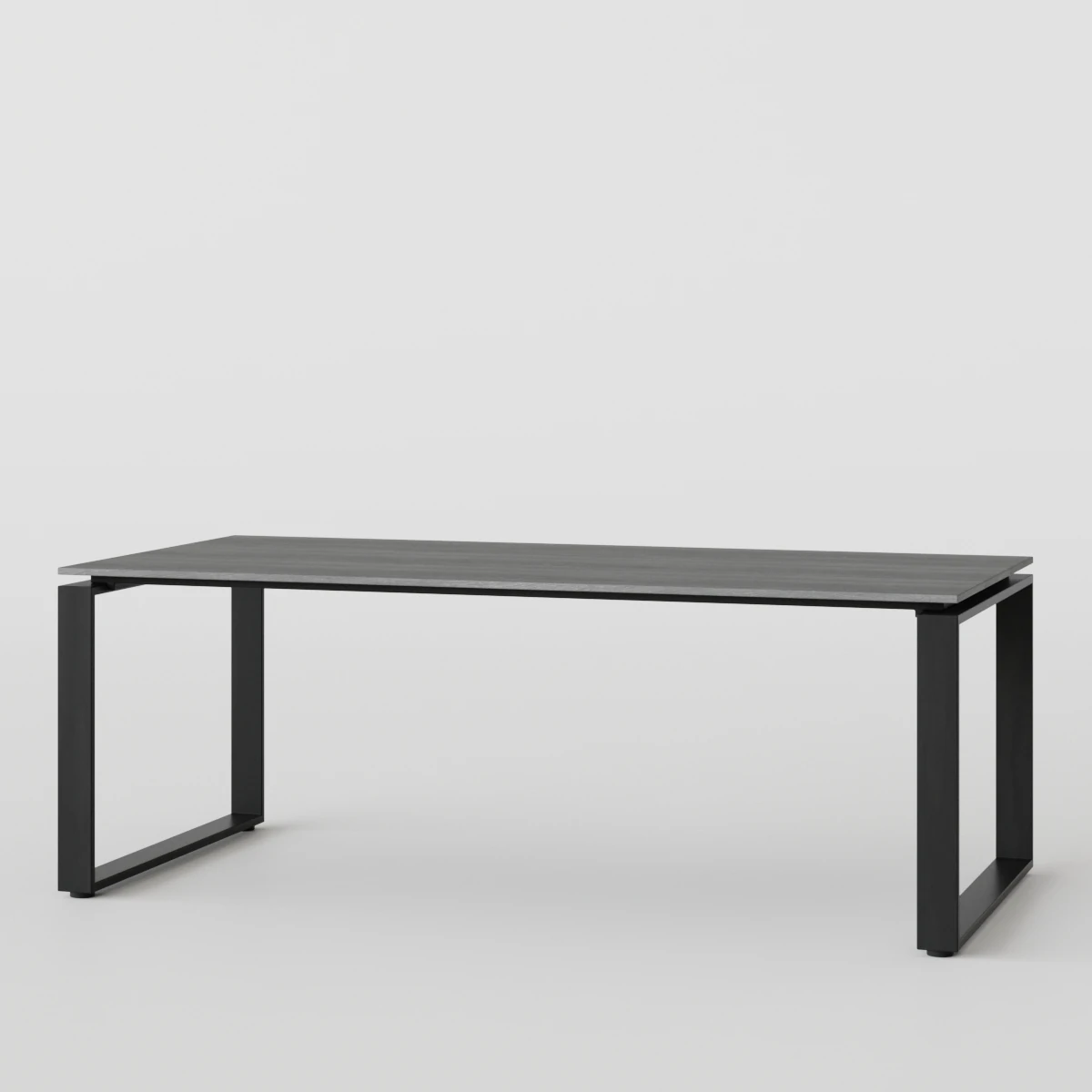
Compact porcelain stoneware top (6 to 12 mm) on a powder-coated aluminium frame. Stays cool in direct sun, takes a 200 degree dish without a trivet. Reads like the Dekton or Neolith you might use indoors.
Plan for 899 to 1,799 euros for a 6-seater. Common finishes: Calacatta marble look, raw concrete, slate grey.
Matte polywood
Solid recycled HDPE profiles, shaped into forms wood would never allow (5 cm rounded edges, arched legs). Available in matte white, anthracite, sand, navy.
Plan for 699 to 1,499 euros for a 6-seater. 20-year structural warranty, no maintenance beyond a wipe-down.
Featured in this guide

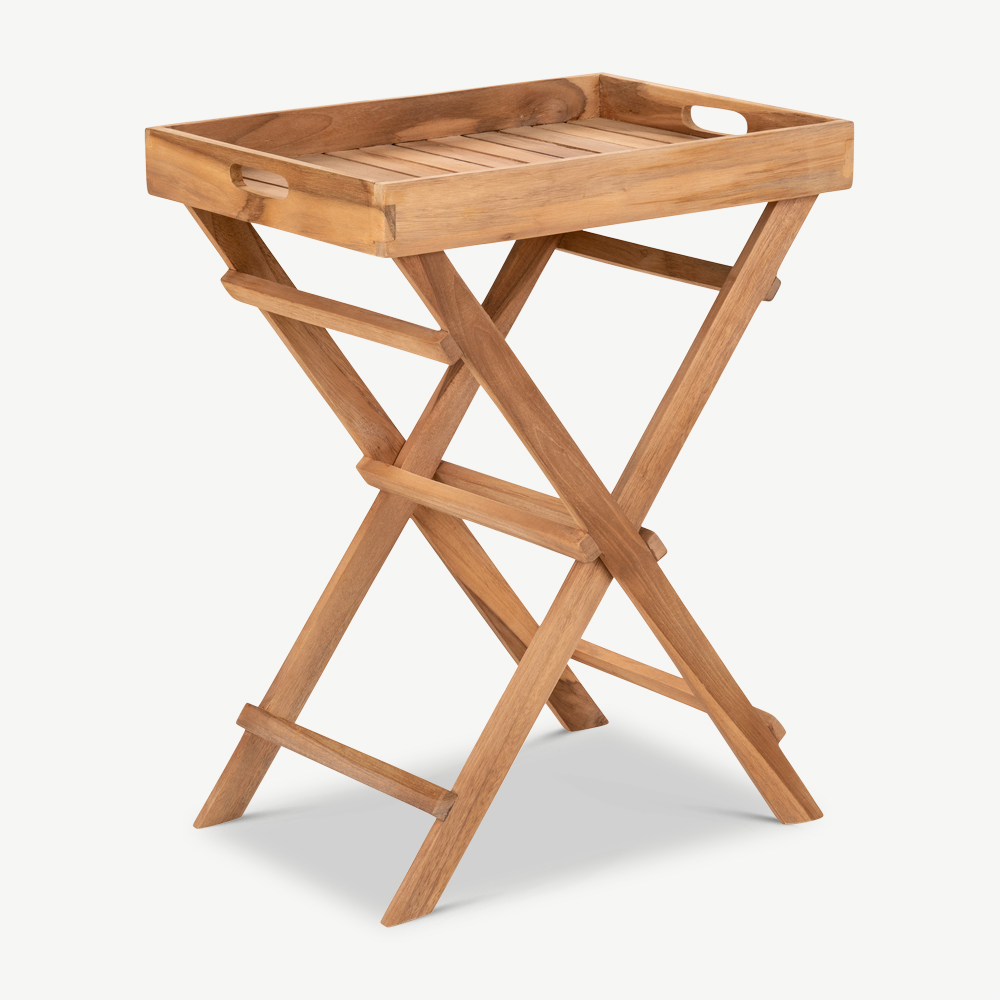


What size for how many covers
Three things matter for sizing: number of seats, shape (decides flow around the table), and height (always 72 to 75 cm for 45 cm chairs). Design tables sometimes try a 70 cm height for visual lightness, but they become uncomfortable after an hour at the table.
| Shape | Seats | Dimensions |
|---|---|---|
| Square | 4 people | 90 to 110 cm |
| Rectangular | 6 people | 160 to 180 x 90 cm |
| Rectangular | 8 people | 200 to 220 x 100 cm |
| Round | 4 people | 110 to 120 cm diameter |
| Oval | 6 to 8 people | 200 x 110 cm |
For terraces up to 12 m², a round or oval frees circulation. For larger gardens, rectangular gives more visual presence. Our dining tables buying guide applies the same flow logic to indoor spaces.
What each top actually needs
A design table should not need constant care. Three habits per finish, no more. The intensive routines marketed with high-end tables exist to justify the price, not because the table needs them.
What a good design garden table costs
A design 6-seater that lasts 15 years is FSC teak, solid polywood, or ceramic on a welded aluminium frame.
Glass on steel and pine on rolled frames last 3 to 5 seasons. FSC teak, solid polywood, and ceramic on aluminium last 15 or more years with almost no maintenance. Real marble tops and numbered designer editions offer no extra durability over ceramic or polywood.
Browse our outdoor furniture selection. For the full outdoor picture, the garden furniture buying guide. For teak-specific care, see teak care guide.
For matching benches or chairs, see our garden bench guide. For matching interior styles, our Scandinavian guide or Japandi guide.
Frequently asked.
Which garden table material is most design-led and durable?
FSC teak for warm lines (20+ years), ceramic on aluminium for contemporary lines (15 to 20 years), and polywood for sculptural shapes (20+ years, 20-year warranty). Avoid glass on steel (rusts in 4 years) and pine (warps in 3 winters).
What size table seats 6?
A rectangular 6-seater is 160 to 180 cm long by 90 cm deep. An oval equivalent is 200 x 110 cm. A round of 130 cm diameter can seat 6 but feels tight. Add 75 cm of chair pull-back clearance all around for flow.
What does a design garden table cost?
A design 6-seater that lasts 15 years costs 699 to 1,499 euros. Below 500 euros, the quality does not hold. Above 1,500 euros, you pay for designer naming or real marble, not extra durability. The sweet spot is 899 to 1,299 euros.
Does a ceramic top survive frost?
Yes, compact porcelain stoneware at 6 to 12 mm is proven against EU frost. It does not crack in freeze-thaw because porosity is below 0.5 percent. Tilt the top slightly so water does not pool centre-table, that is the only precaution needed.
Which shape suits a small terrace?
For terraces under 12 m², choose a round table 110 to 120 cm in diameter or a compact oval 160 x 90. These shapes free corners, avoid sharp angles, and allow circulation. Avoid rectangulars over 180 cm on these surfaces.
Should I bring the design table indoors in winter?
No. The three good materials (FSC teak, ceramic on aluminium, polywood) survive winter without damage. Tilt the top slightly for drainage, and use a breathable cover only during prolonged rain stretches. Continuous covers trap moisture and grow mildew.
