 9800+ TRUSTPILOT REVIEWS


 EN
EN DE
DE FR
FR NL
NL
Buying a rattan chair is not complicated, but four points decide whether you get a chair that lasts fifteen years or one that sags in three. Plus a few European realities most furniture guides skim over: how a chair clears a narrow staircase, what seat height matches a standard table, and how many chairs actually fit a small dining room without crowding it.
This guide gives you a practical showroom and online checklist with dimensions, weights and price points that work in a real European home. With clear guidance on when a cheaper chair is fine and when buying down becomes an expensive mistake.
The four checks that decide quality
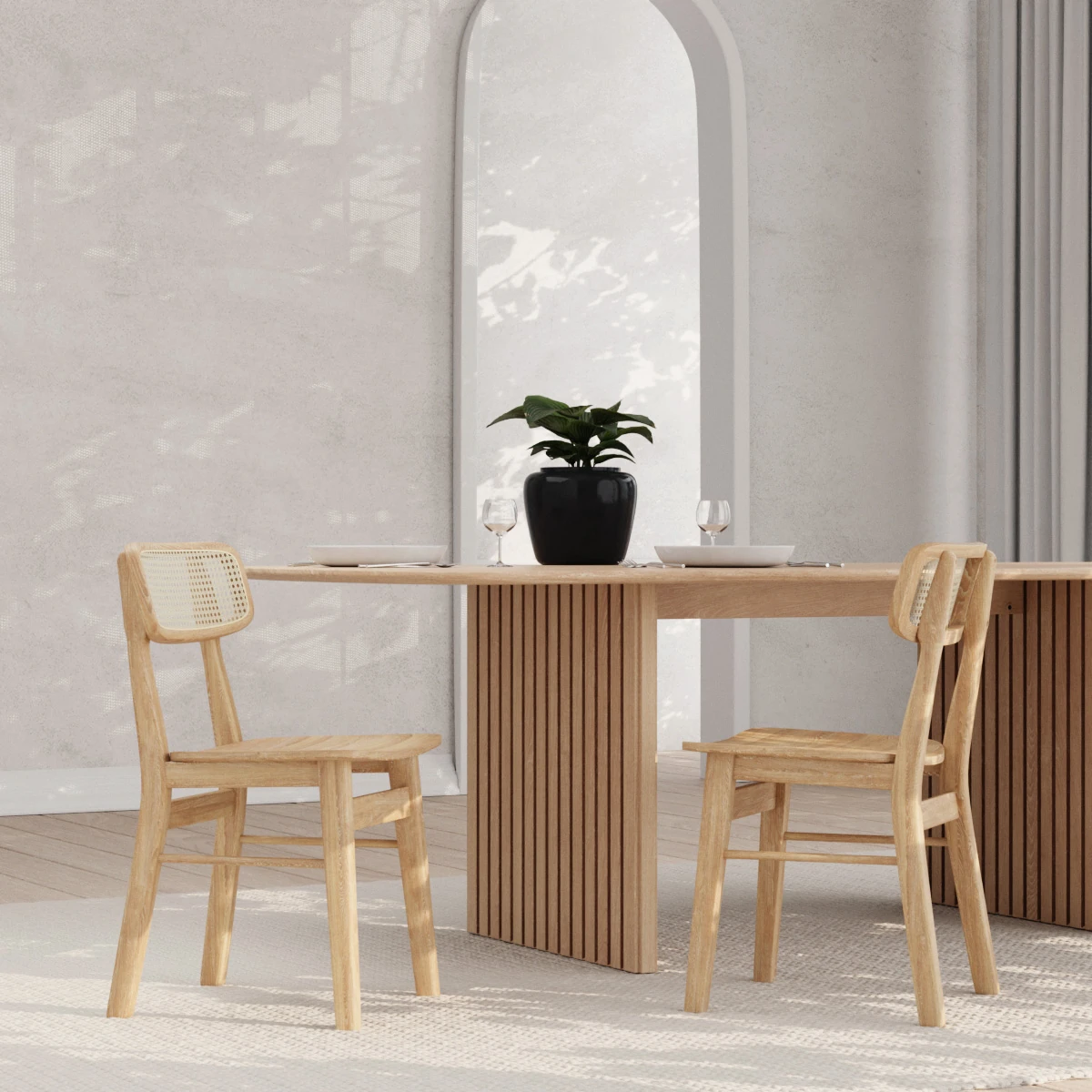
The difference between a €79 chair and a €159 one is not the amount of rattan, it is how it is joined. Four checks cover 90 percent of the quality gap. Run through them in the showroom or ask for close-ups before ordering online.
- Mortise-and-tenon joints: corners should be connected with traditional wood joinery wrapped in rattan strips. Visible screws or metal fittings driven through the weave: skip it.
- Weave density: hold the seat panel against the light. Tight, even, no visible gaps. Cheap models let light through obviously.
- Weight: minimum 4.5 kg for a dining chair, 9 kg for an armchair. Lighter usually means chipboard under a thin rattan veneer.
- Frame finish: water-based lacquer or oil preferred, no heavy gloss that scratches in 2 years. On visible grain you should still see the wood's natural pattern.
Will it fit your home?
Three common European home types, with specific points for rattan chairs. Measure your staircase and the doorway to your dining room before placing a large order.
Period townhouse
Staircases of 60 to 70 cm with sharp turns. Dining chairs always pass. Lounge armchairs with rattan backs (70 to 85 cm wide) are difficult; ask for on-site assembly if the box does not turn the corner.
Keep 27 to 30 cm clearance between seat and table top for comfortable dining.
Mid-century flat or modern terrace
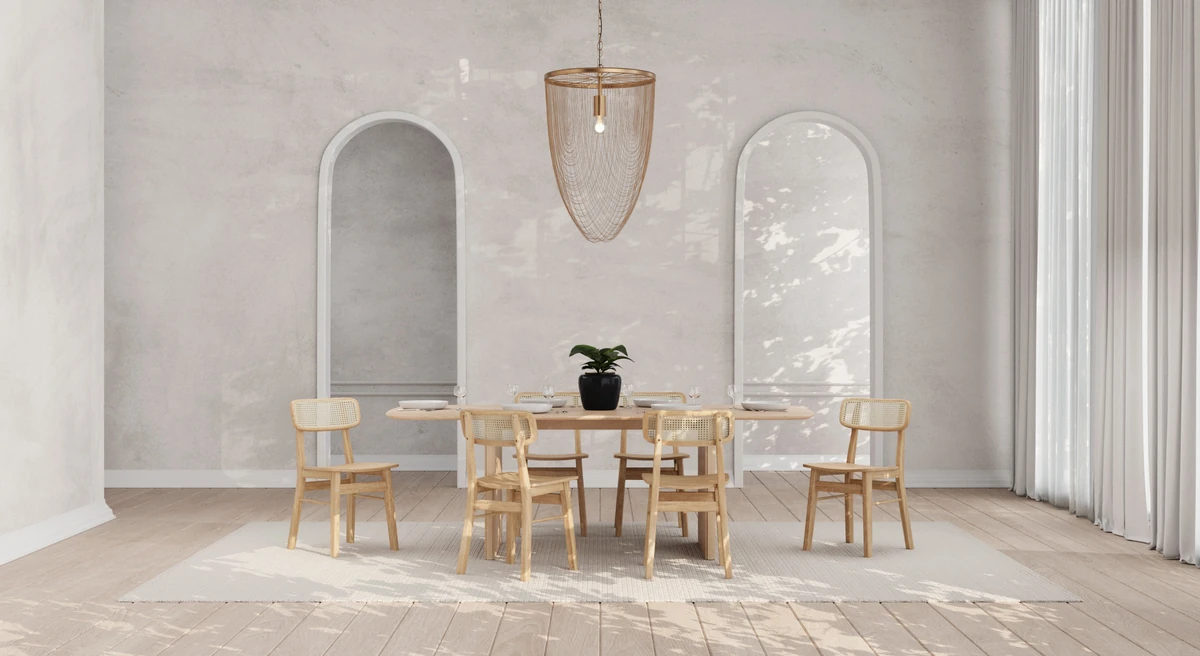
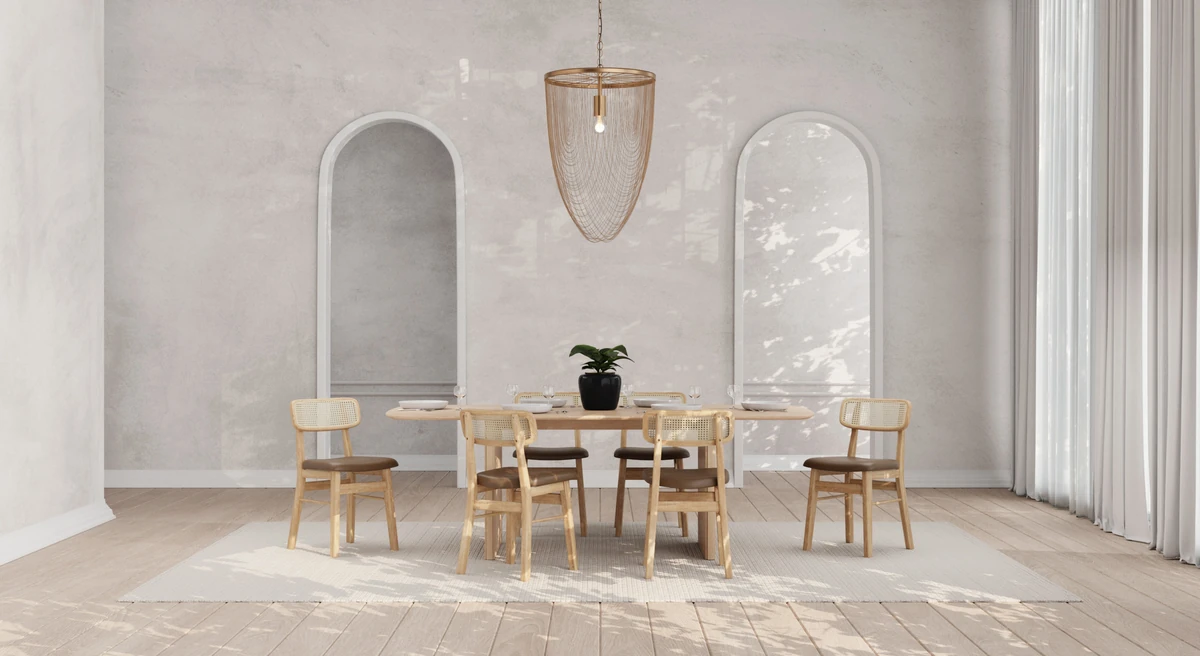
No delivery issues, but watch proportion. A 12 sqm dining area sits well with 4 to 6 chairs around a 160 cm table, not more. Wide chairs with arms crowd the space quickly.
Table height typically 74 to 76 cm, so a standard 46 cm seat height works.
New-build apartment
No delivery limits. Ceilings of 2.80 to 3.20 m give vertical room, so a chair with a slightly taller back reads better than a low one which gets visually lost.
A 100 cm-tall lounge armchair is at home here.
Featured in this guide
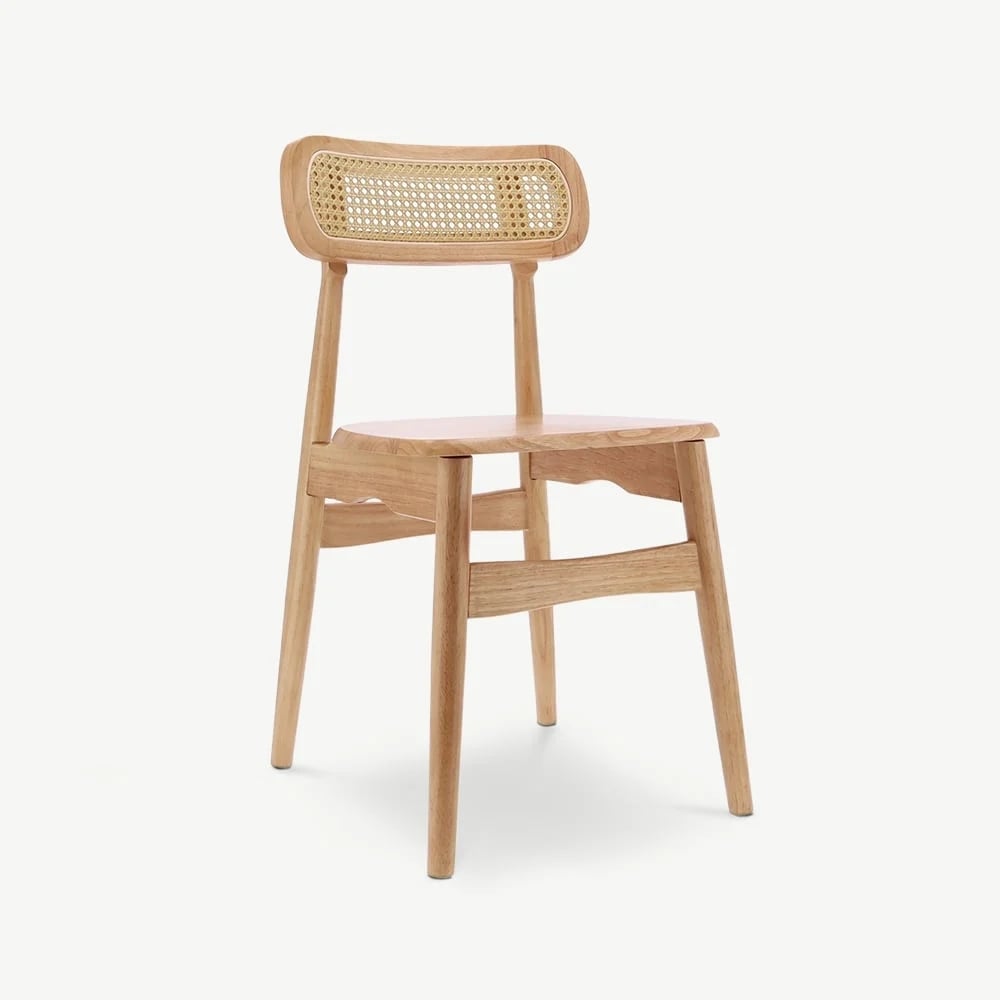
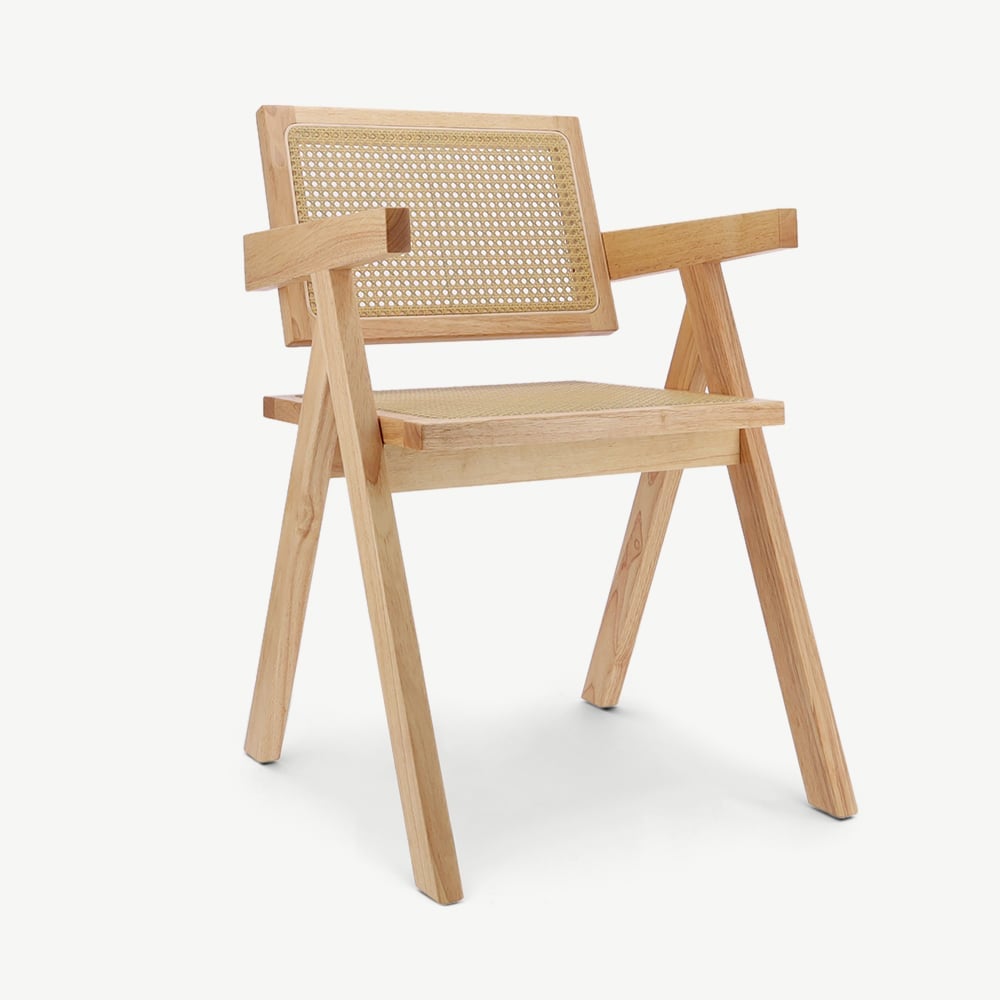
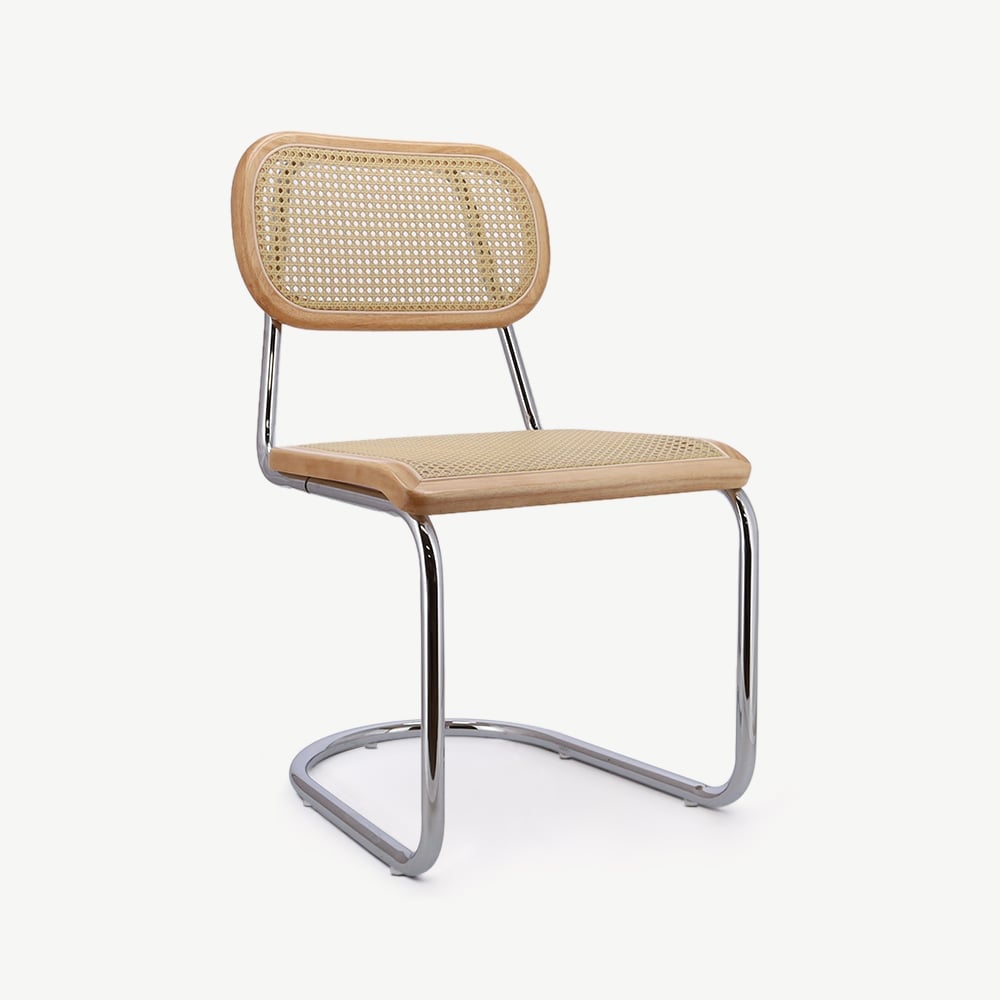

When cheap is fine, when it isn't
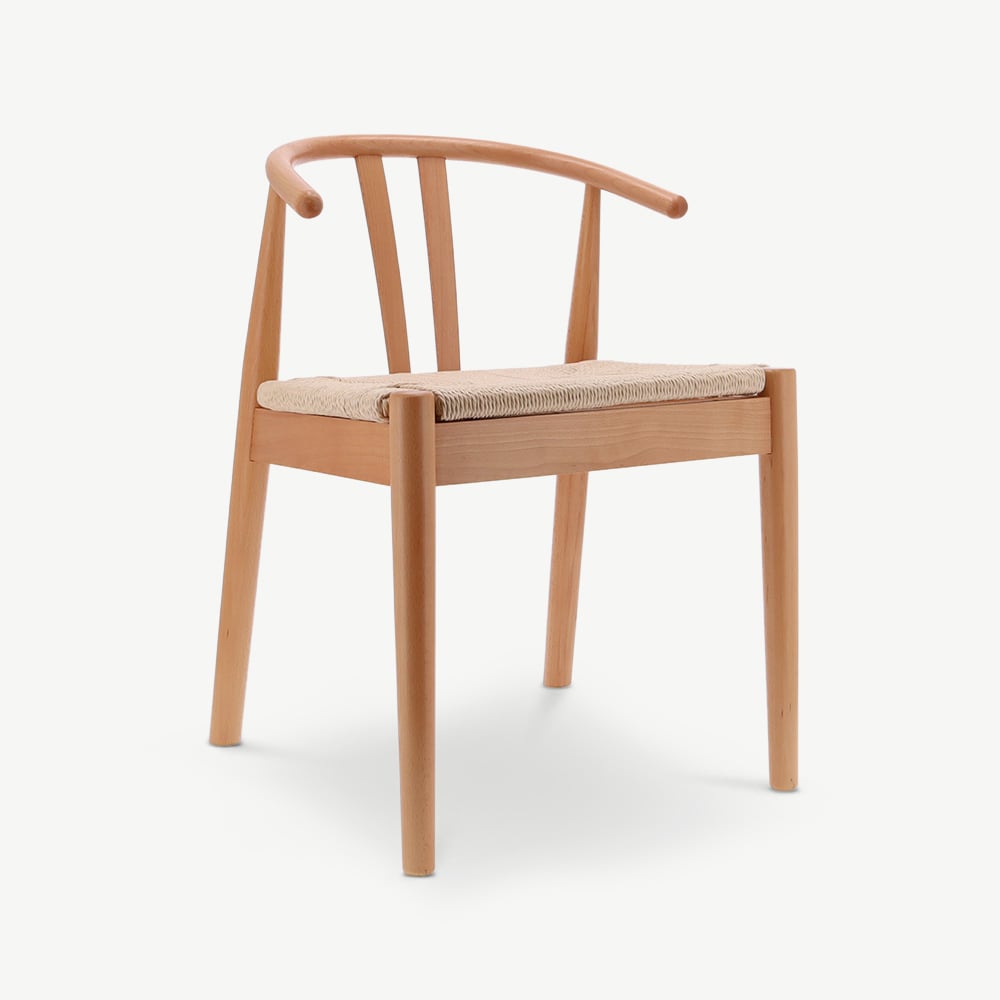
Not every rattan chair needs to be an investment. For a guest room or accent chair, a lower price point is fine. For daily dining, the threshold is higher. Here is what the price actually buys you in each use case.
| Use | Minimum price | Expected life |
|---|---|---|
| Guest room, under 5 h/week | €79 | 15 years |
| Desk or accent chair | €89 | 12 years |
| Daily dining, family of 4 | €99 | 15 to 20 years |
| Dining + home working from same chair | €129 | 18 years |
| Lounge armchair in living room | €280 | 20 years |
These minimums assume real rattan on a beech frame, not budget imitations with cardboard weave on chipboard. Below those floors you almost never reach the listed lifespan, regardless of where you shop.
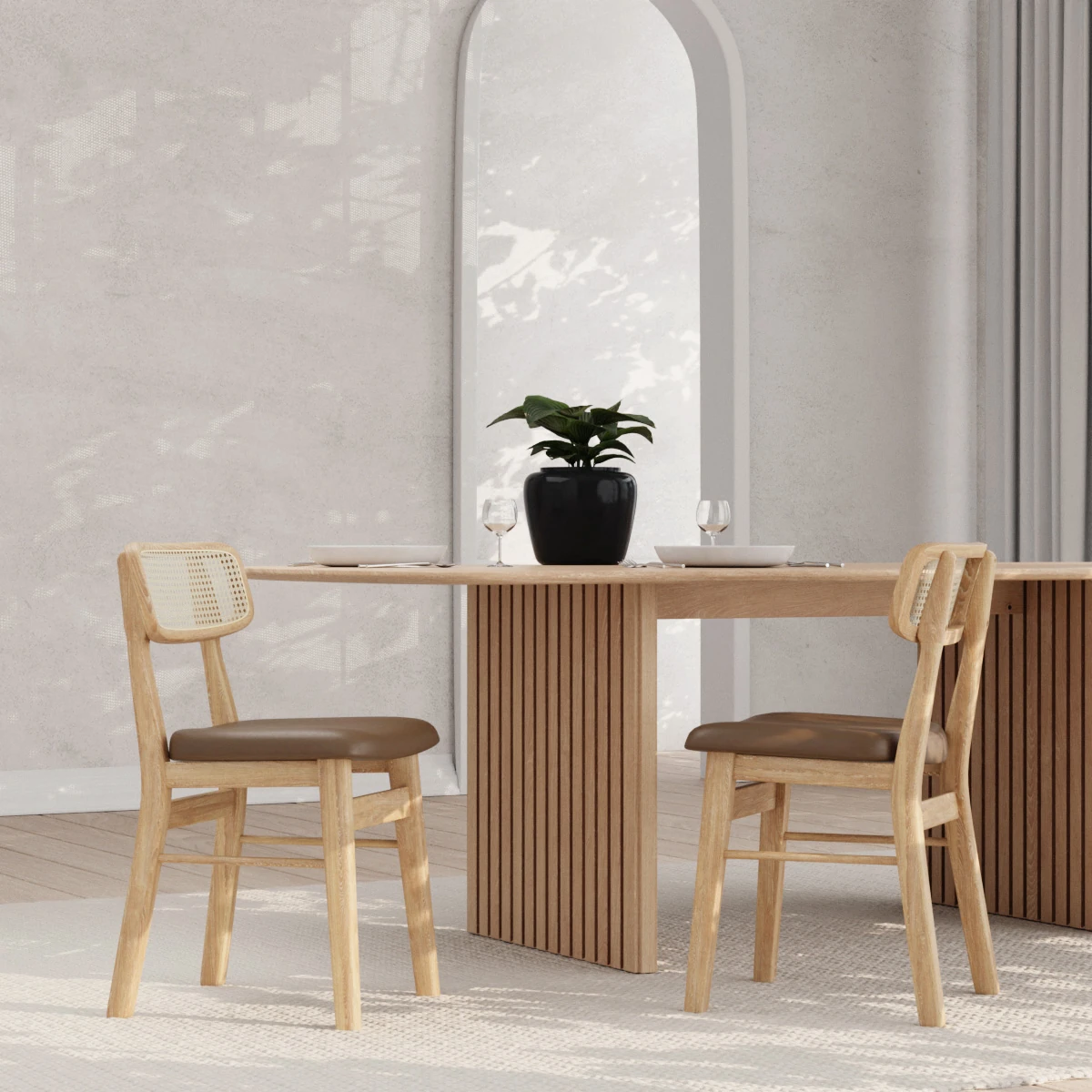
What to ask if you cannot visit
Most European furniture purchases happen online. If you are not coming to a showroom, ask for these four things before deciding. At Furnicher they sit on the product page by default; with other retailers you may need to ask.
The checklist in one line
Joinery, weave, weight, finish. Measure the stair. Check the returns.
Run those six points before you pay, and you buy a rattan chair that lasts. Below €99, risk of hidden compromises (card weave, chipboard) is high. Above €200 for a basic dining chair, you are paying for the brand more than the substance. The €99 to €159 bracket is where European buyers find the best balance of price and lifespan.
Browse our rattan furniture selection. Chairs from €99 on beech frames, typical 15 to 20 year lifespan indoors, 30-day returns. The full material overview lives in our rattan furniture guide.
If you want broader dining-chair guidance, see our dining chairs buying guide. For style choices between rattan families, see rattan chair styles. And for a calmer interior pairing, our Japandi furniture collection.
Frequently asked.
What should I check when buying a rattan chair?
Four points: the mortise-and-tenon corner joints (no screws driven through the weave, no glue smears), weave density (tight and even, hold the seat panel against light), weight (at least 4.5 kg for a dining chair, 9 kg for an armchair), and frame finish (water-based lacquer or oil rather than heavy gloss that scratches in two years). In a showroom, shake the chair: good work creaks lightly and nothing wobbles.
Will a rattan chair fit a narrow European stair?
Standard rattan dining chairs are 45 to 50 cm wide and weigh 4.5 to 6 kg, so they pass through a 60 cm staircase with some manoeuvring. Lounge armchairs with rattan backs are 70 to 85 cm wide and may catch above 60 cm of stair width. Measure both the landings and the doorway to your living room before ordering an armchair, not just the bottom of the stair.
When is a cheaper rattan chair good enough?
For a guest room, desk or accent chair used under five hours a week, €79 to €99 is fine and lifespan will still reach 12 to 15 years. For daily dining, aim for at least €99 on a beech frame with tight weave; below that you risk sagging or cracking within four years. Anything sold as rattan under €70 is almost certainly card weave on chipboard, not the real material.
What is the right seat height for a rattan chair?
Standard seat height is 46 cm, suitable for most European dining tables at 74 to 76 cm high. The recommended clearance between seat and table top is 27 to 30 cm for comfortable eating without knees catching. If your table is taller (78 cm or more), choose a chair with 48 cm seat height. Measure your table before ordering.
Does rattan suit a small flat?
Yes, with attention to scale. In a 12 sqm dining area, four to six chairs around a 160 cm table is the practical limit. Pick chairs under 50 cm wide and avoid wide arms; they crowd the space quickly. One family, four to six identical chairs reads cleanest in a small room and pulls the eye toward the table rather than the chairs.
Do I have to test a rattan chair in store?
Preferred but not essential if the online product photography is detailed enough. Ask specifically for close-ups of the corner joints, the underside of the seat, and the weave held against light. At Furnicher you also have 30 days return on rattan chairs, so you can test at home before deciding finally. Keep the packaging until you are sure you are keeping the chair.
