 9800+ TRUSTPILOT REVIEWS


 EN
EN DE
DE FR
FR NL
NL
Rattan comes in four colour finishes that most buyers cycle through: natural honey, deep black, cognac mid-brown, and white-washed. The visual difference at the showroom is obvious. The difference after five years in a real room is what most people get wrong.
This guide covers what each colour does to a space, how each ages under daily light and use, and which finishes our European buyers gravitate to in different settings. The numbers come from our last 24 months of order data and from customer photos sent in for the review programme.
One material, four different rooms
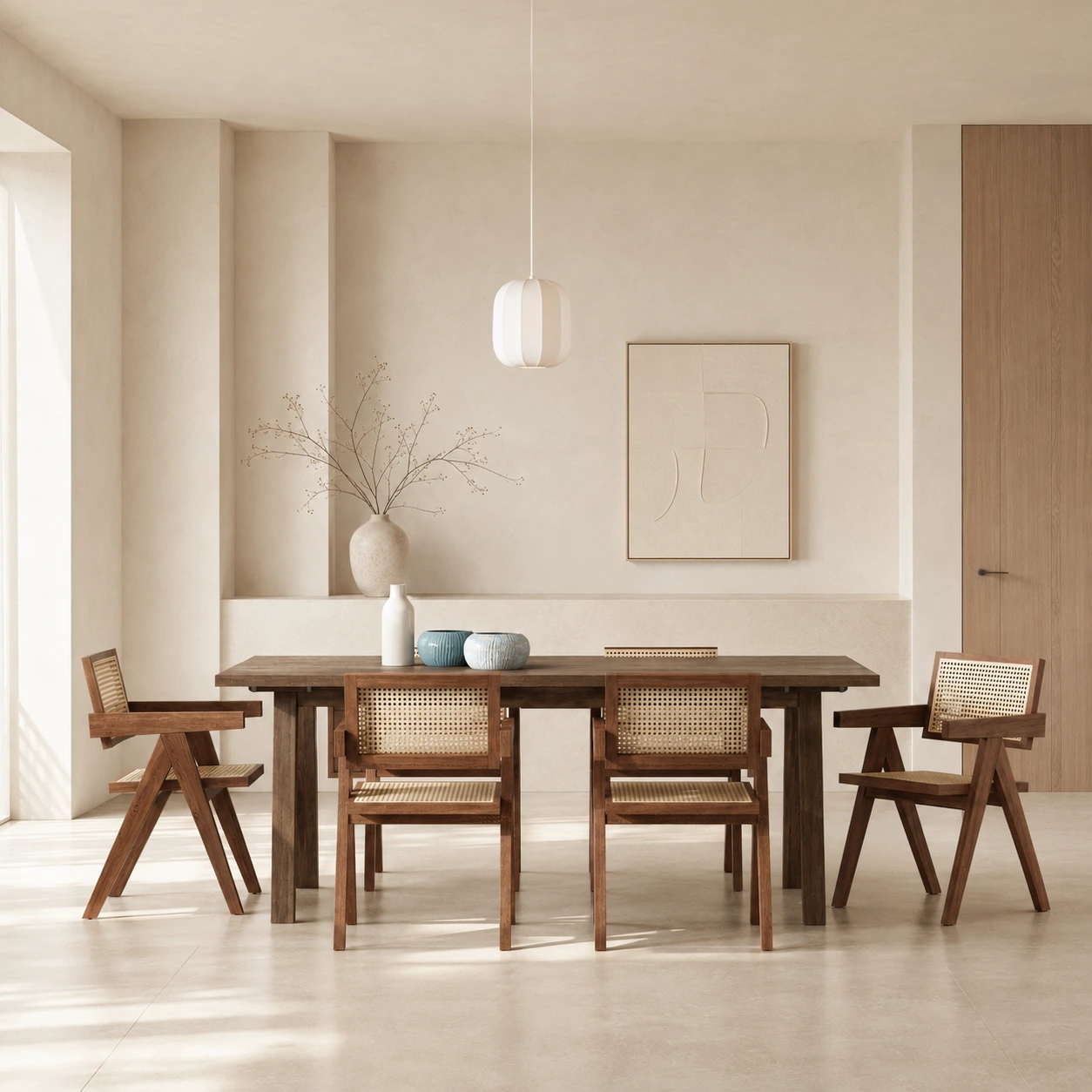
Rattan is sold in a small palette because the cane takes stain unevenly along its length. Manufacturers stick to finishes that work with the natural variation. The result is four mainstream colours, each with its own visual job in a space.
The order of popularity in our European data over the last 24 months: natural 54%, black 28%, cognac 13%, white-washed 5%. Natural dominates because it works in the most rooms with the least effort. The other three are bought when a specific effect is the point.
- Natural: honey to amber, no stain, ages warmer over time
- Black: deep ebony, stained, the strongest contrast option
- Cognac: mid-brown, stained, the quiet middle ground
- White-washed: thinned white pigment, the weave still visible
What each finish actually does in a room
Each colour has a clear job and a clear failure mode. Pick the one that matches the room you have, not the room in the photo.
Natural honey
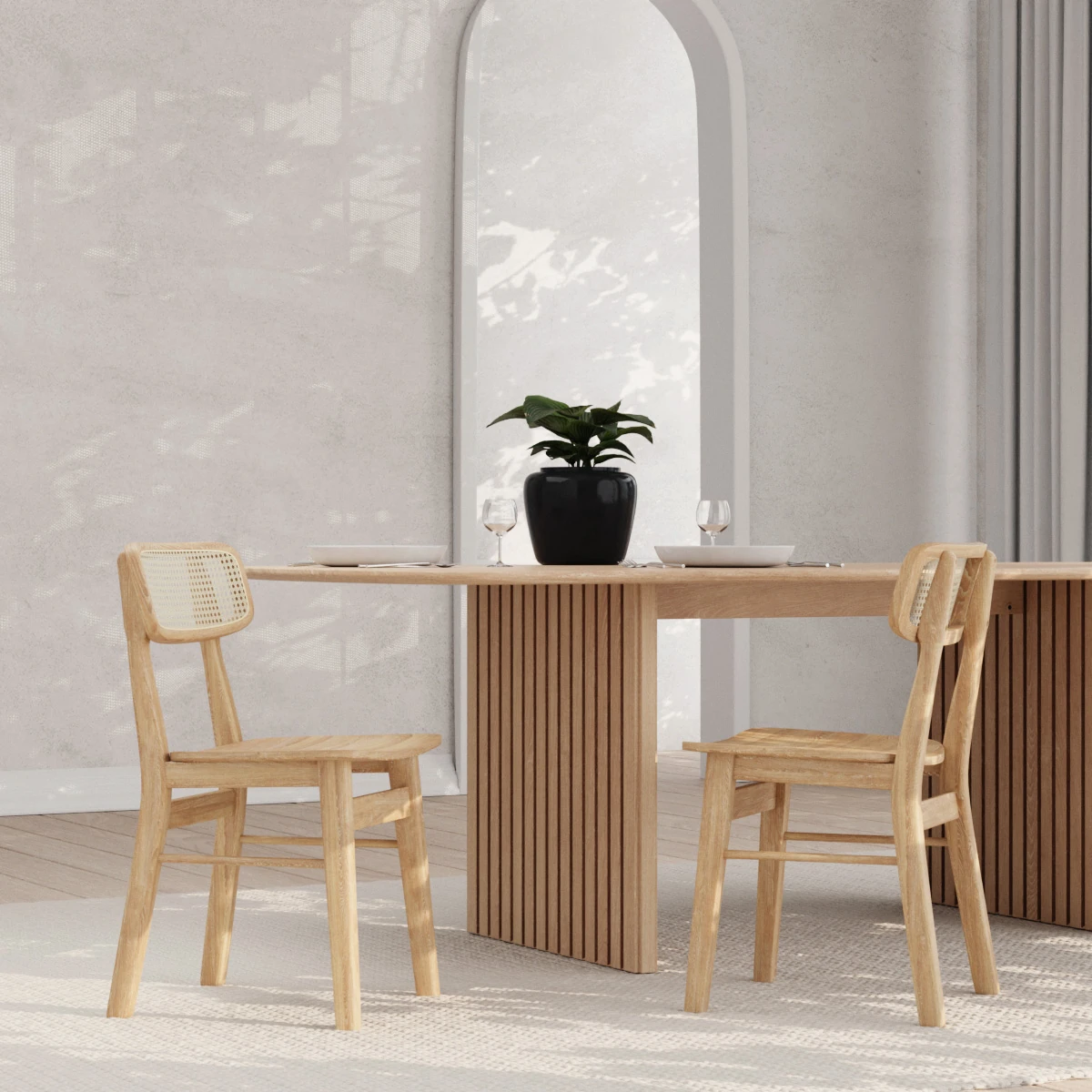
Unstained rattan in its raw colour, sealed with a clear matt finish. Reflects light, keeps the room visually light, pairs with oak, linen, and pale walls. The default Scandi-Japandi pick.
Over five to seven years, the colour deepens to a soft amber. Many buyers prefer the aged tone. UV near a window speeds the shift; oil annually with linseed to slow it.
Black
Stained with a water-based black dye on the natural fibre, then sealed. Reads as a focal point against pale walls. Pairs with brass, dark woods, and warm whites. The chair becomes the statement, not the background.
Loses 5 to 10% intensity per decade under normal indoor light. Edges that catch direct sun fade faster to grey. A re-stain restores the tone for around €60 to €120 per chair.
Cognac
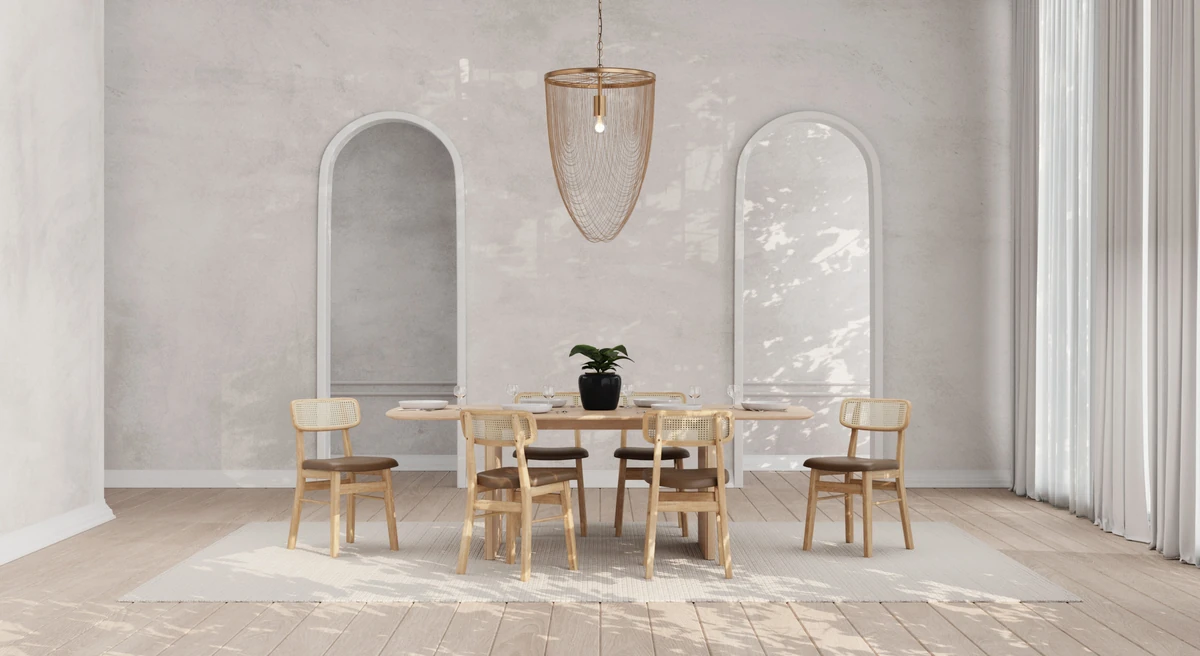
Mid-brown stain. Warmer than natural, softer than black. Increasingly the favourite for Japandi schemes, where it sits between light oak floors and walnut tables without competing with either.
Ages within a narrow range: small darkening rather than colour shift. The most forgiving finish over a decade. Pairs well with cane, leather, and cream textiles.
White-washed
Thinned white pigment that allows the weave texture and some of the natural fibre to show through. Reads coastal, French-country, or pale-modern depending on the surrounding scheme.
Picks up dust and stains the fastest of the four. Touch-up paint can be ordered with the chair to address wear at the contact points. Less suitable for high-use dining setups.
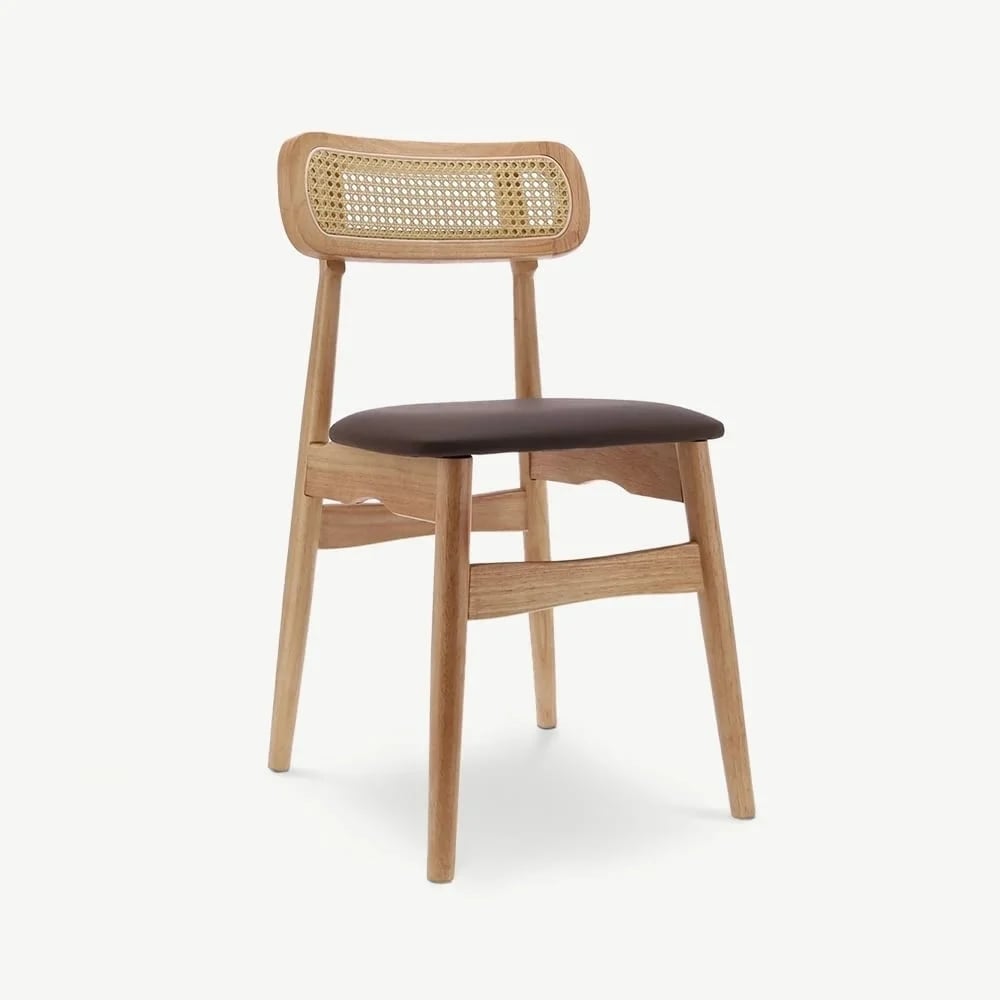
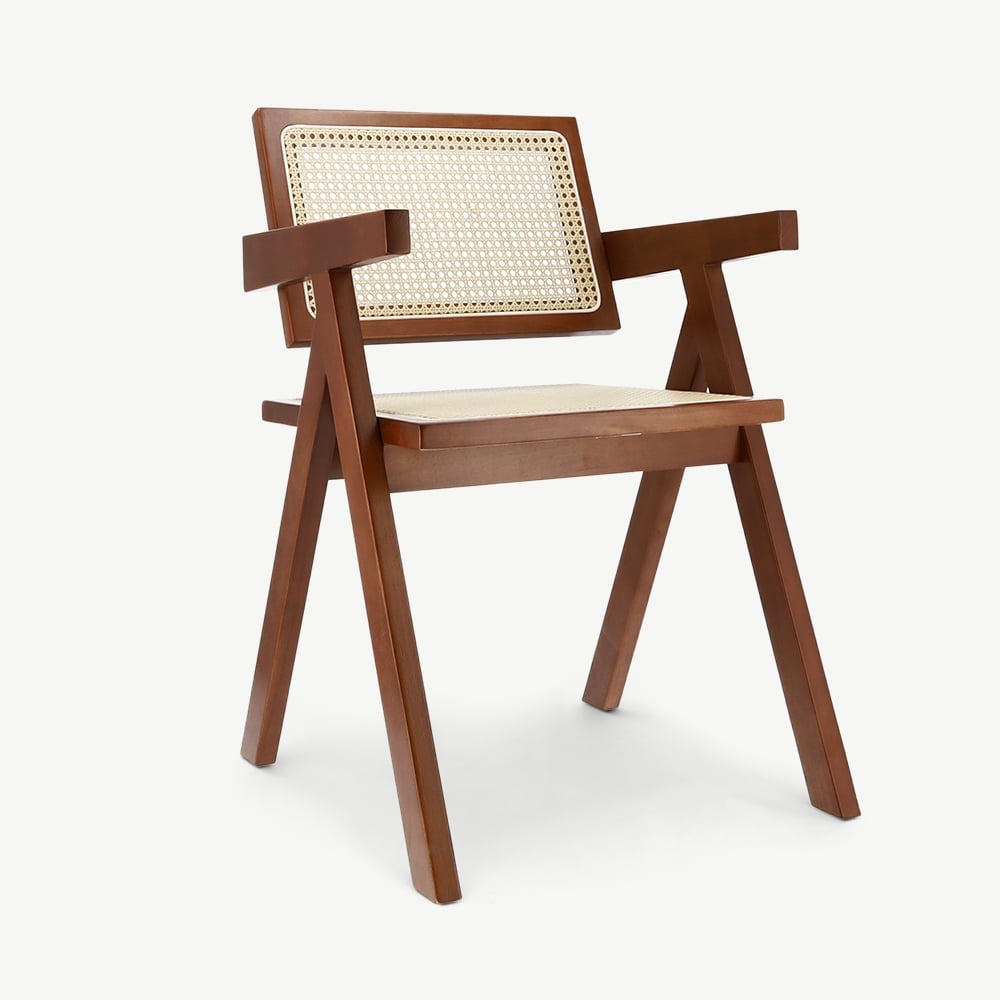
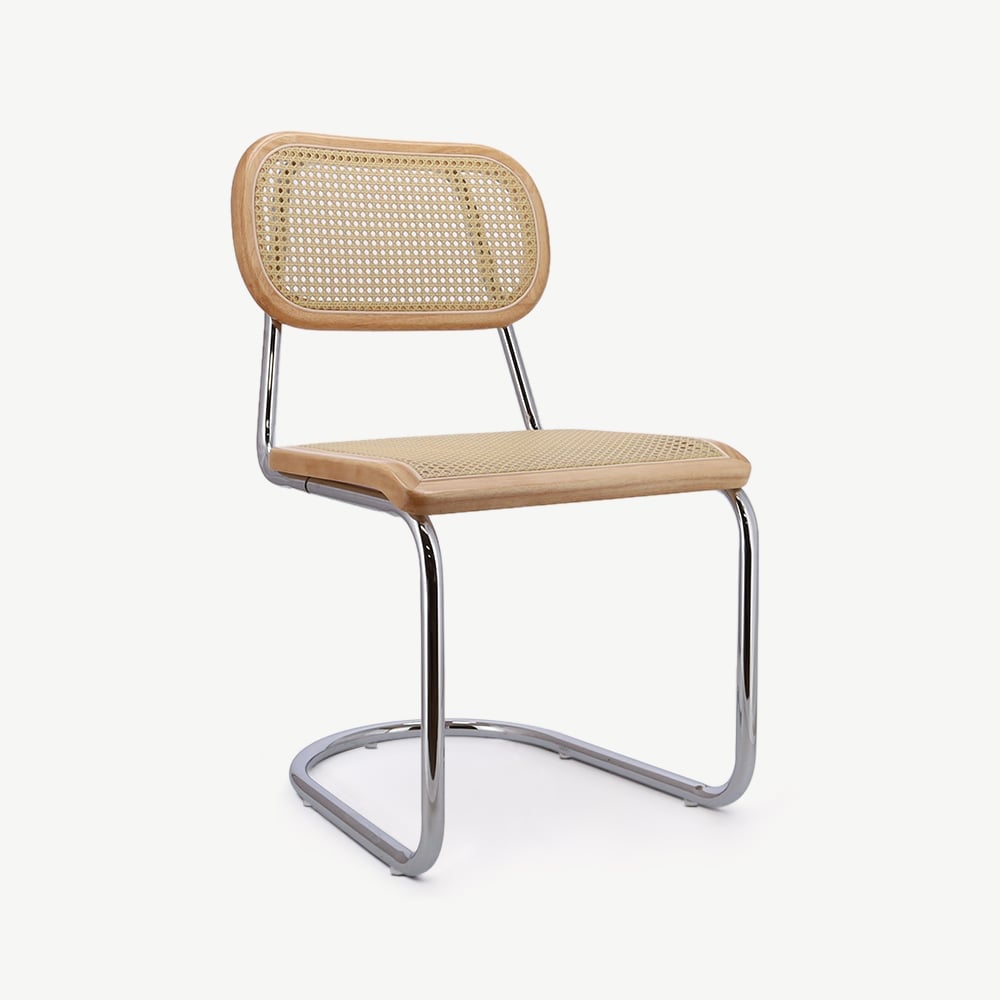
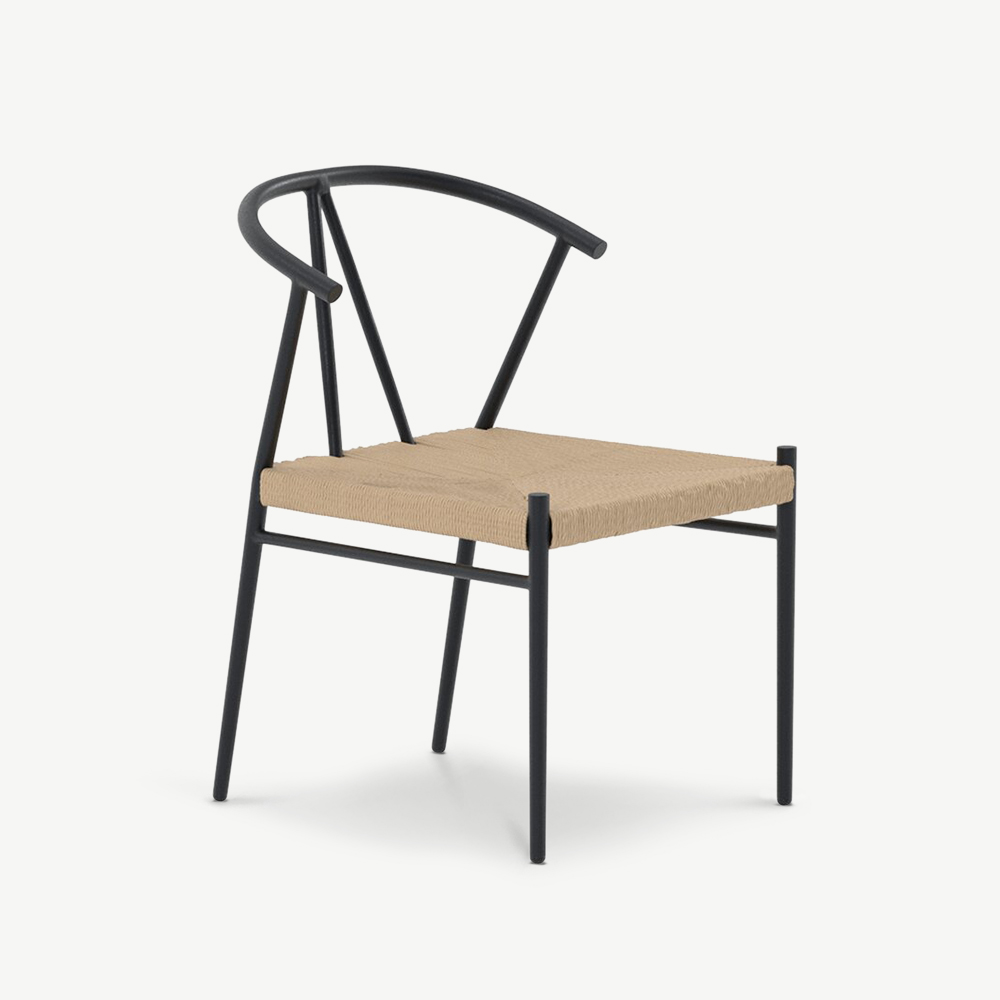
Featured in this guide
How each colour actually wears
The numbers below are 5-year wear observations from customer photos in our review programme. Indoor rooms, normal daily use, no extreme conditions.
| Finish | Colour shift at 5 years | Wear visibility |
|---|---|---|
| Natural honey | Deeper amber | Low, blends with shift |
| Black | Slight grey at edges | Medium, on contact points |
| Cognac | Marginal darkening | Low, very forgiving |
| White-washed | Yellowed in patches | High, marks visible |
If long-term low-maintenance appearance is the priority, cognac wins. If the goal is the most light-reflective finish, natural is the answer. Black for contrast that ages gracefully. White-washed for the brightening effect, accepting that it will show its years.
What we stock and why
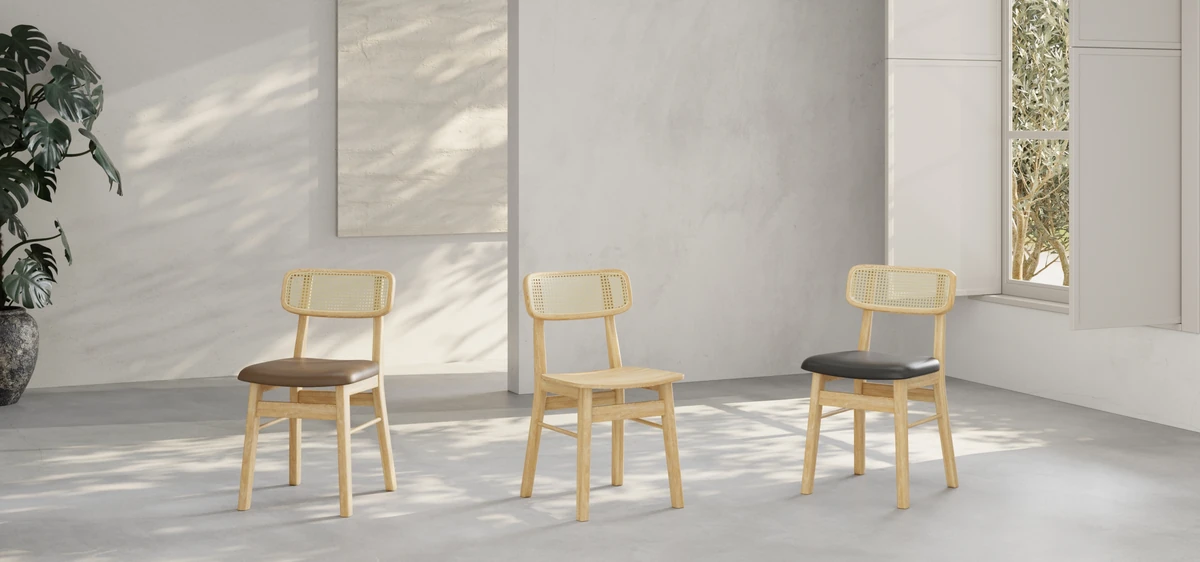
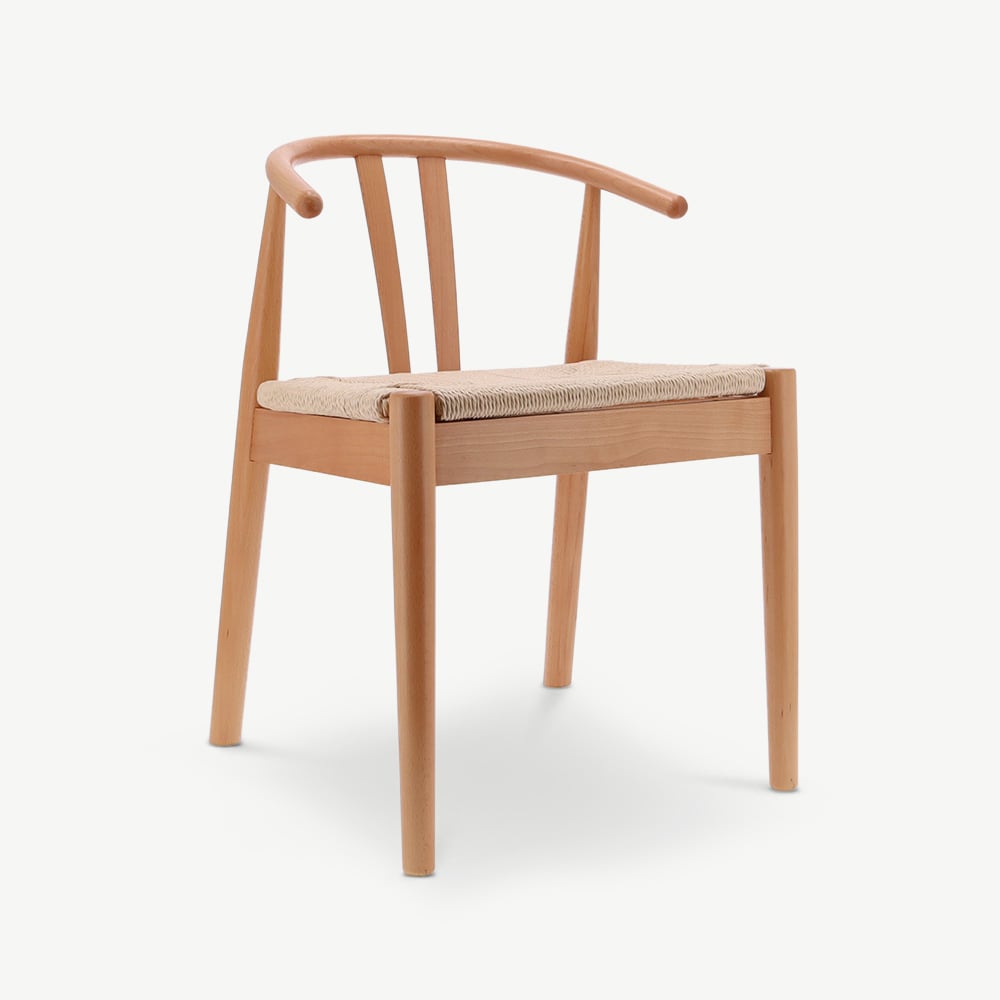
Our rattan dining chair range carries all four finishes. The Scandi chair comes in natural, black, and cognac. The Jenson model adds white-washed. The Peter cantilever ships in natural, cognac, and black.
We stain in batches against orders, so colour consistency within a set is high. For sets of six, order at the same time; for sets added to over time, expect minor batch variation that becomes invisible once the chairs have lived in the same light for six months.
Prices are flat across the colour range: €99 to €249 depending on model, no surcharge for stained finishes. The most-bought combination at our checkout is six natural rattan dining chairs at €119 each.
Pick the colour for the room, not the photo
Natural for warm-and-light. Black for contrast. Cognac for quiet versatility. White-washed for brightening, with the caveat that it shows wear.
Browse the rattan dining chair selection, all four finishes shown in real interior photos. For a single accent piece rather than a set, the Japandi collection is where cognac and natural appear together most often.
The companion read for terminology is rattan vs wicker. For the material side, the deeper article on what a rattan chair actually is covers construction across colours.
Once you have chosen, the care routine applies to every colour identically with one exception: white-washed wants a touch-up paint pen in the cupboard. For how colour fits the wider material choice, see our rattan furniture buying guide.
Frequently asked.
Which rattan colour ages best?
Cognac. The mid-brown stain sits between natural and dark, so any UV fading shifts within a narrow range and reads as patina rather than damage. Natural rattan yellows slightly under sun; black rattan fades to grey at the edges. White-washed rattan picks up dust and stains the fastest, especially around the contact points.
Is natural rattan really yellow?
Natural rattan starts honey-coloured. Under UV, it shifts to a deeper amber over five to seven years, more noticeably near windows. Many buyers prefer the aged tone. If you want the original honey colour kept, place the chair away from direct sun and oil annually with linseed oil, which slows the colour shift.
Does black rattan fade in sunlight?
Yes, but slowly. The black stain (usually a water-based dye on top of the natural fibre) loses 5 to 10% intensity per decade under normal indoor light. Edges that catch direct sun fade faster. The base fibre underneath stays intact, so a re-stain restores the original tone if needed, typically €60 to €120 per chair.
Can rattan be repainted?
Yes, but with limits. Spray-on chalk paint covers natural rattan well and lets the weave texture show through. Heavy paint clogs the weave and makes the chair look plasticky. For a colour change, professional re-staining (water-based dye plus oil top coat) gives the best result and costs €60 to €120 per chair through a furniture restorer.
Which rattan colour suits a small room?
Natural or cognac. Both reflect light and keep visual weight low, which makes the room feel larger. Black rattan adds contrast and reads as heavier; it works best where the chair is meant to be a focal point against a pale wall. White-washed rattan brightens dark corners but shows dust in small spaces with limited airflow.
What is the most popular rattan colour?
Across our European order data over the last 24 months, natural is the most popular (54%), followed by black (28%), cognac (13%), and white-washed (5%). Natural is the safe pick for most interiors. Black is bought when the chair is meant to add contrast. Cognac is the quiet middle ground that increasingly outsells black in Japandi and Scandinavian schemes.
