 9800+ TRUSTPILOT REVIEWS


 EN
EN DE
DE FR
FR NL
NL
Rattan and wicker are not the same thing, and treating them as synonyms costs buyers money. Rattan is what the chair is made of: the stem of a climbing palm grown in Southeast Asia. Wicker is how the chair is made: the over-under weaving pattern you see on seat panels, backrests, and basket sides.
Walk into any furniture shop and you will find the two words used interchangeably. The trade lets it slide because most rattan furniture is woven, and most woven furniture used to be made of rattan. The drift is harmless until you order a "wicker chair" and a paper-rush copy turns up. This guide separates the terms cleanly, covers synthetic wicker, and explains how to tell what you are actually looking at.
One is a material, one is a method
Rattan (genus Calamus) grows in tropical Asia. The cane is solid, flexible, and steam-bendable, which is what makes it useful for furniture frames. The outer skin peels off as split cane and gets woven into panels. The inner pith is used to bind joints. From one rattan pole you get three components.
Wicker is the weave itself. Any pliable strand will do: rattan, willow, bamboo, seagrass, paper rush, or polyethylene. The wicker pattern is the over-under pass that gives the surface its texture. If you remove the strand from the question, you are left with technique, not substance.
- Rattan: a noun for a specific plant material
- Wicker: a noun for a weaving technique (and the resulting surface)
- Overlap: a rattan chair woven in wicker is both, which is why the words got tangled
What you might actually be buying
When a retailer writes "wicker chair" without specifying the material, here are the three things you might be looking at. Each ages and prices differently.
Natural rattan, wicker-woven
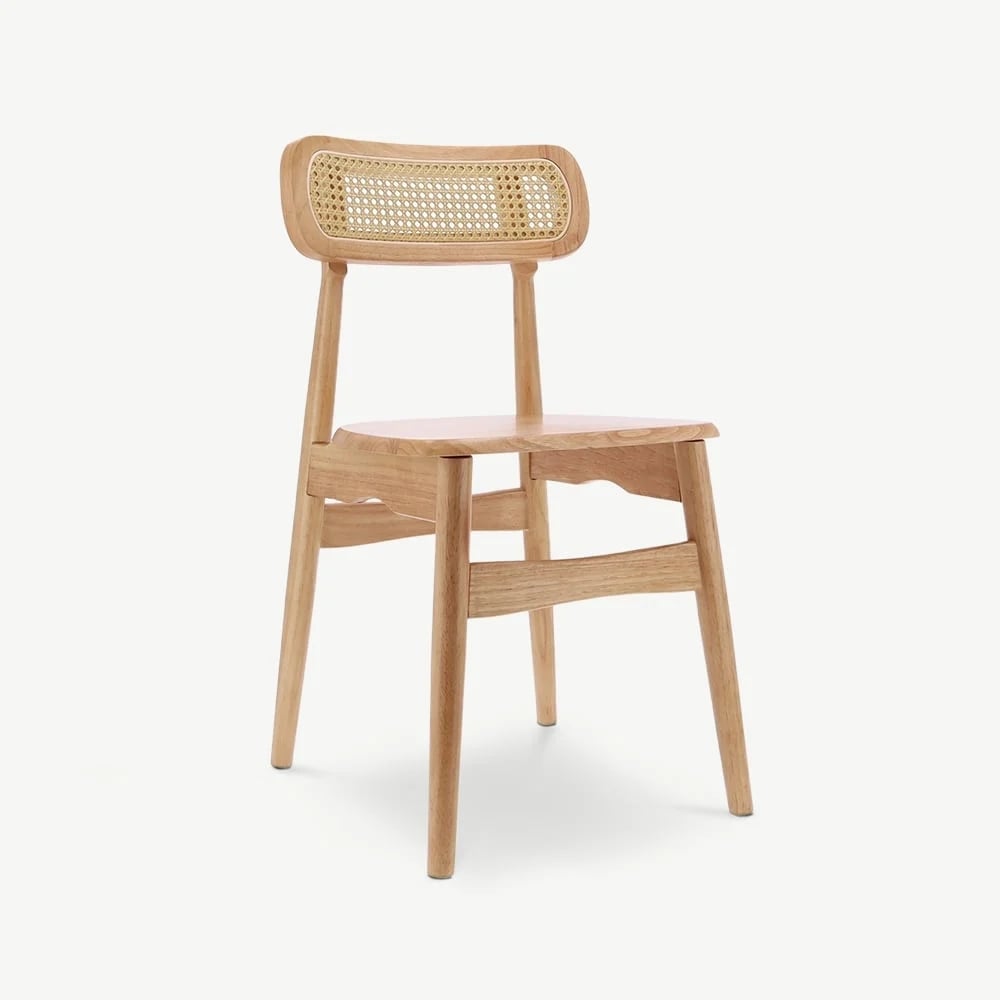
The most common combination in mid-range furniture. Solid rattan poles form the frame, split cane is wicker-woven across seat and back. This is what most people picture when they hear the word wicker, and it is what we mean when we write rattan on our product pages.
Ages well. Re-weave costs €40 to €80 per panel through a craftsman. Not suitable for prolonged outdoor exposure.
Synthetic wicker (PE)
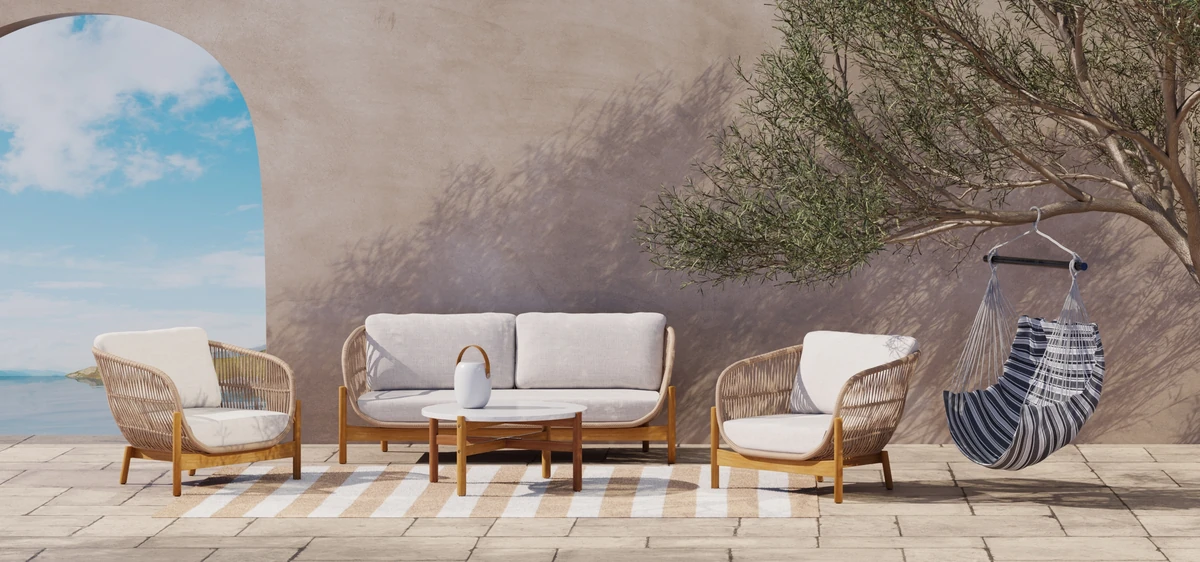
Polyethylene strands woven over a powder-coated aluminium frame. Looks similar at three metres, very different at close range: uniform colour, no nodes, slightly waxy texture. Engineered for outdoor garden sets, public seating, and conservatories.
Cannot be re-woven cleanly when damaged. Frame quality drives lifespan: aluminium 10 to 18 years, cheap steel 3 to 5.
Paper rush, seagrass, willow
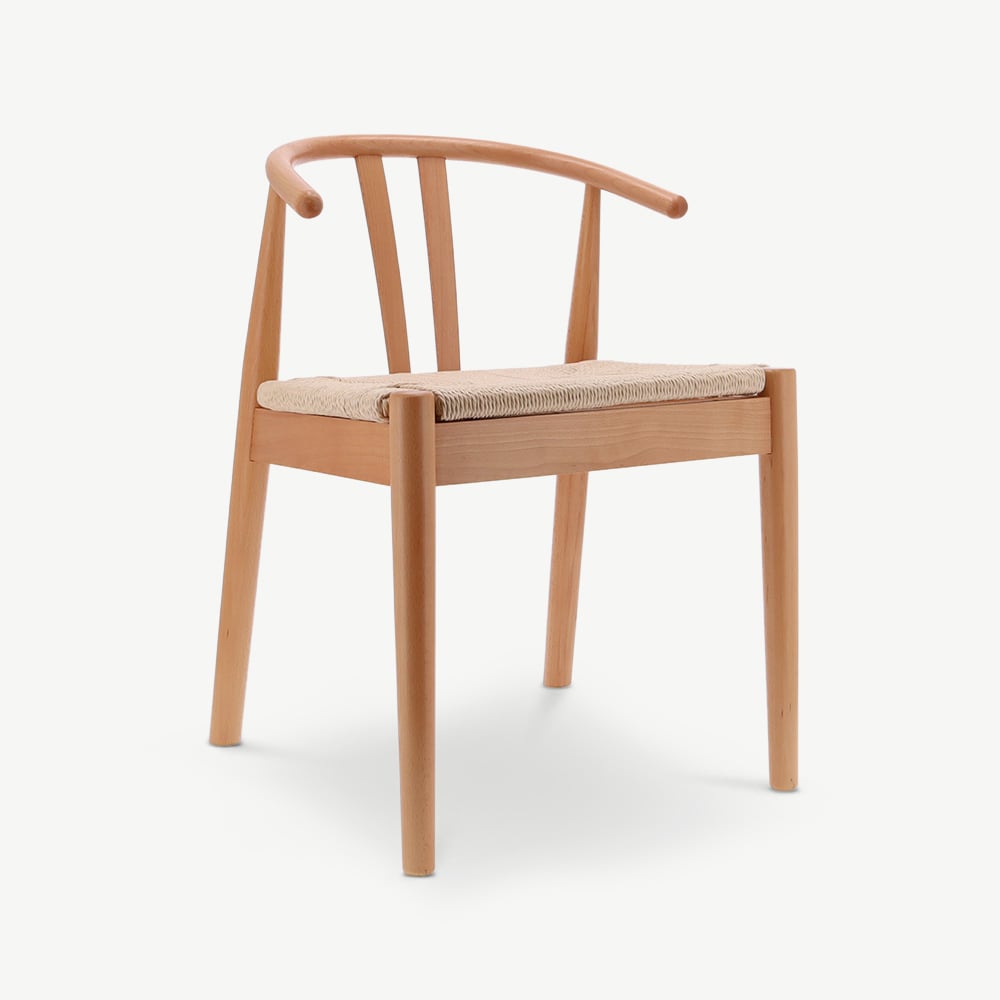
Twisted paper cord, dried seagrass, or willow rod woven in the same wicker pattern. Common on mid-century Scandinavian chairs and current natural-fibre revivals. Often sold as wicker without distinguishing the material underneath.
Paper rush absorbs spills and tears. Seagrass holds up better. Willow cracks under repeated bending. Expect re-weaving every 8 to 12 years.
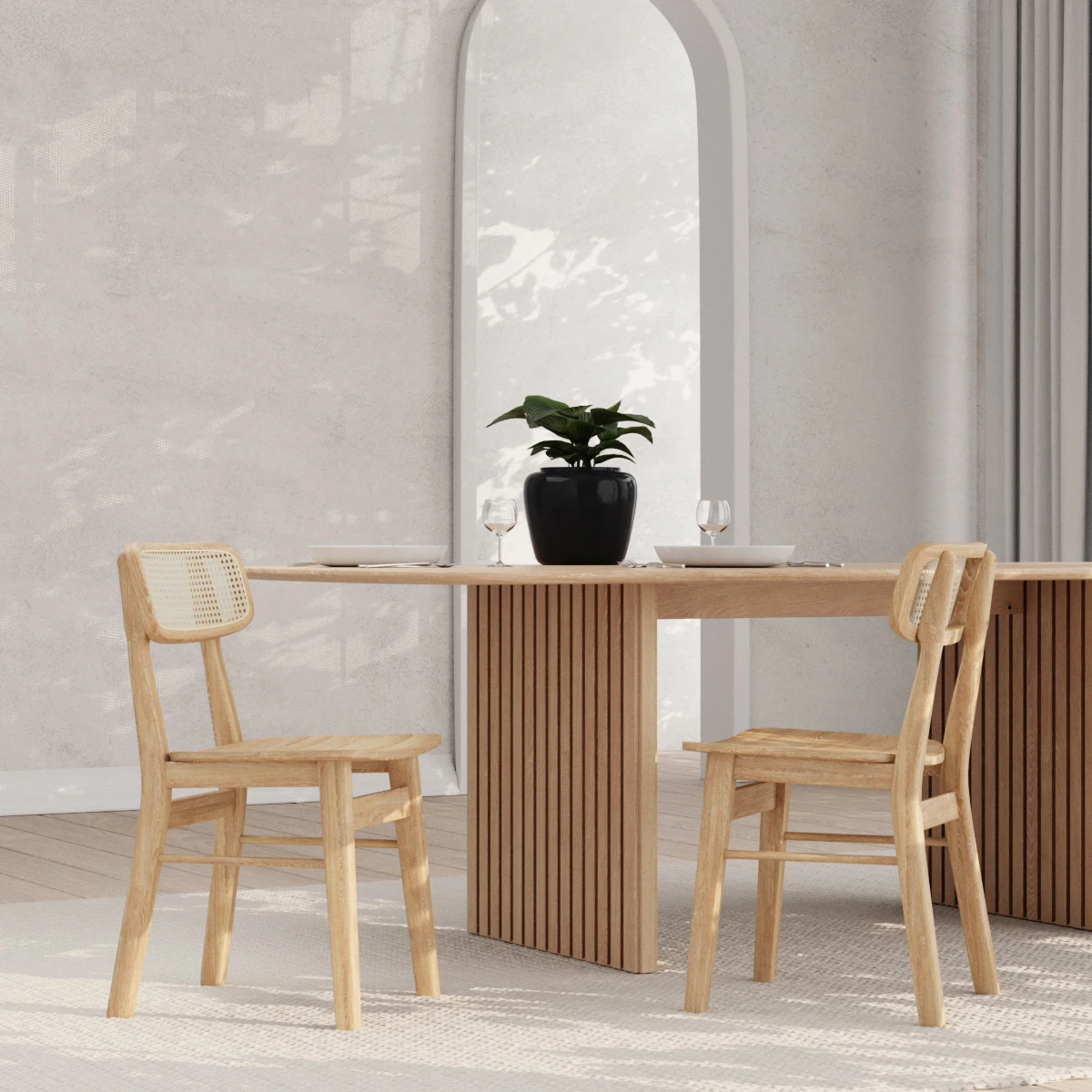
Featured in this guide
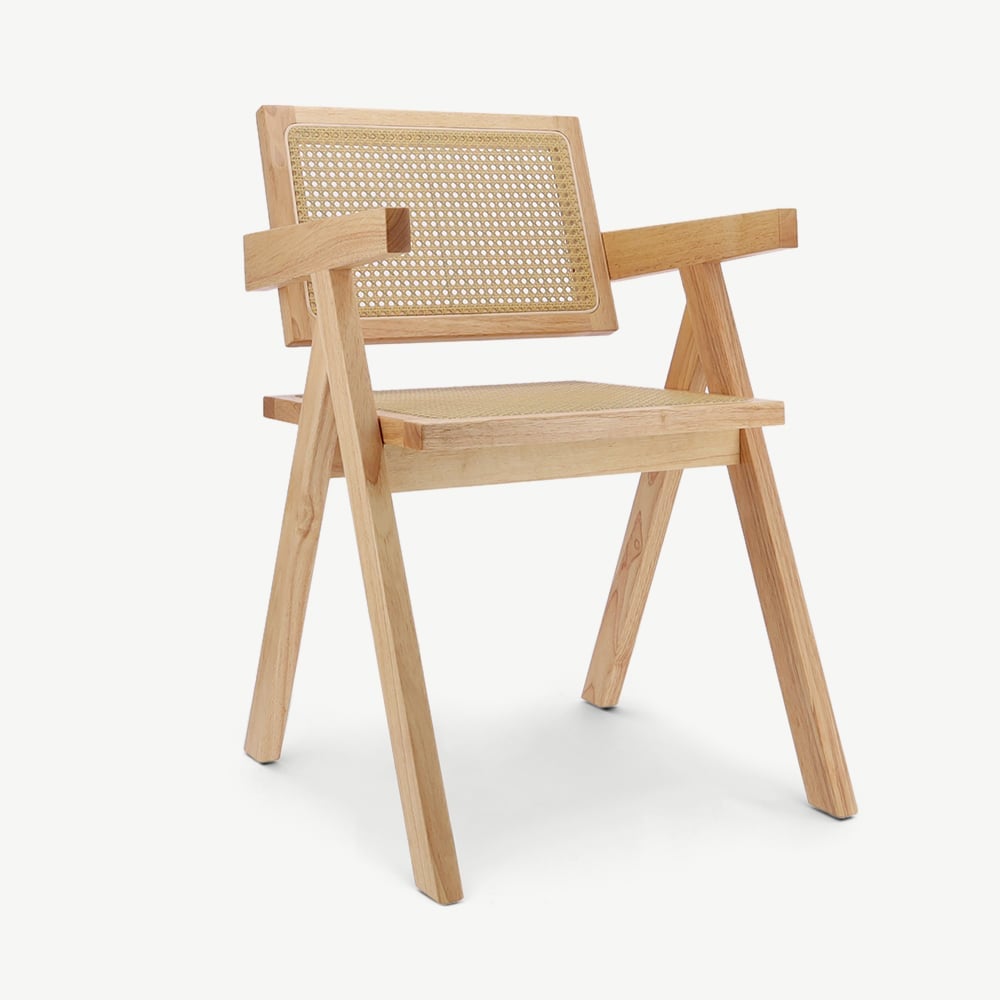
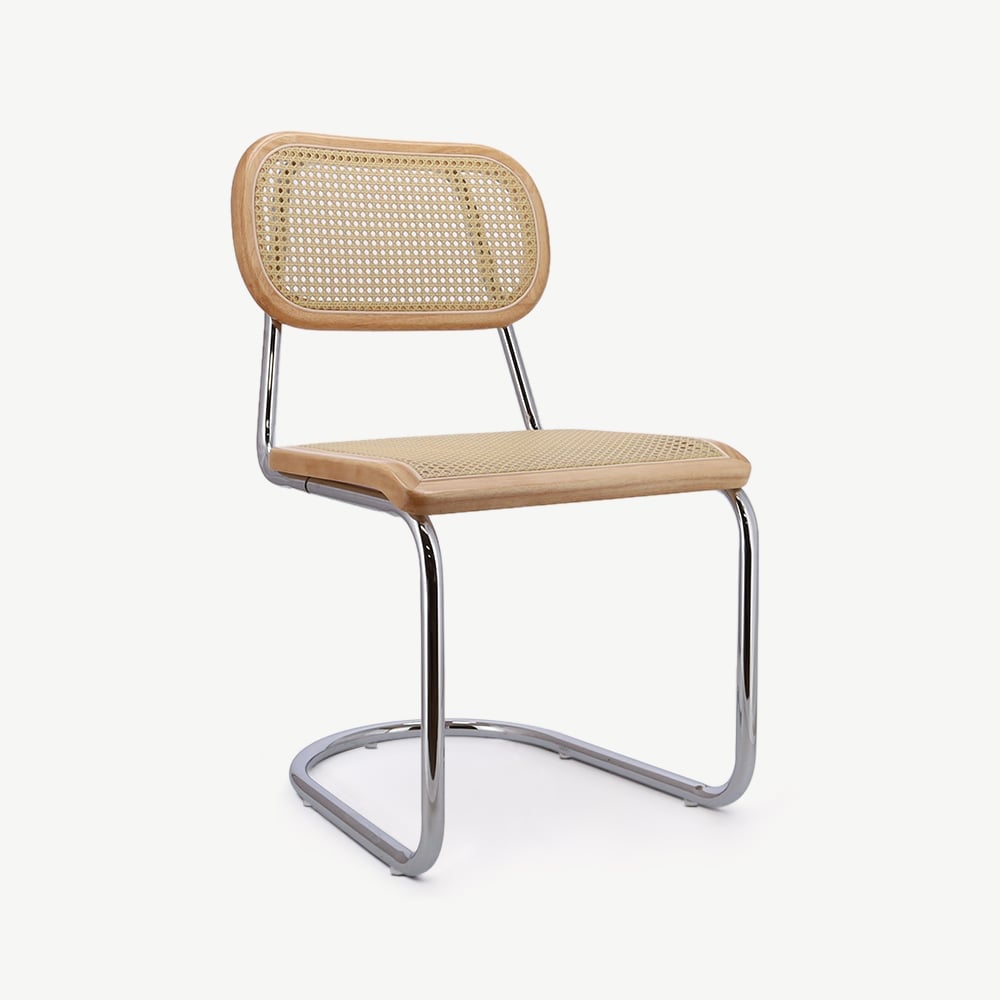

How to tell what you are actually looking at
Most product photography flattens out the differences. In person, the three categories above feel and weigh distinctly different. Five checks that work in any shop.
| Check | Natural rattan | Synthetic (PE) |
|---|---|---|
| Nodes along the strand | Yes, every 20 to 40 cm | No, uniform |
| Colour variation | Slight, piece to piece | Identical |
| Texture under the hand | Slight grain, dry-warm | Faintly waxy |
| Weight | Heavier than it looks | Light to medium |
| Sound when knocked | Soft, woody | Plastic, slightly hollow |
If the shop tag says wicker and none of the rattan column applies, you are looking at synthetic. That is not a problem if the chair is destined for a patio. It is a problem if you paid rattan prices for it.
Pick the material to the use, not the word on the label
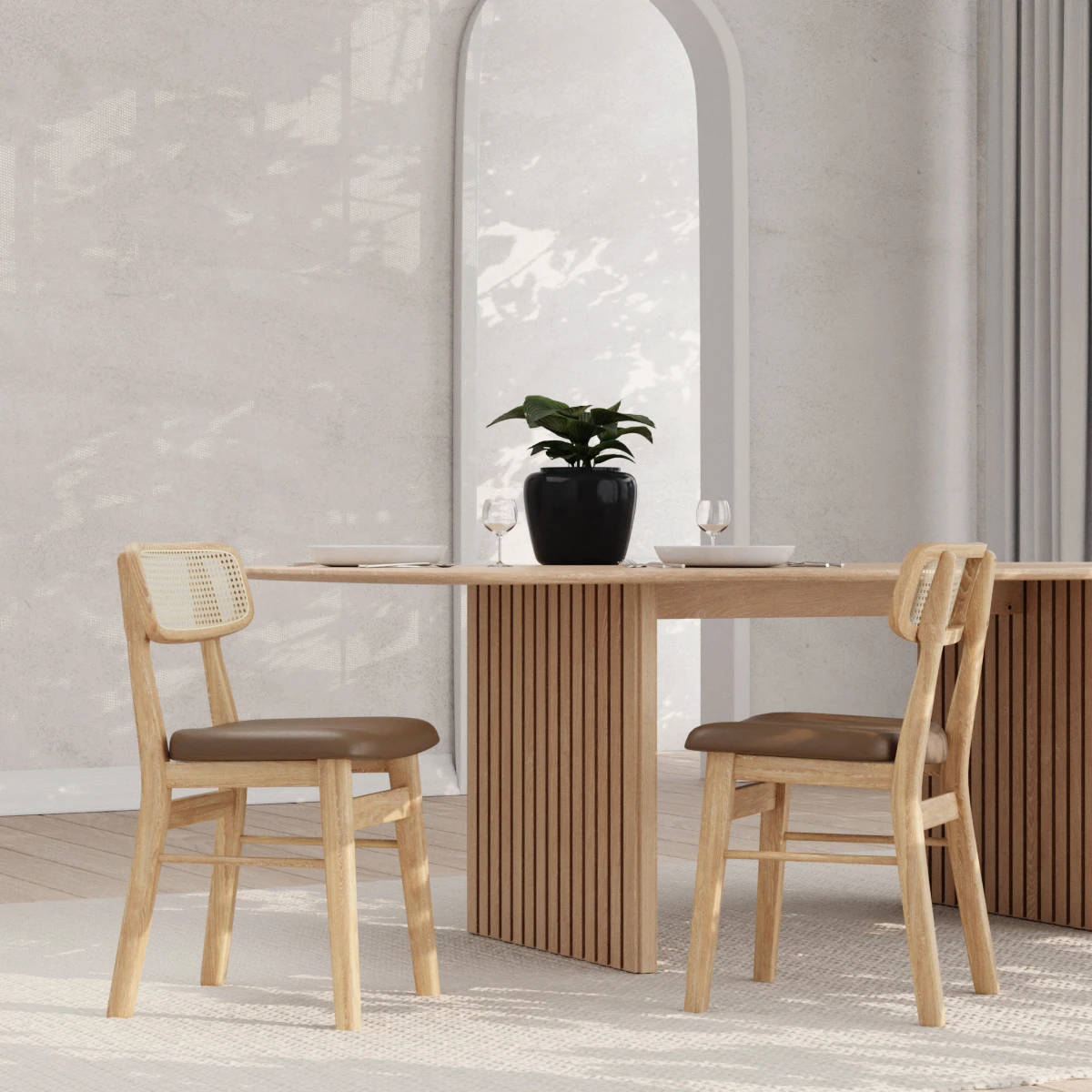
For an indoor dining chair or armchair that will live in a temperate room, natural rattan is the better buy. It ages with a warm honey patina, can be re-woven, and outlasts most upholstered chairs in the same price band.
For a covered terrace, conservatory, or fully exposed garden seat, synthetic wicker on an aluminium frame is the right answer. Natural rattan struggles past 5 years in those conditions; PE wicker handles them for 10 to 18.
The label on the website usually tells you. If it does not, two questions to a sales team usually settle it: is the strand natural rattan or PE, and is the frame solid rattan, aluminium, or steel.
The word matters less than the material
Rattan is the plant. Wicker is the weave. Synthetic wicker is a different conversation entirely.
If you want indoor furniture that ages well and can be repaired, look for natural rattan, wicker-woven, on a solid rattan or beech frame. Our rattan dining chair selection sits between €99 and €249, with most options in the €119 to €159 range.
For outdoor seating that lives through a winter without a cover, look for PE wicker over aluminium in the outdoor furniture collection. Same wicker look, different engineering.
If you want the broader context, the rattan furniture guide covers materials, types, and care across categories. The sibling piece on what a rattan chair actually is goes deeper on the material side.
Frequently asked.
Is rattan the same as wicker?
No. Rattan is a material: the stem of a climbing palm grown in Southeast Asia. Wicker is a technique: the over-under weaving pattern used to build seat panels, backrests, and baskets. A rattan chair is usually woven in wicker, which is why the two words get treated as synonyms. They describe different things.
What is wicker furniture made of?
Wicker is a method, so wicker furniture can be made from any pliable material that can be woven: natural rattan, willow, bamboo, seagrass, paper rush, or synthetic polyethylene (PE). The word wicker tells you how the chair was built, not what it is built from. Always check the material spec separately.
Is synthetic wicker as good as real rattan?
For outdoor use, yes, often better. Synthetic wicker (PE strands over an aluminium frame) handles UV, rain, and humidity in ways natural rattan cannot. For indoor furniture, natural rattan is more repairable, ages more pleasantly, and feels different under the hand. The right choice depends on where the piece will live, not on which is universally better.
How do I tell real rattan from synthetic wicker?
Look closely at a strand. Natural rattan has visible nodes (small bumps every 20 to 40 cm along the cane), a faint grain, and slight colour variation between pieces. Synthetic wicker is uniform in colour, has no nodes, and feels slightly waxy under the hand. Weight is another tell: natural rattan is heavier than it looks; PE wicker on a steel frame can feel disproportionately light.
Why do retailers use the words interchangeably?
Because most rattan furniture is woven, and most wicker furniture used to be made of rattan, the two words drifted together in everyday English. In the trade, the distinction still matters: a buyer ordering wicker without specifying the material can end up with paper rush, willow, or synthetic PE instead of rattan. Always check the material line on the spec sheet.
Is bamboo the same as rattan?
No. Bamboo is hollow, segmented, and rigid. Rattan is solid, flexible, and steam-bendable. Both grow in similar regions, which is why they often appear in the same furniture catalogues, but they perform very differently. Bamboo cracks under bending stress; rattan flexes. A rattan chair frame can be steam-bent into curves no bamboo could survive.
