 9800+ TRUSTPILOT REVIEWS


 EN
EN DE
DE FR
FR NL
NL
Rattan is not a style, it is a material. That is the most important thing to know before you buy a rattan piece. A dining chair, a lounge armchair and a small dresser in real rattan have more in common than a rattan-look outdoor chair that imitates the same finish in plastic.
This guide explains where good rattan comes from, what real quality looks like across furniture categories, which EU-import certifications actually matter, and where you can save money without ending up with something that falls apart in three years.
Where good rattan actually grows
More than 80 percent of processed rattan globally comes from Indonesia, mostly Sulawesi and Kalimantan. The islands sit in the right climate for Calamus manau, the species considered the densest and longest-lasting. Philippine rattan is lighter and more flexible, so it is used more often in fine weaves than in load-bearing frames. Malaysian and Vietnamese rattan is growing in supply and tends to come in at a lower price point.
When you buy rattan, look for an origin label. EU importers have been required since 2018 to hold the Indonesian SVLK certificate, which proves legal harvest. FSC-certified rattan adds replant-and-quota controls on top. Without either, the material often comes from uncontrolled wild harvest, which is not necessarily worse in quality but makes the supply chain unstable.
- Indonesia: densest fibres, the right choice for load-bearing frames
- Philippines: lighter and more flexible, ideal for fine weaves
- Malaysia, Vietnam: growing producers, usually the more affordable end
Where rattan is worth it, and where it isn't
Rattan does not perform equally across every furniture category. Here is the honest breakdown by category, based on 200,000 rattan pieces sold across five European markets.
Dining chairs and armchairs
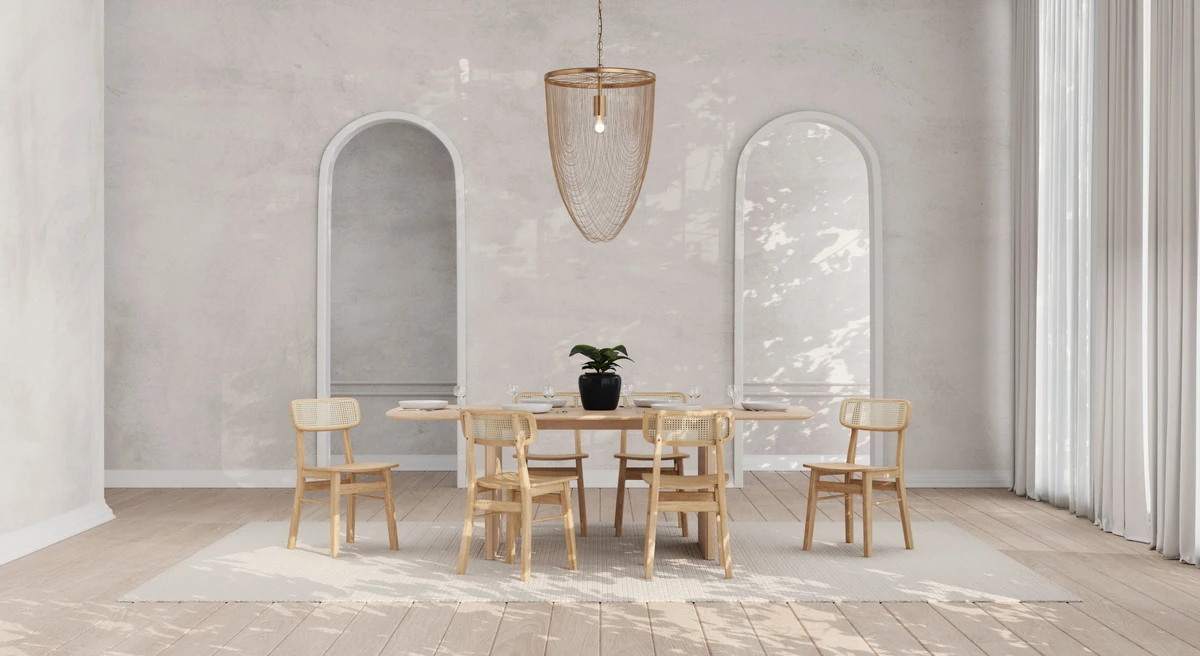
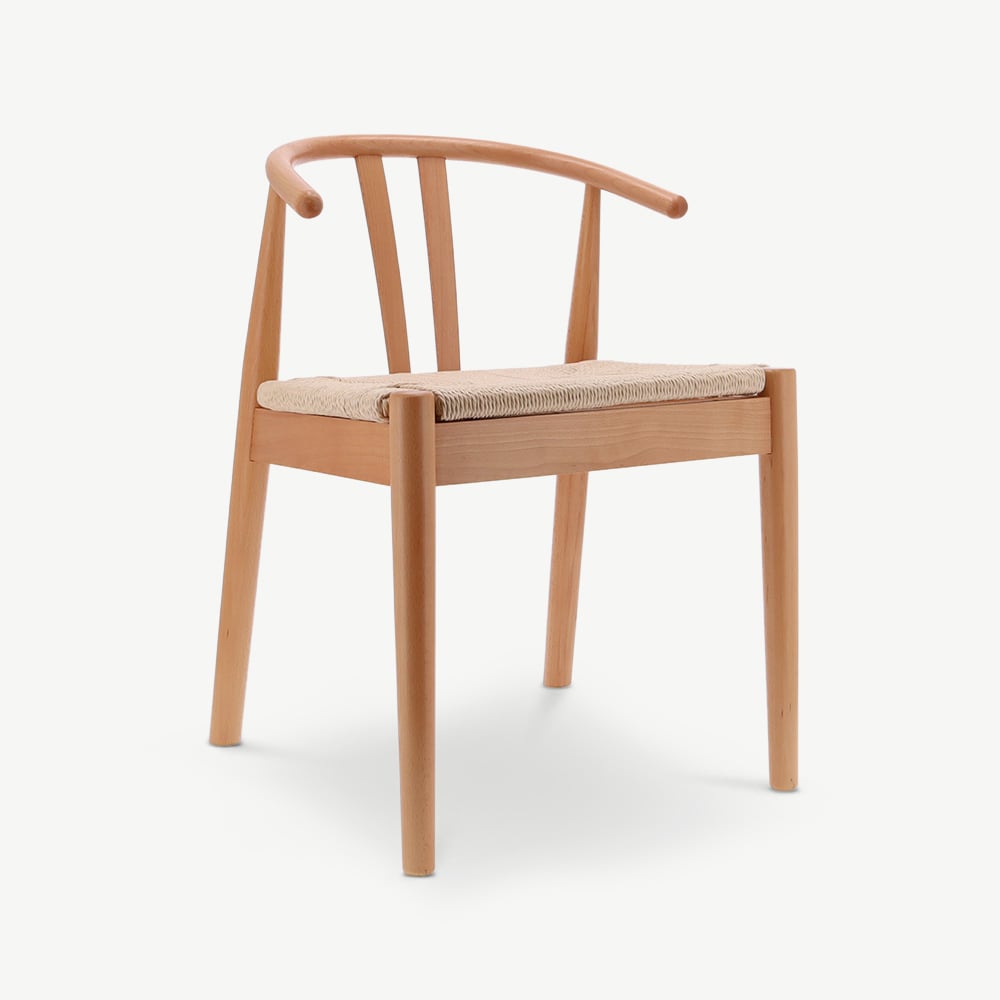
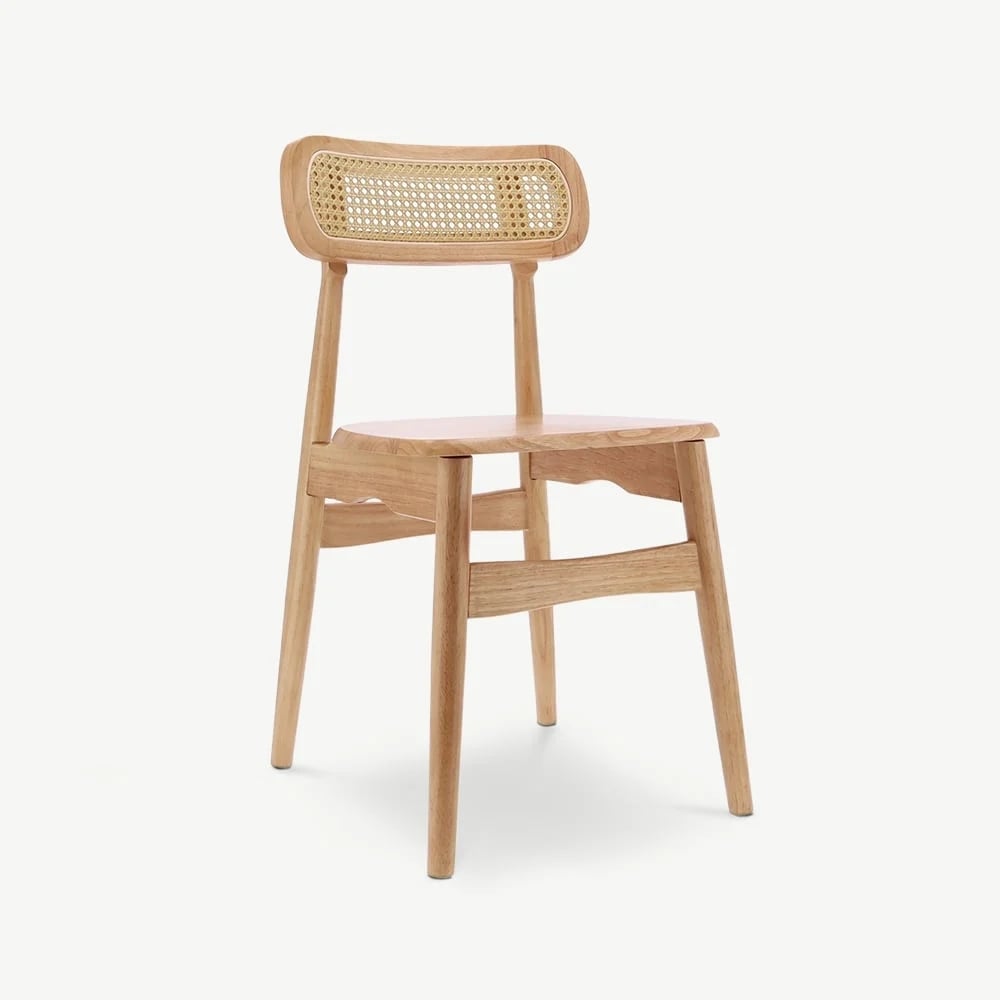
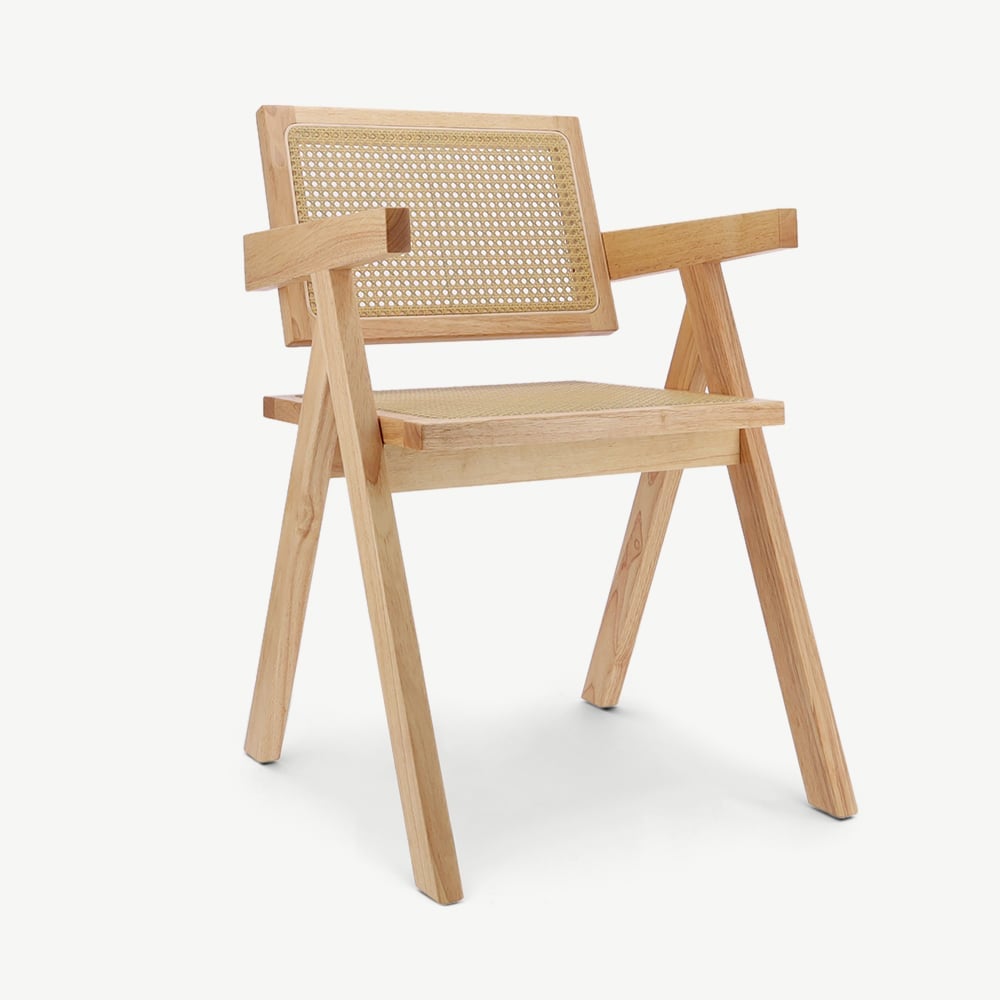
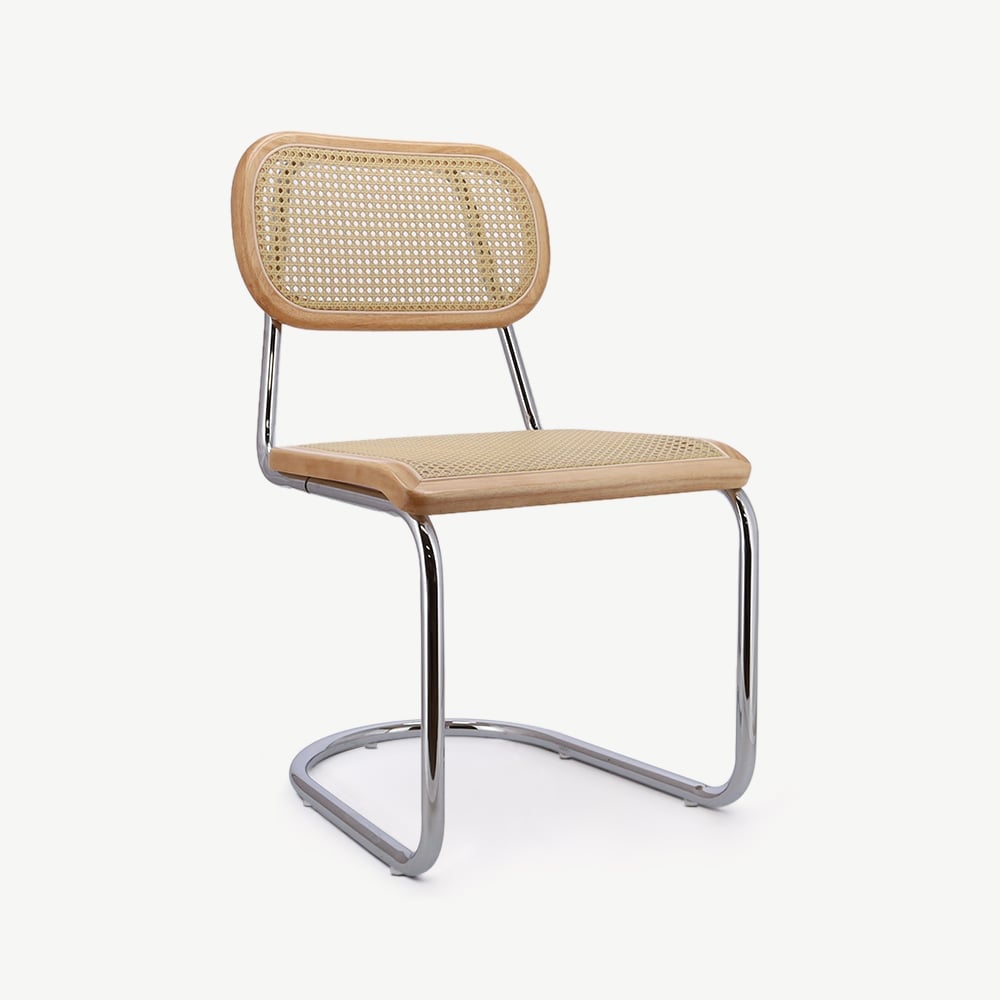
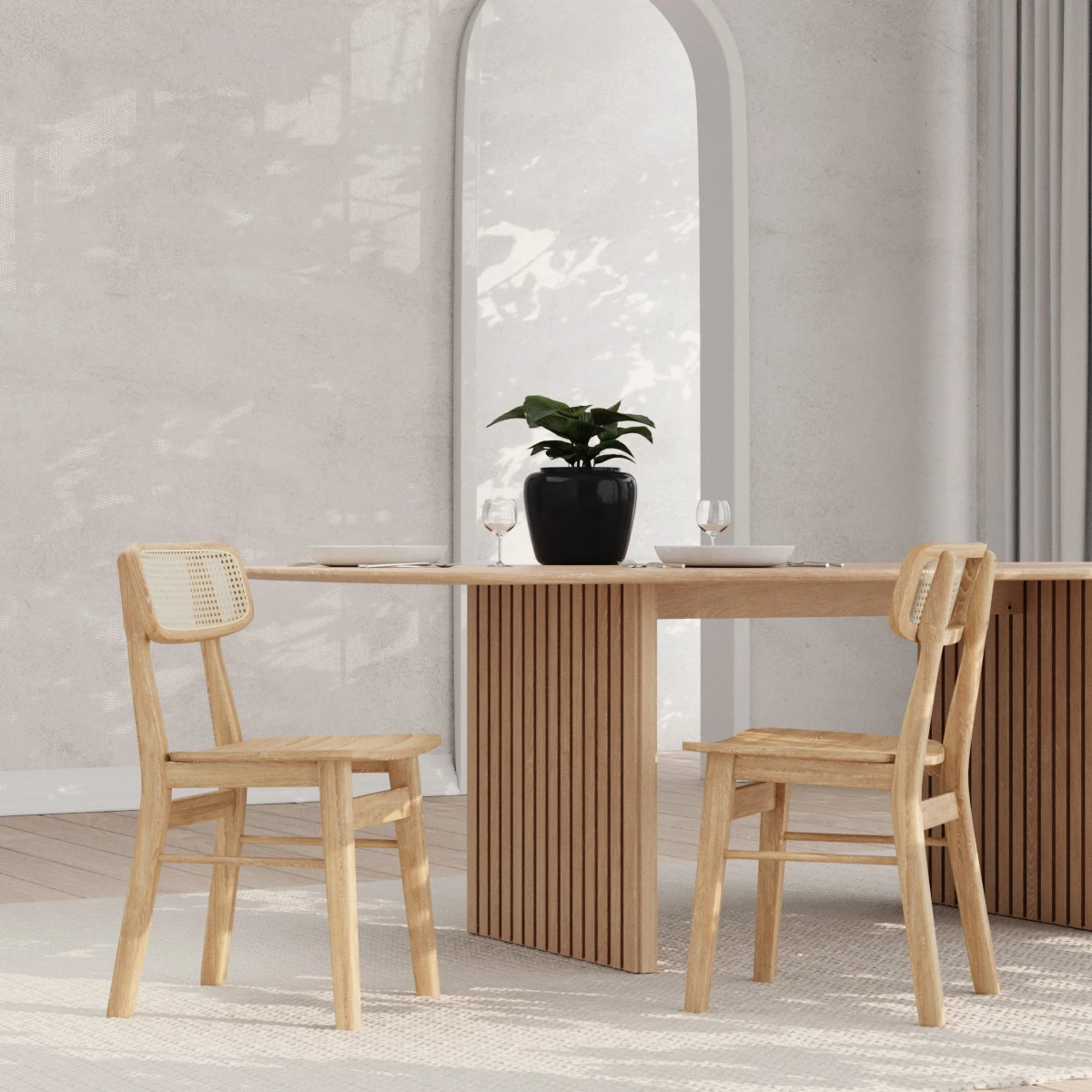
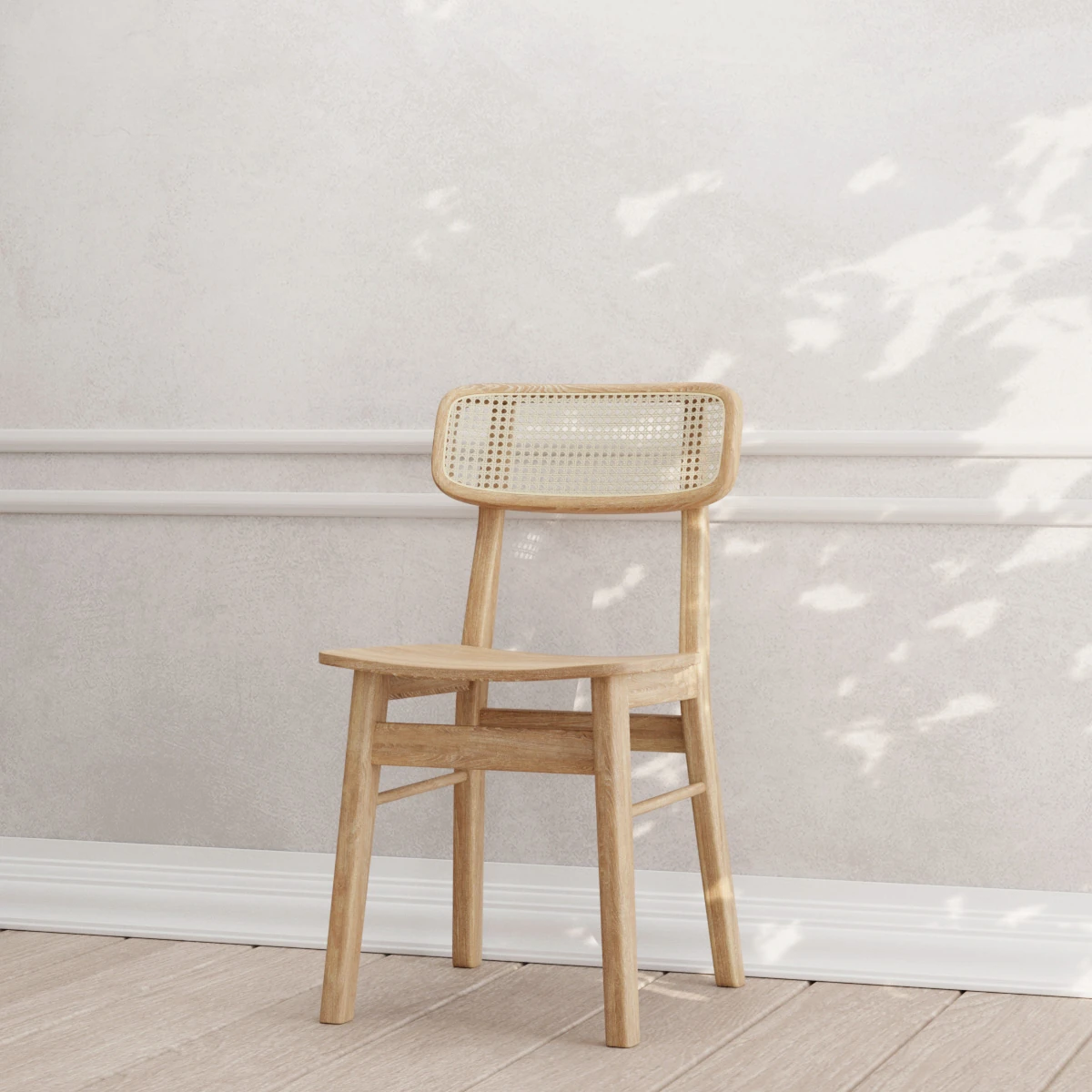
The category rattan was made for. A chair loads the weave at points, not flat, and lives in a temperate interior. Expect 99 to 159 euros for a dining chair on a beech frame, 280 to 480 euros for a lounge armchair with a rattan back.
Models like Scandi, Jenson and Peter in our range fit this bracket. Damaged panels can be rewoven for 40 to 80 euros.
Side tables and dressers
Works well as long as the surface is not regularly wet. A rattan dresser in a bedroom lasts 20 years. A rattan piece in a bathroom or one constantly hit by sweating glasses suffers fast.
Expect 180 to 450 euros. Look for a sealed top, ideally with a thin glass plate as a sacrificial layer.
Sofas and outdoor furniture
On large sofa structures, natural rattan is overloaded across big spans. For outdoor furniture, natural rattan is ruled out by weather. Synthetic PE rattan over aluminium is the correct choice in both.
More on this in our outdoor rattan furniture guide.
Featured in this guide

What rattan furniture is really worth
The biggest price differences are not in the rattan itself, they are in the frame material and the joinery. A chair under 70 euros almost always uses chipboard or thin pine as the structural part. Above 200 euros for a basic dining chair, you are paying for the brand more than the substance.
| Category | Solid quality | Avoid below |
|---|---|---|
| Dining chair | €99 to €159 | €70 |
| Lounge armchair | €280 to €480 | €180 |
| Side table | €120 to €250 | €80 |
| Small dresser | €280 to €480 | €190 |
These figures are for real rattan on solid-wood frames (FSC beech, ash, pine). Synthetic models can come in 30 to 40 percent cheaper because the material is industrial and roll-fed. If a chair sold as rattan costs under 50 euros, it is almost certainly not rattan at all.
How to spot quality before you pay
These four checks take 30 seconds in a showroom and apply across categories. Online, detailed product photography replaces the first three; the fourth is only testable in person.
When buying rattan is worth it
When you want a piece that lasts 15 to 25 years and can be repaired.
Real rattan on a solid-wood frame from a certified source costs more than the cheapest alternative in the catalogue, but less than equivalent upholstered furniture. Dining chairs, armchairs and small storage are the categories where the material pays back long-term. For sofas and outdoor pieces, switch to synthetic alternatives without hesitation.
Browse our rattan furniture selection. Prices start at €99 for dining chairs, with most stock sitting between €119 and €480 depending on category. The full material overview lives in our rattan furniture guide.
If you want a styling reference, our Japandi furniture collection pairs rattan with light oak and linen the way the material was meant to be used. For dining-specific guidance, see our dining chairs buying guide.
Frequently asked.
Where does good rattan come from?
Over 80 percent of processed rattan globally comes from Indonesia, followed by the Philippines and Malaysia. Indonesian rattan (Calamus manau) is the densest and longest-lasting of the commercially available species. Philippine rattan is lighter and more flexible but slightly softer, which suits fine weaves better than load-bearing frames. Look for an origin label or the FSC mark when buying, so you know what you are getting.
What should a good rattan chair cost?
A solid dining chair in real rattan on a beech frame sits between 99 and 159 euros. Lounge armchairs with rattan backs sit between 280 and 480 euros. Side tables run 120 to 250 euros. Anything under 70 euros usually uses cardboard weave or chipboard as the structural part, which fails within five years. Above 200 euros for a basic chair you are paying for the brand, not the material.
How do I spot quality before buying?
Three checks: weave density (tight and even, no visible gaps), weight (real rattan is surprisingly heavy for its size, 4.5 kg or more for a dining chair), and joinery (cleanly wrapped, no glue marks or visible screws through the weave). In store, shake the piece. Good rattan creaks minimally, but nothing wobbles and the seat panel does not sag under pressure.
Is rattan worth it across multiple furniture categories?
Yes, with one caveat. Dining chairs, armchairs, side tables and small dressers all hold up long-term. For sofas with large rattan panels and for outdoor furniture, choose synthetic rattan (PE weave over aluminium) instead, because natural rattan is not load-rated for full sofa structures and is not weather-stable enough for outdoor use in northern Europe.
Which certifications matter when buying rattan?
FSC (Forest Stewardship Council) confirms sustainable harvest with replant and quota controls. SVLK is the Indonesian timber legality certificate that EU importers must hold. For finishes and adhesives, look for Greenguard Gold or the Blue Angel mark. These details belong on the product data sheet; if absent, ask the retailer. Furnicher rattan is SVLK-certified across the range.
