 9800+ TRUSTPILOT REVIEWS


 EN
EN DE
DE FR
FR NL
NL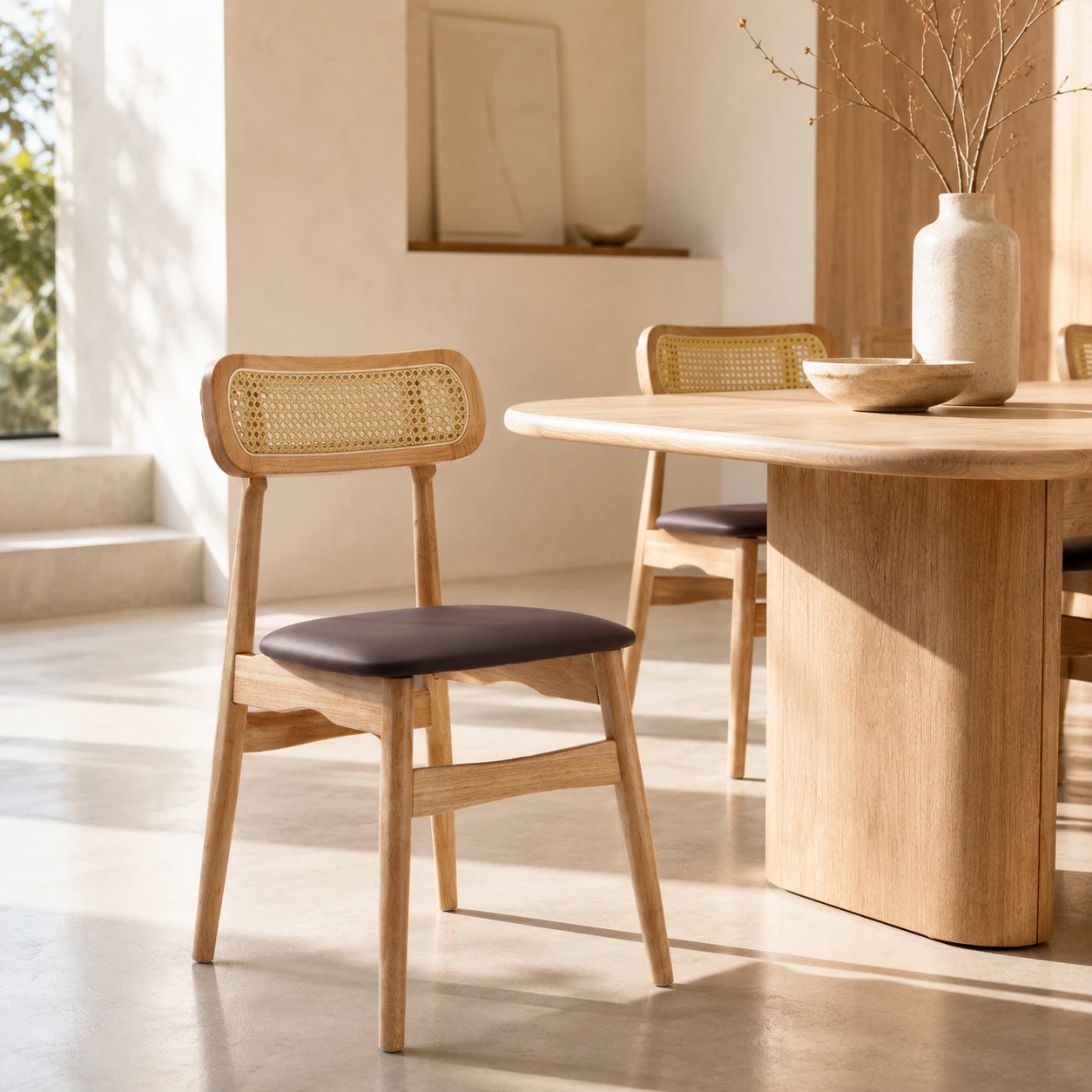
Not every rattan chair has the same story. Five families share the current market, inherited from the Bauhaus, the Riviera bistro tradition, mid-century Scandinavian design, and Marcel Breuer's cane revival. Choosing between them is more than taste; it is a conversation with the room you put them in.
This guide covers the five families, their visual codes and proportions, and the right pairing with two common interior types: a period dining room with cornicing and parquet, and a modern apartment with cleaner lines. With real prices, and what to avoid in each case.
The cantilever, born from Mart Stam
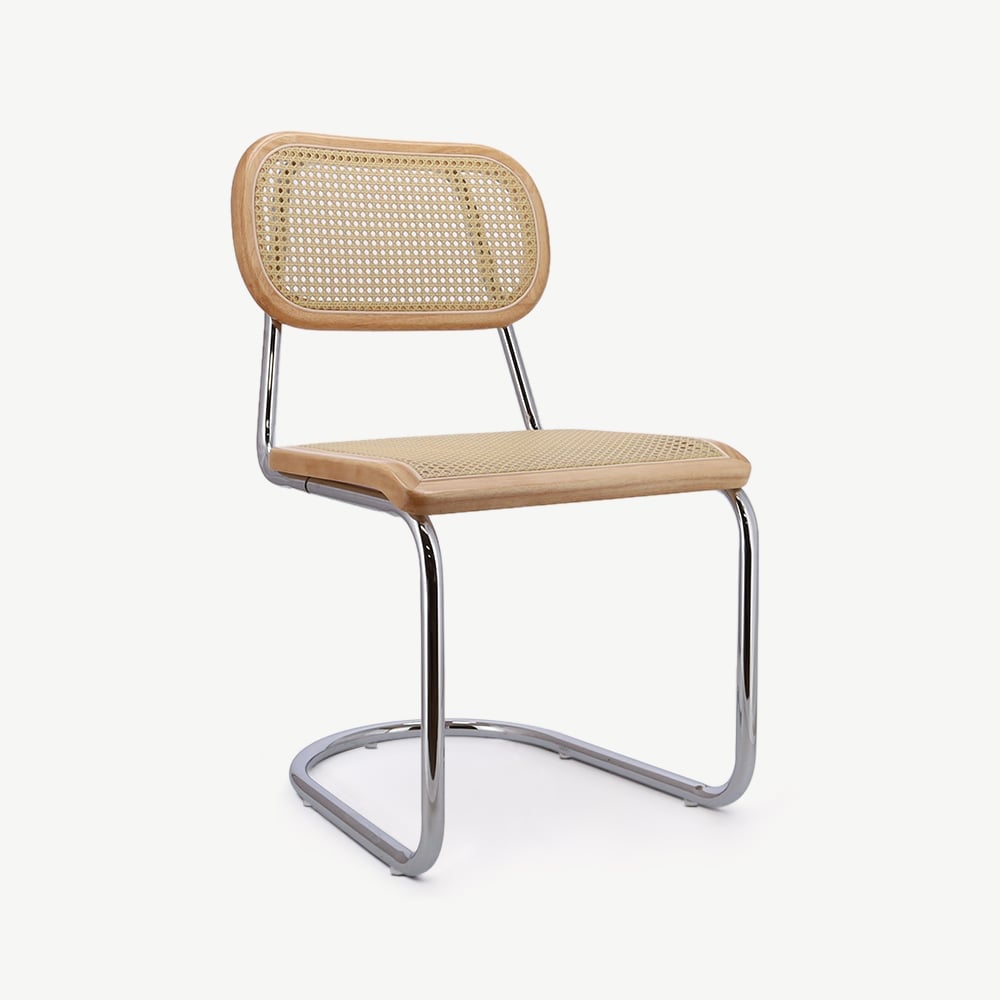
The cantilever chair was sketched in 1926 by Mart Stam: a tubular chrome frame curving into a single continuous loop, with no rear legs. The contemporary rattan reading swaps the original upholstered seat for a curved cane seat and back. Our Noor model takes that idea directly.
Very taut lines, almost graphic in the room. The chrome reads cool, the rattan warms it. The combination works well on pale floors with an oiled-oak table. Avoid pairing with thick cornicing and heavy wallpaper: the cantilever needs air around it to do its job.
- Seat height: 46 cm, fits standard 75 cm tables
- Max load: 110 kg
- Price: €169 to €219 per chair
The scandi-rattan and the Cesca
Two families that hold the centre of the market. Scandi-rattan pairs a solid-wood frame with a woven seat panel; the Cesca borrows Marcel Breuer's signature in a more affordable build.
Classic scandi-rattan
Stained beech frame with a tightly woven cane seat and back. Three common finishes: natural, black, cognac. Our Scandi, Jenson and Peter families sit here. Readable across most rooms, this is the most versatile rattan chair on the market.
Warmer than the cantilever, less iconic than the Cesca, more durable than the cut-price vintage reissues you see in chain stores.
Vintage Cesca
An homage to Marcel Breuer's B32 from 1928. Tubular chrome frame and paper-rush caning, strong personality, immediate read in any room. Pairs particularly well with cornicing, parquet and marble or dark-wood tables.
The rush caning needs reweaving every 8 to 12 years under regular dining use.
Riviera bistro
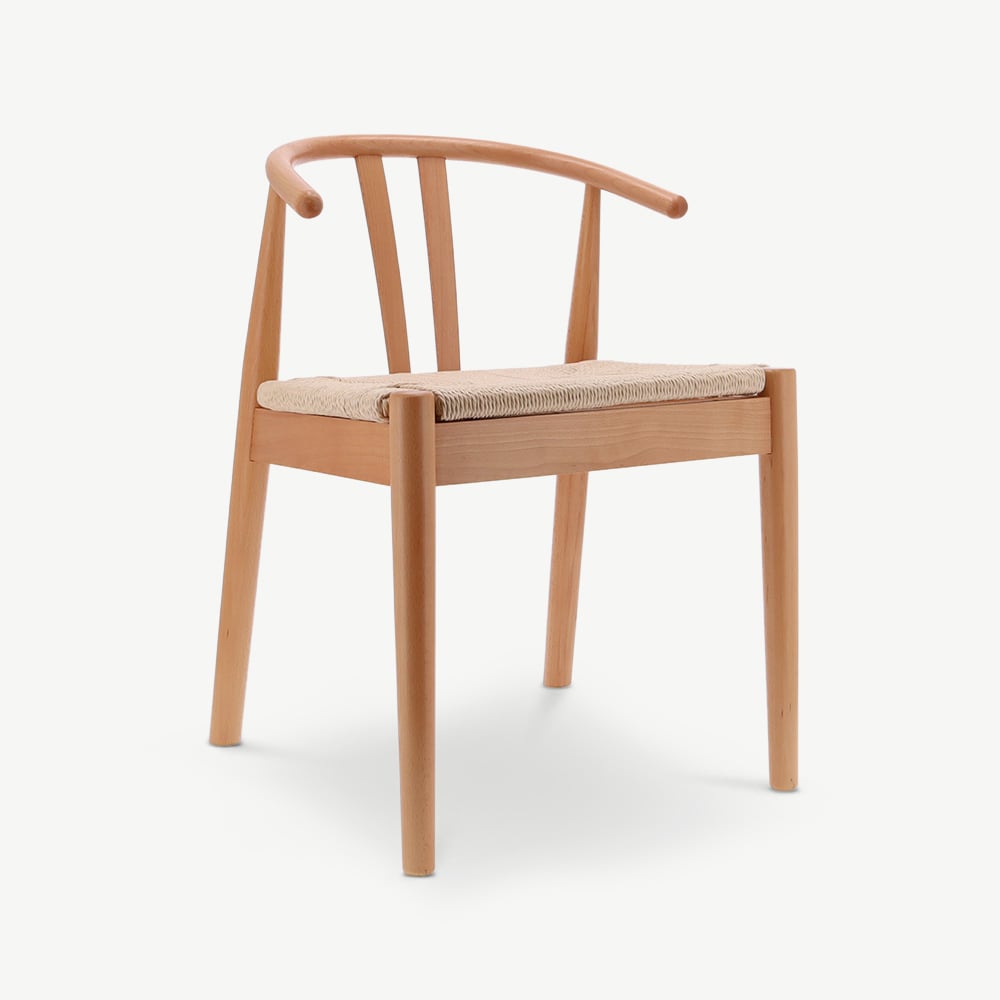
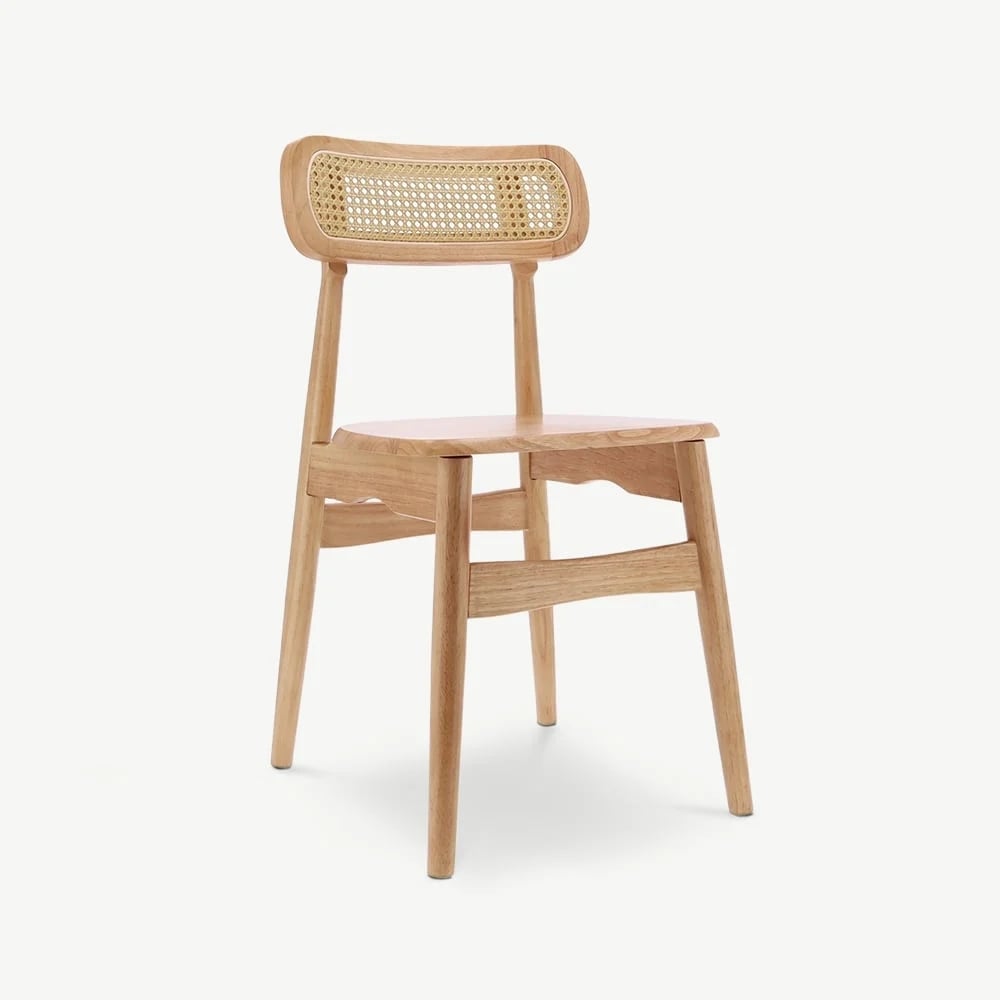
Inspired by 1950s Côte d'Azur café chairs: rounded silhouette, arc back, natural or stained finish. More rustic than the previous families, perfect for southern interiors, open kitchens, reclaimed-wood tables.
Riviera rattan is often less dense than scandi rattan: typical lifespan 10 to 15 years under daily use.
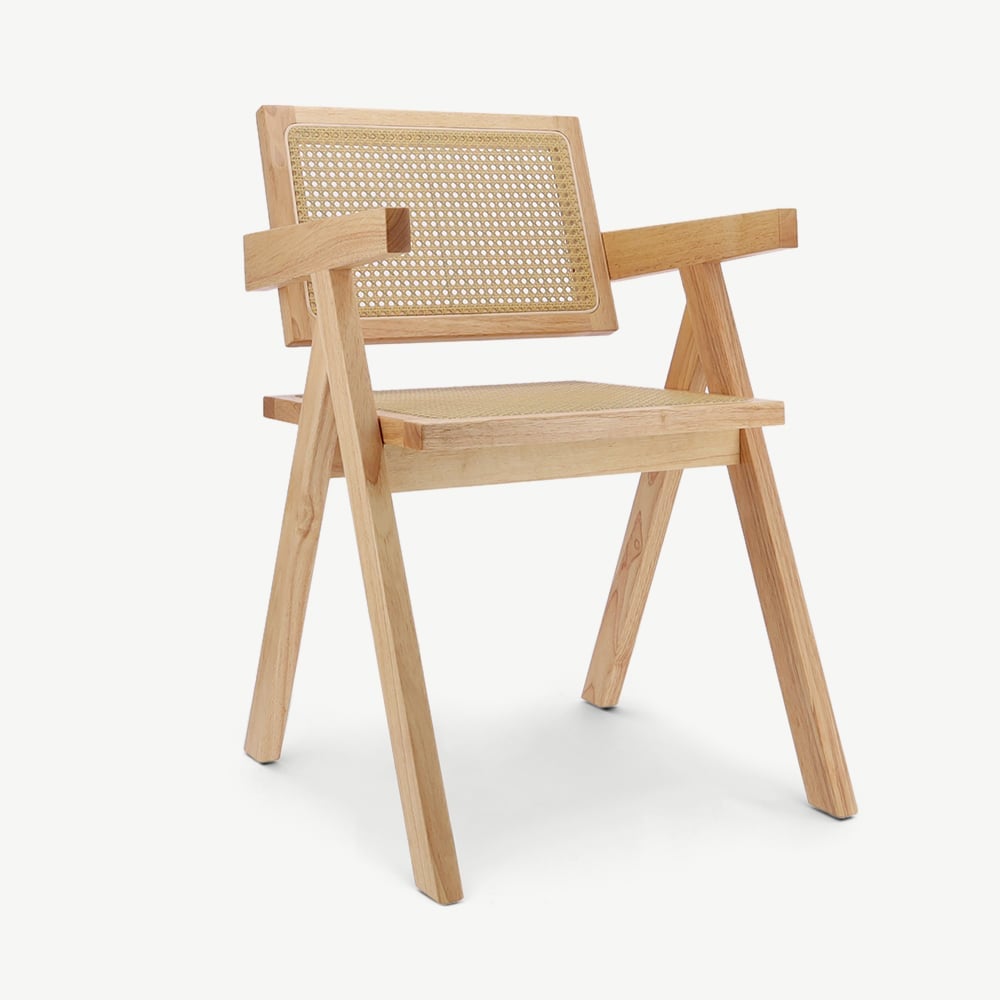
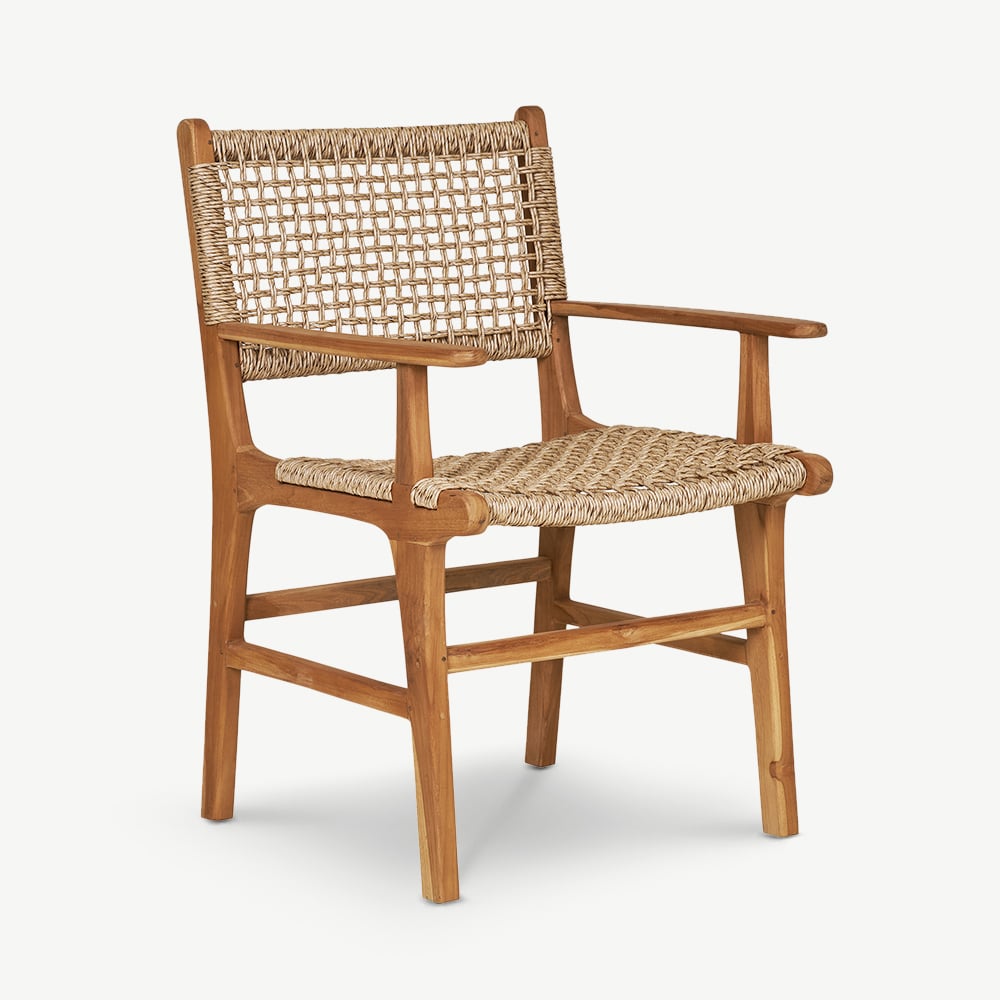
Featured in this guide
Which chair for which room
Rattan is not universal: each family has a context where it shines and another where it vanishes or jars. Here is what works across the most common interior types we sell into.
| Interior | Lean toward | Avoid |
|---|---|---|
| Period (cornicing, parquet) | Cesca, Bauhaus curl | Riviera bistro |
| Modern apartment (pale floor, sage walls) | Cantilever, scandi cognac | Chrome Cesca |
| Open-plan kitchen, reclaimed wood | Riviera, scandi natural | Chrome cantilever |
| Southern home, terracotta tiles | Riviera, scandi honey | Black scandi |
| Industrial loft, polished concrete | Bauhaus curl, Cesca | Riviera bistro |
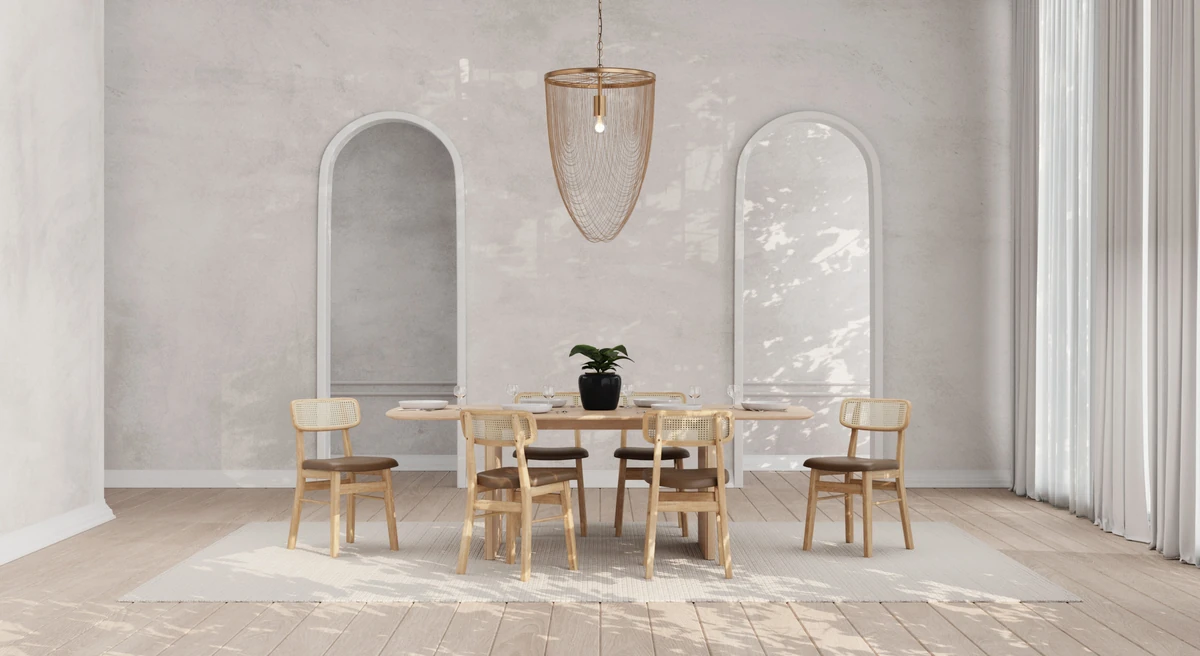
General rule: the busier the room, the cleaner the chair should be. The cleaner the room, the more a chair can carry shape and warmth like the Riviera. Black-stained rattan reads strong on dark floors; on light floors it goes heavy and dull.
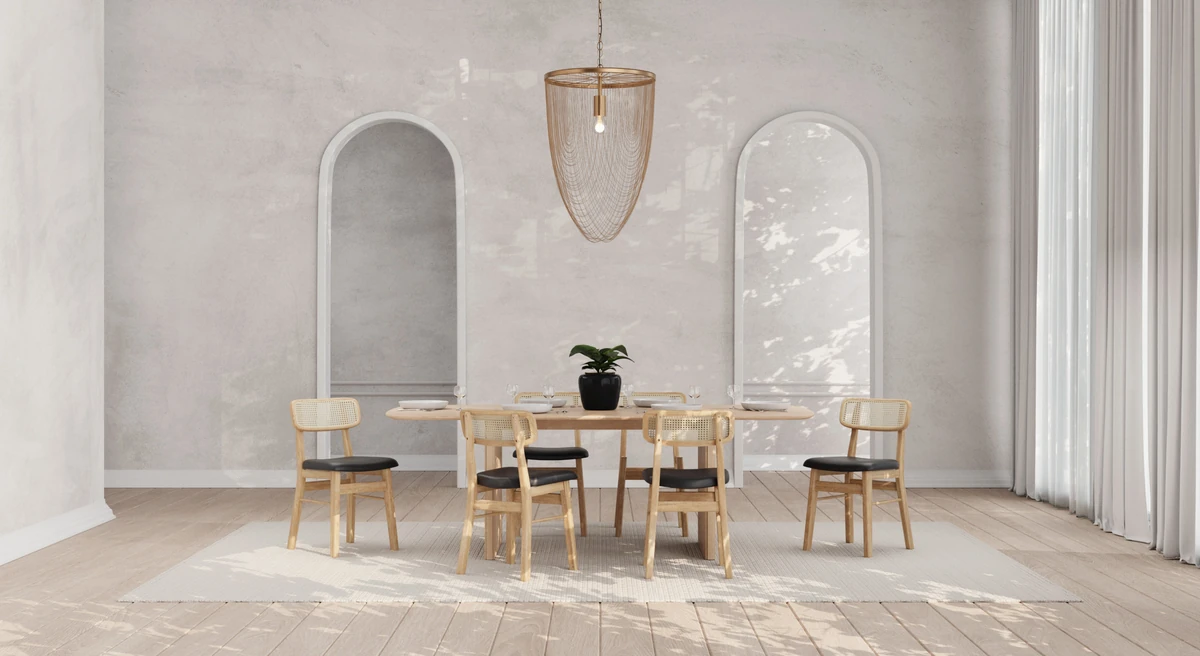
How many around the table, and how to mix
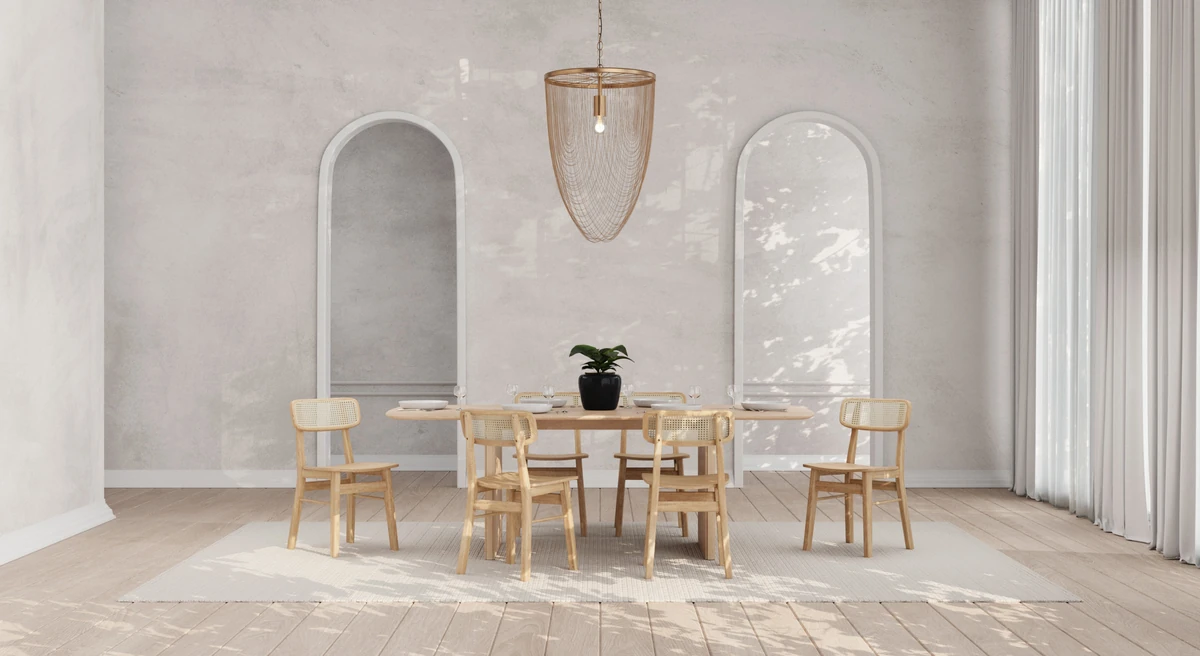
Simple rule: no more than two families around one table. Beyond that, the eye stops reading and the dining room turns into a furniture catalogue. Here is what works in practice.
Which rattan chair for you
The family follows the room, not the other way around.
If your interior has cornicing and parquet, look first at the Cesca or the Bauhaus curl. For a modern flat with pale floors, lean toward the cantilever or a scandi-rattan in cognac. For an open-plan kitchen or a southern home, Riviera and natural scandi are the safe picks. The worst choice is one that does not talk to anything around it.
Browse our rattan furniture selection. Chairs start at €89 for the Riviera bistro, the core of the catalogue sits between €99 and €219 by family. The full material overview lives in our rattan furniture guide.
If your project is about the dining room more than the material, our dining chairs buying guide covers all options. For an interior pairing rattan with light wood and linen, see our Japandi furniture collection.
Frequently asked.
What are the main rattan chair families?
Five families dominate the current offer: cantilever (Noor type, chrome and rattan), classic scandi-rattan (Scandi, Jenson, Peter), the vintage Cesca with chrome frame and paper-rush caning, the Riviera bistro silhouette, and the Bauhaus curled-frame variants. Each has a different character, a clear design lineage and an interior context where it works best.
Does rattan work in a period interior?
Yes, if you pick the right family. A vintage Cesca with chrome frame and paper-rush caning works particularly well in a high-ceilinged dining room with cornicing and herringbone parquet. The warmth of rattan offsets the rigour of the decor without overloading it. Avoid the Riviera bistro silhouette in this context, it reads too rustic against formal mouldings.
Which rattan chair fits a modern apartment?
A cantilever in chrome and natural rattan, or a scandi-rattan in cognac. Clean lines work with light flooring, off-white or sage walls, and an oiled oak table. Avoid black-frame versions on pale floors: the contrast is hard and the chair steals the light from the table, which usually should be the centrepiece of the dining area.
How many rattan chairs around one table?
For a 4 to 6 seat table, all-rattan reads well as a single family. Beyond 8 seats, mix two rattan chairs at the heads with wooden or velvet chairs along the sides. This breaks visual repetition and is practical: rattan chairs are lighter to move when guests slide in and out, so they sit best at the heads where movement happens most.
Does rattan suit a terracotta or tiled floor?
Very well, especially in southern European homes. Ochre or red tiles call for a light rattan tone, honey or natural; avoid black-stained rattan, which makes the whole room feel weighed down. A cantilever or Riviera bistro catches the light best in this context. Chrome frames can read a bit cold on warm tiles, so favour wood-framed rattan.
Can you mix several rattan chair styles?
Yes, if you keep one dominant tone. Mixing a chrome Cesca and a cognac scandi works if the rattan finish stays in the same range. Mixing three different families around one table becomes unreadable: limit yourself to two families maximum, or stay within one family with two close finishes (natural and honey for example).
