 9800+ TRUSTPILOT REVIEWS


 EN
EN DE
DE FR
FR NL
NL
Bar Stools: The Complete Buying Guide (2026)
The single most common bar stool mistake is buying at the wrong height. A stool that sits 10 cm too low turns a sleek kitchen island into an uncomfortable perch. A stool that sits 10 cm too high means your guests eat with their elbows above the counter. Get the height right first. Everything else follows.
Bar stools occupy a peculiar position in the home: they are simultaneously the hardest-working seat in the kitchen and one of the most visible design statements in an open-plan living space. That dual role means the buying decision involves more variables than most furniture purchases. This guide covers the two height categories that determine compatibility, the three most useful stool types, a sizing reference table, a material comparison, four maintenance habits and answers to the questions that come up most often before purchase.
Counter height versus bar height: the distinction that matters
European kitchen counters and islands fall into two standard height bands. Understanding which one you have determines the entire purchase. Measure from the floor to the underside of your counter surface before you read anything else in this guide.
- Counter height (85 to 95 cm worktop): The most common kitchen island height in European homes. Requires a stool with a seat height of 60 to 65 cm. This is sometimes sold as kitchen stool height and leaves a 25 to 30 cm gap between seat and worktop surface, which is the comfortable working clearance for most adults.
- Bar height (100 to 110 cm worktop): More common in dedicated home bars, breakfast peninsulas and some custom-built islands. Requires a seat height of 73 to 78 cm. These stools look taller and sleeker but are uncomfortable if the worktop does not genuinely reach bar height. See our dedicated bar stool height guide for full measurement details.
- Adjustable gas-lift stools: Typically cover a range of 58 to 77 cm seat height. These work for both counter and bar heights, making them the practical choice for households where the counter height is not standard or multiple users of different heights will use the same stools regularly. Read more on adjustable bar stools if flexibility matters to you.
One rule applies regardless of height: leave at least 15 cm of horizontal space between stools to allow comfortable movement at the counter. For three stools on a 150 cm island, that means 50 cm of centre-to-centre spacing, leaving roughly 35 cm of seat width per stool.
Three types that cover every use case
Bar stools divide cleanly into three categories based on back support, adjustability and intended setting. Understanding the trade-offs helps avoid regret after delivery.
Backless bar stool
No back means the stool tucks fully under the counter when not in use, keeping the kitchen visually open. This is the most popular format for kitchen islands in open-plan homes because it disappears into the architecture.
The trade-off is obvious: without back support, long sitting sessions become tiring. Backless stools work best at counters where people perch for 20 to 40 minutes, not for prolonged meals or work sessions. A footrest rail is essential for comfort; without it, leg fatigue sets in within minutes on a tall stool. For background on the difference between a low footrest and a bar stool perch, see footstool vs bar stool.
Furnicher's backless range includes solid wood, metal and upholstered seats with a footrest ring on every model. Fixed-height and adjustable options available.
Bar stool with back
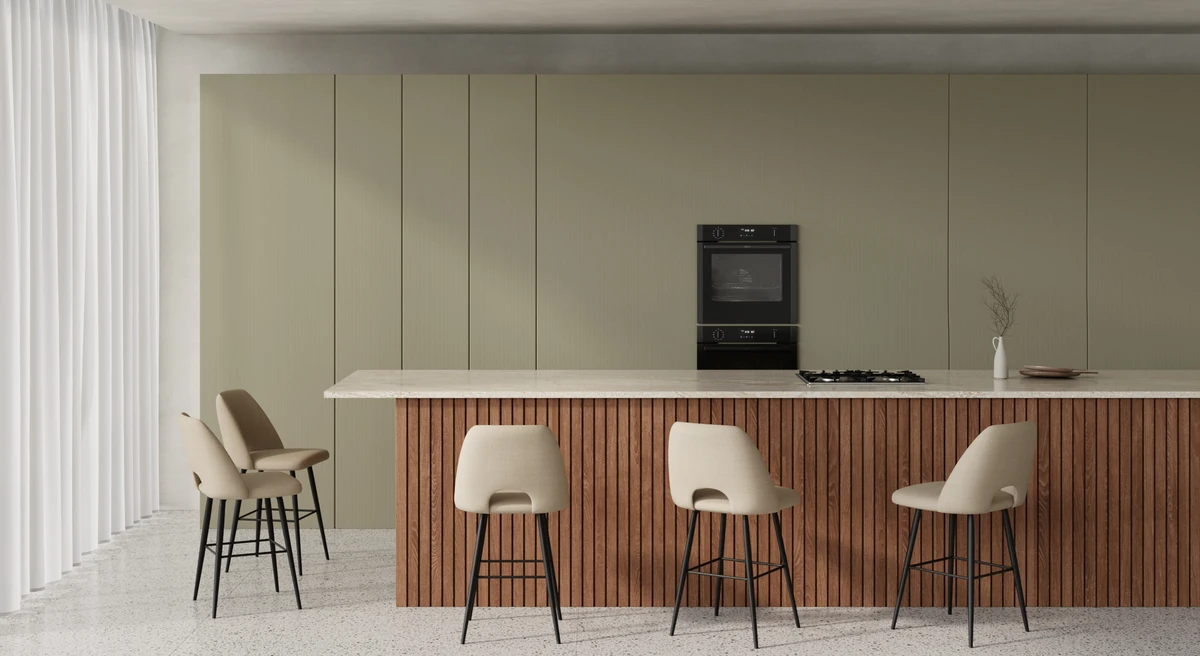
A back transforms the bar stool from a perch into a proper seat. Low-back designs offer a visual lightness while providing lumbar contact; full-back designs are closer to a tall dining chair and work where the stool doubles as an occasional dining seat.
Stools with backs require slightly more space when not tucked under the counter. Account for an extra 15 to 20 cm of depth when planning the floor layout around an island. In a home bar setting where the stools face a fixed surface and are rarely moved, this is not a concern.
Furnicher offers back stools in both low-back and mid-back profiles, with padded seats as standard across all upholstered models in this category. For deeper guidance, read our breakdown of bar stools with backrest.
Swivel bar stool
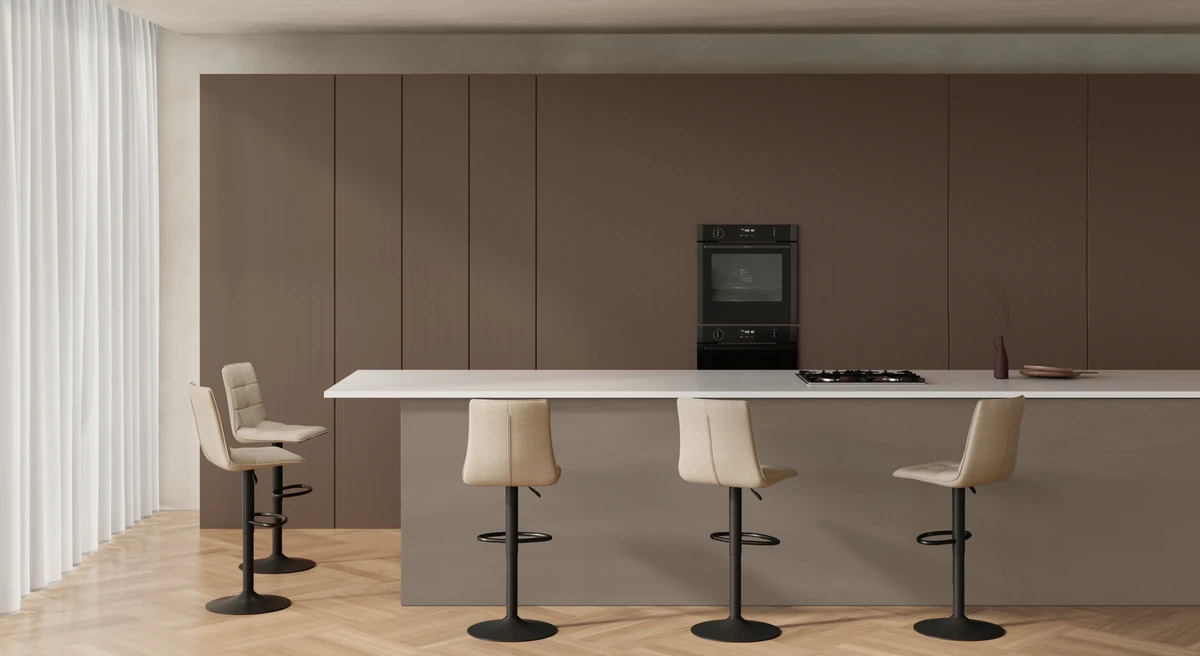
A 360-degree swivel base makes the stool dramatically more social. Guests can rotate to join conversations happening behind the island without awkward dismounting and repositioning. This is the functional reason swivel stools remain so popular in open-plan homes where the kitchen faces a living area.
Swivel mechanisms add a small amount of height to the base and a moderate amount to the price. Quality matters here: a loose swivel mechanism that wobbles under load is dangerous. Look for a 5-point base with a central bearing, not a simple rotating pin.
All Furnicher swivel stools use a sealed bearing mechanism rated for daily household use, available in fixed and adjustable-height variants.
The height table: measure once, order right
This table covers the standard counter and bar height combinations found in European kitchens. Measure the distance from your floor to the underside of your worktop surface, not the top. The gap column shows the knee-clearance that results, which should sit between 23 and 32 cm for comfortable seated use.
| Worktop height | Recommended seat height | Clearance gap | Best stool type |
|---|---|---|---|
| 85 cm | 58 to 62 cm | 23 to 27 cm | Backless or fixed counter-height |
| 90 cm | 60 to 65 cm | 25 to 30 cm | Backless, back, or swivel |
| 95 cm | 63 to 68 cm | 27 to 32 cm | Adjustable gas-lift recommended |
| 100 cm | 68 to 73 cm | 27 to 32 cm | Bar-height fixed or adjustable |
| 105 to 110 cm | 73 to 78 cm | 27 to 32 cm | Bar-height, swivel preferred |
If your worktop sits at exactly 90 cm, any stool in the 60 to 65 cm seat-height range will work. If it sits between heights, choose the adjustable gas-lift option: it buys flexibility and handles multiple user heights in the same household without compromise.
Every Furnicher bar stool product page states the exact seat height (fixed models) or the full adjustment range (gas-lift models) in the specification table. Filter by seat height on the category page to narrow the selection before reading individual descriptions.
Four materials, honest trade-offs
Bar stools take more physical abuse than almost any other furniture in the kitchen. The frame and seat surface both need to handle daily impact, moisture from cooking environments and regular cleaning. For a comprehensive comparison, read our bar stool materials guide.
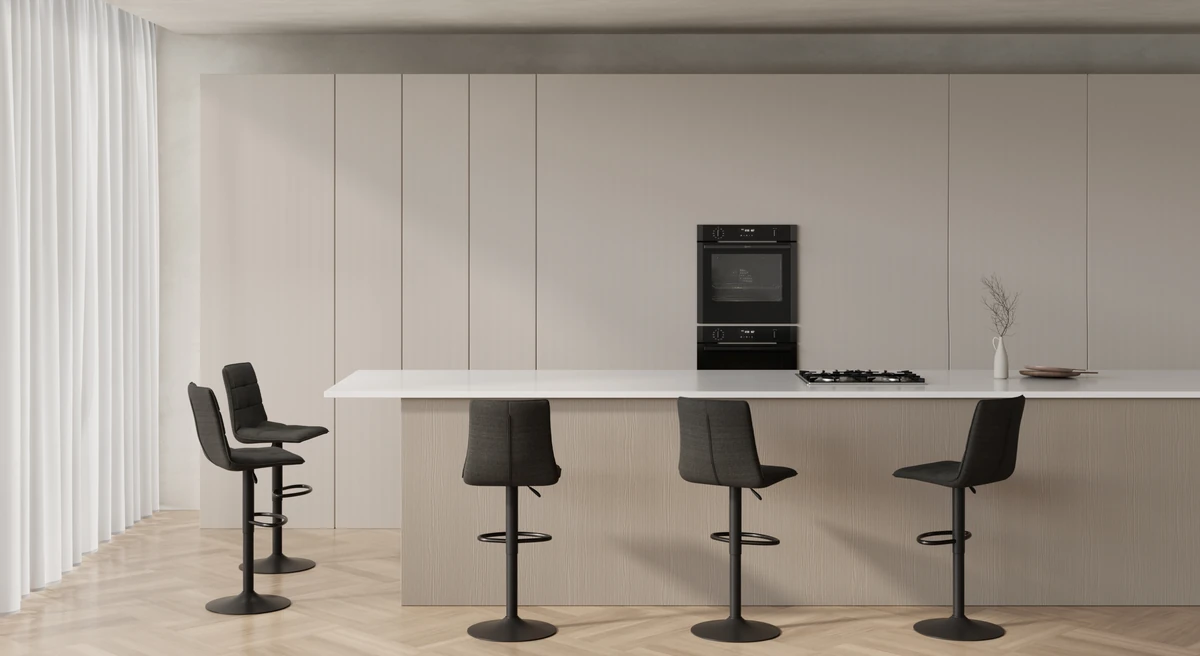
- Metal frame (steel or iron): The most durable option for high-traffic kitchens. Powder-coated finishes resist scratches and can be wiped clean with a damp cloth. Black, brushed brass and matte white are the strongest trend directions for 2026. Avoid chrome in damp kitchens; it shows watermarks immediately. All-metal stools without cushions are cold and noisy; add a cushion or choose an upholstered seat.
- Solid wood (oak, beech, ash): Warm, timeless, repair-friendly. A scratched wood stool can be lightly sanded and re-oiled; a scratched metal stool needs repainting. Oak is harder and more resistant to denting than beech. Avoid solid wood in kitchens with very high steam exposure without regular oiling maintenance. European oak from sustainably managed forests is the benchmark for quality in this category. See our full guide to wooden bar stools for species and finish detail.
- Upholstered seat: Adds comfort for longer sessions. The key question is the fabric. In a kitchen context, choose a performance fabric with at least 30,000 Martindale rub cycles and a stain-resistant finish. Velvet is beautiful but not suited for a seat that may receive food spills. Textured boucle and treated linen perform best. The foam underneath matters too: look for density above 30 kg/m3.
- Rattan and wicker: A natural material that softens the hard lines of a contemporary kitchen. Real rattan is lighter and repairs better than synthetic wicker. Both require occasional re-oiling of the cane and should not be used directly next to a steam source. A rattan stool in a kitchen island context works beautifully when the kitchen is not the main cooking workhorse of the household.
Four habits that keep bar stools looking new
Bar stools are positioned at the intersection of cooking and living, which means they accumulate grease, food debris and daily impact faster than most furniture. These four habits keep them looking their best. For a deeper routine, read our bar stool cleaning and care walkthrough.
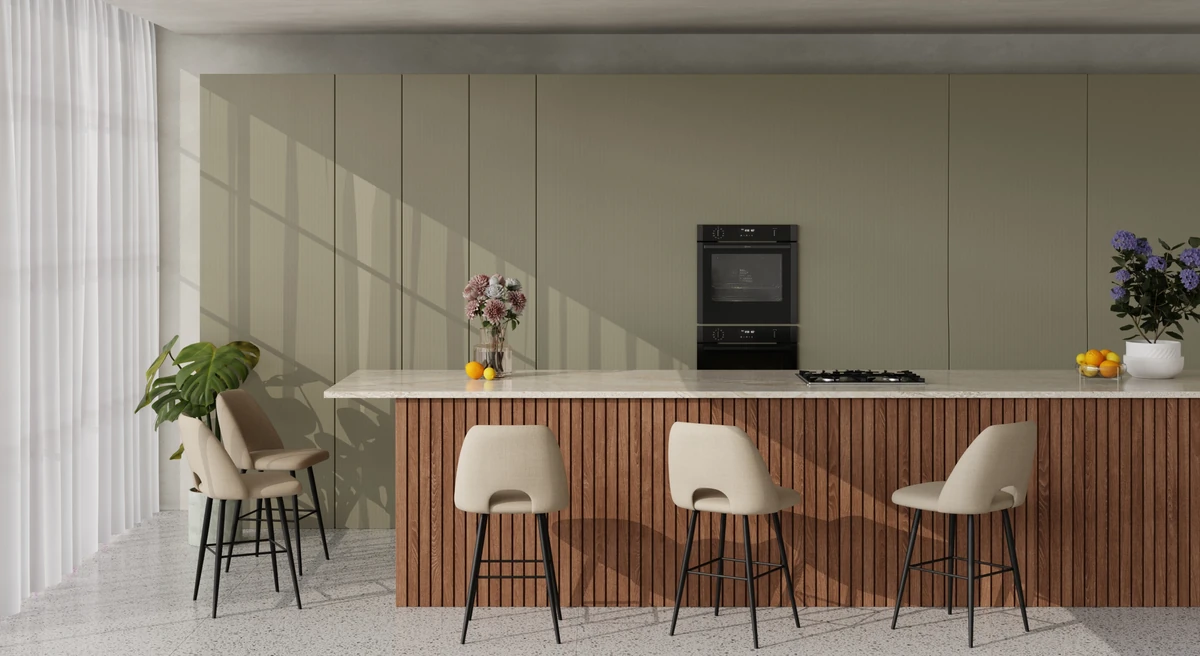
Featured in this guide
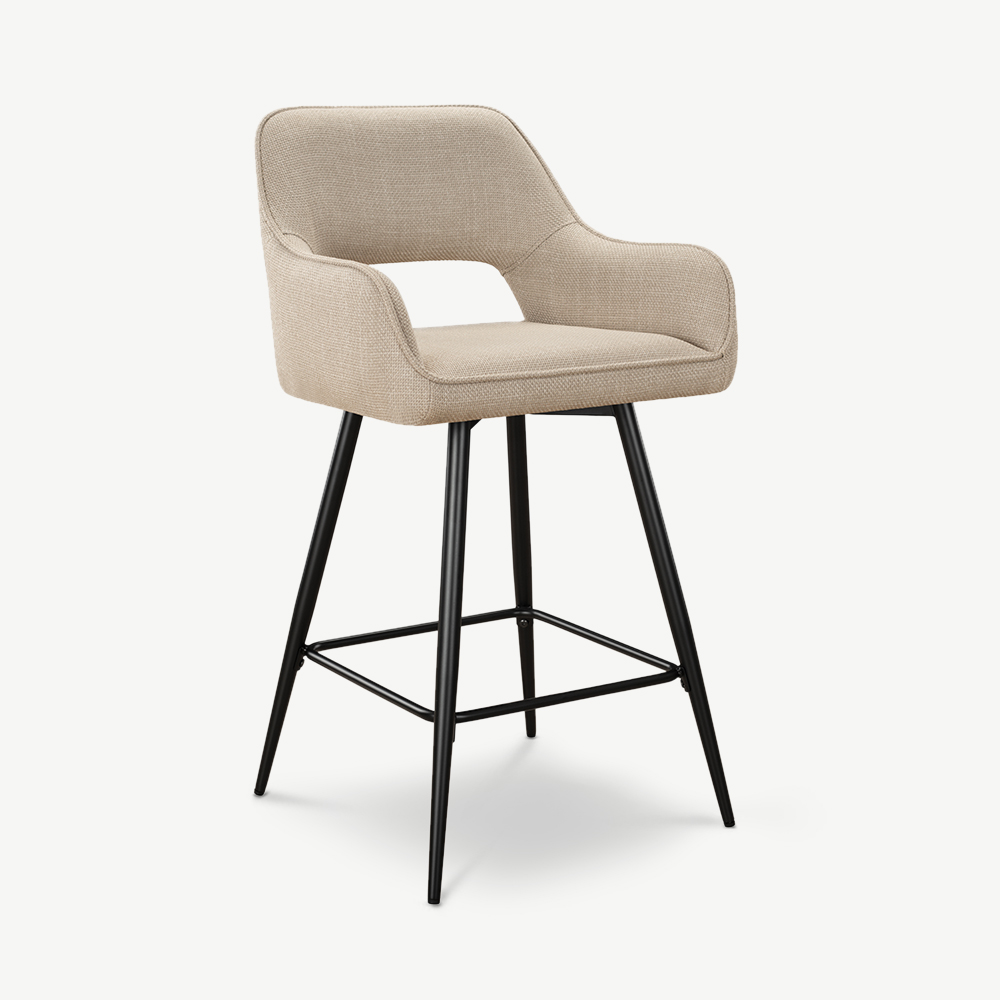

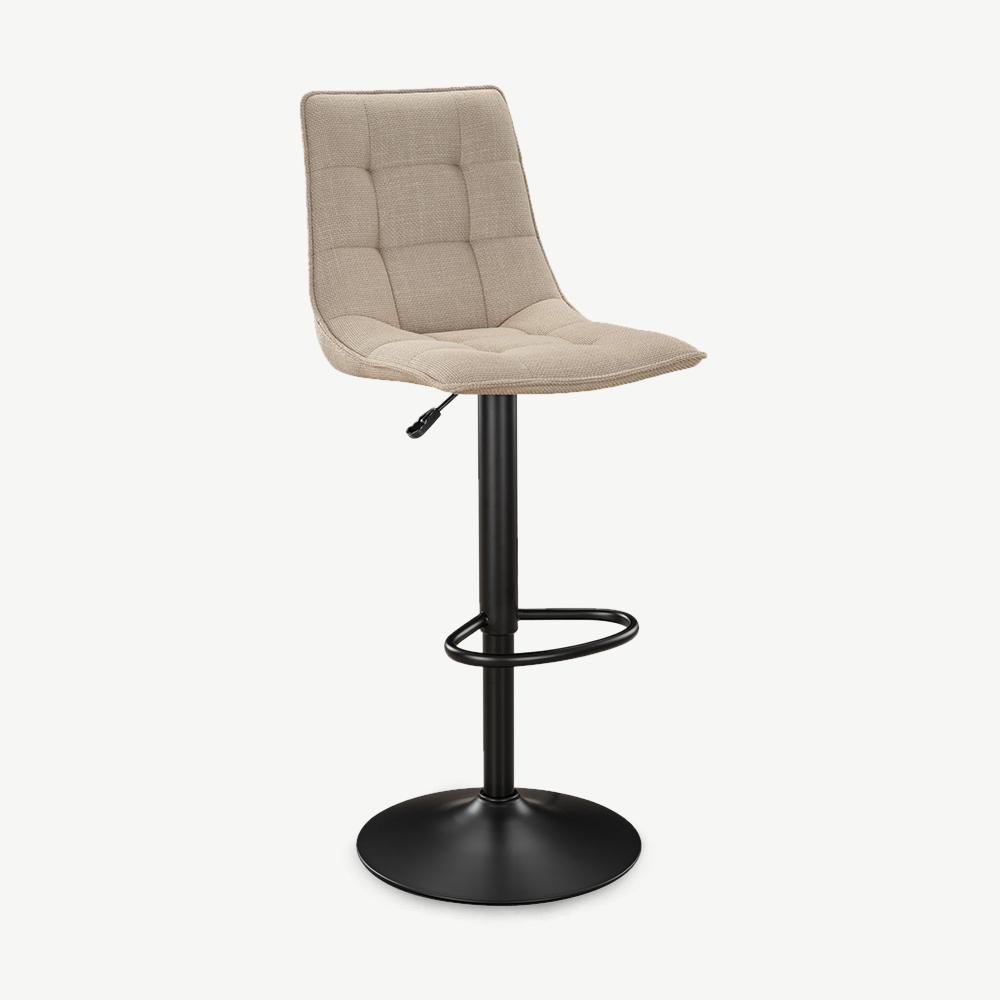


Find the right height, style and material for your kitchen
Over 50,000 customers have furnished their homes with Furnicher. 9,500+ verified reviews, free delivery across Europe, same-day dispatch and Klarna at checkout.
The Furnicher bar stool collection spans metal, solid wood, upholstered and rattan finishes across backless, back and swivel formats. Fixed heights and adjustable gas-lift options are both available. Every product page states the exact seat height and recommended worktop range in the specification table so you can match your counter without measuring twice.
Ordering multiple stools? Quantities of 10 or more for hospitality or home renovation projects qualify for B2B Finance through Mondu. Individual purchases use Klarna for flexible payment.
Go deeper on a specific question
This pillar covers the buying decision end to end. For specific sub-topics, the following guides go deeper without repeating the basics covered above.
- How to choose a bar stool: the short decision framework if you only have five minutes.
- Bar stool buying guide (short version): a condensed cheat sheet of this full pillar.
- Counter stool: the counter-height category explained in isolation.
- Bar stool for kitchen: kitchen-specific selection criteria and durability notes.
- High kitchen chair: how a tall kitchen chair compares to a true bar stool.
Answers to the questions we hear most often
What height bar stool do I need for a 90 cm kitchen island?
For a 90 cm worktop, you need a stool with a seat height of 60 to 65 cm. This leaves a clearance of 25 to 30 cm between your thighs and the underside of the worktop, which is the comfortable working range. Measure from the floor to the underside of the worktop surface, not the top, to get the accurate clearance measurement. If you are unsure about your exact counter height, an adjustable gas-lift stool covering the 58 to 78 cm range removes any sizing risk.
How far apart should bar stools be placed?
Allow 15 to 20 cm of space between the edges of adjacent stools. For a standard 40 cm wide stool seat, that means placing stools 55 to 60 cm apart centre-to-centre. On a 150 cm island, three stools fit comfortably. On a 120 cm island, two stools are the maximum for practical use. Stools that are too close together make getting on and off difficult and create constant elbow contact during use.
Are backless bar stools comfortable for eating at?
For meals under 30 to 40 minutes, yes. For long dinner parties or regular two-hour meals, no. Backless stools are designed for perching, not sustained sitting. The absence of lumbar support means the lower back fatigues noticeably after 45 minutes. If your island doubles as a regular dining surface for proper meals, choose a low-back or mid-back stool. If the island is primarily a breakfast spot and drinks counter, backless is the cleaner choice visually.
Can I use outdoor bar stools indoors?
Yes, with caveats. Outdoor bar stools are typically made from weather-resistant materials such as powder-coated steel, synthetic wicker or treated teak. These materials work perfectly indoors and are easier to clean in a kitchen context. The aesthetic tends toward the casual or industrial. If you want the durability of an outdoor material with an interior finish, look for powder-coated metal frames with an upholstered cushion, which combines weather-resistant structure with living-room warmth.
How do I stop bar stools from scratching my floor?
Fit self-adhesive felt pads to all four feet. On very hard tile or stone floors, rubber feet provide better grip and scratch protection than felt. Replace felt pads every six to twelve months as they compress and lose their protective thickness. If the stool base is a metal ring rather than four feet, apply a continuous strip of felt tape around the inner edge of the ring. Check the pads regularly: a bare metal leg on a hardwood floor will leave marks within days.
How many bar stools do I need for my island?
Divide the usable seating edge of your island by 55 to 60 cm. A 120 cm island seats two. A 150 cm island seats two to three comfortably. A 180 cm island seats three. A 240 cm island seats four. Do not try to squeeze more stools than the space genuinely supports: the result is uncomfortable seating and a cluttered look. When in doubt, choose fewer stools with generous spacing over a cramped row.
What is the difference between a bar stool and a counter stool?
The terms describe the height category, not a different type of product. Counter stools have a seat height of 58 to 68 cm and are designed for worktops of 85 to 95 cm. Bar stools have a seat height of 73 to 78 cm and are designed for taller bar-height surfaces of 100 to 110 cm. In everyday usage, "bar stool" is used for both categories, which is why measuring your worktop before buying is essential rather than relying on the product name alone.
