9800+ TRUSTPILOT REVIEWS




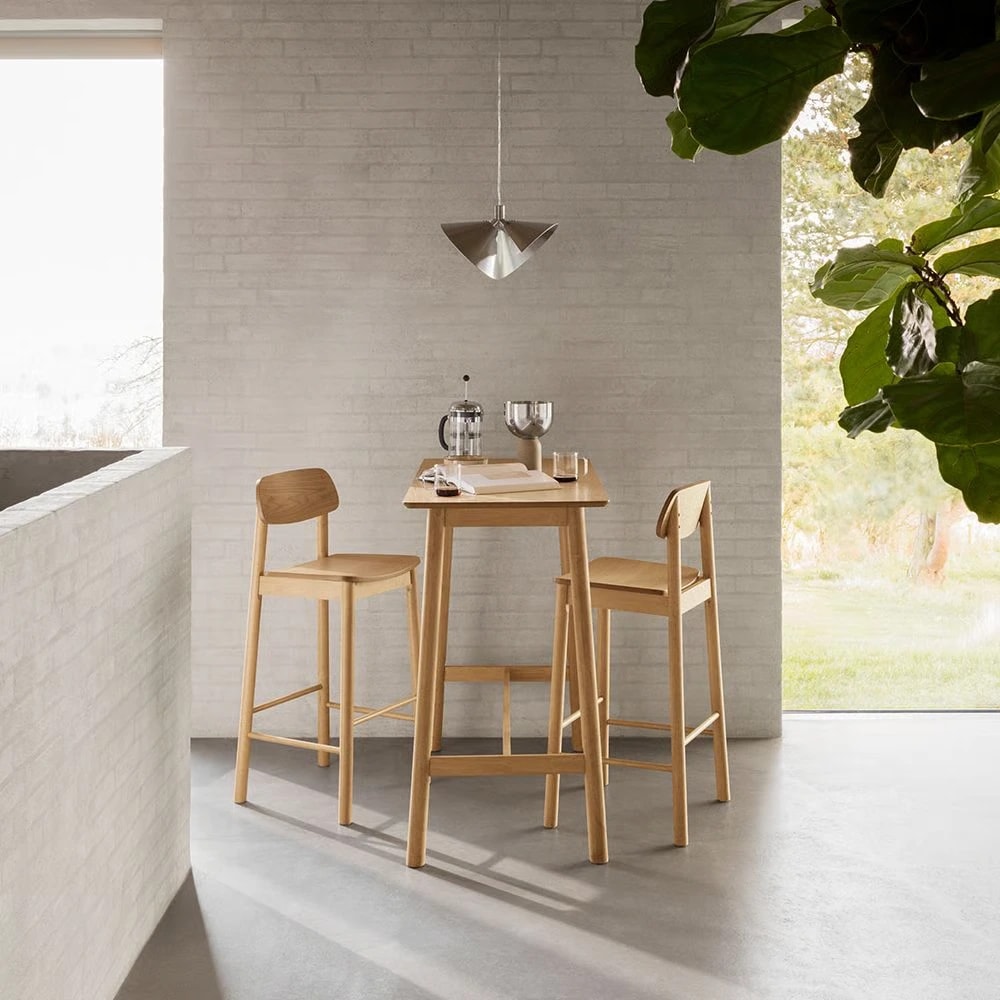
Wood is the most versatile material for bar stools. It ages well, it can be repaired, and it works in kitchens from oak parquet to black painted industrial. The difference between a 79 euro wooden stool that wobbles after two years and a 149 euro one that holds up for ten is almost never about the wood. It is about how the legs connect to the seat.
This article covers the wood species worth considering, compares solid wood with plywood seats, explains why glued mortise joints beat screwed ones, and walks through which finish copes with a real kitchen. At the end, concrete recommendations from the Furnicher range with prices in euro.
Oak, beech and what actually lasts
In practice, three species are worth considering for daily use bar stools. Others (ash, cherry, walnut) exist but rarely sell at standard prices in this category. Acacia is heavily marketed at the low end, but holds up worse than oak in dry indoor heating.
- Oak: harder than beech, pronounced grain, darkens slightly over five years. Carries 130 kg at 28 mm seat thickness. The default choice for heavy use kitchens.
- Beech: pale and uniform, takes stain evenly, almost silent when you sit down thanks to dense structure. 120 kg load rating. Right choice for minimalist kitchens where the wood should not dominate.
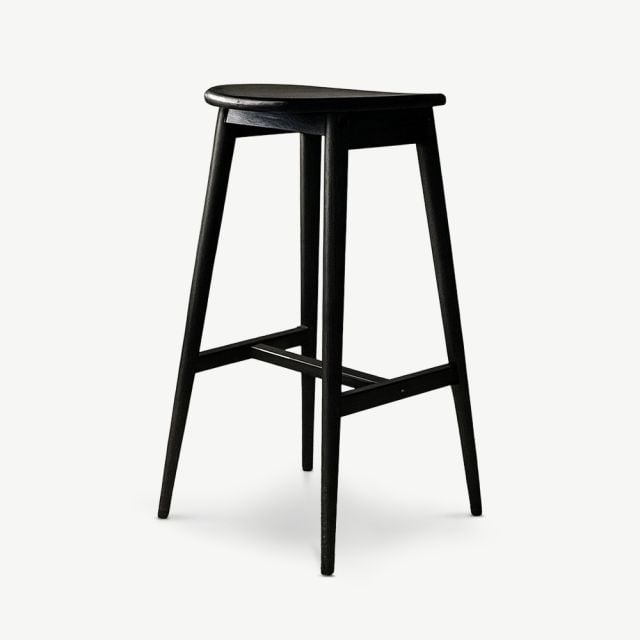
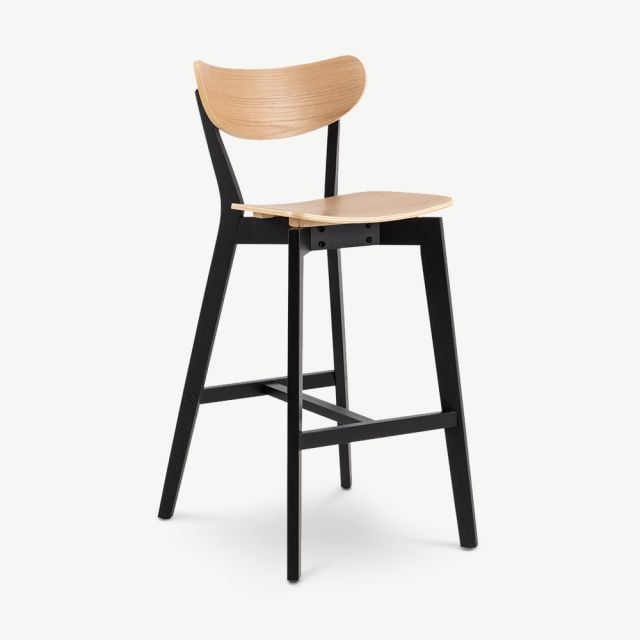
- Black painted oak or beech: not a different wood, the same base with pigmented lacquer over it. Pro: hides water marks. Con: scratches show up as bright lines immediately.
Bamboo is also sold as wood, but it is technically a grass and reacts worse to humidity than real timber. For kitchen use, bamboo does not hold up.
Solid wood vs plywood: three real differences
The marketing language blurs the distinction. What matters comes down to three points: how the seat spreads load, whether it can be repaired, and how it sounds.
Solid wood seat
One piece or several boards edge glued. Lasts 20 to 30 years. Can be sanded back and reoiled when the surface gets scratched. 5.2 to 6.8 kg per seat. Price 119 to 189 euro in the Furnicher range.
Plywood seat (laminated)
7 to 9 thin veneer layers cross laminated under pressure. Lasts 15 to 20 years. Cannot be sanded without losing the top veneer. 2.8 to 3.6 kg per seat. Price 79 to 119 euro.
Moulded plywood
Plywood pressed into a shaped shell under heat, gives a slight spring. Sits more comfortably than a flat solid seat but costs 30 to 50 euro more. Often topped with thin foam upholstery.
Where wooden stools really fail
Stools rarely fail at the seat or in the wood itself. They fail at the join between seat and legs. Three joinery methods circulate on the market with very different lifespans.
| Joinery | Load rating | Lifespan |
|---|---|---|
| Glued mortise and tenon | 130 kg | 20 to 30 years |
| Screwed with wood dowel | 120 kg | 10 to 15 years |
| Screwed with metal bracket | 100 kg | 5 to 8 years |
A glued mortise joint shows no screw heads on the upper face of the seat, and the leg sits flush with the seat with no visible gap. If the manufacturer quotes a load rating above 120 kg, that is a strong signal the joinery is correct. Below 100 kg points to pure screw mounting.
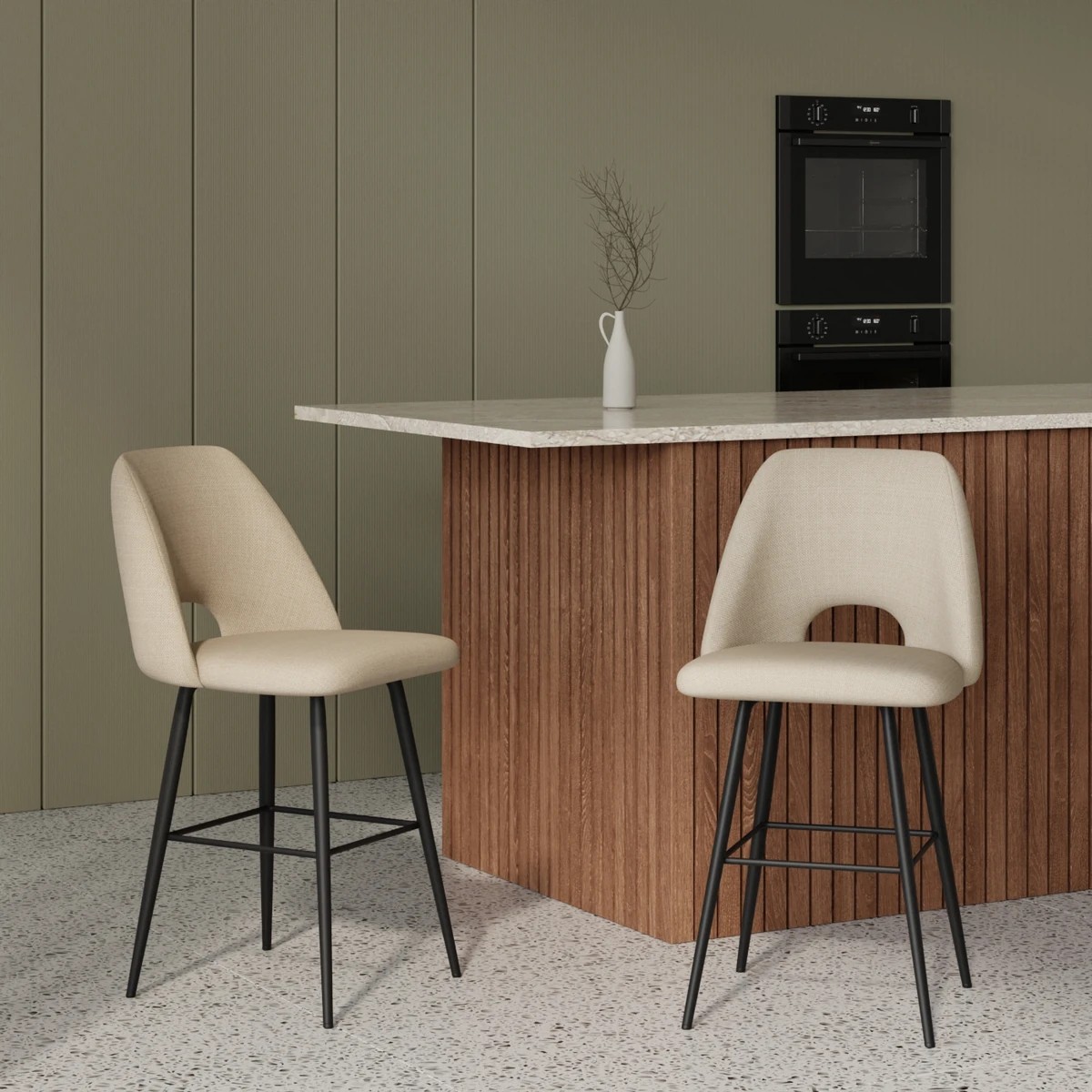
Oil, lacquer or soap: what handles a kitchen
Four surface treatments for wooden bar stools, with the trade offs for actual kitchen use.
Featured in this guide
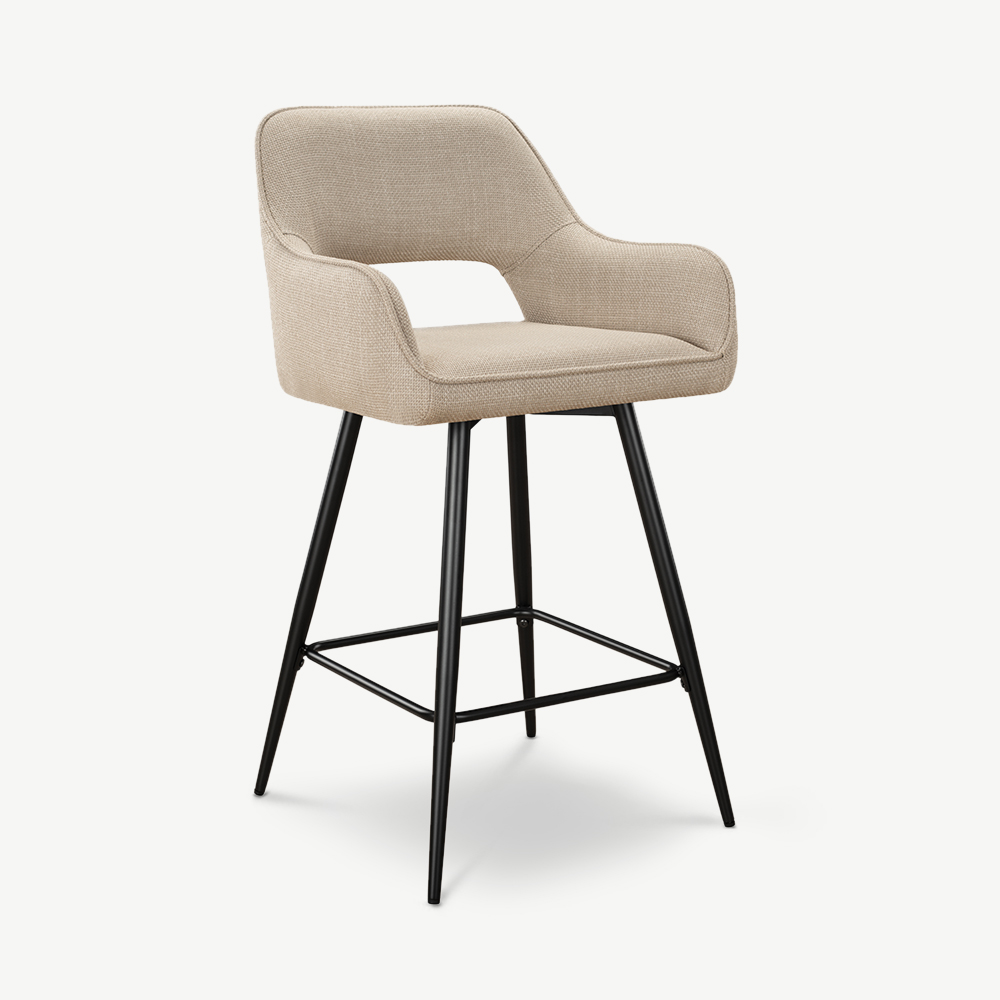


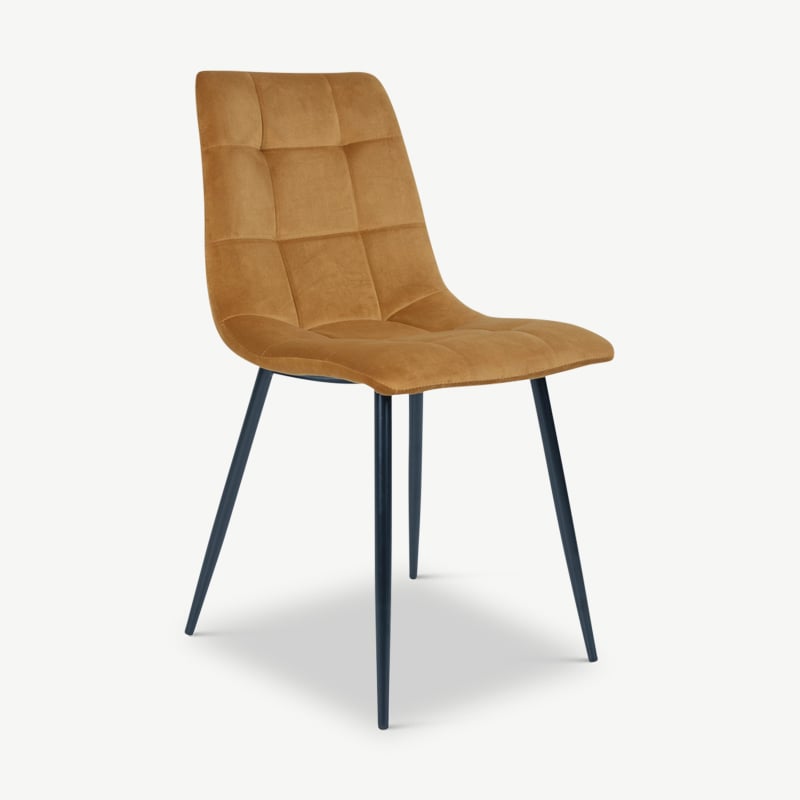
Which wooden stool for which kitchen
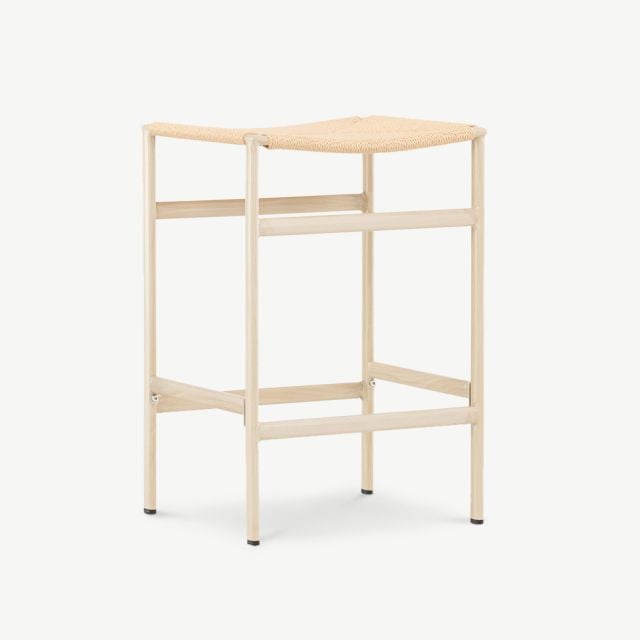
Oiled oak for family kitchens, lacquered beech for minimalist kitchens, black lacquer for loft aesthetic.
Furnicher wooden bar stools start at 89 euro (beech, screwed, 65 cm) and reach 189 euro (solid oak, mortise jointed, 76 cm with backrest). The majority sit between 119 and 159 euro, which is where price matches genuinely long lasting construction. Free delivery across the EU, free returns within 30 days.
Browse the bar stools collection filtered by material on wood. Confirm height first with the bar stool height guide.
Further reading: bar stools for the kitchen, counter stool guide, footstool vs bar stool, and the bar stools buying guide. Style: Scandinavian furniture guide and dining chairs guide.
Frequently asked.
Which wood is best for bar stools?
Oak and beech are the practical choices for daily use. Oak shows the grain clearly and darkens slightly over five years, beech is paler and more uniform and takes stain evenly. Both carry 120 to 130 kg with proper joinery. Acacia is heavily marketed at the budget end but holds up worse in dry heating.
Solid wood vs plywood seat: what is the difference?
Solid wood is one piece or several boards glued edge to edge, 28 to 32 mm thick, lasts 20 to 30 years. Plywood is 7 to 9 thin veneers cross laminated, 11 to 15 mm thick, lasts 15 to 20 years and sits 20 to 40 euro lower in price. Plywood seats can also be moulded for better ergonomics.
Are wooden bar stools comfortable without a cushion?
With a saddle shaped seat (6 to 10 mm dished out under each thigh), yes, up to about 45 minutes at a stretch. Longer use needs a cushion or pad. A completely flat seat with no shape is uncomfortable after 20 minutes regardless of the wood species.
How much does a good wooden bar stool cost?
Solid wood stools with glued mortise joinery start at 99 euro each. Most well made models sit between 119 and 189 euro. Below that, the joinery is usually screwed instead of mortised, which halves the lifespan. Above 200 euro, you enter the designer premium zone.
Which finish lasts longest?
Oiled wood is reoilable and ages well but needs treatment every 12 to 18 months. Lacquered wood is maintenance free for 8 to 12 years but cannot be spot repaired when scratched. Water based lacquer is the current standard and is safe for food contact.
Are wooden bar stools suitable for kitchens?
Yes with caveats: grease splatter on oiled wood leaves dark stains that are hard to remove. For splash zones near the hob, lacquer beats oil. Stools placed directly in front of radiators develop cracks at the joints over time from dry air, so keep at least 2 m clearance from heat sources.