 9800+ TRUSTPILOT REVIEWS


 EN
EN DE
DE FR
FR NL
NL
A backrest on a bar stool is not a style choice. It is a function choice. It is the difference between 30 minutes and 2 hours of comfort. But it costs floor space: a stool with a full back no longer slides under the counter, which in a narrow kitchen means 35 to 45 cm of extra footprint that you may not have.
This article answers three questions: when do you actually need a back, which type fits your sitting time, and what premium is fair to pay. Concrete dimensions, sitting time thresholds, and price brackets from the Furnicher range.
Sitting time decides, not taste
The comfort threshold of a bar stool follows from anatomy, not style. Without back support the lumbar spine settles into an unhealthy posture after 30 to 45 minutes. With a backrest, that window extends to 2 hours or more.
- Under 30 minutes at a time: no back needed. Breakfast, quick coffee, a drink at the counter. The stool tucks fully under, no floor space lost.
- 30 to 45 minutes: low back (18 to 25 cm). Supports the lower lumbar, still slides under most counters, looks tidy.
- Over 45 minutes regularly: full back, 45 to 55 cm tall. Working from a counter, longer family meals, hosting at a breakfast island. The backrest makes a real difference here.
The wrong stool for your actual sitting time costs you back pain later, or a forced replacement. Honest assessment up front saves both.
Three builds, three use cases
What the market sells boils down to three back types. Each with a clear strength profile.
Full back, upholstered
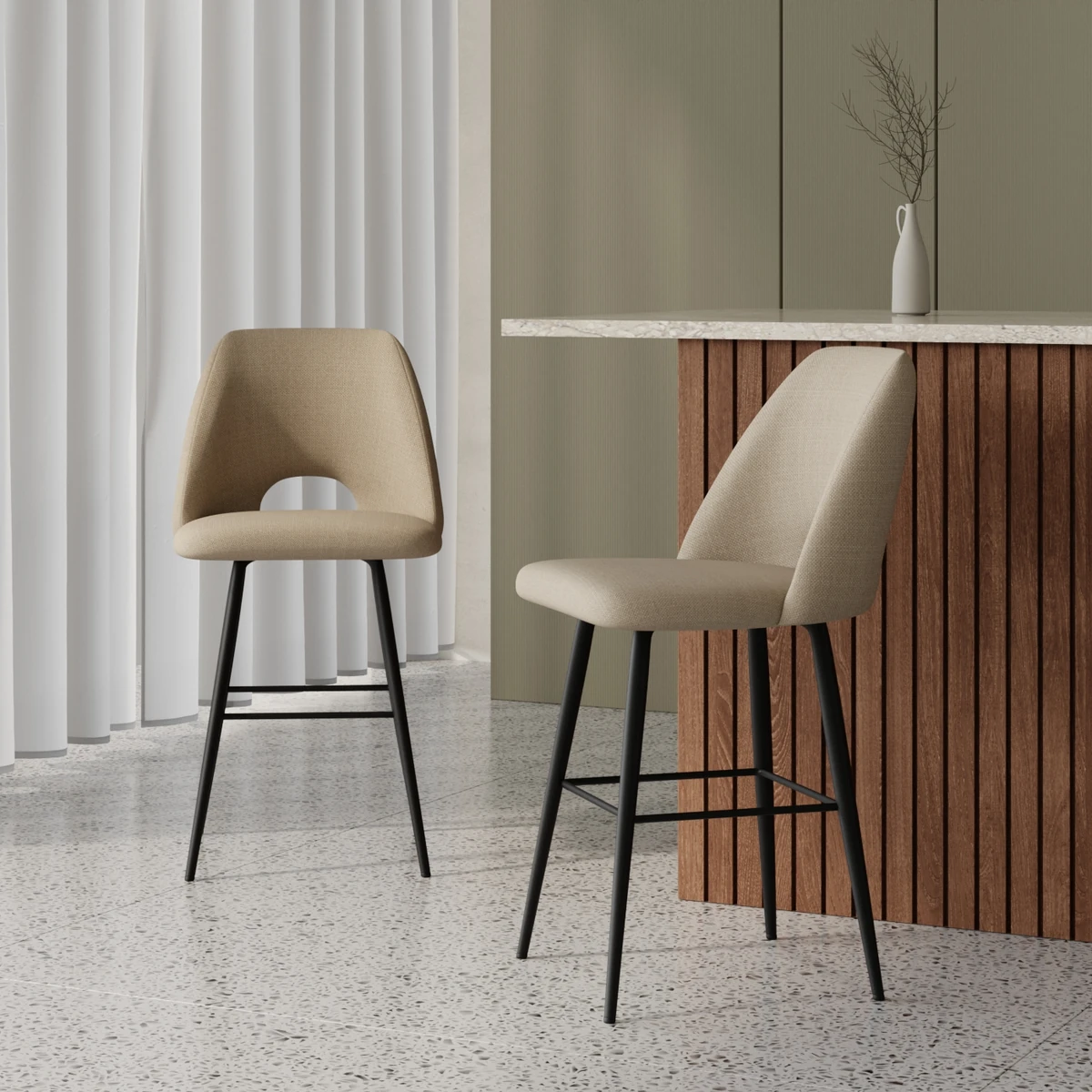
Supports up to shoulder height. With a slight concave curve, follows the lumbar arch. Highest comfort, highest footprint. Furnicher range 139 to 189 euro.
Low back
Supports only the lower back, slides under counters with 8 to 10 cm overhang. The sensible middle for most kitchens. 109 to 149 euro.
Wooden formed back
Moulded plywood or bent solid wood without padding. Supports structurally but not softly. Beautiful look, mid comfort. 99 to 139 euro. Suitable for meals, not for long working sessions.
What the back costs you in floor space
The honest trade off. A stool without a back tucks under the counter and disappears when unused. A stool with a full back sticks out 35 to 45 cm in front of the counter, because the backrest sits above the counter top.
| Build | Height above seat | Footprint in front of counter |
|---|---|---|
| No back | 0 cm | 0 cm (tucks fully under) |
| Low back | 18 to 25 cm | 0 to 12 cm |
| Full back | 45 to 55 cm | 35 to 45 cm |
| Full back with arms | 45 to 55 cm | 40 to 50 cm |
In a kitchen with 1.2 m of clearance in front of the counter (the EU standard minimum), a full back is usable. With 80 to 90 cm of clearance (typical in Berlin period apartments or Paris narrow apartments), things get tight if the stools cannot tuck under. The low back is then the right choice.
Four details that decide comfort
Beyond the basic build, four construction details make a measurable difference.
Featured in this guide


Low back as default, full back when you know why
If unsure, pick low back. That is the sensible middle for 80 percent of home kitchens.
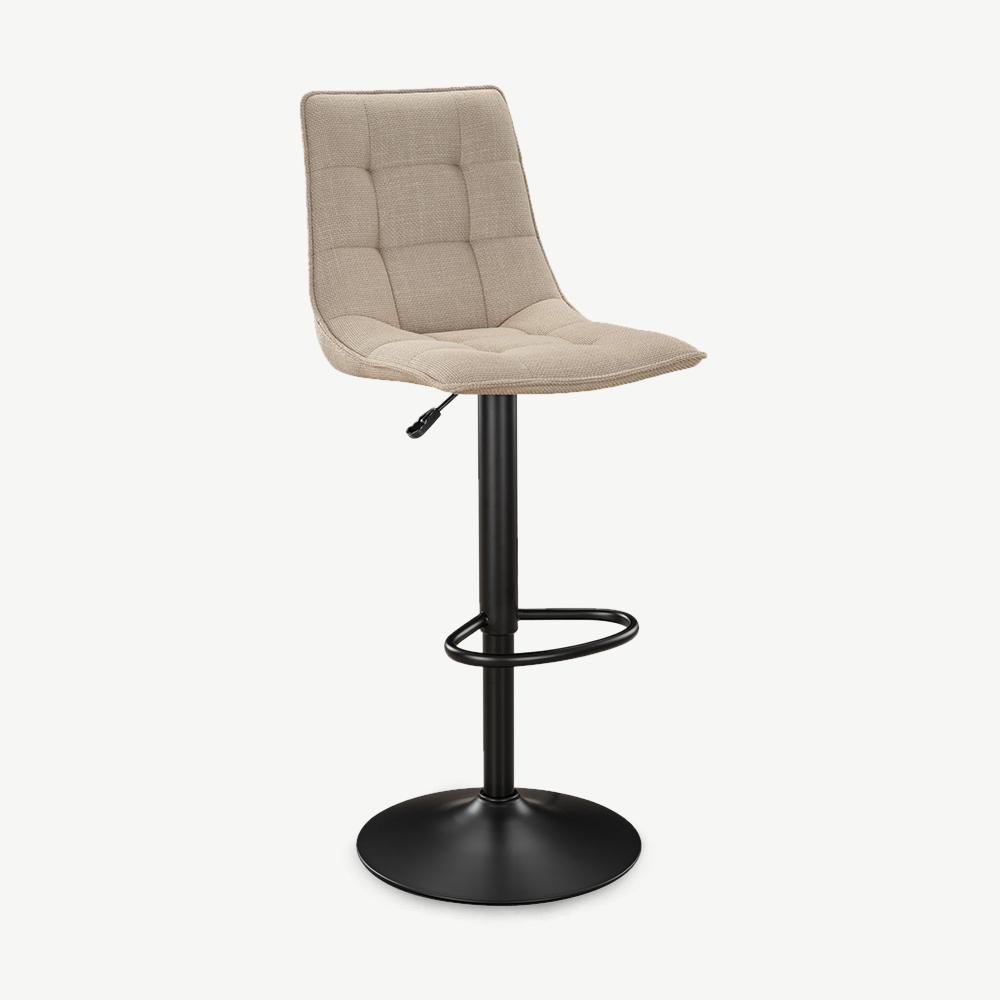
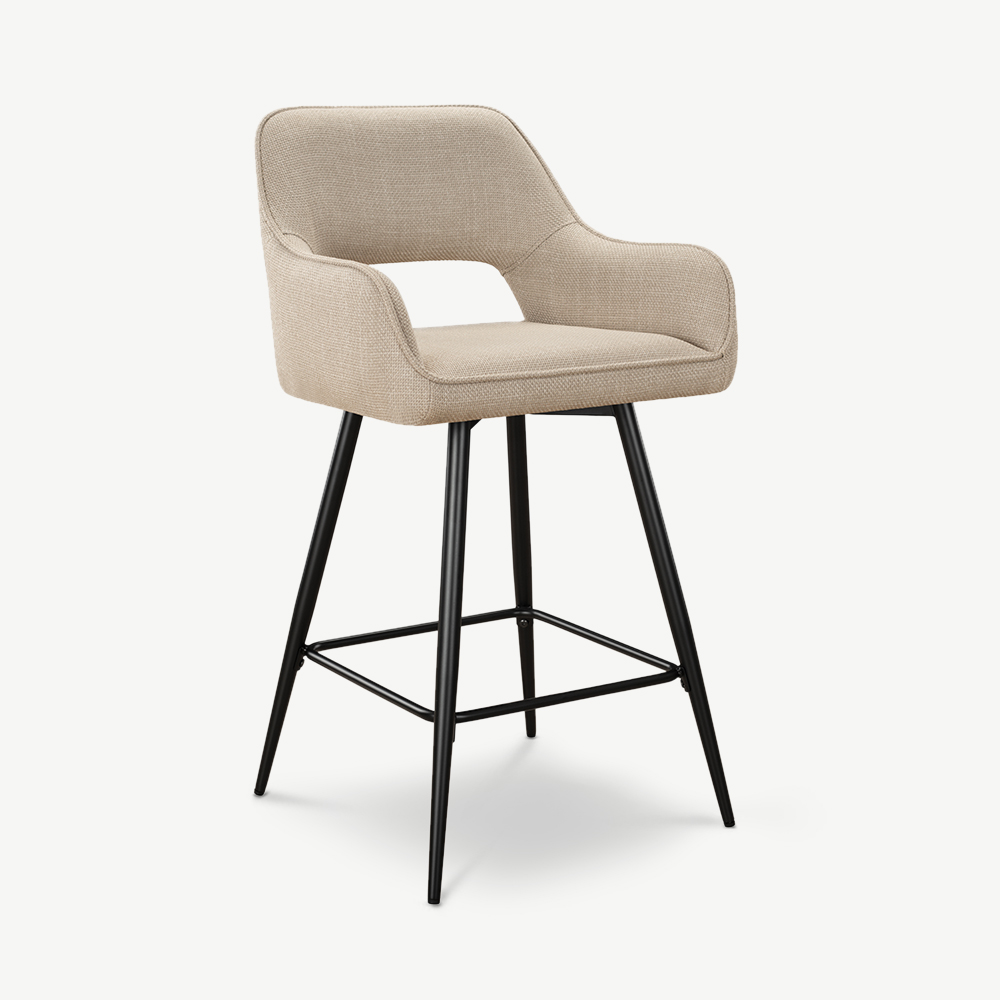
Furnicher bar stools with a low back start at 109 euro (beech, 76 cm seat height). Full back with upholstery from 139 euro. Premium models with boucle covering and arms 169 to 189 euro. All with 5 year warranty, free delivery, and 30 day returns.
Browse bar stools filtered for backrest. Check height first with the bar stool height guide.
Further reading: bar stools for the kitchen, counter stool, footstool vs bar stool, bar stools buying guide. Style: dining chairs guide, Japandi interior.
Frequently asked.
Do I need a bar stool with a backrest?
Over 45 minutes of sitting at a stretch: yes. Under 30 minutes: no. Between 30 and 45 minutes, a low back is a fair compromise. Rule of thumb: how long the primary user sits in one go on average. The wrong choice costs you back pain later or a forced replacement.
Full back vs low back: what is the difference?
Full back reaches shoulder height (45 to 55 cm above the seat), supports the whole back, but does not slide under counters with less than 9 cm of overhang. Low back is 18 to 25 cm tall, supports only the lower back, and tucks under all standard counters when not in use.
How much space does a bar stool with backrest take?
With a full back, the stool sticks out 35 to 45 cm in front of the counter when not in use, plus about 50 cm of clearance for movement. Without a back, the seat slides fully under and takes no extra floor space when unused.
Are bar stools with backrests more comfortable?
For sitting longer than 45 minutes, yes, significantly. The backrest carries 30 to 40 percent of upper body weight and reduces lumbar load. For short use (breakfast, quick drink) the difference in comfort is small.
Which backrest shape is best?
A slightly concave, upholstered back with 5 to 8 degree rearward tilt and lumbar contact at 18 to 24 cm above the seat is most ergonomic. Flat wooden backs look classic but are less supportive over long sessions. Rattan and wire backs are mostly decorative.
What does a good bar stool with backrest cost?
Solid wood or metal stools with a backrest start at 99 euro. With upholstery and back, 119 to 169 euro. Premium upholstered with arms, 189 to 250 euro. Furnicher standard range sits at 99 to 189 euro, which covers most home use cases.
