 9800+ TRUSTPILOT REVIEWS


 EN
EN DE
DE FR
FR NL
NL
Most bar stool returns happen for one reason: the buyer measured the counter and forgot that bodies need room between the seat and the underside of the worktop. Knees hit the cabinet, elbows ride too low, the stool gets sent back. Getting the height right is the single decision that matters most.
This guide walks through seven steps in order: measure the counter, work out the clearance, pick between backrest or backless, fixed or swivel, the right material for your kitchen, the footrest position, and the load rating. Follow them and the stool that arrives will fit the first time.
Measure the counter, then subtract
The first measurement is from the floor to the top of the worktop, taken on the side where the stool will sit. Most kitchens fall into one of three counter categories.
- Standard kitchen counter: 90 to 92 cm tall, needs a 60 to 65 cm seat
- Kitchen island, high: 95 to 102 cm tall, needs a 65 to 72 cm seat
- Bar counter: 105 to 110 cm tall, needs an 80 to 85 cm seat
The rule is simple: 25 to 30 cm of clearance between the seat and the underside of the counter. Less than 25 cm and an average adult thigh does not fit. More than 30 cm and the elbows sit too low, which is the second most common reason for returns. For a precise read on the categories, our bar stool height guide has the full breakdown by counter type.
Backrest or backless, fixed or swivel
Two yes-or-no decisions decide how the stool feels day to day. They are independent: a backless stool can be swivel, a backrest stool can be fixed. The four combinations all exist.
Backless
Backless stools push completely under the counter when not in use, which clears the kitchen floor and reduces visual clutter. Right choice for narrow galley kitchens and short sits under 30 minutes (breakfast, coffee, school-run snacks).
Wrong choice if anyone in the household works from the island for hours. Lumbar support runs out around the half-hour mark.
With backrest
A backrest adds 10 to 15 cm of stool height above the seat. It will not push fully under the counter, so the kitchen feels slightly more occupied. The trade-off pays off when the island doubles as a desk or a homework spot. Our backrest bar stool guide covers the lumbar geometry in detail.
Fixed vs swivel
Fixed stools are sturdier and cheaper. Swivel stools turn 360 degrees on a hidden bearing, which removes the awkward whole-body turn when someone walks into the kitchen. The premium runs €20 to €40 per stool. Worth it on a conversation-heavy island; skip it on a back-to-the-wall counter.
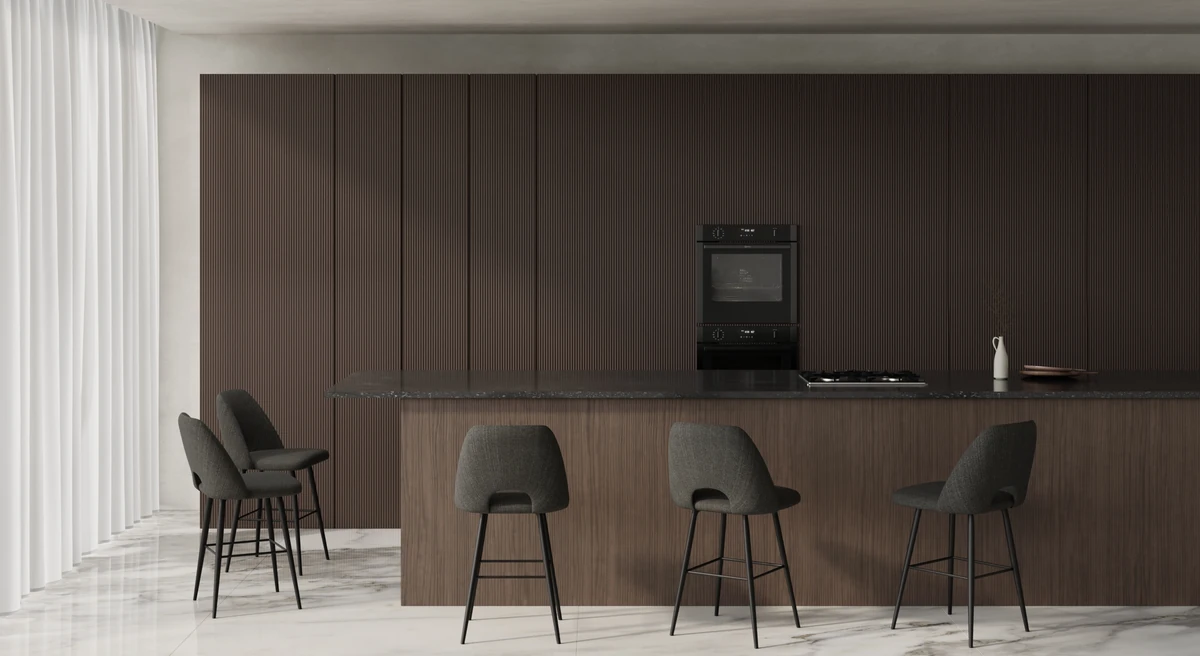
Featured in this guide
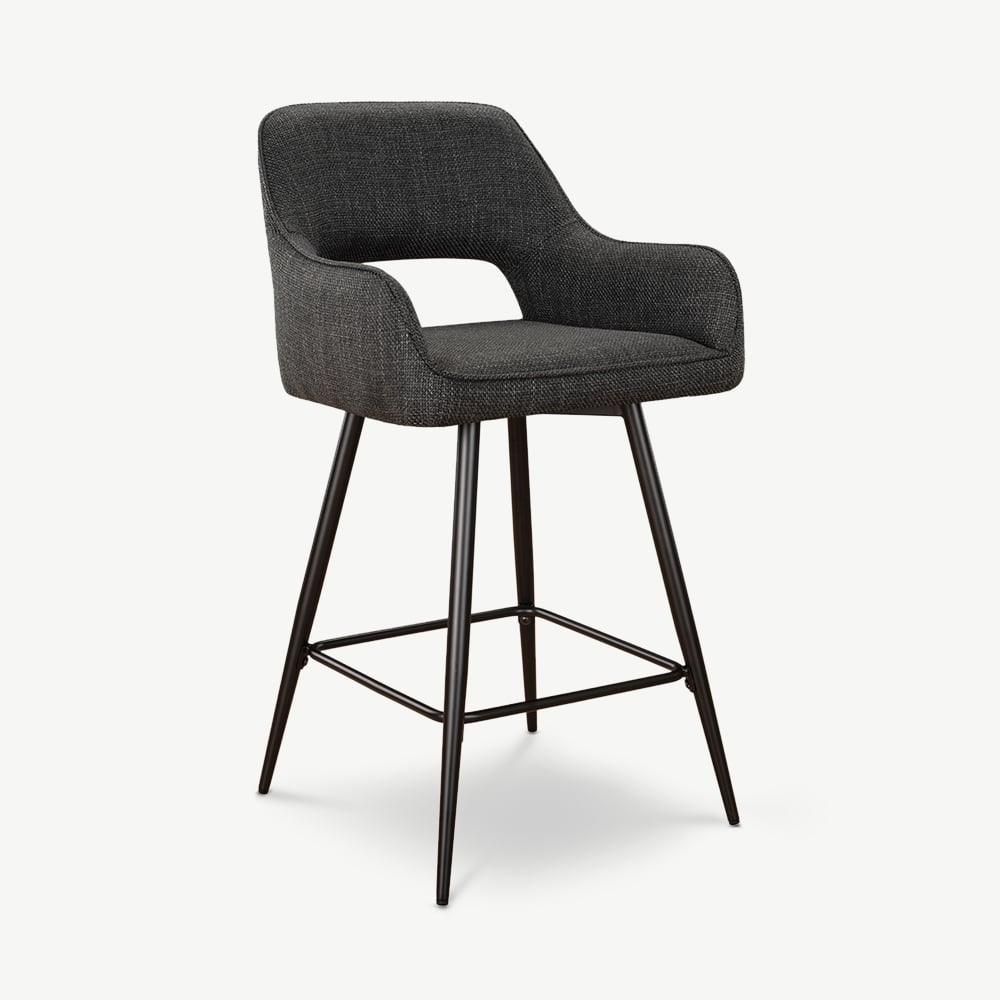


Material, footrest, and what the stool can actually carry
The remaining three decisions are about how the stool wears, how it feels under your feet, and what it holds. Get these wrong and the stool survives a year before something breaks or someone complains.
| Material | Best for | Lifespan |
|---|---|---|
| Solid wood (beech, oak) | Daily family kitchen | 15 to 20 years |
| Powder-coated steel | Heavy use, modern look | 12 to 18 years |
| Plastic shell (PP) | Light use, easy clean | 8 to 12 years |
| Rattan / cane seat | Aesthetic-led, light use | 10 to 15 years |
| Upholstered (fabric) | Comfort priority | 6 to 10 years (seat cover) |
The footrest sits 18 to 23 cm below the seat. Without one, the feet hang from the knee and circulation drops within twenty minutes; a ring footrest works better than a single bar because the foot is not locked to one position. Our bar stool materials guide goes deeper on which footrest construction lasts.
Load capacity is the one spec almost no one checks. Household stools are typically rated 110 to 120 kg. For commercial use, daily multi-person households, or heavier sitters, look for 130 kg+ on a steel or solid beech frame. Adjustable gas-lift stools usually rate lower, around 100 kg, because the gas piston is the weak point.
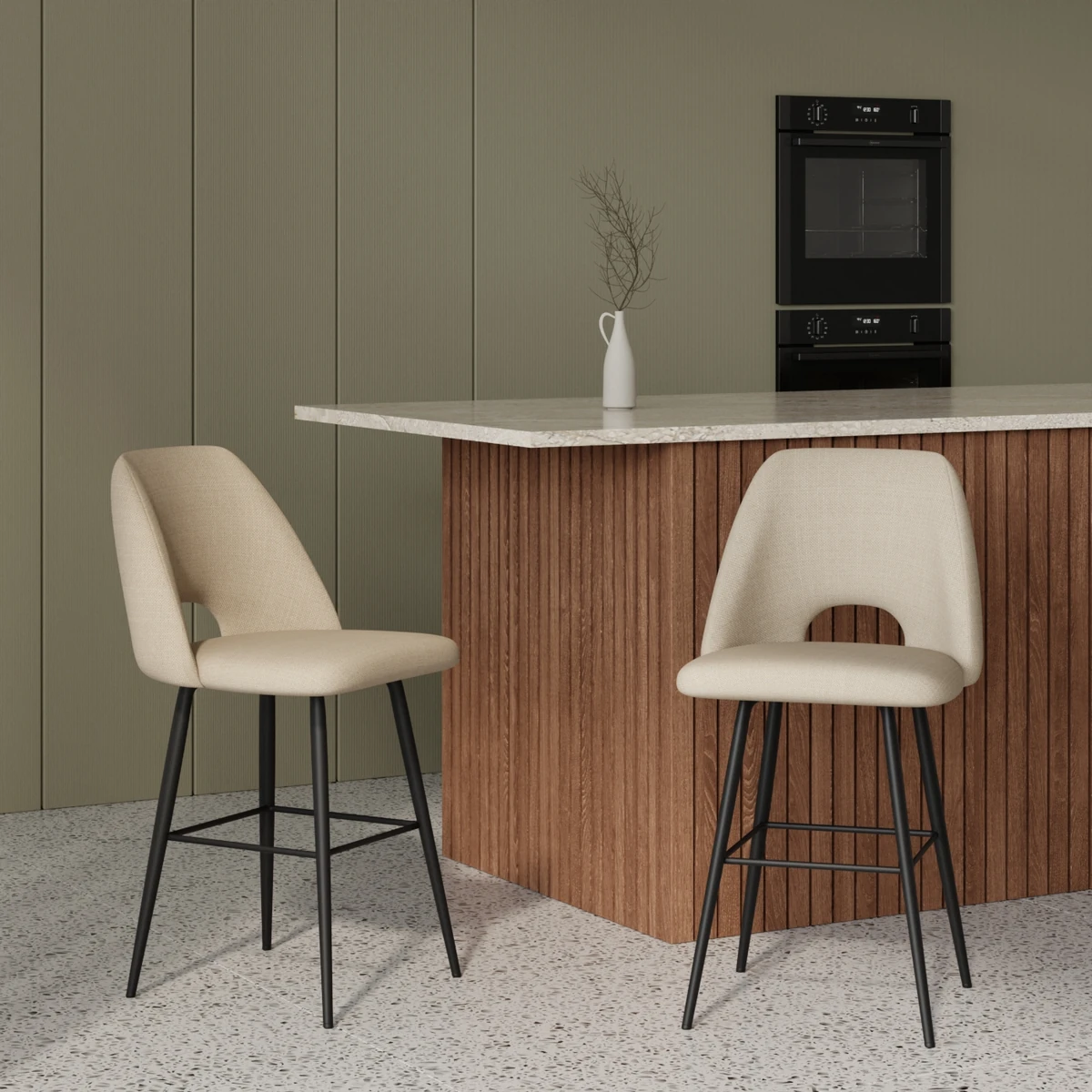
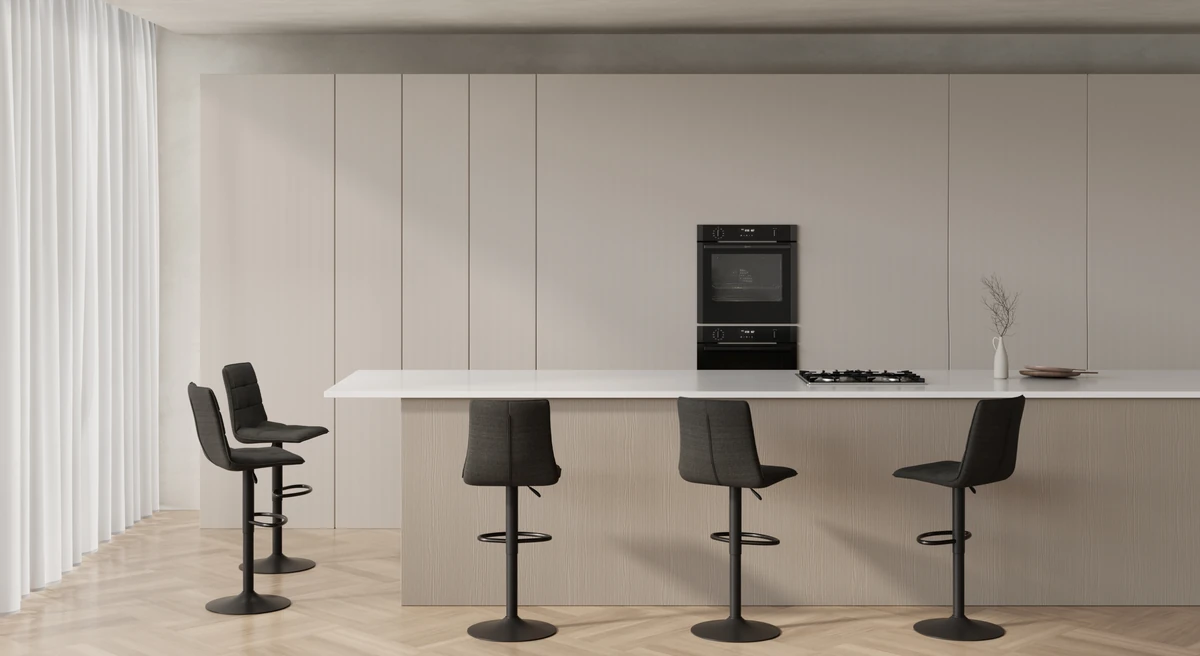
When a gas-lift stool earns its place
Adjustable stools cover a 20 cm range, typically 60 to 80 cm seat height, with a gas piston. They suit three specific situations and add unnecessary cost in everything else.
The seven steps, in order
Counter height first, clearance second, everything else after.
Most failed bar stool purchases skip the first two and start from a style decision. Get the measurements right and the rest becomes a matter of preference rather than fit. A 90 cm counter wants a 60 to 65 cm seat, full stop. A 110 cm bar wants 80 to 85 cm. The footrest sits 18 to 23 cm below the seat. The frame holds 110 kg+ for normal use, 130 kg+ for daily multi-person.
Browse our full bar stool collection. Prices start at €69, with most kitchen-island stools sitting between €99 and €159 and bar-height stools at €129 to €189. Every product page lists seat height, footrest position, and load rating in the spec block; the rule above tells you which to filter on.
For a full strategy overview before browsing, our bar stools buying guide covers cluster choice, kitchen layout, and material durability in one place.
Frequently asked.
What height bar stool do I need for a 90 cm counter?
A 60 to 65 cm seat height. The rule is 25 to 30 cm of clearance between the seat and the underside of the counter. Less than 25 cm and your legs do not fit; more than 30 cm and you feel perched. Measure the counter on the side where the stool will sit, not on the cooking side, because some islands have an overhang on one side only.
How many bar stools fit at a kitchen island?
Allow 60 cm of width per stool for comfort, 50 cm minimum. A 180 cm island fits three stools comfortably or four if the stools are narrow and backless. If the stools are swivel, add 5 cm extra clearance between them so the rotation does not knock the neighbour. For backrest stools at a long bar, count 65 cm per stool to leave room for the back panel.
Are swivel bar stools worth the extra cost?
If the stool sits at a kitchen island that is also a conversation spot, yes. Swivel adds €20 to €40 over a fixed equivalent and removes the awkward turn-with-your-whole-body motion when someone walks into the kitchen. Skip swivel on a back-to-the-wall counter where the stool faces forward all the time.
What weight should a bar stool hold?
Look for 110 to 120 kg rated capacity for normal household use. For commercial use, daily multi-person use, or heavier sitters, choose 130 kg+ with a steel or solid beech frame. Adjustable gas-lift stools usually rate lower (around 100 kg) because the piston is the limiting component. The rating is listed in the spec block of every Furnicher product page.
Backless or with backrest, which is better?
Backless stools tuck fully under the counter, free up visual space, and suit short sits (eating breakfast, quick coffee, a phone call). Backrest stools support longer sits of 30 minutes or more, such as working from the kitchen island or homework supervision. The same kitchen can use both: backless for the counter side, backrest at the end where the long sits happen.
Do bar stools need a footrest?
Yes. Without a footrest the legs hang from the knee and circulation drops within 20 minutes. A footrest 18 to 23 cm below the seat keeps the thighs supported. A ring footrest, which wraps around the base, is more flexible than a single bar because it does not lock the feet into one position. For taller bar-height stools (80+ cm seat), the footrest is the difference between comfortable and unusable.
