 9800+ TRUSTPILOT REVIEWS


 EN
EN DE
DE FR
FR NL
NL
A bar stool is three parts that wear at different speeds: the frame that gets foot-scuffed, the seat that gets sat on and spilled on, and the footrest that absorbs the daily abuse of two shoes. Each part deserves its own material decision. Treating the stool as one material choice is how people end up with a frame that lasts twenty years under a seat that wears out in five.
This guide breaks the stool into those three components and reads each one against the realities of a working kitchen: hot pans, spilled wine, kicked shoes, dropped cutlery, the dog walking past. By the end you know which materials handle what.
Steel, wood, aluminium, brass
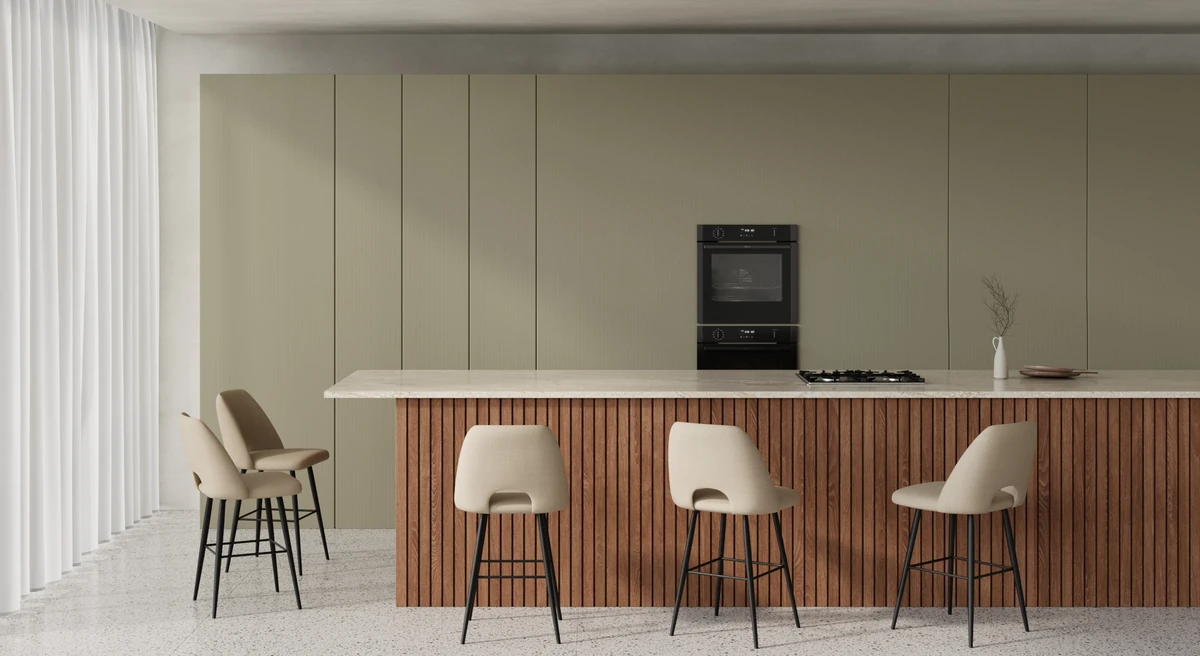
The frame carries the user's weight and absorbs most of the daily abuse. Four metals and one wood category dominate. Each has a clear use case.
- Powder-coated steel: the workhorse. Tubular steel with a baked-on polyester coating. Resists scuffs better than paint, chips revealing dark grey underneath rather than bright metal. Holds 130 kg+ in 1.5 mm wall thickness.
- Solid beech or oak: the long-term play. A turned beech leg with mortise-and-tenon joinery lasts 15 to 20 years in a daily-use kitchen. Heavier than steel; worth the weight for stability.
- Aluminium: lightweight, rust-proof, prone to denting if hollow. Better for outdoor bars and humid environments than for primary kitchen use.
- Brass: an accent material rather than a structural one. Solid brass costs €300+ per stool; most brass-look frames are brass-plated steel.
Plastic frames exist (polypropylene single-piece moulds) but they are not load-bearing frames in the traditional sense. The seat and frame are one continuous shell, which is covered in the next section.
What you actually sit on
The seat takes spills, drops, sliding plates, and the daily friction of clothing. It is the part most likely to fail first. Six materials cover the realistic options.
Solid wood
A shaped wood seat is the longest-lasting option. Spills wipe off, scratches sand out, the seat can be re-oiled every two to three years to refresh the surface. Pairs naturally with a wood or steel frame. Less forgiving on bare skin in cold months.
Plastic (polypropylene)
Injection-moulded polypropylene shells in single colours. The most spill-resistant option (the surface is non-porous), the easiest to clean, and the lightest. Sun fades the colour over 8 to 10 years in a sunlit kitchen. Outdoor-rated variants exist.
Leather
Real leather develops a patina over the first two years and softens for the next ten. PU (polyurethane) leather looks similar at first, costs a quarter as much, and starts cracking at the seams around year five. Both wipe clean of spills.
Fabric upholstery
The most comfortable surface to sit on for hours. Performance fabrics (stain-resistant weaves) handle kitchen spills well; standard cottons do not. Replaceable seat covers exist on some models, which extends the useful life by years.
Rattan / cane
A woven natural rattan seat panel suits visually softer kitchens. Cool in summer, fine on bare skin. Avoid in high-humidity kitchens (conservatory, basement) where the weave loosens. See our rattan chair guide for the durability detail.
PP with cushion
A polypropylene shell with a removable seat cushion. Combines the wipe-clean shell with the comfort of fabric on top. The cushion takes the wear; the shell stays good. Most replaceable-cushion systems are €15 to €25 to swap.
Featured in this guide



Where the damage happens
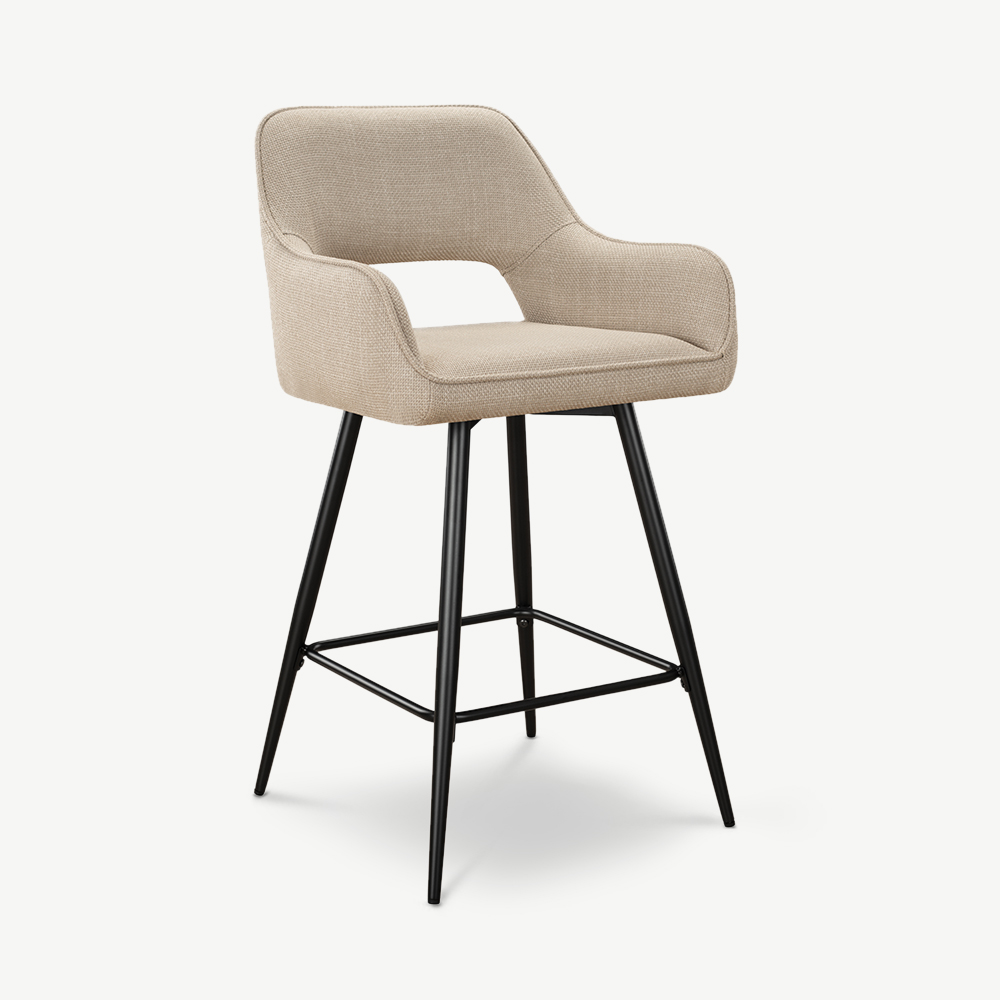
The footrest is the part that gets used most aggressively and inspected least. Two shoes rest on it for every meal, slide back and forth, kick it accidentally, drop crumbs on it. Five years of that wears a footrest faster than five years of sitting wears the seat.
| Footrest type | Scuff resistance | Lifespan |
|---|---|---|
| Solid steel ring, brushed | Excellent | 15 to 20 years |
| Brass-plated steel ring | Good (plating wears at contact point) | 10 to 15 years (visible wear at 5) |
| Powder-coated steel cross-rail | Fair (chips at contact point) | 8 to 12 years |
| Wood cross-rail | Fair (dents under heel pressure) | 8 to 12 years |
| Single chrome bar | Excellent | 15+ years |
A ring footrest wraps around the base, giving four resting positions and spreading the wear over a wider arc. A single cross-rail is one bar at one position, which concentrates the foot traffic on a 15 cm strip. Rings last longer in practice for that reason.
If the footrest is the only visible-wear part on the stool after five years, that is normal. A solid steel or chrome ring is replaceable as a part on better-made stools; on budget stools it is welded in and the whole stool is the unit. Worth knowing before buying.
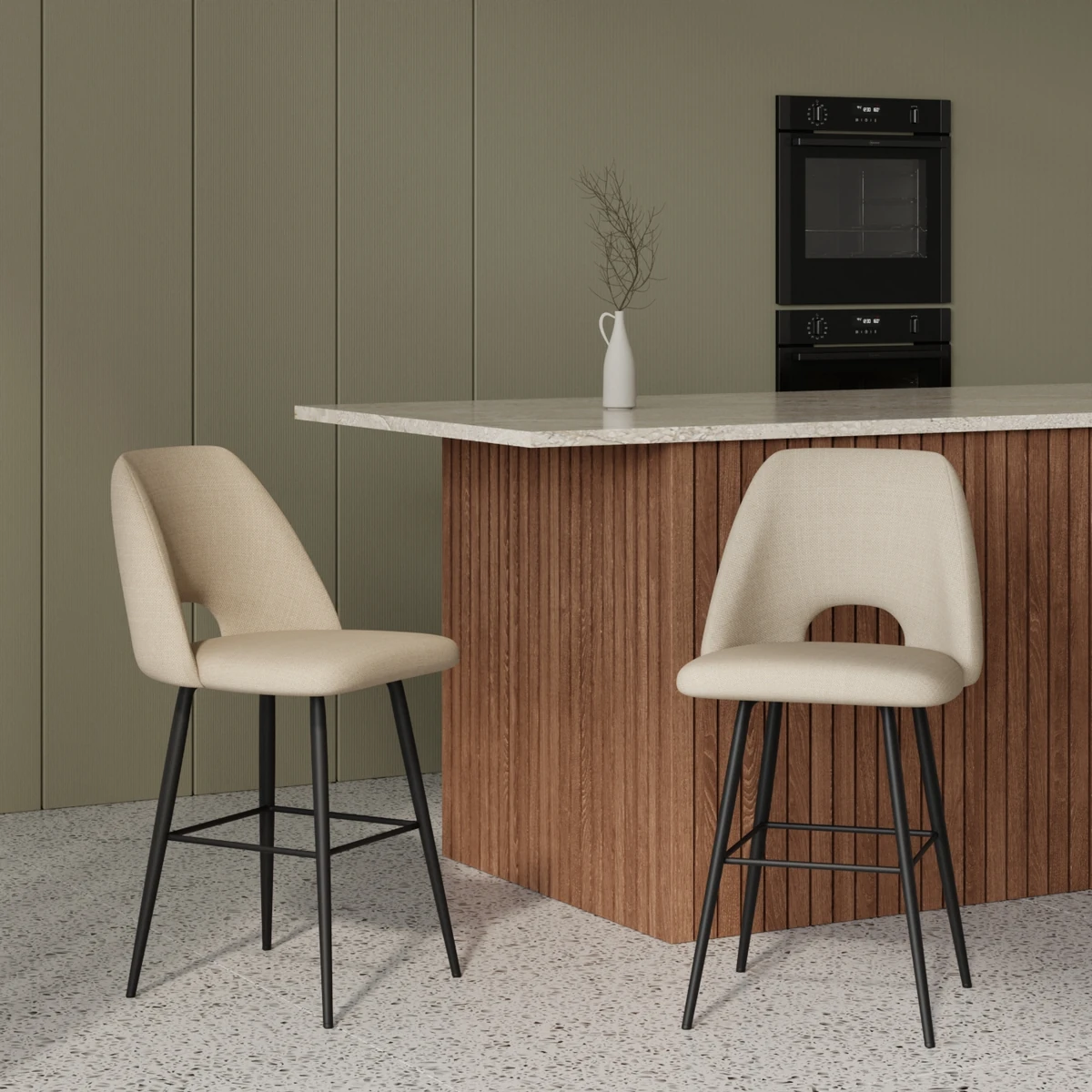
Which combination fits a working kitchen?
Steel frame, plastic or wood seat, chrome ring footrest. That is the long-term household answer.
It survives spills, foot scuffs, the dog, and decade-on-decade use. Add an optional fabric cushion if anyone sits long enough to need it; the cushion replaces every 5 to 8 years for €15 to €25, the rest of the stool keeps going. For a more dressed kitchen, swap to a solid beech frame with a leather seat and brass-plated ring footrest; expect the brass to wear at the contact point around year five, which most owners find appealing rather than a defect.
Browse the full bar stool collection. Prices €69 to €189 across frame and seat combinations. The product spec block on each page lists frame metal, seat material, footrest type, and load rating.
If you have not chosen the height yet, our 7-step bar stool guide covers measurement first. For the broader category context our bar stools buying guide sets out kitchen layout and stool count.
Frequently asked.
Which bar stool frame material lasts longest?
Powder-coated steel and solid beech are the two long-life options. Steel resists scuffs and wipes clean; beech can be sanded and re-oiled if it dents. Both reach 15 to 20 years of daily use without structural failure. Aluminium is durable too but more dent-prone if hollow-section; brass is mostly cosmetic.
Is real leather worth it on a bar stool?
If you sit on the stool daily and keep it indoors, yes. Real leather softens and patinas over 10 to 15 years, where PU leather cracks at the seams around year five. The price gap is about 3x, so the cost-per-year is similar over the leather's lifespan. PU is the right answer if the stool sits in a high-humidity or pet-heavy household.
What seat material is easiest to clean?
Polypropylene plastic. The surface is non-porous, so it wipes spills off completely with a damp cloth. Solid wood is second, since it wipes clean but absorbs liquid if a spill sits more than a minute. Fabric is the hardest unless you choose a performance weave with stain treatment.
Why does the footrest scuff so quickly?
The footrest takes the friction of two shoes for every sitting session. A powder-coated finish chips at the contact point under heel pressure; brass plating wears down to the steel underneath; bare chrome and solid steel handle the abuse longest. Choose chrome or solid steel ring footrests if you want the finish to stay clean.
Can bar stool materials handle outdoor use?
Powder-coated aluminium frames with polypropylene seats handle outdoor use for 8 to 12 years. Steel rusts under coastal or wet conditions. Wood swells and cracks if left exposed. Real leather and fabric upholstery are not outdoor materials. Most kitchen-rated bar stools are indoor only, listed clearly in the product spec.
Are wooden bar stools comfortable enough for daily use?
Yes, with one caveat: a flat-shaped wood seat is uncomfortable for sits over 45 minutes. A contoured wood seat (saddle-shaped, scooped) is fine for hours. If you regularly sit longer than 45 minutes, choose either a contoured wood seat or a wood-base stool with a cushion. Our wooden bar stool guide covers the seat shapes in detail.
