 9800+ TRUSTPILOT REVIEWS


 EN
EN DE
DE FR
FR NL
NL
Three counter heights, three stool heights, one rule. Bar stools are the only seat where a 5 cm mistake makes the chair unusable, so the maths matter. This guide covers the three European standard seat heights, the counter heights they pair with, and the measurement method that keeps you from buying the wrong one twice.
We sell across five EU markets and the most common return reason in the bar stool category is height mismatch. Almost all of those returns trace back to the same error: measuring the bottom of the counter overhang instead of the top, or assuming a kitchen island is bar height when it is counter height. Read the four step method below before you measure anything.
65, 76 and 91 cm: pick one
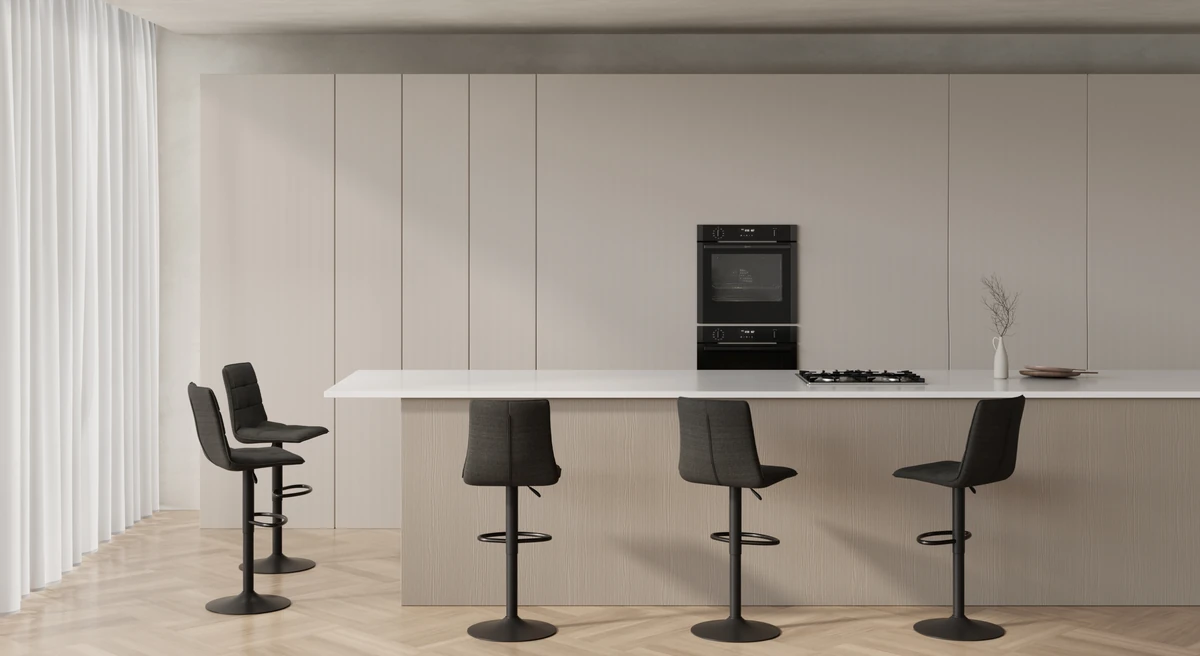
European bar stools are sold in three standard seat heights. Choosing between them is a function of counter height, not preference. A 76 cm stool at a 95 cm island makes your elbows ride too low; a 65 cm stool at a 110 cm bar puts your chin near the surface. The right answer is the one the maths gives you.
- 65 cm (counter height): pairs with kitchen islands and breakfast counters at 90 to 95 cm. By far the most common in apartments where the kitchen island doubles as a seating spot.
- 76 cm (bar height): pairs with 105 to 110 cm bars, the classic home bar and most pub counters. This is the default if someone says bar stool without specifying.
- 91 cm (extra tall): pairs with 115 to 120 cm counters, mostly commercial and bespoke. Footrests matter more than usual because feet do not reach the floor at this height.
If your counter falls between two of these brackets, a height adjustable stool covers the gap. We come back to that further down.
How to measure your counter in four steps
The method below works on any counter shape: rectangular islands, L shaped peninsulas, freestanding bars. Use a tape measure, not a folding rule (folding rules drift by 2 to 4 mm at full extension).
Clear the counter
Remove anything on top so you can see the full thickness of the counter. Cheese boards, fruit bowls and toasters change the visual line and trick the eye when measuring.
Measure to the top surface
Tape on the floor, read to the upper surface of the counter top. Not the bottom of the overhang, not the underside. Standard kitchens land at 90 cm. Bars at 105 to 110 cm. Bespoke islands vary by 2 to 4 cm depending on flooring choices, so always measure rather than assume.
Subtract 25 to 30 cm
For upright use (eating, working on a laptop) subtract 25 cm. For relaxed use (drinks, scrolling on a phone) subtract 30 cm. A 95 cm island therefore wants a 65 to 70 cm stool. A 110 cm bar wants a 80 to 85 cm stool, so the 76 cm standard fits with 1 to 4 cm of slack at the top.
The 25 to 30 cm rule, in practice
The gap between the top of the seat cushion and the underside of the counter is the single number that decides whether a stool is comfortable. Less than 25 cm and your thighs press against the counter when you sit down. More than 30 cm and your elbows sit awkwardly low against the surface.
| Counter height | Recommended stool | Clearance |
|---|---|---|
| 90 cm (standard kitchen) | 60 to 65 cm | 25 to 30 cm |
| 95 cm (raised island) | 65 to 70 cm | 25 to 30 cm |
| 105 cm (standard bar) | 76 to 80 cm | 25 to 29 cm |
| 110 cm (raised bar) | 80 to 85 cm | 25 to 30 cm |
| 115 to 120 cm (commercial) | 85 to 91 cm | 24 to 30 cm |
The exception: if you plan to use the stool primarily as a workstation (laptop on the counter for hours at a time), drop the clearance to the upper end of the range. Lower elbows on a long stretch cause shoulder tension within 30 minutes.
Adjustable, non standard and footrests
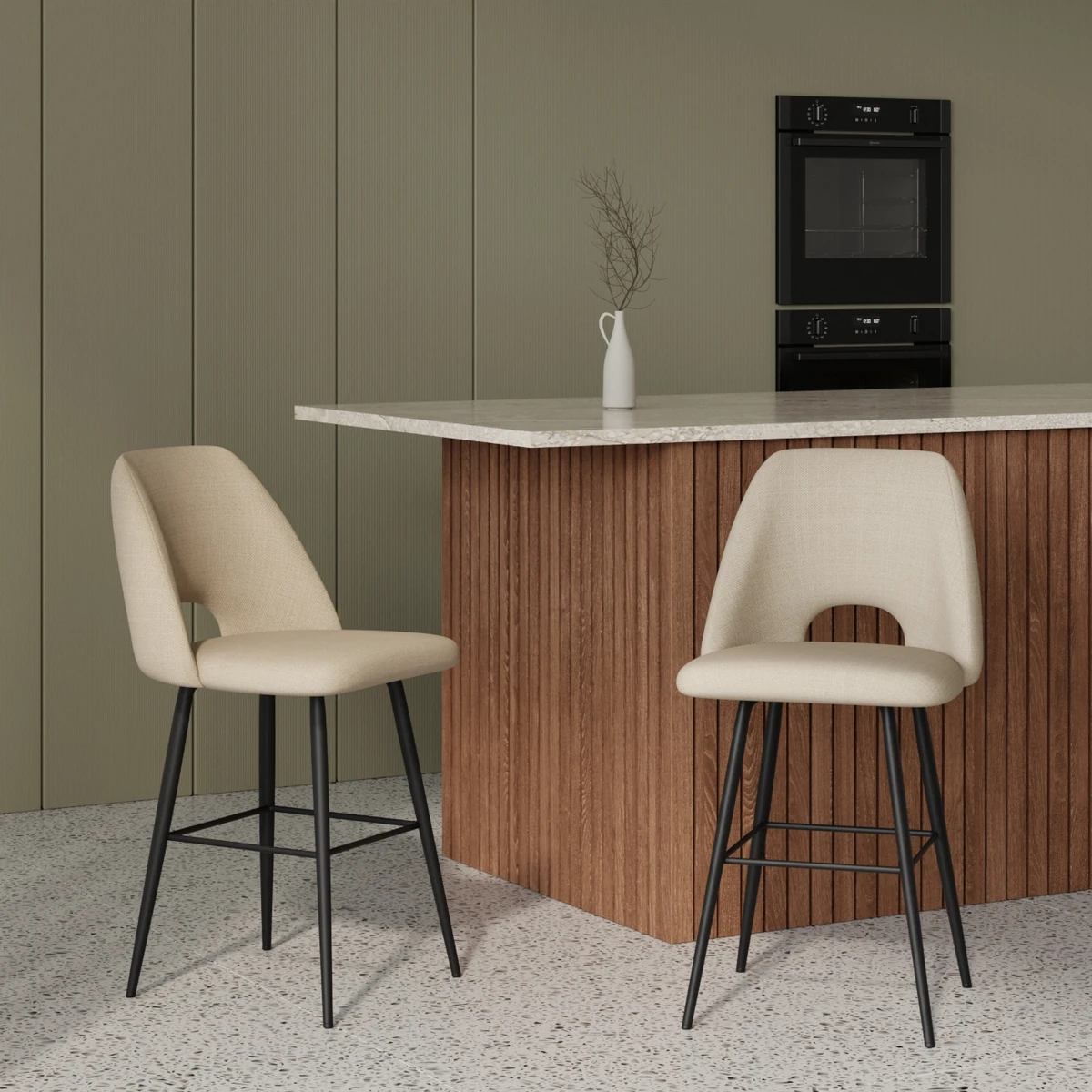
Four situations come up often enough to address here.
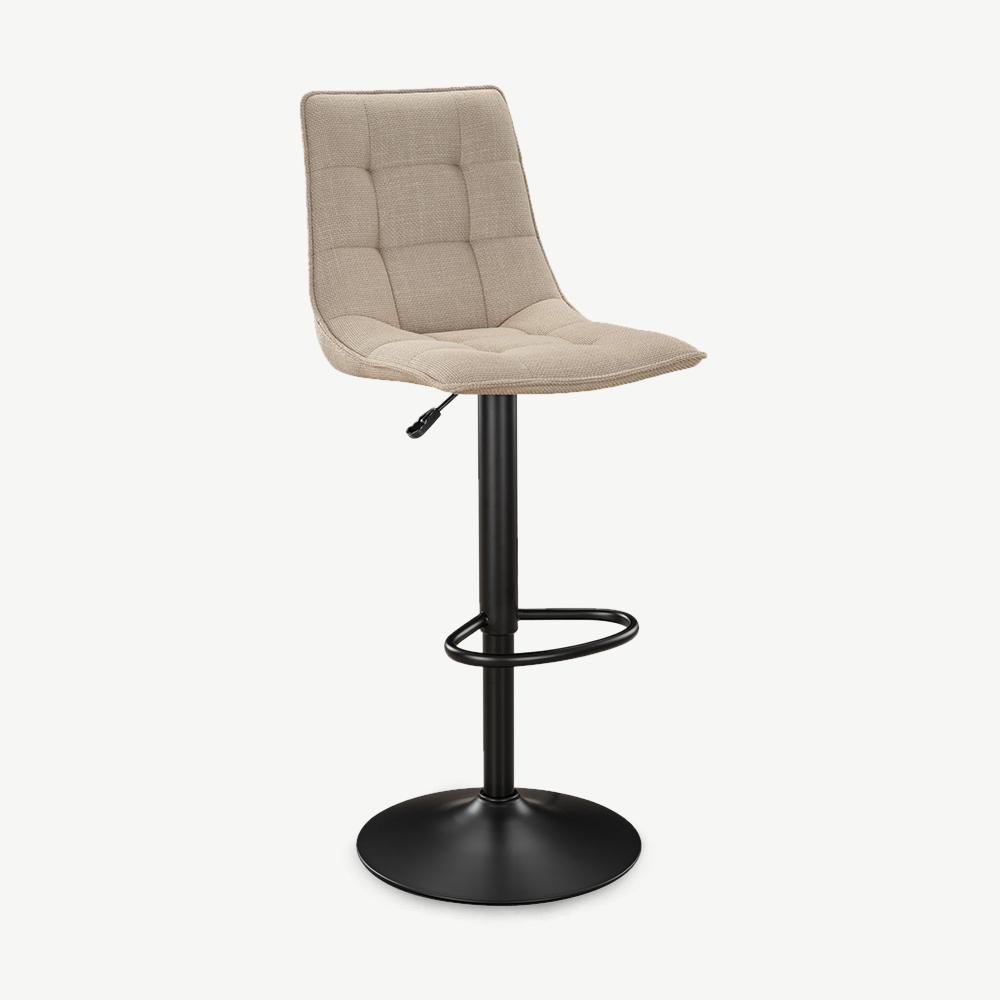
Featured in this guide

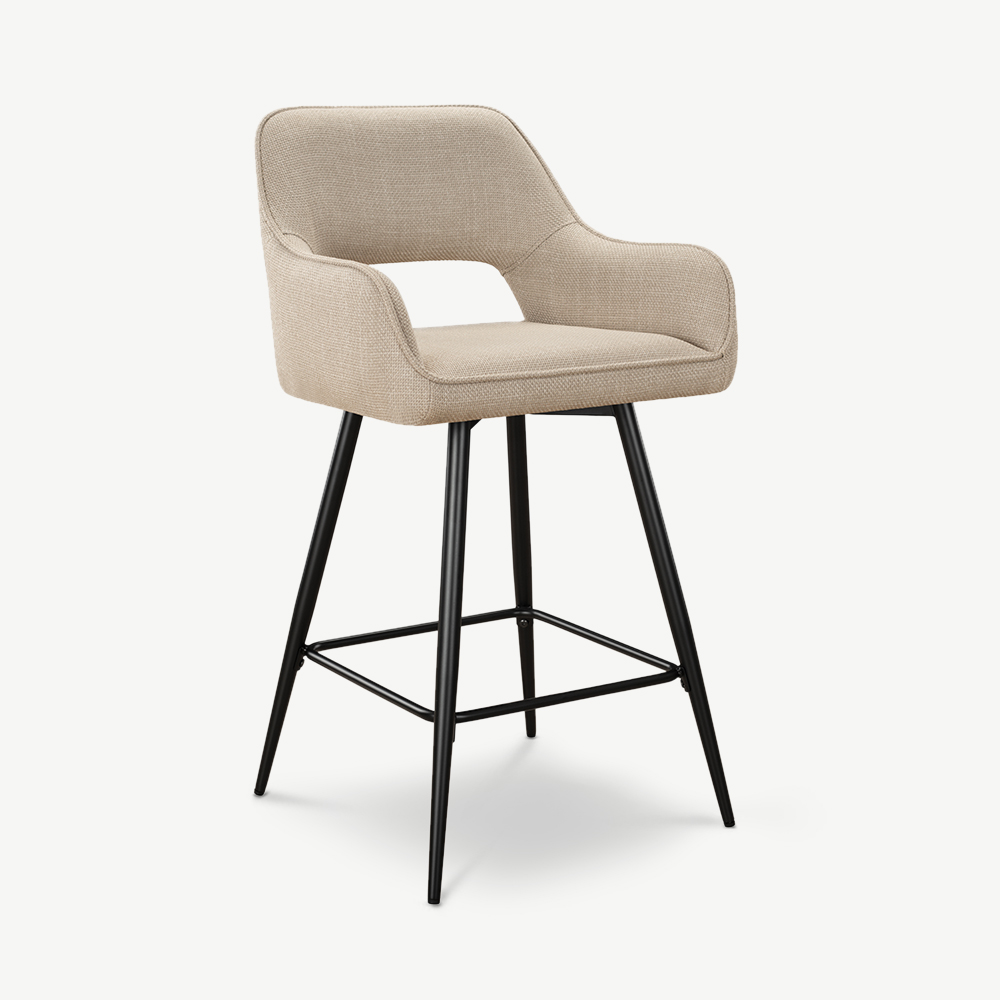


If you only remember one number
Subtract 27 cm from your counter height. That is the stool seat height you want, give or take 3 cm.
The full method above is more accurate, but the 27 cm rule gets you within range on any counter from 85 to 125 cm. From there you round to the nearest standard (65, 76 or 91 cm) and check the clearance one last time before ordering.
Browse our bar stools collection: 65 cm counter stools from 69 euro, 76 cm bar stools from 89 euro, adjustable from 119 euro. Most options sit between 89 and 189 euro depending on material and frame. Free delivery and 30 day exchange across all EU markets in case the height still ends up wrong.
If you want the wider context, our bar stools buying guide covers materials, footrest design and weight ratings. For kitchen specific picks see bar stools for the kitchen. For backless counter heights also read counter stool guide and footstool vs bar stool. Style cross over: Japandi collection and dining chairs buying guide.
Frequently asked.
What is the standard bar stool height?
Bar stools are sold in three standard seat heights in Europe: 65 cm (counter height), 76 cm (bar height) and 91 cm (extra tall). The 76 cm seat is the default and pairs with 105 to 110 cm bar counters. The 65 cm counter stool fits standard kitchen islands at 90 to 95 cm.
How do I measure my counter for a bar stool?
Measure from the floor to the upper surface of the counter, not the bottom edge or the overhang. Subtract 25 to 30 cm to get the right seat height. A 95 cm kitchen island therefore takes a 65 to 70 cm stool, a 110 cm bar takes a 76 to 80 cm stool.
What is the clearance rule between seat and counter?
25 to 30 cm between the top of the seat cushion and the underside of the counter. Less than 25 cm and your thighs press against the counter when seated. More than 30 cm and the surface sits awkwardly high relative to your elbows. 27 cm is the practical middle.
Do I need adjustable height stools?
Useful in two cases: when your counter is non standard (falls between 90 and 105 cm) or when several people of different heights share the seat. A gas lift stool gives 18 to 25 cm of range. The trade off is reduced lateral stability and a 30 to 50 euro premium per stool over a fixed height equivalent.
What height stool for a 90 cm kitchen counter?
A 60 to 65 cm counter stool. Standard kitchen worktops sit at 90 cm, so you need the shorter counter height stool, not a bar stool. A 76 cm bar stool would be 11 cm too tall and would press your thighs against the underside of the counter.
What height for an extra tall bar at 115 to 120 cm?
An 85 to 91 cm extra tall stool. These heights are common in commercial settings and bespoke islands built above standard height. Always check the footrest, because feet do not reach the floor at this height and a missing or badly placed footrest ruins comfort within ten minutes.
