9800+ TRUSTPILOT REVIEWS




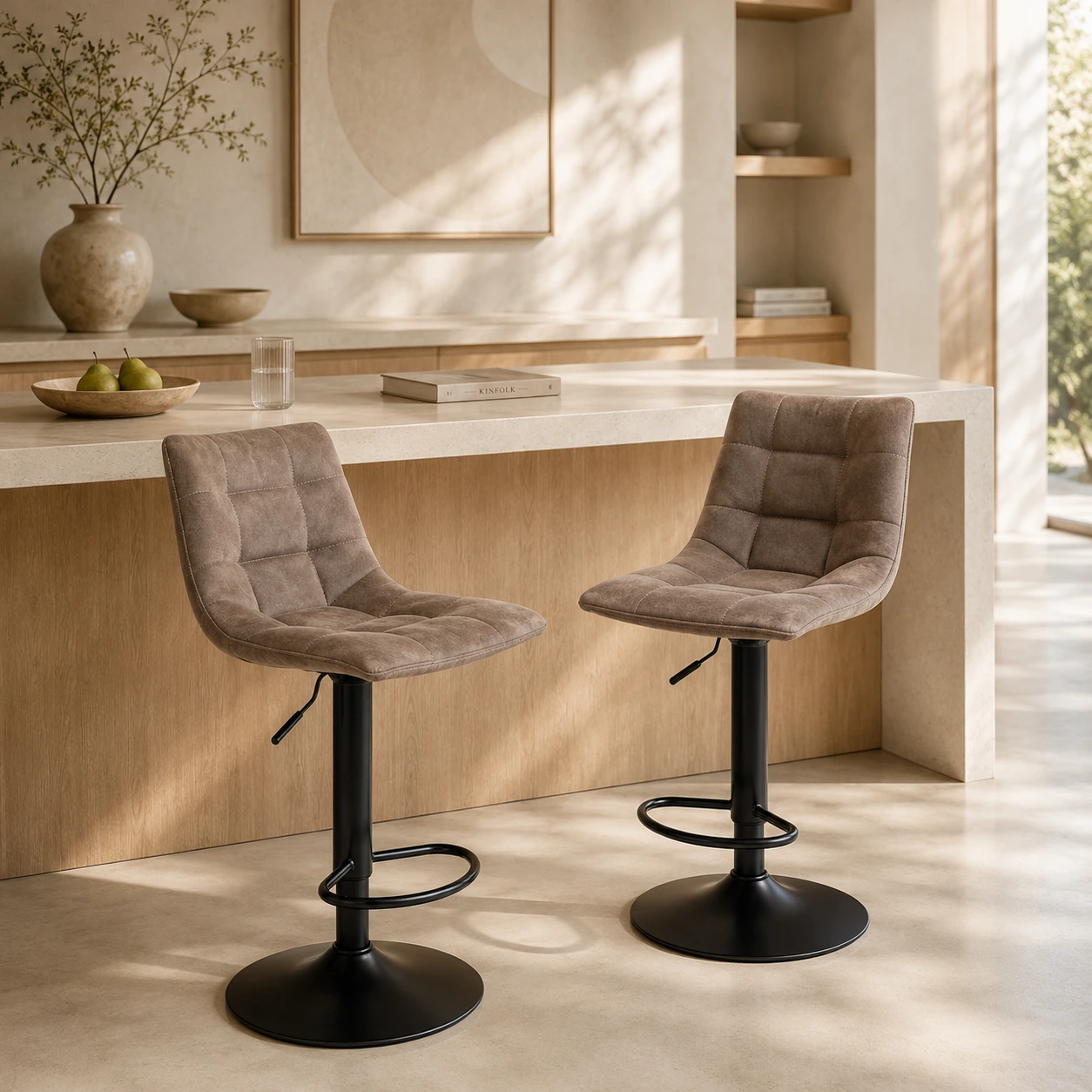
Adjustable bar stools solve one problem well and create two new ones. The problem they solve: a counter that does not match a standard stool height, or several adults of different heights sharing the seat. The problems they introduce: less lateral stability than a fixed stool, and a gas cylinder that eventually fails. Whether to buy adjustable comes down to whether your situation actually needs the adjustment.
This article walks through when adjustable makes sense, what gas lift class 3 vs class 4 means in practice, how long the cylinder lasts and how to spot it failing, and the trade offs in stability worth knowing before you commit. With concrete prices and replacement part costs in euro.
Three valid cases, not more
Adjustable stools are overbought. The marketing pitch (one stool fits everyone) hides the trade offs. In practice there are three situations where the adjustment earns its place. Outside these, a fixed stool is the better answer.
- Non standard counter height: if your counter sits between 90 and 105 cm (a renovation half measure, a custom island, a converted commercial space), a gas lift with 18 to 25 cm range covers the gap that no standard fixed height does.
- Mixed height users sharing daily: if a couple with 25 cm or more difference uses the same stool every day for meals or work, the adjustment is worth the 30 to 50 euro premium per stool. Below 15 cm difference, pick the height for the heavier user.
- Counter renovation pending: if you plan to redo the kitchen in the next 18 to 24 months and the new counter height is undecided, adjustable buys you time without committing to a fixed height that will be wrong.
A growing family is sometimes cited as a fourth case. In practice it is not: kids under 12 should not sit on bar stools at all, and teenagers reach adult height fast enough that a fixed stool at the moment of purchase will work for 8 to 10 years before they outgrow it.
Gas lift class 3 vs class 4
The gas cylinder inside the column is the part that determines how long the stool lasts. Two grades dominate the market, with very different lifespans.
Class 3 (residential)
Rated for 80,000 cycles (about one full lift cycle per day for 220 years, or 5 per day for 44 years, both fictional given the cylinder fails before then). Load rated to 110 kg. The choice for home bar stools. Cylinder replacement 25 to 35 euro.
Class 4 (commercial)
Rated for 160,000 cycles, load to 150 kg. Built for shared use, restaurants, office hot desks. Adds 15 to 30 euro to the stool price. For a private kitchen with two or three adults using it daily, class 4 is overkill. For an office break room or a small cafe, it is the minimum.
Manual screw lift
Twist the seat to lift it. Still sold at the bottom of the market. Slow, less smooth, but no hydraulic to fail. 10 to 15 years lifespan with the only failure mode being the threads wearing down. We do not stock these because the gas lift class 3 is more reliable in practice.
How a gas cylinder actually fails
Gas cylinders do not break catastrophically. They wear out. Three failure modes account for almost all replacements, and all three can be spotted weeks or months before the cylinder gives up. Catching them early means replacing a 25 to 40 euro part instead of binning the stool.
| Failure mode | Symptom | Fix |
|---|---|---|
| Slow drop | Stool sinks 1 to 3 cm under weight, takes 10 to 30 sec | Cylinder replacement 25 to 40 € |
| Stuck at lowest | Lever pulls but nothing rises | Cylinder replacement 25 to 40 € |
| Oil leak | Greasy residue at base of column | Cylinder replacement 25 to 40 € |
| Lateral wobble | Side to side play at the joint between cylinder and seat | Frame issue, replace stool |
The replacement procedure takes ten minutes with a rubber mallet and a screwdriver. Cylinders are a standard size across most home stool brands (50 mm diameter, 215 mm collapsed), so generic replacements work in 9 out of 10 cases.
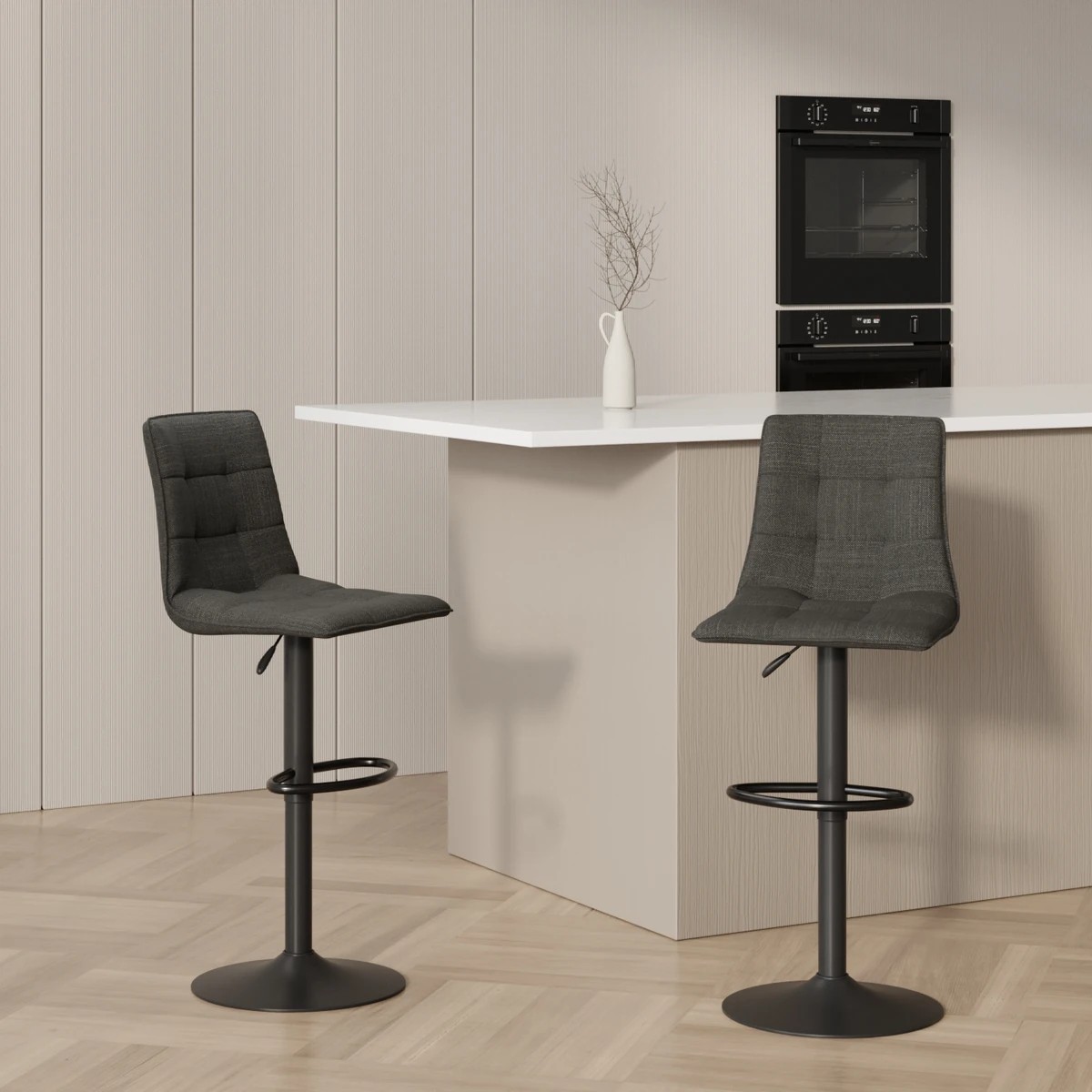
What you give up for adjustability
Four real trade offs against an equivalent fixed stool. None of them are dealbreakers in the right context, but they are real.
Featured in this guide
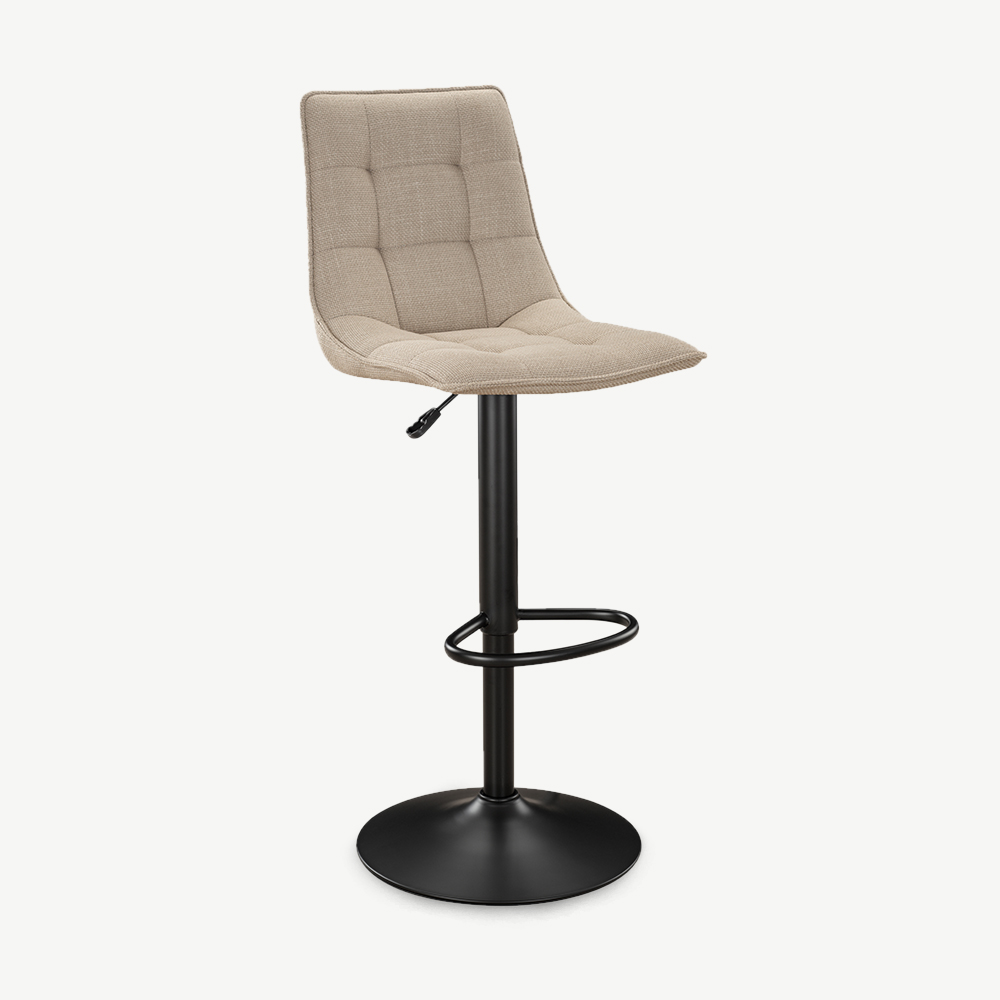
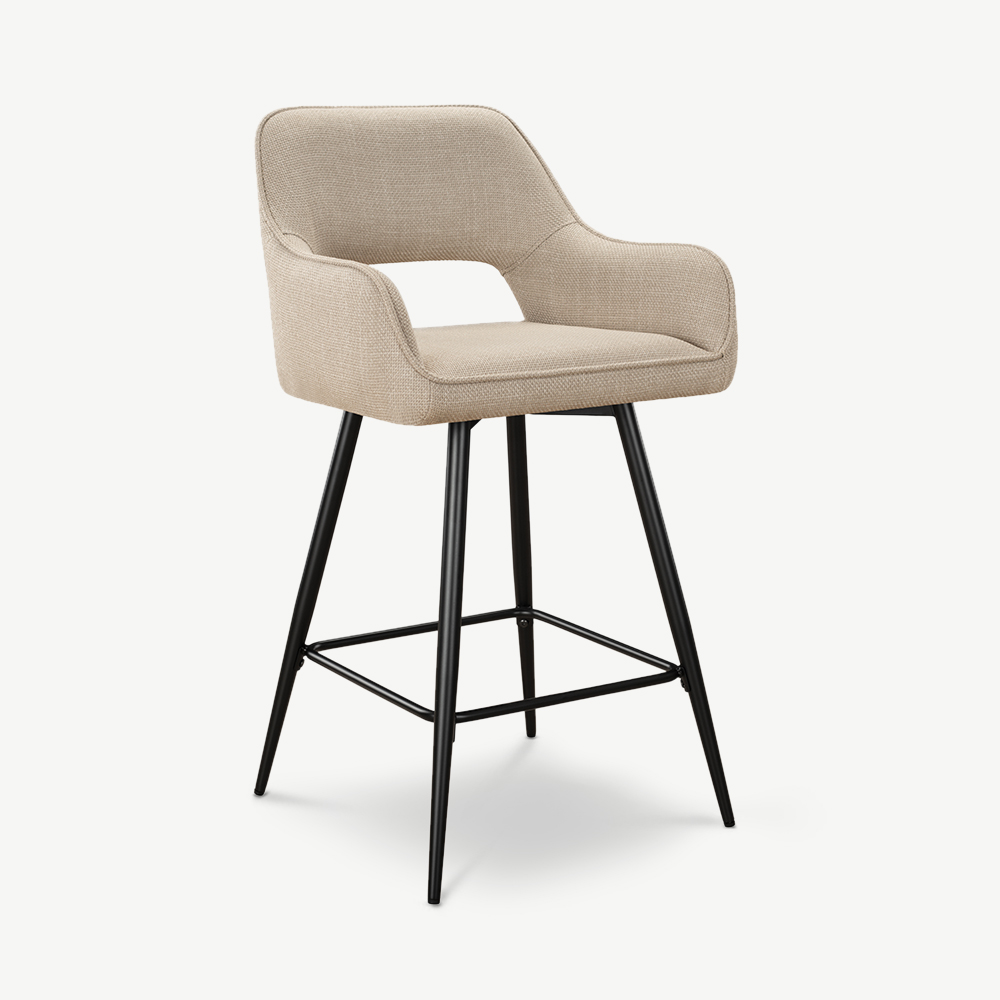


Pick adjustable when you need it, not by default
For a standard counter at 105 cm and adults of similar height, a fixed 76 cm stool is better in every way: more stable, cheaper, lasts longer.
Furnicher adjustable bar stools start at 119 euro with class 3 cylinders and 18 to 22 cm range. Premium models with class 4 cylinders and 25 cm range reach 189 euro. All include a 5 year warranty on the cylinder, free delivery across the EU, and 30 day returns. Replacement cylinders are available through customer support at 29 to 35 euro shipped.
Browse bar stools filtered for adjustable. Match the height first with the bar stool height guide.
Further reading: bar stool for kitchen, counter stool guide, footstool vs bar stool, bar stools buying guide. Style: Japandi interior guide.
Frequently asked.
When do adjustable bar stools make sense?
Three cases: a counter at non standard height (between 90 and 105 cm), several users of very different heights sharing the stool daily, or an undecided buyer planning a counter renovation in the next two years. Outside those cases a fixed stool is more stable and 30 to 50 euro cheaper per unit.
What is gas lift class 3 vs class 4?
Class 3 cylinders are rated for residential use: 80,000 cycles, 110 kg load. Class 4 are commercial grade: 160,000 cycles, 150 kg load. For home bar stools class 3 is sufficient. For shared offices and restaurants only class 4 has the cycle count to last more than three years.
How long do gas lift bar stools last?
A class 3 cylinder lasts 8 to 12 years in residential use. Class 4 lasts 12 to 18 years in commercial use. The cylinder is the limiting part: when it fails, the stool drops slowly under weight. Replacement cylinders cost 25 to 40 euro and take 10 minutes to fit with a rubber mallet.
How do I spot a failing gas cylinder?
Three signs: the stool drops slowly when sat on (the most common), the lift no longer reaches full height, or you see oil residue at the base of the cylinder. The third is rare but means the cylinder is leaking and will fail within weeks. All three are fixable with a 25 to 40 euro replacement cylinder.
What is the weight limit on adjustable bar stools?
Class 3 cylinders are rated 110 kg, class 4 at 150 kg. The stool frame is usually rated higher than the cylinder. The cylinder rating is the binding limit. Loads beyond the rating shorten the cylinder life sharply and in extreme cases may cause sudden drops without warning.
Are adjustable bar stools stable?
Less stable than fixed stools in lateral direction. The five point base helps but a single column has some flex. For very active users (kids, pets jumping up), or for users who hook a foot on the rail and pull with weight, fixed stools track straighter. Adjustable stools work best when the user sits down and stays put.