 9800+ TRUSTPILOT REVIEWS


 EN
EN DE
DE FR
FR NL
NL
Most office-chair guides start with features. That is the wrong end of the funnel. Features only matter once you know what kind of chair you actually need, which depends on your desk, your hours, and your budget, in that order.
This guide is a seven-step procedure. Work through it in sequence and the last step (paying) becomes the easy one. The whole process takes about 15 minutes if you have a tape measure and an honest estimate of how long you sit each day.
Start with the desk, then the hours
Step 1: measure your desk. Floor to underside of the worksurface in cm. EU desks land between 72 and 76 cm; older German desks run higher (78 cm). Your chair seat must reach from roughly 8 cm below desk underside down to about desk minus 30 cm. A standard chair adjusts 42 to 54 cm. If your desk is over 76 cm or you are over 185 cm tall, you need the upper range (46 to 58 cm).
Step 2: count your hours. Honestly. Not what you wish you sat, what you actually sit. The hours-per-day figure decides the budget tier more than any other input.
- Under 4 h/day: a basic task chair (99 to 199 EUR) is enough.
- 4 to 6 h/day: mid-back ergonomic (249 to 449 EUR), lumbar adjustable.
- 6 to 9 h/day: full ergonomic (499 to 799 EUR), seat depth slide, 4D armrests.
- 9+ h/day: EN 1335 or BIFMA X5.1 certified (800 EUR plus).
The ergonomic features that earn their place
Most chairs list a dozen adjustments. Three of them actually change how the chair fits your body. The rest are nice-to-have or marketing language.
Seat height range
A pneumatic gas lift with a 42 to 54 cm range fits 90% of EU users at a 73 cm desk. Check the cylinder rating: Class 4 (BIFMA tested to 12 years) is the safe minimum. Class 3 lifts fail at year 3 to 5.
If you are under 160 cm, look for a low-base option (minimum 39 cm). Over 185 cm, look for a tall cylinder (up to 58 cm).
Seat depth slide
Seat pan slides 50 to 60 mm forward or back. Lets the seat fit your thigh length, leaving 2 to 3 finger widths between the seat edge and the back of your knee. Without this, taller users get pressure behind the knee, shorter users sit forward and lose the lumbar contact.
Worth the upgrade for users under 165 cm or over 185 cm, where a fixed seat depth never quite fits. For an average-height user at the desk under 4 hours, the lumbar adjustment matters more.
Lumbar height adjust
Vertical position of the lumbar pad. Should sit at your beltline, supporting the inward curve of your lower back. Fixed-position lumbar hits the wrong spot on roughly half of users.
A separate adjustment from lumbar depth (how far the pad pushes forward). Both are useful; height matters more.
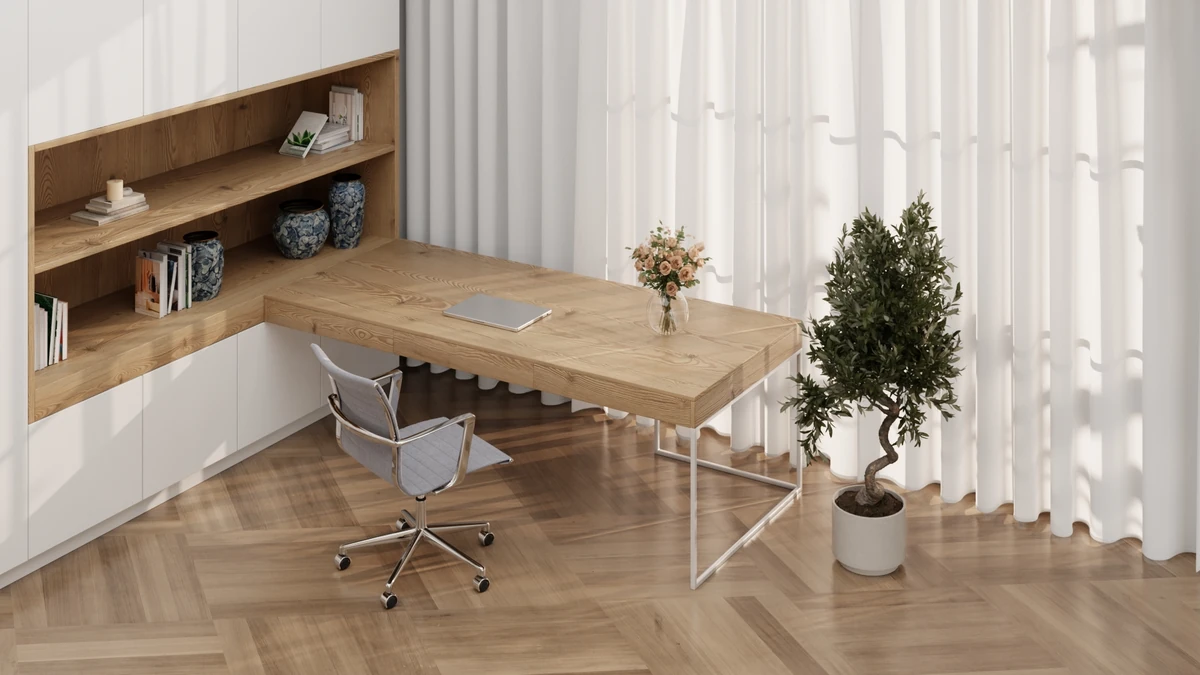
Featured in this guide
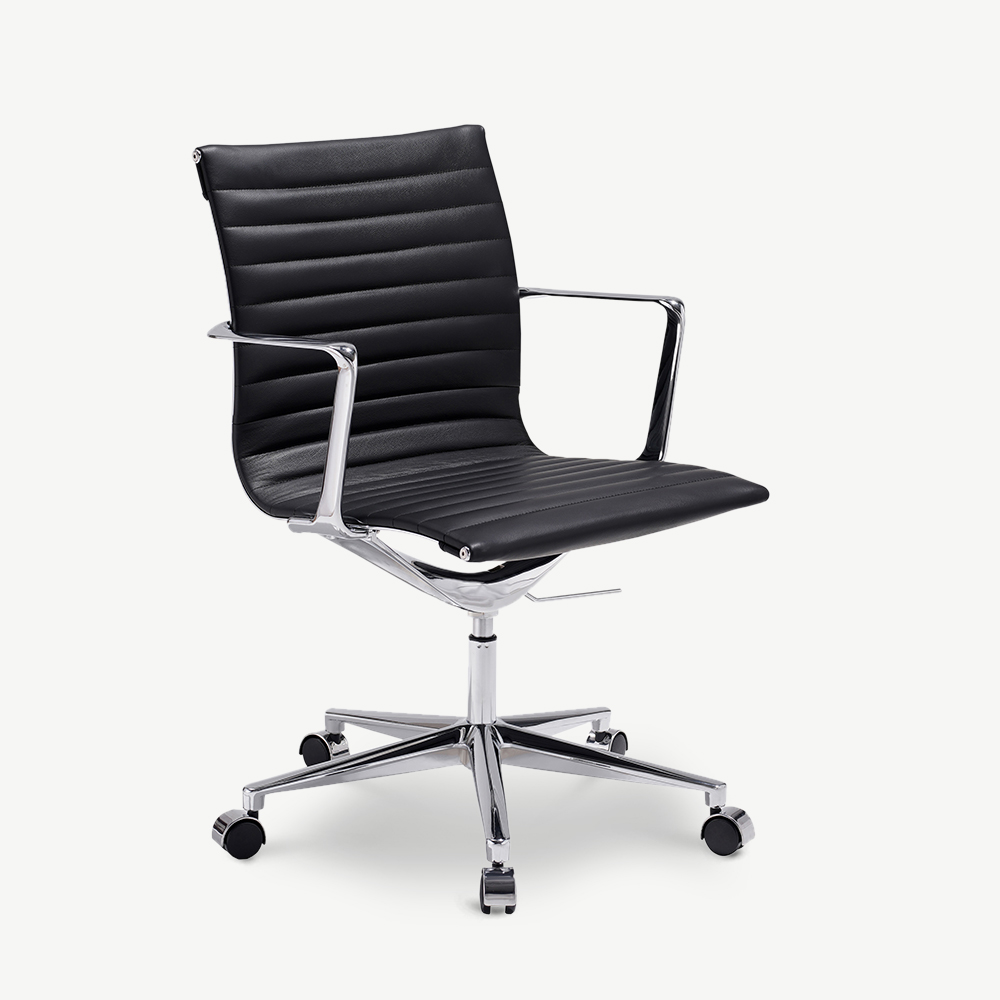
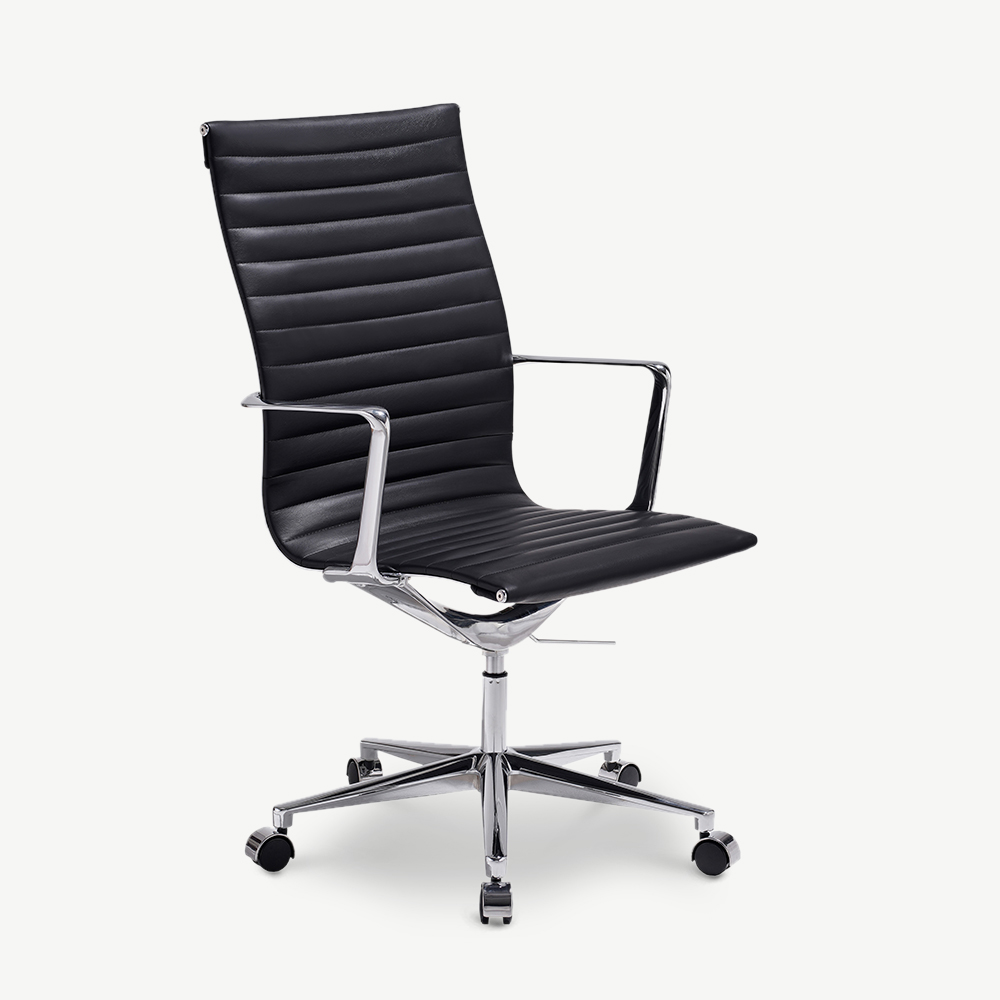
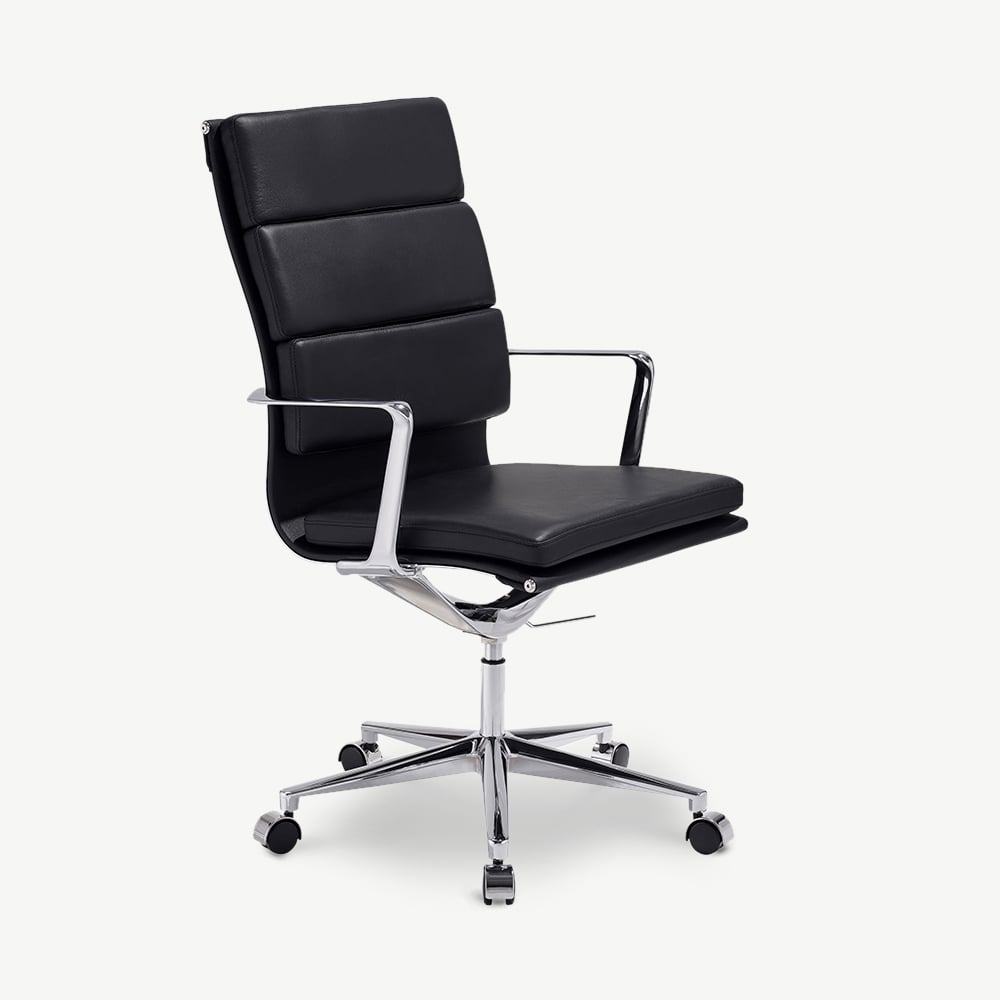
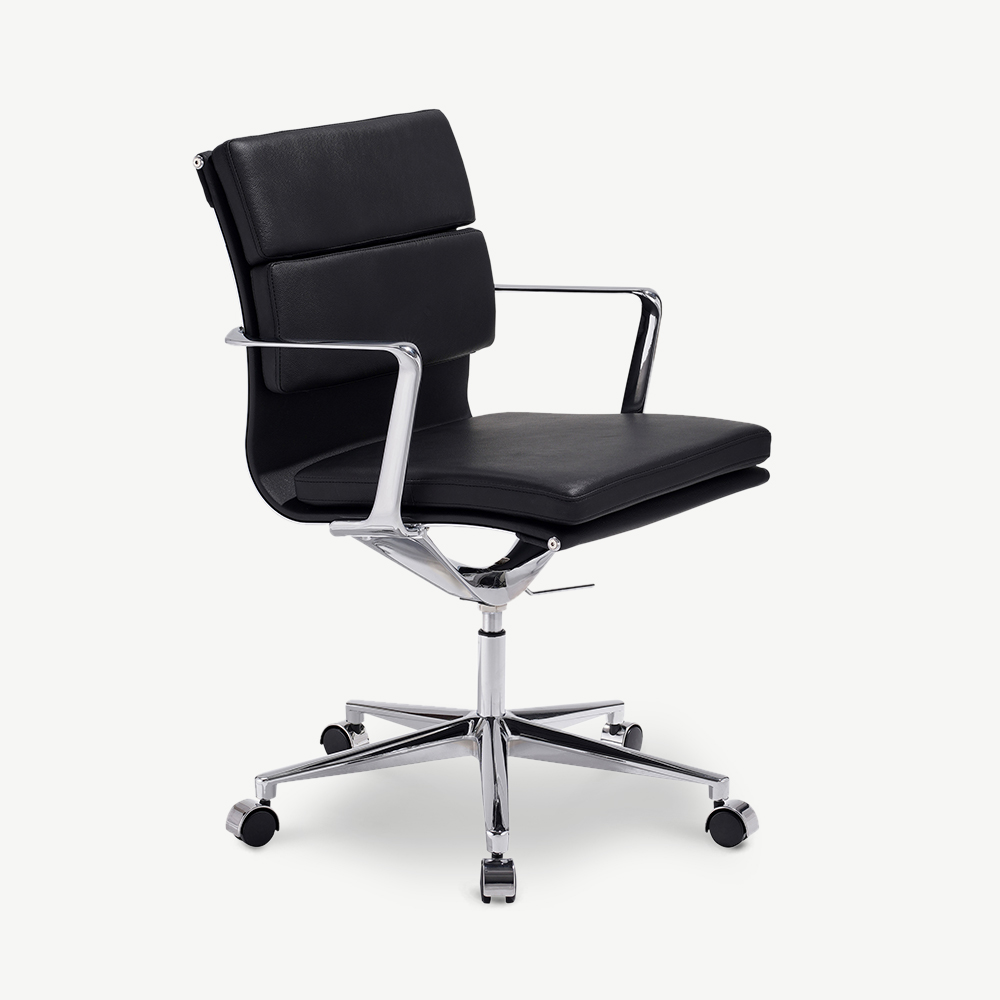
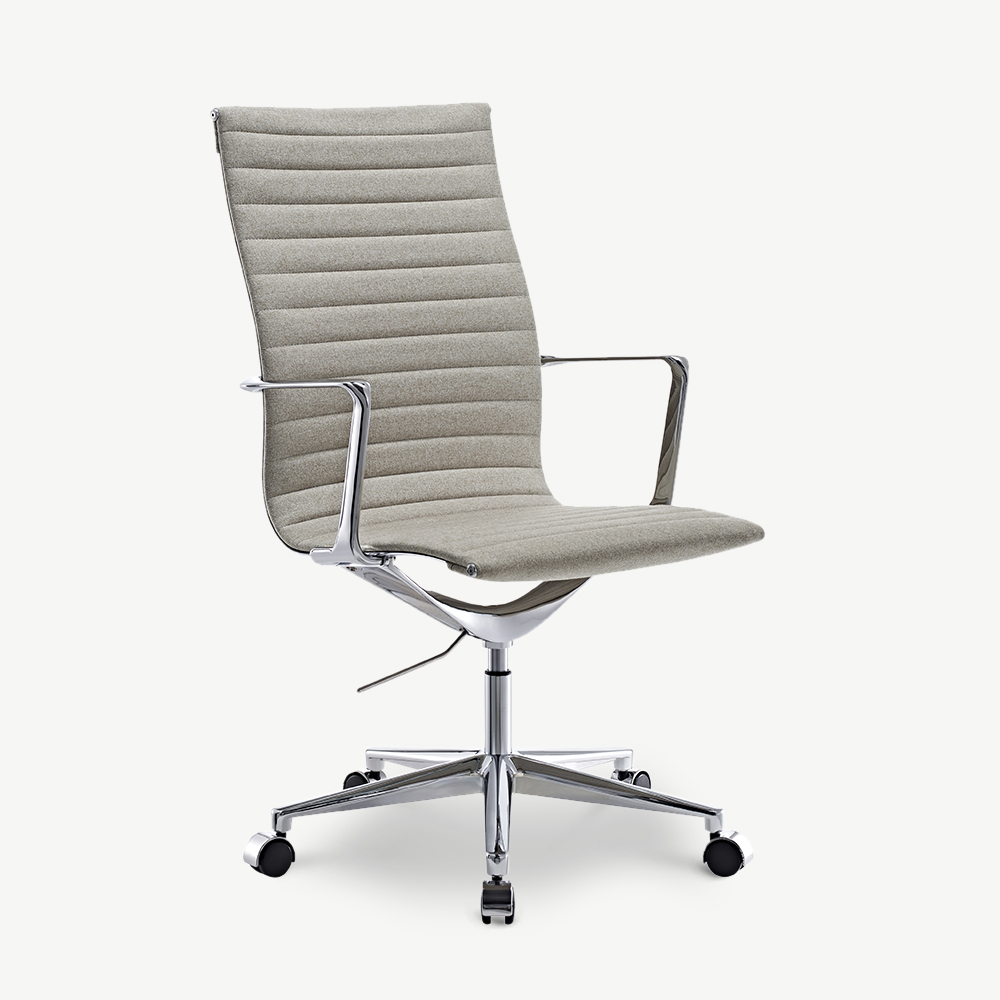
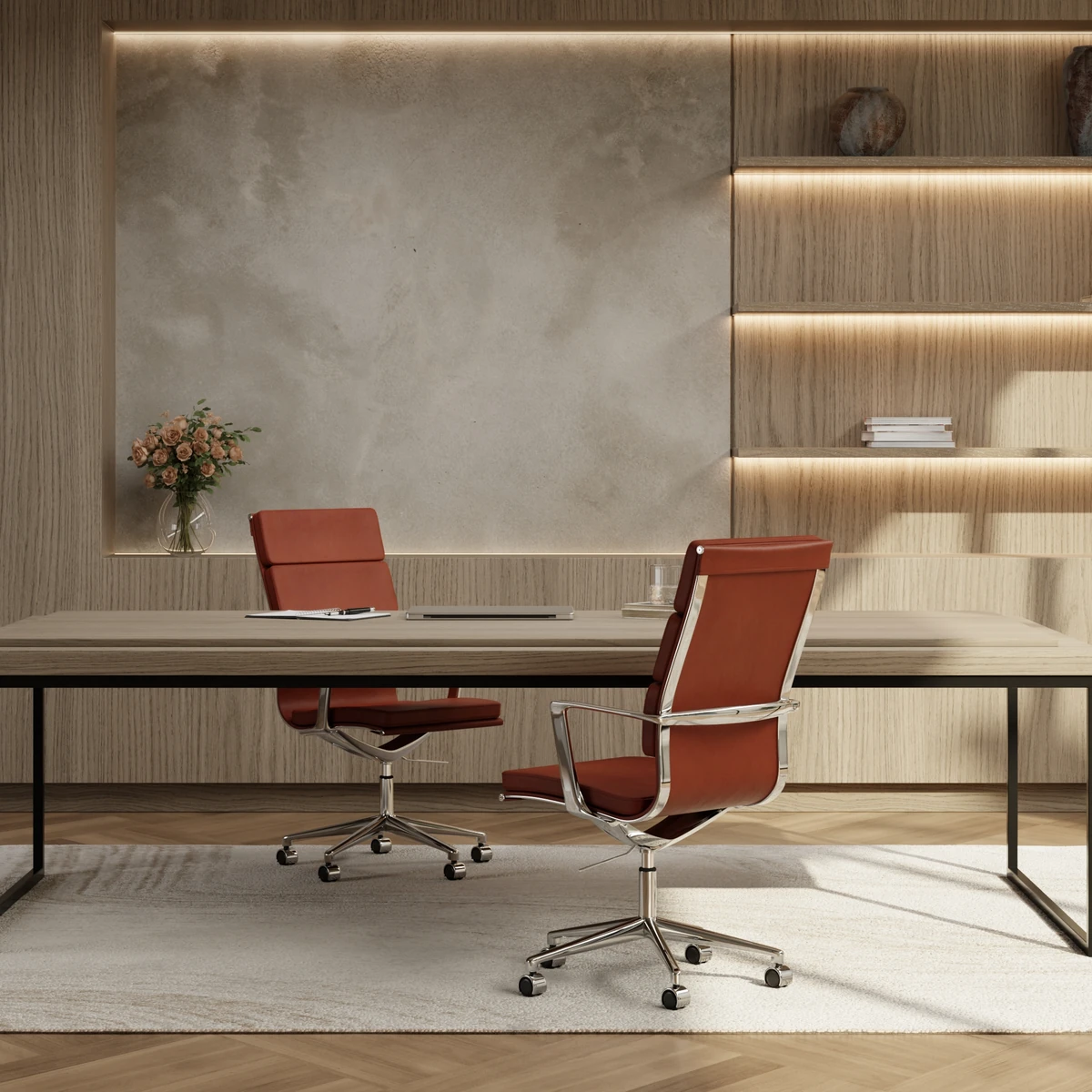
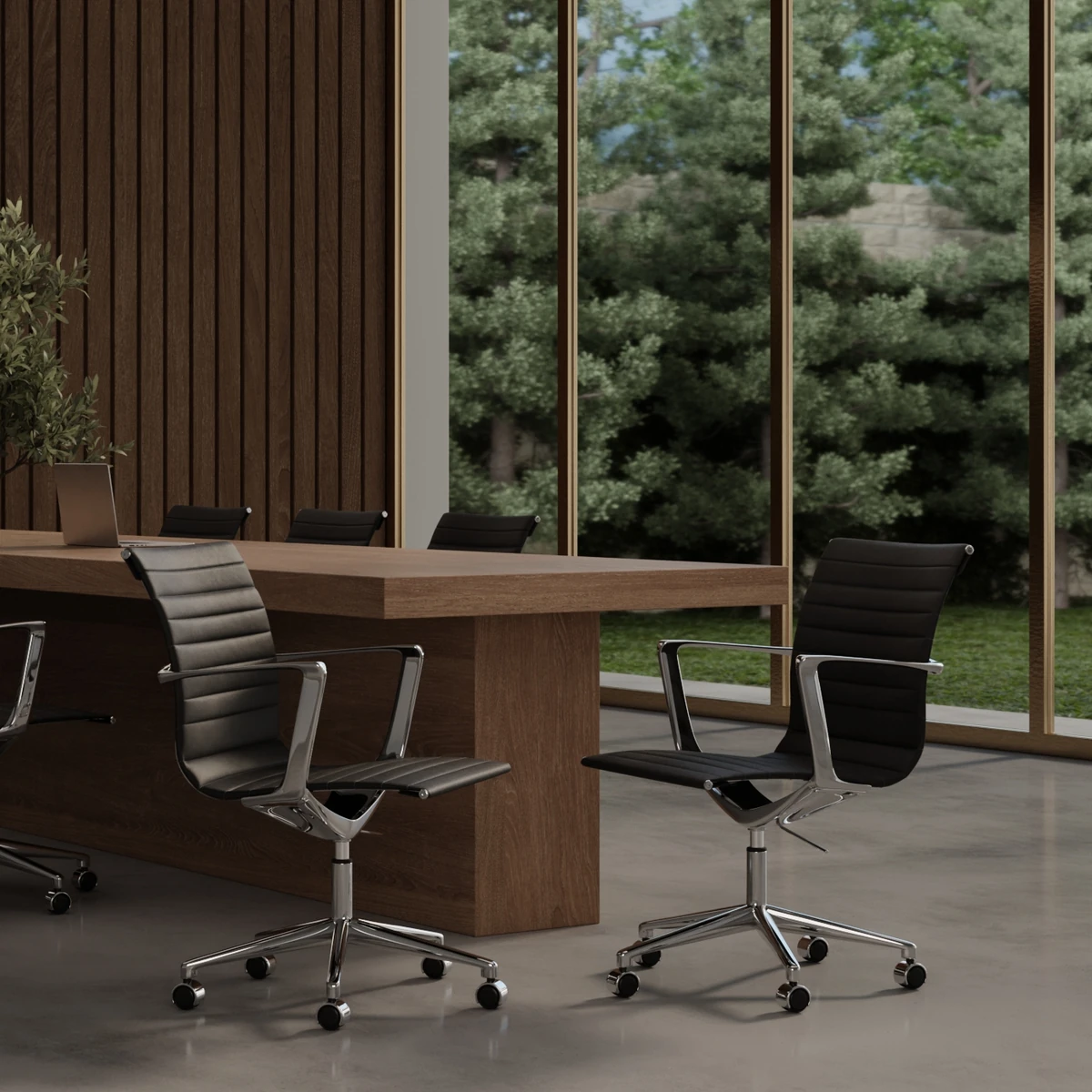
Fabric, mesh, or leather
The material decision is mostly about room temperature and aesthetic intent. Durability is similar across all three if you stick to mid-range and above. The real differences:
| Material | Best for | Durability spec |
|---|---|---|
| Mesh (back) + fabric seat | Warm rooms, 7+ h/day | 5-yr backrest warranty |
| Fabric (full) | Cool offices, soft feel | 60,000+ Martindale |
| PU leather | Representative use, easy wipe | 3 to 5 yr typical |
| Full grain leather | Premium, 10+ yr horizon | Patinas, repairable |
Mesh wins for any room above 22 C or for users who run warm. PU leather looks like leather for 3 to 5 years before it cracks; honest brands disclose this. Full-grain leather costs 200 to 400 EUR more and lasts longer than the chair frame underneath it. See our leather office chair guide for the material breakdown.
Budget, warranty, delivery
The last three steps are administrative. They prevent the regret that comes after the purchase, not before.
Skip the catalogue, follow the steps
Match the chair to the hours, not to the photo on the box.
Browse the full range on our office chairs collection. Prices start at 99 EUR for occasional-use task chairs and run to 799 EUR for full-ergonomic models with 10-year warranties. The complete buying guide goes deeper on the construction side; the ergonomic office chair guide covers what to adjust once it arrives.
For specific use cases, see our guides to home office chairs, office chairs for back pain, and the height-setting guide for once your new chair arrives. If you want a softer aesthetic to balance the technical look, our Japandi collection pairs warm-toned office furniture with light woods.
Frequently asked.
How much should I spend on an office chair?
For occasional use, 99 to 199 EUR covers a basic task chair. For daily home office work of 4 to 6 hours, budget 249 to 449 EUR for a mid-back ergonomic model. Full-time desk work over 8 hours per day justifies 499 to 799 EUR for a certified ergonomic chair with adjustable lumbar and seat depth. Anything under 99 EUR is short-term furniture, not a chair you keep.
What is the most important feature in an office chair?
Seat height adjustment is the single feature that affects posture most. If the seat does not adjust to your desk, no amount of lumbar support compensates. After seat height, the priority order is: seat depth slide (so the seat fits your thigh length), lumbar height adjust (so the lumbar pad finds your beltline), then armrest height. Tilt tension and recline lock are useful but secondary.
Is a mesh or fabric office chair better?
Mesh breathes better and is the right choice in rooms above 22 C or for users who run warm. Fabric is more forgiving in cooler offices and tends to be softer. For abrasion resistance on fabric, look for 60,000 Martindale rubs or higher. Mesh durability is measured differently; look for a 5-year backrest warranty as a proxy. Mesh backs from low-end manufacturers sag within 2 to 3 years.
Do I need BIFMA or EN 1335 certification?
For occasional use, no. For 8 plus hours per day, yes. BIFMA X5.1 (US standard) and EN 1335 (EU standard) both test the chair under load cycles equivalent to 7 to 10 years of full-time use. A certified chair will not fail mechanically within warranty under normal conditions. Uncertified chairs may be fine, but you do not have the third-party guarantee.
What size office chair do I need?
Standard chairs fit users between 160 and 185 cm tall and up to 110 kg. Below 160 cm, look for a chair with a seat depth slide and a low minimum seat height (under 42 cm). Above 185 cm, look for a high-back model with an adjustable headrest and seat depth of at least 50 cm. For users over 110 kg, look for a heavy-duty rated chair (130 to 150 kg load capacity).
How long does an office chair last?
A 99 EUR task chair typically lasts 3 to 5 years. A 400 EUR ergonomic chair lasts 7 to 10 years. A 700 EUR certified chair lasts 10 to 15 years with the gas lift replaced once around year 7 (a 30 EUR part). Premium chairs with 10-year warranties often outlast that timeframe. See our warranty and lifespan guide for the failure-mode breakdown.
