 9800+ TRUSTPILOT REVIEWS


 EN
EN DE
DE FR
FR NL
NL
An office chair can reduce lower back pain. It cannot cure it. The honest version of the story is that the chair matters less than what most marketing implies, and movement matters more than most product pages admit.
This article covers what the clinical research actually shows about chair-based pain mitigation, which three features of a chair are doing most of the work, and the one habit (the 30-minute rule) that consistently outperforms chair upgrades in trials. The goal is a useful purchase, not a hopeful one.
What the research actually shows
Systematic reviews on office chairs and lower back pain (most recent: Cochrane 2019, updated 2022) reach a consistent conclusion. Ergonomic chairs with adjustable lumbar support produce small to moderate improvements in self-reported pain compared with standard chairs. Typical effect sizes:
- 10 to 25 percent reduction in self-reported pain over 8 to 12 weeks.
- Negligible effect on measured spinal compression in seated MRI studies.
- Larger effect when the chair is combined with sit-stand desk use or movement breaks.
The takeaway: a good chair is a useful tool. It is not the most important variable. If you can only change one thing, change how often you stand up. If you can change two, change the chair and the standing habit together.
What to look for, in priority order
Most ergonomic chairs list 8 to 12 adjustments. Three of them account for most of the measurable difference in spinal load. The rest are refinements.
Adjustable lumbar height
The lumbar pad must move up and down (not just push in and out) to land at your beltline. Fixed lumbar pads hit the wrong vertebra for roughly half of users. When the pad is correctly positioned, intradiscal pressure at L4 to L5 drops by 15 to 20 percent compared with no lumbar support.
Non-negotiable for anyone with active lumbar pain or more than 4 hours at the desk. A fixed pad at the wrong height does more harm than no pad at all.
Seat depth slide
The seat pan slides 50 to 60 mm forward or back so the front edge of the seat does not press behind the knees. Pressure behind the knee restricts venous return, which leads to leg fatigue and indirectly to slouching, which loads the lumbar spine.
Standard from 350 EUR. Skip any "ergonomic" chair under that price that lacks it.
Synchro-tilt mechanism
The back reclines 15 to 30 degrees while the seat remains close to level. Lets you shift weight off the lumbar discs every few minutes without leaving the chair. Studies show users with synchro-tilt mechanisms naturally vary their posture 3 to 5 times more often than users in fixed-back chairs.
Different from a simple recline. Look for the tension-adjust dial under the seat.
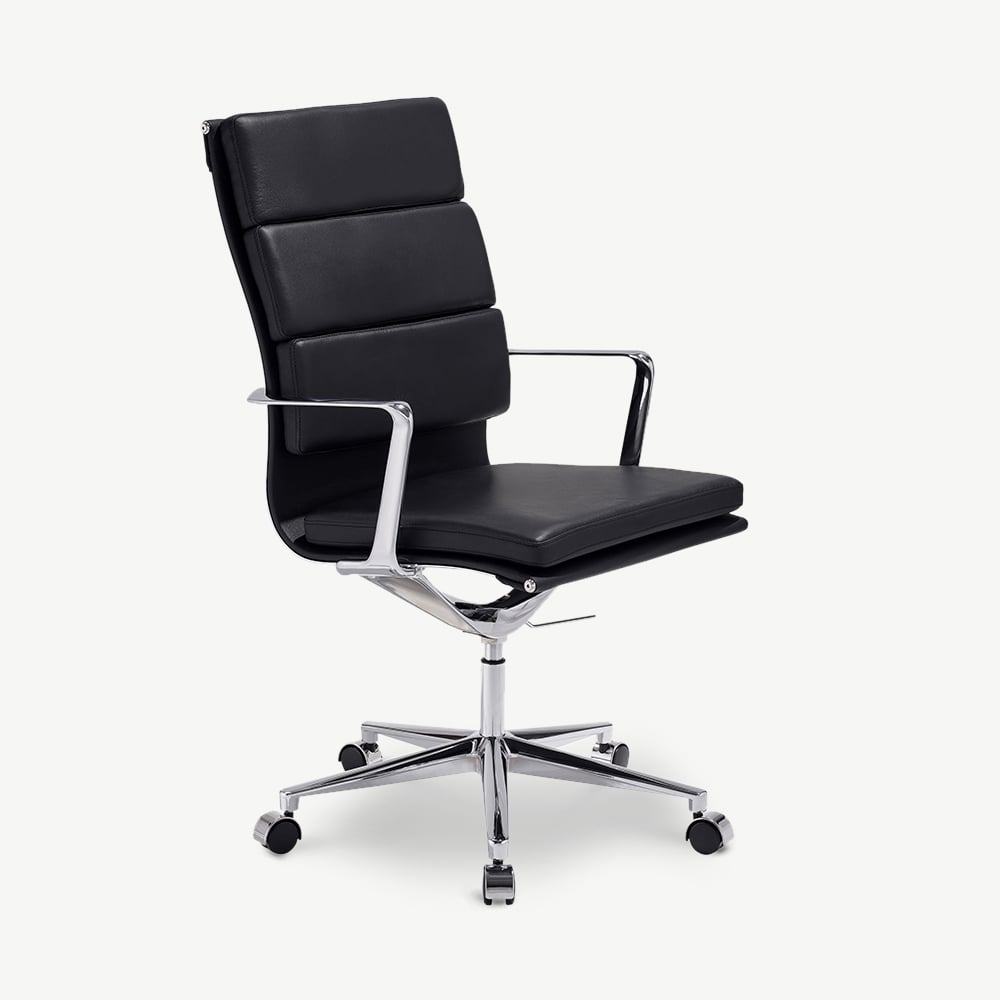
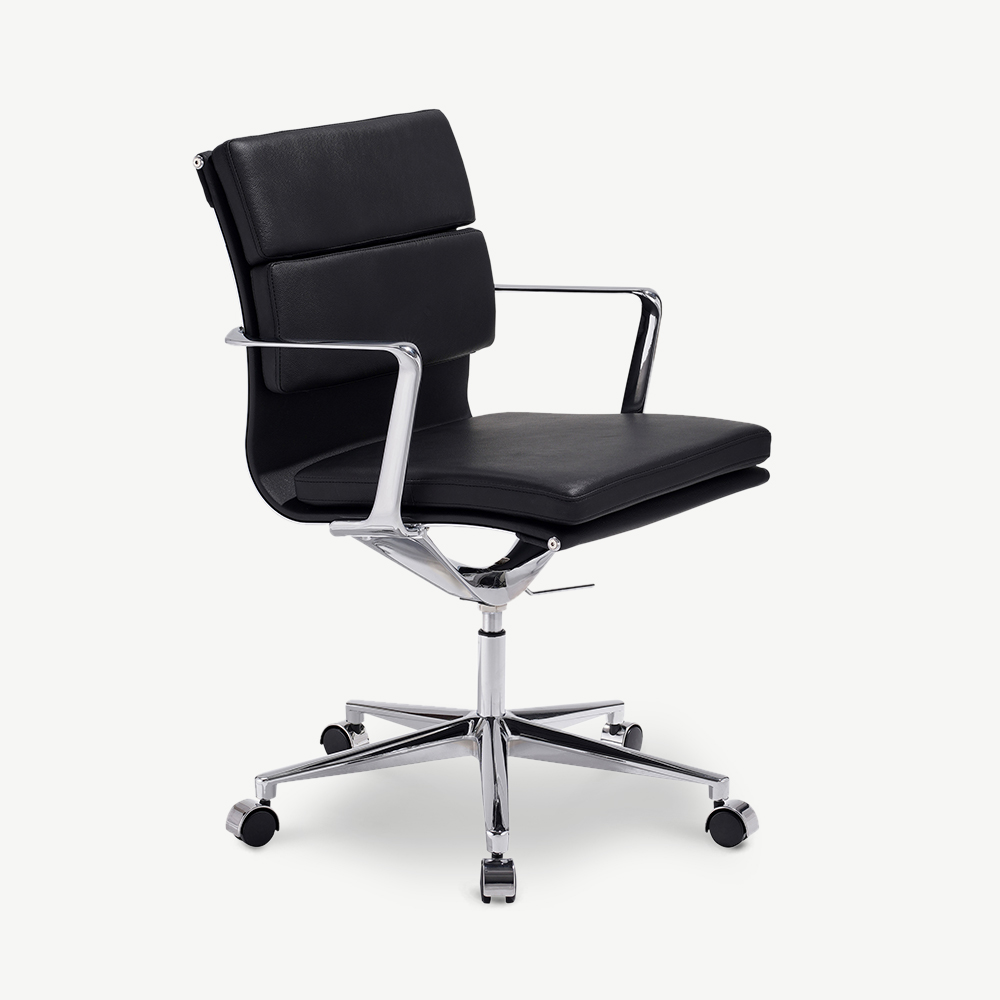
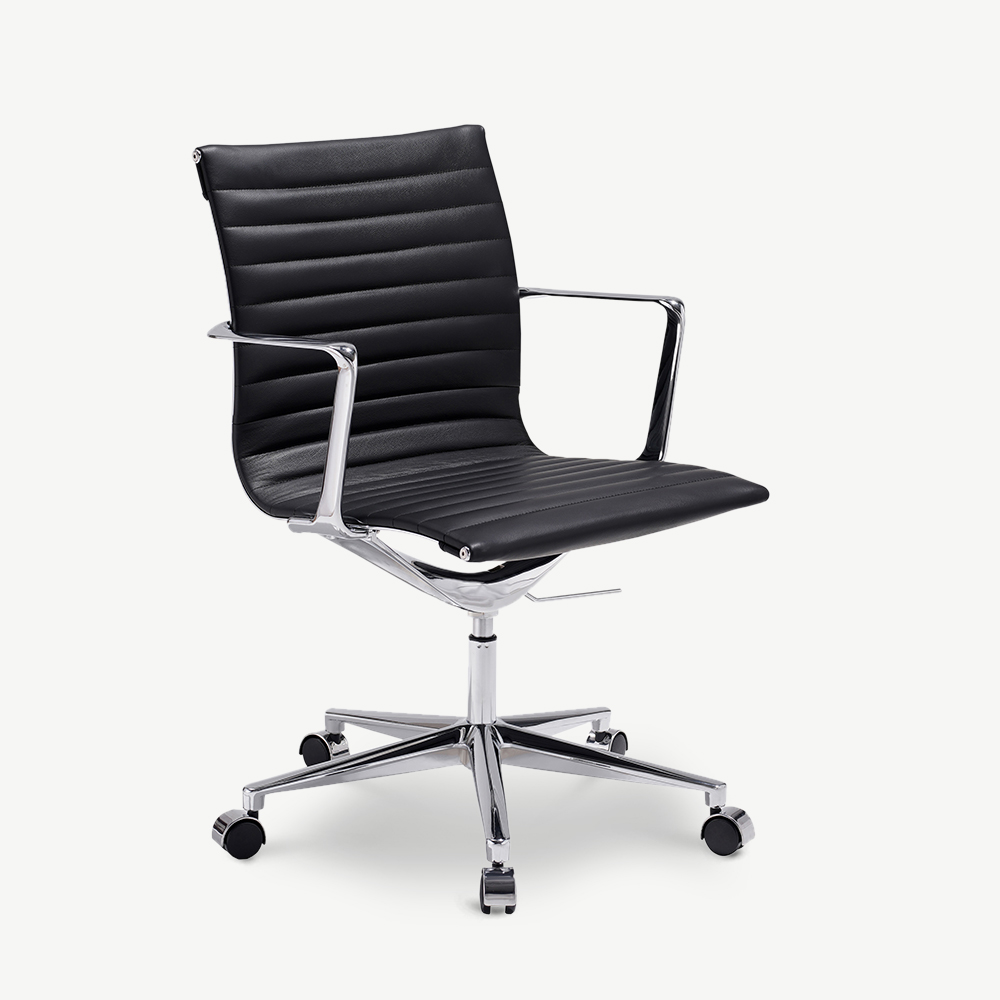
Featured in this guide

Movement beats marketing
The single intervention that shows the largest effect across back pain studies is not a chair, a cushion, or a posture corrector. It is leaving the chair. The current evidence-based recommendation:
| Habit | Frequency | Typical effect |
|---|---|---|
| Stand briefly (30 seconds plus) | Every 30 minutes | 25 to 40 percent pain reduction |
| Walk (2 to 3 minutes) | Every 60 minutes | Adds aerobic benefit |
| Change chair posture | Every 15 minutes | Modest, complements above |
| Sit-stand desk (alternate) | 1:1 to 2:1 ratio | 15 to 25 percent reduction |
The mechanism is simple: lumbar discs are loaded less in standing than in seated postures, and unloaded in walking. A great chair shifts load between positions; standing periodically removes load. The combination is what works, not either alone. See our ergonomic office chair guide for the adjustment procedure.
The first-week protocol
A new chair takes 1 to 3 weeks to settle in. The first 3 to 5 days can feel worse, not better, because muscles that were over-using one posture redistribute the load. Here is the adjustment sequence that minimises the bad week.
Buy the chair, build the habit
A 449 EUR chair plus the 30-minute rule outperforms a 1,200 EUR chair without it. In every trial.
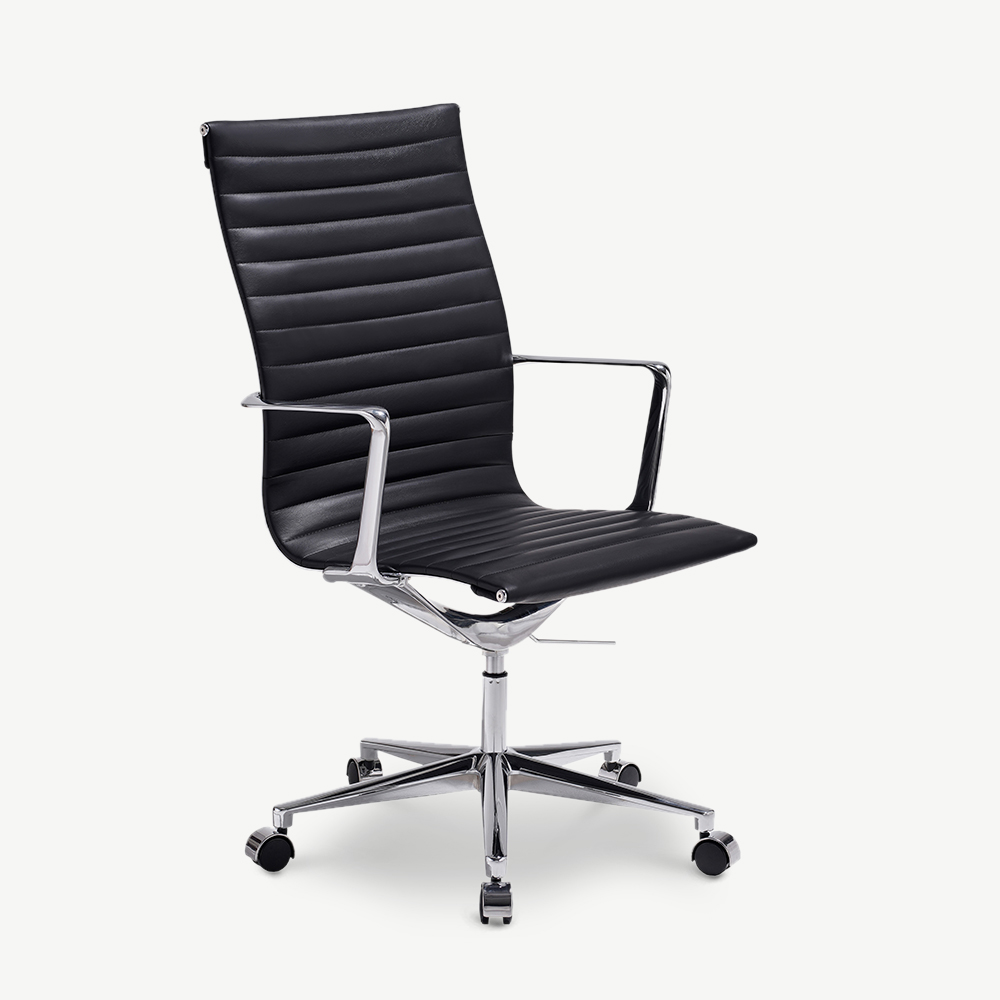
For back-friendly chairs in our range, start with the mid-tier ergonomic models (449 to 599 EUR) that include adjustable lumbar height, seat depth slide, and a synchro-tilt mechanism. Browse the office chair collection or read the full buying guide.
If you are setting up a home workspace from scratch, our guides to home office chairs, how to choose an office chair, and how to set chair height cover the surrounding decisions. For warmer-aesthetic offices, the Scandinavian collection pairs light woods with a calmer palette.
Frequently asked.
Will an ergonomic office chair fix my back pain?
A well-fitted ergonomic chair reduces the load on the lumbar spine and helps. It does not cure back pain on its own. Studies that compared ergonomic chairs against standard chairs found modest improvements in self-reported pain (10 to 25 percent). Adding regular movement (a 2 to 3 minute break every 30 minutes) consistently outperforms changing chairs in clinical trials. The combination is what produces reliable results.
What features actually matter for back pain?
Adjustable lumbar height (not just depth), seat depth slide, and a synchro-tilt mechanism that lets the back recline 15 to 30 degrees while the seat stays close to level. These three features account for most of the measurable difference between a basic chair and a back-friendly one. Headrests, 4D armrests, and adjustable seat angle are useful refinements but secondary.
How tight should lumbar support be?
Firm enough to feel contact across your lower back, soft enough that you do not feel a hard point pushing into the spine. The pad should sit at your beltline (the top of your iliac crest). If you only feel pressure on one vertebra, the height is wrong; if you feel nothing at all, lean back further or move the pad forward by a few clicks.
Is a kneeling chair or saddle stool better for back pain?
For acute back pain episodes, varying posture matters more than the specific posture. A kneeling chair or saddle stool used for 1 to 2 hours per day alongside a conventional ergonomic chair gives the lumbar muscles different load patterns. Used full-time, both alternatives create their own problems (knee pressure, lack of back support, limited recline). Rotate them in, do not replace.
How long does it take to feel a difference with a new chair?
1 to 3 weeks for most users to adjust. The first 3 to 5 days often feel worse, not better; muscles that were over-using one posture start sharing the load and protest briefly. If pain is still increasing after 2 weeks of correct adjustment, the chair is not the right fit. Furnicher's 30-day return policy covers this scenario; do not push through.
What is the best chair for sciatica?
There is no chair that treats sciatica. The general principles still apply: even weight distribution across both sit bones, thighs parallel to the floor, lumbar support at the beltline. A seat pan with a slight forward tilt (anterior tilt mechanism) can reduce nerve compression for some users. Consult a physiotherapist if symptoms persist beyond 2 weeks; a chair is not a medical device.
