 9800+ TRUSTPILOT REVIEWS


 EN
EN DE
DE FR
FR NL
NL
An office chair is one of the few pieces of furniture where the price-to-lifespan ratio is roughly linear. A 99 EUR chair lasts 3 to 5 years. A 700 EUR chair lasts 10 to 15. The difference is not luck or branding; it is the components, mostly the gas lift, the mechanism, and the foam density.
This guide covers what the typical warranty actually covers, which parts fail first (and when), and the repair-or-replace calculus for each failure mode. The goal is to know what to expect, when, and what each broken component is worth fixing.
Expected lifespan and typical warranty
These figures assume 8 hours per day of single-user home or office use. Heavier use (shift work, multiple users per day) cuts the figures by 30 to 50 percent. The warranty is usually shorter than the lifespan; the chair keeps working past the warranty if you replace consumable parts.
| Price tier | Lifespan | Typical warranty |
|---|---|---|
| 99 to 199 EUR (basic) | 3 to 5 years | 1 to 2 years |
| 249 to 449 EUR (mid) | 7 to 10 years | 3 to 5 years |
| 499 to 799 EUR (premium) | 10 to 15 years | 5 to 10 years |
| 800 EUR+ (premium-plus) | 15 to 20 years | 10 to 12 years |
Annualised cost matters more than sticker price. A 99 EUR chair at 4 years is 25 EUR per year. A 499 EUR chair at 12 years is 42 EUR per year, but with much better ergonomics. The cheap chair is only cheaper if you do not care about the gap.
What breaks, in order
Three components account for nearly all office-chair failures. Knowing what fails first determines whether to buy parts or buy a new chair.
Gas lift (year 5 to 7)
A pneumatic cylinder with internal seals. When the seals degrade, the chair sinks under your weight and will not hold height. Test: lift to maximum, sit on it, time how long until it sags. If under 30 minutes, the cylinder is done.
Replacement is a Class 4 cylinder, 30 to 40 EUR, 15-minute job with a mallet. Fits 90% of chairs with standard 11 mm cone fitting.
Casters (year 5 to 8)
The wheels stop rolling smoothly because hair, threads, and dust wrap around the axle. Sometimes they crack on hard floors. Replacement is a set of 5 polyurethane casters for 15 to 25 EUR; they pull out and push in by hand.
For hard floors, soft-tread (rubber) casters work better than the hard ones that come default.
Foam and upholstery (year 7 to 12)
Foam compresses permanently after thousands of hours of compression. When it does, the chair looks fine but feels hard, and the seat edge starts to dig into your thighs. Replacement seat cushions exist for some models (40 to 80 EUR), but for most chairs this is the signal to replace.
Mesh chairs fail differently: the mesh stretches over years and sags in the middle, sometimes covered under warranty.
What "warranty" actually covers
The number on the box (2 years, 5 years, 10 years) only tells you the longest period. Inside the warranty document, coverage usually splits by component. The pattern across brands:
- Frame and mechanism: longest cover (5 to 10 years). Where the value sits.
- Gas lift: often 2 years, sometimes excluded. Read carefully.
- Upholstery and foam: 1 to 2 years for normal wear, longer for defects.
- Casters and armrest pads: 1 to 2 years; treated as consumables.
- Commercial use: often voids consumer warranty. BIFMA/EN 1335 chairs have separate commercial cover.
The thing you actually want covered (the gas lift, because it is the most likely failure) is often the shortest part of the warranty. A 10-year warranty with 2 years on the cylinder is effectively a 2-year mechanism warranty plus a 10-year frame warranty.
The decision matrix
Use these four rules and the answer is usually clear in 30 seconds.
Featured in this guide
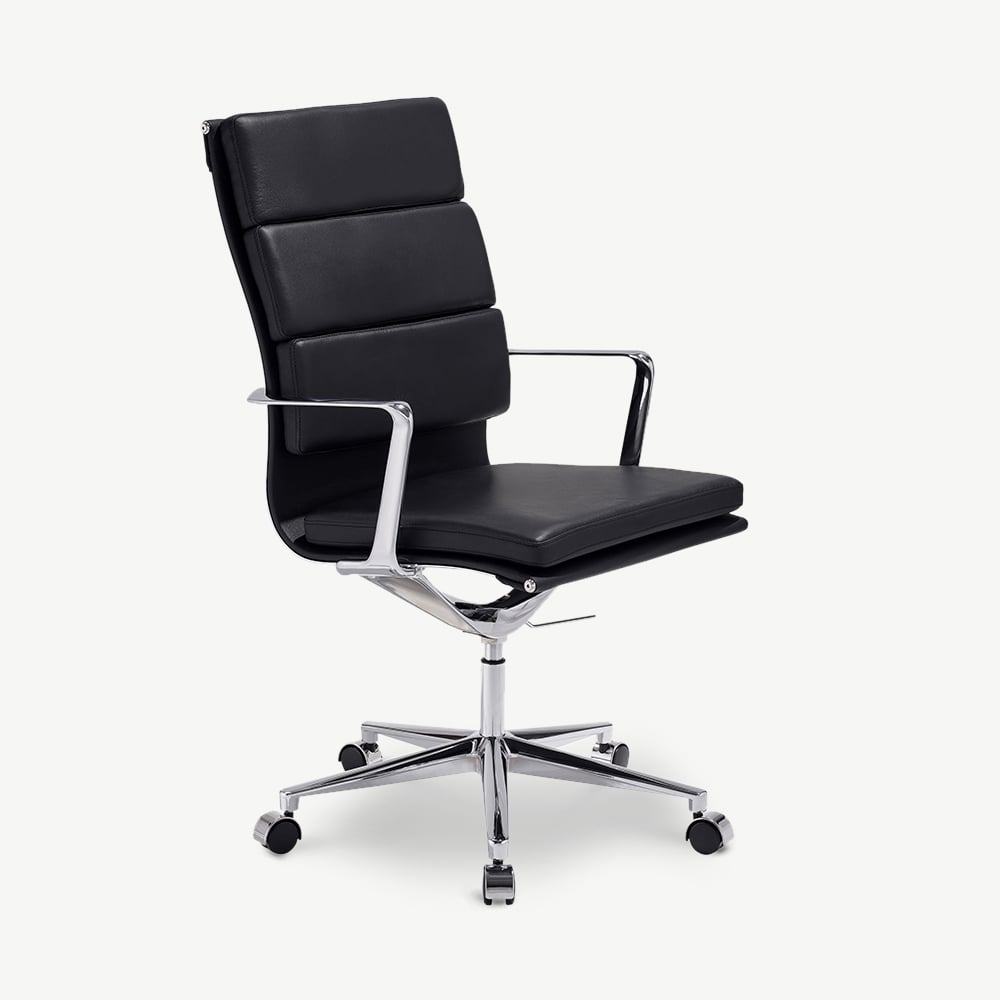
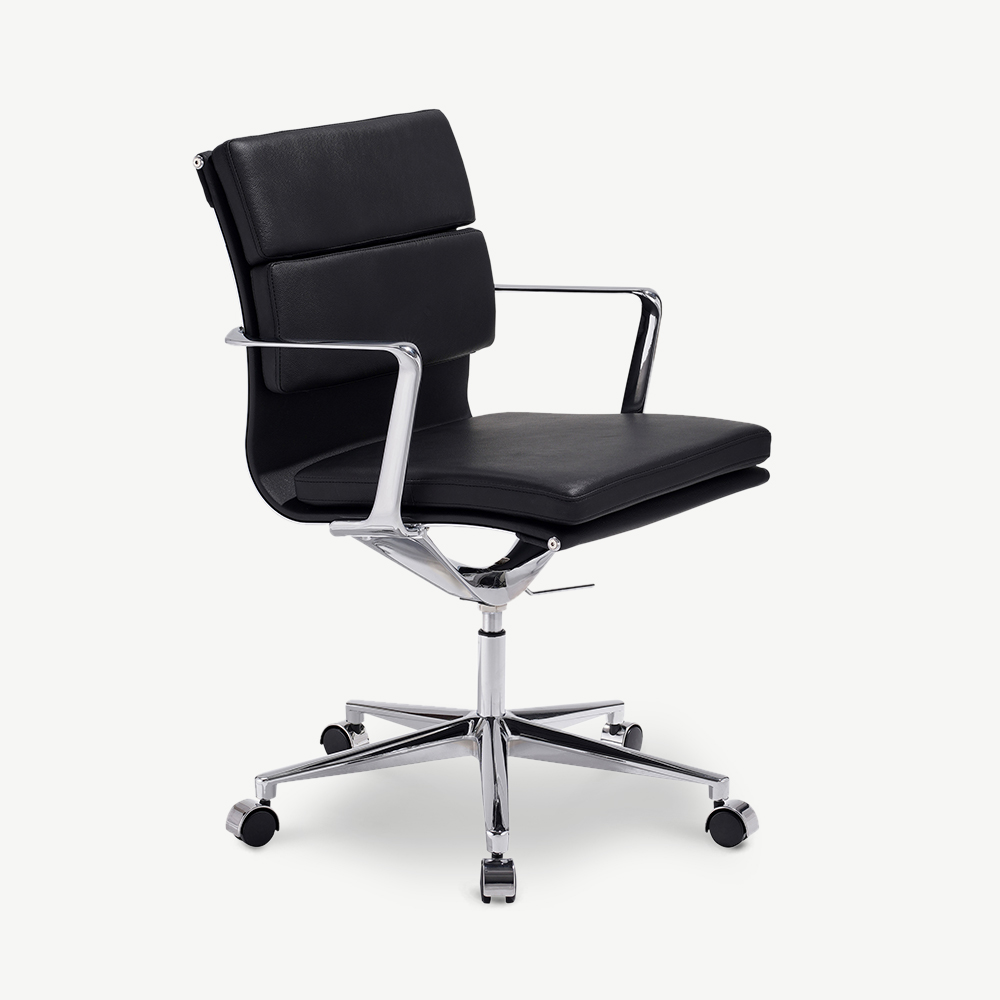
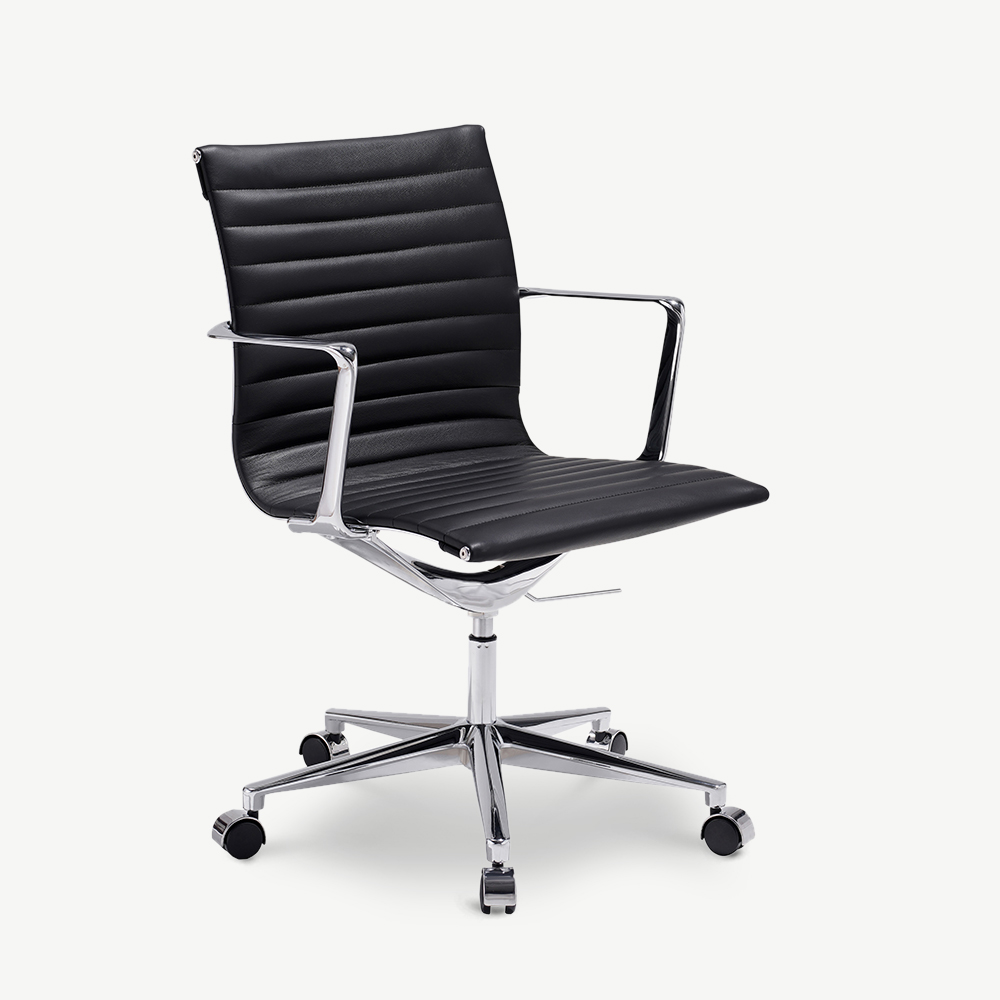
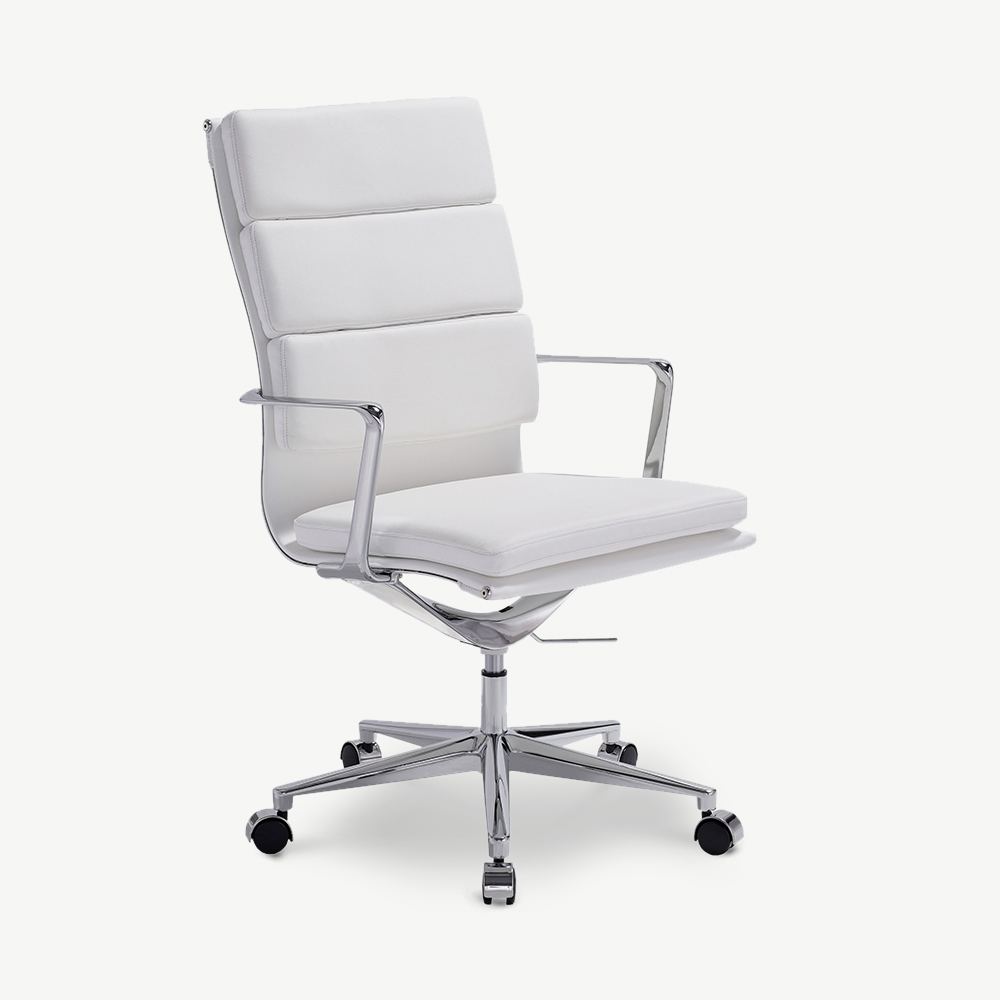
The chair that outlasts its warranty
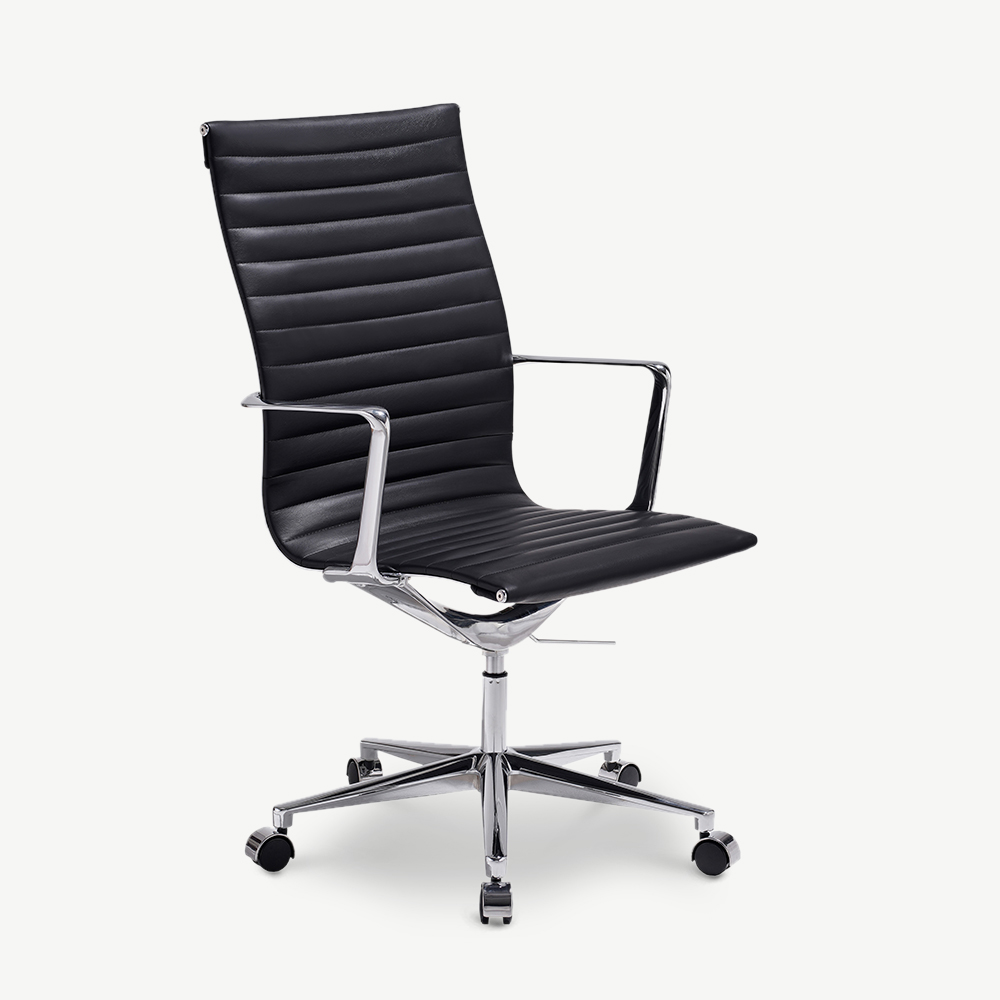
A 449 EUR mid-tier ergonomic with one 30 EUR gas-lift replacement at year 6 gives you 10+ years of useful life. That is 45 EUR per year, all in.
For chairs built around this lifespan math, see our office chair collection. Mid-tier and premium models come with 5 to 10 years of mechanism warranty and parts availability for the components that wear. Read the full buying guide for the decision before purchase.
Related: how to choose an office chair, ergonomic adjustments, office chair for back pain, height-setting guide. For a different style of workspace, the Scandinavian collection pairs muted woods with a calmer office aesthetic.
Frequently asked.
How long do office chairs last?
Budget chairs (99 to 199 EUR) last 3 to 5 years. Mid-tier ergonomic chairs (249 to 449 EUR) last 7 to 10 years. Premium ergonomic chairs (499 to 799 EUR) last 10 to 15 years with one gas-lift replacement. Premium-plus chairs (800 EUR+) last 15 to 20 years with periodic part replacement. All figures assume 8 hours per day of single-user use.
What is a good office chair warranty?
5 years on the mechanism, 2 years on upholstery, 2 years on casters is the minimum for a mid-tier chair. Premium chairs offer 10 years on parts and labour, with some manufacturers covering the gas lift specifically (often the part most likely to fail). Avoid warranties that say "limited" without listing the components covered; if you cannot find a per-component table, assume the warranty is shorter than it looks.
What fails first on an office chair?
The gas lift, almost always. It is a sealed pneumatic cylinder; the internal seals degrade and the chair stops holding height after 5 to 7 years of daily use. Replacement is a 30 EUR part and 15 minutes of work with a rubber mallet. Upholstery wear comes next around year 7 to 10; casters often outlast both because they only see contact when you roll.
When should I repair vs replace?
Repair if the chair was originally over 250 EUR and only the gas lift or casters have failed. Both are sub-50 EUR parts that fit in minutes. Replace if the seat foam has collapsed, the mesh has sagged, or the chair was under 200 EUR new; on cheap chairs, the next thing breaks within months of the first repair, so the repair time is wasted.
Does an office chair warranty cover daily use?
Most consumer warranties assume 8 hours per day of single-user use. Commercial 24/7 use (call centres, shift work, public-access settings) often voids the warranty unless the chair is specifically rated for it. Look for BIFMA X5.1 or EN 1335 certification if the chair will be used more than 10 hours per day or by multiple users; these standards explicitly test for that load profile.
How can I extend the lifespan of my office chair?
Vacuum the casters monthly (hair and fibres are what wear them out, not floor contact), avoid sitting on the armrests (the mounting points crack), do not let the chair sit unused for months under heavy weight (the foam takes a permanent compression set), and replace the gas lift at year 5 to 7 before it fails completely. Doing those four things adds 3 to 5 years to the lifespan of most mid-tier chairs.
