 9800+ TRUSTPILOT REVIEWS


 EN
EN DE
DE FR
FR NL
NL
There is only one correct office chair height, and it is not a number. It is the height at which your feet are flat, your thighs are parallel to the floor, and your forearms reach the desk at 90 degrees. Everything else (the cm figures, the gas-lift markings, the chair size) exists to get you to those three conditions.
This guide is short on purpose. The full procedure takes 5 minutes once your chair is assembled, and the result holds until your desk, your shoes, or your chair changes. Skip the lifestyle theory; the rules below are what an occupational therapist would tell you.
Reference table by height and desk
Use this only as a starting point. After you sit, the three-condition check above is what determines whether the chair is right, not the number you set.
| Your height | Desk 73 cm | Desk 76 cm |
|---|---|---|
| 155 to 165 cm | 42 to 44 cm | 44 to 46 cm |
| 165 to 175 cm | 44 to 46 cm | 46 to 48 cm |
| 175 to 185 cm | 46 to 48 cm | 48 to 50 cm |
| 185 cm plus | 48 to 50 cm | 50 to 52 cm |
If your desk is fixed and not in the 72 to 76 cm range, the chair compensates only so far. Above 78 cm you need a tall-cylinder chair or a footrest. Below 70 cm you need a low-base chair (39 cm minimum).
Five-minute setup
Do these in order, once. The whole sequence assumes a desk in the 72 to 76 cm range and a chair with a working gas lift.
Five mistakes that look right
The chair height is the most-adjusted setting on an office chair, and the most often adjusted wrong. The patterns we see most:
- Chair too high to reach desk easily. Feet dangle, pressure on back of thigh, leg fatigue by lunchtime.
- Chair too low so elbows are below desk. Shoulders raise to compensate, neck and trap pain by week 2.
- Adjusting chair, never the monitor. Forces a head-down posture, which loads the cervical spine.
- Different shoes, same chair setting. Going from heels to flats changes effective height by 4 to 8 cm.
- Old gas lift sinking under load. Chair drifts down over the day. Replace the cylinder; it is a 30 EUR part, see our lifespan guide.
The chair-elbow relationship is the constraint. Everything else adapts: monitor moves, footrest appears, shoe type stays consistent during the workday.
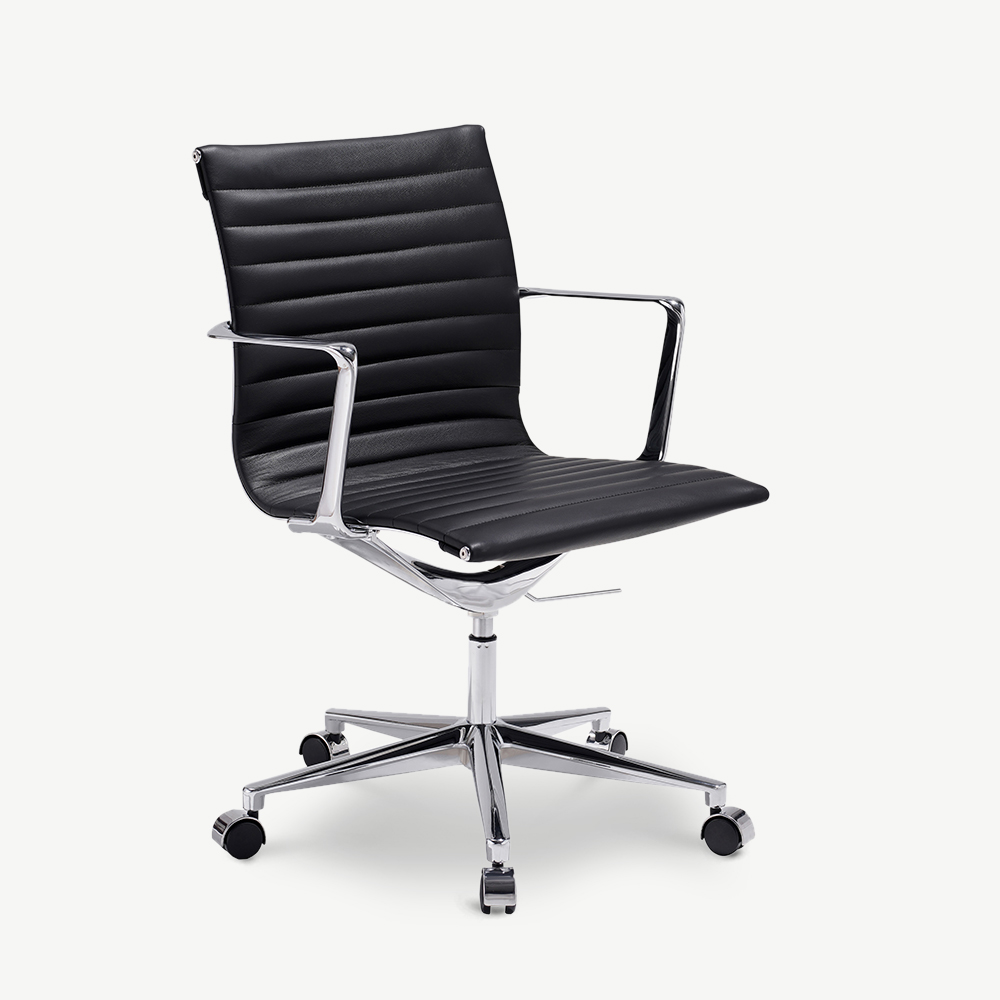
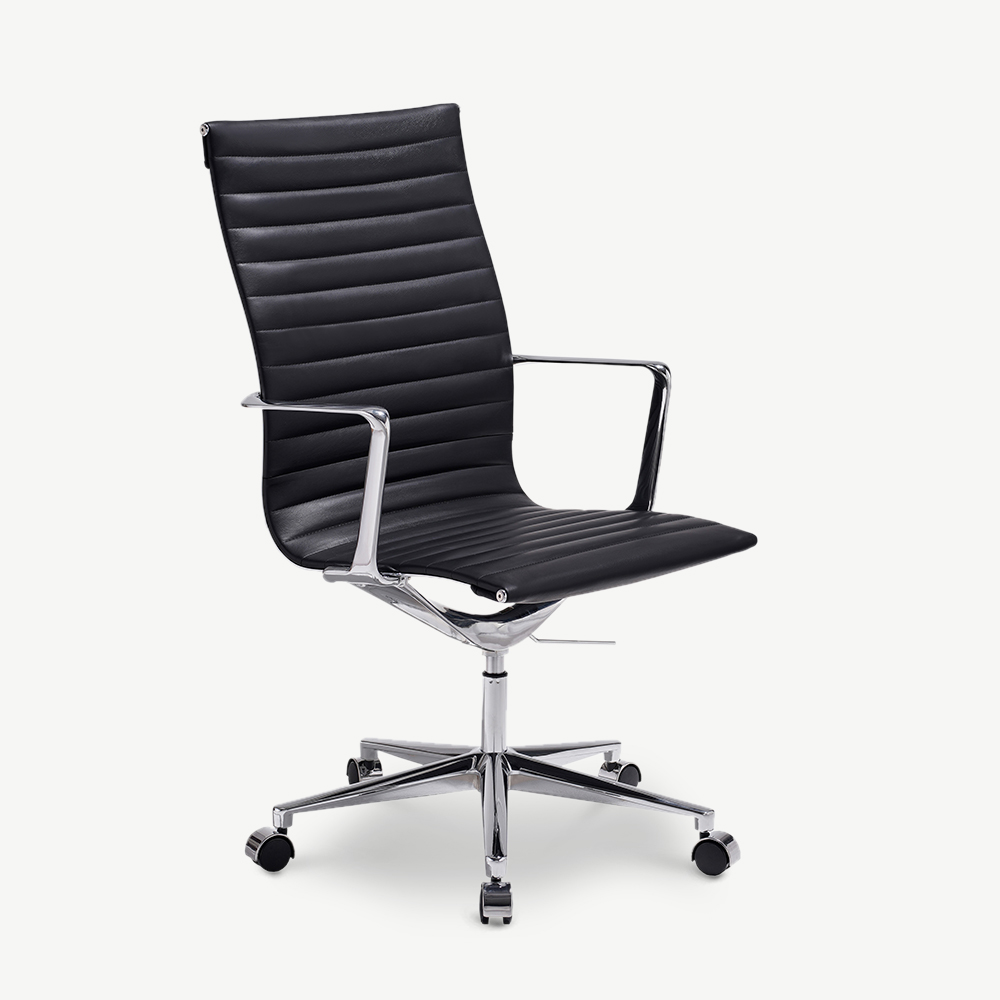
Featured in this guide
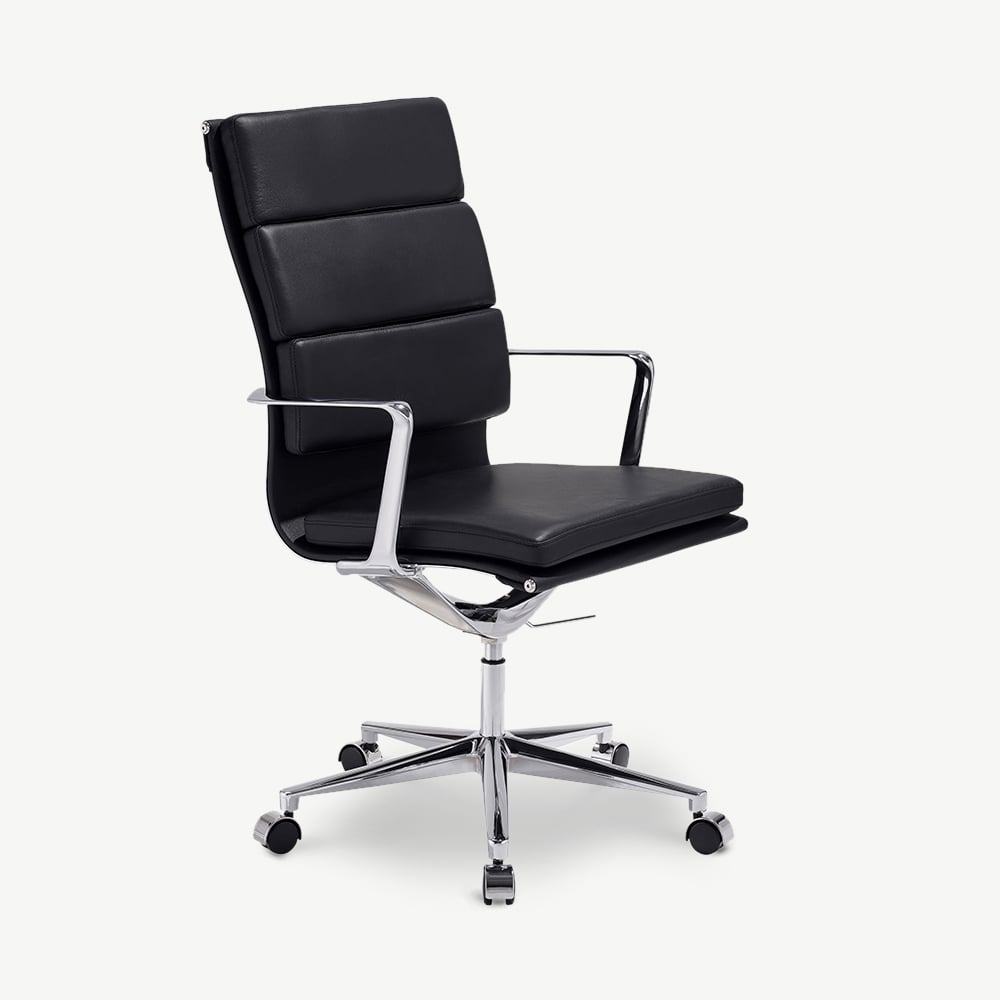
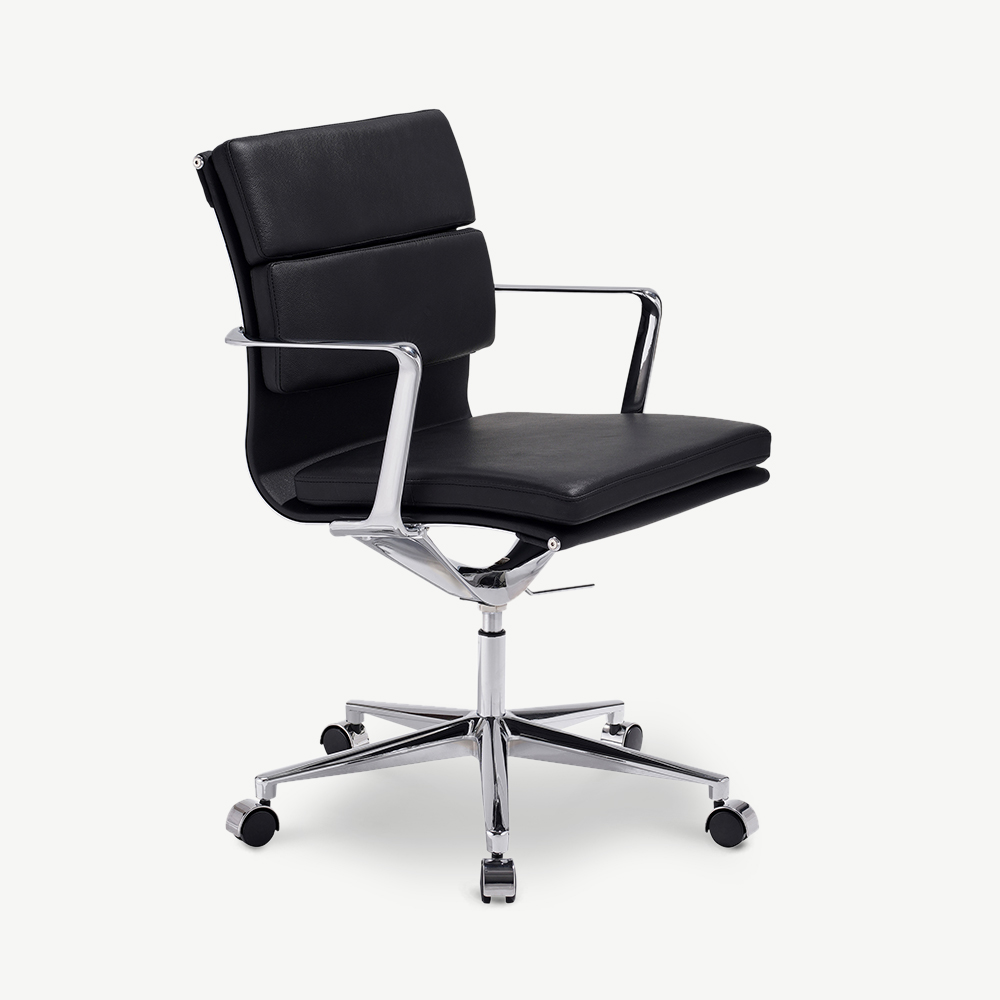

When the chair is the problem
Some chairs cannot reach the right height for the user. That is the chair, not the procedure.
A short user (under 160 cm) with a tall fixed desk (76 cm) cannot satisfy both feet-flat and elbows-at-90 with a standard chair. The answer is either a low-base chair (minimum height 39 cm) plus a footrest, or a height-adjustable desk. Browse the office chair collection for short-user friendly models.
For surrounding decisions: how to choose an office chair, the ergonomic adjustment guide, and office chairs and back pain. The full buying guide ties it together. For a calmer office aesthetic, the Japandi collection works well.
Frequently asked.
How high should an office chair be?
For a standard 73 cm desk, 45 to 47 cm seat height fits most users between 165 and 180 cm tall. The reliable test: sit, feet flat on the floor, thighs parallel, elbows reach the desk at 90 degrees with shoulders relaxed. Adjust until all three conditions are true. Do not aim for a specific number; aim for the three conditions.
What is the correct seat-to-desk gap?
Roughly 28 to 30 cm between seat surface and the underside of the desk for a user 170 to 180 cm tall. Taller users need slightly less (26 to 28 cm), shorter users more (30 to 32 cm). The exact gap does not matter; the elbow-at-90-degrees test does. Use the gap as a starting point only.
Should my feet be flat or angled?
Flat. Heels on the floor, soles supported across their full length. Feet hanging or resting on toes cuts off circulation in the back of the thigh within 20 to 30 minutes and leads to leg fatigue and unconscious posture changes. If the chair has to go too low for your desk to reach the feet-flat position, use a 5 to 8 cm footrest.
What happens if the chair is too high?
Feet dangle or rest on toes only. Pressure shifts to the back of the thigh, restricting venous return. Within 30 minutes you start adjusting posture unconsciously: crossing legs, sitting forward, hooking ankles around the chair legs. All of these load the lumbar spine asymmetrically and produce lower back pain by the end of the day.
What if my desk is not adjustable?
Set the chair height so your elbows reach the desk at 90 degrees with shoulders relaxed. If your feet then do not reach the floor, add a footrest. The chair-elbow relationship is the constraint; everything else accommodates around it. A height-adjustable desk solves this entirely, but a footrest is a 20 to 40 EUR workaround.
How often should I re-check chair height?
Once a quarter, and any time you change shoes (heel height shifts the floor reference) or change desks. Office chair gas lifts slowly lose pressure over years; if the chair sinks during the day, the cylinder is failing and needs replacing. Class 4 replacement cylinders cost around 30 EUR and fit most chairs with a standard 11 mm cone. See our warranty and lifespan guide.
