 9500+ TRUSTPILOT REVIEWS


 EN
EN DE
DE FR
FR NL
NL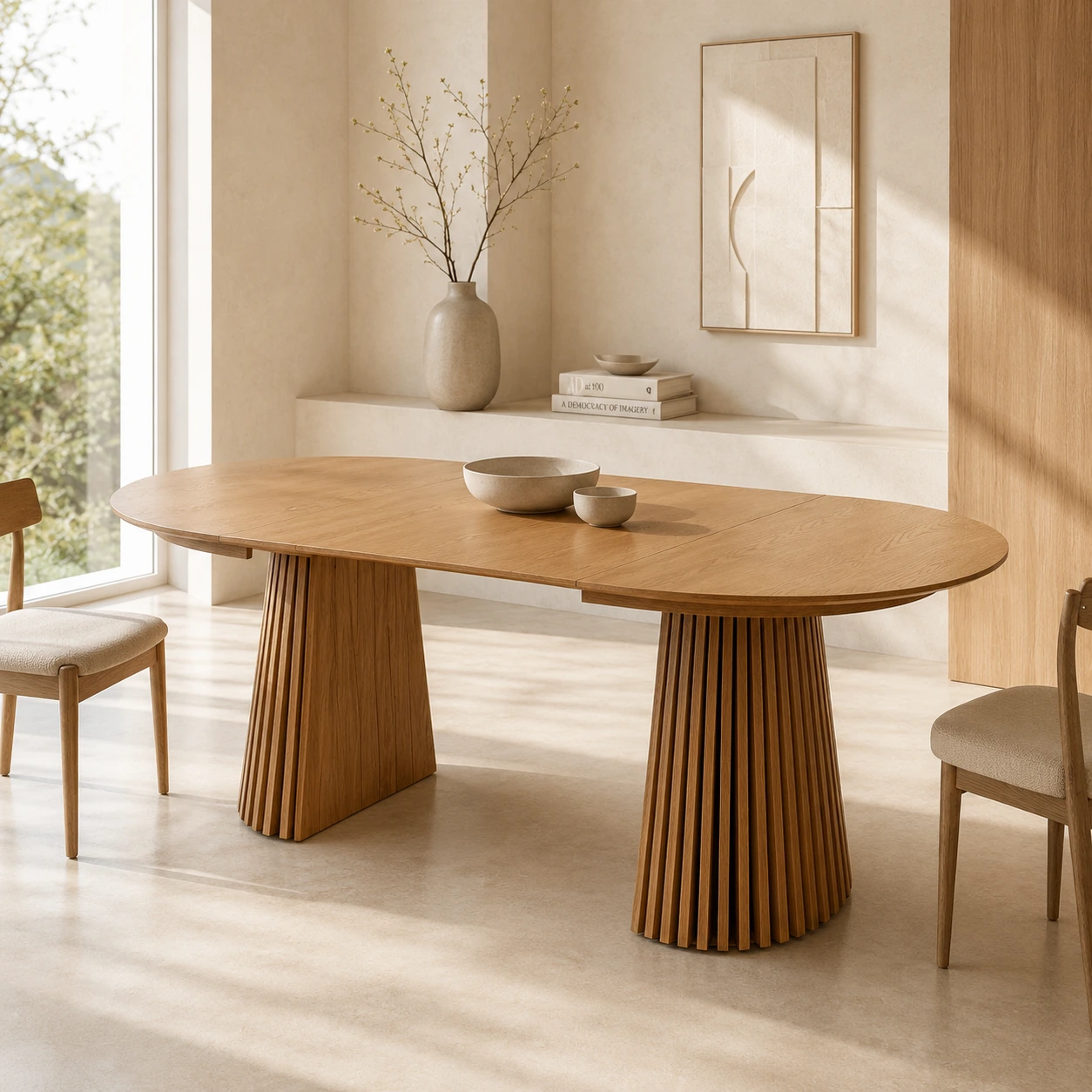
Wood or marble: the decision between a solid oak dining table and one with a Carrara top is not just an aesthetic one. It is a decision about 100 kg of weight difference, double the entry price, and an entirely different care philosophy over 15 years.
This comparison puts the actual numbers on the table: weight, care effort, lifespan, total cost of ownership over 15 years. By the end, you should know which dining table fits your household, your budget, and your daily life.
Profile differences that matter
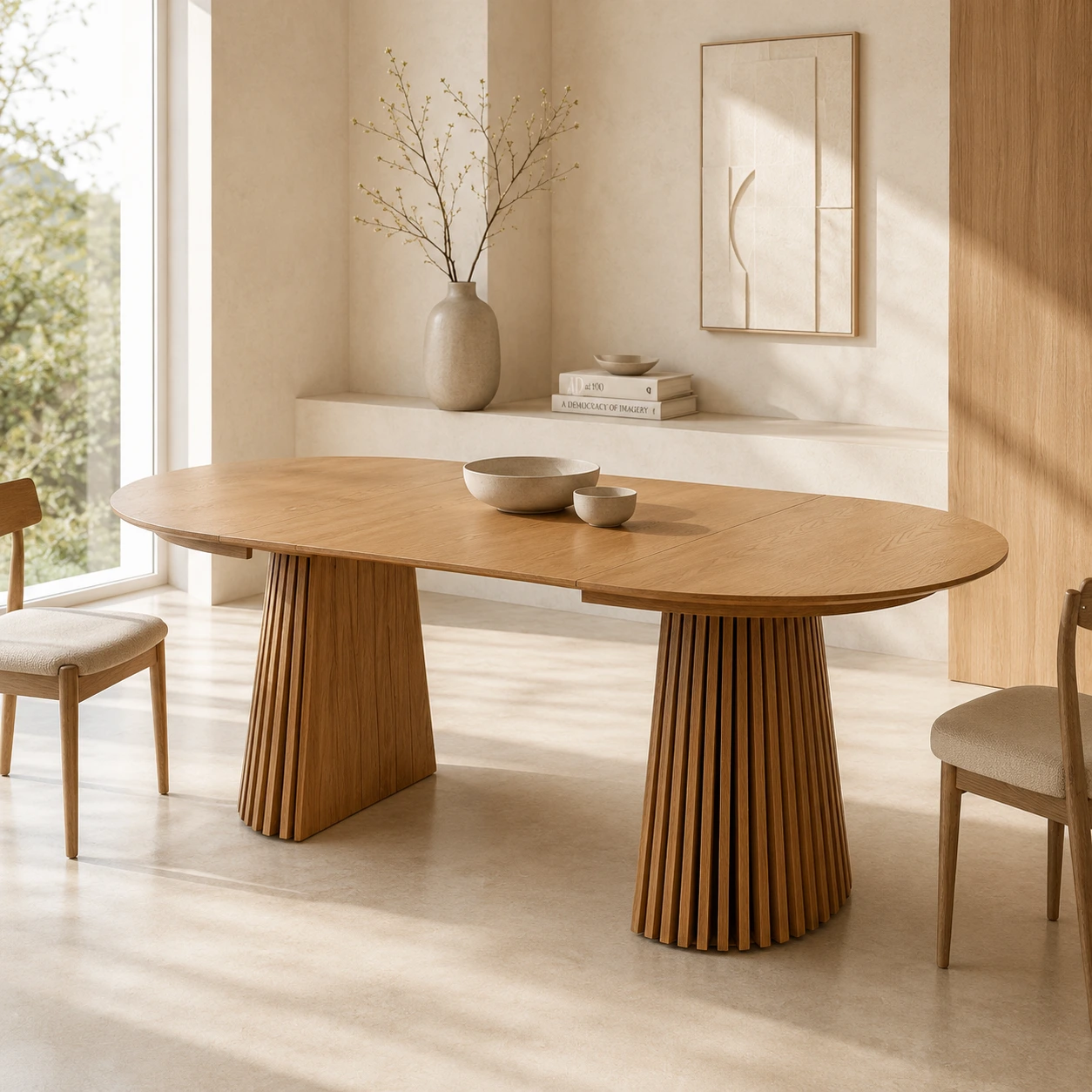
A solid oak dining table reads warm, forgiving, long-lasting, familiar. A Carrara marble dining table reads cool, uncompromising in presence, equally long-lasting, but with its own quirks. They look different, they feel different to use, they behave differently in everyday life.
The single most important number is weight. A 180 cm oak top weighs 30 to 60 kg. A 180 cm Carrara top weighs 80 to 110 kg. With the base, wood totals 50 to 90 kg, marble 120 to 200 kg. That changes how you get the table into the apartment, where you place it, and whether you ever move it again.
The numbers over 15 years
Purchase price, ongoing care, repair, total cost. Both tables 180 cm, comparable style tier.
| Factor | Solid oak | Carrara marble |
|---|---|---|
| Top weight (180 cm) | 30 to 60 kg | 80 to 110 kg |
| Total weight with base | 50 to 90 kg | 120 to 200 kg |
| Purchase price | €499 to €1,200 | €699 to €1,500 |
| Annual care time | 1 hour oiling | 2 hours sealing |
| Care materials 15 yrs | €30 (hard wax oil) | €120 (sealer) |
| Scratch / stain repair | 10 min DIY (sand, oil) | 15 min polish or €150 restorer |
| Lifespan | 40+ years | 50+ years |
| Total cost over 15 years | €529 to €1,230 | €819 to €1,620 |
Featured in this guide


Wood forgets, marble remembers
A solid oak table absorbs scratches and water marks and develops a patina over the years. A water ring from a glass disappears at the next oiling, a knife scratch sands out in 10 minutes, a heat mark from a hot pot becomes invisible with 240-grit paper and a second coat of oil.
Marble remembers. A drop of lemon juice left for 15 seconds leaves a matte etch that does not come off. Sealing pushes that window from 15 to 90 seconds, which is the difference between a stressful dinner and a relaxed one. In a household with children under 10, this is not a theoretical detail.
Wood is forgiving. Marble is precise. Both last a lifetime, but they ask for different attention.
Who should buy which
Family with kids
Children under 12 spill juice, pull felt-tip pens across the surface, slam toys onto the wood. Wood absorbs that and gives it back at the next oiling. Marble stores every acid spill as a permanent mark.
The right choice for households with children under 12 or regular craft sessions at the table; expect to oil it every 6 to 12 months.
Couple no kids, hosts often
If the table gets gentle daily use and is meant to impress at dinner parties, marble is the right effort. The look is the selling point; the care is manageable when no children spill drinks.
Pick this for couples without young kids who host often and can wipe acid spills inside five minutes; otherwise stay with wood.
Single or couple, low maintenance
If neither oiling every 12 months nor sealing every 6 months is on the list, a lacquered wood top is the answer. Lacquered oak needs no attention beyond wiping for 5 years.
The right option when the table must ask for nothing beyond a damp cloth for five years and you accept the visible lacquer surface.
Wood for the family, marble for the stage.
Both tables will outlast you. The question is which care philosophy fits your daily life.
Browse our dining tables collection. Filtering by material on "wood" or "marble" narrows the choice fast. Each product page lists the weight, care instructions, and expected 15-year care effort.
For the marble care routine, read our marble dining tables care guide. If neither pure wood nor marble is right, the concrete dining table guide offers the third option. For style direction: Scandinavian furniture favours light wood, Japandi mixes both. The dining tables buying guide puts both materials in the context of size, shape, and budget.
Frequently asked.
Does marble last longer than wood?
Marginally. Marble lasts 50+ years, solid oak 40+. Both lifespans cover an entire adult life. The difference is not the endpoint but how the table looks after 15 years: wood shows patina, marble shows every etch that was never treated.
Which is heavier, wood or marble dining tables?
Marble, by far. A 180 cm Carrara top weighs 80 to 110 kg, a 180 cm oak top 30 to 60 kg. With base, wood totals 50 to 90 kg, marble 120 to 200 kg. For apartments without a lift or with narrow stairwells, transport is a real concern. Marble requires a 3-person carry.
Which is more expensive to care for, wood or marble?
Marble, by a factor of 4 in materials. 15 years of marble sealer runs around €120, 15 years of wood oil around €30. Time-wise: wood takes 1 hour annually (oiling), marble 2 hours (sealing in two coats). Repair differs: wood is DIY, marble sometimes professional.
Can marble handle hot pots?
Conditionally. Marble tolerates steady heat well, but thermal shock from a 200°C pan onto a 20°C surface can crack the stone. Wood is more robust against surface heat, but burns marks in if a hot pan sits more than a few seconds. In both cases: use trivets.
How does wood look after 15 years?
Oiled solid oak develops a warm patina with use marks that make the table more interesting, not damaged. Water rings disappear at oiling, scratches become part of the story. Lacquered wood, by contrast, shows lacquer cracks after 10 to 15 years and needs a full refinish.
Can I combine wood and marble?
Yes, many modern dining tables do: wood base with marble top, or vice versa. A Carrara top on an oak base pairs the cool top with a warm base. Price band for mix models: €899 to €1,400 at 180 cm. Care logic follows the top.
