 9800+ TRUSTPILOT REVIEWS


 EN
EN DE
DE FR
FR NL
NL
Marble looks indestructible. It is not. Marble is a porous, mildly soft stone that behaves a bit like skin: it absorbs what is left on it, and acids etch the surface in seconds. The good news is that all of that is manageable with a sealer twice a year and a habit of wiping spills the moment they happen.
This guide covers the three marbles most common on dining tables: Carrara, Calacatta, and Nero Marquina. What each one is, how porous it is, what stains it, and the actual care routine that keeps a marble dining table looking right for 50 years.
Carrara, Calacatta, Nero Marquina
Marble is not one material. The slab quarried near Carrara in Tuscany is a different stone from the slab quarried 30 km up the valley near Calacatta, and a different stone again from the Spanish Nero Marquina pulled out of the Markina mountains. They differ in pattern, porosity, and what they tolerate at a dining table.
Carrara is the soft-grey workhorse: 80% of EU marble dining tables sit on Carrara. Calacatta is the rarer and more expensive cousin, with cleaner whites and bolder gold or grey veining. Nero Marquina is the black option, denser than the white marbles and more stain-resistant as a result.
What each marble actually does
Carrara
Quarried in Tuscany since Roman times. Background is a warm white to pale grey; veining is fine, soft grey, often blurred. Most porous of the three: absorbs spills if left more than a few minutes.
The right pick when you want genuine marble for daily life and can wipe acid spills within five minutes; the soft veining hides minor etching better than Calacatta.
Calacatta
From a smaller quarry near Carrara, with cleaner white background and stronger, more dramatic gold or grey veining. About 30% denser than Carrara and slightly less porous, though it still etches.
Choose this when the table is the visual anchor of the room and gets light, careful use; skip it for households that cook acidic food daily.
Nero Marquina
From the Basque country in northern Spain. Deep black background with sharp, almost lightning-bolt white veins. Denser than both white marbles, with lower porosity and better resistance to oil and food stains.
The right call for cooks who want marble but expect daily oil and tomato exposure; the lower porosity forgives faster wipes than the white marbles.
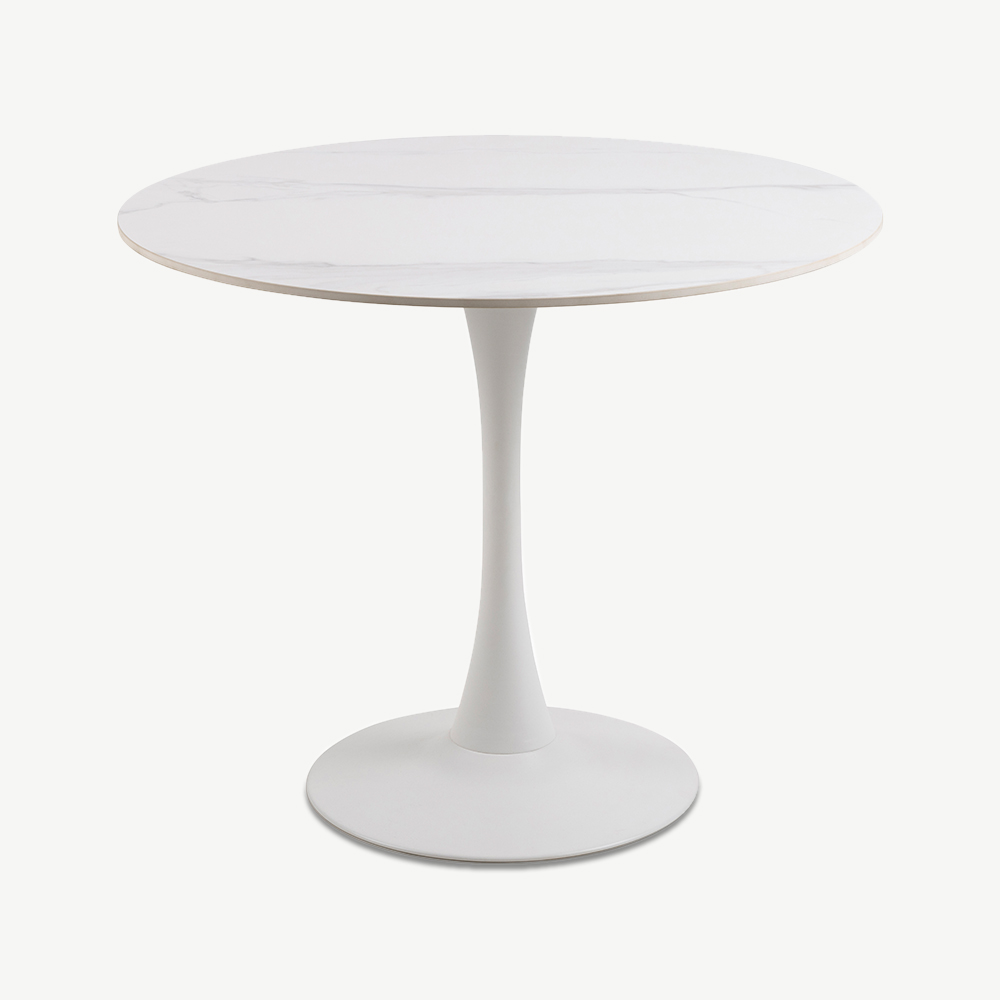
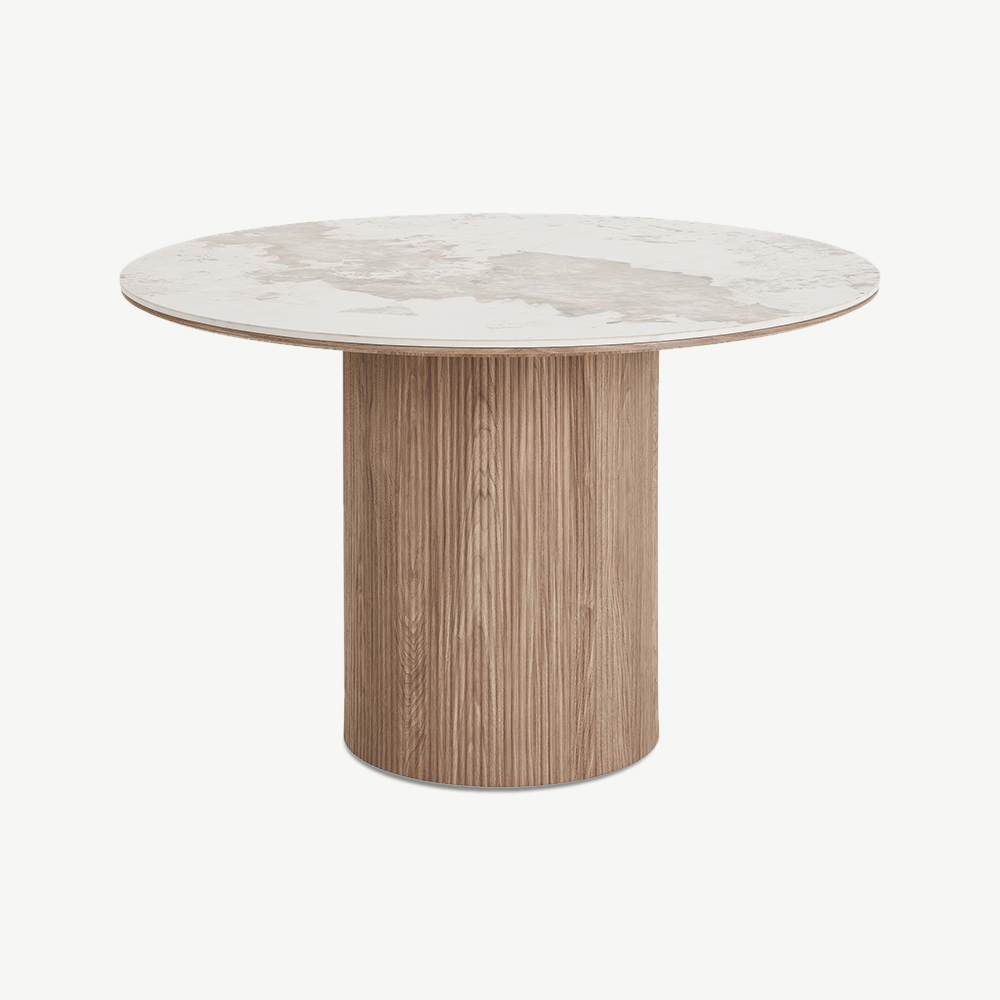
Featured in this guide



What actually stains marble
Marble has two enemies: acids and oils. Acids etch (chemically dull the surface, leaving a matte mark that does not wash off). Oils stain (penetrate the stone and darken it). Most kitchen incidents fall into one category or the other.
| Spill | What it does | Response window |
|---|---|---|
| Lemon juice / vinegar | Etches in 15 seconds | Immediate |
| Red wine | Etches in 30 seconds, stains if left | Under 1 minute |
| Balsamic / soy sauce | Stains the stone deeply | Under 2 minutes |
| Olive oil | Darkens, slowly absorbs | Under 5 minutes |
| Coffee | Mild stain, hard to see on Carrara | Under 5 minutes |
| Water | Nothing if sealed | Any |
Etches cannot be wiped off because they are not on the surface, they are a chemical change in it. Light etches can be polished out with a marble polishing powder; deep ones need a stone restorer. Stains, by contrast, can usually be drawn back out of the stone with a baking-soda poultice given enough time.
Five habits to keep marble looking right
Marble rewards care with 50 years of beauty.
If you can commit to wiping spills fast and sealing twice a year, marble is one of the longest-lasting dining surfaces you can buy.
Browse our dining tables collection. Marble dining tables sit between €699 and €1,500 depending on size and stone. Each product page lists the exact marble origin and the sealer schedule we recommend for the piece.
If marble feels too high-maintenance for your household, compare it with the wood alternative in our wood vs marble dining tables comparison. For the rounder visual cousins, our concrete dining table guide covers cement and microcement tops with similar visual weight and easier care.
For style direction, the Japandi interior guide pairs Nero Marquina with light oak and linen in a combination that suits Calacatta less well. For how marble fits the wider decision, see our complete dining tables buying guide.
Frequently asked.
Does a marble dining table stain easily?
Yes, if it is unsealed and the spill sits. A properly sealed marble dining table tolerates a spilled glass of water indefinitely and a glass of wine for a few minutes. The combination of acid (lemon, wine, vinegar, tomato) and time is what causes permanent etching. Wipe within 60 seconds and almost nothing leaves a mark.
How often do you seal a marble dining table?
Carrara every 6 months, Calacatta and Nero Marquina every 12. The test: drip water on the marble and wait 5 minutes. If the water beads, the seal is intact. If the water has soaked in and left a dark spot, it is time to reseal. A 250 ml bottle of penetrating sealer costs around €25 and treats a 180 cm table 4 times.
Can you remove etch marks from marble?
Light etches yes, deep etches no without professional refinishing. A marble polishing powder (€18 at any hardware shop) rubbed in with a damp cloth removes most light etches in 5 to 10 minutes of work. Deep etches and chips need a stone restorer with the right grits; budget €150 to €300 for a professional refinish of a 180 cm tabletop.
Is Nero Marquina better than Carrara for daily use?
For households that cook a lot and entertain often, yes. Nero Marquina is denser, less porous, and more stain-resistant than Carrara. Spills show less on a black background as well. The trade-off is the visual: Nero Marquina is a stronger design statement and works less well as a neutral piece.
How heavy is a marble dining table?
A 180 cm Carrara top is typically 25 to 30 mm thick and weighs 80 to 110 kg. Calacatta is denser and runs 90 to 120 kg in the same dimensions. Nero Marquina runs 100 to 130 kg. Add the base (cast steel, oak, marble) and a 180 cm marble dining table is usually 120 to 200 kg in total. Plan for 3 people to move it.
Can you put hot pans directly on marble?
Not advised. Marble handles steady heat well but thermal shock (a 200°C pan on a 20°C surface) can crack the stone. The risk is small on Carrara, larger on Nero Marquina (the dense black stone heats unevenly). Use a trivet for hot pans direct from the hob or the oven.
