 9800+ TRUSTPILOT REVIEWS


 EN
EN DE
DE FR
FR NL
NL
A concrete dining table is a 150-kilo piece of architecture you order as furniture. It looks like an industrial element, feels like a building component, and will probably stay in place longer than the flat it moves into. That is both its appeal and its difficulty.
Anyone googling "concrete dining table" is usually after a statement piece: industrial loft, Japandi-brutalist crossover, or a table that looks better after a decade of family life than the day it arrived. This guide covers what to check before buying, how to maintain the surface, and what it actually looks like after five to ten years of real use.
Three things to check before you order
Concrete is heavy. That gets underestimated when ordering online and leads to delivery problems or structural damage.
- Weight and floor load: 80 to 150 kg for the top, 30 to 50 kg for the base. Total 110 to 200 kg. Modern wood floors and concrete subfloors handle that easily; very old plank floors and heritage buildings deserve a second check.
- Delivery and lift access: standard parcel services do not deliver 150 kg furniture. You need a two- or three-person delivery team (included in the Furnicher price). Lift access must take the top, usually upright in a standard EU lift from 0.9 by 1.4 m interior.
- Base first, top last: the top sits on the already-assembled base. Some models have a flat-packed base (good for tight stairwells), others ship as a single cast piece (harder to manoeuvre).
For wider material choices, see the dining tables buying guide.
Three ways to build a "concrete" table
"Concrete" covers three different materials. Each affects weight, price, and maintenance.
Solid cast concrete
Actual concrete, cast in a mould with steel reinforcement. Heaviest, lasts longest (40+ years), shows the most honest patina. At Furnicher, €999 to €1,200.
For buyers who want the material itself, with reinforcement lines as design detail.
Microconcrete on MDF
A 3 to 5 mm microconcrete layer over an MDF core. Looks like solid concrete, weighs noticeably less, costs less. €749 to €999. The coating can show fine cracks over long time spans.
Fibre cement composite
Fibre-reinforced cement composite, often with a resin component. Visually similar but noticeably lighter and less porous. €549 to €749. Forgives more manufacturing variability but also shows less of the real concrete patina.
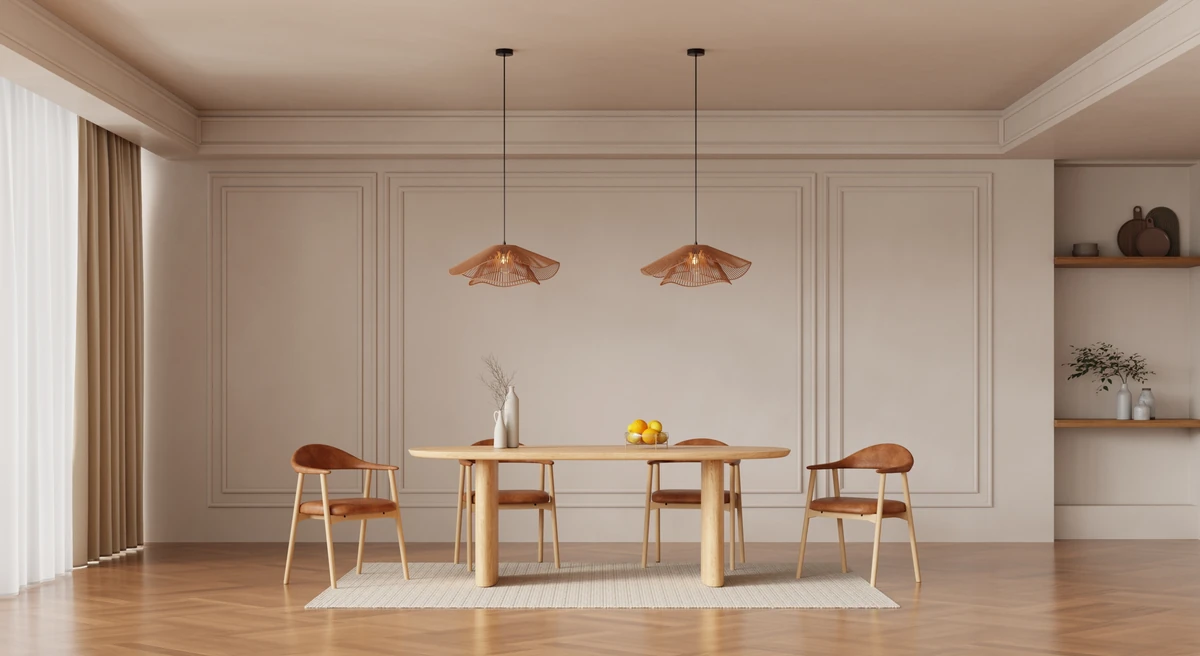
Featured in this guide


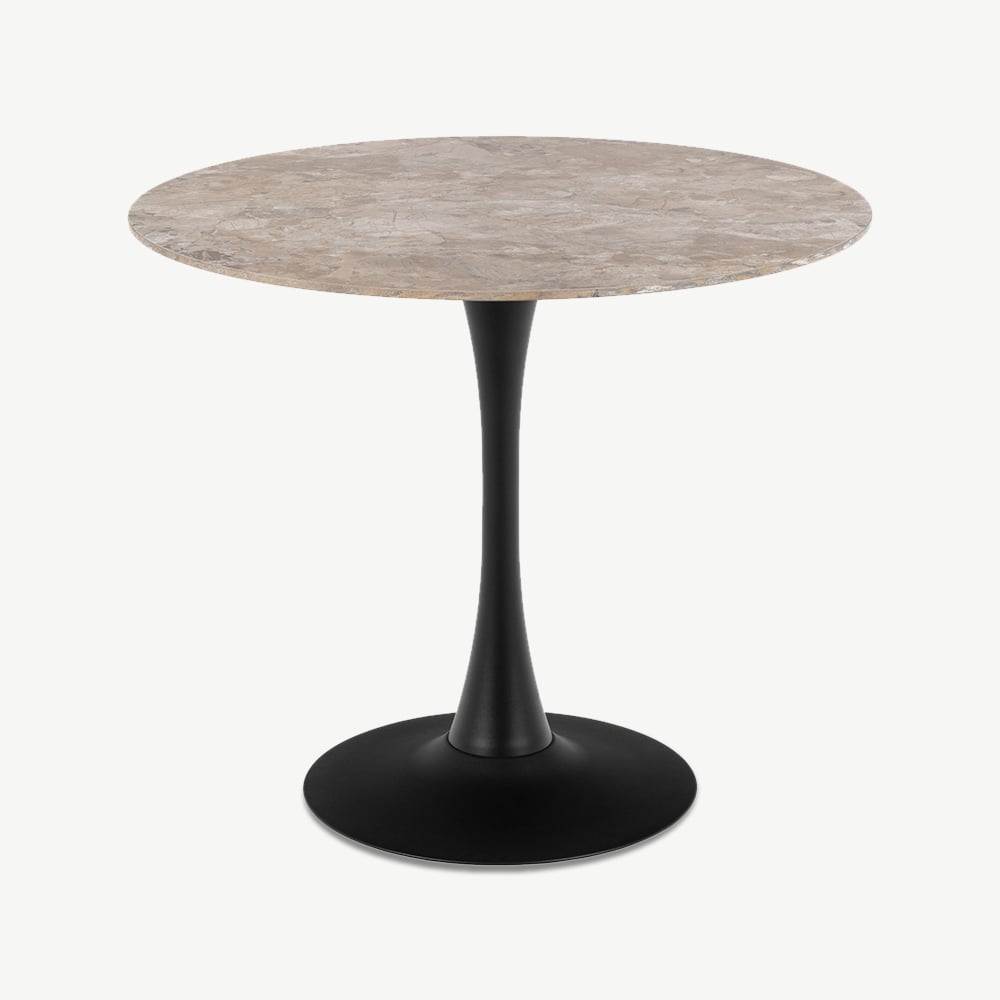

What a concrete table actually looks like at 10 years
With care, concrete ripens into the patina most buyers actually want. Without care, it picks up acid spots and water rings that do not come out. The difference comes down to a single habit: seal it once a year.
First seal: at delivery. Furnicher tables ship factory-sealed. Most brands do too, but verify.
Annual refresh: apply a stone-and-concrete impregnating sealer (any DIY store) with a soft cloth, let it absorb for 10 minutes, polish off with a clean cloth. 15 minutes of work, €15 to €30 per bottle, three to five refreshes per bottle.
Daily care: wipe spills immediately, especially wine, lemon juice, tomato sauce. The seal protects from water; speed is the only protection from acids.
At 10 years: the eating surface has soft darker patches where hands rest. Fine hairline cracks appear at the edge and centre. Corners are slightly rounded from wear. That is the wanted patina; a concrete table that still looks like the showroom after a decade has not been used.
For style pairings, see the Japandi interior guide and the cafe table design guide.
Pick the right concrete dining table for your space
Fibre cement from €549, microconcrete on MDF €749 to €999, solid cast concrete €999 to €1,200.
Every concrete table at Furnicher with weight, material build-up, and seal type on the product page. Free two-person delivery across the EU. Klarna available.
Browse dining tables at Furnicher. Style context: dining tables buying guide.
Quick answers.
How heavy is a concrete dining table?
Solid cast-concrete tops weigh 80 to 150 kg depending on size and thickness. A 180 by 90 cm solid concrete top runs 120 to 150 kg, plus 30 to 50 kg for the base. Total 150 to 200 kg. Check your floor load capacity and book a two-person delivery team, not a standard parcel courier.
Does concrete yellow or crack?
Concrete develops fine hairline cracks over time; this is normal and part of the patina. Real structural cracks are rare in properly cast tables. Concrete does not yellow, but acids like wine or lemon leave darker spots if the seal has worn through.
How do you seal a concrete table?
Two options: impregnating sealer penetrates the material and makes it water-repellent but stays invisible (used on Furnicher models). Topical sealer adds a visible film, gives stronger acid protection, but can dull after 5 years. Re-seal once a year with daily use.
What style works with concrete?
Two styles pair best. Industrial: black-coated steel trestle base, metal chairs or leather upholstery. Japandi/brutalist crossover: pedestal base in light oak, rattan-back chairs. In traditional or country-style interiors, concrete usually reads out of place.
What does concrete look like after 5 to 10 years?
With annual sealing and normal care: fine hairline cracks, slight tonal shift, soft patina where hands touch daily. Without care: acid spots, dark water rings, visible staining at frequent eating spots. Concrete ages well when maintained and ages badly when ignored.
How much does a concrete dining table cost?
At Furnicher: cement composite on MDF core from €549. Solid fibre cement €749 to €999. Real cast-concrete or microconcrete table €999 to €1,200. The last category is justified by the material cost and weight.
